Performance cars aren’t just expensive investments. They’re engineered to tolerances making them fundamentally different from standard vehicles at every level – and that changes everything when something goes wrong on Perth roads.
When turbocharged WRXs overheat on Roe Highway during summer or modified Mustangs break down in Perth’s notorious 40°C+ heat, you can’t just hook them to any available tow truck. Low ground clearance, aftermarket suspension, upgraded brakes, and modified drivetrains demand completely different approaches. One wrong move turns simple sports car breakdown situations into thousands of dollars in damage through operator inexperience.
Owners aren’t just worried about getting vehicles home safely. They’re worried about underbody damage from improper lifting angles, transmission stress from wheel-lift towing methods, and whether operators actually understand what they’re dealing with when performance vehicles require recovery. That worry demonstrates absolute validity when understanding what’s genuinely at stake with high-performance vehicles.
All Out Towing has transported enough performance vehicles across Perth to recognise these concerns intimately. Operators understand that performance car towing requires specialist equipment, trained personnel, and careful attention to manufacturer specifications protecting these high-value investments through every stage of recovery and transport.
Why Performance Cars Need Specialist Towing
Standard towing methods were designed for standard cars with standard clearances, standard drivetrains, and standard suspension setups producing predictable behaviours. Performance vehicles break every single one of those basic assumptions.
Low Ground Clearance Issues
Factory sports cars like Toyota 86, Subaru BRZ, or Nissan 370Z sit low from the factory. These vehicles measure 120-140mm ground clearance compared to standard sedans at 150-180mm – already creating challenges for some towing equipment.
Modified cars with coilover suspension or aftermarket body kits sit even lower – sometimes just 80-100mm from ground, with extreme builds measuring as low as 60mm in some cases. Traditional wheel-lift or hook towing requires lifting front or rear ends at angles between 15-20 degrees minimum. Those angles scrape expensive front splitters, rear diffusers, or aftermarket exhaust systems across pavements before vehicles even begin moving toward destinations.
A $2,000 carbon fibre front lip destroyed in 30 seconds because operators used wrong equipment represents completely avoidable damage that proper methods prevent entirely. Yet this scenario plays out repeatedly across Perth when performance car owners call standard towing services during breakdowns without understanding equipment limitations.
The problem compounds dramatically with lowered vehicles where every millimetre matters critically. Clearance sitting below 100mm transforms minor ramp angles into guaranteed contact situations. What seems like trivial angle differences for standard vehicles becomes difference between safe transport and expensive component destruction for performance cars.
All-Wheel-Drive Drivetrain Protection
Using standard tow hooks on AWD vehicles like Subaru WRX, Mitsubishi Evo, or Nissan GT-R wrecks drivetrains through mechanical stress never intended by engineering teams. The centre differential, transfer case, and transmission aren’t designed for two wheels rolling whilst two remain stationary during towing operations.
Modern AWD systems constantly monitor wheel speeds across all four corners through ABS sensors. When the system detects speed differences exceeding programmed tolerances – which occurs immediately when two wheels lift whilst two remain grounded – it attempts compensating for what sophisticated electronics interpret as catastrophic wheel slip requiring maximum intervention.
This compensation creates enormous internal stress on drivetrain components designed exclusively for synchronized rotation patterns, not opposing forces from wheels rotating at completely different speeds. Even short tows of 5-10 kilometres cause catastrophic internal damage to AWD vehicle recovery systems that inexperienced operators don’t recognize until vehicles reach destinations.
Transfer cases crack under stress concentrations. Differentials overheat rapidly from friction beyond design specifications. Transmission internals wear at accelerated rates from unintended loading patterns never considered during engineering processes. Repairs start at $5,000 for relatively minor damage and commonly exceed $15,000 for complete drivetrain component replacement.
Professional operators use drivetrain-protecting tilt tray services that keep all four wheels level on deck surfaces, eliminating drivetrain stress entirely through proper support. This prevents transfer case damage, transmission failures, and differential destruction occurring systematically with improper recovery methods still used by inexperienced operators.
Aftermarket Modification Complexity
Modified performance cars present additional challenges extending well beyond factory specifications that operators must recognize immediately. Lowered suspension changes designated tow point locations relative to ground surfaces. Upgraded brakes with larger callipers interfere with wheel dollies designed exclusively around standard brake package dimensions.
Carbon fibre body panels crack under concentrated pressure levels that wouldn’t affect steel or aluminium components at all. Wide tyres on staggered wheel setups don’t fit standard wheel cradles designed for narrow factory tyre widths. These modifications create transport complications that standard procedures can’t address adequately without causing damage.
Aftermarket exhaust systems often hang 20-40mm lower than factory equivalents throughout their length, creating new lowest points operators must account for carefully during loading angle calculations. Custom front splitters extend beyond factory bumper profiles by 50-100mm. Rear diffusers protrude further than standard valances. Side skirts reduce clearance between vehicle sides and loading equipment that standard procedures assume exists.
If operators don’t recognise these critical details immediately upon arrival, they discover them the destructive way – through component damage that could have been prevented completely with proper initial assessment. That’s exactly why specialist operators ask specific detailed questions about modifications before dispatching equipment to breakdown scenes.
Common Performance Car Issues In Perth
Perth’s unique combination of extreme climate conditions and challenging road infrastructure creates specific breakdown patterns for performance vehicles that experienced operators encounter repeatedly throughout operating seasons.
Heat-Related Failures
Summer temperatures regularly exceed 40°C across Perth’s metropolitan area during December through February, with some suburbs recording 45°C or higher during extreme heat events that occur several times annually. Performance cars with upgraded turbos generate enormous additional heat beyond factory cooling system design parameters.
Turbocharged engines produce exhaust gas temperatures exceeding 900°C under boost conditions. Larger aftermarket turbos generate even higher temperatures whilst flowing significantly more exhaust volume through systems. If cooling systems can’t dissipate this accumulated heat effectively, temperatures spike rapidly to dangerous levels. Engines reach overheating thresholds within minutes during summer traffic situations.
Cooling system failures cause the most common heat-related breakdowns we respond to throughout Perth summers. Radiator hose splits occur when aged rubber degrades from repeated heat cycling over years. Thermostat failures leave cooling systems unable to regulate temperature properly through normal operating ranges. Water pump failures stop coolant circulation entirely, causing immediate overheating.
Any of these failures can cause complete engine overheating within 5-10 minutes of normal operation, leaving vehicles stranded on busy roads or highways with minimal shoulder space creating immediate safety concerns alongside mechanical problems requiring resolution.
Clutch and Transmission Failures
Performance driving generates enormous stress on clutch and transmission components designed with specific duty cycles and load limits. Track day abuse, aggressive street driving, or simple component age leads to failures that leave vehicles unable to move under their own power, requiring immediate professional recovery services.
Slipping clutches represent the most common failure mode we encounter. Clutch friction material wears gradually with normal use, but performance driving accelerates wear dramatically beyond manufacturer expectations. High-power launches generate friction temperatures exceeding 400°C. Repeated hard shifts under boost create wear patterns that eventually prevent clutches from transmitting full engine torque to transmissions.
When clutches slip severely, attempting to drive vehicles causes additional rapid damage. Friction material continues degrading at accelerated rates. Flywheel surfaces score from metal-on-metal contact as friction material depletes. Pressure plate springs weaken from excessive heat exposure. What might have been straightforward $1,200 clutch replacement becomes $2,500 job requiring flywheel resurfacing and pressure plate replacement.
Electrical System Problems
Modern performance cars employ sophisticated electrical systems managing everything from engine tuning parameters to stability control interventions. Aftermarket modifications increase system complexity substantially, creating additional failure points that standard vehicles simply don’t possess in their electrical architectures.
Aftermarket ECU tunes modify fuel delivery maps, ignition timing curves, and boost control algorithms through recalibrated engine computers. These systems require absolutely reliable electrical power and proper sensor inputs to function correctly under all conditions. When electrical faults occur anywhere in systems, engines may refuse starting, run poorly, or enter protective modes limiting performance severely.
Upgraded fuel pumps draw significantly more current than factory units, sometimes exceeding 20 amps during peak demand periods. If wiring installations can’t handle these increased electrical loads safely, connections overheat and fail progressively. Fuses blow repeatedly. Relay contacts weld from excessive current flow. These failures leave fuel systems unable to maintain required pressure, starving engines regardless of perfect mechanical condition.
Why Tilt Tray Towing Is Non-Negotiable
There’s no legitimate debate remaining among professional operators. Tilt tray towing represents the only safe method for performance and modified vehicles. Alternative methods create unacceptable damage risks that proper procedures eliminate entirely.
Wheel-Lift Towing Dangers
Wheel-lift towing lifts either front or rear wheels off ground surfaces using metal yokes that cradle tyres during transport. It’s operationally fast and works acceptably for standard sedans with 150-180mm clearance and front-wheel-drive systems experiencing typical failures.
However, it creates 15-20 degree angles between lifted vehicle ends and ground surfaces where remaining wheels maintain contact. These angles scrape any car with clearance measurements below 120mm. Front splitters contact pavement surfaces. Rear diffusers drag across roads. Exhaust systems become ploughs destroying components costing thousands to replace properly.
Additionally, wheel-lift methods leave two wheels on ground whilst lifting the other pair completely. This configuration proves catastrophically destructive for AWD vehicles where drivetrain components expect perfectly synchronized wheel rotation at all times. Even relatively short towing distances create internal damage requiring extensive repairs costing $10,000-$20,000.
Flatbed Towing Complete Protection
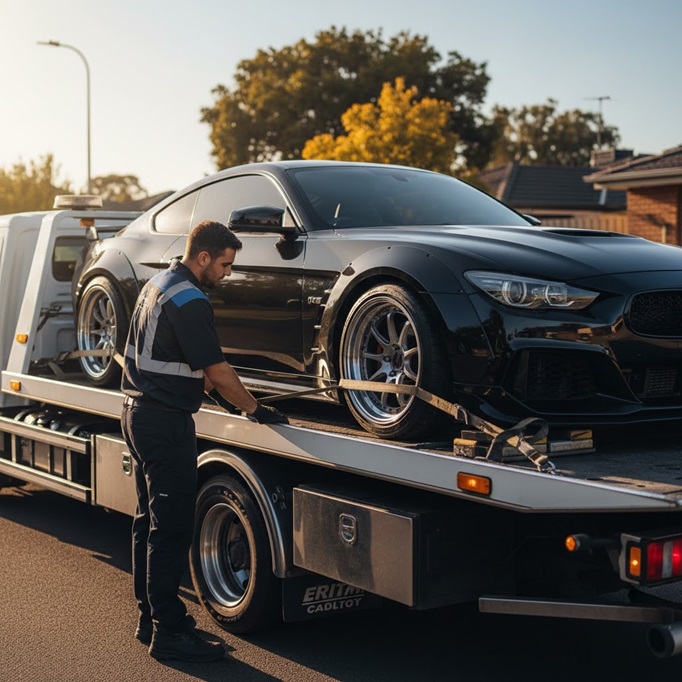
Flatbed or tilt tray transport using undercarriage-safe vehicle recovery eliminates every risk discussed throughout this article. Decks lower flat to ground level. Cars roll onto surfaces under their own remaining momentum or via careful winch assistance with no angles, no drivetrain stress, and no contact with anything except smooth deck surfaces.
All four wheels stay perfectly level throughout entire loading, transport, and unloading processes. Suspension systems neither compress nor extend beyond normal operating ranges. Nothing scrapes ground surfaces. Nothing bends from unnatural forces. Nothing sustains damage from improper handling procedures.
The deck supports complete vehicle weight evenly across all four contact points simultaneously, maintaining factory-designed load distribution throughout transport over all road surfaces. This prevents stress concentrations that could potentially damage suspension components, subframes, or body structures during transport over rough road conditions.
What To Do When Performance Cars Break Down
Breakdowns create immediate stress for any driver. Having predetermined action plans reduces that stress significantly whilst ensuring proper responses to unexpected mechanical situations on roads.
Pull Over Safely
If cars still move under any remaining power, get them as far off active roads as physically possible given circumstances. Use emergency shoulders, side streets, or available car parks. Avoid stopping in live traffic lanes unless absolutely no other safe option exists under prevailing conditions.
Turn on hazard lights immediately upon initial recognition that stopping becomes necessary for any reason. This alerts following traffic to rapidly slowing vehicle speeds ahead. If possible, activate hazard lights before complete speed reduction begins, giving maximum possible warning time to drivers approaching from behind.
Call for Professional Towing
Don’t attempt limping cars home on failing components or restarting them repeatedly hoping problems resolve spontaneously through miraculous mechanical recovery. If vehicles break down sufficiently to require complete stopping, they need professional mechanical attention at proper facilities, not roadside diagnosis attempts.
When calling for recovery services, specifically mention vehicles are performance or modified cars explicitly. This critical information tells dispatch teams to send tilt trays with proper equipment, not wheel-lift trucks that will damage vehicles. Specify approximate ground clearance if known. Mention AWD systems if present. Describe visible modifications affecting transport requirements.
For immediate assistance requiring urgent response, access trackside-quality emergency towing operating around the clock across Perth’s metropolitan area and regional locations. Operators familiar with performance vehicle requirements respond with proper equipment matching specific vehicle needs.
How We Protect Modified Components
Modified cars aren’t just cosmetically different from standard vehicles – they’re often one-of-a-kind builds representing years of dedicated work and significant financial investment totaling $20,000-$50,000 beyond base vehicle costs. Professional operators treat them accordingly with appropriate respect.
Custom Body Kit Protection
Carbon fibre splitters, side skirts, and rear diffusers crack under concentrated pressure levels that wouldn’t affect steel or aluminum components whatsoever. These materials offer excellent strength-to-weight ratios making them ideal for performance applications but demonstrate brittleness under concentrated loads or impact forces.
Operators avoid any contact with these vulnerable components entirely during loading and securing processes. If winching procedures require working near fragile body kits, protective padding goes between any equipment and components. Loading approaches adjust specifically to account for extended dimensions beyond factory profiles that operators must recognize immediately.
Custom Exhaust Systems
Custom exhaust systems frequently hang 20-40mm lower than factory equivalents whilst extending further rearward beyond rear bumpers. These become new lowest points that operators must identify accurately and account for properly during loading angle calculations before attempting any vehicle movement.
Checking exhaust clearance meticulously before initiating winching prevents contact with deck surfaces during the entire loading process. If clearances prove marginal under any conditions, operators adjust deck angles gradually whilst monitoring actual clearance continuously throughout complete loading procedures.
$3,000 titanium exhaust systems featuring hand-fabricated components deserve identical protective care as engines and transmissions receive. These aren’t simple replaceable parts ordered from dealerships – they’re custom fabrications requiring weeks to reproduce if damaged through careless handling.
Why Experience Matters With Performance Vehicles
Anyone can purchase tow trucks. Buying equipment doesn’t automatically create expertise using that equipment properly for specialized applications like performance vehicle recovery operations.
We’ve transported everything from stock Mazda MX-5s to 1,000-horsepower Skylines across Perth. We’ve recovered track cars with stripped interiors and roll cages, drift cars with welded differentials, and show cars with custom paint worth more than complete engine builds. Every single one of those jobs required different assessment approaches and handling procedures.
Experience teaches recognition of critical details that genuinely matter. It teaches understanding that Subaru WRX STI models have different tow point locations than base model WRX variants. It teaches awareness that Nissan 350Z with Nismo body kits measure 15mm less ground clearance than factory specification sheets indicate clearly.
Protecting Your Performance Investment
Performance cars represent significant financial investments alongside genuine passion for driving excellence and automotive enthusiasm. Whether they’re WRXs you’ve worked years to afford, BMWs representing your enthusiasm for precision engineering, or Mustangs balancing American power with modern performance capabilities, these vehicles matter far beyond simple dollar values.
Choosing proper towing services isn’t merely about finding cheapest available options through online price comparison. It’s about identifying professional operators understanding exactly what’s at stake whilst possessing appropriate equipment, relevant experience, and comprehensive insurance protecting investments completely during vulnerable transport periods.
Professional operators providing enthusiast-approved car towing deliver calm, professional assistance during stressful breakdown situations. They ask right questions about vehicle specifications and modification details before dispatching equipment. They send correct trucks with appropriate capabilities for specific vehicle types and breakdown situations encountered.
For professional performance car towing anywhere across Perth, call 0418 959 216 for fast response from our experienced operators. We understand sports car breakdown scenarios intimately and provide specialist breakdown recovery services using proper tilt tray equipment designed specifically for high-performance vehicle protection throughout entire transport processes.