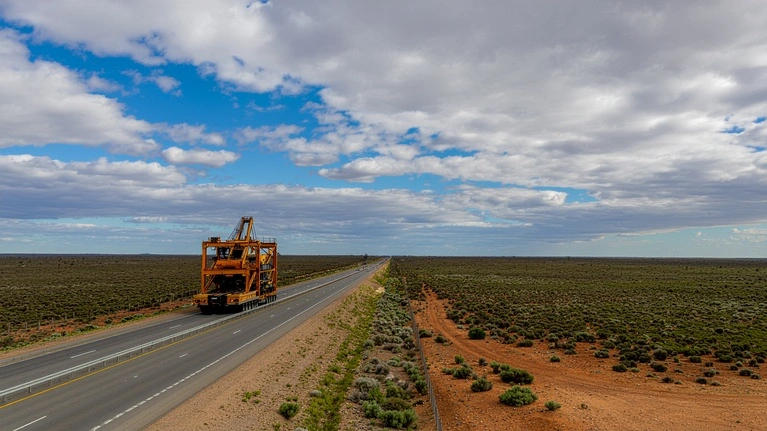
When a truck breaks down on Tonkin Highway during peak hour or a delivery van gets T-boned at a Malaga intersection, the recovery vehicle that arrives isn’t using a simple hook and chain. It’s using an underlift towing system – a piece of precision engineering that has been the backbone of commercial vehicle recovery for decades.
Most people have never heard of an underlift. They’ve seen them work – that extending arm sliding under the front or rear of a broken-down truck – but they don’t know how it actually functions or why it delivers damage-free lifting that other methods can’t match. If you operate a commercial fleet in Perth or you’re responsible for fleet logistics, understanding underlift towing in Perth isn’t just technical curiosity. It’s knowing your vehicle will be recovered safely, efficiently, and without additional damage when things go wrong.
Underlift towing Perth operations represent the evolution of vehicle recovery from brute force to precision engineering. Not the newest technology – tilt trays have taken over some applications – but for medium-duty commercial vehicles, the underlift remains unmatched in speed, efficiency, and the kind of damage-free lifting that protects drivetrain components during transport.
All Out Towing, operating across Perth’s metro area, has invested in modern underlift equipment because Perth’s commercial transport sector demands it. When a truck breaks down, it’s not just an inconvenience – it’s lost revenue, missed deliveries, and potentially breached contracts.
What Actually Is an Underlift?
An underlift is a hydraulic lifting mechanism mounted to the chassis of a tow truck. Think of it as a mechanical arm that extends from the rear of the tow vehicle, slides underneath the disabled vehicle’s axle, and lifts either the front or rear wheels completely off the ground.
Unlike a traditional wheel-lift (which cradles the tyres), an underlift uses heavy-duty forks or a crossbar that hooks directly under the vehicle’s axle or frame. Once positioned, hydraulic pressure lifts the entire front or rear end. The disabled vehicle’s remaining wheels stay on the ground and roll freely during transport.
It’s the difference between carrying something and dragging it. One method protects the vehicle’s drivetrain and suspension. The other doesn’t.
Why Underlifts Became the Standard for Heavy Vehicle Recovery
Before underlifts became widespread in the 1980s and 90s, tow operators relied heavily on boom trucks and sling systems. These worked, but they were slow to deploy, required more manual labour, and often risked damaging the vehicle being recovered.
The underlift changed that equation. It allowed operators to safely recover medium-duty trucks, buses, motorhomes, and even some heavy machinery without needing a full flatbed or crane setup. Speed increased. Damage risk dropped. And crucially, one operator could manage the entire process from the cab using hydraulic controls.
For Perth’s commercial transport sector – where a breakdown on Great Eastern Highway can cascade into missed deliveries across the metro area – the underlift’s capacity for fast, damage-free lifting became indispensable. That speed advantage makes underlift towing Perth operations the preferred choice for time-critical commercial recoveries.
The Core Components: What Makes an Underlift Work
An underlift system isn’t a single piece of equipment. It’s an integrated hydraulic system with several critical components working in concert.
Hydraulic Boom (the L-Arm)
This is the articulated arm that extends and retracts from the rear of the tow truck. Constructed from high-tensile steel, it can extend several metres to reach under the disabled vehicle. The boom pivots at its base, allowing the operator to adjust the angle and positioning for each specific recovery.
Crossbar or Forks
At the end of the boom sits the lifting mechanism itself – either a solid crossbar or a pair of adjustable forks. These slide under the vehicle’s axle or frame rails. The forks can be widened or narrowed to match the vehicle’s chassis width, ensuring a secure grip on everything from a Sprinter van to a 10-tonne rigid truck.
Hydraulic Cylinders
These provide the lifting force. When the operator activates the controls, hydraulic fluid under pressure extends the cylinders, raising the boom and lifting the vehicle’s axle off the ground. Modern systems generate tens of thousands of pounds of lifting force, all controlled with millimetre precision from the cab.
Control System
Modern systems feature electronic controls with proportional joysticks, allowing the operator to make micro-adjustments during positioning. This precision is critical when working in tight spaces – a Northbridge car park, a loading dock in Welshpool, or a narrow access road in Neerabup’s industrial zone.
Stabilisation and Safety Chains
Once the vehicle is lifted, heavy-duty chains secure the axle to the underlift assembly. These aren’t optional – they’re the failsafe that prevents the vehicle from shifting or dropping during transport, especially over rough roads or during emergency braking.
How an Underlift Recovery Actually Happens
Here’s a practical example. A 5-tonne delivery truck has a transmission failure on the Mitchell Freeway southbound, just before the Hutton Street exit, at 7:30am. Traffic is building. The operator calls for recovery.
Step 1 – Assessment and Positioning
Our tow truck arrives and assesses the situation. The truck is front-wheel-drive with a dead transmission – it can’t roll under its own power. We position our tow vehicle directly in front of the disabled truck, aligning our underlift with its front axle.
Step 2 – Deploying the Underlift
From the cab, the operator extends the hydraulic boom. The forks slide under the truck’s front axle, positioned inboard of the wheels to avoid brake lines and suspension components. The operator adjusts the fork width using the hydraulic controls until they’re snug against the axle housing.
Step 3 – Lifting
Hydraulic pressure builds. The boom rises. Within 30 seconds, the truck’s front wheels are completely off the ground. The rear wheels remain planted, ready to roll freely once we’re moving – delivering the damage-free lifting that makes underlifts superior to conventional methods for drivetrain protection.
Step 4 – Securing
Heavy-duty chains loop from the underlift frame to the lifted axle, creating redundant safety connections. Even if hydraulic pressure were somehow lost, those chains hold the load.
Step 5 – Transport
With the front end lifted and secured, we tow the truck to the repair facility. The rear wheels roll normally. The drivetrain isn’t stressed. The suspension isn’t compressed unnaturally. It’s a clean, damage-free recovery.
Total time from arrival to departure: under 15 minutes.
When Underlifts Are the Right Tool (and When They’re Not)
Underlift towing Perth operators use this method for specific vehicle types and situations. It’s not a universal solution, and knowing the difference matters.
When Underlifts Excel
- Medium to heavy rigid trucks up to 12 tonnes GVM
- Buses and motorhomes with robust front or rear axles
- Disabled commercial vehicles with drivetrain failures – transmission, diff, clutch
- Vehicles with locked wheels from seized brakes or transmission in park
- Recovery from tight spaces where a flatbed can’t access
When Another Method Is Better
- All-wheel-drive or four-wheel-drive vehicles – Lifting just one end while the other rolls can destroy the drivetrain. These need our specialist tilt tray towing
- Prestige or low-clearance vehicles – The underlift forks can’t fit under a sports car’s chassis. That’s a job for prestige car towing services
- Severely accident-damaged vehicles – If the frame or axle is compromised, an underlift can’t safely grip the structure. A flatbed is the correct choice
The Physics of Load Distribution
When you lift the front end of a 7-tonne truck, you’re not just supporting that end’s weight – you’re redistributing the entire vehicle’s load across your tow truck’s rear axle and the disabled vehicle’s rear axle.
Think of it like a seesaw. The pivot point is the disabled truck’s rear axle. The weight forward of that point – engine, cab, front axle assembly – transfers to the underlift and, by extension, our tow truck’s rear suspension. The weight behind that point – chassis, load area, rear axle – stays on the disabled truck’s rear wheels.
This is why underlift towing Perth operators calculate weight distribution before every lift. Overload the tow truck’s rear axle, and you risk losing steering control or damaging the tow vehicle’s suspension. Underestimate the load, and the hydraulic system may not have sufficient capacity to achieve safe damage-free lifting.
Why Underlifts Beat Wheel-Lifts for Heavy Work
Wheel-lifts cradle the tyres and lift the vehicle by its wheels. They’re effective for light vehicles – sedans, utes, small SUVs. But for heavy commercial vehicles, they introduce serious problems.
Tyre Stress
A wheel-lift places enormous lateral force on tyres and wheels. For a 2-tonne sedan, that’s manageable. For a 6-tonne truck with dual rear wheels, you risk tyre damage, wheel deformation, or tyre separation during transport.
Suspension Load
Wheel-lifts transfer the entire vehicle’s weight through its suspension system in an unnatural direction. The suspension is designed for vertical loads – bumps and cargo – not the angled forces of being towed. Over time or distance, this damages springs, shock absorbers, and suspension mounts.
Stability
An underlift grips the axle – the strongest structural component of the vehicle’s undercarriage. A wheel-lift grips rubber and alloy. The underlift is designed for damage-free lifting under load. The wheel-lift is not. For heavy commercial vehicles, that distinction is critical.
Hydraulic Precision: How Operators Control Tonnes with Millimetres
Modern underlift systems use proportional hydraulic controls. When you push the joystick forward slightly, the boom extends slowly. Push it further, it extends faster. The same applies to lifting, lowering, and fork adjustment. This proportional control is critical when working in tight spaces – recovering a breakdown in an underground car park, manoeuvring around other vehicles at an accident scene, or positioning inside a narrow Neerabup warehouse access road.
Older systems used simple on/off valves. Modern systems give operators infinite adjustment between zero and maximum force. It’s the difference between a sledgehammer and a scalpel.
Safety Systems and Redundancies
Every underlift system we operate includes multiple layers of safety redundancy.
- Pressure relief valves – If hydraulic pressure exceeds safe limits, relief valves open automatically to prevent cylinder or hose failure
- Load-holding valves – These prevent the boom from dropping if a hydraulic line ruptures, keeping the load suspended until the operator manually releases it
- Safety chains – Mechanical redundancy that holds the vehicle even with complete loss of hydraulic pressure
- Operator training – Our team undergoes regular training on load calculation, positioning, and emergency procedures. Equipment is only as good as the operator using it
Real-World Challenges: When Things Aren’t Textbook
Not every recovery happens in a clean, open space. Underlift towing Perth operations regularly face these challenges.
Tight Clearances
Recovering a truck from a loading dock with 200mm of overhead clearance requires micro-adjustments to the boom angle. Too steep, and you’ll scrape the disabled vehicle’s undercarriage. Too shallow, and you can’t get the forks under the axle.
Damaged Axles
If the vehicle has been in an accident, the axle housing might be bent or cracked. The underlift can’t grip a compromised structure safely – we’d switch to a different recovery method, often our professional accident towing flatbed approach.
Uneven Surfaces
Lifting a heavy vehicle on a slope changes load distribution. The vehicle’s weight shifts toward the downhill end, potentially overloading one side of the underlift. Operators compensate by adjusting the lift angle and using wheel chocks on the tow truck.
Weather Conditions
Hydraulic fluid viscosity changes with temperature. On a 40-degree Perth summer day, the system operates faster. On a cold winter morning, the fluid is thicker and the system responds more slowly. Experienced operators adjust their technique accordingly.
Conclusion
When your truck breaks down, you don’t need theory – you need a recovery operator who understands load physics, hydraulic systems, and Perth’s road environment. Underlift towing Perth operations combine decades of engineering refinement with operator expertise to deliver fast, damage-free lifting that protects your vehicle from the moment the forks slide under the axle to the moment it arrives at the workshop.
For commercial fleet operators, understanding how underlift recovery works gives you confidence when things go wrong. And confidence comes from knowing your towing company Perth trusts has the right equipment, the right skills, and the right approach every time.
For reliable towing services, reach out to our team at 0418 959 216. All Out Towing operates across Perth’s metro area with a maintained underlift fleet ready to recover your commercial vehicles safely, efficiently, and without additional damage.