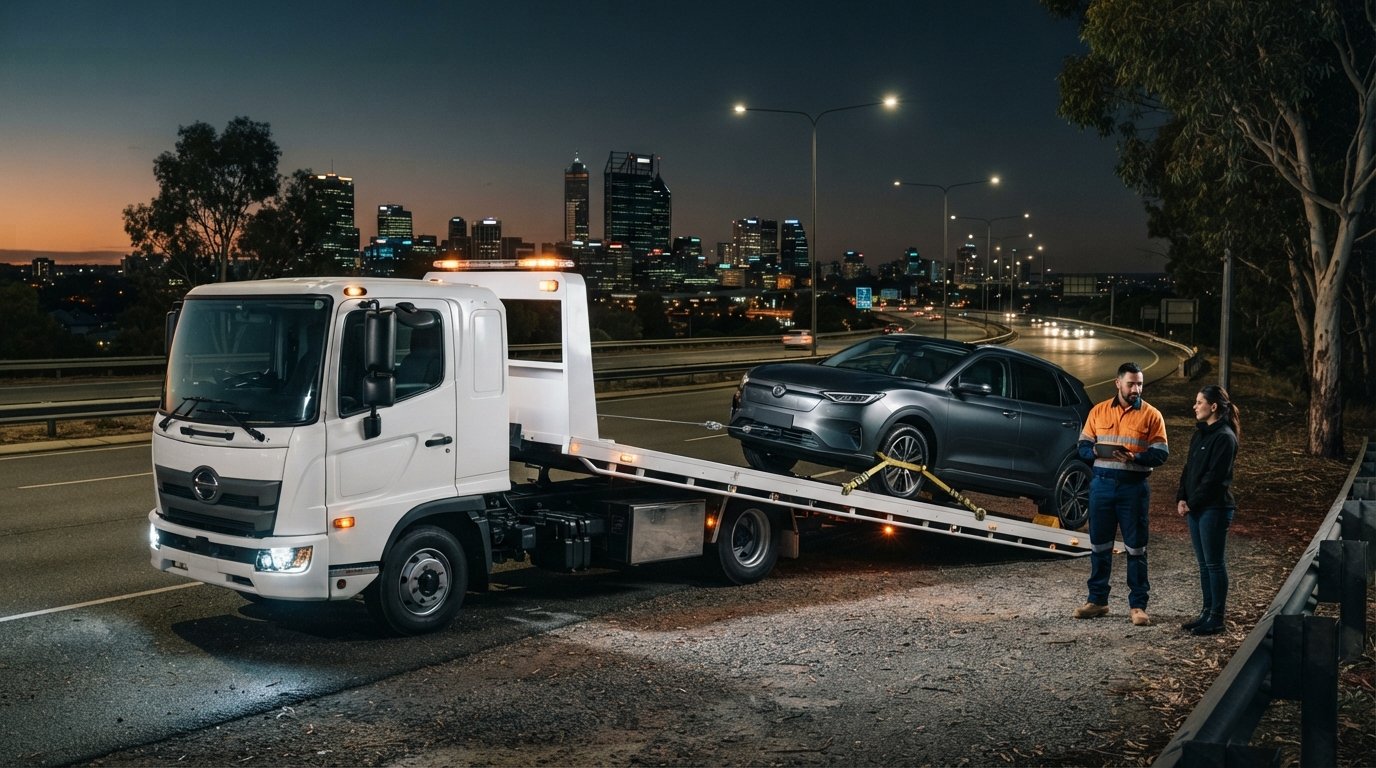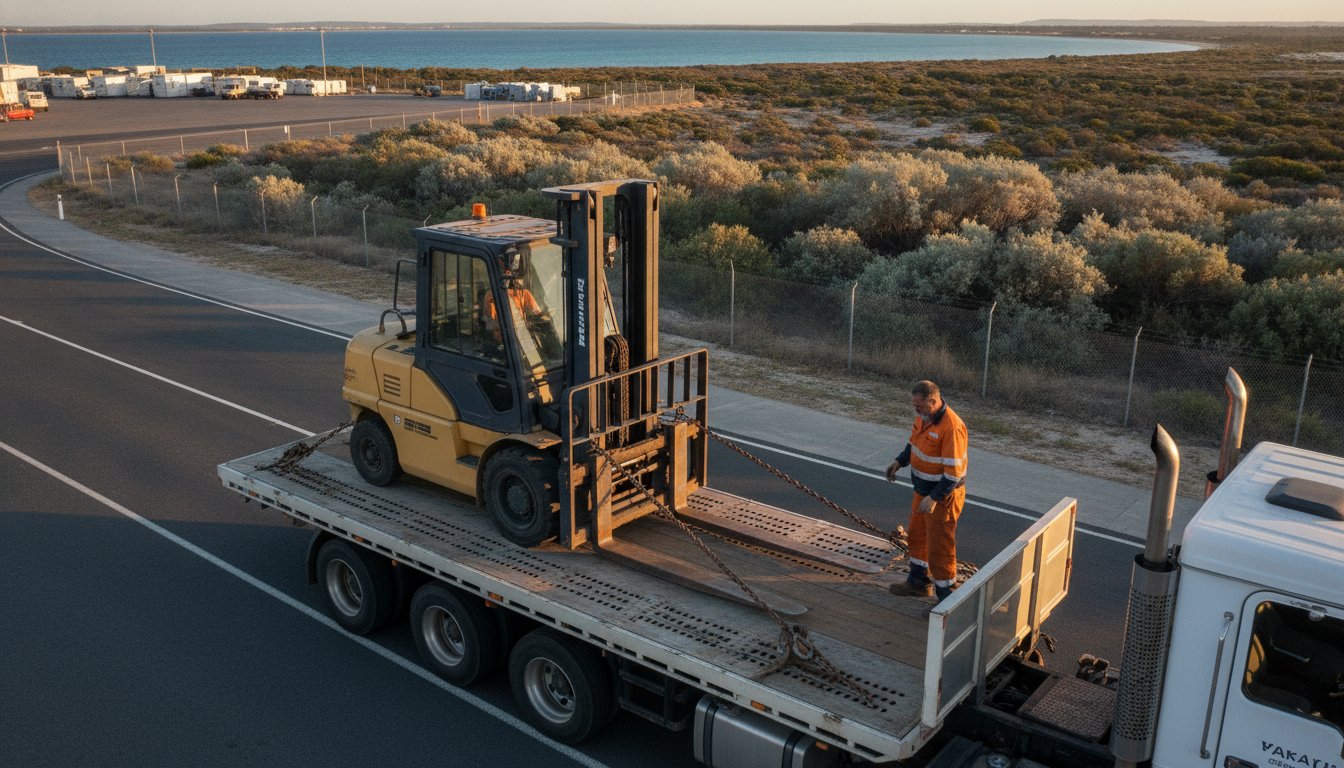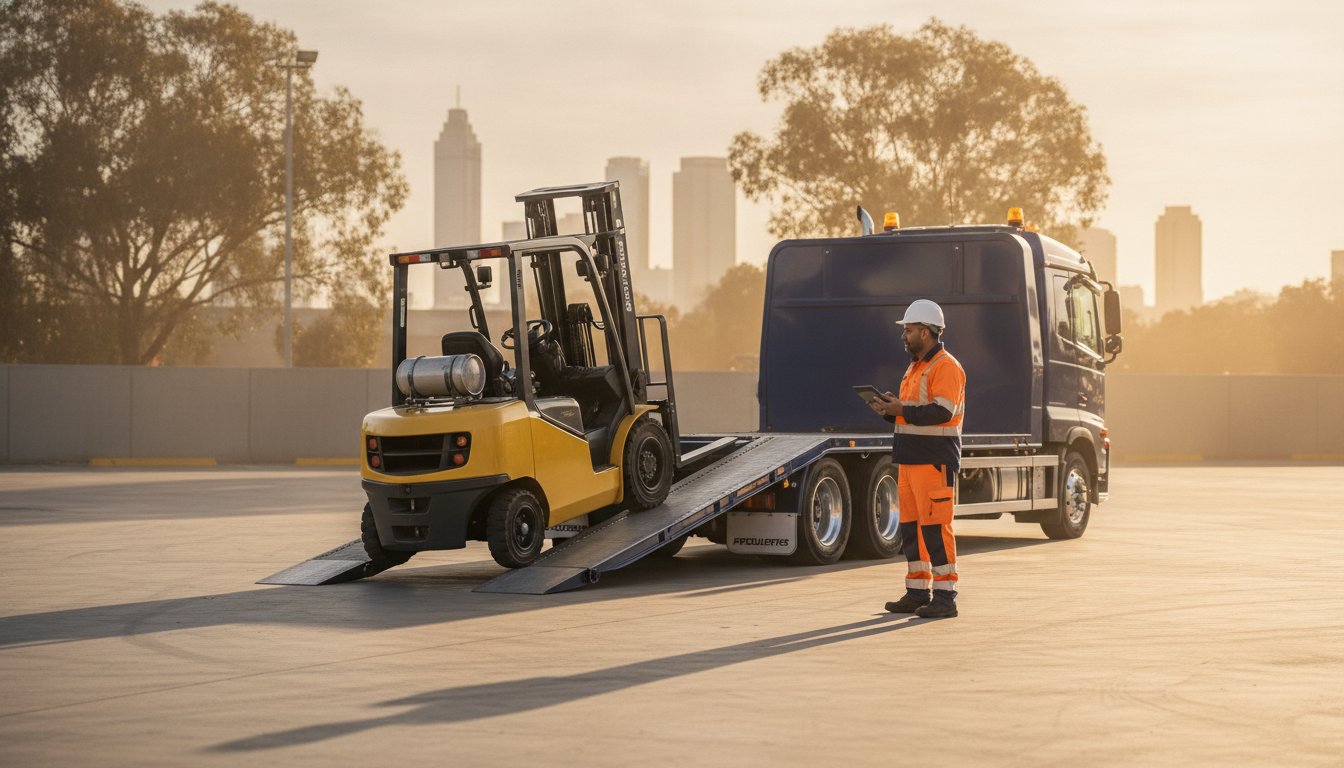
Imagine your site supervisor’s face when a critical forklift arrives two hours late with a bent fork and a leaking hydraulic line. It’s more than just an expensive repair bill; it’s a complete halt to your project timeline and a potential compliance nightmare under the Work Health and Safety Act 2020. You already know that forklift transport Perth isn’t just about finding a truck with a ramp. It’s about protecting your investment and staying on the right side of complex Main Roads WA regulations that govern every oversized load on our streets.
We understand the stress of coordinating heavy machinery moves while trying to avoid the high costs of transit damage. This guide will show you how to master the essentials of safe, compliant forklift relocation in Western Australia. You’ll learn how to achieve zero-damage delivery and full compliance with WorkSafe WA standards by choosing the right equipment and a reliable local partner. We’ll break down everything from the latest 2026 transport regulations to the benefits of using a family-owned business that treats your gear like their own.
Key Takeaways
- Understand the engineering behind “dead weight” transport and why choosing between a standard tilt tray or a heavy-duty super tilt is critical for low-clearance machinery.
- Ensure your next move meets all WorkSafe WA and Main Roads requirements to avoid site disruptions and maintain a perfect safety record.
- Follow a professional pre-transport checklist to prepare your equipment, covering everything from fluid checks to battery isolation for electric models.
- Discover how to vet a partner for forklift transport Perth based on their local experience, 24/7 responsiveness, and commitment to a “safe pair of hands” philosophy.
- Gain the confidence to manage complex machinery relocations with a clear plan for transparent pricing and reliable arrival times.
Understanding the Complexity of Forklift Transport in Perth
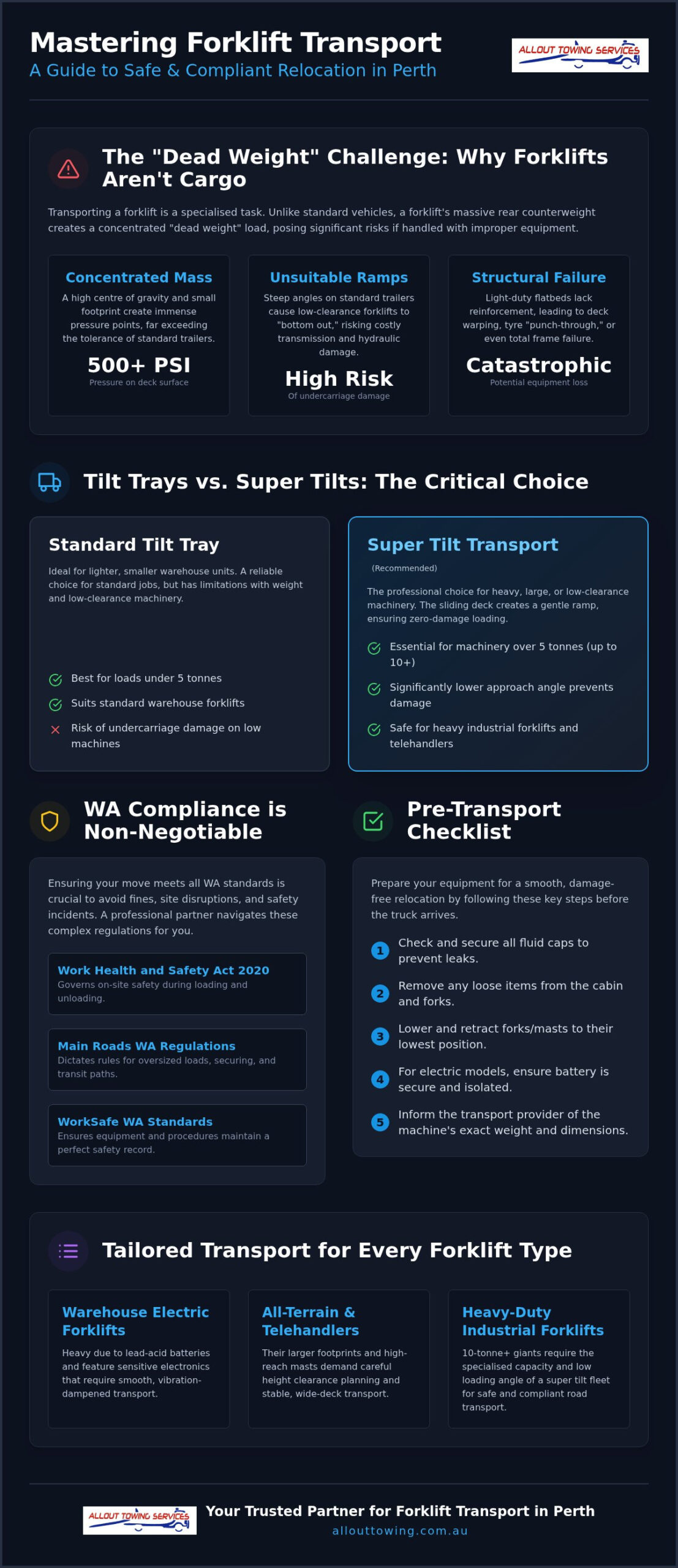
Forklift transport is a specialised logistics discipline that requires far more than just a truck and a set of ramps. It’s a precision service designed to move industrial machinery that, by its very nature, defies standard transport logic. While a car distributes its weight relatively evenly across four points, a forklift is an engineered “dead weight” challenge. To understand what is a forklift in a transport context, you have to look at the massive rear counterweight designed to balance heavy loads. This concentration of mass into a small footprint creates immense pressure on any transport surface.
Choosing the wrong partner for forklift transport Perth can lead to disastrous results. Standard car trailers or light-duty flatbeds are fundamentally unsuitable for this task. They lack the structural reinforcement to handle the point-load of a three or five-tonne machine. Beyond the risk of the trailer frame snapping, the ramp angles on standard trailers are often too steep. This causes the low-slung undercarriage of a warehouse forklift to bottom out, leading to expensive transmission or hydraulic damage before the machine even leaves your site. The same principle applies to other low-clearance vehicles — as explored in our guide to exotic car towing Perth myths, using generic equipment on specialised machinery is one of the most common and costly mistakes owners make.
Why Weight Distribution Matters for Machinery Transport
A forklift’s centre of gravity is significantly higher and further back than that of a passenger vehicle. This makes the machine prone to shifting or tipping if the transport deck isn’t perfectly level or if the tie-down points aren’t engineered for vertical tension. Using inferior equipment often leads to deck warping because the weight isn’t spread across the axles. A heavy forklift can exert a concentrated pressure of over 500 PSI on a tilt tray deck, which far exceeds the tolerance of standard transport equipment and can lead to the tyres “punching through” the metal flooring.
Common Forklift Types Moved Across Western Australia
Our 30 years of local experience has taught us that every machine requires a tailored approach. We don’t believe in a one-size-fits-all solution for Perth businesses. Different units present unique logistical hurdles:
- Warehouse electric forklifts: These units are incredibly heavy due to their lead-acid batteries and contain sensitive electronic controllers that don’t handle road vibrations well.
- All-terrain and telescopic handlers: Frequently found on construction sites from Joondalup to Rockingham, these machines have larger footprints and high-reach masts that require careful height clearance planning under Perth’s bridges.
- Heavy-duty industrial forklifts: When you’re moving 10-tonne giants, you need the specialised capacity of a super tilt fleet to ensure the load remains stable and compliant with WA road safety standards.
Whether you’re moving a single reach truck across a warehouse complex or relocating a fleet of telehandlers to a new mine site, the equipment used must match the machine’s specific engineering. It’s about providing a safe pair of hands for your most hardworking assets.
For businesses looking to further optimise their supply chain beyond machinery transport, you can learn more about Pik Pak Logistics and their specialised 3PL and eCommerce fulfilment solutions.
Tilt Trays vs. Super Tilts: Choosing the Right Equipment
Selecting the right vehicle for forklift transport Perth is the difference between a smooth site relocation and a costly repair bill. Not all trucks are engineered to handle the concentrated mass of a forklift. While a standard tilt tray is often the go-to for light warehouse units, it has its limits. A standard tray typically handles smaller loads, but as the weight climbs toward the five-tonne mark, the structural integrity of the deck and the hydraulics are put to the test. If the equipment isn’t up to the task, you risk deck bowing or hydraulic failure during the loading process.
For larger machinery, the hydraulic winch system becomes a critical safety feature. It allows for a controlled, slow-speed ascent onto the tray, which is much safer than trying to drive a high-torque machine up a steep incline. This precision is especially important when dealing with “dead” units that have no power of their own. Our specialised fleet is designed to bridge these gaps, providing the right capacity for everything from a nimble 1.8-tonne electric lifter to a heavy-duty 10-tonne industrial workhorse. If you also need to move support vehicles or company cars alongside your machinery, our comprehensive vehicle transport Perth guide covers everything you need to know about organising safe, damage-free delivery across Western Australia.
The Advantage of Super Tilt Heavy Transport
When your machinery exceeds the capacity of a standard truck, a super tilt is the only professional choice. The primary benefit of a super tilt is the significantly lower approach angle. By sliding the entire deck back before tilting, we create a much gentler ramp. This is essential for preventing undercarriage scraping on sensitive machinery. The multi-axle configuration of a super tilt provides a more stable platform, distributing the weight more effectively across the road surface to meet Main Roads WA standards.
Safety is always the priority. While your team handles the forklift operator licensing in WA for daily tasks, our role is to ensure the machine arrives ready for work. If you’re uncertain about the weight of your unit, our team provides expert advice on selecting the most cost-effective tilt tray Perth services for your specific needs.
Specialised Loading Techniques for Low-Clearance Units
Warehouse forklifts often have ground clearances of less than 100mm. To load these without damage, we utilise specialised blocks and ramps to “flatten” the approach. This prevents the battery compartment or the mast from catching on the edge of the tray. Once the machine is in position, we don’t just rely on standard straps. We use high-tensile chains and dedicated tie-down points to ensure the machine cannot shift, even during emergency braking or sharp turns.
WA Compliance and Safety Standards for Machinery Relocation
Operating in Western Australia means adhering to some of the strictest safety protocols in the country. Since the introduction of the Work Health and Safety Act 2020, the legal landscape for forklift transport Perth has shifted significantly. It isn’t just the driver’s responsibility anymore. Under the Chain of Responsibility (CoR) laws, site managers and business owners share the legal burden to ensure every load is secured and transported according to Main Roads WA standards. Failing to meet these requirements doesn’t just result in heavy fines; it can lead to WorkSafe WA shutting down your site until a full safety audit is completed.
For businesses involved in international trade, Fremantle Port access adds another layer of complexity. Transporting machinery to or from the wharves requires a driver with a valid Maritime Security Identification Card (MSIC). We maintain current MSIC status to ensure your port-bound machinery moves don’t get stuck at the gate. This level of preparedness is what separates a professional transport partner from a standard towing service. It’s about being a safe pair of hands that understands the local landscape, from the Kwinana Freeway to the inner harbour docks. To streamline your broader supply chain, you can learn more about MTF Logistics and their specialised freight forwarding and palletised cargo solutions.
Load Restraint Guide 2026: Staying Legal on Perth Roads
Securing a forklift requires more than a few generic straps. Because of the concentrated mass of the rear counterweight, the machine can become a projectile during an emergency stop if not anchored correctly. According to the current National Transport Commission guidelines, any restraint system used for forklift transport Perth must be capable of withstanding 0.8g of deceleration in a forward direction and 0.5g in a rearward or sideways direction. Using high-tensile chains and engineered tie-down points is the only way to meet these specific G-force requirements. If your provider isn’t discussing these technical standards, they aren’t machinery specialists.
Insurance and Liability: Protecting Your Industrial Assets
Before you book any move, you must verify the provider’s insurance limits. Standard car towing insurance often excludes heavy machinery or has “hook insurance” limits that don’t cover the full replacement value of a modern electric forklift. You need a partner with comprehensive transit insurance that covers the machine from the moment it’s winched onto the deck until it’s safely offloaded at the destination. Choosing our Tilt Tray Perth Services provides the peace of mind that comes with 30 years of local expertise and full liability protection. Always ask for a current Certificate of Currency to ensure your assets are protected against the unexpected.
How to Prepare Your Forklift for Professional Transport
Preparing your machinery for forklift transport Perth isn’t just about clearing a path for the truck. It’s a critical process that ensures your insurance remains valid and your equipment arrives at the next site ready for immediate use. While our team provides a safe pair of hands during the move, site managers play a vital role in the pre-transport phase. A well-prepared machine reduces the risk of transit damage and keeps your project on schedule without unexpected mechanical setbacks.
Before the tilt tray arrives, conduct a thorough walk-around of the unit. Documenting the current state of the machine is the best way to protect your industrial assets. We recommend taking high-resolution photos of all four sides, the mast assembly, and the tyres. Check the hour meter and fuel levels as well. This creates a definitive condition report that serves as a baseline for your insurance, ensuring total transparency between your business and the transport provider.
Mechanical Preparation Checklist
Safety starts with the mechanical configuration of the forklift itself. Follow these steps to secure the unit for the road:
- Lower the mast: Drop the forks until they are flush with the ground and tilt the mast back fully. This lowers the centre of gravity and prevents the forks from bouncing during transit.
- Isolate power sources: For electric units, use the emergency stop or battery isolation switch to protect sensitive electronics. If you’re moving an LPG model, shut off the cylinder valve, run the engine until the lines are clear, and ideally remove the bottle for separate transport.
- Check for leaks: Inspect the hydraulic lines and transmission for any active leaks. Oil on a steel tilt tray deck creates a significant slip hazard during the winching process.
- Secure loose items: Remove any clipboards, tools, or aftermarket attachments that aren’t bolted to the frame.
Site Access and Logistics Planning
Even the best forklift transport Perth service can be delayed by poor site planning. A heavy-duty tilt tray or super tilt requires significant “swing room” to line up with the machinery. Ensure the loading zone is clear of pallets, skip bins, or parked vehicles. You should also identify any overhead hazards, such as low-hanging power lines or warehouse eaves, that could interfere with the mast height once the machine is elevated on the truck deck.
Timing is the final piece of the puzzle. To avoid the frustration of site delays, coordinate the move with your site supervisor to bypass Perth’s peak-hour traffic windows. This ensures the transport vehicle can arrive and depart without being caught in freeway congestion. If you’re ready to move your machinery with a team that understands these local logistical challenges, you can book your forklift transport with Allout Towing for a seamless site relocation.
Why Allout Towing is Perth’s Trusted Forklift Transport Partner
When you’re searching for forklift transport Perth, you aren’t just looking for a truck; you’re looking for a partner who understands that your machinery is the lifeblood of your operation. Allout Towing has spent over 30 years as a family-owned Western Australian business, building a reputation for unwavering reliability and calm authority. We don’t just move equipment; we provide a “safe pair of hands” that ensures your high-value assets are protected from the moment we arrive on-site. This local, neighborly approach means we prioritise trust over corporate formality, treating every client like a member of the community.
Our 24-hour availability means we’re ready whenever you are. Whether it’s a scheduled fleet relocation or an emergency breakdown move in the middle of the night, we respond with the urgency your situation demands. We service the entire Perth Metro area and extend our reach deep into regional Western Australia. No matter where your project takes you, our specialised transport is only a phone call away, providing a professional solution to even the most stressful logistical challenges.
The Allout Towing Difference: Local Expertise
Our deep knowledge of Perth’s industrial landscape is a significant advantage for our clients. We navigate the busy hubs of Kwinana, Welshpool, and Canning Vale daily, understanding the specific access requirements and traffic patterns of these zones. Our operators are more than just drivers; they are trained specialists who understand forklift mechanics and the nuances of weight distribution. The same meticulous attention to detail that we apply to heavy machinery is reflected in our approach to all high-value transport — including our exotic car towing Perth service, where protecting low-clearance, high-value assets demands the same level of expertise. For more technical details on how we handle diverse equipment, you can explore our guide to Tilt Tray Hire Perth, which covers specialised machinery info in greater depth.
Comprehensive Fleet for Every Industrial Need
We maintain a diverse fleet to ensure we always have the right tool for the job. From standard tilt trays for small warehouse units to heavy-duty super tilts for large industrial plant, our equipment is engineered for precision. Every vehicle in our fleet undergoes regular maintenance and rigorous safety audits to ensure they meet the highest Western Australian standards. We don’t take shortcuts with our gear because we won’t take shortcuts with yours. If you need a reliable, transparent, and expert partner for your next machinery move, contact our team today for a tailored quote that meets your specific site requirements.
Secure Your Next Machinery Move with Confidence
Managing a site relocation involves many moving parts, but your machinery transport shouldn’t be the one causing you stress. By understanding the unique “dead weight” challenges of industrial equipment and selecting the right vehicle for the job, you can ensure your assets arrive safely and on time. Whether you need a standard tilt tray for a warehouse unit or a heavy duty super tilt for an oversized loader, staying compliant with the latest WorkSafe WA standards is non-negotiable for a successful, incident-free project.
For over 30 years, our family-owned team has provided a safe pair of hands for businesses across Western Australia. We combine deep local experience with 24/7 emergency support and a fully insured fleet to handle your most complex requirements. Don’t leave your equipment’s safety to chance when you can partner with the experts in forklift transport Perth. We’re ready to help you streamline your logistics and protect your investment with professional, reliable service. If you are also preparing a new industrial site for operation, visit A1 Precision Solutions for comprehensive turnkey facility services.
Get a Reliable Forklift Transport Quote from Allout Towing today and let us handle the heavy lifting while you focus on the job at hand. We look forward to helping you move forward.
Frequently Asked Questions
How much does it cost to transport a forklift in Perth?
The cost varies based on the machine’s weight, the distance travelled, and the type of equipment required for the move. A short trip between industrial hubs like Welshpool and Canning Vale requires different resources than a long-haul regional delivery. We provide tailored quotes to ensure you only pay for the specific capacity you need, whether that is a standard tilt tray or a heavy-duty super tilt for larger units.
Can you transport a forklift if it is broken down or non-functional?
Yes, we specialise in the recovery and transport of non-functional industrial machinery. Our fleet is equipped with powerful hydraulic winches designed to safely pull “dead” units onto the transport deck without the need for the machine to be drivable. This is a common requirement for units with engine failures or hydraulic issues, and our operators are highly experienced in managing these high-stress recovery scenarios.
Do you have MSIC access for forklift collection from the Fremantle wharf?
Our drivers maintain current Maritime Security Identification Card (MSIC) access to facilitate seamless collections from Fremantle Port. This clearance is essential for entering secure wharf zones and ensures your imported machinery isn’t delayed at the gate. By using MSIC-cleared operators, you avoid the additional storage fees and logistical headaches that occur when a transport provider cannot access the inner harbour docks directly.
What is the maximum weight capacity for your forklift transport services?
Our specialised super tilt fleet is engineered to handle heavy machinery with a load capacity of up to ten tonnes. For smaller warehouse units or reach trucks, we utilise our standard tilt trays which offer a cost-effective solution for lighter loads. Having a diverse fleet allows us to match the right vehicle to your specific forklift, ensuring both safety and structural integrity during the relocation process.
Is my machinery insured while it is on your tilt tray?
Your assets are fully protected by our comprehensive transit and liability insurance from the moment we begin loading. We understand that industrial machinery represents a significant investment, which is why we maintain high-limit “hook insurance” specifically tailored for heavy transport. We are a “safe pair of hands” with over 30 years of experience, and we can provide a Certificate of Currency upon request for your compliance records.
Do I need to be present when the forklift is being loaded or unloaded?
While it is not strictly mandatory, we recommend having a site representative present to sign off on the pre-transport condition report. This joint inspection ensures both parties agree on the machine’s state before and after the move. If you cannot be on-site, our operators can conduct the photo documentation independently and provide digital confirmation to ensure the forklift transport Perth process remains transparent and accountable.
Can you move oversized forklifts or telehandlers across regional WA?
We provide specialised forklift transport Perth services that extend to regional Western Australia for oversized units and telehandlers. Moving larger machinery requires careful planning, including managing permits and adhering to Main Roads WA dimension regulations. Our team handles the logistical heavy lifting, ensuring that even the tallest masts or widest all-terrain units are transported safely across our state’s vast road network with the correct pilot coordination.
How much notice do I need to give for a scheduled forklift relocation?
We prefer 24 to 48 hours of notice for scheduled relocations to ensure the ideal vehicle is reserved for your machine’s specific weight and dimensions. However, we understand that site requirements can change rapidly in the industrial sector. As a 24-hour service provider, we maintain the flexibility to handle urgent, same-day requests and emergency moves whenever a sudden breakdown or project shift occurs on your site. For businesses that also need to coordinate the movement of company cars or support vehicles as part of a broader site relocation, our vehicle transport Perth guide provides a comprehensive overview of how to plan damage-free delivery across Western Australia.