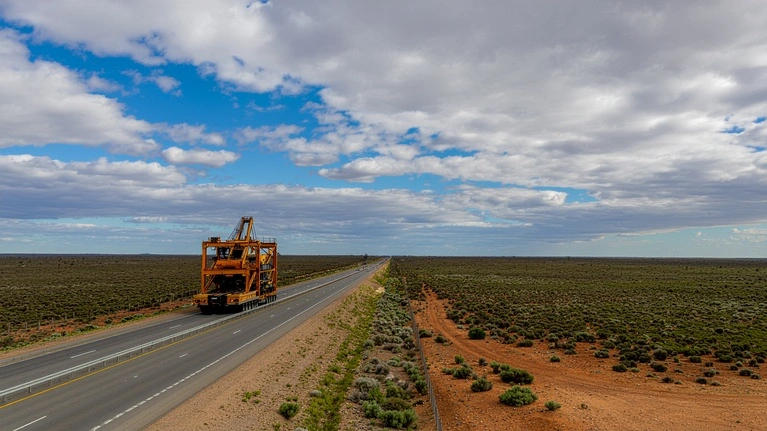
When a prime mover breaks down with a loaded trailer, or a heavy rigid truck loses power on the Mitchell Freeway, the recovery operation isn’t just about hooking up and towing. It’s about legal compliance, operator safety, and moving a vehicle that can weigh more than a fully loaded shipping container.
In Western Australia, the rules around who can tow what are strict – and for good reason. Medium rigid recovery of a 45-tonne vehicle is not the same as pulling a sedan off the roadside. The stakes are higher, the equipment is specialised, and the licensing requirements reflect that reality directly.
Every recovery job at this weight class requires the right licence, the right truck, and the right approach. Cutting corners on any of those three elements doesn’t just risk fines – it risks lives, it voids insurance, and it exposes your business to liability that no operator can afford. Understanding the WA licensing framework is the first step toward managing that risk correctly.
All Out Towing, Perth’s trusted towing provider, has spent years recovering everything from fully loaded semi-trailers to disabled buses and concrete agitators. Every single job requires the correct licence for the load. Here’s what you need to know about the WA licensing framework for heavy vehicle recovery.
What Counts as a 45 Tonne+ Vehicle in WA
Before discussing licences, it’s worth clarifying what we’re dealing with. A 45-tonne vehicle is operating at the upper end of what’s legally permitted on most WA roads without special permits.
Vehicles in This Category Typically Include
- Prime movers with loaded trailers – B-doubles and semi-trailers
- Heavy rigid trucks carrying maximum payload – concrete trucks and tipper trucks
- Coaches and articulated buses
- Mobile cranes and other self-propelled heavy machinery
- Loaded car carriers transporting multiple vehicles
The Gross Vehicle Mass (GVM) or Gross Combination Mass (GCM) determines the category. If the vehicle being towed – or the combination of your recovery vehicle plus the disabled vehicle – exceeds 45 tonnes, you’re operating in heavy combination (HC) or multi-combination (MC) territory. Medium rigid recovery simply isn’t designed for loads at this weight.
The WA Licensing Framework for Heavy Vehicle Recovery
Western Australia follows the national heavy vehicle licensing framework, with enforcement under the Department of Transport WA. The licence you need depends on what you’re towing and how you’re towing it.
Medium Rigid (MR) Licence
Covers vehicles with a GVM over 8 tonnes but not exceeding two axles. You can tow a trailer up to 9 tonnes GVM.
Suitable for:
- Towing medium rigid trucks (single-axle rigid trucks)
- Operating a medium-sized tow truck or recovery vehicle
- Towing light trailers behind a medium rigid recovery truck
Not suitable for:
- Towing heavy rigid vehicles over two axles
- Operating heavy combination recovery equipment
Heavy Rigid (HR) Licence
Covers vehicles with a GVM exceeding 8 tonnes and more than two axles. Also allows towing a trailer up to 9 tonnes GVM.
Suitable for:
- Operating heavy rigid tow trucks, including larger tilt tray trucks
- Towing heavy rigid vehicles – concrete trucks, tipper trucks, buses
- Recovering vehicles with complex axle configurations
Not suitable for:
- Towing articulated vehicles – prime movers with trailers
- Operating B-double or road train recovery setups
Heavy Combination (HC) Licence
This is where serious heavy vehicle recovery begins. An HC licence allows you to drive a vehicle towing a semi-trailer.
Suitable for:
- Towing prime movers with semi-trailers
- Operating a recovery prime mover to tow disabled articulated vehicles
- Handling combinations exceeding 45 tonnes GCM
Critical point: If you’re using a prime mover-based recovery vehicle to tow another prime mover and trailer combination, you need HC at minimum. This is the most common licence class for operators handling 45-tonne-plus recoveries.
Multi-Combination (MC) Licence
The top tier. This covers B-doubles, road trains, and the most complex heavy vehicle combinations.
Suitable for:
- Towing B-double combinations
- Operating road train recovery setups – more common in regional WA than metro Perth
- Handling the most complex and heaviest recovery operations
Most metro Perth recovery work doesn’t require MC, but for regional WA or mine site recoveries involving road trains, it’s essential.
Why the Right Licence Matters for Heavy Recovery
Licensing isn’t just regulatory box-ticking. It’s about competency, safety, and legal liability.
The Legal Consequences of Getting It Wrong
- Fines up to $10,000 for unlicensed operation of heavy vehicles under the WA Road Traffic Act
- Demerit points and licence suspension
- Potential criminal charges for serious breaches
- Your insurance is void if the operator isn’t correctly licensed
- Liability for damage to the towed vehicle falls entirely on the operator
- Third-party claims aren’t covered if the operator was unlicensed
The Safety Consequences
Heavy vehicles handle very differently under tow. Braking distances, stability, and turning radius all change. Without the proper training that comes with the licence process, operators can’t safely manage these loads. The risk of jackknifing, load shift, or brake failure increases dramatically with inexperienced operators.
Think of it like this: using a standard tow hook on an all-wheel-drive vehicle destroys the drivetrain – the mechanical forces work against the design of the vehicle. The same principle applies to licensing. Operating a 50-tonne recovery with the wrong licence puts the wrong operator in charge of forces they’re not trained to manage.
What WA Operators Need Beyond the Licence
Having an HC or MC licence is the starting point, not the finish line. Professional medium rigid recovery and heavy vehicle operations require additional qualifications and compliant equipment.
Fatigue Management Compliance
Under the Heavy Vehicle National Law (HVNL), which applies in WA, operators must comply with fatigue management rules:
- Work and rest hour limits under standard, basic, or advanced fatigue management frameworks
- Record-keeping through logbooks or electronic work diaries
- Chain of responsibility obligations – everyone in the supply chain, including recovery operators, is accountable
If you’re recovering a 45-tonne vehicle at 2am after already working a 10-hour shift, you need to demonstrate you’re within legal driving hours. This is not optional.
Load Restraint and Chain of Responsibility
When recovering a heavy vehicle, you’re responsible for how it’s secured. The National Heavy Vehicle Regulator (NHVR) sets strict load restraint guidelines:
- Proper use of chains, straps, and winches rated for the load
- Understanding of load dynamics – centre of gravity and weight distribution
- Compliance with the Load Restraint Guide 2018
If the towed vehicle shifts during transport and causes an incident, you’re liable under Chain of Responsibility laws – even if you weren’t the driver.
Vehicle Standards and Roadworthiness
Your recovery vehicle must meet WA’s heavy vehicle standards:
- Regular inspections and maintenance records
- Compliance with Australian Design Rules (ADR) for heavy vehicles
- Proper registration and licensing of the recovery vehicle itself
How to Get Your Heavy Vehicle Licence in WA
For operators looking to enter the heavy vehicle recovery industry, here’s the pathway.
Prerequisites
- Hold a current C (car) licence for at least 12 months
- Be at least 18 years old
- Pass a medical assessment – heavy vehicle drivers need a higher medical standard
Training
- Enrol in an accredited heavy vehicle training course for MR, HR, HC, or MC as appropriate
- Training covers vehicle control, load management, safety systems, and regulatory compliance
- Expect 3-5 days of training per licence class
- Assessments are conducted by the Department of Transport WA or accredited assessors
Progression
- You can’t jump straight to HC or MC – you need to hold MR or HR first
- Most operators start with MR, progress to HR, then HC
- Keep your licence current – renewals every 1, 3, 5, or 10 years depending on age
- Complete ongoing training in fatigue management and load restraint as regulations evolve
What Happens During a 45-Tonne+ Recovery
When you call our 24-hour emergency towing service for a heavy vehicle, here’s what actually happens behind the scenes.
Dispatch and Planning
- We confirm the vehicle type, weight, and location
- We determine the required recovery method – tilt tray, underlift, or prime mover recovery
- We dispatch an operator with the correct licence class and equipment for the specific load
Scene Management
- Heavy vehicle recoveries often require traffic management plans, especially on highways
- We coordinate with Main Roads WA and WA Police as needed
- Hazard lights, cones, and signage are deployed to protect the recovery zone before any work begins
Recovery Execution
- The disabled vehicle is assessed for damage and stability before any movement
- Load restraints are applied according to NHVR guidelines
- We comply with all route restrictions – some roads have weight limits or bridge load limits
- Fatigue management records are maintained throughout
- We communicate with the client and any third parties – insurance companies and fleet managers – as the recovery progresses
For medium rigid recovery of lighter trucks within the 4.5-12 tonne range, our commercial truck towing team handles the entire process with the same licence compliance and planning approach.
Common Scenarios Requiring HC or MC Licences
Prime Mover Breakdown on the Freeway
If a prime mover with a loaded trailer breaks down, we can’t hook it up to any tow truck. We use a recovery prime mover operated by an HC-licensed driver to tow the entire combination to a safe location or depot.
Concrete Agitator Immobilised on a Job Site
A loaded concrete truck can exceed 30 tonnes. We use heavy machinery towing equipment and an HR or HC-licensed operator to move it safely. Our specialist heavy equipment towing team handles these recoveries as a standard callout.
Bus Breakdown with Passengers
Recovering a 45-seat coach requires an HR licence at minimum. If the bus is articulated, an HC licence may be required depending on the recovery method.
Mine Site Equipment Transport
Moving a haul truck or large loader in regional WA often requires MC licensing, especially when the equipment is transported on a multi-combination trailer setup.
Why Professional Operators Invest in Proper Licensing
Running a professional heavy vehicle recovery operation requires significant investment in training, licensing, insurance, and equipment. But the business case is straightforward.
Client trust – When a construction company needs a $200,000 excavator recovered, or a logistics firm needs a loaded semi moved off the highway, proper licensing is proof of competence. It’s the first thing professional fleet managers check.
Risk management – One unlicensed recovery gone wrong can bankrupt a business. The fines, insurance voids, and legal liability aren’t worth the shortcut.
Operational capability – With the right licences, we can take on any recovery job in WA. That means more work, a stronger reputation, and the ability to support clients with complex fleets.
Regulatory compliance – WA Police and the Department of Transport conduct roadside checks. If your operator can’t produce the right licence, your truck gets impounded and your business gets fined.
Conclusion
Towing a 45-tonne-plus vehicle in Western Australia isn’t something you improvise. It requires an HC or MC licence, proper training, compliant equipment, and a thorough understanding of heavy vehicle regulations. Medium rigid recovery of smaller commercial vehicles follows the same principle – the licence must match the load.
The licensing framework exists to protect everyone on the road – the operator, the client, and the public. Cutting corners doesn’t just risk fines. It risks lives.
Whether you’re a fleet manager, a site supervisor, or an operator looking to understand what your recovery partner should bring to the job, these licence requirements are the baseline. Everything else – equipment, response time, and on-site expertise – is built on top of that compliance foundation.
Speak with our towing specialists at 0418 959 216 about your vehicle recovery needs. All Out Towing operates across Perth and regional WA with operators who hold the correct licence for every job, equipment that meets or exceeds regulatory standards, and documentation that keeps your fleet management and insurance records complete.