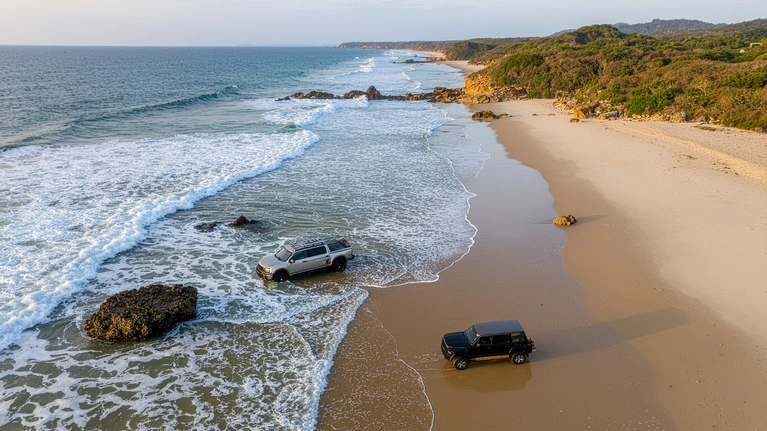
The Two Rocks coastline is stunning. But when your 4WD sinks axle-deep into soft sand or your boat trailer gets swamped by an incoming tide, that beauty turns into a logistical nightmare fast. A Two Rocks beach tow situation is not like a suburban breakdown – the environment is actively working against you, and every minute of delay increases the risk of saltwater damage that can write off a vehicle entirely.
We’ve pulled countless vehicles from Two Rocks Beach over the years, and the pattern is always the same. What starts as a confident drive onto the sand ends with wheels spinning uselessly, the vehicle sinking deeper with every attempt to move. Beach recoveries aren’t like standard roadside breakdowns. The environment is hostile to vehicles, the clock is ticking with tidal movements, and DIY extraction attempts almost always make things worse.
Coastal vehicle rescue at Two Rocks demands specialist equipment, precise knowledge of the local tidal patterns, and an approach that prioritises your vehicle’s safety as much as your own. Standard tow trucks simply can’t operate on soft sand – their weight causes them to sink within metres of leaving the access track, adding a second bogged vehicle to an already complex situation.
All Out Towing, Perth’s trusted towing provider, specialises in emergency beach recovery operations along Perth’s northern coastline, including Two Rocks. We’ve got the equipment, the experience, and the understanding of coastal conditions to get your vehicle back on solid ground without damage.
Why Beach Recoveries Require Specialist Equipment
Standard tow trucks can’t operate on soft sand. Their weight distribution, tyre design, and mechanical configuration make them ineffective the moment they leave sealed roads. You can’t hook a conventional tow vehicle to a bogged 4WD on a beach because the tow truck itself will sink within metres.
What a Proper Two Rocks Beach Tow Requires
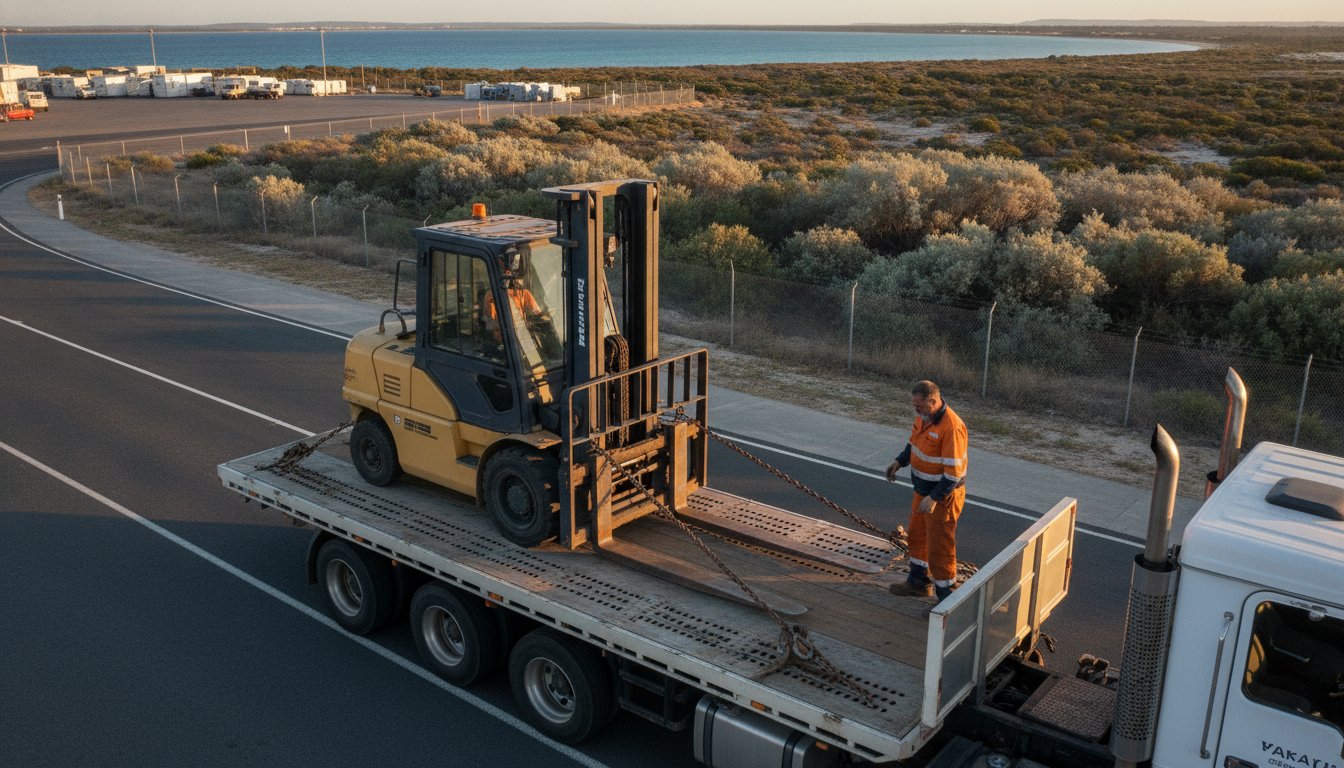
Beach recoveries demand purpose-built recovery vehicles with low ground pressure tyres, winch systems rated for multi-tonne loads, and operators who understand sand mechanics. We use recovery vehicles fitted with wide-profile tyres and hydraulic winches capable of generating controlled pulling force without jerking or stressing your vehicle’s chassis.
The difference between a successful coastal vehicle rescue and a damaged vehicle often comes down to technique. Yanking a bogged car with excessive force can tear off bumper bars, crack chassis mounts, or snap recovery points. Our approach involves gradual tension, strategic anchor points, and constant monitoring of your vehicle’s angle and stress points throughout the extraction.
The Unique Challenges of Two Rocks Beach Recovery
Two Rocks sits roughly 60 kilometres north of Perth CBD, and its beaches present specific recovery challenges that differ from other coastal areas.
Variable Sand Conditions
The sand composition varies dramatically depending on your location along the beach. Some sections are firm and compacted, while others are deceptively soft – especially after rain or during high tide cycles. What looks safe from the access track can be treacherous 50 metres onto the beach.
Tidal Urgency
The tidal range at Two Rocks can catch drivers off guard. What looks like a safe, wide expanse of beach at low tide can transform into a narrow strip with incoming water within a couple of hours. We’ve responded to emergencies where vehicles were already surrounded by water because the driver underestimated how quickly the tide moves. A Two Rocks beach tow that’s manageable at low tide becomes a complex saltwater salvage operation once water reaches the vehicle.
Limited Access Points
Two Rocks has limited beach access routes, and some tracks that look navigable can lead to dead ends or areas with no turnaround space. When we’re dispatched for a coastal vehicle rescue, we assess the safest approach route based on current conditions – not just what GPS suggests.
What Happens During a Two Rocks Beach Recovery
When you contact us for a beach recovery, we ask specific questions immediately: What type of vehicle? How far onto the beach? Is the tide coming in or going out? How deeply bogged are the wheels? These details determine our response strategy.
If the tide is advancing and your vehicle is at risk of water damage, we escalate the job to priority status. Saltwater immersion can destroy a modern vehicle’s electrical systems within hours, turning a recoverable situation into an insurance write-off.
Our Recovery Sequence
Assessment – We examine the vehicle’s position, sand conditions, and the safest extraction angle. Sometimes the quickest route isn’t straight back – we might need to pull sideways first to get wheels onto firmer sand.
Preparation – We deflate your tyres to increase the contact patch and reduce ground pressure. We clear sand from around the wheels and undercarriage to reduce resistance before applying any winch tension.
Anchor Setup – Beach recoveries need solid anchor points. We use our recovery vehicle’s weight and positioning as the primary anchor, sometimes supplemented with sand anchors driven deep into compacted layers.
Controlled Extraction – Using our hydraulic winch, we apply gradual, steady tension. The goal is to move the vehicle smoothly – not jerk it free. We monitor constantly for any signs of stress on recovery points and adjust angle or force as needed.
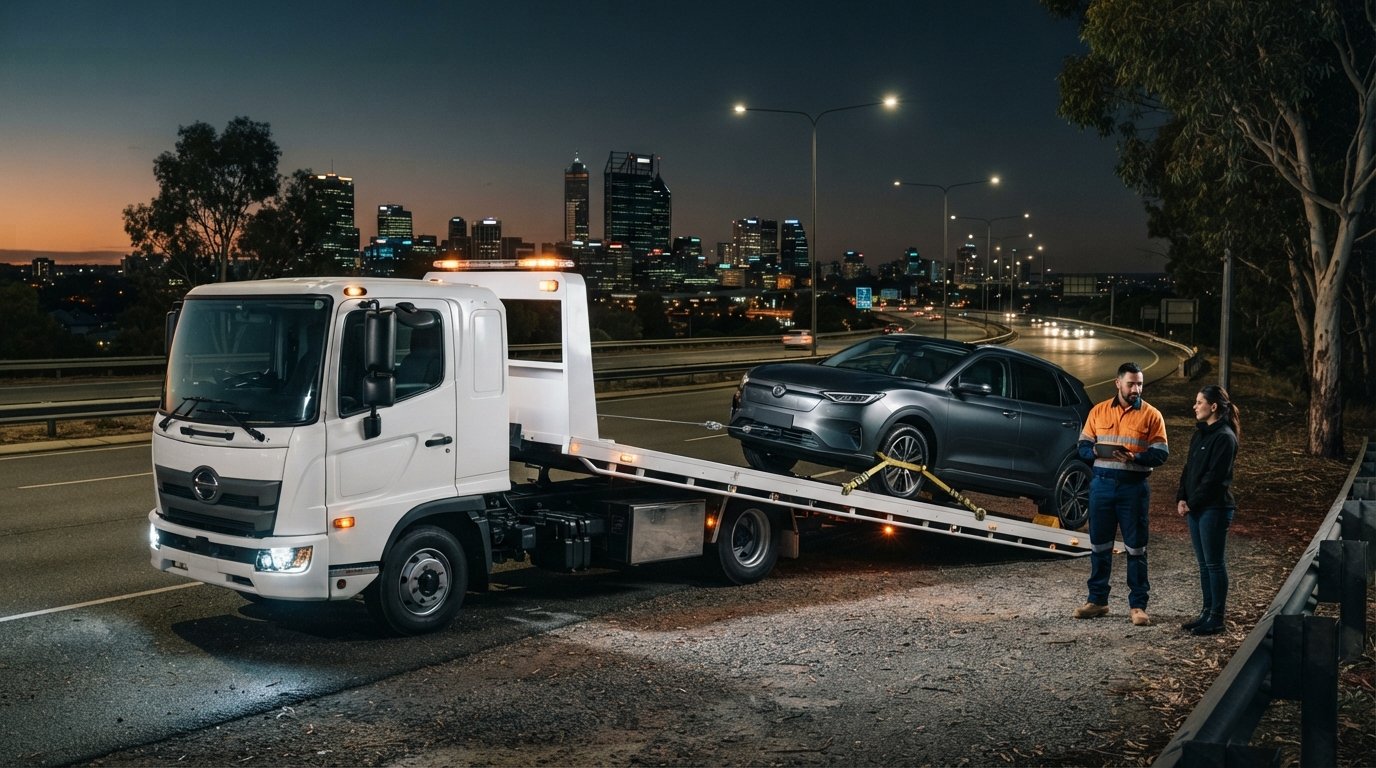
Transport to Safety – Once extracted, we assess whether your vehicle can be driven off the beach or needs to be loaded onto our specialist tilt tray towing for transport. If saltwater has entered the engine or transmission, driving it could cause catastrophic additional damage.
Why Attempting DIY Beach Recovery Often Fails
The instinct when you’re bogged is to keep trying. You rev the engine, rock the vehicle back and forth, try different gears, engage low-range 4WD. Every one of those attempts digs you deeper.
The Sand Mechanics Working Against You
When your wheels lose traction in soft sand, they spin faster than they rotate. This creates heat and friction that actually liquefies the sand immediately around the tyre, creating a self-perpetuating cycle. The more you spin, the deeper you sink. We’ve seen drivers bury vehicles up to the door sills trying to power out of a bog. At that point, the undercarriage is resting on sand, taking weight off the wheels entirely. Coastal vehicle rescue becomes exponentially harder and more expensive.
Using inappropriate recovery equipment is another common problem. Tow straps from hardware stores aren’t rated for vehicle recovery and can snap under load, turning into dangerous projectiles. Recovery points need to be chassis-mounted and rated for your vehicle’s weight – bumper bars and tow balls are not recovery points and will tear off under the forces involved in a proper Two Rocks beach tow.
The Risks of Delaying Beach Recovery
Time matters critically at Two Rocks where tidal movements can be significant. A vehicle that’s recoverable at low tide becomes a complex salvage operation once water reaches it.
Saltwater Damage Happens Fast
Saltwater exposure causes immediate and progressive damage to every system in your vehicle:
- Electrical systems – Modern vehicles have dozens of electronic control units located low in the chassis. Saltwater shorts these systems almost instantly
- Brakes – Disc brakes and callipers exposed to saltwater begin corroding within hours
- Engine and transmission – If water enters through the air intake or breather systems, internal damage occurs the moment you try to start the engine
- Interior – Saltwater-soaked carpets and upholstery create mould and corrosion that’s nearly impossible to fully remediate
We’ve recovered vehicles where the owner delayed calling for help, hoping the tide wouldn’t reach them. By the time we arrived, the vehicle had been partially submerged. The coastal vehicle rescue itself was successful, but the vehicle was a total insurance loss due to water damage. The recovery cost was a fraction of what the delay cost.
What to Do While Waiting for Recovery
If you’re bogged at Two Rocks Beach and have called for a Two Rocks beach tow, here’s how to minimise risk while you wait.
- Stop trying to drive out – Every attempt makes recovery harder and risks damage to your drivetrain
- Monitor the tide – If water is approaching, move valuable items from the vehicle to higher ground. Protect electronics, documents, and personal items without risking your own safety
- Don’t dig – Unless you have proper recovery boards and know how to use them, digging wastes energy. We’ll handle the extraction
- Stay with the vehicle – We need you there to unlock it, answer questions about its mechanical condition, and confirm any pre-existing damage
- Deflate your tyres – Reduce tyre pressure to about 15-18 PSI. This increases the tyre’s footprint and can prevent further sinking while you wait
Preventing Beach Bog Situations at Two Rocks
15 years of coastal recovery work has taught us what separates drivers who get through without incident from those who need a Two Rocks beach tow.
- Check tide times – Know when high tide occurs and plan your beach driving accordingly. Give yourself a safety margin – don’t cut it close
- Deflate before you enter – Reducing tyre pressure before driving onto sand is essential. Aim for 15-20 PSI depending on your vehicle’s weight and tyre specifications
- Maintain momentum – Steady, consistent speed is key. Don’t accelerate hard, but don’t slow down unnecessarily on soft sections
- Read the sand – Avoid areas with visible water seepage, darker colouration indicating moisture, or recent vehicle tracks showing deep ruts
- Carry proper recovery gear – Recovery boards, a rated snatch strap, and a working shovel dramatically improve your chances of self-recovery in minor situations
When Beach Recovery Becomes Vehicle Salvage
In extreme cases, beach recovery crosses into salvage territory. If a vehicle has been submerged by high tide or has sustained significant water damage, the recovery process must account for additional complications.
Saltwater-damaged vehicles require different handling. We can’t simply winch them out and drive them away. In these situations, we use our damage-free tilt tray transport to load the vehicle without attempting to start or move it under its own power. We also coordinate with your insurance company if the vehicle is a potential write-off – our documentation includes photos of the recovery scene, the vehicle’s condition, and the extraction process, all of which support insurance claims.
For vehicles that are driveable after extraction, our 24/7 roadside assistance team can arrange post-recovery checks and transport if any concerns arise after you leave the beach.
Protecting Your Vehicle During and After Beach Recovery
Our recovery process prioritises your vehicle’s integrity throughout. We use soft shackles where possible to prevent damage to recovery points. Winch operations are controlled and gradual to avoid shock loading. We position recovery straps to distribute force across strong chassis points, not cosmetic body panels.
After extraction, especially if there was any saltwater exposure, we recommend:
- Thorough undercarriage wash to remove salt residue
- Inspection of brake components for water contamination
- Check of all electronic systems for correct function
- Monitoring of engine oil and transmission fluid for water contamination – water appears milky in both fluids
If your vehicle was significantly water-affected, we can transport it directly to a mechanic rather than attempting to drive it, preventing additional damage from running contaminated systems.
Conclusion
Two Rocks Beach should be a place of recreation, not stress. But when things go wrong on the sand, you need a coastal vehicle rescue team that understands tidal conditions, has the right equipment, and can respond quickly before the sea makes the decision for you.
Our response coverage extends to all coastal areas from Yanchep to Lancelin. We operate 24/7 because beach emergencies don’t respect business hours – a vehicle bogged at sunset with an incoming tide cannot wait until morning.
Call 0418 959 216 for a fast response from our experienced operators. All Out Towing specialises in professional vehicle recovery across Perth’s northern coastline – available every hour of every day, with the specialist equipment that coastal recoveries demand.