Not every truck that shows up at a crash scene has the legal right to tow your vehicle. In Western Australia, the Tow Truck Act 1978 and the Tow Truck and Tow Truck Drivers Regulations 2008 create a strict framework. Only operators holding a current Tow Truck Driver’s Licence and operating licensed tow trucks can legally remove vehicles from crash scenes.
Understanding Department of Transport Licensing
Both the vehicle and driver must be separately licensed and renewed annually. This isn’t paperwork for paperwork’s sake. The licensing process verifies that operators understand vehicle recovery techniques, safety procedures, and customer service obligations. WA Police maintain a register of authorised operators specifically for accident scenes, ensuring only qualified professionals respond to crashes.
When you need emergency towing in Perth following a collision, you’re dealing with far more than just a truck with a winch. An authorised operator has met Department of Transport standards, carries proper insurance, and operates under regulatory oversight that protects you.
Insurance Recognition and Claim Protection
Major insurers only work with licensed operators to avoid claim complications and ensure proper vehicle handling. This recognition protects you because your insurer won’t dispute coverage when an authorised operator handles the recovery. Regulated pricing under the Tow Truck (Fees) Regulations 2014 sets maximum fees for crash towing, preventing price gouging when you’re vulnerable.
Why Authorisation Matters
Think of authorisation like a tradesperson’s licence – it proves competency, accountability, and adherence to standards. You wouldn’t hire an unlicensed electrician, and you shouldn’t accept towing from an unlicensed operator. An authorised tow truck Perth operator gives you legal recourse if something goes wrong. An unlicensed operator disappears when there’s a problem.
How Crash Towing Works in Joondalup
When you’re involved in a collision on Joondalup Drive, Ocean Reef Road, or anywhere in the northern suburbs, a specific sequence unfolds. Understanding it removes uncertainty when you’re already stressed.
Step One: Police Response and Scene Assessment
WA Police attend serious crashes – those involving injury, significant damage, or road blockage. They assess the scene, document evidence, and determine if vehicles need immediate removal. For minor collisions where all parties can move safely, police may not attend. But you still need professional towing if your car’s undriveable.
Step Two: Choosing Your Preferred Operator
If police are present and your vehicle requires towing, they’ll coordinate with an authorised operator. Here’s what matters: you have the right to choose your preferred tow company, provided they’re licensed and can attend promptly. Police won’t force a specific operator on you unless there’s an urgent safety reason like blocking a freeway.
Step Three: Documentation and Vehicle Condition Recording
The tow operator arrives, confirms authorisation with police if they’re still on scene, and documents your vehicle’s condition. Photos are taken. You’ll sign a towing authority form that authorises the removal and specifies the destination – usually a secure holding yard.
Step Four: Professional Transport Using Appropriate Methods
Your vehicle is transported using the appropriate method. Modern accident towing in Joondalup Perth predominantly uses tilt tray services rather than hook-and-chain methods, because crash-damaged vehicles need extra care. A tilt tray prevents further damage to suspension, drivetrain, or bodywork that’s already compromised. The entire process typically takes 30-45 minutes from arrival to departure, depending on vehicle position and damage severity.
Your Rights After a Joondalup Collision
Many drivers don’t realise they hold significant rights under WA law. These aren’t courtesies – they’re legal protections designed after years of towing industry problems. Understanding your protections means you won’t be taken advantage of when you’re vulnerable.
You Choose the Tow Operator
Unless there’s an immediate safety risk requiring urgent removal, you can nominate your preferred authorised company. Police cannot compel you to use a specific operator, and no tow driver can claim they’re “the only one allowed” to tow your vehicle. If someone tells you otherwise, they’re lying.
You Choose the Destination
Your car doesn’t have to go to the tow company’s yard. You can request towing directly to your home (if safe and accessible), your preferred repairer, or your insurer’s assessment centre. The tow operator must comply unless there’s a legitimate reason they can’t, like access restrictions or distance beyond reasonable scope.
You Receive Itemised Documentation
Before your vehicle leaves the scene, you must receive a receipt or docket showing the tow operator’s licence number, their company details, your vehicle details, the destination, and the estimated cost. This protects you from inflated charges later. Keep this documentation – it’s your proof of what was authorised.
You’re Protected by Maximum Fees
The Tow Truck (Fees) Regulations set caps on what can be charged for different towing scenarios. For a standard crash tow in metropolitan Perth, which includes Joondalup, maximum fees are published and updated by the Department of Transport. Authorised operators cannot exceed these amounts.
You Can Inspect Your Vehicle
Once in storage, you have the right to inspect your car during business hours, retrieve personal belongings, and arrange independent assessment. Storage yards must provide reasonable access. These rights matter most when you’re vulnerable.
Why Tilt Tray Matters for Crash-Damaged Vehicles
Here’s something most drivers don’t consider until it’s too late: the towing method itself can determine whether your insurance claim pays out in full or gets complicated by “secondary damage” disputes.
The Problem With Hook-and-Chain Towing
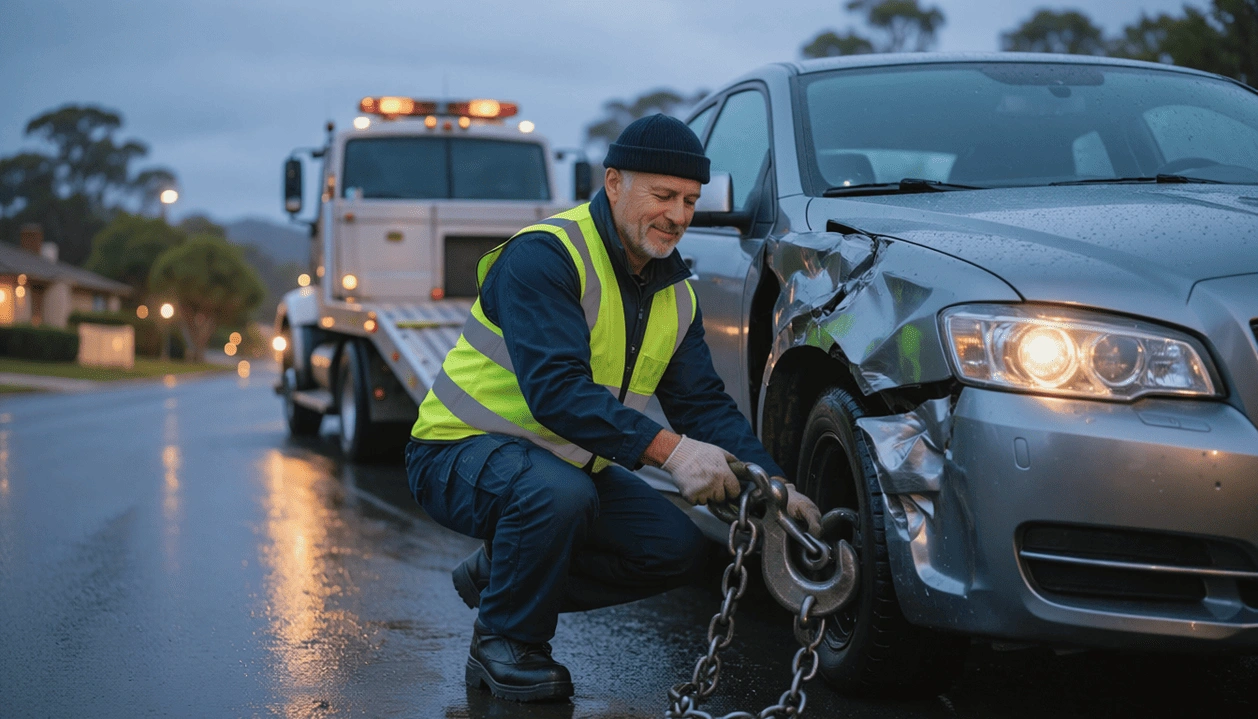
Traditional hook-and-chain towing lifts one end of your vehicle while the other end rolls on its wheels. For a crash-damaged car, that’s problematic. If your suspension’s bent, your steering’s compromised, or your wheels are misaligned from impact, dragging the vehicle on two wheels can cause additional damage.
Your insurer might then argue that some damage occurred during towing, not during the collision. Suddenly you’re fighting over what’s covered. This is why professional accident towing in Joondalup requires a different approach.
How Tilt Tray Eliminates Secondary Damage
Tilt tray towing eliminates this risk entirely. The truck bed lowers to ground level, forming a ramp. Your vehicle is winched onto the flat deck without any wheels touching the road during transport. It’s the difference between dragging an injured person and carrying them on a stretcher – one causes further harm, the other doesn’t.
We use damage-free tilt tray transport as the default method for professional accident towing because it protects both the vehicle and your claim. Insurance assessors recognise this, and it removes any ambiguity about when damage occurred.
AWD and 4WD Vehicle Requirements
For all-wheel-drive vehicles (common in Joondalup’s family-oriented suburbs), tilt tray isn’t just preferred – it’s mandatory. Towing an AWD vehicle with wheels on the ground destroys the drivetrain within kilometres. Using a standard tow hook on an all-wheel-drive is like trying to make two people walk in different directions while their shoes are tied together – it will wreck the drivetrain.
That’s why a tilt tray is always used for 4WDs and AWDs. It’s not a preference. It’s a requirement to prevent thousands of dollars in mechanical destruction that your insurer won’t cover if improper towing caused it.
What Happens at the Holding Yard
Your vehicle arrives at a secure storage facility, usually within 30-60 minutes of leaving the crash scene. Understanding what happens next prevents surprises when you follow up the next day.
Security and Independent Documentation
The yard operator logs your vehicle into their system, recording its condition with photographs and notes. This creates an independent record separate from the tow driver’s documentation. Your car is placed in a fenced, monitored compound – required by licensing regulations to prevent theft or tampering.
Insurance Notification and Assessment Access
If you’ve provided your insurer’s details, the tow operator notifies them of the vehicle’s location. Most major insurers have agreements with authorised yards for assessment access. This speeds up your claim process significantly. Direct insurance billing means your insurer arranges payment directly with the yard, removing paperwork burden from you.
Storage Fees and Timeline Management
Storage fees are regulated but charged daily, typically starting 24 hours after the vehicle arrives. If your car sits in the yard for two weeks while your claim processes, you’re paying storage for each day. Your insurance usually covers this, but understanding the timeline helps you stay on top of the claim.
Personal Belongings and Vehicle Release
You can retrieve items from your vehicle during business hours without charge. Bring your ID and the towing receipt. Yards must allow reasonable access, but they’re not obligated to open outside business hours except in genuine emergencies.
Once your insurer assesses the damage and approves repair or write-off, they’ll authorise release. If the vehicle’s repairable, it goes to your chosen repairer. If it’s a total loss, it goes to salvage. You’ll need to settle any outstanding towing and storage fees before release, though insurers typically handle this directly.
Common Joondalup Crash Locations and Response Times
Joondalup’s road network includes high-risk corridors where crashes occur more frequently. Knowing this helps you understand response patterns and what to expect if you’re involved in an incident.
Mitchell Freeway: High-Risk Corridor
This stretch (especially Hodges Drive to Ocean Reef Road) sees high-speed, high-volume traffic that makes it particularly dangerous during peak hours. Crashes here often require urgent removal due to traffic flow impact. 24-hour emergency towing teams respond to freeway incidents within 20-30 minutes, even during peak periods, because crews are positioned strategically across the northern suburbs.
Joondalup Drive: Arterial Collision Hotspot
This major arterial sees frequent rear-end collisions at its many traffic lights, particularly near shopping centres like Lakeside Joondalup. These crashes are usually less severe but still require professional removal, especially during busy retail periods.
Ocean Reef Road and Marmion Avenue: Coastal Routes
These routes carry mixed-use traffic – families heading to beaches, commercial vehicles, and cyclists. Crashes here often involve multiple vehicle types, requiring different towing approaches and careful handling.
Wanneroo Road: Commercial Vehicle Challenges
Heavy truck traffic combined with suburban vehicles creates unique challenges. Commercial vehicle crashes may require commercial truck towing services rather than standard car towing, particularly for light rigid or medium rigid vehicles.
Response times matter enormously after a crash. You’re exposed, possibly injured, and vulnerable. Fast, professional response reduces your time on the roadside and gets your vehicle secured quickly. Coverage across Joondalup, Edgewater, Ocean Reef, Currambine, and surrounding areas ensures minimal response times when you need help right away.
Insurance and Crash Towing: What You Need to Know
Your insurance policy almost certainly covers authorised crash towing, but the details matter. Understanding how coverage works prevents unexpected out-of-pocket costs.
Comprehensive Insurance Coverage
Typically includes full towing and storage coverage for crash-related incidents. The insurer pays the tow operator directly, and you won’t see a bill. However, this only applies if you use an authorised operator. Use an unlicensed tow, and your insurer may refuse to cover it.
Third-Party Property Insurance Limitations
Usually covers towing if you’re at fault and your vehicle needs removal, but coverage limits vary. Check your policy schedule for towing caps (often $500-$1000). If towing and storage exceed this, you’ll pay the difference.
Third-Party Fire and Theft
Generally doesn’t cover crash towing unless the crash resulted from theft or fire. You’d pay towing costs yourself, making it crucial to understand maximum regulated fees.
The Claiming Process
After the tow, contact your insurer immediately. Professional operators provide detailed invoices showing compliance with regulated fees, which insurers require for processing claims. Most insurers settle directly with authorised tow operators, removing the burden from you entirely.
Never let an unlicensed operator tow your vehicle to “save money” or because they arrived first. Insurers will scrutinise the towing documentation, and using an unauthorised operator can void your claim or reduce your payout. The few dollars you might save on towing could cost you thousands in claim complications.
What to Do Immediately After a Joondalup Crash
When you’re involved in a collision, your actions in the first 30 minutes shape everything that follows – your safety, your legal position, your insurance claim, and your vehicle’s fate.
Priority One: Safety
If anyone’s injured, call 000 immediately. Don’t move injured people unless there’s immediate danger (like fire). Turn on hazard lights, set up warning triangles if you have them, and move to a safe position away from traffic.
Priority Two: Police
Call WA Police on 131 444 for crashes involving injury, significant damage, or if the other party is aggressive or uncooperative. Police create an official incident report that’s crucial for insurance claims and legal protection.
Priority Three: Documentation
While waiting for police or towing, photograph everything – vehicle positions, damage, road conditions, traffic signs, and the other vehicle’s registration and damage. Exchange details with the other driver: names, addresses, phone numbers, licence numbers, insurance details, and registration numbers.
Priority Four: Towing
If your vehicle’s undriveable, you need professional towing. You can call your preferred operator directly, or if police are present, they’ll coordinate. Make sure you specify where you want your vehicle taken – your home, your repairer, or your insurer’s assessment centre.
Priority Five: Notification
Call your insurer as soon as safely possible – most have 24-hour claim lines. They’ll start the claim process and confirm towing coverage. Provide them with the tow operator’s details and destination.
What NOT to Do
Don’t admit fault at the scene, even if you think it was your mistake. Don’t sign anything except the towing authority form. Don’t let anyone pressure you into using a specific repairer or tow operator. Don’t leave the scene before exchanging details, unless you’re being taken to hospital.
After-Hours Crashes: What Changes
Crashes don’t respect business hours. In fact, serious incidents are statistically more likely during evening and night hours, particularly on Friday and Saturday nights. Understanding how after-hours crashes differ helps you know what to expect.
Police Response and Scene Management
After-hours crashes, especially those involving injury or suspected impairment, receive full police attendance. WA Police operate 24/7, and they’ll coordinate scene management including towing if required. Your immediate safety protocols remain the same regardless of time of day.
24-Hour Towing Availability
Authorised operators must maintain 24-hour emergency capability to hold their licences. Crews operate around the clock specifically for Joondalup and northern suburbs coverage. You won’t wait until morning – professional response happens immediately, any time you call.
After-Hours Fee Structure
After-hours towing (typically between 6pm and 6am on weekdays, and all weekend) may incur additional fees under the regulations, but these are capped. Authorised operators must clearly disclose after-hours rates before towing begins.
Insurance and Yard Access
Your insurer’s 24-hour claim line operates continuously, so you can start your claim immediately even at 3am on a Sunday. They’ll confirm coverage and coordinate with the tow operator. Your vehicle will be secured in the holding yard overnight, but you won’t be able to retrieve personal belongings until business hours (usually 8am-5pm weekdays). If you need critical items like medication or a child’s car seat, mention this to the tow operator – they may be able to retrieve it before leaving the scene.
The main difference after-hours is that administrative processes (insurance assessment, yard access, repairer coordination) wait until business hours resume. The towing itself happens just as quickly and professionally as it would during the day.
When You Need More Than Just a Tow
Some crashes create complications beyond simple vehicle removal. Understanding when you need additional services prevents delays and frustration.
Fuel and Fluid Spill Management
If your vehicle’s leaking fuel, oil, or coolant significantly, the tow operator may need to contain it before moving the vehicle. This protects the environment and complies with EPA requirements. Professional operators carry spill kits for this exact scenario.
Difficult Access or Positioning Recovery
If your vehicle’s left the roadway, landed in a ditch, or ended up in a position where standard towing won’t work, you need specialised towing solutions. Modern fleets include equipment for complex recoveries, including winching capabilities for vehicles in difficult terrain.
Multiple Vehicle and Equipment Situations
If you’re towing a caravan or trailer when the crash occurs, both units need removal. Specialist towing solutions coordinate removal of caravans, boats, and trailers as part of the same callout, ensuring everything gets transported safely and together.
Commercial Vehicle Considerations
If you’re driving a work truck, ute with equipment, or light commercial vehicle, standard car towing may not be appropriate. Professional truck towing services handle everything from small commercial vans to medium rigid vehicles.
The key is communicating your specific situation when you call for towing. Don’t assume the operator knows you’re towing a caravan or driving a modified vehicle. Tell them upfront so they can dispatch the right equipment and expertise.
Choosing an Authorised Operator Before You Need One
Here’s something most drivers never consider until it’s too late: you can choose your towing provider before you’re ever in a crash. It’s like choosing your emergency contacts – you hope you never need them, but having the decision made in advance removes stress when crisis hits.
Keeping Contact Details Accessible
Keep emergency towing contact details in your phone and glovebox. When police ask “do you have a preferred tow operator?” you can answer immediately rather than scrambling to search online while you’re shaken and stressed. This simple step removes decision-making burden from you when you’re in no condition to research.
What to Look For in an Authorised Operator
Current Licensing: Verify they hold valid Department of Transport authorisation. Licensed operators proudly show their credentials and have nothing to hide.
Full Fleet Capability: Ensure they operate tilt tray trucks, not just hook-and-chain. Investment in modern tilt tray equipment specifically for safer crash towing demonstrates commitment to proper methodology.
24/7 Availability: Confirm they actually answer after-hours, not just claim to. Your team should be genuinely available any time you call, because crashes don’t wait for business hours.
Professional Communication: Look for operators who explain the process, provide written quotes, and treat you with respect when you’re vulnerable. This approach demonstrates understanding of the stress accident situations create.
Perth’s Trusted Authorised Operator
All Out Towing operates as Perth’s 24/7 towing specialist with 30+ years of experience serving the northern suburbs and metropolitan area. Police-certified operators and direct insurance billing mean your claim processes smoothly without additional stress.
Conclusion: You’re Protected When You Know Your Rights
Road trauma reshapes families and communities. When you’re involved in a collision in Joondalup, understanding how authorised crash towing works protects your rights, your insurance claim, and your vehicle.
The key points: verify operator authorisation, choose your preferred licensed towing provider before you need one, understand your rights to choose destination, and know that regulated fees protect you from price gouging. Professional operators committed to safe, transparent service prove invaluable when you’re most vulnerable.
For immediate towing assistance after a crash in Joondalup or anywhere in the northern suburbs, All Out Towing provides 24-hour emergency response with tilt tray services, proper documentation, and expertise from decades of handling crash recoveries. Professional operators understand the stress of vehicle accidents and provide calm, efficient assistance. Call 0418 959 216 for immediate response and professional handling of your vehicle across Perth’s metro area.