Treating a multi-tonne access platform like an ordinary car recovery is the quickest way to tear off a pothole protection skirt or crack a hydraulic steering assembly. When arranging scissor lift towing Perth contractors and site supervisors know that standard transport tactics simply don’t work for top-heavy machinery with barely 60 millimetres of deck clearance.
You know the acute stress of watching a tardy transport driver miss a critical trade window, or cringing as an inexperienced operator tries to drive a compact slab lift up steep ramps until the undercarriage grounds out. Lost hours on site burn serious money, and nobody can afford the safety risks or legal headaches that come with improper load restraint on Western Australian roads.
You’ll discover how to relocate electric and rough terrain scissor lifts across Perth safely without site delays or equipment damage. We cover the precision tilt tray geometry, winch-controlled loading techniques, and Chain of Responsibility standards required to protect your access gear and keep your trades working on schedule.
Key Takeaways
- Understand why specialised tilt slide tray geometry is essential to eliminate breakover damage and protect sensitive undercarriage components during loading.
- Match your access plant to the correct transport setup, whether that means a 4.5-tonne 7-metre tray for slab units or a 10-tonne 10-metre heavy unit for rough terrain models.
- Learn the essential differences in securing indoor electric scissor lifts versus multi-tonne outdoor diesel equipment to prevent wheel scuffing and harness damage.
- Meet your legal statutory duties under Western Australian Chain of Responsibility laws by mastering mandatory four-point direct tie-down lashings.
- Discover how partnering with licensed local specialists for scissor lift towing Perth wide ensures prompt trade arrivals and damage-free machinery relocations.
Why Scissor Lift Transport Demands Specialist Tilt Tray Equipment
Moving elevated work platforms across Western Australian construction sites involves far more than simply hailing a standard recovery vehicle. Unlike conventional road vehicles designed with compliant approach angles and suspension articulation, aerial work platforms and scissor lift mechanisms are purpose-built for vertical stability on firm ground. When you book scissor lift towing Perth wide, selecting a provider with the right tilt slide equipment is essential. Without specialised plant trailers or low-degree slide beds, standard loading methods routinely result in cracked chassis, bent pothole protection bars, or damaged steering cylinders.
Contractors often find out the hard way that generic transport can breach hire agreements before the gear even arrives on site. A botched loading attempt puts plant machinery out of action, triggering expensive repair charges and trade hold-ups. Professional heavy machinery towing requires tailored vehicle transport techniques that safely counter both low clearances and top-heavy weight distribution.
The Problem with Low Ground Clearance and Breakover Angles
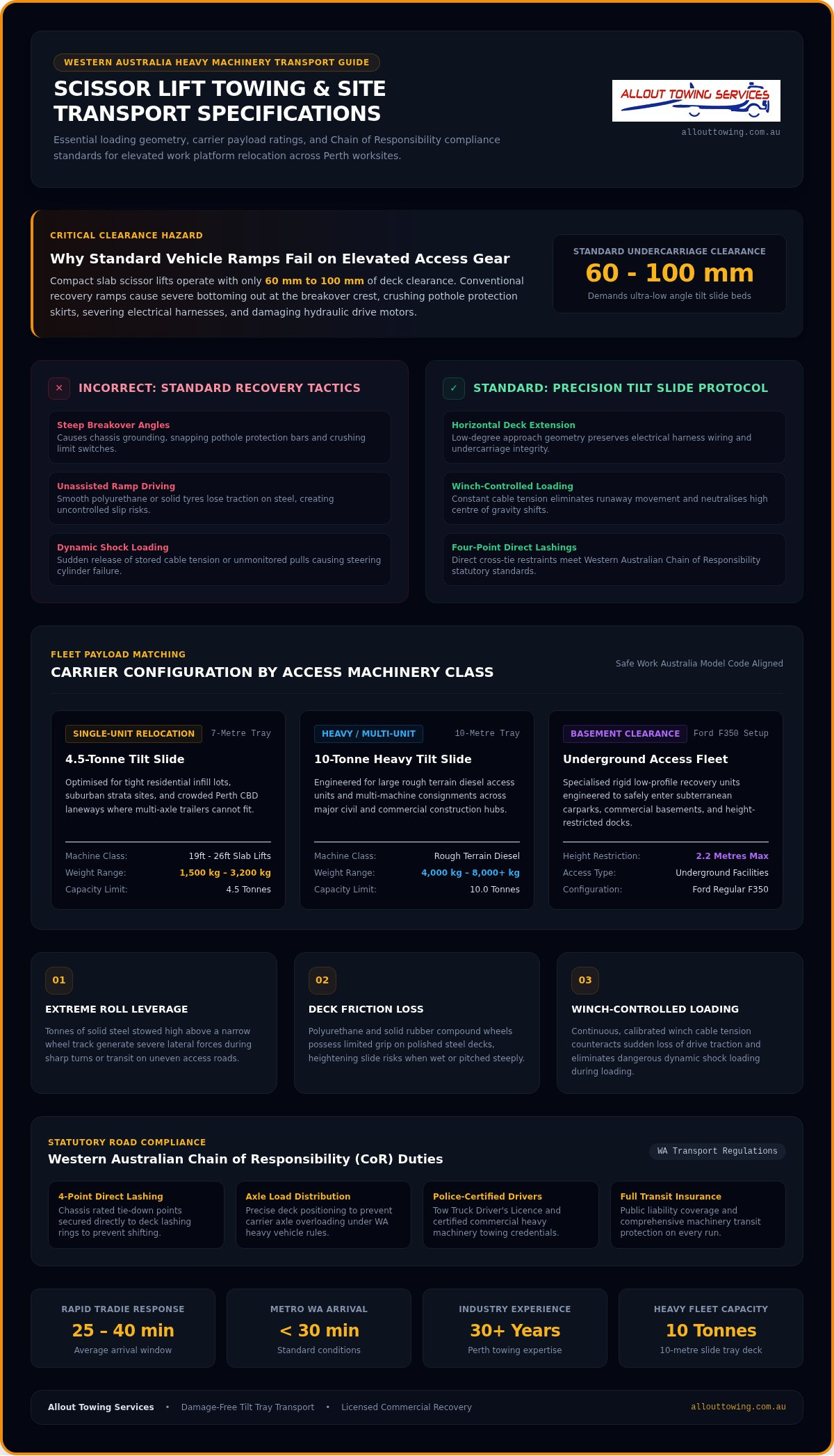
Electric slab scissor lifts operate with minimal underbody clearance, often leaving only 60 mm to 100 mm between the chassis and flat concrete. When forced up steep loading ramps, the machine bottoms out at the breakover crest. This impact instantly crushes pothole protection skirts, snags limit switches, and destroys low-slung hydraulic drive motors. Purpose-built tilt slide decks slide back horizontally to achieve an ultra-low approach angle, preserving sensitive underbody components and electrical harness wiring as the wheels cross onto the steel deck.
Weight Distribution and High Centre of Gravity Risks
A stowed scissor lift concentrates tonnes of solid steel high above its wheel track. This elevated mass creates severe stability challenges during loading and road haulage:
- Extreme roll leverage: Sharp road turns or uneven site access tracks generate heavy lateral forces, making top-heavy plant equipment vulnerable to shifting.
- Sudden deck slides: Solid rubber or polyurethane tyres have limited friction on smooth steel, creating high slip risks if ramps are wet or pitched too steep.
- Dynamic shock loading: Driving a unit unassisted up a ramp risks traction loss; winch-controlled loading maintains constant cable tension to eliminate sudden runaway movement.
By pairing low-angle tilt beds with controlled winch tension, professional operators eliminate tip-over risks completely. Your access machinery stays secure, protected from mechanical stress, and ready to work the moment it touches down on site.
Selecting the Right Transport Setup for Perth Worksites
Matching plant tonnage to the correct carrier deck makes the difference between an effortless delivery and a costly site shutdown. Under the Safe Work Australia Model Code of Practice for Elevating Work Platforms, principal contractors and logistics operators share a direct duty to assess access risks and secure plant gear safely. Getting scissor lift towing Perth wide done right demands a carrier configured for your specific operational footprint, especially when dealing with tight Perth CBD laneways, suburban strata developments, or active civil sites.
Selecting the wrong vehicle payload rating leads to overloaded truck axles, unstable transit dynamics, and severe legal liability under Western Australia transport regulations. Aligning tray length and carrying capacity with the exact machine footprint protects both the gear and your project schedule.
Single-Unit Moves: 7-Metre Trays for Standard 4.5-Tonne Loads
Compact slab lifts, such as 19-foot and 26-foot models weighing between 1,500 kg and 3,200 kg, are well suited to a 7-metre tilt slide truck with a 4.5-tonne capacity. These versatile rigid carriers navigate crowded suburban streets and tight residential infill lots where larger multi-axle trailers cannot fit. If you are relocating individual access platforms or mid-sized tools, explore our machinery transport Perth service for medium equipment.
Multi-Machine Relocations: 10-Metre Trays for 10-Tonne Payloads
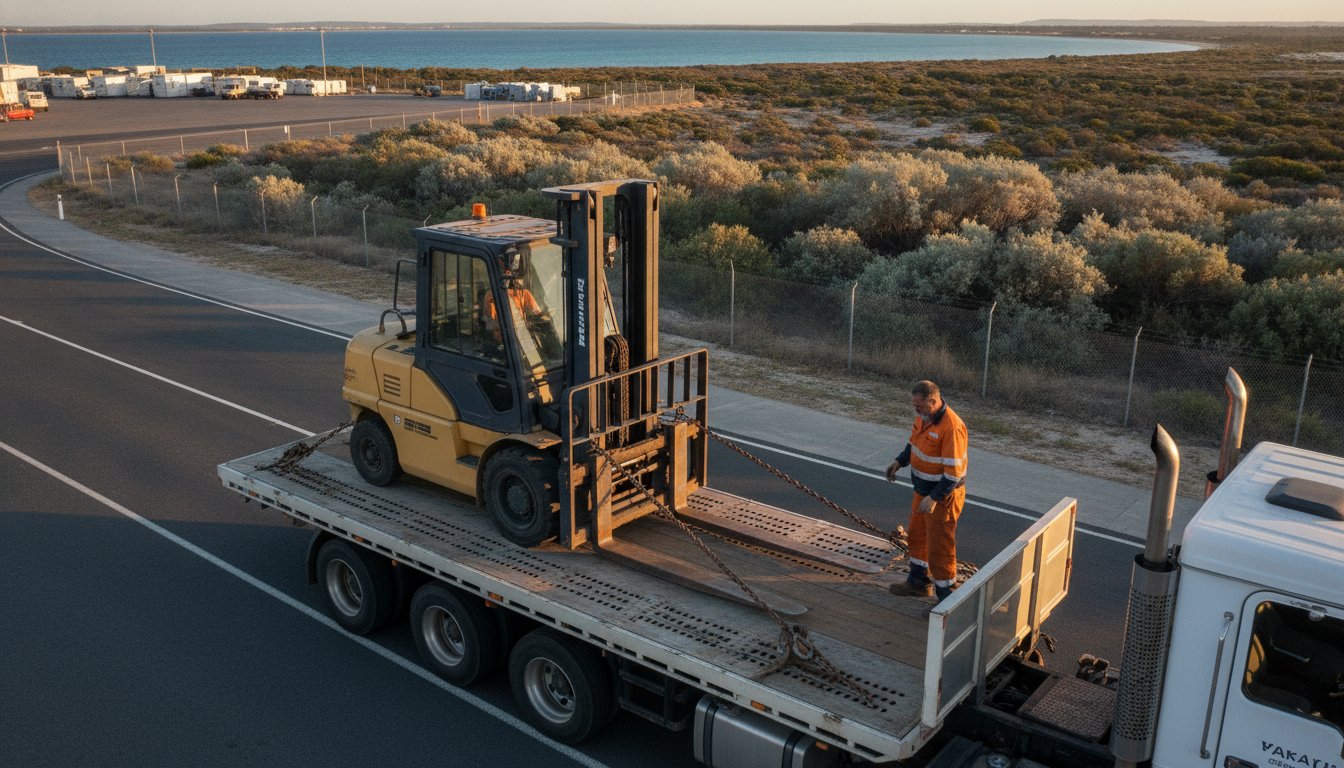
Large rough terrain diesel scissors weigh anywhere from 4,000 kg to over 8,500 kg, quickly maxing out standard light carriers. A heavy-duty tilt slide featuring a 10-metre tray and 10-tonne capacity provides the deck space and axle ratings needed to transport these bulky units. It also enables dual loading, letting contractors shift two electric slab units together in a single trip. Consolidating machinery deliveries slashes haulage expenses and frees up congested loading docks. You can also check our super tilt heavy transport WA options for massive equipment.
Underground and Low-Clearance Building Access
Multi-deck commercial car parks and basement utility areas across Perth often enforce ceiling restrictions capped at 2.2 metres. Standard tilt trays cannot enter these facilities, stranding dead or locked access machines several storeys below street level. Specialised low-profile vehicles, like custom Ford Regular F350s engineered within a 2.2-metre height limit, solve this problem directly:
- They access tight subterranean docks without risking overhead sprinkler or ducting damage.
- They retrieve disabled scissor lifts using winch recovery, avoiding manual pushing up steep ramps.
- They extract machines to open ground so they can safely transfer to heavy transport decks.
If you face challenging site access or tight clearance restrictions, reaching out to Allout Towing helps ensure the right truck arrives the first time.
Electric Slab Lifts vs Rough Terrain Diesel Lifts: Transport Needs
Electric indoor platforms and outdoor diesel workhorses have very different haulage requirements. While slab units demand gentle handling over smooth surfaces, rough terrain equipment requires heavy-duty chaining to manage massive physical footprints. When scheduling scissor lift towing Perth tradespeople must account for tyre composition, deck contamination, and overall chassis dimensions. The National Transport Commission Load Restraint Guide mandates that carriers secure plant machinery against severe dynamic forces, but protecting the machine itself requires equipment-specific transport protocols.
Failing to distinguish between these machine profiles leads to expensive mishaps. Electric units risk contaminated tyres that mark up newly finished flooring, while wide diesel units can exceed safe tray boundaries if not loaded with pinpoint precision.
Caring for Electric Indoor Units and Non-Marking Tyres
Electric slab units run on specialised non-marking polyurethane or soft solid rubber tyres. These tyres easily pick up steel metal swarf, concrete grit, and sharp road debris commonly left on unwashed truck beds. Once embedded, that debris acts like coarse sandpaper, gouging architectural epoxy surfaces or polished concrete upon delivery. Professional carriers sweep truck decks clean before winching indoor units aboard. Upper control consoles and digital steering joysticks must also be wrapped with heavy weather covers to protect sensitive electronics against Perth’s coastal rain and abrasive highway dust.
Handling Heavy Diesel Rough Terrain Access Machinery
Diesel rough terrain scissors feature wider wheel footprints, aggressive lug patterns, and heavy stabilising systems that demand specialised handling:
- Tray edge margins: Wide chassis widths require dead-centre alignment on 10-metre trays to maintain equal weight distribution across truck axles.
- Mechanical pin security: Built-in hydraulic outriggers and levelling legs must be fully retracted and physically pinned before departure to prevent road contact.
- Mud and slurry clearance: Thick site mud on knobby tyres drastically reduces surface friction, requiring operators to clean contact points before chaining.
- Wet weather traction: Steel decks get slick during winter rain; winches must control the ascent rather than relying on wheel torque to prevent dangerous lateral sliding.
Managing these massive machines requires dedicated equipment and proven site logistics. Review our construction equipment transport Perth guidelines for big civil projects to see how we manage heavy plant moves safely.
Safety, Load Restraint, and Western Australia Road Regulations
Transporting elevated access equipment on major corridors like the Mitchell Freeway or Tonkin Highway requires absolute adherence to road safety standards. Main Roads Western Australia Heavy Vehicle Services actively inspects commercial loads across metropolitan arterials, checking axle mass distribution and mechanical lashing integrity. When booking scissor lift towing Perth contractors cannot treat tie-downs as an afterthought. Simply leaving the machine hitched to a recovery winch cable violates transport law; winches are recovery tools, not rated travel restraints. Road vibrations and hydraulic line bleed can cause winches to lose tension, turning unsecured machinery into a fatal road hazard.
Safe transport demands a rigorous, step-by-step loading process. Before applying chains, operators must fully isolate the machine power, lock the battery switch, and engage the mechanical emergency brake interlocks to prevent hydraulic brake slippage during transit.
Four-Point Tie-Down and Rated Lashing Protocols
Western Australian transport regulations require equipment loads to withstand 0.8g deceleration forward, 0.5g rearward, and 0.5g laterally. Operators achieve this through direct, opposed four-point lashing:
- Direct lug attachment: Fasten Grade 70 transport chains straight to the chassis tie-down lugs, never looping around steering linkages or hydraulic lines.
- Ratchet binders only: Tension all chains using ratchet-action load binders to maintain steady force and prevent hazardous recoil injuries during release.
- Opposing angles: Pull two forward chains rearward and two rear chains forward at angles between 30 and 45 degrees to stop longitudinal creep.
- Friction matting: Place rubber friction mats under smooth tyres to dramatically improve deck grip and counter lateral roll forces on highway off-ramps.
Chain of Responsibility and WA Site Compliance
Under Western Australia’s Chain of Responsibility legislation enacted within the Road Traffic (Administration) Act 2008 and Road Traffic (Vehicles) Act 2012, accountability extends along the entire logistics network. Site managers, equipment hire consignors, transport companies, and truck drivers all share statutory duties to ensure access gear travels safely. If a load shifts, every party in the chain faces severe penalties. Police-certified operators verify that all chains, hooks, and ratchet binders display clear, legible working load limit tags before leaving the gate. Drivers also complete height checks during pre-trip inspections, ensuring total deck clearance stays well under low-hanging Perth commuter railway bridges.
To keep your projects completely compliant with state transport safety laws, book your next relocation with Allout Towing’s certified machinery transport team today.
Booking Fast, Reliable Access Equipment Relocation with Allout Towing
Site schedules run on tight margins, and waiting around for a late transport carrier burns billable crew hours fast. When you need dependable scissor lift towing Perth trades and hire companies trust Allout Towing to show up promptly. As a local, family-owned business with more than 30 years of towing industry experience, we understand the stress of keeping complex construction timelines moving. We treat your access assets like our own, ensuring smooth dispatch and transit without costly job delays.
Our transport response time commitment keeps tradies moving. In standard conditions across metropolitan Perth, our drivers arrive within 30 to 45 minutes. For rapid tradie assistance, our average response is between 25 and 40 minutes, meaning your elevated gear arrives right when your team is ready to step onto the platform.
Why Perth Builders and Hire Companies Choose Allout Towing
Decades of working Western Australian roads have given us deep knowledge of local site challenges and haulage requirements:
- Specialised fleet capability: Our equipment includes two tilt slide trucks with 7-metre trays and 4.5-tonne capacities, a heavy-tow tilt slide truck featuring a 10-metre tray and 10-tonne capacity, and two low-clearance Ford F350s built for 2.2-metre underground carparks.
- Damage-free transport: Every driver is fully police-certified and extensively trained in gentle, winch-controlled loading techniques to protect vulnerable electronic sensors and low undercarriages.
- Local trust and protection: We provide licensed commercial vehicle transport backed by comprehensive insurance and public liability coverage, ensuring total compliance on every transit leg.
Information Needed for an Instant, Accurate Transport Quote
Having your access plant specifications ready helps our dispatch team match the perfect truck immediately. When arranging scissor lift towing Perth wide, please confirm:
- Machine details: Make, model, total operating weight, and exact chassis width.
- Ground conditions: Hardstand concrete, uncompacted gravel, or muddy winter soil at both collection and set-down points.
- Site access parameters: Overhead height restrictions, narrow gates, basement ramps, or specific security sign-in windows.
- Operational status: Confirm whether the unit drives under power or requires a winch recovery onto the bed.
Keep your job site productive and your access machinery protected. Contact Allout Towing on 0418 959 216 or book online today for professional, damage-free tilt tray transport across Perth.
Keep Your Access Plant Moving Without Delay
Relocating elevated work platforms across Western Australia doesn’t have to put your worksite behind schedule or put your plant equipment at risk. Protecting low-slung steering components demands gentle approach geometry, while heavy diesel platforms require strict four-point chain tensioning to maintain total road stability. When you prioritise proper deck dimensions and rated load restraint, your machines arrive ready for immediate operation.
For dependable, damage-free scissor lift towing Perth builders and trade contractors rely on Allout Towing. Backed by more than 30 years of Western Australian towing industry experience, our fully licensed, insured, and police-certified operators handle everything from narrow basement extractions to multi-machine relocations. Our versatile fleet features 7-metre decks alongside heavy tilt slides with tray capacities up to 10 tonnes, giving you the exact capability your job requires.
Don’t let logistics hold up your site trades. Book your scissor lift transport with Allout Towing today and experience fast, professional access equipment transport that keeps your commercial builds moving forward smoothly.
Frequently Asked Questions
Can you transport scissor lifts into basement car parks with low ceilings?
Yes, we operate two specialised low-clearance Ford Regular F350s engineered specifically for tight structures with a 2.2-metre height restriction. Standard tilt trays cannot fit into these low-ceiling basement car parks without striking fire sprinklers or ductwork. Our dedicated low-profile vehicles safely enter restricted underground parking areas, hook on to stranded or powered-down scissor lifts, and recover them to street level without damaging the building structure or the machine.
How is a scissor lift secured to a tilt tray truck during transport?
We secure scissor lifts using direct, four-point mechanical lashing with rated Grade 70 transport chains and ratchet-action load binders. Each chain attaches to designated factory chassis tie-down lugs, pulling at opposed angles to prevent forward, backward, and sideways movement. We also lay heavy friction mats under smooth tyres to counter lateral sliding and ensure the machine’s mechanical brake interlocks are fully engaged before the truck starts rolling.
What is the maximum weight capacity of your machinery transport fleet?
Our heavy-tow tilt slide truck carries payloads up to 10 tonnes on an extended 10-metre tray, which easily accommodates large rough terrain diesel access platforms. For everyday slab units and compact plant equipment, we run two 7-metre tilt slide trucks rated to 4.5 tonnes each. This balanced fleet ensures we can match the exact deck capacity and tare weight of your equipment without overloading truck axles or risking transit stability.
Do I need to be on site when the transport driver picks up the lift?
You don’t need to stay on site as long as site access is arranged and the machine’s keys or isolation codes are accessible. When you arrange scissor lift towing Perth wide with us, you can leave clear collection notes regarding gate entry, equipment location, and contact numbers. Our police-certified drivers carry out full pre-load safety checks and keep you updated via phone so work proceeds smoothly without pulling your staff away from other tasks.
How quickly can a tilt tray arrive at my Perth job site?
Our standard response time for metropolitan Perth callouts averages between 30 and 45 minutes, with urgent tradie callouts often arriving in 25 to 40 minutes. We understand that trade crews standing idle around an empty bay costs serious money. By staging our fleet strategically across the metro area, we dispatch the nearest appropriate truck promptly to keep your project moving on schedule without frustrating transit bottlenecks.
Can you move access equipment between Perth and regional Western Australia?
Yes, we provide country towing and long-distance machinery transport connecting metropolitan Perth with regional project sites across Western Australia. Relocating access platforms over vast distances requires dependable, heavy-duty carriers and experienced operators who understand rural road dynamics. Whether your gear needs to travel up to the Mid West or down to the South West, our fully insured tilt slide trucks deliver your plant securely and ready for work.
Why shouldn’t I tow a scissor lift using a standard car trailer?
Standard trailers lack the low approach angles and high axle ratings required to move dense access machinery safely. With deck clearances as low as 60 millimetres, driving a slab lift onto standard trailer ramps inevitably snaps underbody components or high-centres the chassis. Furthermore, standard trailers rarely meet Australian Chain of Responsibility performance standards for securing top-heavy plant equipment, creating serious tip-over hazards and significant legal liability on public roads.