Improvised towing methods can twist a heavy leisure vehicle’s chassis beyond repair in a matter of seconds. When your caravan or campervan breaks down along a busy Western Australian corridor, the stress is immediate and real. You worry about structural frame damage, confusing weight ratings, and unlicensed chaser trucks appearing on the freeway shoulder. Securing reliable recreational vehicle towing Perth drivers can count on means choosing purpose-built transport methods rather than risking standard car recovery gear.
You shouldn’t have to risk your pride and joy just to get it safely off the road. In this guide, you’ll learn how to transport caravans, campervans, and motorhomes safely across Western Australia without structural damage. We’ll walk through the exact tilt tray specifications needed for heavy leisure transport, clear up local transport regulations, and share practical roadside protocols that keep your family protected.
Key Takeaways
- Understand why flatbed tilt tray transport prevents expensive chassis twisting and body damage compared to traditional towing methods.
- Learn how to calculate critical Tare Weight, GVM, and Aggregate Trailer Mass figures before booking recreational vehicle towing Perth services.
- Discover the winch-controlled loading and load restraint procedures required to meet Western Australian transport safety regulations.
- Master essential roadside positioning and emergency safety protocols to protect your family while waiting on Perth freeway shoulders.
- Identify the licensing credentials and equipment specifications needed to choose a reputable, fully insured transport specialist.
Understanding Recreational Vehicle Towing in Perth: Challenges and Regulations
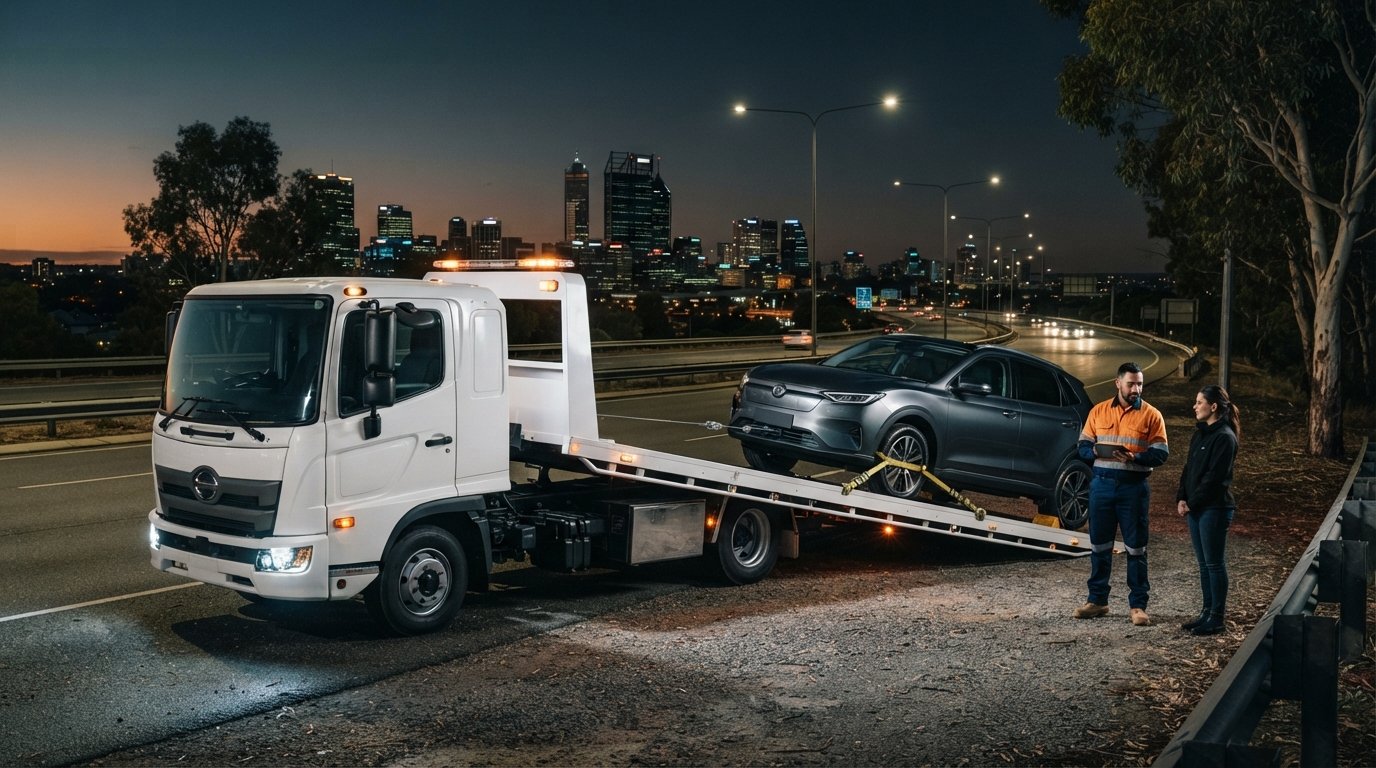
Recreational vehicle towing covers the safe relocation of caravans, campervans, fifth-wheelers, and motorhomes across Western Australia. Unlike passenger cars, leisure setups feature sprawling wheelbases, delicate living quarters, and top-heavy weight profiles. Navigating high traffic density along the Kwinana Freeway or tackling corrugated roads on regional Perth outskirts places severe mechanical stress on damaged chassis components. While the basics of towing involve hitching or lifting a disabled rig, oversized holiday builds demand specialised equipment. Booking professional recreational vehicle towing Perth operators rely on ensures your mobile home rides safely on a flatbed rather than trailing behind a basic wheel-lift cradle.
The Legal Framework for RV Towing in Western Australia
Western Australia enforces strict standards to safeguard road users. Transport businesses must comply with Department of Transport WA rules established under the Towing Services Act 2024. Every recovery operator must hold a valid Tow Truck Driver Licence, confirming they meet character, safety, and operational standards. Under the Road Traffic (Vehicles) Act 2012, Chain of Responsibility laws also apply directly to leisure transport. These regulations hold both the driver and the towing contractor legally accountable for safe loading, correct axle limits, and roadworthiness throughout the journey.
Structural Vulnerabilities of Caravans and Motorhomes
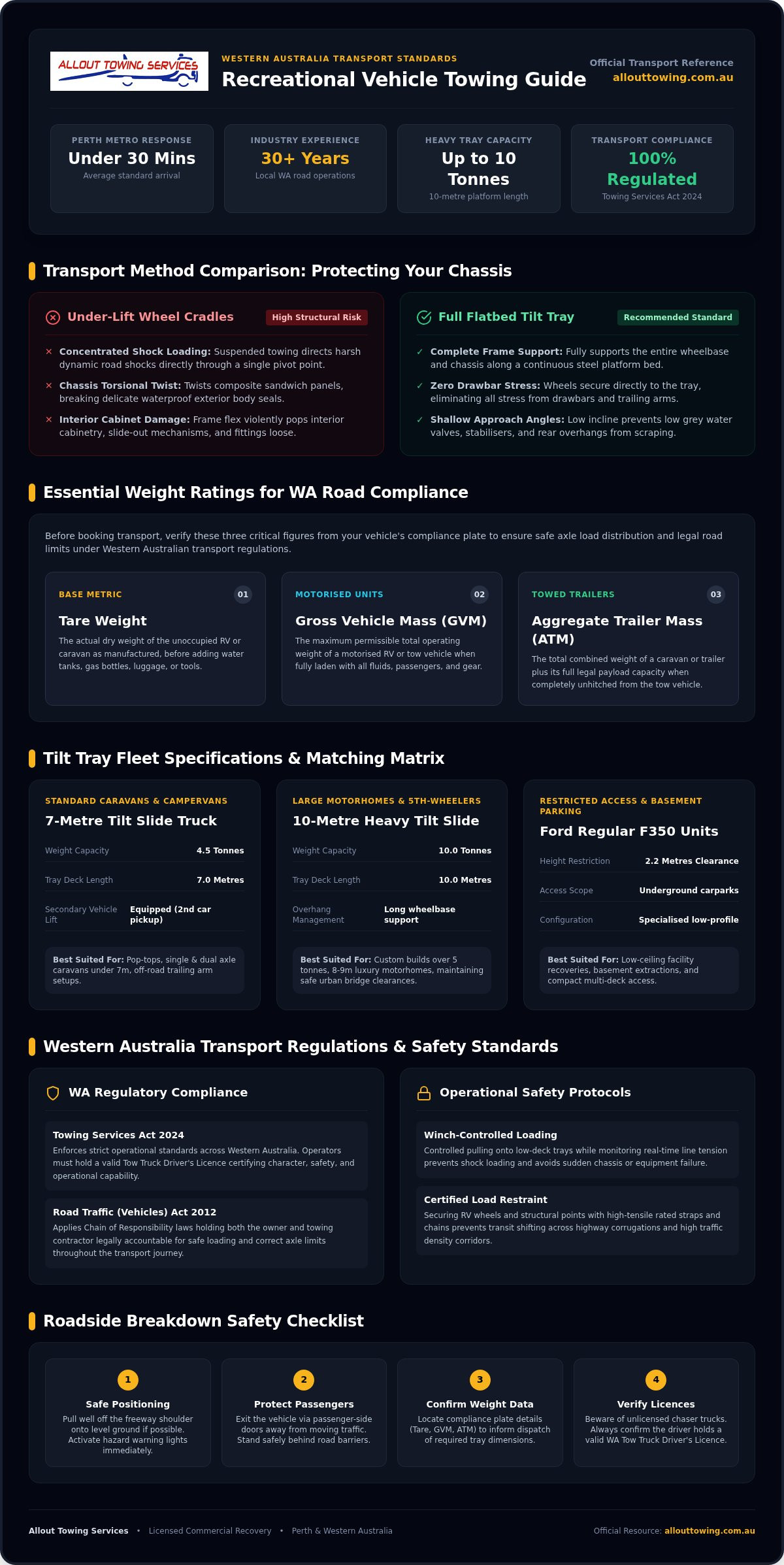
Leisure vehicles are engineered as lightweight mobile living quarters, not rigid commercial haulers. Modern caravans and motorhomes rely on composite sandwich panels, extended rear overhangs, and intricate slide-out mechanisms that can’t absorb harsh torsional twist. Towing an RV with suspended axles using an under-lift wheel cradle concentrates dynamic road shock directly onto a single chassis point. That sudden pivot flex causes frame misalignment, pops interior cabinetry loose, and fractures weatherproof exterior seals. Transporting an RV on a full-length tilt tray supports the complete chassis, preventing body flex and safeguarding costly interior fittings from structural fatigue.
Matching Equipment to Vehicle Weight: Trays, Capacities, and Clearances
Every safe recovery begins with precise weight calculations. Guessing your setup’s mass creates dangerous axle overloads and endangers everyone sharing the corridor. When arranging professional recreational vehicle towing Perth operators need three primary figures from your compliance plate:
- Tare Weight: The actual dry weight of the unoccupied RV before adding water, gas bottles, luggage, or tools.
- Gross Vehicle Mass (GVM): The maximum permissible operating weight of a motorised RV or tow vehicle when fully laden.
- Aggregate Trailer Mass (ATM): The combined weight of a caravan or trailer plus its full payload when unhitched from the tow vehicle.
Adhering to these limits is vital for meeting Western Australian towing regulations, which govern load distribution and heavy vehicle compliance. Beyond total mass, tray deck inclination determines whether an RV loads cleanly or scrapes. Modern leisure rigs feature low chassis rails and long rear tail overhangs that easily bottom out. Proper equipment must maintain shallow approach angles so bumpers, grey water valves, and rear stabiliser legs clear the ramp incline without contact.
Caravan and Campervan Transport Requirements
Standard camper trailers, pop-tops, and single or dual-axle caravans measuring under seven metres generally suit a 4.5-tonne capacity carrier. Dedicated 7-metre tilt slide trucks provide a flat, continuous bed that accommodates independent trailing-arm suspensions and raised off-road hubs. Operators secure the wheels directly onto the steel bed, removing any stress from the caravan’s drawbar or delicate chassis rails during transit.
Large Motorhomes and Fifth-Wheelers
Extended luxury motorhomes and fifth-wheel setups present complex mass distribution challenges. When a custom build exceeds five tonnes or spans eight to nine metres, standard tilt beds fall short. These larger platforms require a 10-metre heavy tilt slide truck engineered with a 10-tonne working limit. This heavy-tow platform distributes the prolonged wheelbase evenly, keeping overall transport heights safe under urban bridges, powerlines, and arterial underpasses. If you need clarity on your rig’s dimensions, consulting Allout Towing’s tilt tray services ensures the correct platform arrives on scene first time.
Critical Safety Factors: Load Restraint, Winch Recovery, and Securing RVs
Moving a multi-tonne caravan or disabled campervan onto a recovery deck requires strict mechanical discipline. Securing an RV against sudden braking and crosswinds is the operator’s primary duty. High-standard recreational vehicle towing Perth specialists apply engineered load restraint techniques that prevent frame stress, ensuring your leisure asset remains immovable during transit.
Before any cable unspools, a professional operator runs through a systematic vehicle recovery checklist. This routine evaluates deck clearance, roadside ground stability, winch angles, and the integrity of factory structural points before committing to a lift or pull.
Winch-Controlled Loading Mechanics
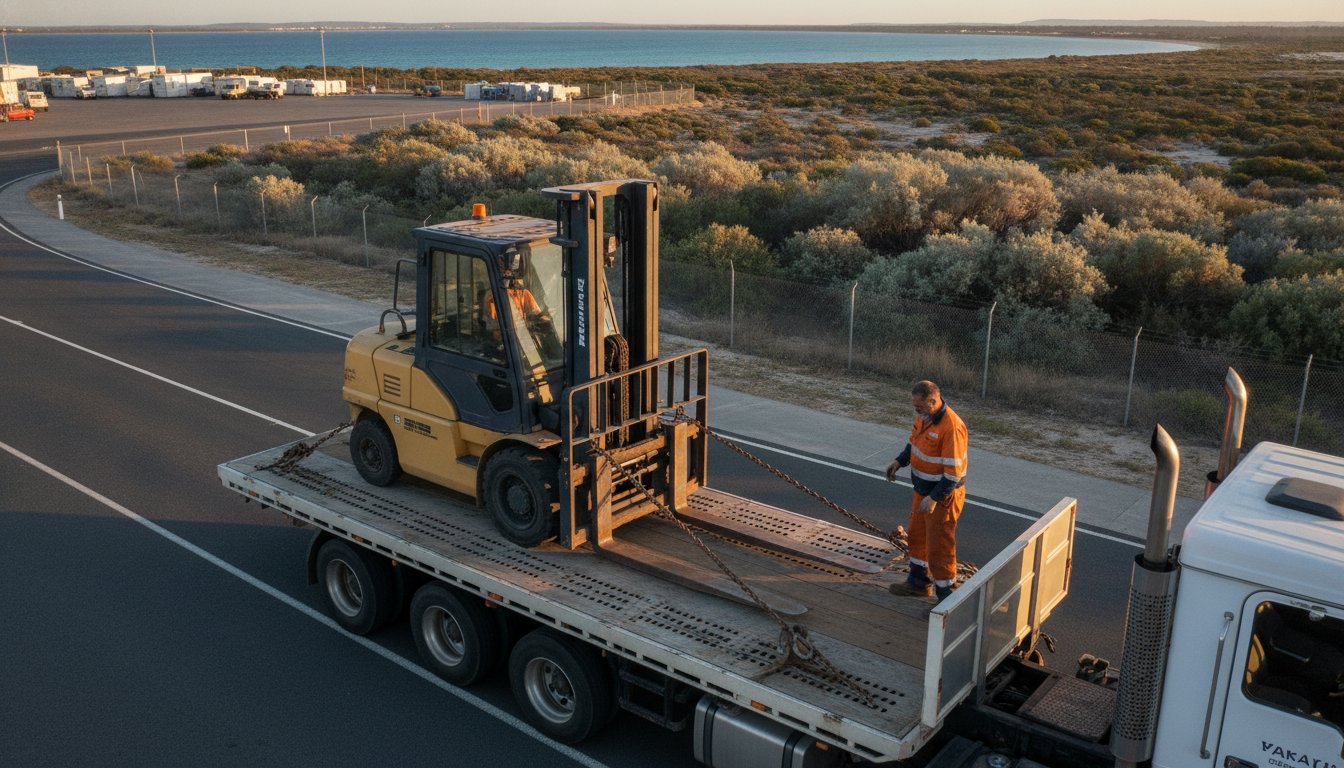
Immobilised motorhomes or bogged camper trailers cannot simply drive onto a recovery bed. Technicians use winch-controlled loading, running variable-speed hydraulic winches to execute a continuous, smooth pull. Snatching or dynamic pulling is avoided entirely; eliminating shock loading prevents sudden equipment failure and protects delicate front subframes from warping. Bridles connect solely to structural chassis crossmembers rather than steering arms, sway bars, or suspension links, which easily bend under tens of thousands of Newtons of pull force.
Certified Load Restraint Systems
Once loaded, securing the RV demands equipment that complies with Western Australian transport laws. Operators apply dedicated wheel-choker harnesses or four-point cross-lashed transport chains rated to the vehicle’s gross mass. Restraining the setup through wheel straps allows the camper’s suspension to absorb road undulations naturally without placing twisting loads onto cabinetry, wall seals, or pop-top latches.
Before leaving the recovery site, operators complete a final safety walkaround:
- Confirm winch tension locks and safety dog clutches are engaged.
- Check tension on all four individual corner tie-downs.
- Verify that RV slide-outs, fold-down steps, and roof latches are locked mechanically.
- Inspect tyre clearances to prevent contact with the tilt tray headboard during heavy deceleration.
What to Do in a Motorhome Breakdown on Perth Highways
Suffering mechanical failure while cruising along high-speed corridors like the Kwinana Freeway or Mitchell Freeway instantly tests your nerves. When warning lights flash and propulsion drops, quick thinking preserves family safety. Managing a stranded motorhome requires deliberate decisions before booking recreational vehicle towing Perth recovery teams.
Immediate Safety Actions on Freeways
Steer gradually toward the emergency breakdown lane or hard shoulder as engine power fades. Switch on hazard lights immediately. Position the leisure vehicle as far to the left of the white fog line as possible, turning the wheels left toward the embankment. Everyone must exit through the left passenger doors, well clear of live traffic lanes. Walk behind roadside crash barriers, and keep a packed first aid kit close at hand while keeping children and pets secure.
Contacting Dispatch and Verifying Tow Credentials
Once your family stands in a secure position behind the barrier, phone for recovery transport. Be prepared with essential details:
- Your precise location, referencing the nearest exit ramp, freeway marker, or prominent bridge.
- Specific rig details, including vehicle make, model, estimated GVM, and total length.
- The breakdown symptoms, noting whether wheels rotate freely or brakes are locked.
Confirm the operator’s response time commitment to your coordinates. When dealing with unexpected highway strandings, review established 24 hour towing Perth protocols to understand emergency arrival standards across metro corridors.
Be vigilant against opportunistic operators. Unsolicited recovery trucks frequently scout major arterial routes during peak transit hours. Never release your motorhome or caravan to an unlicensed chaser truck that pulls up unannounced. These opportunists exploit stressed holidaymakers, inflating clearance fees and using inadequate gear that risks devastating chassis strain. Check that the driver holds an authentic Tow Truck Driver Licence before permitting any winch lines near your asset. For calm, accredited assistance from seasoned local professionals, contact Allout Towing’s emergency recovery team to dispatch a dedicated tilt slide deck directly to your breakdown location.
Securing Professional Tilt Tray RV Transport Across Metropolitan Perth
Selecting the right vehicle transport partner protects your substantial leisure investment. You need an operator that treats your caravan or motorhome with genuine care rather than rushing an emergency hook-up. Dedicated recreational vehicle towing Perth services require verified credentials, high public liability coverage, and heavy-capacity recovery beds designed specifically for extended holiday rigs.
Allout Towing brings more than 30 years of towing industry experience across Western Australia. Operating a dedicated fleet, the company provides two 7-metre tilt slide trucks with a 4.5-tonne weight limit for standard trailers and campervans, alongside a 10-metre heavy tilt slide truck offering a 10-tonne capacity. This fleet variety ensures your recreational build receives flatbed transport matched strictly to its axle loads and chassis length.
Local Knowledge and Rapid Response Across Metro Perth
Breakdowns cause massive disruption for traveling families. Local dispatch teams commit to an average response time under 30 minutes across metropolitan Perth, helping to get everyone out of harm’s way fast. As a family-oriented local provider, operators treat your holiday asset as if it were their own. For oversized expedition campers or massive commercial conversions, exploring super tilt heavy transport WA ensures specialised logistical planning for extreme chassis dimensions and complex gross mass distributions.
Booking Scheduled or Emergency RV Transport
Booking safe relocation is simple whether you face an immediate mechanical breakdown on the Tonkin Highway or need planned transit to a caravan specialist. Follow these straightforward steps to organise transport:
- Contact dispatch with your vehicle’s make, external length, and compliance plate mass figures.
- Specify collection and destination addresses, highlighting any overhead wires, steep driveways, or tight access gates.
- Select scheduled transit or immediate breakdown dispatch.
If you need planned relocations, warranty drop-offs, or detailed advice, explore our dedicated recreational vehicle towing Perth transport services. For accident-related incidents, police-certified operators work directly with major Australian insurers to streamline claim billing, keeping paperwork simple during stressful moments. When you require dependable 24-hour tilt tray assistance, reach out directly to the Allout Towing team by phone on 0418 959 216 to arrange rapid, damage-free recovery.
Protect Your Mobile Home With Engineered Tilt Tray Recovery
Safeguarding your holiday investment comes down to three essentials: verifying accurate compliance weights, demanding full-deck tilt tray support over axle cradles, and following calm safety protocols during a highway breakdown. Choosing purpose-engineered transport ensures delicate composite panels, internal cabinetry, and suspension alignments remain intact throughout transit.
Backed by more than 30 years of towing industry experience across Western Australia, Allout Towing provides the dependable recovery support your rig deserves. Our police-certified operators hold valid Tow Truck Driver Licences, coordinate directly with insurers, and operate dedicated 7-metre (4.5-tonne) and 10-metre (10-tonne) tilt slide trucks. When you need trusted recreational vehicle towing Perth services, our experienced crew handles your leisure build with exceptional care.
Contact Allout Towing for reliable Perth RV transport to organise scheduled transit or rapid emergency assistance, and keep your Western Australian travels rolling smoothly.
Frequently Asked Questions
Can any tow truck transport my dual-axle caravan?
No, standard towing cradles or short tilt trays cannot safely transport a dual-axle caravan. Dual-axle setups have extended wheelbases and specific weight distributions that require a flat, full-deck tilt slide truck with adequate deck length, such as a 7-metre tray rated to 4.5 tonnes. Attempting to lift a dual-axle rig by one axle causes severe suspension binding, frame distortion, and unbalances the Aggregate Trailer Mass across the road.
How does a tilt tray prevent damage to low-profile motorhomes?
A tilt tray hydraulically angles its deck down to tarmac level, creating a gentle gradient for loading. Low-profile motorhomes have extended rear overhangs, grey water tanks, and stabiliser jacks that drag or tear on steep ramps. By using low-angle slide decks and controlled winching, the entire vehicle climbs aboard smoothly without grounding the rear bodywork, protecting your delicate underbody components and chassis rails.
What details do I need when calling for recreational vehicle towing in Perth?
When booking recreational vehicle towing Perth operators need your exact location, the make and model of the RV, and its compliance plate figures. Have your Tare Weight, GVM, or ATM ready, alongside total external length and clearance height. Mention any access hurdles, such as low-hanging trees or soft road verges, and confirm whether the vehicle rolls freely or has locked brakes.
Will my comprehensive vehicle insurance cover the cost of RV towing?
Most comprehensive insurance policies cover emergency transport costs if the breakdown results from a collision, storm damage, or an insured hazard. General mechanical breakdowns or scheduled relocations typically require out-of-pocket payment unless you carry specialised roadside assistance cover. Accredited towing operators in Western Australia work directly with major insurers, billing the insurer straight away to take administrative stress off your shoulders after an accident.
Is it safe to stay inside a motorhome or caravan while it is being towed?
No, it is illegal and exceptionally hazardous to remain inside any recreational vehicle while it is on a tilt tray deck or under tow. RV living cabins are not engineered with protective roll cages or crash-rated safety belts. In Western Australia, road safety laws require all passengers to travel securely inside the towing truck’s cabin or in a separate passenger vehicle.
How fast can a tilt tray arrive during a breakdown on Perth freeways?
Standard response times across metropolitan Perth average between 30 and 45 minutes, with rapid emergency dispatch reaching stranded drivers in under 30 minutes under regular traffic conditions. Operators prioritise freeway breakdowns along major transit routes like the Mitchell and Kwinana Freeways, deploying automated dispatch systems to locate the nearest available tilt slide truck and secure your family quickly.
What is the difference between an unlicensed chaser truck and a licensed operator?
An unlicensed chaser truck operates without legitimate transport accreditations, commercial transit cover, or police clearance. These operators often cruise freeways seeking vulnerable, stranded drivers, charging unregulated fees and using sub-par gear. In contrast, licensed recreational vehicle towing Perth providers employ police-certified drivers carrying authentic Department of Transport licences, correct mass-rated equipment, and comprehensive insurance to safeguard your mobile home throughout transit.