Your car sits maybe 90 millimetres off the ground when you’ve finished the modifications. Every driveway bump is a calculated risk. Every parking lot is a navigation puzzle. But the real challenge comes when something goes wrong and you need to move your vehicle.
Traditional towing methods – the hook systems that work fine for standard cars – become a nightmare for low-clearance vehicles. They’re designed for normal ride heights and standard suspension geometry. Your modified machine is neither.
The difference between getting your car to the mechanic safely and arriving with a shattered splitter, scraped bumper, or compressed suspension comes down to one choice: who you trust to move it.
The Low-Clearance Challenge in Duncraig
The Duncraig car community understands this problem intimately. North of Joondalup, where automotive enthusiasts gather to work on their vehicles, the conversation around reliable transport for modified cars comes up constantly. Whether you’re driving a slammed Subaru, an air-suspended BMW, or a custom lowered Holden, you’ve already invested thousands into your build. The last thing you need is improper towing undoing all that work.
When your low-clearance car needs to move – whether for a rebuild, an event appearance, or unexpected breakdown recovery – you need transport that understands your vehicle’s unique geometry and respects the modifications you’ve made.
Standard Hook Towing Doesn’t Work for Modified Cars
Here’s what happens when you call a standard towing company for a low-clearance vehicle. They arrive with a hook truck – perfectly adequate for regular cars. They assess your vehicle’s height and realise immediately that traditional wheel-lift towing won’t work. They suggest hooking to the front or rear axle instead.
That’s when the problems begin.
A hook under your front axle creates downward stress on custom suspension components that weren’t designed for that angle of load. If you’re running air suspension, you’re now putting pressure on systems designed for smooth, controlled movement – not the jerking motion of a hook truck. Your chassis angles as the vehicle lifts, stressing modified suspension points.
By the time you reach your destination, you might have more damage than you started with.
How Tilt Tray Services Protect Your Vehicle
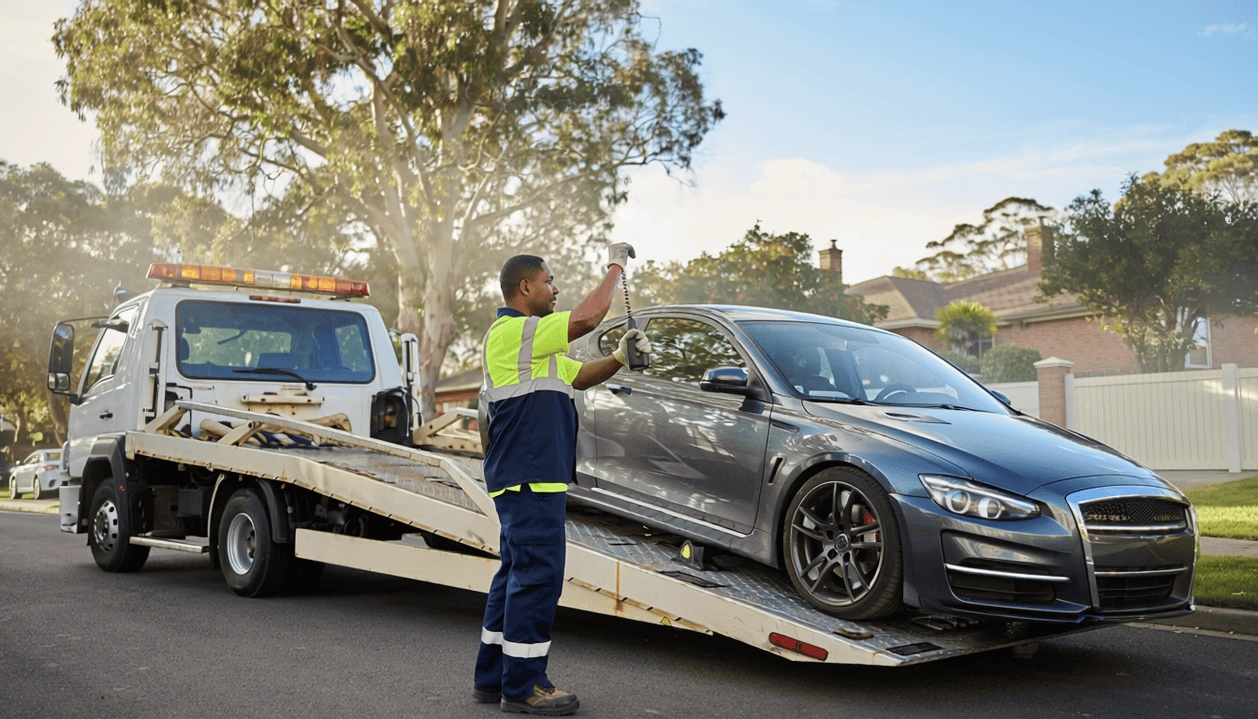
A tilt tray is fundamentally different from hook towing. Instead of lifting your vehicle at single points, a tilt tray cradles the entire undercarriage on a flat, level platform. Your car rolls smoothly onto the deck with minimal suspension compression and no body contact with equipment.
The Engineering Advantage
Think of the difference between hanging from a rope versus lying on a table. One concentrates all stress at single points. The other distributes weight evenly across a surface.
When your low-clearance car sits on a tilt tray, every suspension point shares the load equally. Modified components – whether air suspension bags, coilover setups, or custom chassis reinforcements – experience uniform support throughout the journey.
The flat platform means zero body angle change. Your chassis remains exactly as designed, whether the tray is level or slightly inclined during loading. Modified splitters, skirts, and aftermarket bumpers stay clear of any contact with towing equipment.
Professional Low-Clearance Handling
Duncraig tilt tray specialists understand that every modified car is different. A slammed Japanese import with air suspension needs different handling than a lowered Holden with coilover springs. Custom widebody kits change how the vehicle sits. Aftermarket spoilers and wings create unique clearance considerations.
Proper technique starts before loading. The operator assesses your vehicle’s lowest points and plans an approach that maintains clearance throughout the process. If your bumper is 85 millimetres off the pavement at the steepest angle, the operator knows that and adjusts the tray’s tilt rate accordingly.
Soft securing straps – never metal chains – hold your vehicle in place. These distribute holding force across the chassis rather than concentrating it at single points. Padding protects any contact areas.
The entire loading, transport, and unloading process happens under professional control, respecting the specific requirements of your modified machine.
Common Low-Car Modifications and Their Towing Vulnerabilities
Not all low-clearance vehicles face the same towing risks. Understanding your car’s specific vulnerabilities helps you communicate them to your transport operator.
Air-Suspended Vehicles
Air suspension systems are designed for independent control of ride height and comfort. But during towing, they create unique challenges. If your air suspension system isn’t properly supported during transport, the pressure in the bags can fluctuate, stressing components designed for smooth, controlled operation.
A tilt tray supporting the entire chassis maintains consistent pressure distribution across suspension components. The vehicle maintains its designed geometry throughout transport.
Slammed Vehicles with Coilover Systems
Custom coilover springs compressed to aggressive ride heights represent significant investment. They’re also vulnerable during towing if your vehicle is lifted at incorrect points. The compressed springs can experience additional stress that they’re not designed to handle.
A level tilt tray platform keeps the entire suspension system in its loaded state throughout transport – the same state it experiences during normal driving. No additional stress. No risk of component damage.
Widebody and Fender Kit Vehicles
Widebody modifications extend bodywork beyond standard factory dimensions. Aftermarket fender flares, side skirts, and custom bumper extensions create clearance challenges. Traditional hook towing risks contact with these expensive modifications.
With tilt tray services, your entire widened vehicle sits safely on the platform. Every custom panel clears all equipment.
Custom Spoilers and Aero Components
Show-quality spoilers, custom wings, and aerodynamic modifications represent both significant cost and pride of ownership. They’re often the first thing at risk during improper towing.
A flat tilt tray means your rear wing, front splitter, and side skirts never come close to any towing equipment. They remain exactly as you finished them.
What Makes Tilt Tray the Only Safe Recovery Option
For standard vehicles, multiple towing methods are acceptable. For low-clearance cars, tilt tray isn’t just preferred – it’s essential.
The Physics Are Clear
A hook truck distributes vehicle weight through two small contact points (front and rear axle pickup points). This concentration of load creates stress angles that modified suspensions aren’t designed to handle.
A tilt tray distributes that same weight across the entire undercarriage support area. The stress is uniform. The angle is consistent. The load distribution matches how your vehicle was designed to sit.
The Insurance Perspective
Most comprehensive car insurance policies specify towing requirements in the fine print. Many explicitly require “flatbed” or “tilt tray” transport for modified vehicles, or they reserve the right to deny claims if damage occurs during improper towing.
If you’ve invested in custom work, your insurer wants that investment protected during transport. They won’t cover damage caused by hook towing when flatbed was required.
The Professional Standard
Professional auto transporters, high-end dealerships, and specialist workshops exclusively use tilt trays for modified vehicles. This isn’t preference – it’s industry standard for protecting valuable, custom-built machines.
When your car has unique modifications, you deserve the same professional standard.
Real Damage Scenarios: How Proper Technique Prevents Them
Understanding what can go wrong helps you see why tilt tray services aren’t an upsell – they’re essential.
Scenario 1: Splitter Damage During Hook Towing
Your front splitter hangs 60 millimetres below your bumper. A hook truck operator lifts the front axle to load your car. The angle change forces the bumper upward slightly, and the splitter contacts the ground, tearing away and damaging internal mounting points. Repair cost: $2,400.
With a tilt tray, the vehicle rolls onto the flat platform with no angle change. The splitter maintains consistent clearance. No contact. No damage.
Scenario 2: Air Suspension Stress
Your air-suspended BMW loses pressure when the suspension bag is bent at an angle during hook towing. The system compensates with a pressure spike that damages an internal component. The vehicle won’t air up properly for the next six months. Repair cost: $3,800.
With a tilt tray, your vehicle maintains its loaded height and suspension angle throughout transport. No pressure fluctuations. No component stress.
Scenario 3: Widebody Panel Damage
Your widebody JDM import has custom side skirts that extend beyond factory width. A hook truck’s straps contact the inner edge of the skirt, applying pressure that cracks the fiberglass. Repair cost: $1,500.
With a tilt tray, the entire widened vehicle sits safely on the platform. The skirts are in the air, completely clear of any contact.
These scenarios play out regularly when modified cars are transported improperly. They’re almost entirely preventable with proper tilt tray services.
Finding Specialist Tilt Tray Operators in Duncraig
Not all tilt tray operators have experience with low-clearance vehicles. Standard transports and regular breakdown assistance might use tilt trays for standard-height cars but lack the expertise for modified machinery.
What to Look For
Ask potential operators about their experience with low-clearance vehicles specifically. Do they understand air suspension? Have they transported slammed imports? Can they discuss the specific considerations for your type of modification?
Legitimate specialists will ask you detailed questions about your vehicle: exact ride height, suspension type, aftermarket components, custom aero setup. They want to understand your car before planning transport.
They’ll explain their process for your specific vehicle. Standard height? No problem. Slammed with air suspension? They’ll discuss how they’ll manage that. Widebody with custom paint? They’ll explain their securing and padding approach.
Ask about their equipment. Do they have adjustable tilt trays? Can they accommodate extremely low vehicles? Do they use soft securing straps or metal chains?
The Professional Difference
When you contact All Out Towing for low-clearance transport, you’re speaking with operators who’ve handled everything from slammed Japanese imports to custom-built show cars. We ask about your modifications. We assess your vehicle’s specific vulnerabilities. We plan the approach that protects your investment.
We use modern tilt tray equipment with adjustable cradles and soft securing systems. Your vehicle isn’t just another job – it’s the result of your passion and investment.
Cost Comparison: Professional Tilt Tray vs. Damage Repairs
It’s tempting to call the cheapest towing option when you’re in a crisis. Here’s the actual math.
A professional Duncraig tilt tray service for a distance of 25-30 kilometres typically costs $200-350 depending on the vehicle and specific requirements.
If improper hook towing damages your splitter, it’s $1,500-3,000. If it stresses your air suspension system, it’s $3,000-5,000. If it damages your custom paint or fiberglass work, add another $2,000-4,000.
You’re risking $5,000-12,000 in damage to save $150.
The actual cost of tilt tray services isn’t an expense – it’s insurance. It’s the cost of protecting the work and investment you’ve already made.
We’ve assisted Duncraig vehicle enthusiasts countless times who’ve experienced improper towing damage. The relief when a professional low car towing Perth operator handles their vehicle properly is worth far more than the transport cost.
Preparation Steps Before Your Modified Car Needs Transport
You hope you never need towing. But with a heavily modified vehicle, it’s wise to prepare.
Know Your Vehicle’s Specifications
Document your exact ride height (from wheel center to chassis). Know your suspension type (air, coilover, fixed). Photograph your lowest points and custom components. List all aftermarket additions that might affect towing.
Keep this information somewhere accessible. When you need transport, you’ll already know what to communicate.
Understand Your Insurance Requirements
Call your insurer and ask specifically about towing requirements for modified vehicles. Do they require tilt tray? Do they specify flatbed? Get the answer in writing and keep it with your insurance documents.
If your policy requires tilt tray and you use hook towing instead, damage claims will be denied. Knowing your requirements means you’ll never make that mistake.
Establish a Relationship Before You Need Help
Don’t wait until you’re stranded to find a reliable transport operator. Contact specialists now. Ask about their experience. Get their contact information. Know who to call when the time comes.
When you’re stressed and your car is immobilised, you want to call someone you’ve already vetted, not gamble on a random search result.
Signs That Your Vehicle Qualifies as “Low-Clearance”
If any of these apply, you need tilt tray towing:
- Your car sits lower than 100 millimetres ground clearance (measured at the lowest point)
- You have aftermarket splitters or aero extensions extending below bumper level
- You’re running custom air suspension or heavily compressed coilover systems
- Your bumper, side skirts, or fender flares are wider than factory specification
- You’ve completed custom bodywork, widebody modifications, or fender extensions
- You have a custom chassis setup with non-standard suspension geometry
- You’re unsure about any of your vehicle’s modifications and their clearance impact
If any of these apply, your vehicle isn’t suitable for standard hook towing. You need the flat, level platform that only a tilt tray provides.
Making the Right Choice for Your Modified Machine
Your low-clearance car represents significant investment – in components, in labour, in passion. When it needs to move, that investment deserves protection.
Tilt tray services aren’t a luxury upgrade for show cars. They’re a fundamental requirement for any vehicle with modifications that affect its profile or suspension geometry. They’re how professional specialists protect your work.
Whether you need tilt tray services in Perth for your first transport or you’re a regular participant in the enthusiast community, you deserve operators who understand your vehicle and respect the work you’ve invested in it.
When you’re ready to transport your modified machine with confidence, call All Out Towing for a specialist approach. We’ll ask the right questions, plan the proper technique, and make sure your vehicle arrives exactly as it left – undamaged and respected.
Call 0418 959 216 for Duncraig tilt tray specialists who understand modified vehicles.