You’ve likely stood on a site as the sun goes down, watching your project timeline slip because a vital piece of kit is still sitting on a trailer hours away. It’s a frustrating reality for many Perth project managers who deal with hidden transport costs and the constant worry of equipment damage during a rough load-out. You understand that moving heavy plant across Western Australia is a high-stakes operation where a single mistake can halt an entire job.
We believe that machinery transport Perth should be the most reliable part of your project, not the most stressful. This 2026 guide provides the expert roadmap you need to master heavy equipment logistics while ensuring total compliance with Main Roads WA. We’ll explore how to avoid surprise fees, ensure zero-damage arrivals, and find a family-owned transport partner who values reliability as much as you do. From navigating tight metro sites to long-haul regional moves, we’ll give you the local knowledge to keep your operations moving forward without a hitch.
Key Takeaways
- Learn the essential steps for cleaning and documenting your equipment to meet strict WA biosecurity and “weed and seed” site requirements.
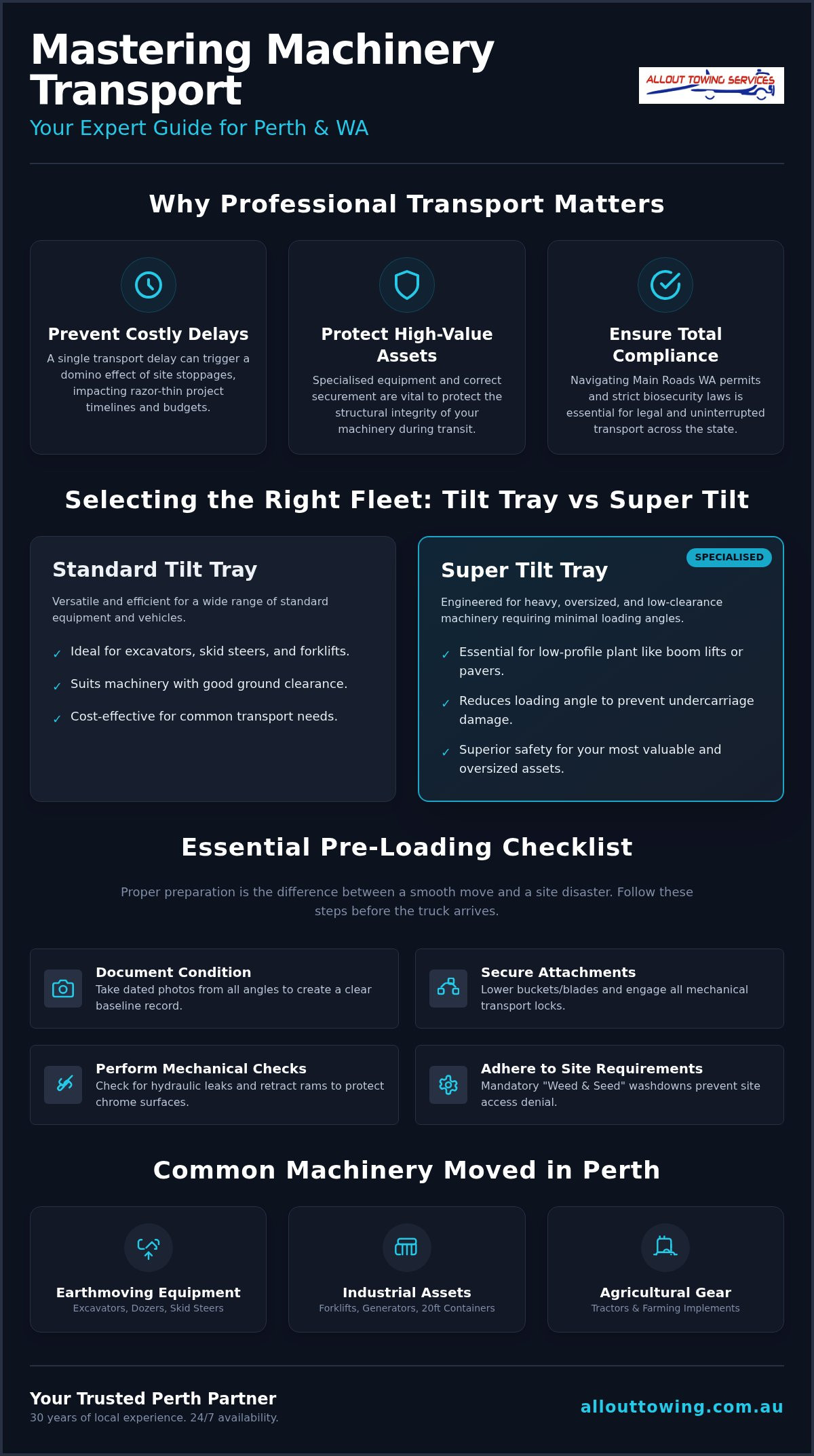
- Understand when to use a standard tilt tray versus a specialised super tilt for your heaviest and most oversized plant.
- Simplify the process of securing Main Roads WA Class 1 permits and coordinating pilot vehicles for legal transport across the state.
- Optimise your project timeline for machinery transport Perth by choosing a partner with 30 years of local experience and 24/7 availability.
- Discover how transparent pricing and family-owned reliability can eliminate the risk of hidden costs and site delays.
What is Professional Machinery Transport and Why Does it Matter?
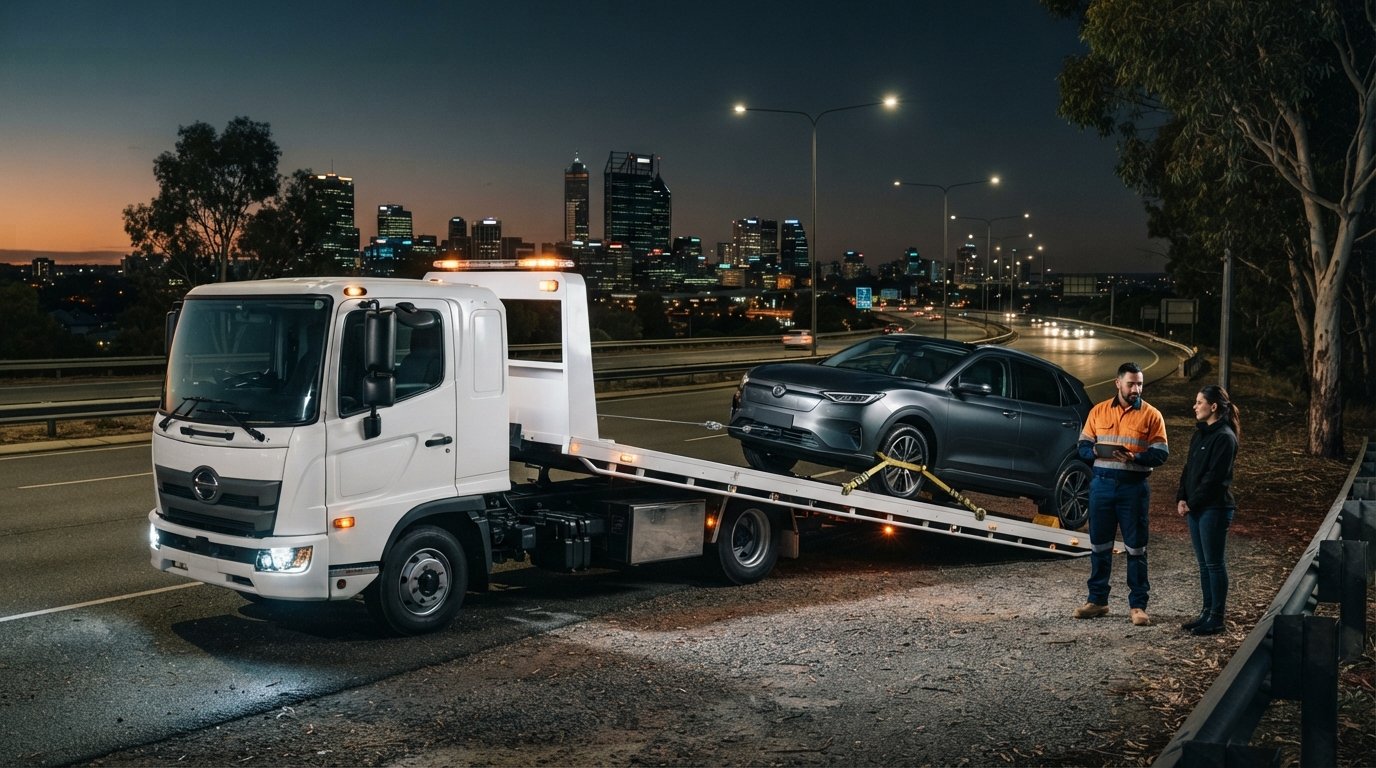
Professional machinery transport is the specialised relocation of industrial, agricultural, and construction equipment. It’s a far cry from standard towing. While a regular tow truck might manage a vehicle breakdown, it lacks the deck strength and specialised ramps needed for heavy plant like excavators or forklifts. Choosing the wrong transport method doesn’t just risk your warranty; it puts the structural integrity of your high-value assets on the line during every bump and turn.
In the fast-paced Perth construction and mining sectors, project timelines are razor-thin. A single transport delay can trigger a domino effect of site works stoppages, leading to significant financial losses. Professional machinery transport Perth services act as a safeguard against these hidden costs. By focusing on precision loading and reliable scheduling, we ensure your machinery arrives ready for work, protecting both your equipment and your bottom line from the stresses of transit.
Common Types of Machinery Moved in Perth
Perth’s diverse industry requires a versatile approach to transport. We regularly handle a wide variety of gear, including:
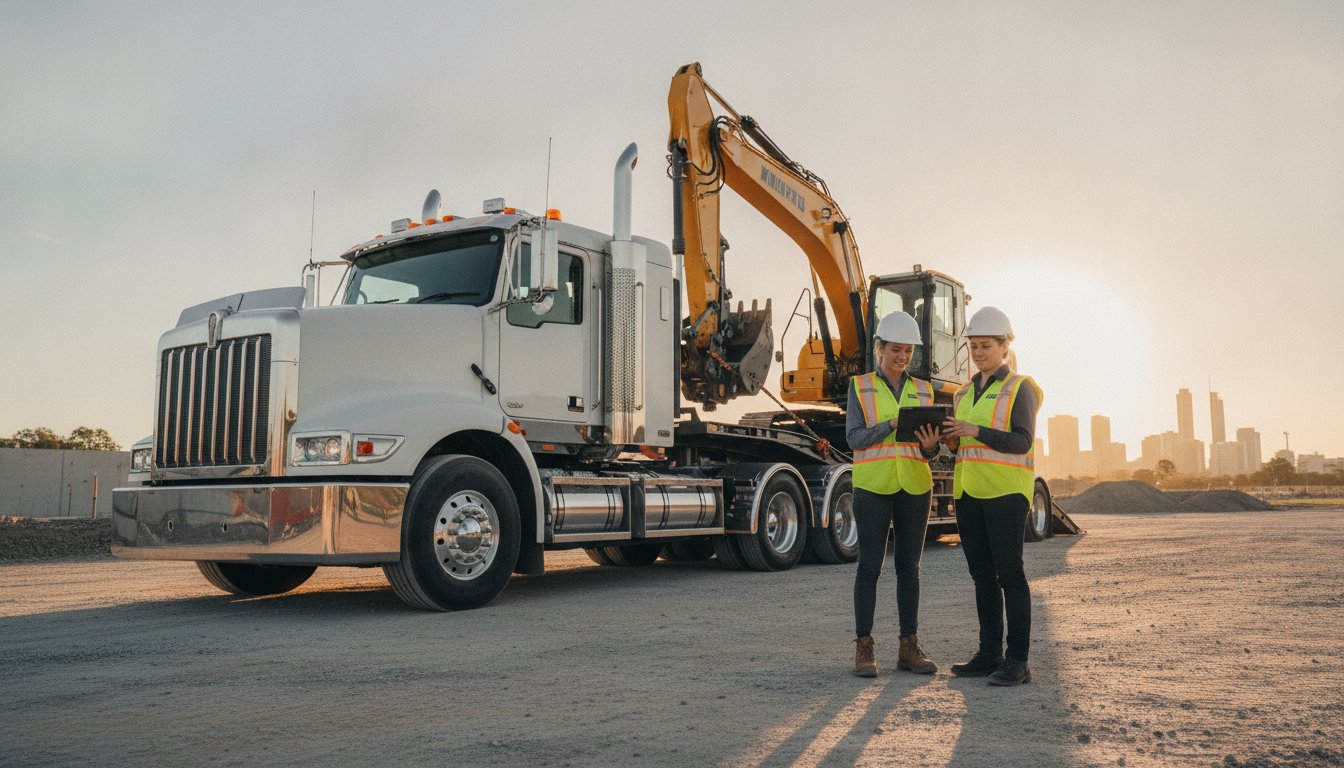
- Earthmoving equipment: This includes excavators, dozers, and skid steers essential for civil works and mining.
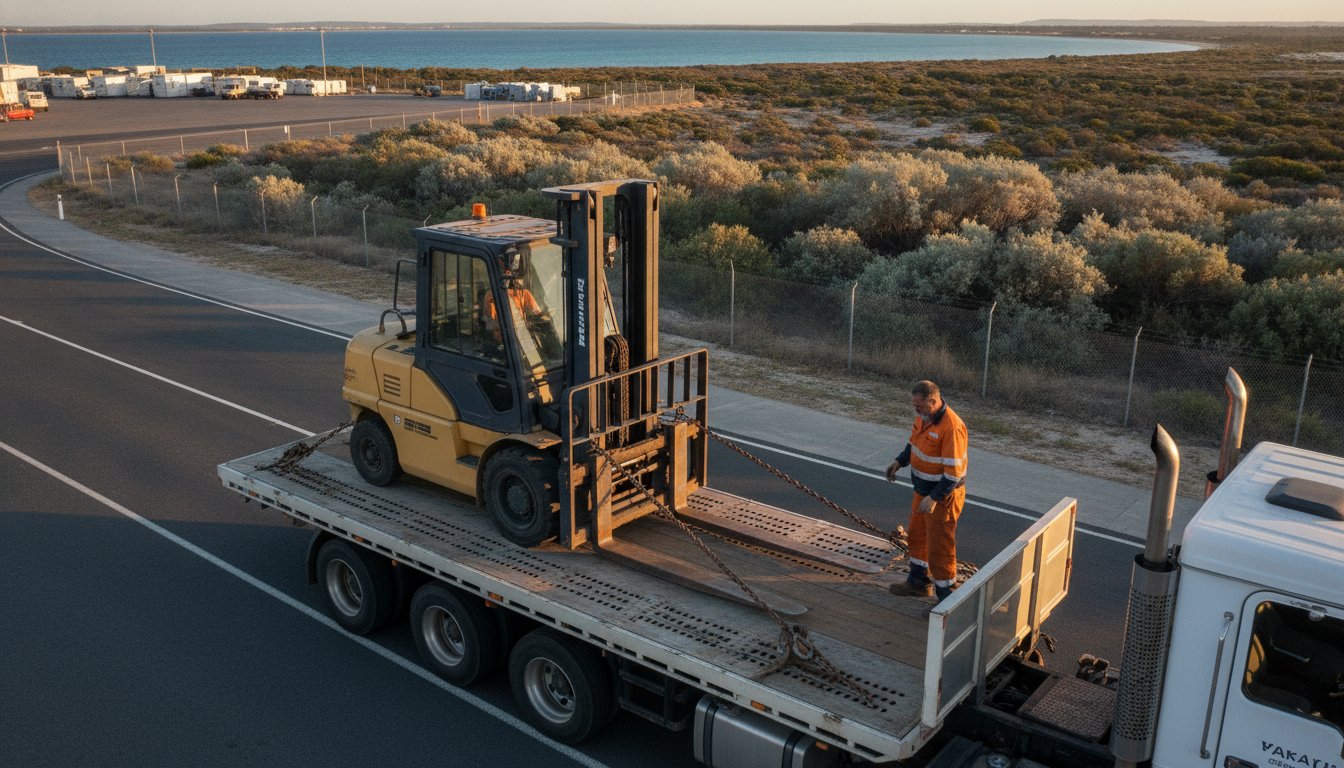
- Industrial assets: Heavy-duty forklifts, large-scale generators, and 20ft shipping containers.
Each of these assets requires a different approach to weight distribution and securement to ensure they arrive in the same condition they left. For operators needing to verify precise weight data for their assets, Independent Scale Service provides expert industrial weighing equipment services. Our experience across these sectors allows us to anticipate the specific needs of each machine type.
For property owners in the Perth Hills and surrounding regions, ensuring your land is ready for new equipment is just as important as the transport itself; you can visit Gidge Rural to access their essential acreage maintenance checklist.
The safety of a heavy load depends entirely on the equipment used to move it. Specialised trailers like super tilts are engineered to reduce loading angles, which is vital for low-clearance machines that risk damage on steeper ramps. We use high-tensile lashing and certified securement points to prevent any movement on the deck, especially when navigating the long, uneven stretches of regional WA roads. This approach ensures your asset is in a safe pair of hands from pick-up to drop-off. Machinery transport is a high-stakes logistics service requiring specific WA accreditation to ensure the safety of all road users and the protection of your equipment.
Step-by-Step: How to Prepare Your Machinery for Transport
Proper preparation is the difference between a smooth move and a site disaster. Before the truck arrives, spend time documenting the condition of your plant. Take dated photos from every angle and note any existing wear or minor damage. This isn’t about a lack of trust; it’s about clear communication. When you’re arranging machinery transport Perth for high-value assets, this documentation provides a baseline for everyone involved.
Don’t overlook the “weed and seed” requirements. Western Australia has rigorous biosecurity laws to prevent the spread of invasive species and soil-borne diseases. If your excavator is moving from a rural project back to a metro site, a thorough high-pressure washdown is mandatory. Many Tier 1 sites will refuse entry to any machine carrying visible mud or organic debris, which can lead to expensive turnaround delays.
Check all hydraulic lines and seals for weeping or active leaks. A small leak can become a major slip hazard on a steel tilt tray deck, compromising safety during the loading process. Ensure fuel caps are tightened and check that the machine has enough fuel for the operator to safely drive it onto the trailer. If you have concerns about specific site requirements, consulting with a local transport expert can help clarify the best approach for your specific equipment.
The Pre-Loading Checklist
A few minutes of mechanical preparation can prevent thousands of dollars in transit damage. Follow these essential steps before the transport driver arrives:
- Retract all hydraulic rams to protect the chrome surfaces from road grime and stone chips.
- Lower buckets, blades, or attachments to the floor or secure them with certified transport pins.
- Isolate batteries and engage the mechanical transport locks or articulating joint pins.
- Clear the loading zone of stray vehicles, materials, or debris so the driver has a straight, safe run.
Site Access and Egress Planning
Heavy transport rigs need significant room to manoeuvre. Measure your gate widths and check for low-hanging branches or overhead power lines that could obstruct a loaded truck. Soft ground or recently filled trenches are common traps for heavy vehicles, potentially leading to a bogged truck and hours of recovery work. Identifying underground services like septic tanks or water mains is also vital to prevent infrastructure damage. For complex projects, detailed construction equipment transport Perth planning ensures that every turn and overhead clearance is accounted for before the wheels start turning.
Selecting the Right Fleet: Tilt Trays vs. Super Tilts
Choosing the correct vehicle for machinery transport Perth ensures you aren’t paying for more truck than you need, while guaranteeing the absolute safety of your load. At Allout Towing, our 30 years of local experience has taught us that every piece of plant has a “perfect fit” in our fleet. Whether you’re moving a single forklift or a massive piece of mining equipment, the choice between a standard tilt tray and a super tilt comes down to weight, dimensions, and specific site conditions.
While low loaders are often used for massive fixed loads, tilt trays and super tilts offer the distinct advantage of self-loading capabilities. This often eliminates the need for expensive on-site cranes or specialised loading docks. By using the truck’s own hydraulic deck to create a gentle ramp, we can safely winch or drive equipment directly onto the bed, making site-to-site transfers faster and more cost-effective for your business.
When to Book a Tilt Tray
Standard tilt trays are the reliable workhorses of the Perth metro area. They’re ideally suited for smaller plant and equipment weighing up to approximately 10 to 12 tonnes. If you need to move a 20ft shipping container or a small excavator between suburban sites, a tilt tray is often the most agile and economical choice. These trucks can navigate tighter residential streets and smaller construction gates where a larger rig would simply struggle to turn. If you are managing a home renovation and want to find out more about Residential lift and mobility equipment sales and installation, our tilt trays provide the precision required for delivering such specialised mobility solutions to your property.
They’re also the preferred option for forklift transport Perth services. Because warehouse relocations often involve multiple short trips, the rapid loading and unloading cycle of a tilt tray keeps your project on schedule. This fleet type is perfect for urgent site transfers or recovering a machine that has suffered a breakdown and needs immediate transport to a repair centre.
The Power of the Super Tilt
One of the biggest advantages is the superior winch capacity. If a machine isn’t running, a super tilt can safely pull massive weights onto the deck without putting undue stress on the equipment’s frame. For those needing deep technical specifications on weight limits and deck lengths, our guide to super tilt heavy transport WA covers everything you need to know about moving oversized plant safely and legally.
Navigating WA Regulations: Permits and Compliance
Moving heavy plant across Western Australia involves more than just a strong winch and a sturdy trailer. It requires a deep understanding of the legal framework set by Main Roads WA. For any machinery transport Perth operation involving oversized loads, a Class 1 permit is often the first requirement. These permits are mandatory for vehicles and loads that exceed standard dimensions, such as an excavator that is wider than 2.5 metres or a loaded height that exceeds 4.3 metres. Failing to secure the right paperwork doesn’t just lead to heavy fines; it can result in your load being grounded mid-transit, throwing your entire site schedule into chaos.
Compliance also extends to the Chain of Responsibility (CoR) laws. These regulations mean that everyone involved in the transport chain, including the machinery owner, shares legal responsibility for the safety of the journey. You’re required to ensure that the transport operator is following fatigue management rules and that the load is secured according to national standards. Allout Towing manages permit applications to streamline the process for clients, taking the administrative burden off your desk and ensuring every move is fully compliant before the truck leaves the yard.
Oversized Load Requirements in Perth
When a load exceeds specific width or height thresholds, it triggers the need for pilot vehicles and escorts. In the Perth metro area, these “wide load” movements are often subject to strict curfew restrictions. Generally, oversized machinery cannot move on major highways during peak morning and afternoon traffic periods to ensure public safety. Planning for these windows is essential to avoid having a rig sitting idle on the shoulder of the Kwinana Freeway waiting for the curfew to lift.
Route planning is the other critical pillar of compliance. We’ve all seen the news reports of trucks meeting their match at the infamous Bayswater Bridge or similar low-clearance structures. Our team conducts thorough route assessments to identify low bridges, narrow local council roads, and overhead power lines. This “last mile” planning is vital for getting your gear onto tight suburban sites without damaging public infrastructure or your own equipment.
Safety and Insurance Compliance
Before any machinery is loaded, you must verify that your transport partner carries comprehensive “Goods in Transit” insurance. Standard vehicle insurance rarely covers the multi-million dollar value of specialized mining or construction plant. In the rare event of a breakdown or a site incident, having access to professional truck towing Perth services ensures that both the transport rig and your machinery can be recovered safely without further damage. To ensure your next move meets every WA safety and legal standard, contact our compliance team for a detailed quote.
Why Allout Towing is Perth’s Trusted Machinery Transport Partner
Choosing a partner for machinery transport Perth isn’t just about finding a truck; it’s about finding an organisation you can trust with your most valuable assets. Allout Towing has spent over 30 years building a reputation for unwavering reliability across Western Australia. As a family-owned and operated business, we don’t hide behind corporate formality. We understand the pressure of site deadlines and the financial impact of equipment sitting idle. Our history in the local industry means we’ve seen almost every logistical challenge Perth can throw at us, from tight metro construction sites to remote mining deliveries.
Project schedules rarely stick to a standard nine-to-five window. That’s why we offer 24-hour service for both emergency recoveries and scheduled transport. If a machine breaks down at midnight or needs to be on-site before the first shift starts at dawn, we’re ready to move. This commitment to availability ensures your project keeps moving, no matter the hour. We treat every load with our “safe pair of hands” philosophy, applying the same level of care to a heavy excavator as we do to a prestige luxury vehicle. From basic car towing to specialised super tilt heavy haulage, our comprehensive service covers the full spectrum of WA’s transport needs.
The Local Advantage
Our team possesses a deep, intuitive knowledge of Perth’s suburbs and the challenging conditions of regional WA country roads. This local expertise allows us to anticipate potential bottlenecks before they happen. When you call us, you’re speaking to a team that values personal service. We make an effort to know your name and understand your specific business requirements, rather than treating you as just another job number in a database. Supporting us means you’re supporting a local WA business that has been an integral part of the state’s industrial landscape for over three decades.
Book Your Machinery Transport Today
Getting your equipment where it needs to be starts with a clear, transparent quote. To help us provide the most accurate pricing, please have the dimensions, approximate weight, and specific site conditions of both the pickup and delivery locations ready. Whether you’re dealing with a difficult load-out or a straightforward metro transfer, we’re here to provide the professional support you need. Contact Allout Towing for a Machinery Transport Quote and experience the peace of mind that comes with hiring Perth’s most dependable transport team.
Secure Your Next Heavy Move with Confidence
Moving heavy plant across Western Australia doesn’t have to be a source of site-day stress. By focusing on thorough equipment preparation, selecting the right specialised fleet, and ensuring full compliance with Main Roads WA permits, you protect both your budget and your assets. Whether you’re navigating tight metro streets or the long hauls of regional WA, having a seasoned partner makes the difference between a project delay and a successful delivery.
Allout Towing brings over 30 years of local experience to every job, offering a “safe pair of hands” for your most valuable equipment. Our family-owned team provides 24/7 emergency support and a fleet that’s fully insured and compliant with all state regulations. Don’t leave your site logistics to chance or risk the hidden costs of unreliable providers.
Get a Reliable Machinery Transport Quote from Allout Towing today and keep your project on track. We’re ready to help you master machinery transport Perth with the reliability your business deserves.
Frequently Asked Questions
Do I need a permit to move my machinery in Perth?
You will need a permit from Main Roads WA if your equipment exceeds standard legal dimensions, such as being wider than 2.5 metres or higher than 4.3 metres. These are known as Class 1 permits. While the specific requirements depend on your route and load size, we take the stress out of the process by managing the permit applications for you. This ensures your move is fully compliant before the truck even arrives on site.
How much does machinery transport cost in Western Australia?
The cost of machinery transport Perth depends on several variables, including the total weight of the plant, its dimensions, and the distance of the haul. Special requirements like pilot vehicles or Main Roads permits also influence the final price. Because every move is unique, we provide tailored quotes based on your specific site conditions and equipment needs. Contacting us with your machine’s make and model allows us to give you a transparent, accurate estimate.
Can you move non-running or broken-down machinery?
Yes, we can safely relocate non-running or broken-down machinery using our specialised winching equipment. Our tilt trays and super tilts are designed to pull immobilised assets onto the deck with precision, avoiding further mechanical damage. Whether it’s a site breakdown or a machine destined for a repair centre, our operators have the experience to handle difficult recoveries. Just let us know the machine’s condition when booking so we can bring the right recovery gear for the job.
What is the maximum weight a Super Tilt can carry?
Our super tilt trailers are engineered for heavy-duty haulage, typically handling loads up to approximately 25 tonnes depending on the specific configuration and weight distribution. These trailers are the preferred choice for oversized excavators, dozers, and heavy industrial plant that exceed the capacity of a standard tilt tray. If you have an exceptionally heavy or oddly shaped asset, our team can review the technical specs to ensure it fits safely within our fleet’s operating limits.
Do you provide machinery transport to regional WA towns like Karratha or Kalgoorlie?
We provide comprehensive machinery transport Perth services across the entire state, including regular hauls to regional hubs like Karratha, Port Hedland, and Kalgoorlie. Our team is experienced with the unique challenges of long-distance WA country towing, such as managing fatigue on long stretches and navigating remote site access. Whether you’re moving gear between mine sites or sending agricultural equipment to the Wheatbelt, we have the reach to get your assets where they need to go.
Is my equipment insured while it is on your truck?
Your equipment is protected by comprehensive “Goods in Transit” insurance while it is being handled or transported by our team. We understand that heavy plant represents a significant capital investment for your business, so we maintain high levels of coverage to give you total peace of mind. This insurance is a standard part of our service, ensuring that your assets are in a safe pair of hands from the moment they are loaded until the final drop-off.
How much notice do I need to give for a machinery move?
While we offer 24/7 emergency support for urgent site recoveries, providing 24 to 48 hours of notice is ideal for scheduled moves. This lead time is particularly important if your machinery requires Main Roads WA permits or pilot vehicles, as these administrative steps can take time to finalise. For standard metro moves within Perth, we can often accommodate tighter schedules, but booking in advance helps us guarantee your preferred time slot and ensures a seamless site transition.
What is the difference between a tilt tray and a low loader for machinery?
The main difference lies in the loading method. A tilt tray uses a hydraulic sliding deck to create a ramp, allowing the truck to winch or drive equipment directly onto the bed without external help. A low loader has a fixed, lower deck height and often requires separate ramps or a crane for loading. While low loaders are excellent for massive, tall loads, tilt trays and super tilts offer much more flexibility for rapid, self-sufficient site-to-site transfers.