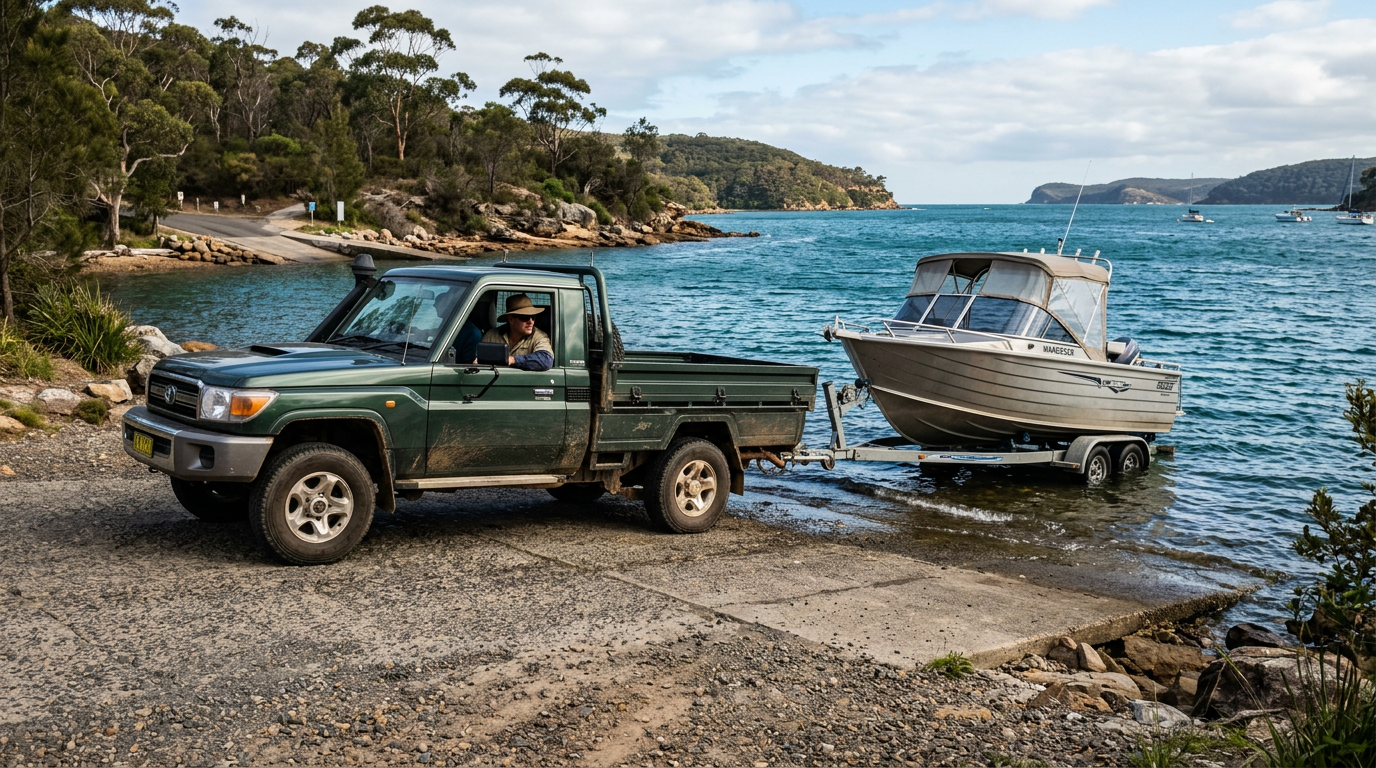
Deep water boat launches can become difficult when the tow vehicle loses traction near the waterline. Wet surfaces, algae, sand, loose gravel and soft edges can all affect how a ute and trailer move on a ramp.
Boat ramp recovery requires careful assessment because continuing to spin the wheels can make the vehicle more deeply embedded. If a boat and trailer are still attached, the recovery also needs to account for the vessel, trailer and tow vehicle together.
Why Boat Ramp Recovery Becomes Complicated
Boat ramps can have changing surface conditions, particularly around the waterline. A surface that appears firm may become slippery or unstable once it is wet.
Allout Towing Services provides towing and recovery services across Perth, including specialised towing and boat towing. The company has more than 30 years of towing industry experience and operates 24/7.
Traction Loss Near the Waterline
Loss of traction can occur when tyres encounter a slippery or loose ramp surface. Applying excessive throttle can cause the tyres to spin and potentially worsen the situation.
If the vehicle begins losing traction, stop and assess the position of the ute, trailer and boat. The next step should depend on the surface, vehicle position, available recovery points and whether the combination can be moved safely.
Warning Signs Before Launching Too Deep
Before launching, look at the ramp and surrounding surface. Wet algae, loose gravel, sand, deep wheel ruts or soft edges can affect traction.
The tow vehicle and trailer should also be appropriate for the boat being launched. Consider the combined weight and the vehicle manufacturer’s towing and loading specifications before entering the ramp.
Check the Ramp and Trailer Setup
Before reversing towards the water, check the trailer’s visible components and make sure the boat is properly secured.
The coupling, safety chains, winch and straps should be checked before launching. Trailer lights should also be functioning before the vehicle enters the water, subject to the trailer manufacturer’s recommended launch procedure.
If the ramp surface appears unsuitable or the vehicle cannot safely reach the required launch position, reconsider the launch rather than continuing into an increasingly difficult position.
What Not to Do When a Ute Gets Bogged
If the tyres are spinning without moving the vehicle, avoid repeatedly applying more throttle. This can dig the tyres further into a soft surface and make recovery more difficult.
Do not attempt an improvised recovery without considering the recovery points, equipment and position of the boat and trailer. A sudden pull from an unsuitable point can damage vehicle or trailer components.
Keep the Load Stable
If a boat and trailer are attached to a bogged vehicle, recovery planning needs to account for the complete combination.
Allout Towing’s tow fleet includes trucks for different towing and transport requirements. Its published fleet includes tilt slide trucks with capacities ranging from 4.5 tonnes to a heavier 10-tonne capacity, with the appropriate vehicle depending on the job.
The available equipment does not mean every bogged ute or boat can be recovered using the same method. Vehicle position, total weight, access and the condition of the ramp need to be assessed first.
How Professional Watercraft Retrieval Helps
Professional recovery can be useful when a tow vehicle is stuck near water and the driver cannot safely resolve the situation.
The recovery operator can assess the position of the vehicle and trailer, the condition of the surface, available access and the most suitable recovery or towing equipment.
Allout Towing’s specialised towing service includes boat towing across Northern Perth, alongside other specialised towing requirements.
Equipment, Angles and Tie-Downs
Recovery equipment needs to be appropriate for the vehicle and load. Recovery points, attachment methods and the direction of force should be considered before any pulling operation begins.
The load-planning principles used in heavy machinery towing provide a useful comparison for larger or unusual recovery situations. Rated equipment, load weight, access and controlled movement matter when transporting or recovering heavy loads. The heavy machinery service itself is separate from Allout Towing’s boat towing service.
Preventing the Problem Before It Starts
A successful launch begins before the vehicle reaches the waterline. Check the ramp conditions, weather, available space and the suitability of the tow vehicle and trailer.
Avoid backing farther into the water than necessary. Follow the boat and trailer manufacturer’s launching instructions and keep the tow vehicle positioned on the firmest practical surface.
If traction begins to deteriorate, stop rather than continuing deeper into the ramp.
When to Choose a Different Launch Plan
A different ramp or transport method may be worth considering if the available launch area appears unsuitable for the vehicle and boat combination.
If the tow vehicle is close to its towing limits or the ramp conditions are poor, professional boat transport may also be an option. Allout Towing’s specialised towing service includes boat towing across Northern Perth, allowing owners to discuss alternative transport requirements before taking an unsuitable combination onto the ramp.
Protecting the Vehicle After Recovery
A vehicle that has been exposed to water during a difficult recovery should be checked before returning to normal use. Pay attention to brakes, tyres, electrical components and any visible damage.
The boat and trailer should also be inspected. Check the coupling, safety chains, winch, straps, trailer lights and other components that may have experienced additional strain during the recovery.
Check the Setup Before Driving Away
Once the vehicle has been recovered to a safe position, do not immediately assume the entire combination is ready for the road.
Look for bent or damaged components, changes in coupling position, displaced straps and damaged trailer lights. If the trailer or boat has entered deeper water than intended, follow the manufacturer’s recommended maintenance procedures for the affected components.
If the tow vehicle or trailer has suffered visible damage, have the relevant component inspected before continuing the journey.
For valuable boats and other high-value loads, the careful handling principles used in prestige vehicle transport provide a useful comparison. Allout Towing’s prestige vehicle service is specifically for prestige and classic cars, but its emphasis on careful transport and protecting valuable loads illustrates why controlled handling matters during recovery.
Understanding Insurance Before Recovery
Insurance arrangements should be clarified before a recovery where possible. Do not assume that a particular policy automatically covers every towing, recovery or water-related incident.
Allout Towing states that it can bill major insurance providers directly in applicable towing situations. Whether this applies to a specific boat ramp recovery depends on the circumstances and the relevant insurer.
If an incident is connected to an insurance claim, contact the relevant insurer and confirm what information or approval is required before arranging recovery.
FAQ
What should a driver do first during boat ramp recovery?
Stop applying excessive throttle and assess the situation. Check the position of the ute, boat and trailer, the ramp surface and whether there is a safe way to recover the vehicle.
Can a bogged ute damage the boat trailer?
Yes. An unsuitable or uncontrolled recovery can place additional force on the coupling, drawbar, winch, safety chains or other trailer components.
When is professional watercraft retrieval needed?
Professional assistance is worth considering when the vehicle is stuck near water, the trailer is loaded, the ramp surface is unstable or the driver cannot identify a safe recovery method.
Should I keep driving if the ute is still moving slowly?
Not necessarily. If the vehicle is losing traction or moving into softer ground, continuing may make the situation worse. Stop in a safe position and reassess the recovery plan.
Conclusion
Boat ramp recovery is safest when the tow vehicle, trailer and vessel are treated as one transport combination. Checking ramp conditions beforehand and stopping early when traction is being lost can help prevent a difficult launch from becoming a more serious recovery situation.
Allout Towing Services provides specialist tow service support, including boat towing across Northern Perth. To discuss watercraft recovery or transport requirements, call 0418 959 216.