A boat trailer can appear roadworthy while its wheel bearings are already showing signs of wear. For Perth boat owners, checking the bearings before a longer trip can help identify problems before they become a roadside breakdown.
Trailer bearing problems can develop through water exposure, inadequate lubrication, contamination, wear or extended periods without use. Unusual heat, grinding noises or excessive wheel movement should not be ignored. If a bearing requires attention, arrange inspection or repair before the trailer is used for another journey.
Why Trailer Bearing Problems Happen
Boat trailers can operate in demanding conditions. Launching and retrieving a boat exposes trailer components to water, while repeated use, storage and road loads can contribute to component wear.
Allout Towing Services handles boats, trailers and other transport requirements across Perth. The company has more than 30 years of experience in the towing industry and provides towing services 24 hours a day, seven days a week.
Saltwater and Storage Risk
Water exposure is one reason boat trailers require regular maintenance. Saltwater can contribute to corrosion and deterioration of trailer components, particularly when equipment is not properly maintained after marine use.
Extended storage can also allow existing problems to go unnoticed. A trailer that has not been used for several weeks or months should be checked before being taken onto public roads.
Trailer bearing problems may not be obvious during a short driveway movement. A longer journey places more sustained load on the trailer, making it important to address known issues before departure.
Warning Signs Before the Trailer Moves
Some bearing problems produce noticeable warning signs. A wheel may develop excessive movement, a bearing may make grinding or rumbling noises, or one hub may become significantly hotter than the other during use.
These signs warrant inspection rather than another trip.
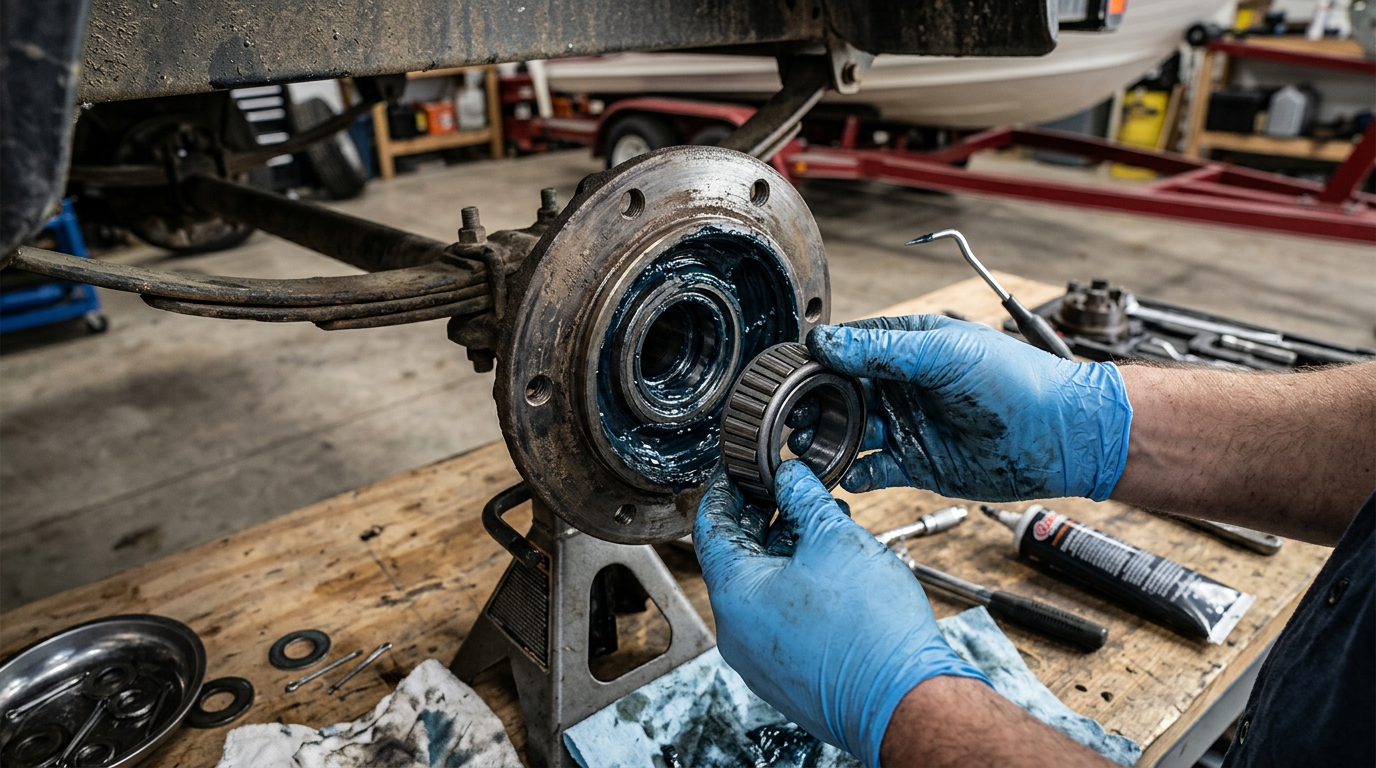
Wheel bearing repair or replacement should be carried out by a suitably qualified person when a bearing is worn or damaged. Continuing to tow with a suspected bearing problem can increase the risk of further trailer damage or a roadside breakdown.
Simple Checks at Home
If you are familiar with trailer maintenance and have the appropriate equipment, a basic inspection can help identify obvious problems. With the trailer safely supported, check for abnormal wheel movement and listen for unusual sounds when the wheel is rotated.
Do not place yourself underneath an inadequately supported trailer. If you are unsure how to inspect the bearings safely, have the trailer checked by a qualified mechanic or trailer specialist.
Bearing checks should also form part of a broader trailer inspection. Check the tyres, wheel nuts, lights, coupling, safety chains and other visible components before towing.
What Happens During a Mid-Tow Failure
A serious bearing failure can cause substantial heat and damage around the wheel hub. In severe cases, a damaged bearing can affect the hub, axle or wheel assembly.
If a trailer develops unusual vibration, smoke, grinding, significant heat or instability while travelling, find a safe location to stop as soon as practical. Do not continue towing simply because the destination is nearby.
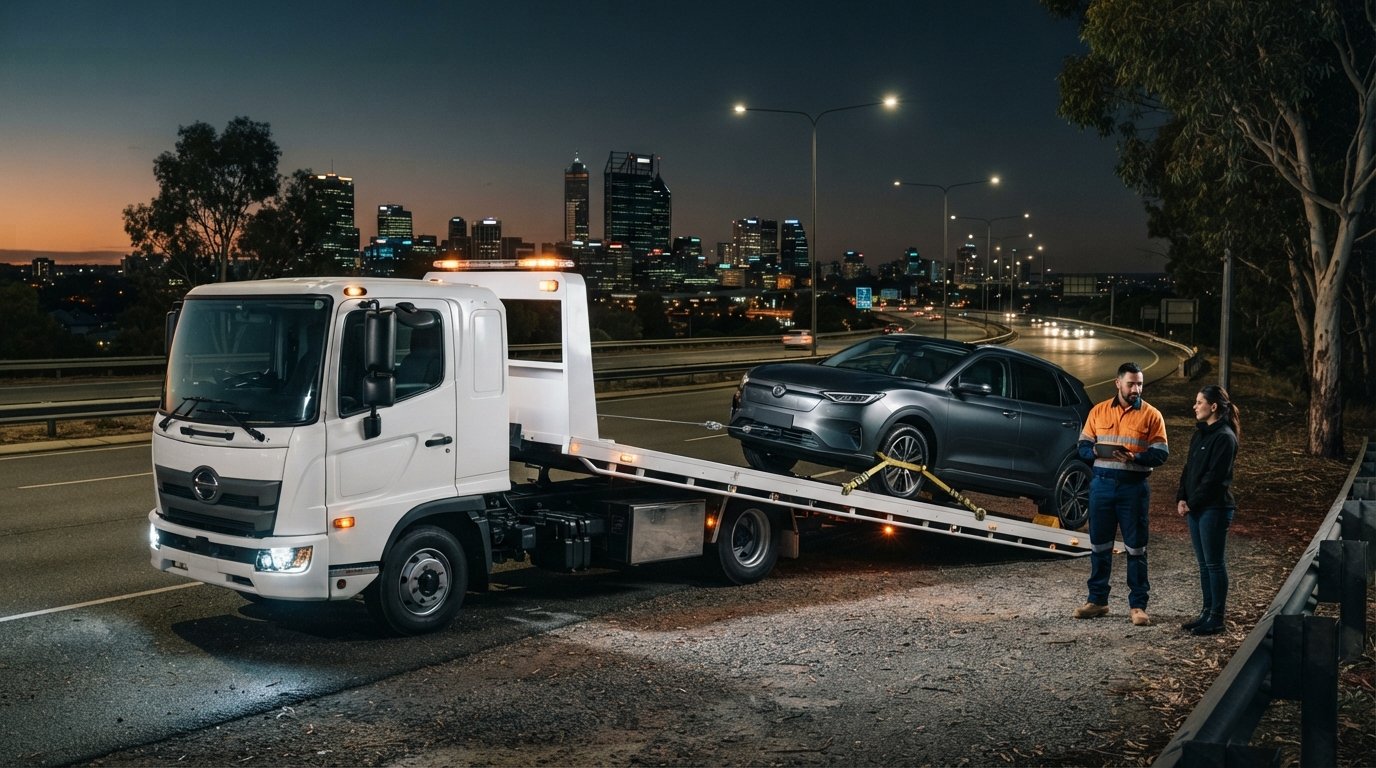
If the boat and trailer cannot safely continue, professional recovery may be required. Allout Towing’s tow fleet includes several truck types for different towing and transport requirements. Its published fleet includes tilt slide trucks with capacities of 4.5 tonnes and a heavier tilt slide truck with a 10-tonne capacity.
Avoid Forcing the Trailer Onward
A bearing problem can become more serious when the trailer continues travelling under load. Heat and friction can contribute to additional damage, while a severely damaged wheel or hub can leave the boat and trailer stranded.
Once the trailer is in a safe position, the next step should be determined by the condition of the boat, trailer and affected components.
If the trailer cannot be safely towed, tell the recovery operator about the bearing problem before the job begins. Information about the boat, trailer, location and visible damage can help determine the appropriate recovery approach.
Planning Wheel Bearing Repair Before a Trip
Wheel bearing maintenance should be part of routine trailer servicing rather than something left until a problem develops.
This is particularly important for boat trailers that are regularly exposed to water or have spent an extended period in storage. A qualified mechanic or trailer specialist can assess the bearings, seals, hubs and related components and advise whether repair or replacement is required.
If a trailer has already developed unusual heat, noise or wheel movement, arrange an inspection before using it again.
Keeping Records for Repeat Trips
Keeping a simple record of trailer inspections and maintenance can make it easier to know when components were last checked.
For larger boats and heavier transport requirements, the load-planning principles used in heavy equipment towing provide a useful comparison. Weight, equipment capacity, load security and access all need to be considered when planning a transport job. Allout Towing’s heavy machinery service itself is specifically focused on machinery and equipment transport rather than trailer bearing repair.
When to Call a Professional Tow Operator
Professional towing can be useful when a boat trailer becomes disabled and cannot safely continue. It may also be appropriate when the trailer has suffered damage that prevents normal towing or when the owner does not have suitable recovery equipment.
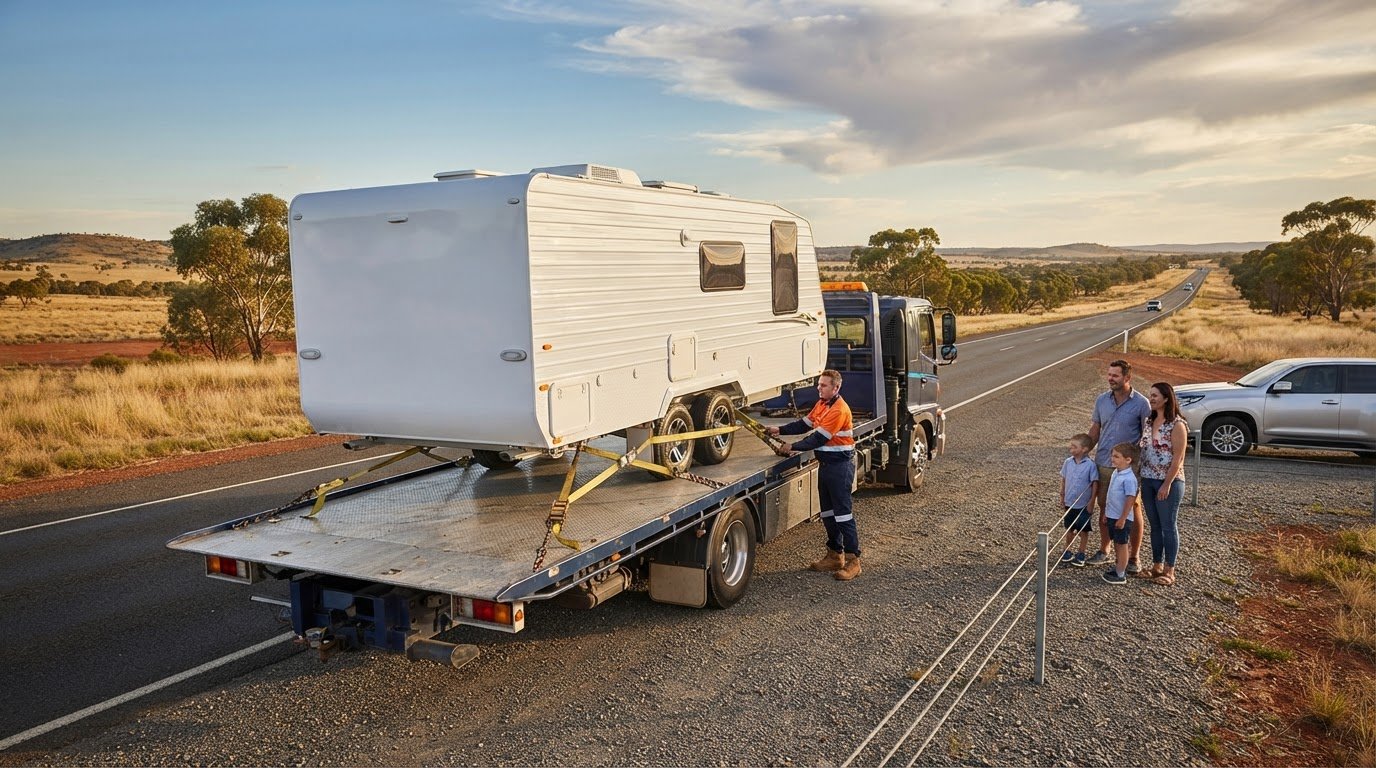
Allout Towing’s specialist tow service specifically includes boat towing across the wider Northern Perth area. The company states that its specialised towing equipment can transport boats, caravans, motorbikes and heavy machinery.
When arranging recovery, provide the operator with the boat’s approximate size and weight, trailer condition, location and details of the bearing problem. This helps the operator understand the job before arriving.
Protecting the Boat During Recovery
A disabled trailer may require a different recovery method from a normal boat tow. The condition of the wheel, hub, axle and trailer should be considered before attempting to move it.
The boat should remain appropriately secured during any recovery movement. Loose equipment should be secured, and any known damage or handling concerns should be communicated to the recovery operator.
For valuable recreational boats, the careful handling principles associated with prestige car towing provide a useful comparison. Allout Towing’s prestige vehicle service focuses on carefully securing and transporting high-value, vintage and collectible vehicles, although that service is specifically for cars rather than boats.
Preventive Maintenance Habits
Regular maintenance is more effective than waiting for a bearing to fail. After launching a boat, follow the trailer manufacturer’s maintenance recommendations for cleaning, lubrication and inspection.
Before a longer journey, check the trailer’s tyres, lights, coupling, safety chains, brakes and wheel assemblies. Pay particular attention to any component that has previously shown signs of wear.
A spare wheel can be useful in the event of a puncture, but it does not address a worn or damaged bearing. If a hub is producing unusual noise or heat, the underlying problem should be investigated before another trip.
Pay Attention During a Test Drive
A short test drive can reveal changes in trailer behaviour before a longer journey. Stop in a safe location and check for unusual smells, sounds, vibration or excessive heat around the wheels, without touching a potentially hot component directly.
If one hub is noticeably hotter than the others, treat that as a reason for further inspection rather than assuming it is normal.
Likewise, unusual vibration or changes in how the trailer tracks behind the vehicle should not be ignored. Pulling over early, when it is safe to do so, can help prevent a developing problem from becoming a more serious roadside breakdown.
FAQ
What causes trailer bearing problems?
Common contributing factors include normal wear, inadequate lubrication, contamination, water exposure, damaged seals, corrosion and poor maintenance. Boat trailers can require particular attention because they may be exposed to water during launching and retrieval.
How can wheel bearing repair prevent a breakdown?
Repairing or replacing a worn or damaged bearing before a journey can address a known mechanical problem before it develops into a roadside failure. A qualified mechanic or trailer specialist should determine the appropriate repair.
Should a boat trailer be towed after a bearing noise appears?
No. Grinding, unusual noise, excessive heat or wheel movement should be treated as warning signs requiring inspection. Continuing to tow may increase the risk of further damage.
What should I do if a bearing fails during a trip?
Stop in a safe location as soon as practical and avoid continuing to tow if the trailer is unsafe. Contact a suitable recovery provider and explain that the trailer has a suspected or confirmed bearing problem.
Conclusion
Trailer bearing problems are easier to address before a boat reaches the road than after a failure leaves the trailer stranded. Regular inspection, appropriate maintenance and attention to warning signs can help reduce the likelihood of an avoidable breakdown.
When a boat trailer has become unsafe to tow, Allout Towing Services provides specialised towing and boat transport across the wider Northern Perth area. To discuss recovery or transport requirements, call 0418 959 216.