When your ute breaks down with $8,000 worth of tools locked in the tray, or your work van stalls during peak hour on the Mitchell Freeway, the clock doesn’t just tick-it hammers. Every minute off the road means lost jobs, frustrated clients, and revenue bleeding out faster than you can explain the delay.
Trade vehicles aren’t just transport. They’re mobile offices, warehouses, and livelihoods rolled into one. That’s why professional trade vehicle towing Perth demands a different approach than standard passenger car recovery. We’ve towed everything from fully loaded plumber’s vans to dual-cab utes carrying scaffolding, and the pattern remains consistent: tradespeople need speed, security, and zero damage to their equipment.
All Out Towing operates across Perth’s northern suburbs-from Joondalup to Yanchep, Butler to Balcatta-with a fleet designed specifically to handle the unique demands of commercial trade vehicles. We’re not discussing standard hook-and-chain jobs. Proper tradie breakdown northern suburbs recovery demands precision, security, and understanding that your vehicle isn’t just metal and rubber-it’s your income.
Why Trade Vehicles Need Specialised Emergency Towing
Here’s the reality: a tradie’s vehicle carries more weight, more value, and more complexity than most passenger cars. A typical dual-cab 4WD ute might be hauling a tonne of tiles, a diesel generator, or a full toolkit worth more than the vehicle itself. Standard towing methods can damage suspension, scratch trays, or worse-shift unsecured loads during transport.
All-Wheel-Drive and Four-Wheel-Drive Systems
All-wheel-drive and four-wheel-drive systems dominate the trade vehicle market. Towing these incorrectly wrecks drivetrains through mechanical stress never intended by engineers. It’s like trying to drag a shopping trolley sideways-everything binds up, gears grind, and you’re facing a repair bill dwarfing the towing cost.
Modern AWD systems in vehicles like the Ford Ranger, Toyota HiLux, and Mitsubishi Triton employ sophisticated multi-plate clutch arrangements distributing torque variably between front and rear axles. These systems expect all wheels rotating at matched speeds within narrow tolerances. When two wheels lift during towing whilst two remain grounded, the system interprets this as catastrophic traction loss requiring maximum intervention.
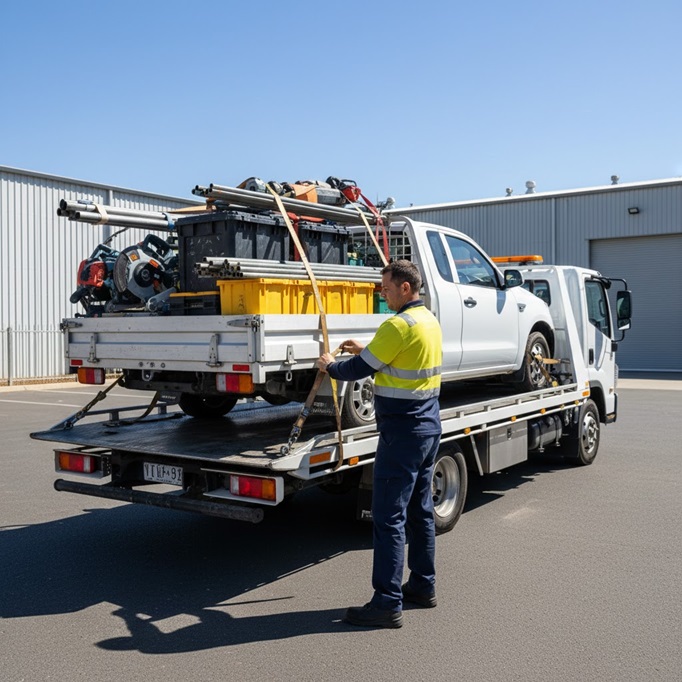
Professional operators protecting commercial assets use commercial-grade tilt tray towing for the majority of trade vehicle recoveries. The entire deck lowers to ground level, your vehicle rolls or winches on without lifting a single wheel, and everything-tools, materials, equipment-stays exactly where you left it. No hooks. No angles. No risk.
Weight Distribution and Load Concerns
Commercial ute emergency towing requires understanding how loads affect vehicle dynamics during recovery. A plumber’s van might weigh 2.8 tonnes empty but hit 3.5 tonnes when loaded with pipe stocks, a water jetter, and hand tools. An HVAC technician’s truck could carry compressors, refrigerant cylinders, and ducting materials shifting the centre of gravity dramatically.
Standard towing methods create three critical risks for loaded utes:
Weight shift during lift: When a hook truck lifts the front or rear of a ute, tools and equipment slide toward the elevated end. Heavy items like compressors, generators, or toolboxes can shift suddenly, damaging the tray or-worse-breaking free during transport.
Unsecured items becoming projectiles: A ladder, toolbox, or sheet of plywood sitting safely in your tray during normal driving becomes a hazard when the vehicle tilts at 30-40 degrees on a traditional tow.
Damage to specialised fitouts: Many commercial utes have custom trays, canopies, drawer systems, or roof racks worth $5,000-$15,000. A careless lift can bend aluminium trays, crack fibreglass canopies, or snap roof rack mounts.
For lighter commercial vans or 2WD utes without sensitive drivetrains, we assess whether conventional tows prove safe. However, if any doubt exists, we default to the tilt tray. Your business can’t afford the gamble.
Common Trade Vehicle Breakdowns Across Northern Suburbs
The northern suburbs stretch from coastal Mindarie to semi-rural Yanchep, with industrial pockets around Wangara and Malaga. This mix of terrain and usage patterns creates specific breakdown hotspots requiring experienced work vehicle breakdown Perth operators.
Mitchell Freeway and Major Arterials
Mitchell Freeway congestion proves brutal during peak hours. A stalled van near the Hester Avenue exit doesn’t just inconvenience you-it creates safety hazards for every commuter stacked behind. We prioritise freeway callouts because the risk multiplies by the minute.
Wanneroo Road and Marmion Avenue see constant trade traffic. Overloaded vehicles, stop-start driving, and extended idling at job sites stress engines and transmissions. We’ve recovered dozens of vans that overheated in summer traffic or suffered clutch failure after months of heavy loads.
Construction Sites and Industrial Zones
Construction sites around Alkimos and Eglinton generate their own challenges. New estates mean unmade roads, dust, and debris. Air filters clog, tyres puncture on stray nails, and batteries drain from running power tools off the vehicle’s electrical system. If your ute won’t start after a long day on-site, we bring roadside assistance first-jump starts and mobile battery replacements often get you moving without requiring full tradie breakdown northern suburbs recovery.
The industrial areas around Wangara and Malaga see constant trade vehicle movement. When breakdowns happen in these areas, they often block access for other commercial vehicles. We prioritise these recoveries because we understand the ripple effect one blocked trade vehicle creates throughout supply chains.
Coastal Salt Exposure Effects
Coastal salt exposure accelerates corrosion in vehicles working near the ocean. Tradies servicing Quinns Rocks, Mullaloo, or Burns Beach face accelerated wear on brake lines, exhaust systems, and electrical connections. When these components fail, they fail catastrophically and suddenly.
Salt-laden air attacks metal components relentlessly. Brake lines develop pinhole leaks. Exhaust hangers corrode and snap. Electrical connections oxidise and fail. These failures often occur without warning during operation, stranding vehicles requiring immediate northern suburbs trade towing response.
What Happens When You Call for Emergency Trade Vehicle Towing
Speed matters, but so does communication. When you contact us for assistance, we ask specific questions that passenger car operators skip entirely:
Vehicle specifications: What’s the make, model, and drive type (2WD, 4WD, AWD)? This determines which truck we dispatch and recovery methods we’ll employ.
Cargo assessment: What’s loaded in the tray or van? Tools, materials, equipment? A ute with a tonne of tiles in the tray requires different handling than an empty van.
Location and access: Is the vehicle accessible, or is it stuck in a driveway, worksite, or tight parking area? Site access challenges affect response planning.
Destination requirements: Do you need the vehicle dropped at a mechanic, your yard, or back to your home base? For insurance jobs, we work directly with most major insurers.
These details determine which truck we dispatch and how we approach the recovery. A Ford Ranger loaded with plumbing gear needs different handling than an empty HiAce van.
Our average response time across the northern suburbs sits at 25-45 minutes, depending on traffic and your exact location. For urgent freeway breakdowns or situations blocking traffic, we escalate priority through instant-response emergency services.
On-Site Recovery Procedures
Once on-site, our operators secure your vehicle and cargo following systematic procedures. If tools sit loose in the tray, we help strap them down before loading. If you’ve got ladders or timber extending past the tailgate, we assess whether they need separate securing or removal before transport. Nothing shifts during the tow.
We photograph vehicles from every angle before loading begins. These time-stamped digital images create indisputable records of vehicle conditions at pickup moments. If anything happens during transport-which won’t occur with proper procedures but documentation matters regardless-we’ve got definitive proof of before states.
Protecting Your Tools and Equipment During Recovery
Let’s be direct: tool theft remains rampant across Perth. A van full of power tools represents a $15,000 target sitting on the roadside. Every minute your broken-down vehicle sits unattended increases risk exponentially.
Security Protocols During Transport
When we arrive, we treat your vehicle as the asset it represents. If you can’t stay with the vehicle, we photograph the load, document what’s secured, and keep everything locked during transport. Our tilt tray trucks feature tie-down points and ratchet straps rated for commercial loads-your equipment doesn’t move.
Professional tradie vehicle recovery services include comprehensive cargo securing as standard procedure, not optional extras. Toolboxes get checked and locked. Loose items in trays get stabilised with proper restraints. Materials that could shift during transport get assessed-if safety concerns exist, we discuss options before moving.
For high-value loads-say, a sparkie’s van with $20,000 in test equipment and cable-we recommend you travel with us or arrange separate transport for irreplaceable items. We’ve never experienced theft incidents, but we’d rather you possess peace of mind than harbour regret.
Overnight Storage Options
If your vehicle needs storage overnight before repairs commence, we deliver it to secure yards rather than leaving it street-side at workshops. This simple step eliminates risk entirely whilst providing controlled access to your vehicle and equipment.
Secure storage facilities provide climate-controlled environments with 24-hour surveillance and restricted access. Your vehicle and tools remain protected from weather, theft, and vandalism during vulnerable periods between breakdown and repair commencement.
Insurance, Fleet Management, and Getting Back to Work Fast
Most trade vehicles operate under insurance coverage, but policies vary dramatically. Some policies include towing up to set dollar amounts; others require upfront payment with later reimbursement. We provide itemised invoices immediately after service, including GST breakdowns, ensuring you possess everything your insurer or accountant needs.
Fleet Support Arrangements
For businesses running multiple vehicles, we offer fleet support arrangements through business-protecting vehicle recovery programmes. If you’ve got three vans and two utes on roads, breakdowns aren’t rare-they’re inevitable statistical certainties. We establish priority response agreements and consolidated monthly billing, so your admin team isn’t chasing receipts every time vehicles require recovery.
Fleet managers appreciate our systematic approach. When managing multiple vehicles across different sites, you need recovery services that communicate clearly, provide accurate ETAs, and handle paperwork properly. We’ve built long-term relationships with construction companies, electrical contractors, and plumbing businesses by demonstrating reliability when their vehicles experience failures.
Workshop Coordination
The faster you get vehicles to trusted mechanics, the faster you’re back earning. We work with workshops across northern suburbs and can recommend specialists for diesel engines, auto electrical faults, or transmission rebuilds if you don’t maintain regular mechanic relationships. We’re not paid for referrals-we simply know who performs solid work because we’ve delivered hundreds of vehicles to them over 15 years.
Professional trade vehicle towing Perth operators understand that your relationship with your mechanic matters. We’ll deliver vehicles wherever you need them-whether that’s your regular workshop in Malaga, a specialist diesel mechanic in Wangara, or an insurance-approved repairer in Balcatta.
Why Northern Suburbs Tradies Choose Tilt Tray Over Hook Towing
Think of hook towing like this: you’re lifting the front or rear of the vehicle, leaving the other end rolling on its own wheels. For rear-wheel-drive vans, that might work adequately. For 4WD utes with transfer cases engaged, it’s mechanical suicide. The drivetrain fights itself the entire journey, shredding gears and destroying differentials.
Tilt Tray Mechanical Advantages
Tilt tray towing eliminates that risk entirely. The truck’s deck hydraulically lowers to 10-degree angles or flatter. Your vehicle winches onto the deck under its own weight distribution. Once secured, the deck lifts back to horizontal, and your ute rides like it’s parked in a driveway. No wheels turning. No strain. No damage.
This method also protects lowered vehicles, utes with bull bars or heavy-duty bumpers, and anything with aftermarket suspension. If you’ve spent money modifying your work vehicle, the last thing you want involves tow trucks scraping your custom setup across bitumen.
We’ve towed dual-cabs with toolboxes, ladder racks, and roof-mounted light bars-all without single scratches. That’s the difference between drivers who understand trade vehicles and operators who just see another job.
Load Security During Transport
Every vehicle gets secured properly using manufacturer-specified attachment points. We maintain databases showing correct securing locations for every major make and model. Each strap rates to 5,000kg but positions distribute load rather than concentrate stress on single points.
Four-point securing prevents even millimetre-level movement during transport. Soft blankets separate straps from painted surfaces. Wheel chocks use rubber construction, never metal. Even winch hooks carry protective sleeves preventing accidental bumper or chassis contact.
Coverage Across Joondalup, Wanneroo, and Coastal Northern Suburbs
Our depot positioning means we cover northern suburbs comprehensively with rapid tradie breakdown northern suburbs response:
Joondalup and surrounds: Quick access to the CBD fringe and industrial areas around Wangara and Malaga where many tradies source materials and parts.
Wanneroo and Gnangara: Rural-urban fringe where tradies service acreage properties and new developments requiring specialist equipment.
Butler, Jindalee, Alkimos: Growth corridors with constant construction activity and heavy trade traffic generating regular breakdown callouts.
Yanchep and Two Rocks: Outer northern areas where breakdowns mean longer waits-unless you call local operators who know the roads intimately.
Coastal suburbs (Mullaloo, Quinns Rocks, Mindarie): Salt air, beach access, and marine trade work create unique vehicle stresses requiring experienced recovery operators.
We don’t contract northern suburbs jobs to southern-based operators. Our trucks already operate in your area, meaning faster response and drivers who know local road networks, traffic patterns, and workshop locations intimately.
If you break down on worksites in Yanchep, we’re not navigating from Fremantle. We’re 20 minutes up the road with proper equipment and experienced operators.
After-Hours and Weekend Trade Vehicle Towing
Breakdowns don’t respect business hours. A refrigeration tech’s van dying at 9pm Saturday isn’t just inconvenient-it might mean spoiled stock or failed emergency callouts affecting client relationships.
Our 24-hour emergency towing operates every day annually. Same trucks. Same operators. Same response times. We don’t outsource after-hours calls to answering services or third-party contractors. When you call at 2am because your ute won’t start after late jobs, you’re speaking directly to our dispatch team, and trucks are already rolling.
Weekend and after-hours rates apply, but we maintain pricing transparency upfront. No surprises. No “call-out fees” that double quoted amounts. You’ll know costs before we dispatch.
Accident Recovery for Trade Vehicles
If you’re involved in accidents, priority becomes safety first, then securing vehicles and loads. Collisions scattering tools across roads create secondary hazards for other drivers requiring immediate post-collision trade vehicle recovery response.
We coordinate with WA Police and insurance assessors clearing accident scenes safely. If your ute remains drivable but damaged, we assess whether conventional towing proves safe or if tilt trays prevent further damage. Insurers appreciate this approach-it prevents claim inflation from towing-related damage.
For write-offs or vehicles heading to assessors, we deliver directly to insurance-approved facilities. We’ve worked with every major insurer operating in Perth and understand their documentation requirements, which speeds claim processes considerably.
When You Need More Than Just Towing
Sometimes breakdowns aren’t terminal-dead batteries, blown tyres, or empty fuel tanks prove fixable on-site. Our industrial-strength recovery operations include comprehensive roadside assistance handling these situations without requiring tows:
Jump starts: Dead batteries from running tools or lights? We get you started and recommend battery checks.
Tyre changes: Punctures on Wanneroo Road? We swap to spares and get you moving.
Emergency fuel delivery: Ran dry between job sites? We bring enough diesel or petrol reaching nearest servos.
Lockout assistance: Keys locked in vans with engines running? We’ll get you back in without damage.
These services cost fractions of tows and get you back to work in minutes, not hours.
Choosing the Right Towing Partner for Your Trade Business
You’ve got options when vehicles break down. Here’s what separates professional trade vehicle towing Perth from generic services:
Equipment matters: Operators with only wheel-lift or hook trucks can’t safely tow 4WD utes or loaded vans. We maintain mixed fleets-tilt trays, flatbeds, and heavy-duty recovery vehicles-because trade vehicles demand it.
Local knowledge counts: Drivers who don’t know that Marmion Avenue becomes car parks at 5pm leave you stranded longer. We live and work in northern suburbs. We know shortcuts, traffic patterns, and workshops.
Transparency builds trust: We quote clearly, arrive when promised, and explain what we’re doing and why. If vehicles need special handling, we explain before touching them.
Availability proves non-negotiable: Towing companies shutting at 5pm or avoiding weekends aren’t built for trade work. Breakdowns happen when they happen. We’re always available.
Keeping Your Trade Vehicle Road-Ready
Prevention beats recovery every time. Here’s what 15 years towing trade vehicles has taught us:
Service schedules matter more for commercial vehicles. You’re accumulating higher mileage, carrying heavier loads, and idling longer than passenger car drivers. Oil changes, coolant flushes, and brake inspections need happening more frequently-not when dashboards light up.
Check your load capacity religiously. Every vehicle possesses rated payloads. Exceed them regularly, and you’ll shred tyres, stress suspension, and overheat brakes. We’ve towed utes 500kg over capacity-the damage proves cumulative and expensive.
Battery maintenance remains simple but critical. Running power tools, inverters, or auxiliary equipment drains batteries rapidly. If batteries exceed three years old and you’re using them hard, replace them before they fail at worst possible moments.
Tyres wear differently under loads. Rotate them regularly and check pressures when loaded, not empty. Under-inflated tyres generate heat, and heat destroys tyres-especially during Perth summers.
If you maintain proactive maintenance schedules, you’ll call us far less often. But when you do need us, we’ll be ready with professional trade vehicle towing Perth services protecting your business assets.
For immediate assistance with trade vehicle breakdowns across Perth’s northern suburbs, call 0418 959 216 to speak with our dispatch team about emergency recovery services designed specifically for commercial vehicles and the tradespeople who depend on them daily.