A dropped bike in peak-hour traffic. A blown tyre on Tonkin Highway. A seized engine 40 kilometres from home on Sunday afternoon. These aren’t hypothetical scenarios for Perth riders, they’re the reason you need professional motorcycle recovery that actually understands two-wheeled vehicles.
Not how to strap something down and hope it stays put. Not improvised methods adapted from car towing that ignore fundamental differences. Actual knowledge of how sport bike fairings crack under pressure, how cruiser chrome scratches from improper contact, and why loading angle matters more than most operators realise through experience.
The difference between competent motorcycle handling and amateur improvisation shows immediately in your bike’s condition upon delivery. Cracked fairings from over-tightened straps. Bent clip-on handlebars from compression forces. Scratched fuel tanks from shifting during transport. Damaged suspension components from excessive securing tension. These aren’t acceptable risks when professional alternatives exist.
We’ve moved thousands of motorcycles across Perth, from track-prepped superbikes to fully-dressed touring cruisers. We understand what proper recovery demands, not just equipment, but systematic methods developed through years of experience. All Out Towing provides professional sport bike towing perth that protects your investment through proper equipment, trained operators, and damage-prevention protocols that amateur services simply can’t replicate.
Why General Towing Services Damage Motorcycles
Most general towing operators have never transported motorcycles properly. They own straps and perhaps a trailer, but they don’t understand that sport bike clip-on handlebars can’t support compression loads, cruiser footpegs aren’t tie-down points, or bikes with engaged steering locks damage themselves during winching operations.
Equipment Designed for Four-Wheeled Vehicles
Standard tow trucks use hooks and chains designed for car frames that withstand concentrated pressure points. These methods work for vehicles with four tyres maintaining ground contact and rigid chassis distributing forces evenly. Motorcycles operate under completely different physical principles that make car-towing equipment inappropriate and damaging.
Hook towing lifts the front wheel whilst leaving the rear on the ground, a configuration that damages steering bearings not designed for suspended weight. The loading angle scrapes fairings and exhaust systems against deck surfaces. Bikes become unstable with only one wheel supporting their mass, risking catastrophic tips during transport that bend frames and crack engine casings.
Improvised Securing Methods Create Damage
Amateur operators attach straps wherever seems convenient, handlebars, mirrors, bodywork, exhaust systems. These locations concentrate force on components never designed to withstand securing loads. Handlebars transfer stress through steering components into frames at vulnerable connection points. Bodywork compresses inward, cracking paint and creating stress fractures.
We’ve recovered motorcycles after other services “helped” them home. Cracked fairings from over-tightened straps applied incorrectly. Bent clip-on handlebars from compression forces exceeding design limits. Scratched fuel tanks from shifting during transport over rough roads. One Harley arrived with its front fender crushed because operators didn’t account for suspension compression during the securing process.
The Three Critical Differences That Matter
Professional cruiser motorcycle recovery requires three fundamental capabilities that general services lack consistently:
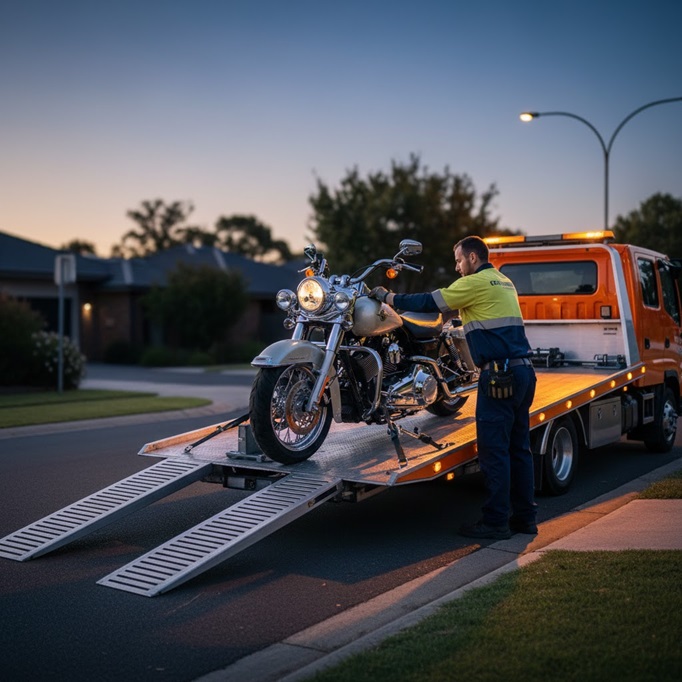
First, equipment designed specifically for motorcycles rather than adapted from car towing. Purpose-built wheel chocks that accommodate two-wheeled balance. Soft-loop straps that protect chrome and paint. Tilt tray configurations that load bikes without steep angles that damage ground clearance.
Second, operators trained in bike-specific handling rather than improvising on the day. Understanding where to attach straps safely. Knowing how much suspension compression to apply. Recognising why loading angles matter for different bike types and configurations.
Third, knowledge of weight distribution and balance rather than treating bikes like stable, grounded vehicles. Motorcycles concentrate weight in engines and frames, balance on narrow tyres, and tip easily when stationary, characteristics that demand completely different approaches from car recovery.
Sport Bike Versus Cruiser Transport Differences
A Yamaha R6 and a Harley Road Glide both have two wheels, but transport requirements differ dramatically. Professional operators understand these distinctions and adjust methods accordingly to prevent damage.
Sport Bike Challenges and Requirements
Sport bikes sit low with minimal ground clearance that creates loading complications. Aerodynamic fairings extend below frames, and underslung exhausts protrude toward roads. Standard loading ramps create angles that drag these components across metal surfaces, causing immediate and expensive damage that insurance rarely covers.
Clip-on handlebars mount directly to fork tubes rather than traditional handlebar clamps, meaning they can’t support tie-down compression without bending or breaking. Proper securing attaches to triple clamps or frame sections, avoiding handlebars entirely to prevent structural damage.
Fairings use plastic construction that cracks under point-load pressure from standard straps. Even padded straps can damage bodywork if positioned incorrectly without proper distribution. We add protective material at all contact points, distributing pressure across larger surface areas that plastic panels tolerate safely.
Cruiser Transport Requirements and Considerations
Cruisers present opposite challenges that demand different handling. They’re significantly heavier, with some touring models exceeding 400 kilograms wet weight. Wider profiles from saddlebags and highway pegs extend well beyond frames. Chrome and paint covering everything requires careful strap placement that prevents marking.
Fully-dressed touring bikes need soft tie-down points that won’t scratch chrome or damage painted surfaces through contact. We use fleece-lined straps on all contact areas and avoid hard edges near bodywork completely. The investment riders make in chrome and custom paint deserves corresponding care during transport operations.
Weight distribution matters critically with cruisers given their mass. Their longer wheelbases and lower centres of gravity mean you can’t simply winch them up like dirt bikes. Controlled, even loading keeps bikes stable throughout the process, preventing tips and maintaining operator control over heavy machines.
Custom Modifications and Special Handling
Custom builds introduce variables that experienced operators handle routinely whilst amateurs struggle. Extended handlebars change securing geometry significantly. Lowered suspensions reduce ground clearance further. Forward controls and highway pegs create new interference points during loading that must be avoided.
We assess modifications before loading, identifying complications and adjusting methods appropriately. This attention to individual bike configurations separates professional superbike transport perth services from operators applying one-size-fits-all approaches that damage custom work.
Professional Four-Point Securing Systems
Every motorcycle we transport receives systematic securing that eliminates damage risk whilst maintaining stability throughout journeys across Perth’s roads. The method isn’t complicated, but precision matters significantly.
Wheel Chock Foundation for Stability
Front wheels slot into padded chocks designed for motorcycle tyre widths specifically. These devices hold bikes upright without manual support, critical for solo operators managing heavy touring bikes or unstable sport bike geometries. The chock prevents forward and backward movement during the securing process and throughout transport.
Bikes position centrally on decks with adequate clearance from side rails and rear equipment. This placement prevents contact damage during transport and allows proper strap angle application. Centre positioning also maintains optimal weight distribution for towing vehicles, ensuring stable handling.
Front Tie-Down Attachment Points
Two front straps secure to fork tubes or triple clamps, never to handlebars or clip-ons that can’t withstand forces. The straps connect at 45-degree angles that pull forward and downward simultaneously. This configuration compresses front suspension slightly whilst maintaining stability and preventing lateral movement.
Strap tension receives careful calibration through experience. We compress suspension approximately 30 percent, enough to lower centres of gravity and reduce bounce, but not enough to bottom out forks or damage seals. The suspension retains movement capability that absorbs road irregularities during transport.
Rear Securing Points and Methods
One or two rear straps anchor to subframes or swingarms, pulling straight backward to complete securing. We avoid exhaust systems, plastics, and decorative components entirely. The combination of front and rear straps creates triangulated support that prevents movement in all directions without over-compressing components.
Custom cruisers with modified subframes require adapted securing points that we identify through assessment. We locate reinforced frame sections capable of withstanding strap loads, avoiding modifications that can’t support securing forces safely without damage.
Suspension Compression Balance
Proper compression maintains bikes stable without exceeding design limits that cause damage. We rock motorcycles gently after securing to verify stable attachment without excessive rigidity. Bikes should resist movement in all directions whilst suspension maintains slight give, not locked rigid like vices that transfer forces improperly.
This balance ensures safe transport over Perth’s varied road conditions. Potholes and irregularities create constant movement. Properly secured bikes absorb these forces through suspension systems rather than transferring stress into frames or securing points that weren’t designed for such loads.
Emergency Motorcycle Recovery Services
Breakdowns and accidents don’t follow schedules or respect business hours. Professional recovery operates continuously, responding to emergencies regardless of timing or location across Perth’s metropolitan area.
24-Hour Breakdown Response
Mechanical failures happen at 2 AM as readily as 2 PM without discrimination. Operators providing fast emergency recovery operate around the clock, dispatching GPS-tracked trucks with average response times under 30 minutes for metro locations. Whether you’re stranded on Great Eastern Highway or broken down in Fremantle, professional assistance remains available.
Night-time recoveries require additional safety precautions including proper lighting and increased visibility measures. Our trucks carry equipment for safe operations during all conditions, protecting operators and stranded riders from traffic hazards that intensify during darkness.
Post-Accident Recovery Protocols
Accident scenes demand different approaches than mechanical breakdowns. Damaged bikes often can’t roll normally, can’t balance properly, and have compromised structural integrity. We’ve handled everything from minor tip-overs to high-speed collisions, adjusting methods based on damage severity.
Minor damage where bikes still roll receives standard loading with extra care around damaged bodywork. Major damage involving bent forks or broken frames requires winch-assisted loading with support for compromised structures. Total losses that won’t roll at all need skid-plate loading or manual lifting depending on weight and condition.
Insurance Coordination and Documentation
If you’ve been involved in accidents, our priority becomes getting you and your bike off roads safely. We coordinate with police, other drivers, and insurance companies as needed. You’ve got enough stress without worrying about recovery logistics during traumatic situations.
Operators providing insurance-approved accident towing include documentation that supports insurance claims comprehensively. We photograph bikes before and after loading, establishing damage extent and confirming careful handling throughout transport processes. This documentation protects your interests.
Collision Scene Management
Don’t move motorcycles after accidents until police clear scenes and complete investigations. Evidence preservation matters for insurance claims and potential legal proceedings. We work within established protocols that support your interests whilst removing damaged vehicles from roadways safely.
Comprehensive insurance policies typically cover accident towing costs. We work directly with major insurers, invoicing them directly when you provide claim numbers and authorisation. This arrangement eliminates upfront costs during already expensive post-accident periods.
Long-Distance And Interstate Transport
Moving motorcycles across Perth or interstate requires planning beyond local recovery services. Different scenarios demand different approaches and preparation levels that casual operators don’t understand.
Enclosed Versus Open Transport Options
Most motorcycle transport happens on open tilt trays where bikes travel securely but exposed to weather and road spray during journeys. For daily riders and adventure bikes already covered in road grime from regular use, this presents no concern practically. The transport remains safe and damage-free regarding mechanical handling.
Enclosed transport costs more but protects bikes completely from weather and debris throughout extended journeys. Your motorcycle arrives exactly as it left, without dust accumulation, rain spotting, or insect residue that mars finishes. Consider enclosed options for show bikes, vintage restorations with original paint, brand new prestige machines, or custom builds with specialised finishes.
Operators providing high-value vehicle transport extend premium service to motorcycles requiring maximum protection. A 1970s Moto Guzzi or $40,000 MV Agusta deserves the same care we provide prestige cars through covered transport.
Track Day and Event Delivery
Perth’s motorcycle community stays active with track days at Barbagallo, ride events down south, and bike shows at Burswood. Sometimes you need bikes somewhere but can’t or don’t want to ride them there through traffic.
Track day transport saves your tyres from street wear before competition. You arrive fresh rather than fatigued from 90 minutes in traffic. Multiple bikes can travel together if you’re bringing race bikes and mates’ machines. Return transport remains available if mechanical issues end track days early.
Interstate Purchase Coordination
Buying motorcycles from eastern states or regional WA requires transport from sellers to your location. We coordinate with sellers to schedule pickups at convenient times, inspect bikes before loading, and deliver them to your specified destinations safely.
Interstate transport uses enclosed trailers for extended road exposure protection. Your bike travels thousands of kilometres without accumulating the mechanical wear and weather damage that riding creates. New owners receive their motorcycles in the condition sellers promised.
Show Bike and Exhibition Transport
Show bikes demand white-glove treatment that standard services don’t provide. We’re talking soft-touch straps only, covered transport, climate consideration, and minimal handling. If you’ve spent six months detailing your custom build, we’ll treat it like the rolling art piece it is.
Show transport includes coordination timing so you’re on-site to receive bikes personally. We don’t leave show-quality machines unattended in parking areas. Professional delivery reflects the care your investment deserves.
Selecting Qualified Motorcycle Towing Services
Not all operators handle motorcycles competently. Before trusting anyone with your bike, verify they possess appropriate equipment, experience, and insurance coverage that protects your interests.
Essential Equipment Questions
Ask potential services about their motorcycle-specific equipment in detail. Proper operators maintain wheel chocks, soft loop straps, and tilt tray configurations for bike transport. If they mention chains, hooks, or wheel-lift systems, they lack appropriate equipment for harley towing services or sport bike recovery.
Request photos of their equipment and loading procedures before committing to service. Professional services willingly demonstrate capability because it differentiates them from general towing companies. This transparency protects your investment and confirms you’re choosing qualified operators.
Experience Verification with Bike Types
Sport bikes, cruisers, adventure bikes, and scooters require different handling approaches that experienced operators understand instinctively. Operators experienced with various motorcycle types recognise these distinctions and adjust methods accordingly. Ask about their familiarity with your specific bike category during initial contact.
Custom modifications, lowered suspensions, and aftermarket accessories add complications that experienced operators handle routinely. Ensure your chosen service has encountered similar situations and knows how to accommodate non-standard configurations safely without damaging expensive modifications.
Insurance Coverage Requirements
Professional towing services carry public liability insurance covering vehicles during transport operations. For motorcycles worth tens of thousands of dollars, this protection matters significantly. Verify insurance coverage before allowing operators to handle your bike.
Western Australian transport regulations require appropriate licensing for commercial operations. Legitimate services maintain current documentation available upon request. This verification ensures legal operation and protects your interests if claims become necessary.
Pricing Transparency Standards
Reputable operators provide upfront quotes based on distance, bike type, and timing without hidden fees. You shouldn’t guess what transport will cost or discover unexpected charges when invoices arrive. Clear pricing reflects professional operations valuing customer trust over exploiting emergencies.
Distance-based rates make sense because fuel costs and time investment increase with longer transports proportionally. After-hours surcharges cover premiums for 24-hour availability. These charges should be explained clearly before service begins, allowing informed decisions.
Motorcycle Towing Across Perth
Perth’s geography creates unique challenges that operators must understand. The city sprawls across significant distances with varied road conditions. Mitchell Freeway connects northern suburbs to the CBD. Kwinana Freeway serves southern areas. Tonkin Highway creates an eastern bypass carrying high-speed traffic.
Metropolitan Coverage Areas
We cover Perth metro completely, from Joondalup to Mandurah, Fremantle to Midland without limitation. Local presence means faster response times compared to services dispatching from single central locations. Understanding regional roads, traffic patterns, and geographic challenges affects response efficiency significantly.
This coverage extends to all Perth suburbs and major routes. Whether you’re broken down on Stirling Highway, stuck on Great Eastern Highway, or stranded in Rockingham, professional track bike delivery reaches you quickly with appropriate equipment.
Regional Extensions Beyond Metro
Coverage extends into regional areas surrounding Perth metro. Breakdowns heading to Margaret River, mechanical failures near Toodyay, or accidents approaching York all receive professional response. Regional recoveries require additional planning for distances and road conditions, but we handle them routinely.
Remote area recoveries demand planning regarding fuel range, road conditions, and timing. We coordinate realistic schedules rather than promising immediate response from hours away. Clear communication about arrival times reduces stress during already difficult situations.
What Makes Specialist Services Different
Specialist motorcycle towing isn’t simply general towing applied to bikes. It’s purpose-built equipment, trained operators, and systematic methods developed through thousands of recoveries that create reliable outcomes.
Purpose-Built Equipment Standards
Our fleet includes tilt tray trucks specifically configured for motorcycles with multiple tie-down points, padded chocks, and soft straps. We don’t adapt car equipment hoping it works, we use tools manufactured for two-wheeled vehicles.
The difference shows in results consistently. Bikes arrive in the same condition they left, without transport-related damage. This reliability comes from using correct equipment operated by people who understand how to use it properly through training and experience.
Trained Operators Make the Difference
Our operators receive training in motorcycle-specific loading techniques that car operators don’t need. They understand where to attach straps safely, how much suspension compression to apply appropriately, and why balance matters for stationary bikes. This knowledge prevents damage that inexperienced operators cause through ignorance.
Training includes different bike types from sport bikes to cruisers, dirt bikes to scooters. Each category presents unique challenges that systematic training addresses comprehensively through structured learning.
Systematic Methods Ensure Consistency
We don’t improvise or hope things work out during transport. Every motorcycle follows proven securing protocols that eliminate damage risk whilst maintaining stability. These methods developed through years of experience and thousands of successful transports across Perth.
Systematic approaches mean consistent results regardless of which operator handles your recovery. You get the same professional service whether it’s a weekday afternoon or Sunday midnight emergency without variation in quality.
Conclusion
Professional sport bike towing perth protects your investment through proper equipment, experienced handling, and damage-prevention protocols that amateur services simply cannot replicate. The difference between amateur attempts and qualified service shows immediately in your bike’s condition upon delivery to your destination.
Whether you’re experiencing mechanical breakdown, accident damage, or planned transport needs, proper cruiser motorcycle recovery eliminates stress and prevents complications that improvised solutions create. Perth riders can access unique equipment towing that handles the city’s diverse motorcycle community professionally.
For immediate assistance with prestige motorcycle recovery, call 0418 959 216 to speak with our dispatch team. We’ll get you and your bike safely off the road and to your destination without damage.