Getting your licence is a major milestone in Perth, but it doesn’t prepare you for everything that happens on WA roads. You’ve practised parallel parking and three-point turns, but no one teaches you what to do when your car won’t start in the Karrinyup car park at 9 PM, or when you’ve clipped a kerb on Riverside Drive and damaged your tyre beyond repair.
That’s where first time towing Perth services become essential. If you’re a new driver in Perth, understanding what to expect from professional tow truck operators can turn a stressful breakdown into a manageable inconvenience. We’ve helped thousands of drivers through their first towing experiences, and there’s considerably less to worry about than you might think when you know what’s actually involved. Getting your licence is a major milestone in Perth, but it doesn’t prepare you for everything that happens on WA roads. You’ve practised parallel parking and three-point turns, but no one teaches you what to do when your car won’t start in the Karrinyup car park at 9 PM, or when you’ve clipped a kerb on Riverside Drive and damaged your tyre beyond repair.
That’s where first time towing Perth services become essential. If you’re a new driver in Perth, understanding what to expect from professional tow truck operators can turn a stressful breakdown into a manageable inconvenience. We’ve helped thousands of drivers through their first towing experiences, and there’s considerably less to worry about than you might think when you know what’s actually involved.
The Most Common Reasons New Drivers Need Towing
Battery failures top every list. You’ve left headlights on at university, or the car’s been sitting unused for two weeks whilst you’ve been away on holiday. The battery’s completely flat, and you’re genuinely stuck. Our learner driver breakdown guide starts with this scenario because it’s overwhelmingly the most frequent.
Tyre damage comes next in frequency. Perth’s roads can be harsh on tyres, especially if you’re still getting used to judging kerb distances accurately or navigating tight parking spaces. A blown tyre on the freeway or slow puncture that’s gone unnoticed for days can leave you stranded far from home.
Minor accidents happen more frequently to new drivers – that’s statistics, not judgement. A misjudged merge, tight car park scrape, or rear-end bump at traffic lights can leave vehicles undriveable even when damage looks superficially minor. Structural issues aren’t always visible to untrained eyes.
Mechanical breakdowns don’t discriminate by driver experience. Your first car might be older, more affordable, and consequently more prone to unexpected failures. Overheating, transmission issues, or snapped timing belts can happen to anyone regardless of driving expertise.
Lockouts are surprisingly common amongst new drivers still developing vehicle routines. You’ve locked keys in the boot, or dropped them down a storm drain. If you can’t access your car, you can’t drive it home.
What Actually Happens When You Call for a Tow
Here’s precisely what happens when you ring All Out Towing or another professional first time towing Perth service.
You’ll speak to a real person, not automated systems or recordings. We’ll ask where you are, what’s wrong with the car, and whether you’re currently safe. If you’re on busy roads or in unsafe positions, we’ll prioritise getting to you quickly.
We’ll give you honest estimated arrival times. Peak hour on Tonkin Highway? It might take 40 minutes realistically. Quiet Sunday morning in Joondalup? We could be there in 15 minutes. We’ll be forthright about timing because we know you’re already stressed.
We’ll confirm costs upfront with no surprises. Distance, time of day, and vehicle type all factor into pricing, but we’ll explain it clearly before dispatching trucks.
You’ll receive updates if we’re running late. Traffic happens. Accidents create delays. If we hit obstacles, we’ll call and update you rather than leaving you wondering.
What to Do Whilst You’re Waiting
Stay safe first and foremost. If you’re on freeway sides or busy roads, exit vehicles and stand well behind barriers if available. Don’t stand between cars and traffic. If it’s not safe to exit vehicles, stay inside with seatbelts fastened and hazard lights flashing continuously.
Turn on hazard lights immediately. This signals to other drivers that you’re stationary and not moving. It’s the simplest way to reduce risks of being struck by inattentive drivers.
Call someone you trust. Parents, friends, partners – let someone know where you are and what’s happening. It’s reassuring for you, and it means someone else knows your situation if anything changes.
Don’t accept help from strangers offering to tow you. It sounds harsh, but unlicensed towing is dangerous and often involves scams. Wait for the professionals you’ve actually called.
Grab valuables before operators arrive. Phones, wallets, keys, laptops – take them with you. Your car will be secure with us, but it’s sensible practice regardless.
The Difference Between Tow Truck Types
Not all tow trucks are identical, and truck types matter significantly for your specific vehicle and situation.
Wheel lift trucks are most common for standard breakdowns. They lift either front or rear wheels off ground and tow vehicles with the other two wheels rolling. It’s quick, effective, and works for most sedans, hatchbacks, and small SUVs.
But here’s critical information: if your car is all-wheel drive or four-wheel drive, wheel lift won’t work safely. Towing 4WDs with two wheels on ground destroys drivetrains within short distances. That’s why we use tilt tray trucks for these vehicles exclusively.
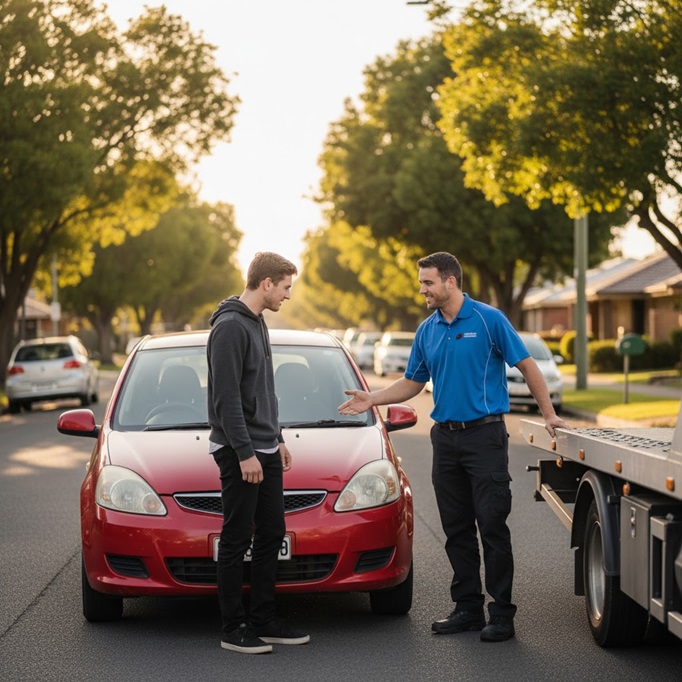
beginner-friendly tilt tray towing explained by lowering flatbeds completely to ground, winching vehicles aboard, and transporting them with all wheels off ground. It’s the safest option for almost any vehicle. It’s essential for prestige cars, lowered vehicles, cars with damaged suspension, and anything requiring extra care.
What You’re Allowed to Do
You can ride in tow trucks with us. If there’s space and it’s safe, you’re welcome to come along. Most of our trucks have passenger seats, and we’d rather you stay with your car than be left stranded in unfamiliar areas.
You can’t bring extra passengers beyond yourself. Insurance and safety regulations limit how many people can ride in trucks. If you’ve got friends with you, they’ll need to arrange their own transport.
You can ask questions freely. What’s wrong with the car? How long will tows take? What should you do next? We’ve heard every question imaginable, and we’re happy to explain processes clearly.
You can’t interfere with tow operations. Once we’ve started securing vehicles, let us work professionally. We’re trained, insured, and experienced. Trying to ‘help’ by adjusting straps or moving vehicles can cause injuries or damage.
If You’re in an Accident
If you’ve been in crashes, processes differ slightly. Safety and legalities come first always.
Call police if anyone is injured, if other drivers leave scenes, or if there’s significant damage. You’re legally required to report certain accidents in WA, and police will guide you through requirements.
Exchange details with other drivers. Names, phone numbers, addresses, registrations, insurance details. Take photos of both cars, damage, and scenes if it’s safe to do so.
Call your insurance company promptly. They’ll tell you which repairers to use and whether they’ll organise tows or if you need to arrange them yourself.
Don’t admit fault at scenes. Even if you think it was your mistake, let insurers work it out through proper processes. Saying “sorry, it was my fault” at scenes can complicate claims significantly.
When we arrive for first-accident towing with insurance guidance, we’ll take extra care. Damaged cars are often unstable, with broken suspension, leaking fluids, or sharp metal. We’ll secure everything properly and clean up debris if needed.
How Much Towing Actually Costs
Towing isn’t cheap, but it’s not exploitation either. Here’s what influences final prices for new driver emergency assistance.
Distance is the biggest single factor. 5km tows from Subiaco to West Perth cost far less than 40km tows from Mandurah to Joondalup. Most companies charge base callout fees plus per-kilometre rates.
Time of day matters significantly. Tows at 2 PM Tuesday are standard pricing. Tows at 2 AM Sunday involve round-the-clock emergency towing for new drivers, and after-hours rates apply. We don’t charge extra to punish you – it’s because our operators are on call overnight and weekends, which costs more to provide.
Vehicle type affects pricing. Small hatchbacks are easier and cheaper to tow than dual-cab utes or 4WDs requiring tilt trays.
Your location can add costs. If you’re stuck in difficult spots – down steep driveways, in soft sand, or in multi-storey car parks – it takes more time and equipment to extract vehicles safely.
Most tows in Perth range from $150 to $400 depending on those factors. If you’re insured, check policies – many comprehensive policies include towing up to certain distances or dollar amounts.
What if You Can’t Afford the Tow
Check insurance first. Even basic third-party property insurance sometimes includes roadside assistance or towing cover. Call insurers before assuming you’re paying out of pocket.
Check roadside assistance memberships. RAC, AAMI, NRMA, and others offer towing as membership parts. If you’ve got cover, use it.
Ask about payment plans honestly. Some towing companies (including us) can arrange payment options if you’re genuinely stuck. We’re not in the business of leaving people stranded over financial constraints.
Be honest with operators. If you can’t afford full tows, say so clearly. We might be able to tow you to nearest safe spots instead of all the way home, or suggest cheaper alternatives.
Questions to Ask Before Trucks Arrive
“What’s the total cost, including any after-hours fees?” Get clear answers in dollars, not vague estimates.
“How long until you arrive?” This helps you plan and stay calm during waits.
“What type of truck are you sending?” If you’ve got 4WDs or lowered cars, confirm they’re sending right equipment.
“Can I ride with you?” If you don’t have other ways home, this matters significantly.
“Where will you take my car?” Make sure they’re clear on destinations before leaving.
After the Tow
Your car will be delivered to addresses you specified. If it’s mechanics, we’ll drop it in their yards and notify them it’s there. If it’s your home, we’ll park it safely on your property or on streets.
You’ll receive receipts or invoices. Keep these for insurance claims or your own records.
Mechanics will assess damage or faults. They’ll call you with quotes for repairs. If you don’t have trusted mechanics, ask friends or family for recommendations, or check online reviews.
If it’s insurance jobs, repairers will liaise with insurers. You’ll need to lodge claims, provide photos and details, and wait for approval before repairs start.
What Makes Professional Services Different from Dodgy Ones
Licencing and insurance matter enormously. Every legitimate towing operator in WA must hold correct licences and carry public liability insurance. If someone offers cheap tows and they’re not licensed, walk away immediately. If they damage vehicles or cause accidents, you’ve got zero recourse.
Proper equipment distinguishes professionals. We use well-maintained trucks, quality straps and chains, and right vehicles for specific jobs. Dodgy operators use rusty gear, improvised setups, and trucks that shouldn’t be on roads.
Transparent pricing means we tell you costs before starting. Dodgy operators quote low, then add ‘fees’ once your car is loaded and you’re stuck with no alternatives.
Trained staff have years of experience. We know how to secure cars, avoid damage, and handle tricky situations safely. Dodgy operators learn as they go, often at your vehicle’s expense.
Preventing Breakdowns
Maintain your car through regular services, oil changes, and checks that catch problems before they strand you. If mechanics say “you’ll need new brake pads soon,” don’t wait until they fail.
Check tyres regularly. Tread depth, pressure, and condition. $120 tyres are cheaper than $300 tows.
Don’t ignore warning lights. That check engine light isn’t a suggestion – get it examined.
Keep jumper leads or portable jump starters in boots. Flat batteries are easiest problems to solve if you’ve got right gear.
Join roadside assistance programs. RAC membership costs around $100 annually and covers breakdowns, flat batteries, and towing. It’s the best insurance you can buy.
Conclusion
Needing first time towing Perth services feels like disasters when you’re new to driving, but it’s genuinely not. It’s a normal part of car ownership, and it happens to everyone eventually. The key is knowing what to expect, staying calm, and calling professionals.
You’re not inconveniences. You’re not burdens. You’re drivers who need help, and that’s exactly what we’re here for. For p-plate towing help Perth or beginner driver roadside support, call 0418 959 216 for learner-driver breakdown towing assistance anytime.