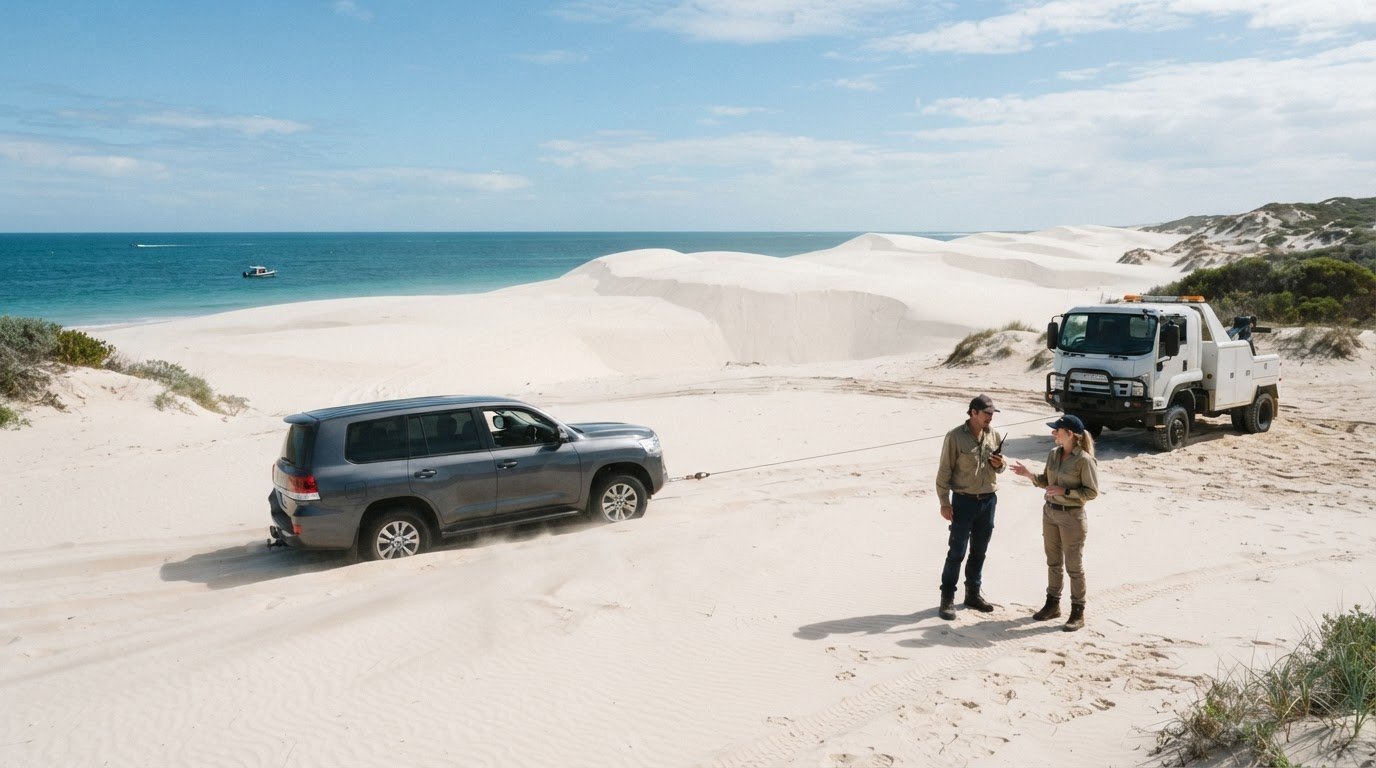
What if the first step after getting bogged near Lancelin isn’t trying to drive out, but clearly explaining where you are? Soft sand and shifting dunes can leave a vehicle stuck or unable to move, and it’s stressful when you’re unsure what to do next. This guide explains the first steps for beach vehicle recovery Lancelin drivers may need, including how to share useful location details when arranging help.
It can be hard to know whether you need recovery to move a bogged vehicle or towing to transport a damaged or inoperable vehicle. You’ll learn how to describe your vehicle and its position, organise the key details before calling, and understand when tilt-tray transport may suit a vehicle that needs to be moved. Allout Towing provides towing and recovery across Perth and Western Australia, with more than 30 years of towing experience.
Key Takeaways
- For beach vehicle recovery Lancelin support, describe your exact position and the clearest nearby landmark you can identify.
- Tell the towing operator whether the vehicle is stuck, damaged, driveable or already free so they can understand what help you need.
- Before calling, have your vehicle details, contact number and intended destination ready if it needs transport.
- Recovery helps move a vehicle that cannot move from its position; towing transports a vehicle to another location.
- Allout Towing provides emergency towing and recovery across Perth and Western Australia. A free quote is available.
Beach Vehicle Recovery in Lancelin: Start with the Situation
Being stranded near Lancelin can be stressful, especially if you’re unsure whether the vehicle needs to be freed or transported. Start by noting where it is, whether you can see any damage and whether it can move under its own power. These details help the towing team understand what support you need for beach vehicle recovery near Lancelin.
Beach vehicle recovery is assistance for a vehicle that can’t move from its current position. A vehicle bogged in sand may need recovery, while one that has been freed but is damaged or won’t drive may need towing to another location. Off-road driving can involve changing surfaces and difficult terrain; the general Off-roading overview also describes the possibility of vehicles becoming stuck.
Is the vehicle stuck, damaged or simply unable to continue?
Describe the vehicle’s current state as plainly as you can. Are the wheels bogged in sand? Is the vehicle immobilised, or has it already been freed? Can it move, even if you don’t think it’s safe or practical to continue driving? You don’t need to diagnose the problem. A clear description helps the operator understand whether you need recovery or towing.
Mention visible damage or anything that changed after the vehicle stopped, such as a warning light, flat tyre or new noise. Stick to what you’ve observed rather than guessing at the cause. If the vehicle has been freed, say so and explain whether it can still be driven. That distinction helps shape the next steps.
What location details help near Lancelin?
Give the clearest location description you can, starting with a recognisable nearby landmark if you know one. Explain which beach access you used and where the vehicle is in relation to it. If you’re unsure of the access name, describe what you can see around you rather than guessing.
Be specific about the vehicle’s immediate surroundings. For example, say whether it’s on open sand, near the access point or close to the water. Mention visible obstacles or changes in the route that could help someone understand how to reach you. Don’t assume the person taking your call can see your location.
Before calling, organise the key facts:
- Describe the vehicle’s position and the route or access point you used.
- Say whether it’s bogged, immobilised, freed or able to drive.
- Report visible damage or changes you noticed after it stopped.
- Share a recognisable landmark and details of the surrounding area.
Clear information helps the towing team understand what support you need. If you’re uncertain how to describe what’s happened, start with what you can see and whether the vehicle moves. The operator can ask follow-up questions to clarify the situation.
How Beach Vehicle Recovery and Towing Support Differ
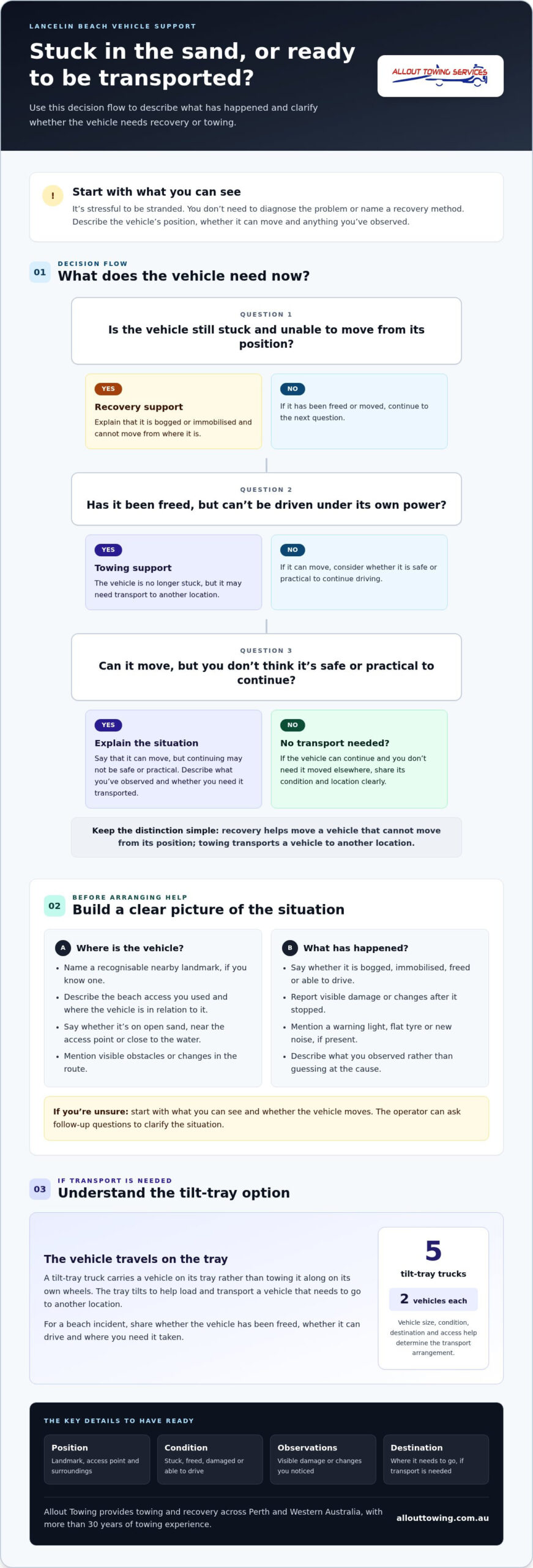
Once you’ve described what happened, the next question is what the vehicle needs now. Recovery helps when a vehicle can’t move from where it is; towing transports a vehicle to another location. These needs can occur one after the other, but they aren’t the same job. A vehicle might be freed and then found to be unable to drive, making transport the next concern.
For beach vehicle recovery Lancelin situations, focus on the outcome you need rather than trying to name a technical method. Explain whether the vehicle remains stuck, has been freed, or can move but needs transport. That gives the towing team a clear starting point for discussing suitable support.
When does a beach incident become a towing job?
A beach incident may become a towing job once the vehicle is no longer stuck but still can’t be driven. For example, it may have visible damage, fail to start or be unable to move under its own power. In these situations, request emergency towing for an immobilised vehicle and explain what happened before it stopped.
Be clear about whether the vehicle is still in its original position or has already been moved. If you’re unsure what caused the problem, say what you observed instead of guessing. Allout Towing provides emergency towing for immobilised vehicles. Share the vehicle’s condition and transport needs so the team can understand your request.
What does a tilt-tray truck contribute?
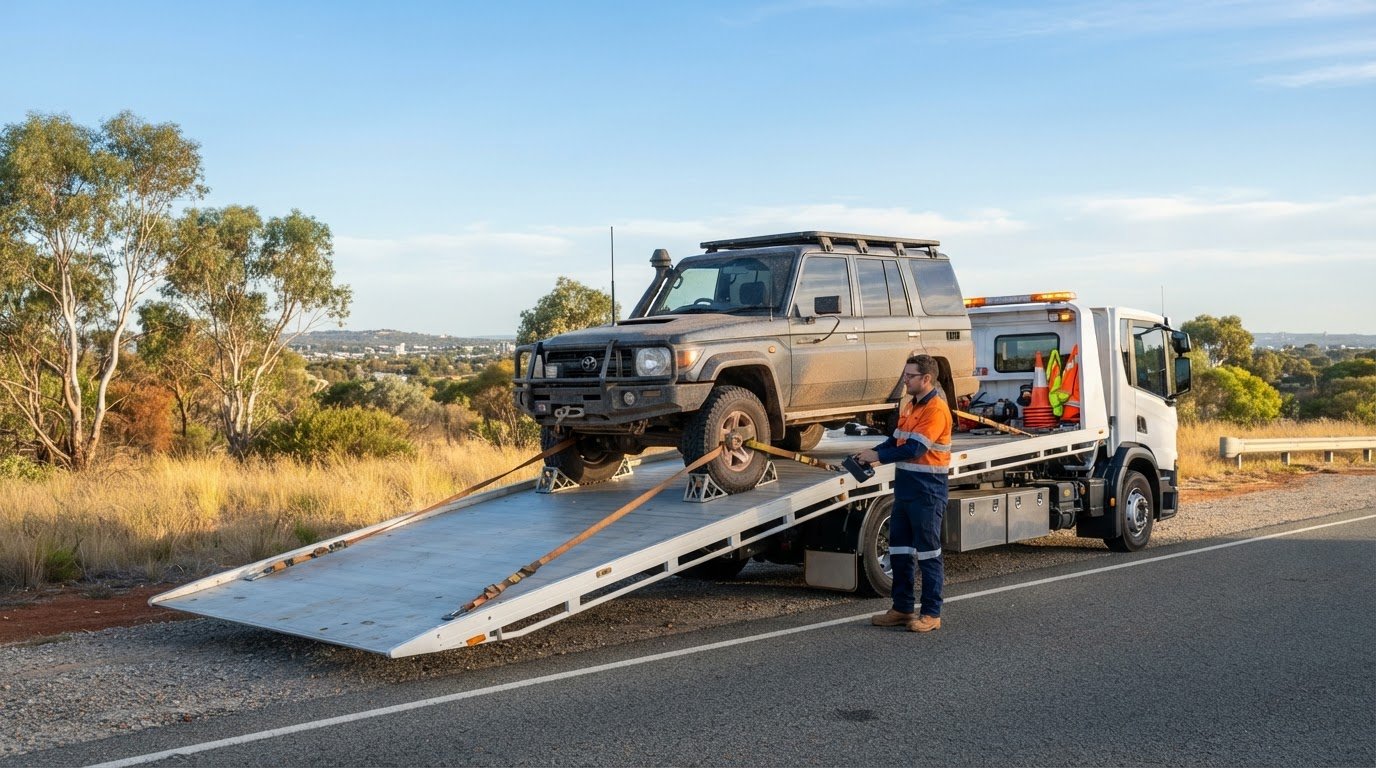
A tilt-tray truck carries a vehicle on its tray rather than towing it along on its own wheels. The tray tilts to help load and transport the vehicle. This can be useful when a car needs to travel to another location, including after a beach incident has left it unable to drive.
Allout Towing operates five tilt-tray trucks, each able to carry two vehicles. The vehicle’s size and condition, the requested destination and where it can be accessed help determine the transport arrangement.
If you’re arranging towing, tell the operator whether the vehicle has been freed, whether it can drive and where you need it taken. You can also consult Main Roads Western Australia for official road information. Clear details help the team understand the transport request and plan the service.
For a vehicle that needs transport after a beach incident, contact Allout Towing about towing support and share the vehicle’s condition and intended destination.
Choosing Recovery or Towing Support for a Lancelin Beach Incident
Once you know whether the vehicle can move, you can describe the support you need more clearly. Use the guide below to organise the key details before requesting help. You don’t need to choose a recovery method yourself; explain the situation and the towing team can discuss the next step with you.
- Stuck and unable to move: Say where the vehicle is positioned, what type of vehicle it is and whether it can move at all. Mention whether it is bogged or immobilised, and describe any visible damage or changes you noticed.
- Freed but undriveable: Explain that the vehicle is no longer stuck but cannot be driven. Describe any visible damage or warning signs, and give the destination you have in mind for transport.
- Driveable but needing transport: State that the vehicle can move under its own power but you need it taken elsewhere. Share the vehicle type, your current location and the intended destination.
This simple distinction makes beach vehicle recovery Lancelin support easier to discuss. For broader information about emergency towing and transport, see the 24 hour towing Perth guide.
What if the vehicle is still stuck?
Keep your description factual. Give the clearest position details you have, identify the vehicle type and explain what it’s doing now: for example, whether it’s bogged, immobilised or showing visible damage. If you can’t tell what caused the problem, say so. That information helps the towing team understand the request and discuss suitable support without you needing to name a particular extraction technique.
A do-it-yourself attempt may not suit the vehicle’s position or condition. Don’t assume advice for another vehicle or location will apply to yours. If the situation feels unclear, focus on describing what you can see and whether the vehicle can move.
What if the vehicle is free but cannot be driven?
If the vehicle has been freed but remains immobilised, emergency towing can move it to another location. Tell the operator it’s no longer stuck, then describe any visible damage and where you’d like it transported. If you’re unsure whether it’s safe to drive, explain that rather than trying to diagnose the issue over the phone.
For a high-value vehicle that needs careful transport, Allout Towing provides prestige vehicle transport. In every case, share the vehicle type, its current condition and your destination so the team can discuss the towing request clearly.
What to Do Before Calling for Help Near Lancelin
It’s understandable to feel flustered when your vehicle won’t move. You don’t need to diagnose the fault before calling. A calm, clear account of the situation gives the towing team useful information to discuss the next step for beach vehicle recovery Lancelin support.
Use this short sequence to organise the details:
- Describe your location. Give the clearest position you can near Lancelin, including a recognisable landmark, the access point you used and where the vehicle sits in relation to it.
- Identify the vehicle. Share its make, model and body type, and say whether it’s a 4WD, car or another vehicle.
- Explain the problem. Say whether it’s stuck, damaged, immobilised, freed or ready to be transported. Include visible changes you noticed after it stopped.
- Say whether it can move. Be clear about whether it moves under its own power, even if you’re unsure it should continue. Don’t guess at the cause of a fault.
- Share your contact and destination. Give a number where the team can reach you. If the vehicle needs transport and you know where it should go, name the intended destination.
Call checklist: Share your location, vehicle make and model, current condition, whether it can move, a contact number, any immediate assistance needs and the destination if transport is required.
Vehicle and incident details to have ready
Along with the make and model, describe the vehicle’s body type and whether it’s a 4WD, car or another type. Then give a plain-language account of what happened: it may still be stuck, have been freed but become undriveable, or be ready for transport. Mention visible damage and tell the operator if passengers need assistance. Stick to details you can observe.
Location and destination details to explain
Be as precise as possible about where you are near Lancelin. A nearby recognisable landmark, the beach access you used and the vehicle’s position can help explain the location. Describe access using what you can directly observe, such as the surface or any visible obstruction. If you’ve chosen a destination, share it so the towing request can be discussed with that journey in mind.
If you’re feeling overwhelmed, read the checklist slowly from your notes or ask a passenger to help gather the details. You can contact Allout Towing on 0418 959 216 to discuss the vehicle and towing support. Providing clear information helps the team understand your request and the vehicle’s transport needs.
For help discussing your vehicle and location, call Allout Towing on 0418 959 216.
Arrange Emergency Towing Support for a Lancelin Vehicle Recovery
Being stranded can leave you unsure what to do next. Allout Towing provides 24/7 emergency towing and recovery across Perth and Western Australia, giving you a local contact to discuss the situation and the support you need. Its drivers are fully insured and police-certified.
For beach vehicle recovery Lancelin support, explain whether the vehicle is still stuck or has been freed but cannot be driven. Recovery and transport are different needs, so a clear description helps the team understand what you’re requesting. You don’t need to know a technical term or choose a particular method before you call.
What to expect when you contact Allout Towing
Be ready to describe the vehicle’s position, its condition and the clearest location details you have. If it has already been freed, say whether it can move under its own power. If it needs transport, share the destination you have in mind. These details help the team discuss the towing request and relevant vehicle information with you.
If you’re worried or finding it hard to explain, take it one point at a time: where the vehicle is, what happened and what it can do now. It’s fine to describe what you can see rather than guess at the cause. The team can talk through the information you provide, so you can focus on communicating the situation clearly.
Allout Towing’s emergency towing and recovery service operates around the clock. A free quote is available. Share the vehicle’s location, condition and transport needs so the team can discuss your request.
Get towing help for a vehicle recovery situation
Before contacting the team, have your vehicle details and current location to hand. If passengers need immediate assistance, mention that during the call. For transport, share the intended destination if you know it. A straightforward account helps keep the conversation focused on the vehicle and the support being requested.
Allout Towing provides emergency towing and recovery across Perth and Western Australia. Whether the vehicle remains stuck or needs towing after it has been freed, the team can discuss the circumstances and relevant vehicle details with you. A free quote is available.
For help with a Lancelin vehicle recovery situation, Call Allout Towing on 0418 959 216 or email admin@allouttowing.com.au to discuss the vehicle and your towing needs.
Save a Clear Plan for Your Next Step
A beach incident can feel less overwhelming when you know what to do next. Save the towing contact details before your next trip, and keep your phone ready to share your location if plans change. If you’re dealing with beach vehicle recovery Lancelin now, focus on describing what’s happening rather than trying to diagnose the vehicle yourself.
Allout Towing can discuss your towing needs and provide a free quote. Call 0418 959 216 to discuss your situation and request a free quote. You can also email admin@allouttowing.com.au.
Take it one step at a time. A clear conversation can help you move towards the support your situation calls for.
Frequently Asked Questions
Can a tow truck recover a vehicle stuck on a beach near Lancelin?
Allout Towing provides towing and recovery support across Perth and Western Australia. When you call, describe the vehicle’s position, the access route and its condition so the team can understand the recovery request. If the vehicle is carrying passengers or has visible damage, include that information too.
What should I do first if my vehicle is stuck in sand near Lancelin?
If anyone is injured or needs urgent medical help, call 000. Otherwise, take a moment to assess what has happened before deciding on your next step. If you’re unsure whether the vehicle is damaged, don’t try to diagnose it. Explain what you can see and whether it moves. This gives the towing operator a clear picture without requiring you to identify the fault.
Can Allout Towing help if my vehicle is free but will not drive?
Yes. Allout Towing provides emergency towing for immobilised vehicles. If you’re contacting your insurer about the incident, let the team know. Allout Towing offers direct billing to major insurers and also works with private and trade insurers. This can help you understand how to proceed with the towing request.
Is Allout Towing available for emergency towing at night?
Yes, Allout Towing provides emergency towing 24 hours a day, 7 days a week. Call 0418 959 216 and explain that you need assistance after dark. Keep your phone available so the team can discuss the request and any relevant details with you.
What information should I give when calling for beach vehicle recovery?
Give the operator a clear account of the incident and mention any immediate assistance needs, such as a passenger who is injured or unable to leave the vehicle. If you’re unsure of a landmark, describe visible features around your position instead. You can also say whether you’re contacting your insurer, so the team can discuss relevant billing arrangements while talking through the towing request.
Can a tilt-tray truck transport a 4WD after a beach incident?
Yes, tilt-tray transport can move a 4WD after an incident. Share details about the vehicle and its destination when discussing the job. Allout Towing’s fleet has five tilt-tray trucks, each able to carry two vehicles.
How do I get a quote for towing near Lancelin?
Request a free quote by calling 0418 959 216 or emailing admin@allouttowing.com.au. If you email, include a contact number so the team can discuss your request, along with useful details about the vehicle and where it needs to go. Allout Towing can then talk through your towing needs and provide quote information.