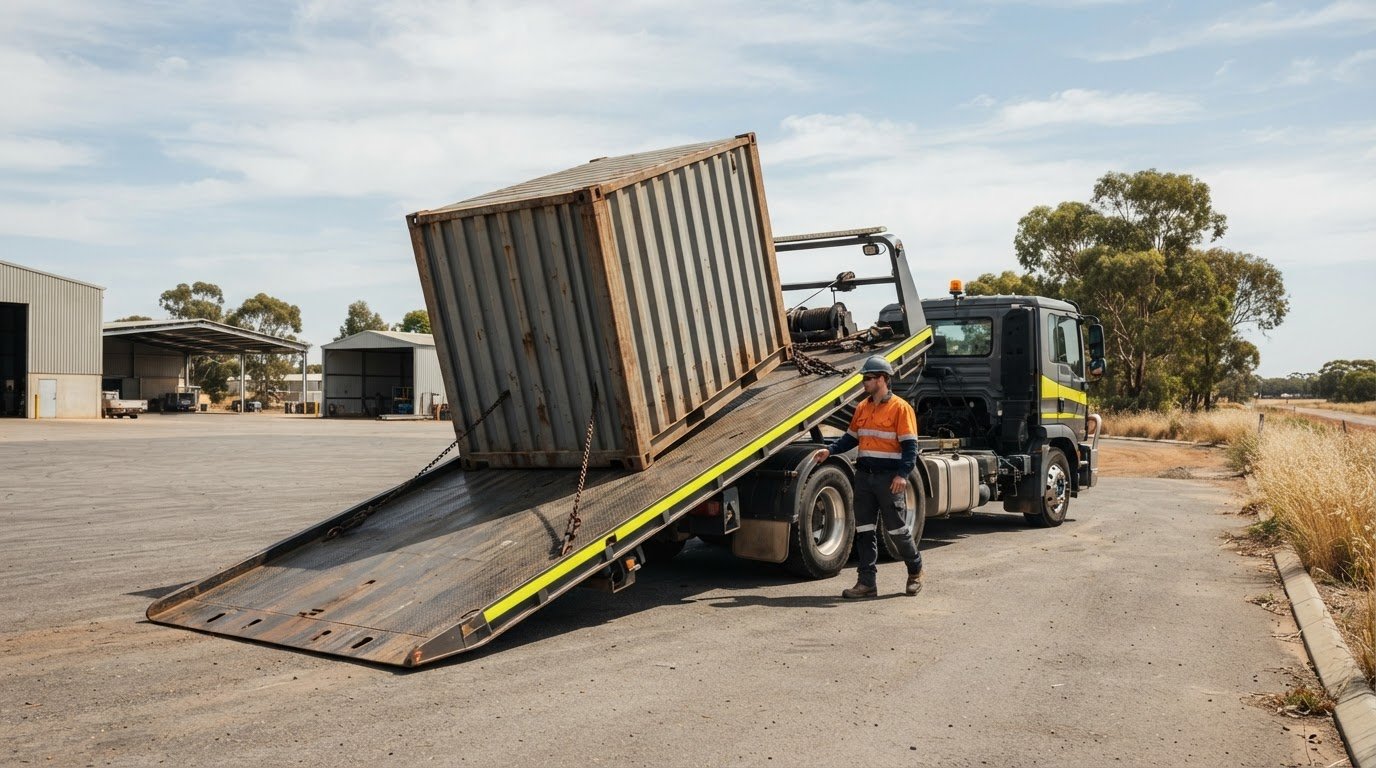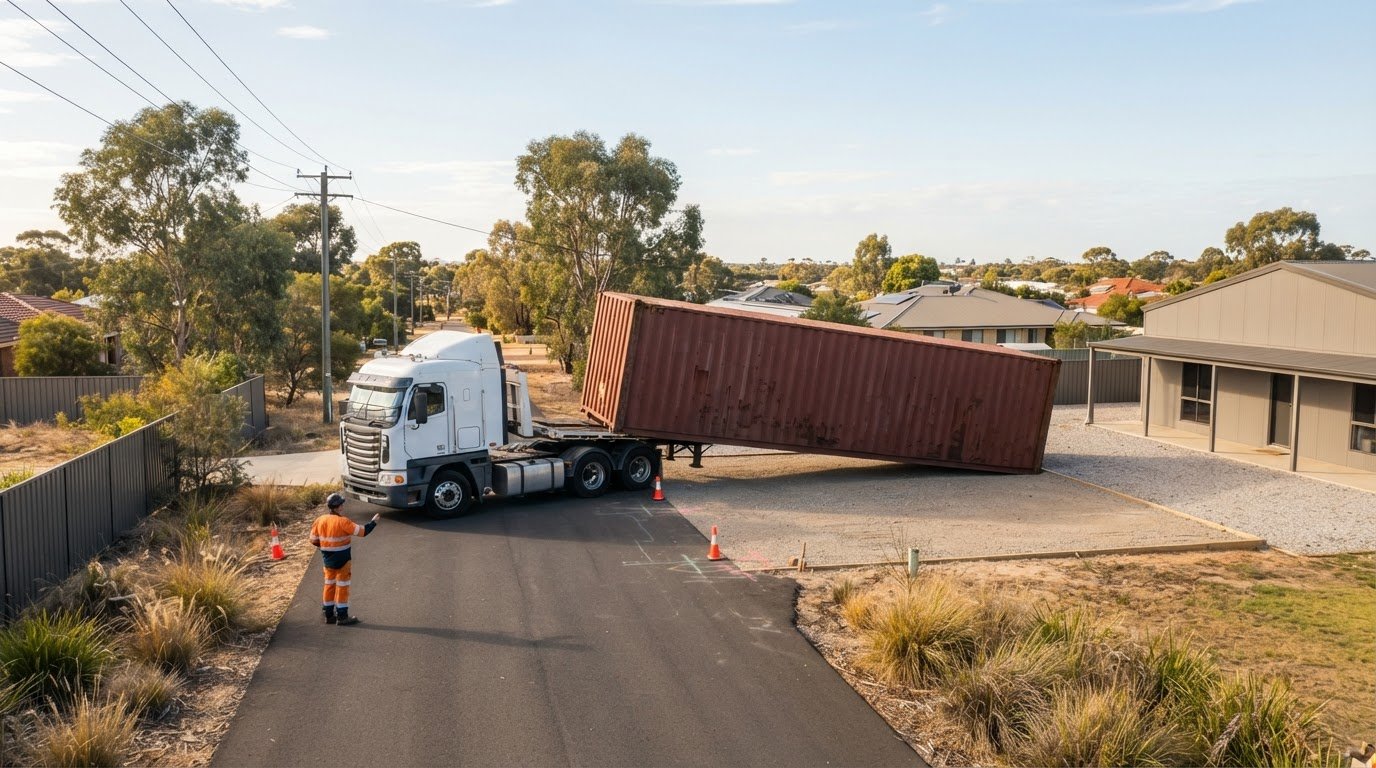
What if the delivery truck can reach your street but cannot safely position the container where you need it? For a 40ft container delivery Perth customers need to plan the site and transport together. It’s understandable to worry about tight access, turning space and the set-down area, especially when these details can affect how the delivery is handled.
This guide explains what to prepare before arranging transport, from describing the route and site access to identifying a suitable placement area. You’ll learn which details to share so the transport operator can plan the move, understand the container’s size and access conditions, and reduce the chance of avoidable surprises.
Allout Towing provides container transport across Perth and Western Australia. As a family-owned and operated local business with more than 30 years of towing industry experience, we focus on practical planning, safe transport and clear communication. Use the steps below to prepare your site and organise your delivery with confidence.
Key Takeaways
- Container transport moves a shipping container between locations. Buying or hiring the container is a separate arrangement.
- Compare a 20ft and 40ft container by considering what you need to store and the handling space available at your site.
- For a 40ft container delivery Perth move, share the pickup and destination, access conditions, timing needs and intended placement when discussing transport.
- Prepare in sequence: confirm site details, note access restrictions and obstacles, then clear the planned set-down area.
- Allout Towing provides container transport across Perth and Western Australia. Share your delivery details to plan the move.
What does 40ft container delivery in Perth involve?
A 40ft container delivery Perth job involves moving an existing container from its current location to another site. Container transport means moving a shipping container from one location to another using specialised towing equipment. The container may belong to you, or form part of a business or worksite operation. Transport is separate from buying or hiring a container: the transport plan covers collection, the journey and placement at the destination.
A 40ft unit is one size within the wider freight system of the intermodal container, which is designed to move between different modes of transport. For a local move, the practical task is to get the specific container from its current position to the required set-down area. Planning depends on the container, pickup point, destination and site access. Sharing accurate details at the start helps the operator plan the job and address access issues before moving day.
When do Perth customers arrange a 40ft container move?
Businesses may relocate storage while reorganising a workplace, moving premises or changing where equipment and stock are kept. Construction teams may move a site container between work locations or reposition it as project needs change. In Perth and elsewhere in Western Australia, pickup and delivery conditions can differ even when both locations are in the same general area.
Coordinate pickup and delivery details before the planned move. The person arranging access at each location should know when the container is expected, where it will be collected and where it needs to go. If access or the intended position changes, pass that information on as soon as possible. Last-minute changes can add stress and disrupt other work on site.
Moving an existing container is different from ordering one as part of a purchase or hire. You may already know its location, contents and intended use. Sharing those details helps the transport operator understand the actual job and plan for its collection and delivery.
What information helps plan container transport?
Before arranging transport, gather the practical details below. You don’t need specialist terminology. A clear description of both locations gives the operator a useful starting point:
- The full pickup and delivery addresses, including the best site entrance at each location.
- Your preferred timing and any site access windows or coordination needs.
- Whether the container is empty or loaded, and a description of its contents.
- The container’s condition and any loading details that could affect handling.
- Access notes, such as gates, restricted approaches, obstacles and the intended set-down position.
Be straightforward if you’re unsure about a detail. For example, describe what you can see at the entrance and where you hope the container will sit instead of guessing whether a vehicle can manoeuvre there. Allout Towing provides container transport across Perth and Western Australia, with planning based on clear communication and the requirements of each move.
To plan a container move, provide the container details, pickup and delivery addresses, access conditions, preferred timing and intended placement.
How do container size and site access shape a 40ft delivery?
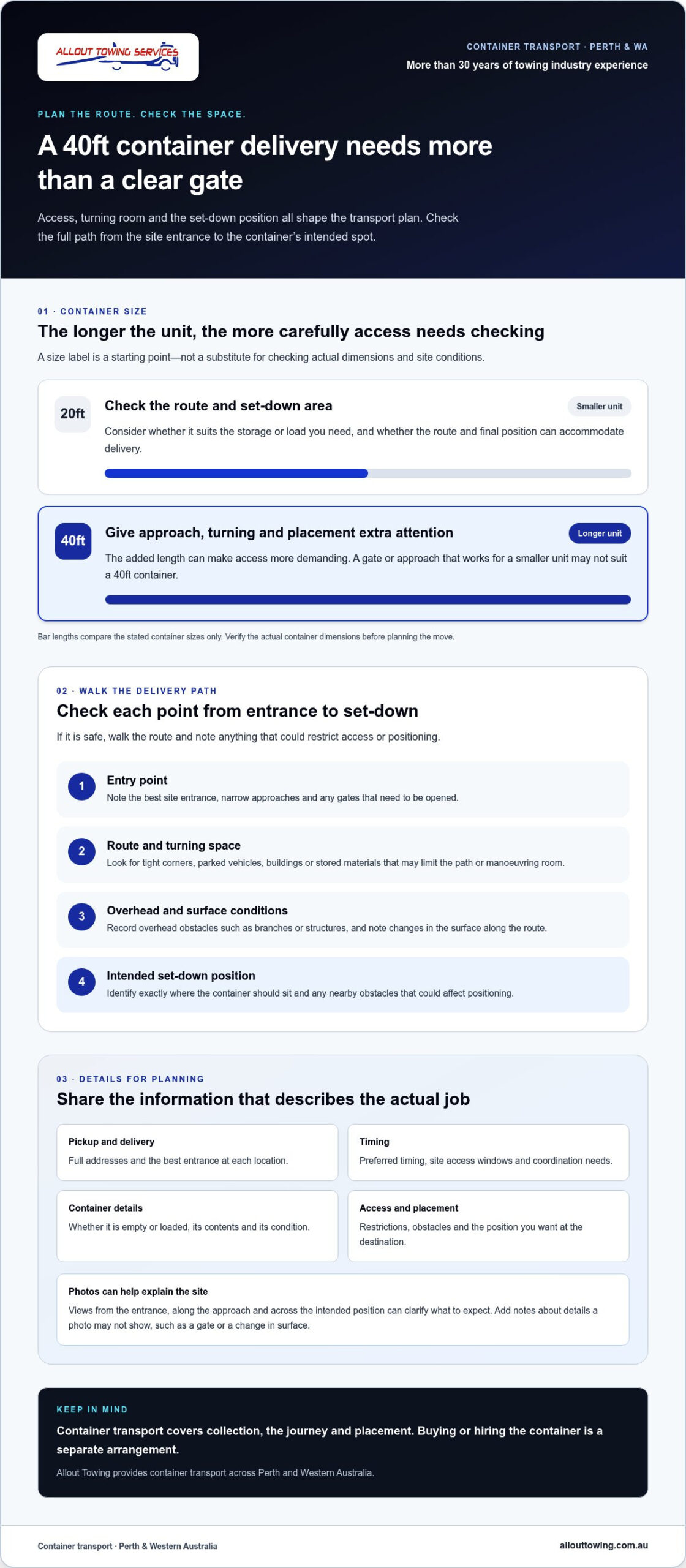
The right transport plan depends on more than the container’s stated size. A longer unit can need more room to approach, turn and reach its intended position. A gate that suits a smaller container may not provide a workable path for a longer one. Even a clear entrance does not guarantee there is enough space to position the container safely.
Use this comparison to think through the job. Container specifications and site conditions vary, so treat size descriptions as a starting point and verify actual measurements rather than relying on assumptions.
| Container size | Common planning consideration | Measurements |
|---|---|---|
| 20ft | Consider whether it suits the storage or load you need, and whether the route and set-down area can accommodate delivery. | Verify the container’s actual dimensions. |
| 40ft | Pay close attention to the approach, turning space and exact placement because the longer unit can make access more demanding. | Verify the container’s actual dimensions. |
What site access details should you assess?
If it is safe to do so, walk the route from the entry point to the planned set-down area. Note narrow approach roads, gates, tight corners, overhead obstacles such as branches or structures, and the surface condition. Check whether parked vehicles, buildings or stored materials could restrict the path or the space needed to position the container.
Describe the set-down area clearly. Identify the position you want and any nearby obstacles that could affect access. Photos from the entrance, along the approach and across the intended position can make your description easier to understand. Add notes about details a photo may not show, such as a change in surface or a gate that needs to be opened.
How does a 40ft container differ from a smaller move?
A 40ft container may suit a larger storage or load requirement, but its length can call for more planning around access and placement than a smaller unit. Don’t assume containers of the same stated size have identical specifications, or that an approach suitable for a 20ft unit will work for a 40ft one. Share the container’s details and site information so the transport plan reflects the actual job.
If you’re preparing the wider move, use the guidance in this article to organise delivery details and site access. For practical help with container transport planning, share your site notes and intended placement with Allout Towing.
Which delivery details should you compare before arranging transport?
A container’s size alone doesn’t show what a delivery involves. Two 40ft moves may differ because of the distance, pickup conditions, destination access, requested placement and timing. Consider these parts of the job together so the transport plan reflects the route and site requirements, not just the container label.
For a 40ft container delivery Perth customers should give the operator a clear picture of both ends of the move. A pickup area with limited room, for example, needs different planning from an open site. At the destination, the intended position and nearby constraints also affect how the container can be handled. Include any known route restrictions or site rules when describing the job.
What should a container delivery quote account for?
A useful quote should relate to the transport you need. Give the operator details that describe the work, including:
- The distance between the collection point and destination.
- Pickup and drop-off conditions, including access limits or site rules.
- Your preferred timing and any requirements at either location.
- Where you want the container placed and anything that could affect the approach.
- Handling needs related to the container’s contents and condition.
These details help make the proposed plan specific to your move. If a site has a narrow entrance or the set-down position is close to buildings, mention it rather than assuming it won’t matter. Photos or clear site notes can help explain the conditions. Transport costs depend on the job, so provide accurate details when requesting a quote from Allout Towing.
How do equipment and experience affect the transport plan?
The operator needs to match the equipment and handling arrangements to the container and the conditions at pickup and delivery. A truck that suits one transport task may not suit another, so don’t assume a vehicle is appropriate based on the container size alone. Clear information supports a safer, more practical plan and helps identify any details to resolve before the move.
Allout Towing provides container transport across Perth and Western Australia. Our local towing experience informs how we assess transport details, communicate about access and plan for each job. Sharing your specific container and site conditions helps us plan around the actual requirements.
If your move involves a larger or specialised load, our heavy transport guide can help you understand the additional planning involved. To discuss your container move and the details that shape its transport plan, get in touch through Allout Towing’s container transport service.
How should you prepare your Perth site for container delivery?
A clear site plan can reduce uncertainty on delivery day. Before the move, check the access route and intended placement, then make sure the people responsible for the site know what to expect. Accurate details help the transport operator plan the approach and address constraints before the job is underway. If you’re unsure whether an obstacle matters, describe it rather than leaving it out.
What should you clear before the truck arrives?
Work through these steps in order. They’ll help you prepare the space and give the operator a clear picture of the site:
- Confirm the site details. Check the pickup and delivery addresses, the entry point and where the container should be set down.
- Walk the access route. Look for gates, tight turns, overhead obstacles, surface changes and other restrictions. Note anything that could affect access.
- Check the placement area. Identify the exact position and consider nearby buildings, parked vehicles and stored materials that could get in the way.
- Clear avoidable obstructions. Where possible, move parked vehicles and loose items out of the access path and set-down area.
- Make the position clear. Mark or describe the intended location so the operator can identify it on arrival. Share useful photos or site notes when arranging the job.
- Pass on changes. Tell the operator about access constraints or site changes that arise after you provide the initial details.
Keep people and activity clear of the planned working area during delivery, and follow the operator’s directions. Don’t guide a vehicle from a position where you could be exposed to moving equipment or traffic.
How can businesses coordinate a container delivery?
For a business or active worksite, nominate one person to coordinate access and placement details with the transport operator. Let staff, builders or property managers know the planned arrangements so they can keep the route and set-down area clear. If access depends on a gate being opened or a particular entrance being used, organise that ahead of time and share the instructions clearly.
Choose someone who knows the site to provide directions and confirm the intended position. If that person won’t be there, provide clear written instructions and make sure the operator knows whom to contact on site. This helps avoid confusion if the preferred set-down point is not obvious or site conditions have changed.
If the project also involves moving equipment, the machinery transport guide can help you plan those arrangements alongside the container move. For 40ft container delivery Perth planning, share your site access notes and placement instructions with Allout Towing to arrange container transport.
Arrange 40ft container delivery in Perth with Allout Towing
Once you’ve gathered the delivery details, you can start a focused transport discussion. Consider how the container’s arrival fits into your next steps, such as when staff need access to its contents or when the site needs the space for other work. Sharing that context helps keep the transport plan aligned with your schedule.
What happens when you arrange container transport?
Contact Allout Towing with the details of the existing container move. Explain what you need transported and outline any arrangements that could affect the job. The team will discuss the transport plan with you and the information needed to organise the move. If your plans change, let the team know so the updated details can be considered.
Keep your enquiry focused on relocating the container you already have. This separates transport arrangements from decisions about buying or hiring a container and keeps the discussion centred on your delivery requirements.
Why arrange your Perth container move with Allout Towing?
Allout Towing provides container transport alongside heavy transport services. Each move has its own requirements, so share the details of your container and intended transport to plan for the job. Clear communication gives you a practical next step without assuming every load or route needs the same arrangement.
To discuss your move, call Allout Towing on 0418 959 216 or arrange your Perth container transport online. Have your delivery information handy to help plan the next steps.
Set your container move up for a smooth handover
A container relocation is easier to manage when it’s part of the wider site schedule, rather than a last-minute delivery task. Before the move, decide who will oversee the handover at each end and make sure your team knows when the access area needs to be clear. This can help keep your business or project organised while transport is underway.
For your 40ft container delivery Perth job, use the details you’ve gathered to start a practical conversation about the transport plan. Allout Towing is a family-owned local business serving Perth and Western Australia, with more than 30 years of towing industry experience and licensed, insured services. Our team can help organise container transport around the details of your move.
Arrange your Perth container transport with Allout Towing and share the details of your move. A clear plan helps you prepare for delivery and the handover at your site.
Frequently Asked Questions
Can a 40ft container be delivered to a residential site in Perth?
Delivery depends on the property and approach. A site can look spacious from the street but have limited room inside the boundary, so consider whether the planned position leaves access to garages, entrances and shared areas. If access crosses land you don’t control or the property is managed, coordinate arrangements with the relevant owner or manager before the move.
How much does 40ft container delivery in Perth cost?
The cost depends on the transport job rather than a standard price for every container. When reviewing a quote, check that it describes the collection and delivery task you intend to arrange and that the requested placement and handling are understood. If your plans change after receiving the quote, explain what has changed and ask how it affects the proposed arrangement.
What information do I need to arrange a 40ft container delivery?
Along with the basic move details, identify who can authorise collection and who will receive the container at its destination. This is especially useful if a business, landlord or site manager controls access. If paperwork or an identification label helps distinguish the container from others at a shared depot or worksite, have those details ready for the transport discussion.
Can a 40ft container be delivered to a building or construction site?
Yes. Allout Towing provides container transport for site-related moves. For an active construction project, consider how delivery fits around other scheduled work, including trades or equipment movements that could affect the area. Nominate one person to coordinate the container handover and communicate changes to the site plan, so different teams have the same instructions.
How do I prepare a site for container delivery?
Plan how the container will be used after it arrives, not only where it will be placed. For example, allow room to open the doors and for people to reach the stored items. If the container will arrive loaded, make sure its contents are secured for transport and explain the load to the operator. Discuss any change to the agreed position before delivery.
Can Allout Towing transport a 40ft container anywhere in Western Australia?
The route and site conditions shape the transport plan, so give the actual destination when arranging the move. A regional property can have different journey and access requirements from a Perth site.
Should I buy a container before arranging delivery?
No. Buying a container is separate from arranging its transport. If you already have access to a suitable container, you can discuss moving it without purchasing another one. If you’re still buying or hiring, coordinate the expected collection date and handover with the seller or hire company. This helps align the container’s readiness with the transport plan and avoids scheduling around an uncertain release time.