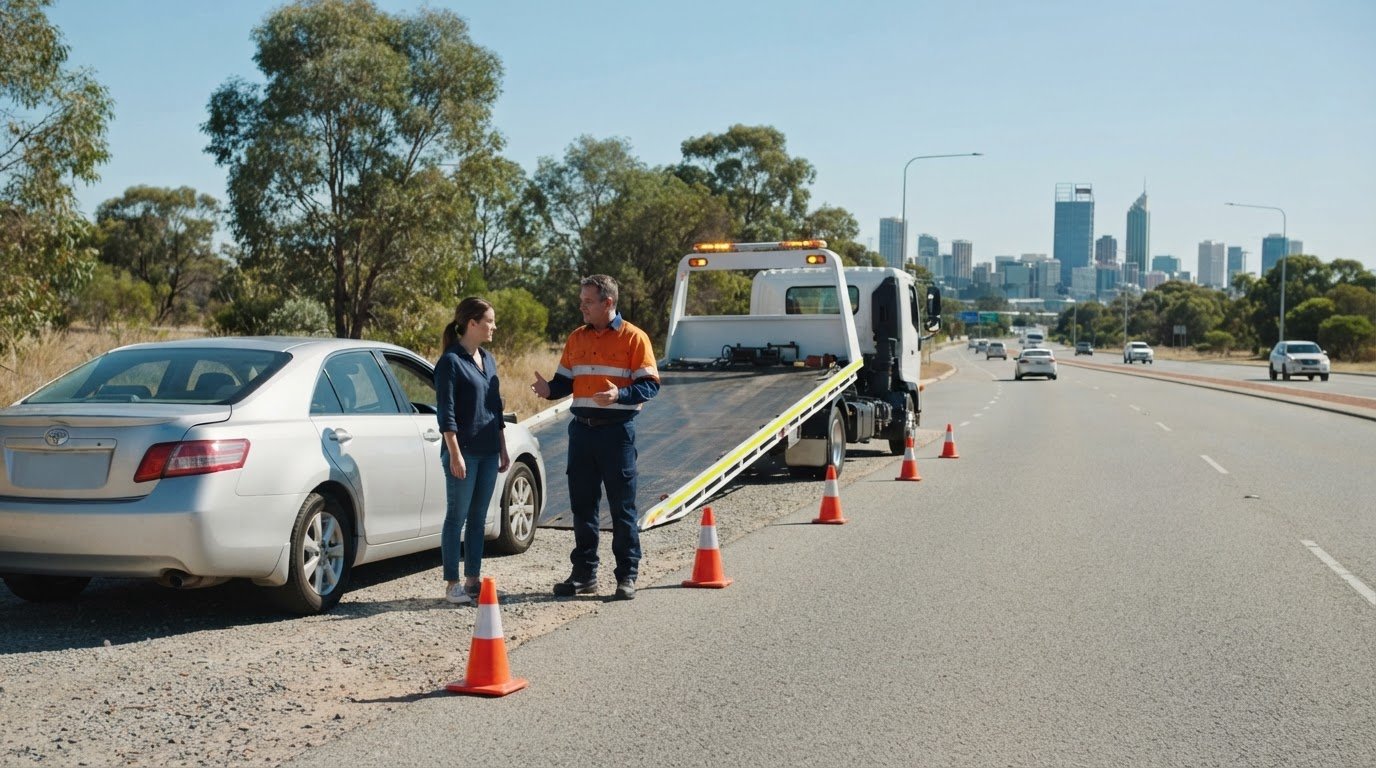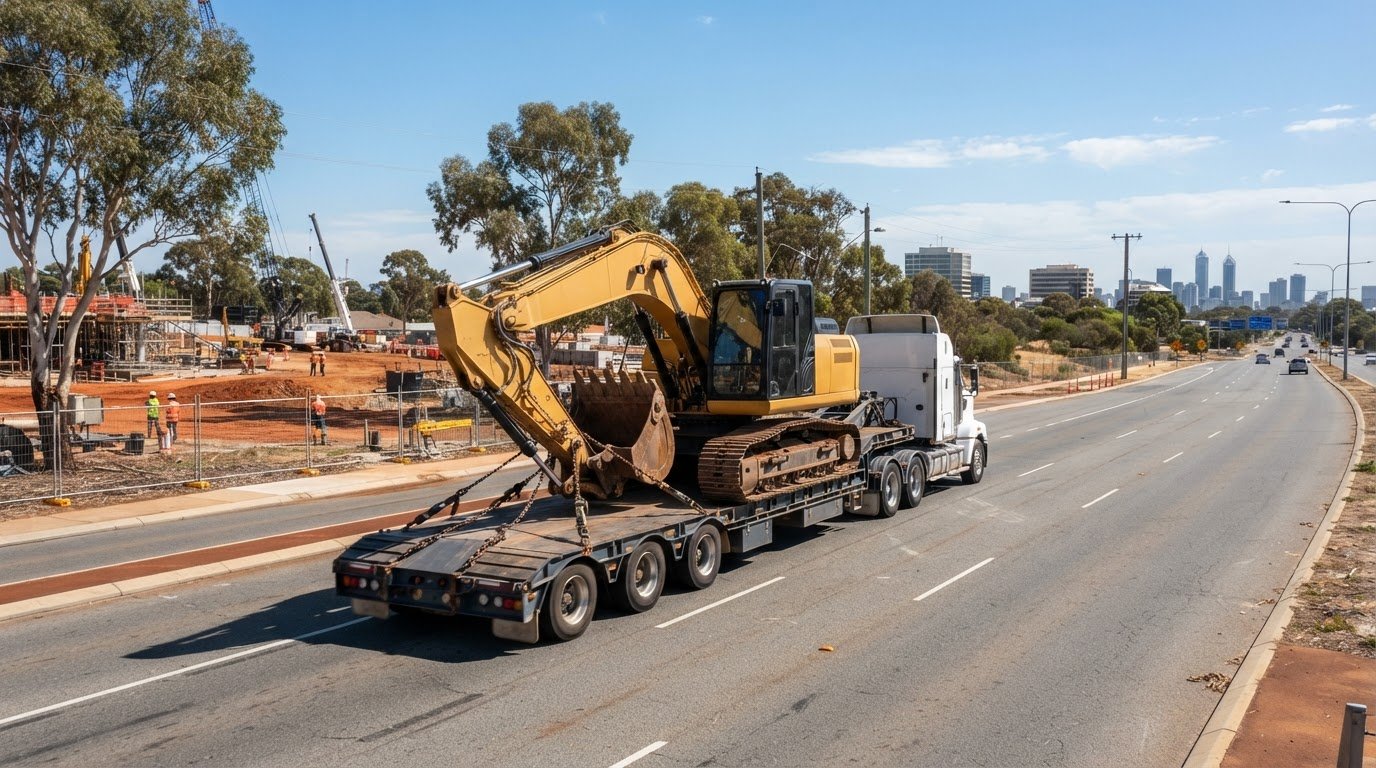
A machinery move is priced by the load and the work involved, not just the kilometres. Heavy machinery towing rates in Perth depend on the equipment, route, access at each end, and the transport setup required. The price depends on the individual job and is provided after a quote request. A clear picture of the move helps you understand what shapes the quote and plan the next step.
It’s understandable to want a clear figure before arranging transport, especially when equipment is needed to keep work moving. A delay can affect site schedules, staff and other planned tasks. Each move has different practical requirements, so accurate details are more useful than a broad estimate that may not suit your job.
This guide explains what affects machinery transport quotes in Perth, what information to prepare and how to plan loading and delivery. It also distinguishes planned equipment transport from heavy-vehicle accident recovery. With these details in hand, you can discuss your transport needs and organise the move with greater confidence.
Key Takeaways
- WA’s crash-towing fee caps for light vehicles don’t apply to heavy vehicles; charges for heavy-vehicle crash towing must be reasonable.
- Distance, machinery dimensions and weight, site access, and loading requirements all affect the transport quote.
- Prepare the machine’s make and model, approximate dimensions and weight, and clear pickup and delivery locations before requesting a quote.
- Matching the transport setup to the equipment and site conditions helps plan safe loading, load restraint, and delivery.
- Allout Towing provides machinery transport and Super tilt heavy transport for equipment moves that need specialised transport.
Reasonable charges for heavy vehicle crash towing
Crash-towing caps for light vehicles
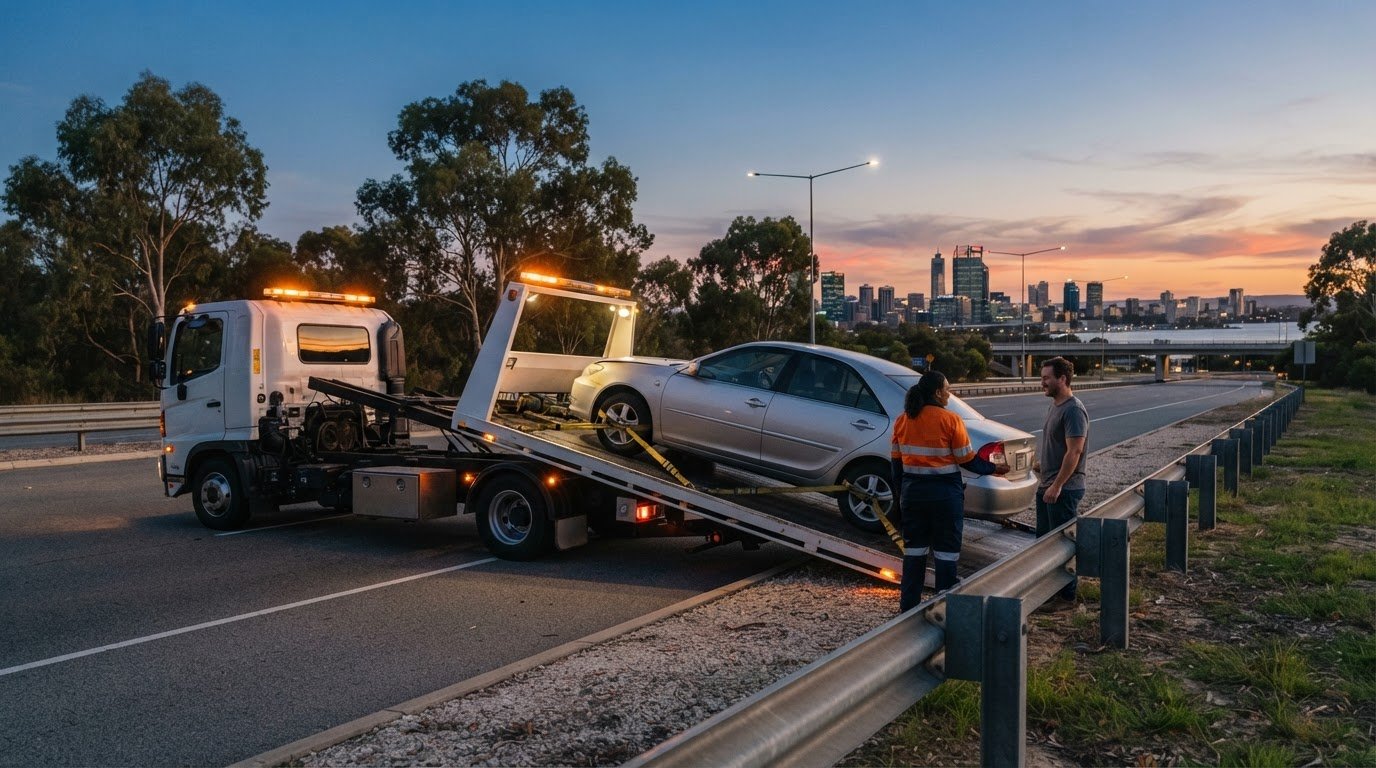
A crash-towing cap is the maximum regulated fee for an eligible accident-related tow. In Western Australia, the maximum charge for a light-vehicle crash tow is A$523, including GST, for the first 50 kilometres. After the first 50 kilometres, the maximum distance fee is A$4.75 per kilometre. These limits apply to accident-related towing, not breakdown towing or planned transport. For example, a passenger car towed after a collision is treated differently from machinery booked for a worksite transfer.
Vehicles and situations covered
The caps cover crash towing for light vehicles, including passenger cars, utes and small vans, as well as motorcycles. They apply when a vehicle is towed from an accident scene, not when a driver arranges a routine move or requests breakdown assistance. In Perth, the capped base charge includes loading, transport, unloading and required paperwork. A maximum after-hours surcharge of A$149 may apply once for the tow, during the specified weekday overnight period, on weekends or public holidays.
Perth and Peel storage charges
Secure-yard storage is charged separately from towing. An operator may charge a single administration fee when releasing a vehicle stored after a crash. Review the paperwork to understand each charge and what it covers.
Heavy vehicles and reasonable charges
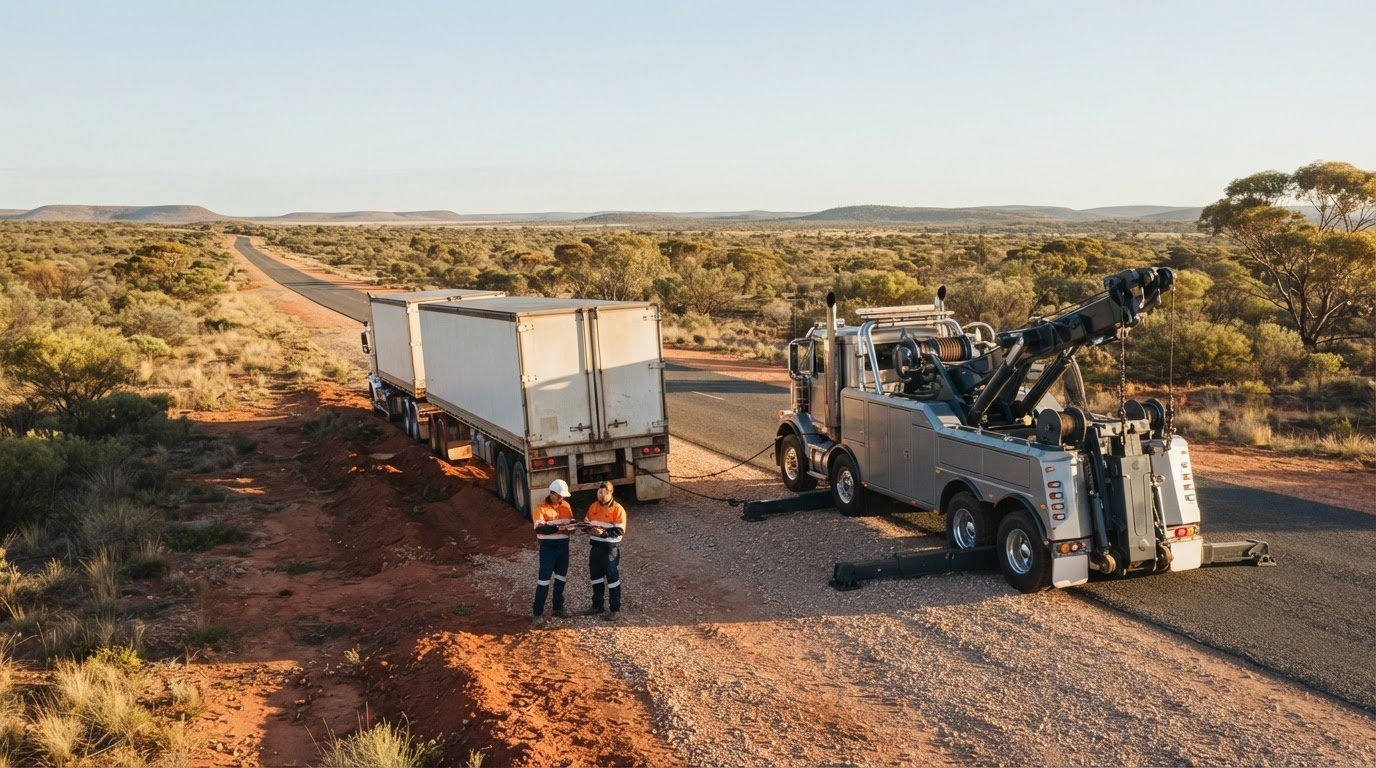
Heavy vehicles are excluded from the regulated crash-towing fee caps that cover light vehicles and motorcycles. The A$523 maximum therefore does not set a rate for a crashed heavy vehicle. Instead, towing workers and towing service providers must apply reasonable charges for heavy-vehicle crash towing in Western Australia. The cost may reflect the recovery work and equipment required for that vehicle and situation. These charges are distinct from the capped rates for a damaged car, ute or small van.
Access, recovery and paperwork
A difficult-access recovery involves towing a vehicle from a location where specialist staff or equipment may be needed. Maximum charges do not apply to crashed-vehicle recoveries in difficult-to-access areas in Western Australia. Examples include a vehicle in a culvert or inside a building. If you arrange your own crash tow, sign the completed Department of Transport-approved Authority to Tow form. It records the towing and storage charges payable, so read it before agreeing to the tow.
Factors affecting towing costs
Heavy machinery towing rates in Perth depend on the work required for each move. A quote takes the machine, journey and conditions at both sites into account. There is no single figure that suits every load. A compact forklift collected from an open yard presents different requirements from a large machine inside a busy worksite. The price depends on the job and is provided after a quote request.
Machine size and weight affect the transport setup required. A longer or wider machine takes up more carrying space, while its weight determines which truck can transport it. Attachments also matter if they are travelling with the machine. For example, a loader with its bucket attached may need a different arrangement from one transported without it. Include the machine’s measurements and known weight in your quote request.
Distance and route describe how far the equipment must travel and the practical path between sites. A transfer within one Perth suburb differs from a move across the metropolitan area or to a regional destination. The machine’s dimensions or transport setup may also affect route access. Provide the collection and delivery locations, rather than a broad description such as “north of Perth”.
Access at each site affects how the truck can reach and leave the equipment. A narrow entrance, uneven ground or limited turning space can change where the truck can position for loading. A machine at the back of a warehouse may need a different approach from one beside a clear gate. Describe access accurately, including any site rules affecting truck entry or the loading area.
Condition and loading requirements affect how the machine can be placed on the transport vehicle. Equipment that starts and moves may be positioned differently from a machine with damaged tracks or locked wheels. Explain what works and what does not, and mention any loose parts or attachments. Clear information helps plan handling that suits the machine, rather than assuming it can move under its own power.
Timing and coordination matter when collection must fit around site activity. A requested time window, restricted gate access or delivery appointment can shape how the job is organised. Explain any urgency and name the person who can meet the truck. If other equipment or vehicles occupy the loading area, arranging clear access beforehand can help prevent avoidable delays.
Before requesting a quote, gather the machine’s details, both locations, its condition and any access or timing constraints. For equipment moves, Allout Towing’s machinery transport service is one option to discuss when planning the job.
Information to provide when requesting a quote
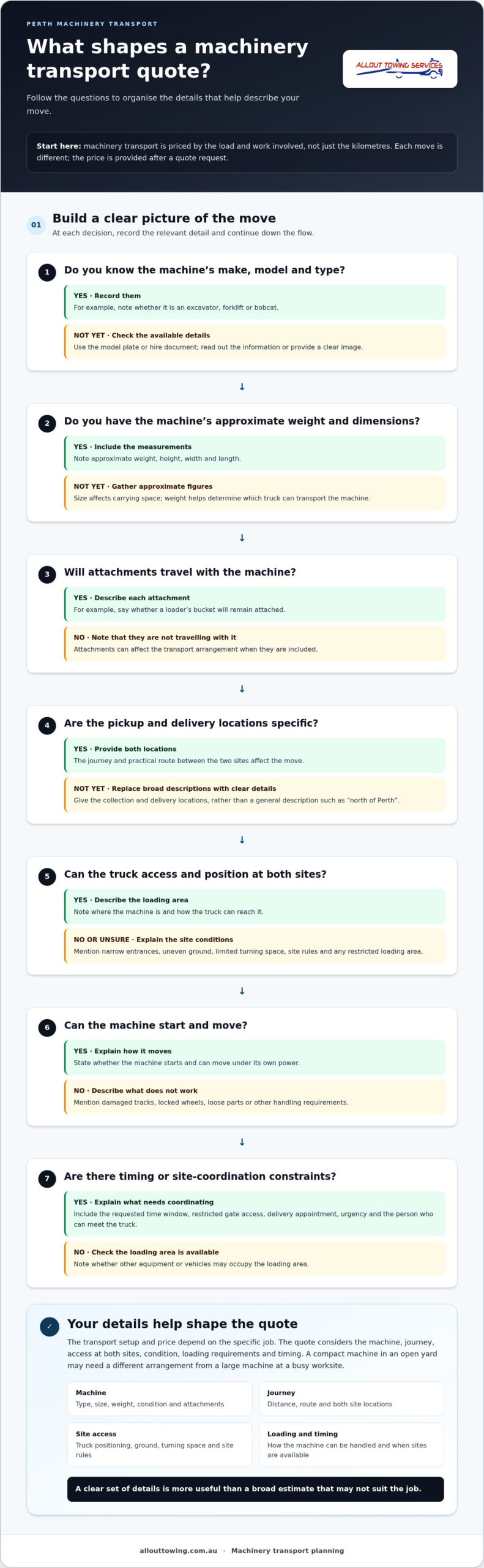
A quote request provides the information needed to assess a specific machinery move. Start with the machine’s make, model and type, such as an excavator, forklift or bobcat. Add its approximate weight and dimensions, including height, width and length. If you only have a model plate or hire document, read out the details or send a clear image. Accurate measurements help identify a suitable transport setup.
Pickup and delivery details include the addresses and access points at both ends of the trip. Give the street address, suburb and site contact for collection and delivery. Explain where the machine is located, such as behind a warehouse or beside a site gate. Mention any narrow approach, low overhead clearance, steep driveway or restricted entry. These details help assess the truck’s route to the equipment.
Travel distance is the route between the pickup and delivery locations. Provide both full addresses, not just suburb names, because access roads can change the practical route. Include any designated truck entrance. For example, an industrial property may require delivery through a service gate rather than the public entrance. Mention any preferred route or delivery window set by the site.
Loading information explains how the machine can be prepared and placed on the transport vehicle. State whether it starts, moves and steers, and report faults such as damaged tracks, locked wheels or a leaking component. Explain whether attachments need to travel with it or parts have been removed. If the machine cannot move under its own power, say where it is positioned and what blocks access. This helps the operator assess the loading task.
An upfront quote gives you a price before transport proceeds. For clarity, ask what the quoted work covers, including collection, loading, travel and delivery, and how changes to the job are handled. If the machine’s actual dimensions differ from the estimate, for instance, the transport plan may need to change. Share measurements and photographs so the quote reflects the load and site conditions.
An emergency request is for a transport job that needs prompt attention because equipment is damaged, blocking access or required for scheduled work. Explain why the move is urgent, where the machine is and when the site can receive it. Give a reachable contact number and name the person who can meet the truck. Include any loading restrictions caused by weather, site hours or another vehicle.
Before sending your request, gather the machine details, both addresses, access notes, operating condition and timing. Keep the information together in one message and clearly describe any complex loading requirements. This gives the quote assessment a useful picture of the transport instead of leaving key details to guesswork.
Heavy machinery and equipment transport
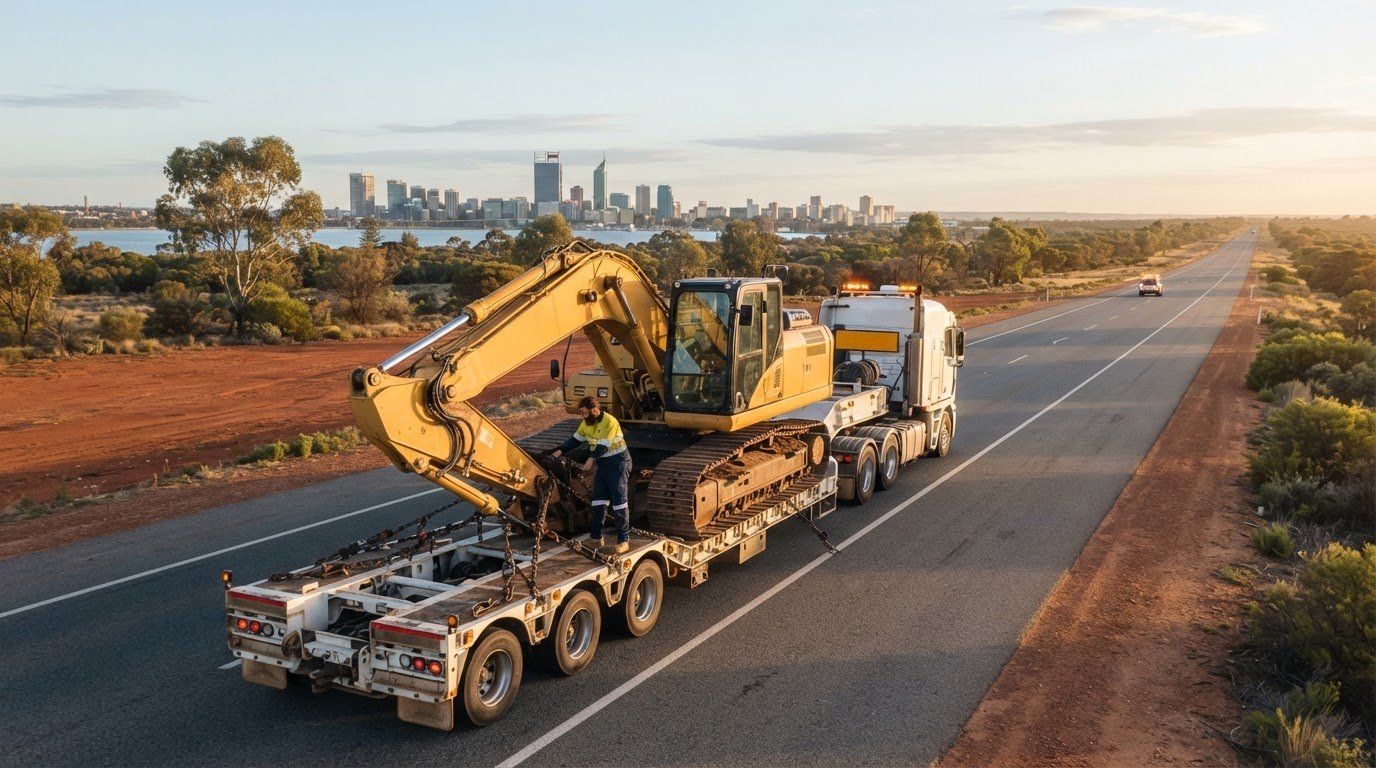
Heavy machinery transport moves large plant equipment between worksites or other locations using specialised transport. In Western Australia, an excavator, bobcat or forklift needs a plan based on its weight, dimensions and condition. This differs from moving a passenger vehicle, which has different loading and carrying requirements. Provide accurate machine details so the transport setup suits the equipment.
Equipment dimensions are the machine’s length, width and height, including any attachments travelling with it. Measure the complete load, not just the main body. A bucket, forks or other fitted attachment can change the overall width or height. Tell the operator whether attachments can be removed and whether they need to travel with the machine. This helps assess the truck and loading arrangement before collection.
Carrying capacity is the maximum load a transport truck can carry safely. The machine’s weight must be considered alongside any attachments or other cargo. Use the manufacturer’s plate, equipment manual or hire paperwork for the clearest available weight information. Don’t estimate from appearance alone. A compact forklift and a larger construction machine may need different trucks, even if they are used for similar site work.
Loading access is the space and ground conditions needed for a truck to reach and load the equipment. At a roadside pickup, a narrow shoulder or passing traffic can affect where loading takes place. On a worksite, soft ground, a steep approach or a restricted gate may affect access. Describe these conditions and share site instructions so operators can plan the truck’s position and loading.
Load restraint means securing machinery so it stays in place during transport. Before collection, identify movable parts, loose attachments and areas that could be damaged by contact with straps or chains. The operator can then account for securing points and suitable protection. For example, the forklift’s forks and mast need consideration alongside the main body. Keep the collection area clear for the truck and loading process.
Route planning means choosing a practical path between the collection and delivery points. Provide both addresses, site entry details and known access limits. A move across Perth differs from a regional Western Australia trip in distance and route requirements. Tell the operator about delivery times or site operating hours so the transport plan accounts for when the equipment can be received.
Pre-collection preparation means getting the machine and site ready before the truck arrives. Confirm the machine’s operating condition, remove loose items and arrange access with the site contact. Keep its documents or model details available. These steps help operators match the truck, loading method and load restraint to the actual equipment, rather than relying on assumptions.
Heavy-duty machinery towing
Heavy-duty machinery towing moves large or heavy equipment using a transport setup suited to the load. A large excavator, loaded forklift or construction machine may require a different truck from smaller plant equipment. The machine’s weight, dimensions, condition and collection point all shape the plan. Provide details from its identification plate or operating documents, including any attachments travelling with it.
Transport capacity is the load a truck and its equipment can carry safely. The machine’s weight is only one part of the assessment. Attachments, buckets or other items travelling with it also affect the total load. Give the operator the machine’s known weight and dimensions rather than relying on a visual estimate. A long machine may need more tray space even when its weight is within capacity.
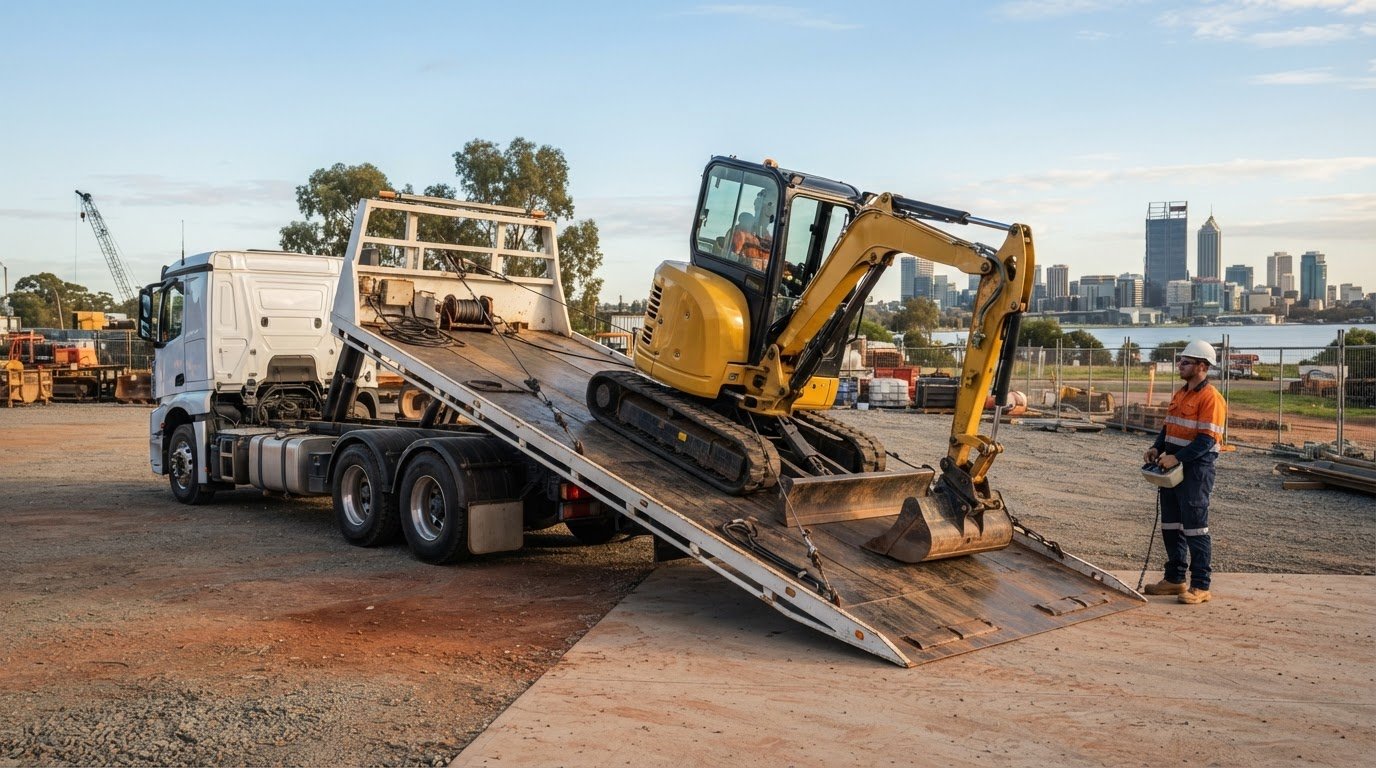
Loading method is how equipment moves from the ground onto the transport vehicle. A machine that starts and can be driven into position presents a different loading task from one with damaged tracks or locked wheels. Explain whether it moves, steers and stops as expected. Describe where it sits, such as on firm ground, a slope or behind a site obstruction. These details help plan access and loading.
Load restraint means securing equipment to prevent movement during transport. Before loading, operators need to consider the machine’s shape, weight distribution and suitable securing points. Identify loose components and attachments that could shift, then clear the area around the machine. For example, keep people and site vehicles away from the loading zone while the truck positions and secures the equipment.
Route assessment involves reviewing the journey and access at both ends. Give the collection and delivery addresses, site entry instructions and known restrictions. A narrow gate, low overhead structure or soft surface can affect truck access. For a regional Western Australia move, provide the full destination and site opening times. This helps the transport plan account for the route and receiving location.
Heavy-vehicle safety planning involves coordinating the load, truck and people involved in a move. Keep the site contact available to guide operators to the correct equipment and loading area. Point out overhead hazards, nearby traffic and other machinery before loading starts. Clear instructions reduce confusion, particularly when several machines are on the same worksite or a truck must enter through a shared access road.
For heavy-duty equipment moves, prepare the machine details, route, access notes and operating condition before arranging transport. Request heavy machinery transport with those details ready.
Allout Towing: Tilt Tray Perth Services
Allout Towing provides machinery transport and Super tilt heavy transport for equipment moves across Perth and Western Australia. Container Transport is also available for container moves. When requesting a heavy machinery towing quote, share the equipment’s dimensions, weight and condition, along with pickup and delivery access details. This helps define the transport requirements and clarify the next steps.
Allout Towing’s heavy-tow tilt slide truck has a 10-metre tray and a 10-tonne capacity. This equipment is suited to loads within those stated limits; the machine’s measurements and weight remain essential when planning a move. If you’re arranging equipment transport, contact Allout Towing to discuss the job and request a quote.
Plan your machinery move with confidence
Plan heavy machinery towing rates in Perth as part of your project, rather than leaving transport until the last minute. Confirm the collection and delivery locations, arrange site access and identify who can meet the transport operator at each end. Preparation helps keep the handover clear and gives your team a practical timeline for the equipment.
The price depends on the job and is provided after a quote request. The machine, route, access and loading requirements all shape the assessment. Before contacting Allout Towing, gather the equipment details and site instructions. If a machine is damaged or cannot move under its own power, explain this clearly so the transport plan accounts for its condition.
Allout Towing provides machinery transport and Super tilt heavy transport for equipment moves. Share the relevant details and contact Allout Towing for a quote. A clear plan is a useful first step towards getting your machinery where it needs to be.
Frequently Asked Questions
What Can Affect the Price?
The machine’s transport requirements, route and loading work all affect the price. An attachment travelling separately may change how the load is arranged, while a machine that cannot move under its own power may need a different loading approach. The pickup and delivery sites matter too. A clear site contact and accurate access instructions can help avoid surprises during collection.
How do Perth heavy equipment transporters calculate towing and transport costs?
A machinery transport quote accounts for the equipment and the work required for its journey. This includes the machine’s specifications and condition, collection and delivery locations, and the loading and transport setup. Heavy machinery towing rates in Perth are assessed job by job, rather than set at one standard figure for every machine. Clear equipment and site details help make the quote relevant to your move.
How much does it cost to transport excavators, loaders, tractors, and forklifts around Perth?
There isn’t one fixed price to move an excavator, loader, tractor or forklift around Perth. The cost depends on the machine, route, access and loading requirements, and is provided after a quote request. Allout Towing offers a free quote for machinery transport and Super tilt heavy transport. Include the machine type and pickup and delivery suburbs in your request.
What information do Perth towing companies need to provide an accurate machinery transport quote?
For a useful quote, provide the machine’s make, model and identifying details, along with the pickup and delivery addresses. Add recent photographs showing the whole machine and its attachments, and share site entry instructions or the contact person’s name. If the equipment belongs to a business or hire company, have the person arranging transport available to clarify access or delivery arrangements.
Which Perth companies offer heavy machinery towing, and what are their service areas and rates?
Allout Towing offers machinery transport and Super tilt heavy transport in Perth. Rates are provided after a quote request and depend on the equipment, route, site access and loading requirements.