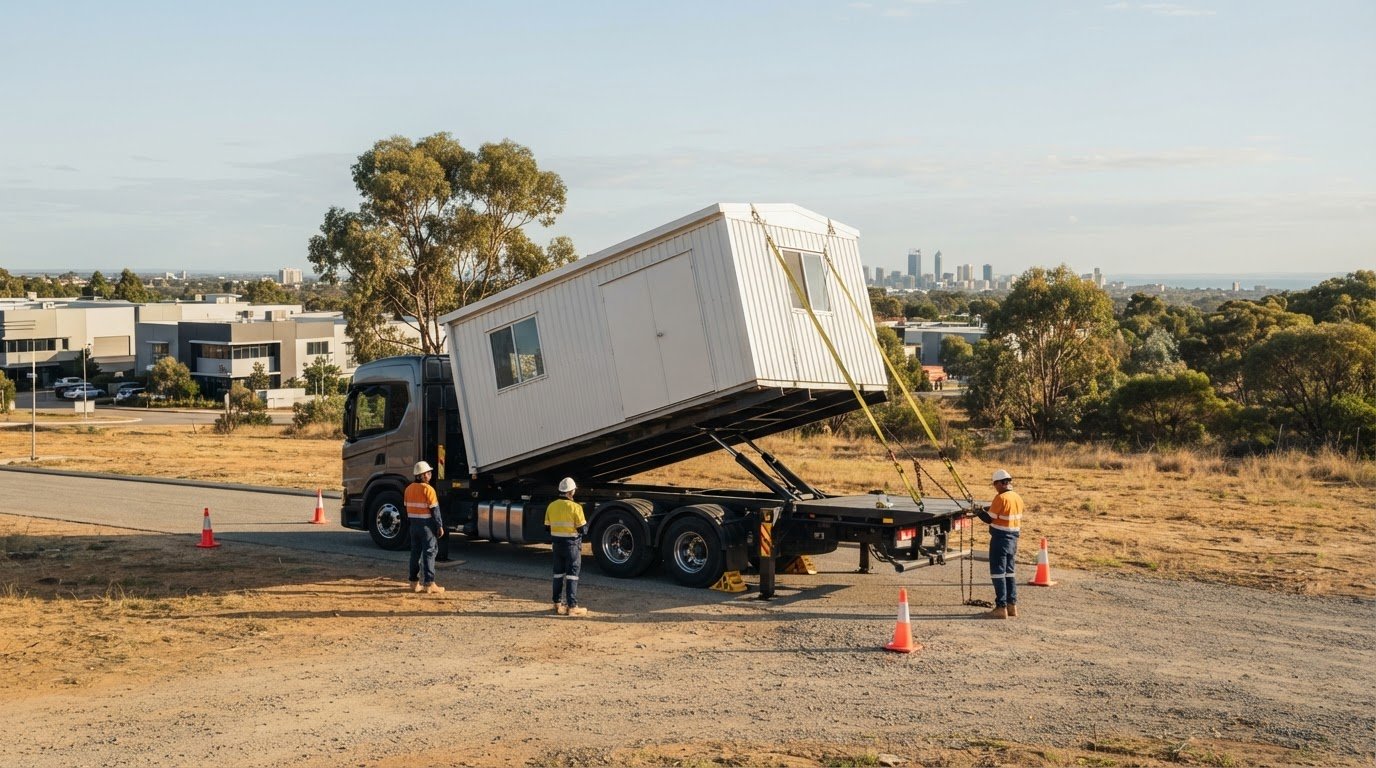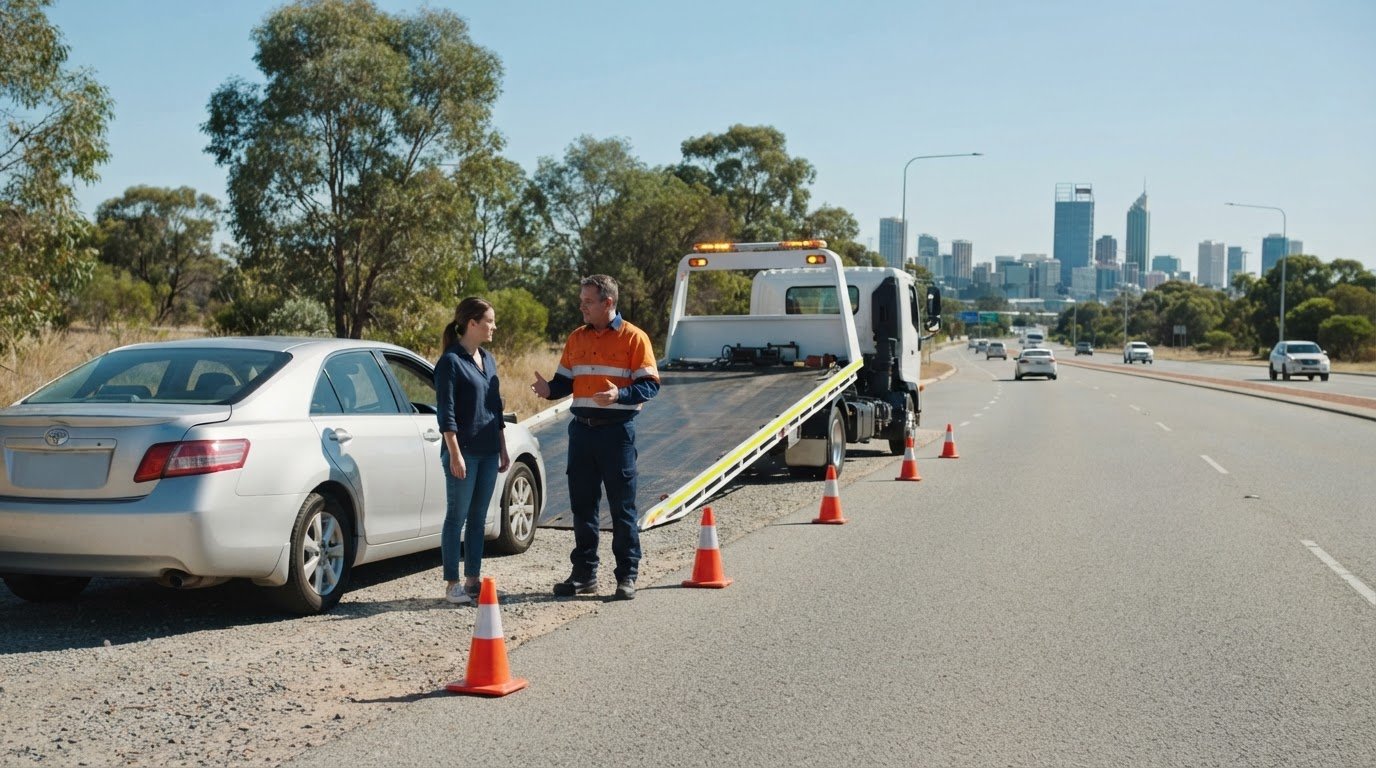
A tow truck at a crash scene doesn’t automatically mean your vehicle is being impounded. After a collision, it can be difficult to tell whether police or another authority is moving a vehicle to clear traffic, or whether a private operator is offering recovery. If you need accident towing Perth drivers can arrange, knowing the difference can help you make a clearer decision.
It’s understandable to feel pressured when traffic is building, your car may be damaged and you need to decide where it should go. The first truck to arrive doesn’t necessarily decide who handles the full tow or where your vehicle is taken. In a standard crash-scene clearance, drivers generally retain a choice of provider and destination, while authorities can arrange a tow in specific circumstances.
This guide explains how an authority-arranged vehicle move differs from private accident recovery, what to establish before agreeing to a tow and how insurance may fit into the process. Allout Towing provides accident recovery across Perth and Western Australia, with fully insured and police-certified drivers and direct billing to major insurers. Direct billing does not determine whether an insurer will approve a claim.
Key Takeaways
- A tow truck’s arrival doesn’t tell you whether the move is police-directed, a traffic relocation or private accident recovery.
- An authority-arranged move may differ from a tow to your chosen destination. Clarify what the move covers before arranging the next step.
- For accident towing Perth, establish who arranged the move, where the vehicle needs to go and what recovery help you want.
- Share clear details about your vehicle, its current location and destination to help organise the right recovery.
- Allout Towing provides private accident recovery, with fully insured and police-certified drivers and direct billing to major insurers.
Police impound towing in Perth: what the term can mean after a crash
A tow truck arriving after a crash doesn’t tell you who arranged it or where your vehicle is going. That uncertainty can add to an already stressful scene. The first step is to distinguish private recovery from a traffic relocation or an impound. All three can involve a tow truck, but they serve different purposes.
What is the difference between an impound tow and accident recovery?
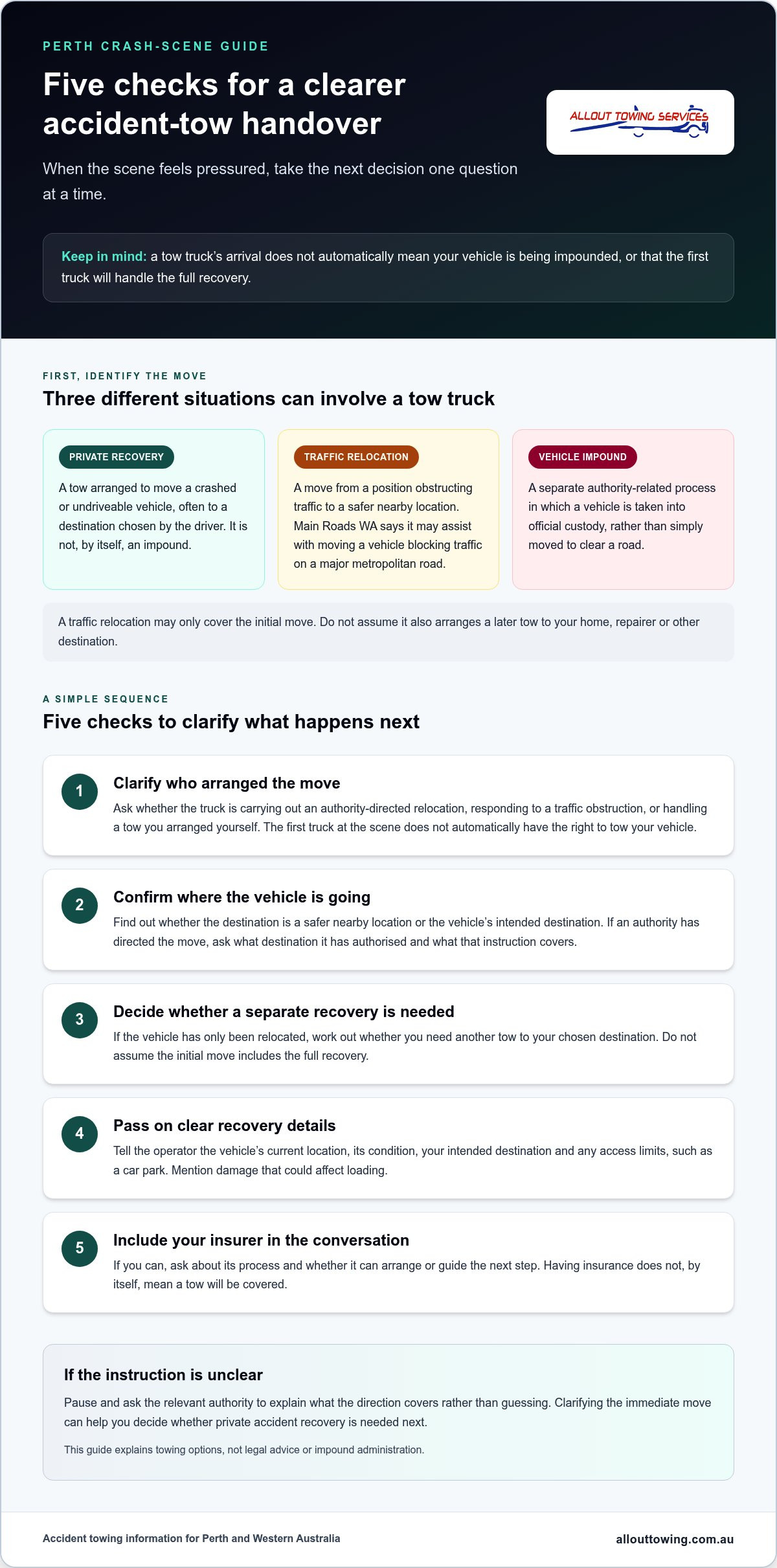
Private accident recovery is a tow arranged to move a crashed or undriveable vehicle, often to a destination chosen by the driver. It deals with transporting the vehicle after a collision. It is not, by itself, an impound.
Traffic relocation means moving a vehicle from a position where it obstructs traffic to a safer nearby location. Main Roads WA says it may assist with moving a vehicle blocking traffic on a major metropolitan road. That limited move shouldn’t be confused with a later recovery tow to a repairer or another destination.
Vehicle impound is a separate authority-related process. It means a vehicle is taken into official custody, rather than simply moved to clear a road. The general meaning is outlined in Vehicle Impoundment. In this article, “police impound towing” refers to that distinct concept, not every tow that happens after a crash.
Who may arrange a tow after a crash in Perth?
You may arrange a private tow if your vehicle can’t be driven and you need it taken to a chosen destination. A traffic-related move is different. It may be arranged to deal with an obstruction and may take the vehicle only to a safer nearby place. Don’t assume the truck carrying out that move has also been engaged for the full recovery.
Main Roads WA’s crash-towing guidance says the first tow truck at the scene doesn’t automatically have the right to tow your vehicle. Its guidance also recognises the driver’s choice of towing company and destination after a crash. This helps distinguish an unsolicited arrival from a tow you’ve arranged, but it doesn’t mean every interaction with police or Main Roads follows the same process.
- Ask who arranged the move: you, an authority or someone responding to a traffic obstruction.
- Clarify whether the vehicle is going to a nearby safe location or to its intended destination.
- If you need accident towing Perth drivers can organise privately, give the operator the vehicle’s current location and your preferred destination.
This section explains towing options, not legal advice or impound administration. If an authority gives you specific instructions, clarify what they cover before arranging any further movement. Establishing whether the immediate need is traffic clearance, an impound or private recovery can make your next decision easier.
What happens when a crashed vehicle needs towing in Western Australia?
Once the immediate scene is being managed, work out what will happen to the vehicle. A move to clear an obstruction may take it only to a safer nearby location. It doesn’t necessarily arrange transport to your home, repairer or another destination. If you’re shaken, take it one question at a time: who is arranging this move, and where is the vehicle going?
How to clarify who has arranged the tow
Ask whether the truck is carrying out an authority-directed relocation or a tow you can arrange yourself. If an authority has directed the move, ask what destination it has authorised and whether that instruction applies only to the initial relocation. If you don’t understand the direction, pause and ask the relevant authority to explain it rather than guessing or assuming the driver can change it.
What to establish before arranging accident recovery
If you’re arranging a separate recovery, give the towing operator clear details: the vehicle’s location, its condition, any access limits, your intended destination and whether an insurer is involved. Mention damage that could affect loading, along with any confined access, such as a car park. These details help the operator understand the job and plan suitable vehicle transport.
A simple sequence can keep the handover clear:
- Clarify the instruction. Establish whether the vehicle is being moved under an authority direction or whether you’re arranging the tow.
- Confirm the destination. Find out where the first move will take the vehicle and who has authorised that destination.
- Decide what happens next. If the vehicle has only been relocated, work out whether you need a separate tow to your chosen destination.
- Pass on the recovery details. Tell the operator where the vehicle is now, what condition it’s in, any access constraints and where you want it taken.
- Include your insurer in the conversation. If you can, ask about its process and whether it can arrange or guide the next step. Don’t assume a tow will be covered simply because you have insurance.
For official information about towing requirements and crash-tow processes, see the Department of Transport’s Western Australian Towing Industry Reforms. The published “24 Hour Towing Perth” guide also covers broader emergency towing information. Allout Towing provides accident recovery and direct billing to major insurers for private tows. Direct billing does not guarantee claim approval. To arrange a private tow, use the Allout Towing online enquiry option and share the vehicle’s location and intended destination.
Police-arranged towing versus private accident towing: how the options differ
After a crash, separate a move made to address a traffic obstruction from a tow you arrange to take your vehicle where it needs to go. These may happen one after the other, but they have different purposes. This comparison summarises the distinction, not legal advice. Follow the specific instructions given at the scene.
- Traffic relocation: Main Roads may assist with a vehicle obstructing traffic on a major metropolitan road. The purpose is to move it to a safer nearby location. Clarify where it has been taken and whether you need to arrange further transport.
- Private accident recovery: The driver organises a tow to transport a crashed or undriveable vehicle to a chosen destination. Give the operator the vehicle’s location, condition and destination.
- Impound: This is a separate authority-related process, not routine accident recovery or traffic relocation. Follow the relevant authority’s instructions about the impound process.
Main Roads WA’s guidance says the first tow truck at a crash scene doesn’t automatically have the right to tow the vehicle. Its driver-choice guidance concerns crash towing: drivers can choose the towing company and destination in that context. Don’t treat this as a rule covering every interaction with police or Main Roads, or assume an authority-directed move has the same purpose as a private recovery.
When a move is directed to address a traffic obstruction
Main Roads may help relocate a vehicle obstructing traffic on a major metropolitan road to a safer nearby location. That move can clear the obstruction without taking the vehicle to your preferred repairer or home. Once the vehicle is in the safer location, you may need to organise a separate tow for the rest of the journey. Clarify the destination and what the initial move covers.
When a driver arranges private accident recovery
Private accident towing addresses the practical need to transport a crashed or undriveable vehicle. Tell the operator where the vehicle is, describe its condition and access, and give clear destination instructions. For example, say whether it’s at the crash scene or has already been relocated, then name the repairer or other destination you want. This helps the operator plan the recovery instead of assuming the first move is the final one.
Private recovery doesn’t administer an impound, and arranging a tow doesn’t mean an insurer will approve or pay for it. Allout Towing offers direct billing to major insurers as a billing option, but this isn’t a promise of claim approval or coverage. If you’re arranging accident towing Perth drivers can organise privately, keep authority instructions and your transport arrangements distinct so you know who is responsible for each move.
How to organise accident towing in Perth without adding confusion
After a crash, it can be difficult to keep track of instructions and make decisions quickly. You don’t need to explain everything at once. First establish whether an authority has directed a move or whether you’re arranging private recovery. Then identify the vehicle, state where it needs to go and organise the tow. This keeps the immediate move separate from any further transport you need.
What information should you give the towing operator?
Share the details that help the operator understand the vehicle’s location and recovery needs. If you’re unsure of a road name or exact address, describe a nearby landmark or the direction of travel. Be clear about damage and access. Specific information helps the operator plan suitable transport for the job.
- Location: Give the road, a nearby landmark or the vehicle’s current location if it has already been moved.
- Vehicle: State the make or type of vehicle and whether it can be driven.
- Condition: Describe visible damage or anything that may affect loading and transport.
- Access: Mention a narrow entrance, low clearance, steep driveway or other access constraint.
- Destination: Name where you want the vehicle taken. Make clear if this differs from an authority-directed relocation.
- Insurance: Let the operator know if an insurer is involved and direct billing may be relevant.
How can insurance billing fit into the process?
Once you’ve explained the job, mention your insurer if you’re discussing billing. Allout Towing offers direct billing to major insurers and works with private and trade insurers. This is a billing option, but it doesn’t confirm that your insurer will cover a particular tow or approve a claim. If you have claim information available, keep it handy and share the relevant details. Your insurer can explain how your policy applies.
Before the tow is arranged, recap the essentials: where the vehicle is, whether it can be driven, where it’s going and whether an insurer is involved. If you’re feeling overwhelmed, give the information one point at a time. Allout Towing offers a free quote for private accident recovery, so you can discuss the job rather than guess a price from incomplete details.
For accident towing Perth drivers can organise after a crash, request a free accident towing quote from Allout Towing.
Accident towing in Perth: how Allout can help with private recovery
If your vehicle can’t be driven after a crash, arranging transport is one more task at an already difficult time. Allout Towing provides private accident recovery and 24/7 emergency towing across Perth and Western Australia. We handle the recovery you arrange. Police, Main Roads and other authorities decide whether an authority-directed move or impound applies.
What Allout Towing brings to a recovery job
Our family-owned business has more than 30 years of overall towing experience, and our service team has more than 15 years of experience. Allout Towing’s drivers are fully insured and police-certified. When a damaged or undriveable vehicle needs transport, share its condition and your destination so the team can understand the recovery job.
Our fleet includes five tilt-tray trucks, each able to carry two vehicles at the same time. Allout Towing can tow loads of up to 10 tonnes. When you call, share the vehicle’s location and condition to help the team understand the job and plan suitable transport. We work across Perth and Western Australia, including Perth’s northern suburbs.
Allout Towing also offers direct billing to major insurers. This can help with billing arrangements, but it doesn’t guarantee that an insurer will cover a particular tow or approve a claim. If your insurer is involved, mention it when organising the recovery so the billing details can be discussed alongside the job.
How to request help after a crash
When you’re ready to arrange private recovery, call 0418 959 216 to discuss the tow or request a free quote. You can give the details one at a time. Start with the vehicle’s location and condition, then explain where you need it taken and whether an authority has already directed a separate move. This keeps your private recovery request distinct from any official instructions.
If calling isn’t convenient, use the online enquiry form to contact Allout Towing for accident recovery. Share the essential details and the team can discuss your request with you. If your vehicle can’t be driven after a crash, Allout Towing can help arrange private accident recovery across Perth and Western Australia.
Take the next step with confidence
After a crash, you don’t need to work out every detail at once. Focus on the immediate transport decision: where your vehicle is now, whether an authority has given instructions and where you want it taken next. Clear information can help turn a stressful situation into a manageable plan.
If you need accident towing Perth support, Allout Towing can discuss privately arranged recovery and help you work through the next step. Share what you know, even if some details are still unclear. You can request a free quote before arranging the tow.
Call Allout Towing on 0418 959 216 to discuss accident recovery or request a free quote. Explain what has happened and where the vehicle is now, and the team can discuss your recovery request.
Frequently Asked Questions
Can I choose my tow truck after a crash in Perth?
Yes. Main Roads WA says the first truck at a crash scene doesn’t automatically have the right to tow your vehicle. If you’re arranging accident towing Perth, make your choice clear before the vehicle is loaded. If you’re shaken or injured and someone else is helping with calls, ask them to communicate your preferred company and destination accurately. Keep a note of what they arranged.
Does a police-arranged tow always mean my car has been impounded?
No. A tow truck’s presence alone doesn’t establish that your vehicle has been impounded. If you’re unsure, ask the person who arranged the move to explain its purpose and identify the authority responsible for any further instructions. Keep the contact information so you can follow up about what happens after the vehicle leaves the scene.
What should I do if my car is moved to a safer location after a crash?
Use the vehicle’s new position as the pickup point for any further recovery, not the original crash location. For example, if it has been moved into a nearby car park, tell the operator which entrance to use and whether the vehicle is on a particular level. This distinguishes the crash location from where the car is now.
Can Allout Towing bill my insurer directly for accident towing?
Allout Towing offers direct billing to major insurers and works with private and trade insurers. If you want to use this option, have your insurer’s name and any claim reference available when discussing the job. Also ask your insurer how it wants towing charges handled, as a billing arrangement doesn’t determine policy coverage. This helps you understand the payment process without assuming a claim outcome.
Is accident towing available after hours in Perth?
Yes. Allout Towing provides emergency towing 24 hours a day, 7 days a week, including accident response. For an after-hours enquiry, call 0418 959 216 and keep your phone nearby in case the team needs to clarify the pickup point. If someone else is with the vehicle, let them know who will make the arrangements so calls and updates stay clear.
How do I get a free quote for accident towing in Perth?
Call Allout Towing on 0418 959 216 or use the online enquiry form to request a free quote. If the vehicle has already been moved, say whether you’re asking about transport from its current position or from the original crash location. That distinction helps describe the requested trip accurately. The quote depends on the details of the specific recovery.