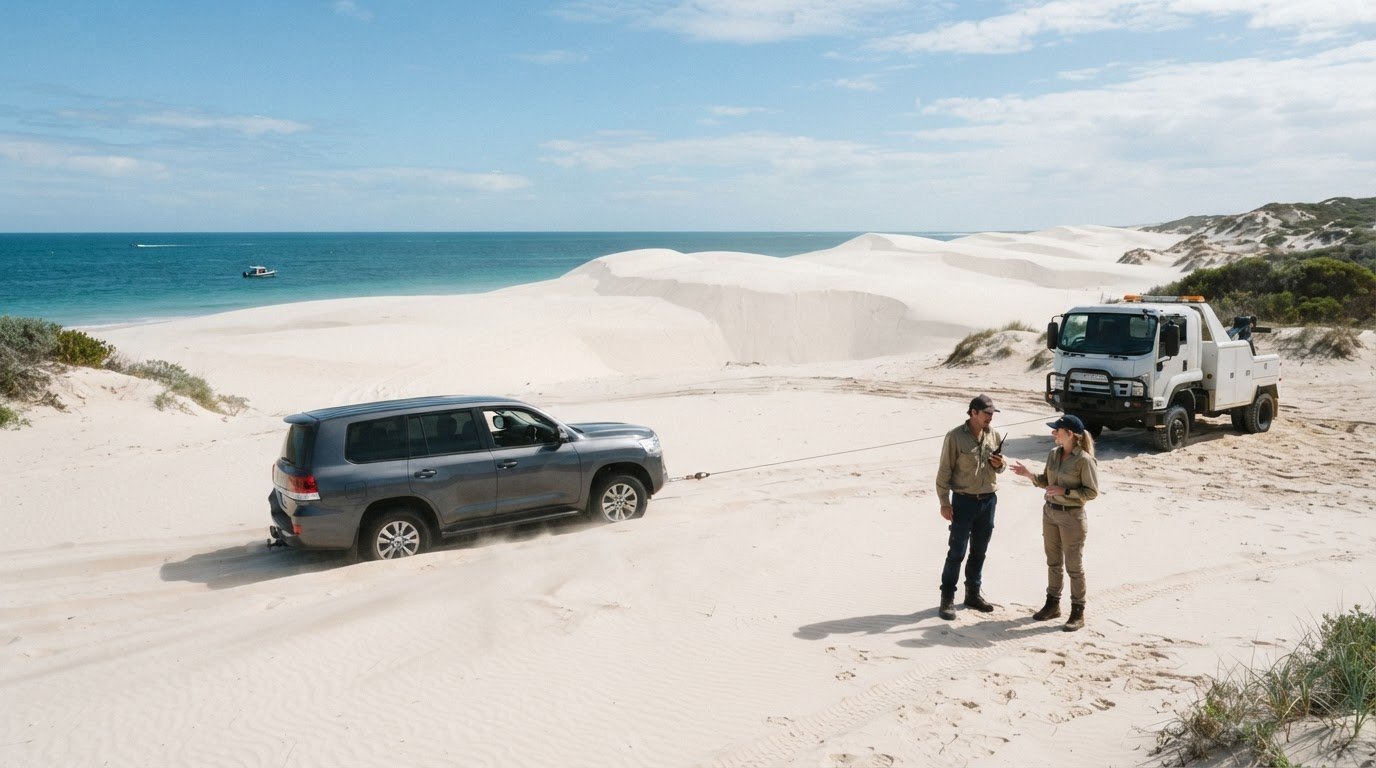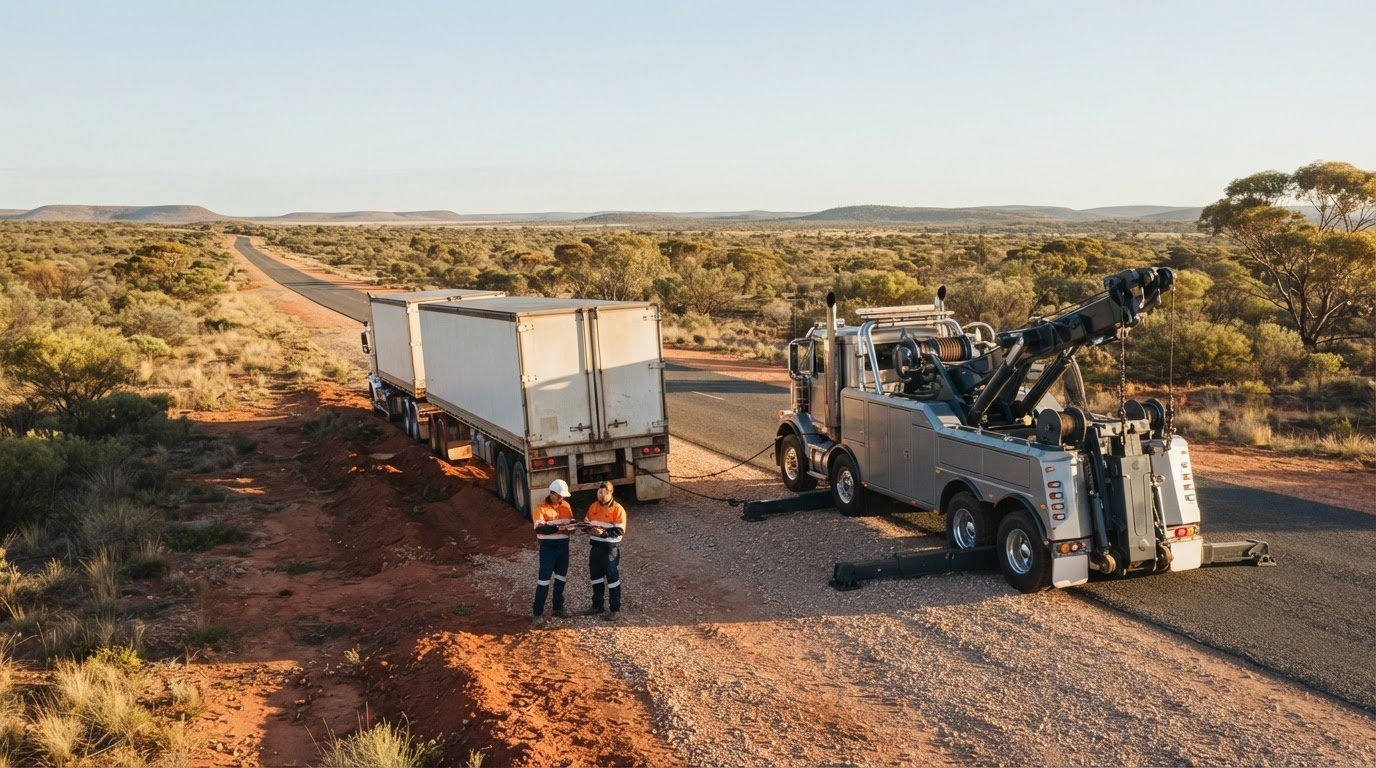
A bogged, stuck or stranded heavy vehicle needs an assessment of its position, load and access before a recovery method is chosen. For emergency heavy vehicle recovery in WA, the right approach depends on the vehicle or machinery and the conditions at the scene. According to Main Roads Western Australia, people needing assistance on state roads can call its 138 138 Customer Call Centre.
A breakdown or incident can leave drivers under pressure, especially when a heavy vehicle or machinery is blocking access or cannot be moved safely. This guide explains how recovery teams assess the situation, choose towing or transport equipment, and manage the move across Western Australia.
You’ll learn what affects the recovery plan, when a tilt tray may be suitable and what details help responders understand the job. These practical steps can make the next move clearer, with safety kept at the centre.
Key Takeaways
- Recovery for a truck, bus or machine starts with its condition, position, load and access at the scene.
- Learn how tilt tray and heavy transport options suit different vehicles and recovery needs.
- Vehicle weight, axle layout and cargo all help shape the equipment and transport plan.
- When calling for help, share the location, vehicle type, load details and any access hazards you can see.
- Understand the emergency towing and transport options available across Western Australia, including when state-road assistance may be relevant.
Can you tow heavy vehicles and machinery?
Yes. Trucks, buses and machinery can be towed or recovered when the vehicle, load, access and scene conditions suit the equipment. On a Western Australian state road, call Main Roads Western Australia’s 138 138 Customer Call Centre for assistance.
The recovery plan takes account of traffic exposure, the vehicle’s condition and whether it can be loaded safely. A heavy vehicle’s speed limiter does not determine its recovery method. Its size, weight and damage do.
Heavy-duty towing and recovery
Heavy-duty towing and recovery means moving trucks, buses, machinery or equipment after a breakdown, collision, bogging or rollover. It matters because a loaded truck and an excavator present different lifting, access and transport needs. The National Heavy Vehicle Regulator administers Heavy Vehicle National Law rules and regulations in each participating jurisdiction.
For example, a bus with steering damage may need to be loaded rather than conventionally towed. A bogged machine may need a controlled pull before transport. Operators assess the scene and vehicle before selecting an approach.
Selecting a recovery truck
Choosing a recovery truck means matching its capacity and equipment to the vehicle, load and recovery position. An unsuitable truck may not be able to lift, pull or carry the disabled vehicle safely. Clear details help dispatch select suitable equipment and plan access.
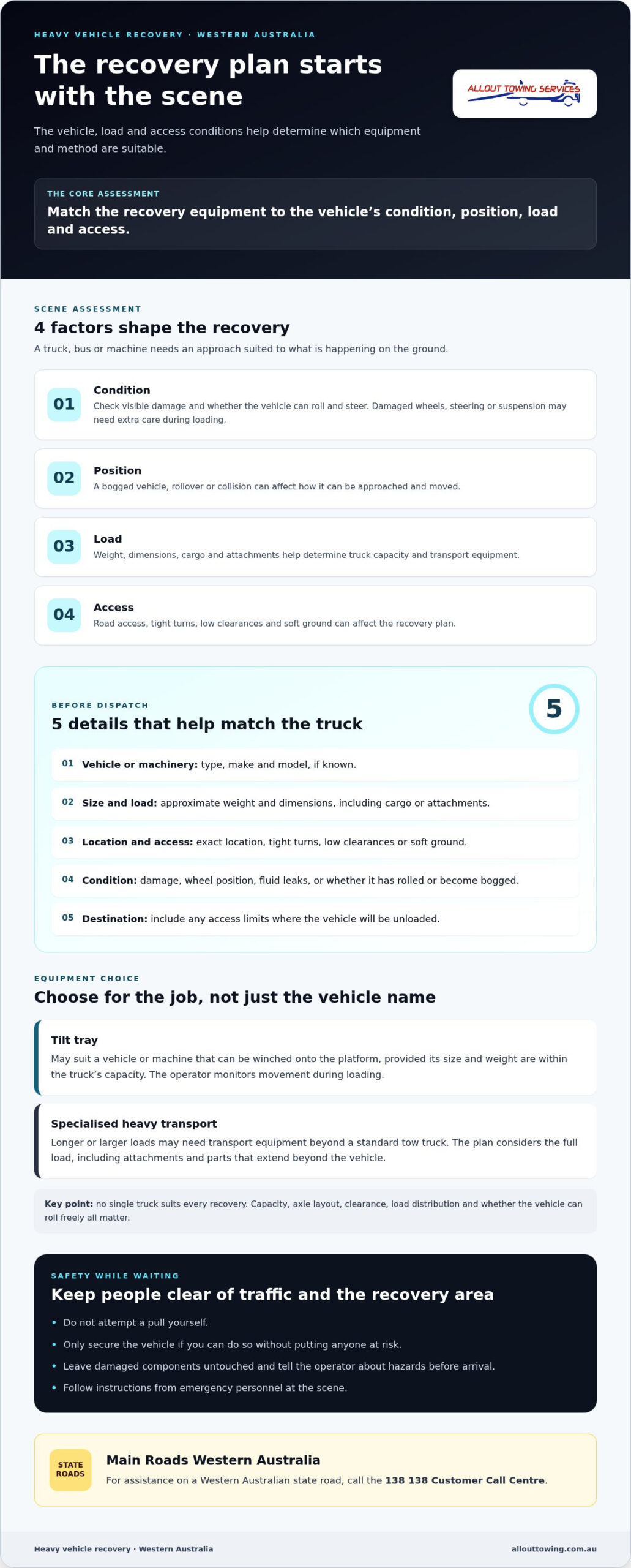
Share the truck or machine type, its approximate weight if known, the load, location and visible damage. Describe road access and nearby hazards, and say whether the vehicle has rolled or become bogged. These details help distinguish a straightforward tow from a more involved recovery.
Operators consider axle configuration because it affects how the vehicle’s weight is distributed. They also assess clearance, load distribution and whether the vehicle can roll freely. No single truck suits every recovery, so the equipment needs to match the job.
Recovery methods for common incidents
Recovery methods are the planned steps for moving a disabled vehicle from its position. A rollover, bogging, breakdown or collision can each create different risks. After a rollover or collision, damaged parts and an unstable load may affect how the vehicle can be loaded.
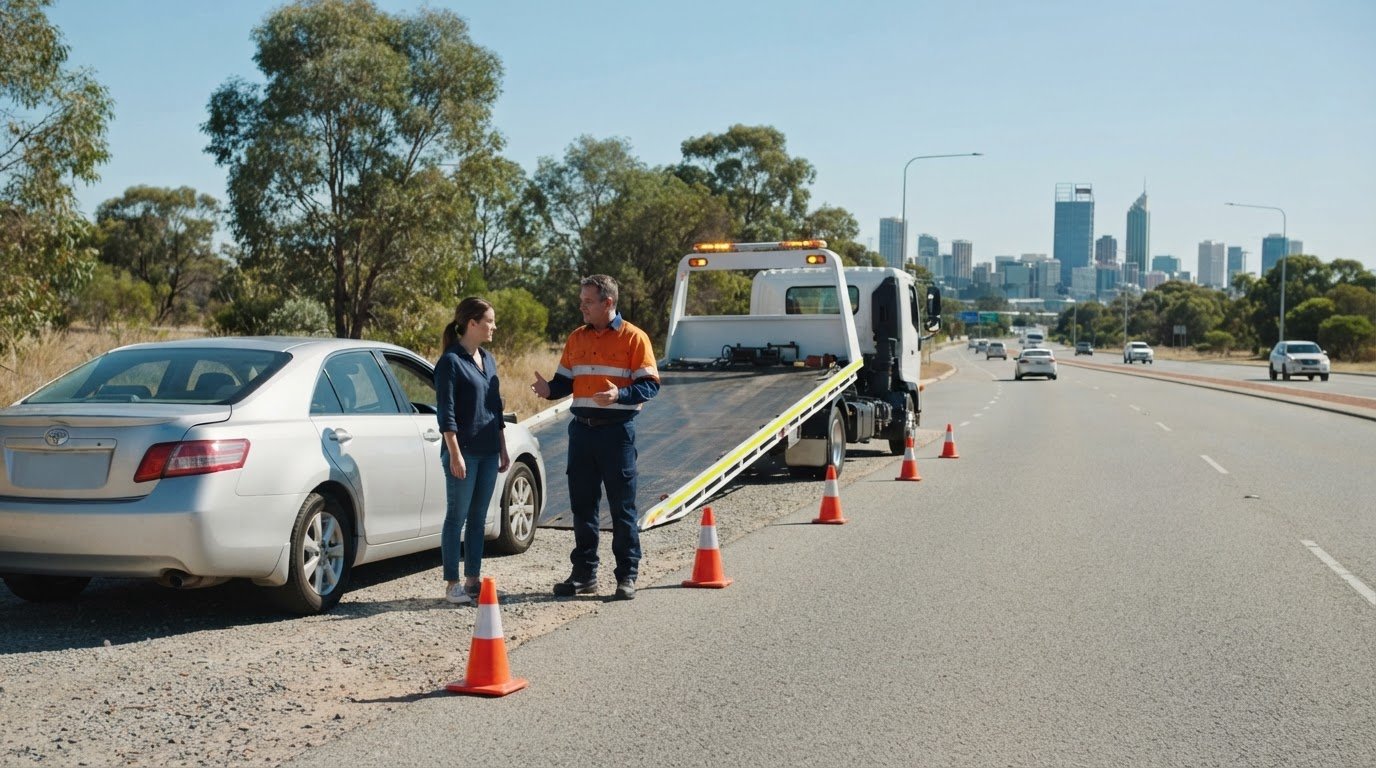
For a bogged vehicle, operators assess the ground and pull direction before applying controlled force. For a breakdown, they check whether the vehicle can roll and steer. Keep clear of traffic, don’t attempt a pull yourself, and give dispatch the incident type and location.
While waiting, keep people away from traffic and the recovery area. If the vehicle can be secured without putting anyone at risk, prevent it from rolling and leave damaged components untouched. Tell the operator about hazards before the truck arrives.
In Western Australia, Main Roads Western Australia can assist people requiring help on state roads through its 138 138 Customer Call Centre. Roadside traffic conditions, access and the disabled vehicle’s position affect how a recovery can be approached. Follow instructions from emergency personnel at the scene.
Remote-area recoveries can involve difficult access, longer travel and additional recovery equipment. These factors can affect the plan and any extra charges. The price depends on distance, access, equipment and recovery complexity, and is given after a quote request.
Fleet and specialist transport capabilities
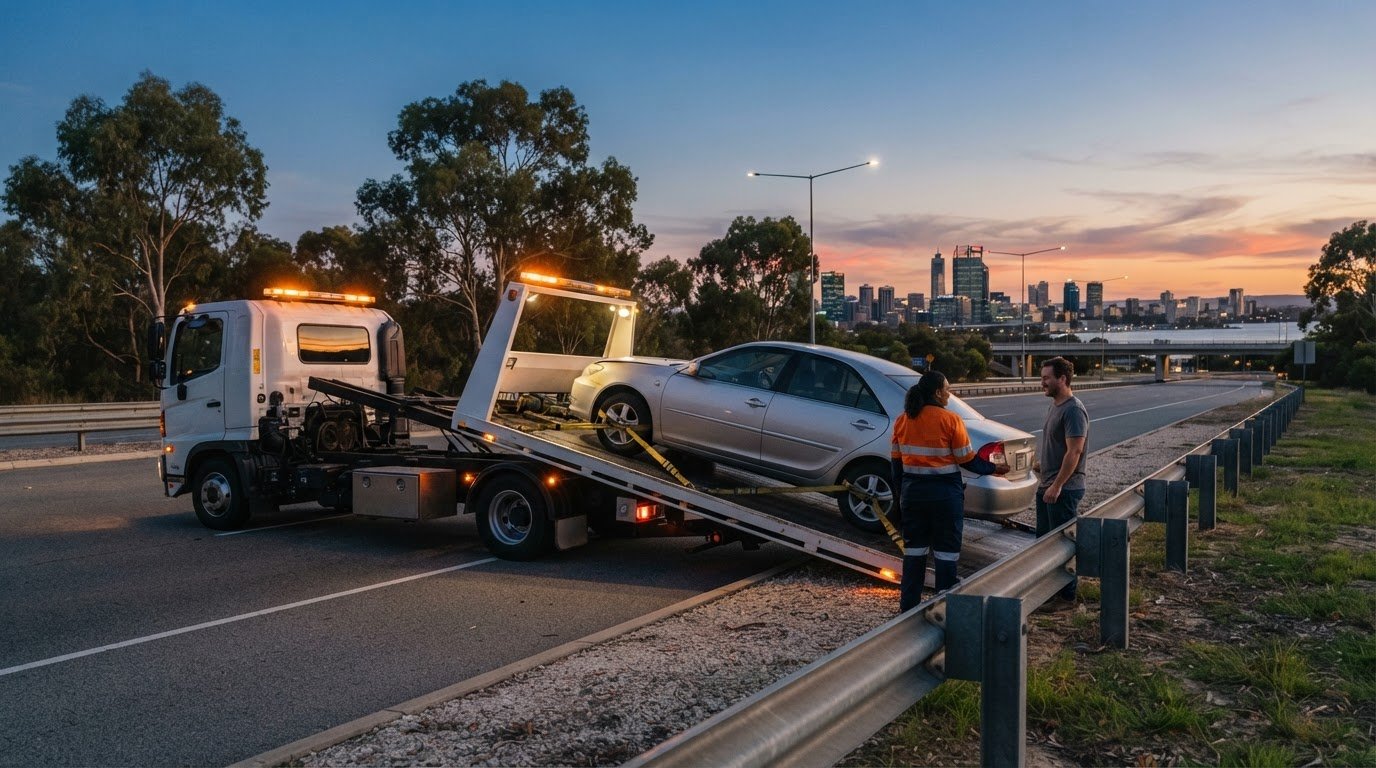
A recovery fleet combines different tow trucks and transport equipment to suit different vehicle shapes, loads and access conditions. In Western Australia, a tilt tray carries a vehicle or machine on a platform that lowers for loading, then secures it for transport.
The right truck depends on the situation, not simply on whether the vehicle is called a truck or machine. A rigid truck, articulated prime mover, bus, forklift and excavator each have different dimensions and loading points. Operators consider the vehicle’s condition, cargo, approach and destination before selecting equipment.
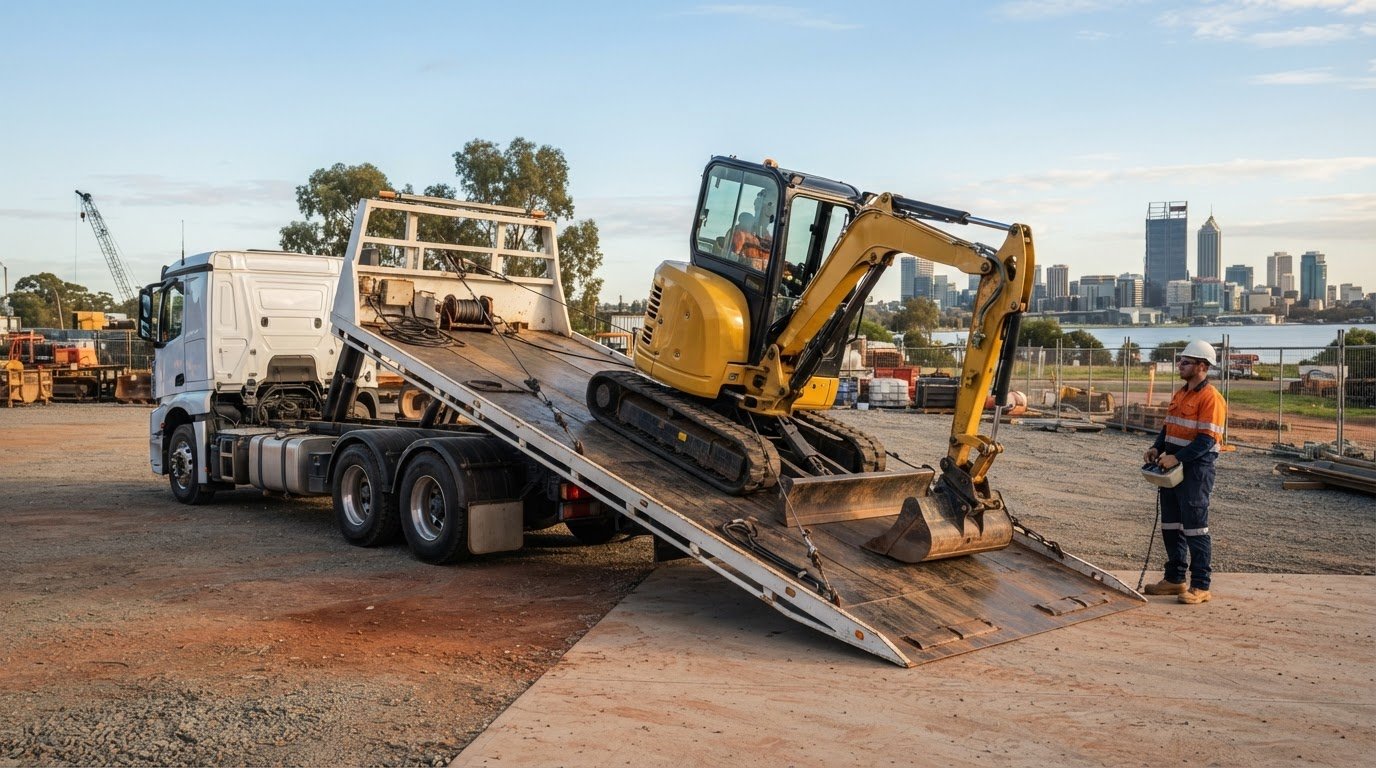
A tilt tray may suit a vehicle or machine that can be winched onto its platform, provided its size and weight are within the truck’s capacity. Winch-controlled loading draws the vehicle onto the deck while the operator monitors its movement. If the wheels, steering or suspension are damaged, loading may need extra care to avoid worsening the damage.
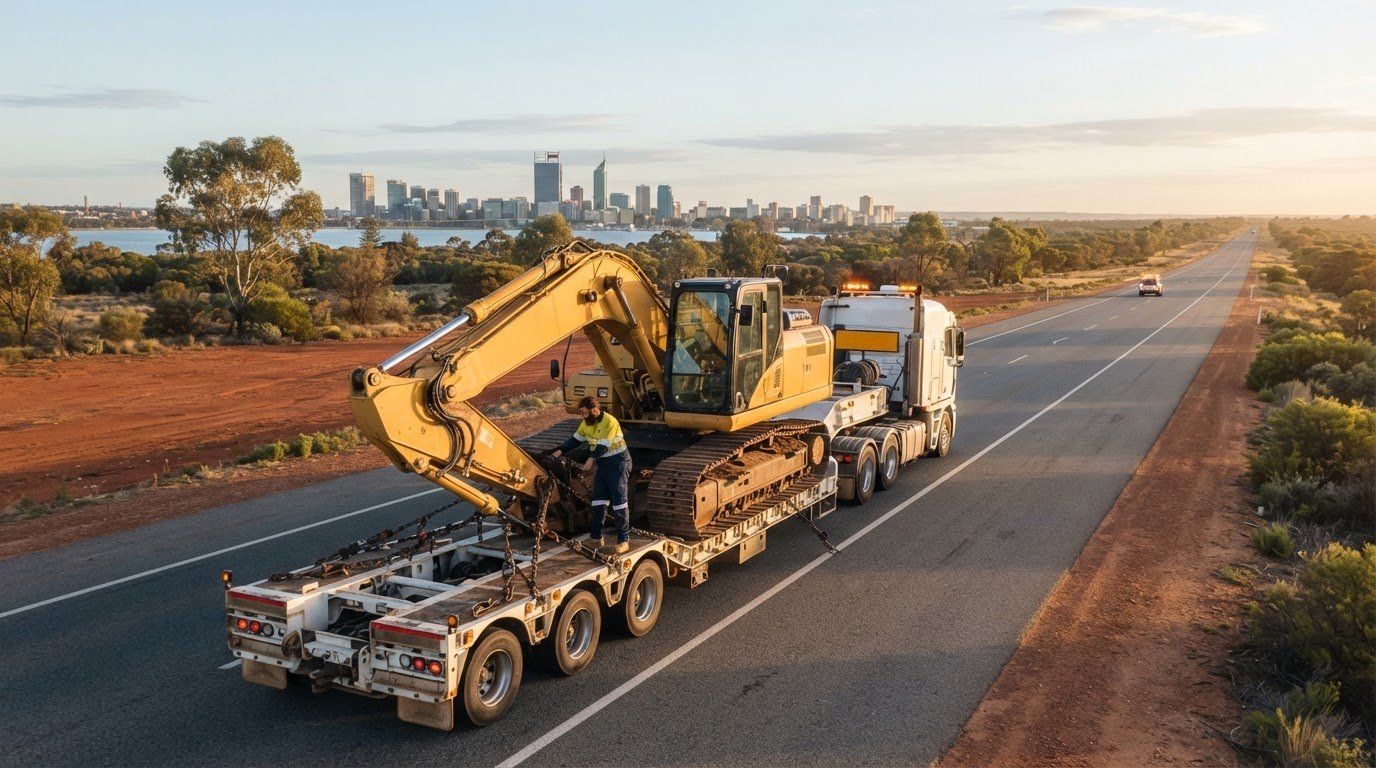
Longer or larger loads may need specialised heavy transport rather than a standard tow truck. Equipment selection depends on the whole load, including attachments, cargo and any parts extending beyond the vehicle. For example, an excavator transported with its bucket fitted has a different profile from the same machine secured without it.
Before dispatch, share practical details that help match the truck to the job:
- Vehicle or machinery type, make and model, if known.
- Approximate weight and dimensions, including the load or attachments.
- Exact location, road access and any tight turns, low clearances or soft ground.
- Damage, wheel position, fluid leaks or whether the vehicle has rolled or become bogged.
- Destination and any access limits at the unloading point.
Clear information helps trained operators plan loading and securement. Load restraint means securing the vehicle or cargo with chains, straps or nets to prevent movement in transit. Operators must account for how the load sits on the deck and whether it could shift during braking or cornering.
For machinery, the transport plan also considers removable attachments, loose items and safe loading access. A forklift, for instance, may need its forks positioned and secured before transport. A container needs suitable carrying equipment and securement, while construction machinery may need a low-deck arrangement to manage its height.
Specialist vehicle transport is useful when a disabled unit cannot safely continue under its own power or when machinery needs moving between sites. If your job involves equipment relocation, explore specialist machinery transport options as part of planning the move.
Vehicle weight, axle configuration and load assessment
Vehicle weight helps operators choose recovery equipment, but the total figure alone does not tell the whole story. They also assess how weight is distributed across the axles, whether cargo is secure and how the vehicle can be reached. A loaded prime mover, an empty bus and a forklift each create different loading and transport demands.
Axle configuration describes the number and arrangement of a vehicle’s axles. It matters because the recovery truck needs to support and move the disabled vehicle safely, rather than treating every heavy vehicle alike. A rigid truck and an articulated combination, for example, may need different loading arrangements. The vehicle’s position, damage and load can also change the plan.
Load assessment covers the vehicle, cargo and attached equipment together. A machine with a bucket or other attachment needs to be assessed as a complete load, while a forklift may have forks or loose items that need securing. After an accident, operators also consider whether cargo has shifted, parts are damaged or the vehicle is sitting at an awkward angle.
Drivers can help by giving dispatch details in a clear order:
- Identify the vehicle type, make and model, if known.
- Describe its load, attachments and any items that have shifted.
- Share an approximate weight or dimensions if available, without guessing.
- Explain the axle arrangement if you know it, such as a rigid truck or articulated combination.
- Report damage, bogging, a rollover, blocked access or nearby hazards.
These details help operators judge whether the vehicle can be winched onto a tilt tray or needs another recovery arrangement. A bus with damaged steering, for example, may not roll normally during loading. A forklift on uneven ground may need a different approach from one on firm, level access.
Assessment also considers where the vehicle will be loaded and unloaded. A tight entrance, soft shoulder or overhead obstruction can limit a recovery truck’s approach. Describe access from the road to the vehicle, not just its location on a map. A driveway, worksite gate or narrow lay-by can change the loading plan.
Operators use these details to plan equipment, loading and load restraint. Load restraint secures the vehicle or cargo with chains, straps or nets to prevent movement during transport. If cargo appears unstable after an accident, keep clear and tell dispatch. Don’t climb onto the vehicle or try to reposition heavy items yourself.
Weight, axle layout and load condition all work together. A complex recovery may involve a damaged vehicle, attached machinery and restricted access at the same time. Clear details about each factor give operators a better picture before arrival and help them prepare an appropriate recovery and transport plan.
24/7 Emergency heavy vehicle recovery
Heavy vehicle breakdowns can happen at any hour, leaving drivers exposed to traffic or stranded away from services. Emergency response depends on the location, incident and recovery equipment required.
Emergency recovery services in WA
Emergency recovery moves disabled heavy vehicles from unsafe or obstructive positions and arranges transport when needed. It can help when a truck, bus or machine cannot continue safely. Depending on the vehicle and scene, recovery may involve towing, winching, tilt tray loading or specialist transport.
In Perth, Main Roads Western Australia keeps incident response vehicles on standby 24/7 on smart freeways. These vehicles assist with freeway incidents, while a heavy vehicle requiring recovery may need separate towing equipment. On other state roads, Main Roads Western Australia’s 138 138 Customer Call Centre handles requests for assistance.
Tell dispatch whether the incident involves a breakdown, collision, bogging or rollover. A loaded truck blocking a lane needs a different response from a disabled machine at a worksite. Give the location, vehicle type, load details and visible hazards so operators can plan equipment and access.
Round-the-clock recovery availability
Round-the-clock recovery availability means help can be requested at any hour, including overnight and on weekends. It matters because a breakdown at night can leave drivers waiting beside moving traffic or far from services. Towing providers in Perth typically aim for metro response times of around 45 minutes, mirroring standard rapid-response practices used by emergency operators like Bernabe Towing & Recovery.
Arrival times depend on distance, traffic, road access and the recovery truck required. A remote breakdown or complex rollover can need more planning than a vehicle stopped beside an accessible metropolitan road. Share the exact location and job details when arranging help.
Heavy vehicle insurance or roadside assistance may cover emergency recovery only if the relevant policy or plan includes it. The vehicle class, incident circumstances, recovery method and policy terms determine whether the costs are covered.
When arranging assistance, give the operator a precise location and a safe contact point. Explain whether the vehicle is carrying cargo, blocking traffic or leaking fluids. Don’t attempt to move a heavy vehicle or use a tow line yourself. Keep clear of traffic and follow directions from emergency personnel.
For a freeway breakdown in Perth, Main Roads incident response vehicles may help manage the incident, while towing addresses the disabled vehicle. On a regional road, access and travel distance can shape the response plan. Clear details on the first call help dispatch assess the situation and send suitable recovery capacity.
What emergency heavy vehicle recovery services are available in Western Australia?
Emergency heavy vehicle recovery in WA can involve towing, roadside extraction and transport to another location. The right service depends on the vehicle’s condition, load and position. A truck with a breakdown may need towing, while machinery stuck at a worksite may need controlled recovery before transport. When you call, explain what happened and where the vehicle is.
Heavy vehicle towing moves a disabled truck or bus that cannot safely continue. Operators consider whether it can roll, steer and brake, then select a suitable towing method. After a collision, loading may be more appropriate than a conventional tow to avoid further damage before transport to heavy repair specialists such as AA Truck Body & Paint.
Tilt tray transport carries a vehicle or equipment on a platform that lowers for loading. It can suit a forklift, truck or machine that needs transport without being driven on the road. The operator assesses the load and access, including the approach and unloading point.
Heavy transport moves larger machinery or equipment between locations. Construction equipment may need an arrangement suited to its size and attachments. Container transport is a separate task that requires suitable equipment to carry and secure the container for its journey.
Accident and recovery support helps with vehicles that are damaged, bogged or obstructing access. A bogged truck may need controlled pulling, while a rollover requires assessment before movement. When requesting emergency heavy vehicle recovery in WA, describe the incident clearly.
To help identify the service required, tell the recovery operator:
- Whether the vehicle is a truck, bus, forklift or other machinery.
- Whether it has broken down, collided, rolled over or become bogged.
- What it is carrying, including attachments or a container.
- Where it is, and whether the approach or unloading area has restrictions.
These details help distinguish a straightforward tow from recovery involving winching or specialist transport. A loaded vehicle with damage and restricted access needs a different plan from an empty truck on clear, firm ground. Keep clear of traffic and the recovery area while help is arranged.
If a heavy vehicle or machine needs moving after a breakdown or incident, request heavy vehicle recovery and transport. Share the vehicle type, load, location and access conditions so the recovery can be matched to the job.
Allout Towing: Tilt Tray Perth Services
Allout Towing can help when a disabled vehicle or machine needs careful loading and transport. Its Tilt Tray Perth Services include two tilt slide trucks, each with a seven-metre tray and a 4.5-tonne capacity, plus a heavier tilt slide truck with a 10-metre tray and a 10-tonne capacity.
For larger transport tasks, Allout Towing provides super tilt heavy transport and container transport. Tell the team what vehicle or equipment needs moving, its condition, the load details and any access restrictions. This gives them practical information to discuss the right transport approach for your situation.
If you need help with a tilt tray or heavy transport job, contact Allout Towing to discuss your requirements.
Prepare for the next step with confidence
A clear recovery plan can make a difficult roadside situation easier to manage. Before a trip or work shift, decide who will arrange towing and where drivers can find vehicle and load details. That preparation can help you explain the job calmly if a breakdown disrupts the day.
If you need emergency heavy vehicle recovery in WA, Allout Towing offers Tilt Tray Perth Services, 24 Hour Car Towing and Super tilt heavy transport. These services support different towing and transport needs, from a vehicle requiring tilt tray loading to a heavy load needing specialist transport.
When you’re ready to discuss a recovery or transport job, share the vehicle type, its condition and the access situation. Contact Allout Towing about recovery and take the next step with a clear plan.
Frequently Asked Questions
Bogged, stuck or stranded?
If a heavy vehicle is bogged, stuck or stranded, keep people clear of traffic and tell the recovery operator exactly what has happened. A truck sunk into soft ground needs a different approach from a bus stopped with a mechanical fault. Share your location, vehicle type, load and visible hazards. Don’t try to pull it free yourself, as an uncontrolled movement can make the situation worse.
Do you service regional Western Australia?
Yes. Allout Towing provides towing and transport across Perth and Western Australia, including country towing. For a regional breakdown, give the operator the town or road name, vehicle type and condition. If you’re unsure of your exact position, describe nearby landmarks or road signs. Details such as a worksite entrance or lay-by can help pinpoint where the recovery truck needs to reach.
How much does towing cost in Perth?
Allout Towing offers a free quote rather than publishing a single towing price. The quote depends on details such as the vehicle, pickup point, destination and transport requirements. A car moved from a clear roadside location may need a different arrangement from a vehicle that cannot roll. Provide accurate location and vehicle details when requesting a quote.
How much will a recovery cost?
A recovery quote depends on the vehicle and the work needed to move it safely. A bogged truck, collision-damaged bus or machine with restricted access can require different equipment and handling. Tell the operator whether the vehicle has rolled, become stuck or suffered damage, and describe its load and access conditions. Allout Towing provides a free quote based on the job details.
How quickly can a tow truck arrive in Perth?
Arrival time depends on your location, traffic, the incident and the recovery truck required. A straightforward breakdown in an accessible area differs from a heavy vehicle recovery in WA involving a load or difficult access. Give dispatch your exact location, vehicle type and a safe contact point. Mention lane blockages or hazards promptly so the response can be planned around the situation.
Is it only cars and vehicles that can be recovered?
No. Allout Towing handles more than cars, including trucks, buses, caravans, motorhomes, campervans and machinery. Heavy machinery and equipment towing covers items such as bobcats, excavators, forklifts and farm equipment. If a forklift breaks down at a worksite, for example, describe its location, condition and attachments to help identify the transport it needs.
Which heavy vehicle recovery operators provide 24/7 emergency service in WA?
Allout Towing provides 24-hour emergency towing, including truck towing and recovery for heavy vehicles up to 10 tonnes. If a truck becomes disabled overnight, share its location, vehicle type, load and whether it can move. This helps the operator understand the incident before arranging the recovery. For a heavy load or machinery, include its dimensions and any access constraints you know.
What areas of WA do heavy vehicle recovery companies cover?
Coverage varies by operator. Allout Towing serves Perth and Western Australia, with its local Perth focus including Joondalup, Quinns Rocks, Wanneroo, Yanchep, Clarkson, Duncraig, Butler, Kingsley and Craigie. For work elsewhere in the region, give the location and road details when arranging help. A town name, nearby intersection or worksite access point can help identify where the recovery truck needs to go.