An engine seizure is one of the most destructive mechanical failures a vehicle can experience. Unlike a flat tyre or a dead battery, a seizure locks metal components together permanently inside the motor. Every wrong decision made in the minutes that follow increases the damage bill significantly.
Engine seizure towing is a specialised process. It demands equipment and expertise that most standard recovery operators don’t carry. The difference between a $3,000 engine rebuild and a $15,000 replacement often comes down to one decision – how the vehicle was moved after the engine stopped turning.
Perth drivers facing this situation need accurate guidance fast. What caused the seizure matters. But what happens next matters more. Towing a seized vehicle incorrectly forces locked drivetrain components to rotate under load. That generates catastrophic secondary failures in transmissions, differentials, and driveshafts – compounding the original damage significantly.
All Out Towing, operating across Perth’s metro area, provides engine seizure towing using tilt tray recovery equipment that keeps all four wheels completely off the ground. Our experienced operators have handled seized vehicles from Joondalup to Mandurah. Our dispatch team asks the right questions to send the correct equipment for your vehicle type and drivetrain configuration.
What Actually Happens During an Engine Seizure
The Mechanics of a Seized Engine
An engine seizure occurs when moving parts inside the motor lock together due to friction, heat, or contamination. The most common cause is catastrophic oil loss. Without lubrication, pistons expand from heat and fuse to cylinder walls permanently. Bearings grind down to metal-on-metal contact. Connecting rods can snap under the resulting stress.
Think of engine oil as the buffer between every moving part inside the motor. When that buffer disappears, friction generates temperatures that weld metal components together. What follows cannot be reversed without professional engine work – and often requires complete replacement.
Warning Signs Before Complete Failure
Engine seizures rarely happen without prior warning. Drivers who recognise the signs can sometimes prevent full failure. Common indicators that appear before a seizure include:
- Rapid oil pressure loss indicated by the oil warning light
- Sudden temperature spikes in the coolant temperature gauge
- Unusual knocking, rattling, or ticking sounds from the engine bay
- Visible smoke rising from under the bonnet
- Progressive loss of power combined with increasing mechanical noise
- Oil spots or puddles beneath the vehicle after parking
When full seizure occurs, the engine stops suddenly during driving – often with a grinding or clunking sound. After that, the starter motor won’t turn the engine over. The damage is already done at that point.
Why Every Restart Attempt Makes It Worse
Each attempt to restart a seized engine causes additional internal damage. The starter motor strains against locked components. On a partially seized motor, forcing ignition can bend valves or crack the engine block entirely. Seized engine recovery must begin immediately – and it must begin with the correct equipment for the drivetrain type.
Why Traditional Towing Destroys Seized Engines
The Drivetrain Connection Problem
Most drivers don’t realise this critical fact. Even though the engine has stopped, the drivetrain remains mechanically connected. The engine, transmission, driveshaft, and wheels are linked in most vehicles. When you tow a seized vehicle with drive wheels rolling, those connected components are forced to move. The engine physically cannot rotate. Something else absorbs that force instead – and the results are very costly.
Engine seizure towing requires a fundamentally different approach to standard recovery. The equipment must eliminate drivetrain rotation entirely – not simply reduce it.
Wheel-Lift and Hook Towing Risks
Traditional wheel-lift towing creates serious mechanical failures on seized vehicles. When drive wheels remain on the ground and roll, they attempt to rotate the transmission input shaft. Since the engine won’t turn, the transmission is forced to work against a locked component. The specific consequences include:
- Automatic transmission cases cracking under torsional stress
- Differential gears stripping when rear wheels are forced to rotate
- Driveshaft U-joints failing from accumulated torsional energy
- Half-shafts snapping on rear-wheel-drive vehicles under towing load
- Transmission tunnels punctured by failed driveshaft components
Hook towing a seized vehicle is like dragging someone forward when their feet are bolted to the floor. Something has to give. With drivetrain protection towing using a flatbed method, none of that destructive stress is applied – because the wheels never contact the road during transport.
The True Cost of Secondary Failures
Secondary failures compound the financial damage rapidly. A seized engine costs approximately $4,000 to rebuild. Add a destroyed automatic transmission and that figure increases by $5,000 more. A damaged differential adds another $2,500. Transfer case failure on an AWD vehicle? A further $6,000 or more on top of that.
The $100 saved by using budget recovery becomes a $15,000 mistake. Drivetrain protection towing delivered through damage-free car towing – where experienced operators use certified flatbed equipment and industry-standard load securing – is the only method that prevents this escalation entirely.
How Tilt Tray Recovery Protects Your Vehicle
How the Tilt Tray Loading Process Works
Tilt tray recovery solves the drivetrain problem completely by removing all four wheels from the ground. There’s no rolling. No drivetrain rotation. No stress applied to locked or damaged components throughout the process.
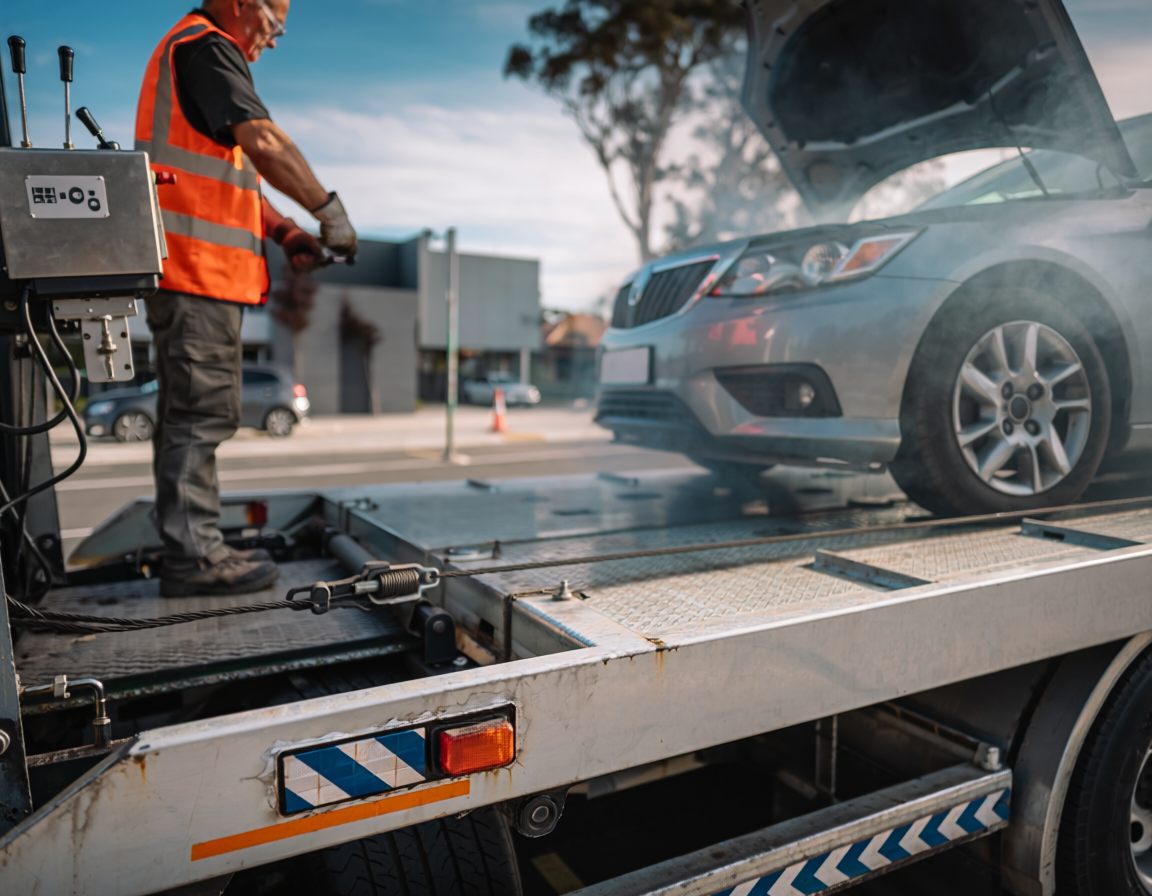
The flatbed deck lowers hydraulically until it sits completely flat on the road surface. A remote-controlled electric winch then pulls the vehicle straight onto the deck at a low, controlled angle. No sudden jerking. No lateral forces on steering or suspension components. Trained specialists providing specialist tilt tray towing keep the entire drivetrain completely stationary from loading through to delivery, using wheel straps and transport chains rated to 5,000kg breaking strain each.
Once loaded, the vehicle remains completely secure throughout the entire journey to the destination.
The Engineering Advantages of Flatbed Transport
Tilt tray recovery provides structural protection advantages that wheel-lift methods cannot match:
- No weight concentration on specific suspension points during loading
- No stress on steering components from being pulled at an angle
- Full underbody protection with the vehicle sitting completely flat and level
- No scraping risk for lowered, modified, or bodykit-equipped vehicles
- Even weight distribution across the entire vehicle footprint
- All drivetrain components remain in their natural stationary position throughout
For vehicles with already-damaged suspension or steering components, these advantages are critical. Damaged parts need careful protection during transport – not additional mechanical load from an improper recovery method.
AWD and 4WD: Why Tilt Tray Is Mandatory
All-wheel-drive and four-wheel-drive vehicles have one absolute requirement during towing – all wheels must stay completely off the ground. Centre differentials and transfer cases are not designed to operate with one axle stationary and another rolling. Even at slow towing speeds, the result is transfer case destruction.
Tilt tray towing in Perth is the only compliant method for these drivetrains, in accordance with vehicle manufacturer towing specifications. Many modern AWD systems engage automatically without driver input. Owners often don’t realise their vehicle has full-time AWD until a repair bill tells them otherwise. After a seizure, that risk multiplies substantially.
Special Considerations for Different Vehicle Types
Commercial Trucks and Heavy Vehicles
Engine seizures in commercial trucks create additional complexity beyond passenger vehicle recovery. Heavy diesel engines frequently seize from coolant system failures rather than oil loss. A blown head gasket allows coolant into the cylinders. The engine then hydro-locks because liquid doesn’t compress the way air does.
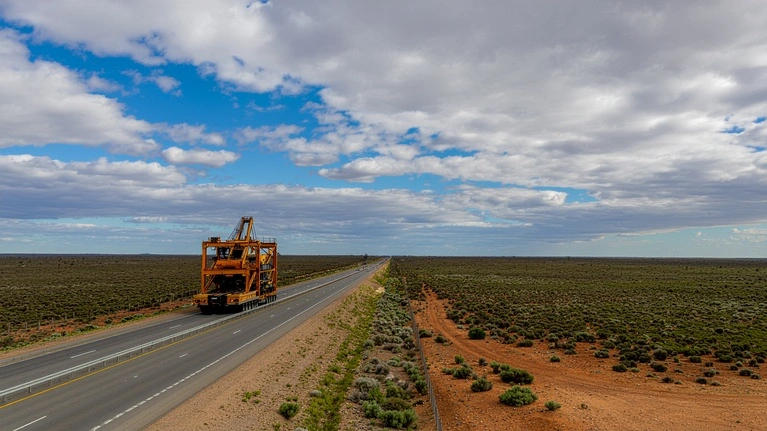
These vehicles require specialised heavy equipment rated for their GVM. Heavy-duty tilt trays handle commercial vehicles up to 8 tonnes, with reinforced decks and dual-winch systems for even load distribution during loading. A seized diesel engine in a work truck costs $15,000-$30,000 to replace, and every hour of downtime adds further commercial losses. Specialist heavy machinery transport by certified operators with heavy vehicle industry expertise minimises that downtime significantly.
Performance and Modified Vehicles
Forged internals, precision-machined clearances, and high-boost tuning make performance engines expensive to build. They also make seized engine recovery more critical when failures do occur. Performance engines often seize from tuning issues – excessive boost or an overly lean fuel mixture – rather than maintenance neglect.
Modified vehicles require especially careful handling during loading. Low-angle winching protects custom front splitters and side skirts. Soft straps prevent contact damage to aftermarket wheels. Tilt tray towing in Perth ensures no road debris strikes the vehicle during transport. For high-value performance and luxury vehicles, prestige car towing services provide the specialist handling these vehicles deserve – with enclosed transport options and comprehensive insurance coverage protecting irreplaceable components throughout.
All-Wheel-Drive Systems and Transfer Case Risks
The specific risks for AWD vehicles during engine seizure towing deserve clear emphasis. A seized engine doesn’t disconnect the mechanical links between drivetrain components. Forcing AWD wheels to roll during recovery applies rotational force directly through the centre differential and transfer case. These components were never engineered to handle that kind of stress.
We’ve recovered AWD vehicles where the owner attempted standard hook towing first. The transfer case failures that followed cost more to repair than the original engine seizure itself. Tilt tray recovery eliminates this risk completely – every wheel stays stationary throughout the entire transport process, with no exceptions.
What to Do the Moment Your Engine Seizes
Immediate Safety Priorities
When the engine seizes while driving, quick decisions protect both the driver and the vehicle. Follow these steps immediately:
- Guide the vehicle to the roadside or a safe area using remaining momentum
- Activate hazard lights as soon as the vehicle stops moving
- Do not attempt to restart the engine – each attempt causes additional internal damage
- Do not try to roll or push the vehicle to a more convenient location
- Set up a warning triangle behind the vehicle if one is available and it’s safe to do so
- Stay with the vehicle if it has stopped on a busy road or highway
The most important rule: leave the vehicle exactly where it stopped until professional engine seizure towing arrives with certified flatbed equipment suited to your drivetrain type.
What to Tell the Dispatch Team
Professional dispatch teams ask specific questions to send the right equipment for your situation. Having this information ready before calling speeds up the entire process:
- Vehicle make, model, year, and drivetrain type (FWD, RWD, AWD, or 4WD)
- Exact location – GPS coordinates help on highways and in industrial areas
- Whether the vehicle is blocking moving traffic
- Any visible fluid leaks or smoke from the engine bay
- Modifications affecting loading (lowered suspension, body kits, oversized wheels)
- Preferred delivery destination for the vehicle after recovery is complete
Our 24-hour emergency towing dispatch team uses this information to match the correct tilt tray and winching equipment to your specific vehicle. The right equipment dispatched on the first call saves time and prevents further drivetrain damage throughout the process.
Documenting the Scene for Your Insurer
Thorough documentation before engine seizure towing begins protects your insurance claim later. Take photographs before the tow truck arrives:
- Any oil or coolant pooling beneath the vehicle
- Dashboard warning lights (turn ignition to accessory mode to illuminate them)
- The vehicle’s position relative to road features or nearby vehicles
- Any visible smoke or damage visible through gaps in the bonnet
This documentation gives your mechanic important diagnostic context. It also establishes the vehicle’s condition before towing began – protecting you if any question arises about when specific damage actually occurred.
The Recovery Process: What to Expect
From First Call to Secure Loading
The engine seizure towing process follows a clear sequence from the moment you make contact. Response times average 30-45 minutes across the Perth metro area, based on location and traffic conditions. Priority is given to vehicles blocking traffic or positioned in unsafe roadside locations.
On arrival, the operator assesses the full situation before any equipment is deployed. Is there oil or coolant on the ground? Are the wheels locked or free-rolling in neutral? Is the vehicle on level ground? These answers shape the winching strategy for that specific vehicle and situation.
The tilt tray deck lowers completely to the road surface. Soft winch straps attach to manufacturer-approved recovery points – never to bumpers or fragile body panels. Operators carry application-specific hardware for hundreds of vehicle models, ensuring correct attachment points are used every time. The winch pulls slowly and steadily. No jerking. No sudden load changes that could stress already-damaged components further.
Why DIY Recovery Always Costs More
The temptation to save money using a tow rope or a borrowed trailer is understandable. However, engine seizures are precisely the wrong situation for improvisation and DIY solutions.
Standard car trailers rarely have decks low enough to load a seized vehicle without steep ramp angles. Those angles scrape front bumpers, under-trays, and exhaust systems. If wheels won’t roll freely – common with seized automatics – you’re winching a 1,500kg dead weight up a 15-degree incline without adequate equipment. Tow ropes require the towed vehicle’s wheels to roll, delivering exactly the drivetrain damage described in detail earlier.
What trained operators complete in 15 minutes takes DIY recovery 2-3 hours of struggle – assuming nothing breaks during the attempt. The potential savings rarely exceed $100. The potential additional damage often exceeds $10,000.
Engine Seizure Prevention
Common Causes and How to Address Them
Understanding the root causes helps prevent future engine seizures. The most common failures fall into two categories.
Oil system failures:
- Skipped or delayed oil changes allowing sludge to block oil passages
- Slow oil leaks that go unnoticed until the sump empties
- Failed oil pumps delivering insufficient lubrication to bearing surfaces
- Wrong oil viscosity for Perth’s hot summer operating temperatures
Cooling system failures:
- Burst radiator hoses causing rapid and complete coolant loss
- Failed water pumps leading to progressive engine overheating
- Blown head gaskets mixing coolant and engine oil internally
- Gradual coolant leaks that slowly empty the cooling system over time
Maintenance Habits That Prevent Catastrophic Failure
The prevention strategy is straightforward. Follow the manufacturer’s service schedule consistently. Address warning lights immediately – never drive on a lit oil pressure warning light, even for a short distance. Watch for fluid spots under the vehicle after parking.
Modern engines cover 200,000-300,000km reliably when properly maintained. A weeping rocker cover gasket losing 100ml of oil each week seems minor at first. Over a long highway trip, it can empty the sump completely. That small, ignored leak becomes a seized engine and an engine seizure towing call that could have been avoided entirely with basic maintenance awareness.
Dashboard warning lights are urgent alerts – not suggestions. The moment an oil pressure or temperature warning appears, stop safely and immediately. Continuing to drive even a short distance often turns a preventable problem into an irreversible one.
Conclusion
Engine seizures happen without warning and create immediate pressure to act correctly. The decisions made in the minutes following a seizure determine whether the vehicle is repairable or written off completely. Proper engine seizure towing using tilt tray recovery equipment removes all drivetrain rotation risk and protects the vehicle from compounding damage during transport.
A seized engine is sometimes fixable with a professional rebuild. A seized engine combined with a destroyed transmission, cracked differential, and failed transfer case is often beyond economic repair. Drivetrain protection towing is not an optional upgrade – it’s the minimum standard required for any seized engine recovery in Perth.
Whether you need tilt tray towing in Perth for an AWD family car, a high-performance vehicle, or commercial equipment, All Out Towing delivers professional solutions using certified equipment and trained operators ready around the clock. Call 0418 959 216 – our team will confirm your vehicle type, drivetrain, and location to ensure the correct tilt tray recovery equipment arrives on the very first call.