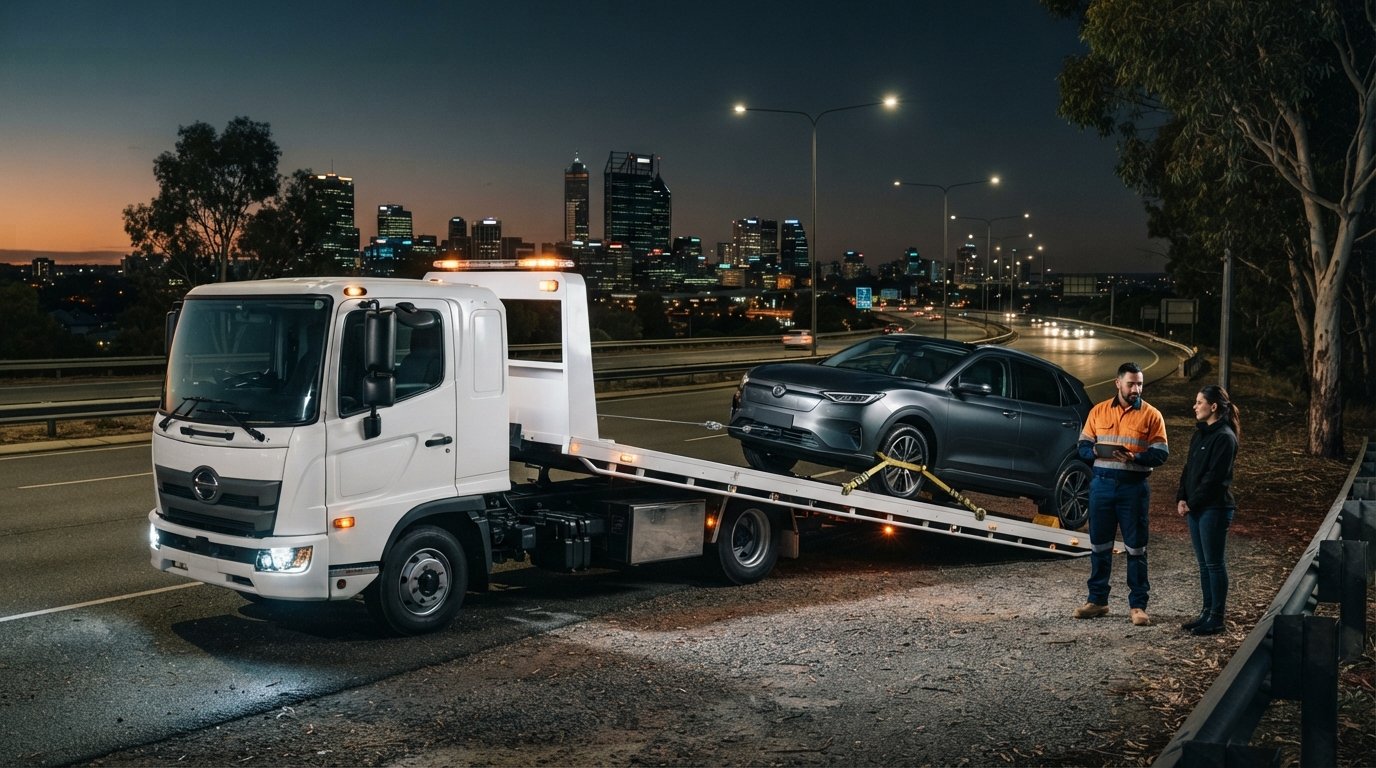
You are standing on the side of the Kwinana Freeway with your hazard lights flashing and your heart racing. Within minutes, a tow truck driver you didn’t call is already pressuring you to sign a contract while you’re still trying to process the shock of the impact. It’s an incredibly stressful moment where the fear of making a wrong move, such as accidentally voiding your insurance or failing to report the crash correctly, feels overwhelming. Most Perth drivers feel exactly this way when the unexpected happens on our roads.
Knowing exactly what to do after car accident Perth incidents occur is the best way to regain control and protect your interests. This guide provides a clear, legally compliant roadmap to help you manage the scene safely and fulfil your obligations under Western Australian law. We will walk you through the immediate safety steps, explain the current A$3,000 damage threshold for police reporting, and show you how to secure a professional recovery without the high-pressure tactics. By the end of this article, you’ll have the confidence to handle the situation with a calm head, ensuring everyone stays safe and your vehicle is moved without further damage.
Key Takeaways
- Prioritise immediate safety by moving your vehicle to a secure position and using hazard lights to alert other Perth motorists.
- Understand your legal obligations in WA, including exchanging driver details and identifying the A$3,000 damage threshold for police reporting.
- Learn how to perform a quick safety check for fluid leaks and structural damage to determine if your car is actually safe to drive.
- Discover what to do after car accident Perth events to avoid high-pressure “chaser” tow trucks and exercise your right to choose a professional recovery service.
- Gain peace of mind by choosing a local, family-owned recovery specialist with 30 years of experience in handling complex crash scenes.
Immediate Safety: The First 60 Seconds at a Perth Crash Scene
The sound of crunching metal is almost always followed by a heavy, disorienting silence. Your adrenaline is surging, and your heart is likely racing. In these first 60 seconds, your brain is trying to process what just happened while your instincts might be telling you to jump out of the car. However, the most critical part of knowing what to do after car accident Perth events is staying calm and securing the immediate environment to prevent a bad situation from getting worse.
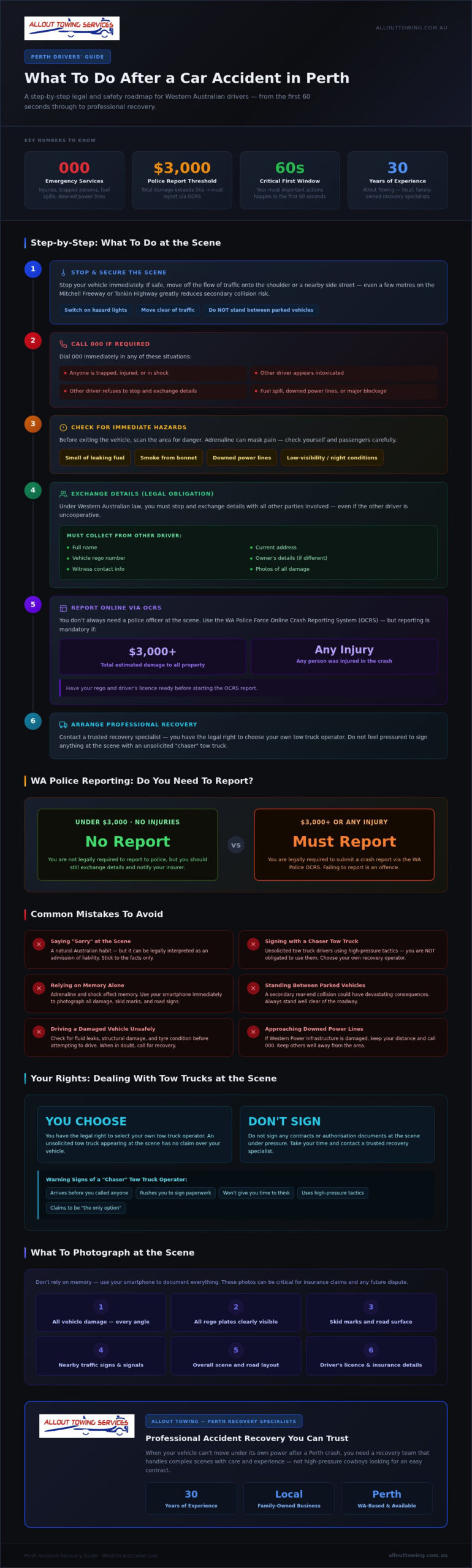
Stop your vehicle immediately. If the car is still mobile and it’s safe to do so, move it out of the flow of traffic to the shoulder or a nearby side street. If you are stuck on a busy Perth arterial like the Mitchell Freeway or Tonkin Highway, moving even a few metres can significantly reduce the risk of a secondary high-speed collision. Once stopped, switch on your hazard lights. This is a non-negotiable step to alert other Perth motorists who may be approaching the scene at speed, especially during peak hour or in low-visibility conditions.
Before you unbuckle, take a breath and check yourself and your passengers for injuries. Adrenaline can mask pain, so look for visible signs of trauma or shock. Once you’ve confirmed everyone is okay, scan the immediate area outside the vehicle. Look for downed power lines, the smell of leaking fuel, or smoke coming from under the bonnet. If you see Western Power infrastructure damaged or smell a strong scent of petrol, keep your distance and keep others away.
When to Call 000 in Western Australia
Not every bingle requires a 000 call, but you must dial emergency services if anyone is trapped, seriously injured, or in shock. In Western Australia, you should also contact the police immediately if the other driver appears intoxicated or if they refuse to stop and exchange details. If the crash has created a significant hazard, such as a blocked major intersection or a fuel spill that requires Department of Fire and Emergency Services (DFES) intervention, 000 is your first point of contact. Clear communication with the operator ensures the right resources arrive quickly to manage the scene.
Securing the Site and Managing Traffic
If the accident happens at night on a poorly lit Perth road, use your phone’s torch or a handheld light to make yourself visible to passing traffic. Stand well clear of the roadway while waiting for assistance; never stand between two parked vehicles, as a rear-end shunt could have devastating consequences. While you are speaking with the other party, stick to the facts. It’s a natural Australian habit to say “sorry” as a polite gesture, but in a legal context, this can be interpreted as an admission of liability. Focus on ensuring everyone’s safety and let the authorities or insurance investigators determine fault later.
Exchanging Details and Reporting Requirements in WA
Once the immediate danger has passed, your next priority is gathering information. Under Western Australian law, you have a legal obligation to stop and exchange details with the other parties involved. It’s best to stay focused and methodical even if the other driver is upset or uncooperative. Collect their full name, current address, and the registration (rego) number of their vehicle. If the driver is not the owner, try to get the owner’s details as well. This information is the foundation of any future insurance claim or police report.
Don’t rely on memory. Use your smartphone to take clear photos of the damage to all vehicles involved and the surrounding road conditions, such as skid marks or obscured traffic signs. If there are bystanders who saw what happened, politely ask for their contact information. Their independent accounts can be invaluable if there’s a dispute later on. If your vehicle is too damaged to drive, contacting a specialist in accident and recovery can help clear the road while you focus on these administrative tasks.
The Online Crash Reporting System
In Western Australia, you don’t always need to wait for a police officer to attend the scene. However, you must report the crash to the WA Police Force if the estimated total damage to all properties involved exceeds A$3,000 or if anyone was injured. This is handled through the Online Crash Reporting System (OCRS). You should complete this report as soon as possible after the event. The system will guide you through the details, but having your rego and licence ready will speed up the process. Reporting promptly ensures you remain legally compliant and creates an official record of the incident.
What Information Your Insurer Will Need
Your insurance provider will require a specific set of facts to process your claim without delays. Beyond the other driver’s details, they will ask for the exact time, date, and location of the Perth crash. Be sure to capture “point of impact” photos; these show exactly where the vehicles collided before they were moved. Knowing the name of the other driver’s insurance company is also helpful. Providing this comprehensive data set reduces the risk of claim rejection and helps your insurer advocate for you effectively. This is a vital part of what to do after car accident Perth situations to ensure your financial interests are protected from the start.
Is Your Car Safe to Drive? Assessing Damage and Hazards
After you have exchanged details and taken your photos, the next big question is whether you should attempt to drive home or call for professional recovery. Many drivers make the mistake of assuming that if the engine starts, the car is fine to hit the road. However, driving a compromised vehicle is a major safety risk to you and other Perth road users. Part of knowing what to do after car accident Perth situations is being able to perform a quick, objective assessment of your vehicle’s condition before you put the key in the ignition.
Start by checking the ground beneath your engine bay. Look for puddles of coolant, which often has a sweet smell and a bright green or pink colour, or dark, slippery oil. If you see a rainbow sheen on the bitumen, you likely have a fuel leak. Any loss of vital fluids can lead to an engine seizure or a fire within minutes of driving. Next, check that your bonnet and doors close securely. A bonnet that doesn’t latch properly can fly open at 80km/h, completely obscuring your vision. You should also verify that your tyres are still inflated and that your steering wheel is straight. If the car pulls hard to one side or you hear a rubbing sound when moving, the suspension or alignment is likely damaged. If you’re ever unsure whether to drive or call for help, our guide on who to call for car breakdown Perth situations covers exactly how to get the right assistance quickly and safely.
- Fluid Leaks: Check for coolant, oil, or brake fluid on the road surface.
- Structural Integrity: Ensure the bonnet, boot, and all doors latch firmly.
- Tyres and Steering: Look for visible misalignment or tyres touching the bodywork.
- Lighting: Confirm that indicators and brake lights are still functioning for the drive home.
The Danger of Hidden Damage
Modern vehicles are incredibly complex. Even a low-speed bingle can knock sensitive Advanced Driver Assistance Systems (ADAS) out of alignment. If your car has autonomous braking or lane-keep assist, these sensors often live behind the bumper or windscreen and require professional recalibration after an impact. Driving a “seemingly fine” car might feel okay on a suburban street, but the vibrations of the Mitchell Freeway can cause a weakened radiator hose to pop or a cracked rim to fail entirely. If you have any doubt about the mechanical state of your vehicle, it is always safer to arrange a tow than to risk a high-speed breakdown in heavy traffic.
Specialised Recovery for Luxury and Heavy Vehicles
Not all towing methods are created equal. If you are driving a prestige vehicle or a modern AWD SUV, traditional “hook and chain” towing can cause permanent damage to the drivetrain. These vehicles require specialised tilt tray Perth services to ensure the car is transported with all four wheels off the ground. This is equally important for those towing a caravan or motorhome during a Perth road incident. These larger setups require a recovery team with the right weight-rated equipment and the local experience to move heavy loads safely without causing further structural stress to the chassis.
Handling Tow Trucks at the Scene: Avoiding the Cowboys
Within minutes of a collision, you might notice a tow truck pulling up behind you even though you haven’t made a call yet. These are often referred to as “chasers” because they monitor radio frequencies or use digital apps to race to crash scenes across the city. It’s vital to stay calm. While they might seem like a convenient solution to your immediate problem, these drivers are often looking for high commissions from specific storage yards or repairers. One of the most important things to remember when deciding what to do after car accident Perth is that you have the absolute legal right to choose your own towing provider.
Don’t feel pressured by aggressive sales tactics or the urgency of the moment. If a driver approaches you, check their vehicle for a valid WA tow plate. This plate is a legal requirement for any truck performing accident recovery in Western Australia. Before you allow anyone to touch your vehicle, ask for their business name and a clear breakdown of their fees. Never sign an “Authority to Tow” form if it’s blank or if you haven’t had time to read the fine print. These documents are legally binding contracts that could commit you to expensive storage fees or dictate exactly where your car is repaired.
Your Rights as a Motorist in Perth
You are not obligated to use the first truck that arrives on the scene. If you have already contacted a trusted provider, simply tell the uninvited driver that you have made other arrangements. A reputable professional will respect your decision and move on. Choosing a local, family-owned business ensures you are dealing with people who value their reputation in the community over a quick commission. If you need a reliable, professional recovery from a team you can trust, you can book our 24 hour car towing service to ensure your vehicle is handled with care.
Where Should Your Car Be Towed?
Deciding where your vehicle is taken is a key part of what to do after car accident Perth events. You need to make this decision before the car is loaded onto the tray. You can have it taken directly to your preferred smash repairer, your own home, or an insurance-approved holding yard. Be aware that some holding yards charge daily storage fees that can add up quickly if your insurance assessment takes time. If you’re unsure, check with your insurance company first. They often have preferred locations that streamline the claim process. A professional recovery service will wait while you make this choice, ensuring your car is eventually stored in a secure, monitored facility where it won’t suffer further damage or theft.
Professional Accident Recovery: How Allout Towing Supports You
When you’re standing on the roadside after a collision, the technical details of insurance and reporting can feel like an impossible puzzle. This is where professional support makes all the difference. Allout Towing provides a calm, authoritative presence at crash scenes across the Perth metropolitan area, drawing on 30 years of local experience. For broader support needs, such as NDIS services or personalised care following a traumatic event, Mighty Mentors WA provides dedicated mentoring to help individuals regain their confidence. We understand that the most important part of what to do after car accident Perth events is finding a provider who prioritises your safety and the integrity of your vehicle over a quick profit.
Our 24-hour emergency response ensures you are never left waiting in a vulnerable position. We operate a fleet of modern tilt tray trucks, which are the industry standard for safe vehicle recovery. Unlike traditional tow trucks that lift only one end of the car, a tilt tray allows your vehicle to be loaded entirely onto the platform. This eliminates the risk of drivetrain wear or bumper damage during transport. Whether you are stuck in the CBD or on a quiet suburban street in Joondalup, our family-owned team arrives prepared to handle the logistics so you don’t have to.
The Allout Towing Difference
We pride ourselves on being a “safe pair of hands” during high-stress moments. Our drivers are trained to manage the chaos of a crash scene with empathy and professional rigour. You won’t find hidden “hook-up” fees or confusing surcharges here; we believe in transparent pricing that respects your situation. Our technical expertise is equally broad, providing specialised care for everything from a standard family Kia to a high-performance Lamborghini. We treat every vehicle as if it were our own, ensuring it reaches its destination in the same condition it left the scene. For those who value this level of dedicated service and require premium transport in other parts of the country, Zoom FNQ offers luxury private transfers for travellers in Far North Queensland.
Get Back on the Road with Confidence
The recovery process doesn’t end when the car is on the tray. We assist with the often-confusing world of insurance paperwork and vehicle storage logistics, helping you bridge the gap between the accident and the repair. By coordinating directly with your insurer, we help streamline the claim process and reduce your administrative burden. If you find yourself in a bingle, remember that reliable 24 hour towing Perth services are just a phone call away. Knowing what to do after car accident Perth incidents starts with choosing a partner who has seen it all and knows how to get you home safely. Contact Allout Towing for immediate accident recovery and the peace of mind that comes with three decades of expertise.
If your vehicle is deemed a total loss during the insurance assessment, your next step will be arranging for its disposal. For readers who might be managing a similar situation for a vehicle located in Victoria, Melbourne Car Removal offers professional valuations and removal services for all types of cars, SUVs, and 4WDs.
Stay Safe and Take Control on Perth Roads
A car crash is a jarring experience, but you don’t have to navigate the aftermath alone. By prioritising immediate safety, understanding the A$3,000 reporting threshold, and firmly exercising your right to choose a licensed recovery specialist, you protect both your vehicle and your insurance claim. Knowing exactly what to do after car accident Perth incidents occur ensures that you remain in the driver’s seat even when your car is off the road.
At Allout Towing, we’ve spent more than 30 years as a family-owned and operated business helping local drivers through their most stressful moments. We provide a 24/7 emergency response across the metropolitan area, offering the calm authority and technical expertise needed to move your vehicle safely. Need urgent accident recovery? Contact Allout Towing 24/7 for reliable Perth service.
Take a deep breath and focus on the steps ahead. With the right information and a professional team behind you, you’ll be back on the road before you know it. If your path to recovery requires assistance with daily living products, you can discover Mobility and You for expert advice and equipment to help you regain your mobility.
Frequently Asked Questions
Do I have to call the police for a minor car accident in Perth?
You only need to call the police to the scene if someone is injured, the total damage appears to exceed A$3,000, or if there is a significant hazard like a fuel spill or blocked highway. For minor bingles where everyone is safe and the vehicles are movable, you can simply exchange details and go on your way. However, you should still call 000 if the other driver is aggressive, intoxicated, or refuses to provide their information.
What happens if I don’t report a crash to the Insurance Commission of WA?
Failing to report a crash when required can lead to your insurance claim being rejected or even legal penalties under the Road Traffic Act. The Insurance Commission of WA (ICWA) uses these reports to manage personal injury claims and coordinate with the police. If you are unsure what to do after car accident Perth incidents, filing a report through the Online Crash Reporting System is the best way to protect your legal and financial interests.
Can I choose which tow truck company takes my car from the accident scene?
Yes, you have the absolute legal right to choose your own towing company in Western Australia. You aren’t obligated to use the first truck that arrives at the scene, even if the driver is being persistent. If you have a preferred local provider with a solid reputation, you can tell other operators to leave. Choosing your own recovery specialist ensures your vehicle is handled by a professional you trust rather than a random “chaser” truck.
How much does it cost to have a car towed after an accident in Perth?
Towing costs in Perth vary depending on the time of day, the distance of the haul, and the type of equipment required for the recovery. While we don’t quote fixed industry rates here, factors like after-hours service or heavy machinery transport will influence the final price. Most reputable companies provide a clear breakdown of charges before they load your vehicle; always ask for a quote to avoid surprises later in the claim process.
What details should I exchange with the other driver after a crash?
You must exchange your full name, current address, and vehicle registration number with all other drivers involved in the collision. It’s also helpful to record their phone number and the name of their insurance provider to speed up the claim process. If the driver isn’t the owner of the vehicle, make sure you record the owner’s name and address as well. Taking a photo of their driver’s licence is the fastest way to ensure all information is accurate.
Is it illegal to leave the scene of an accident in Western Australia?
Yes, it’s a serious offence to leave the scene of an accident in Western Australia without stopping to provide assistance and exchanging details. This is often referred to as a “hit and run” and can result in heavy fines or imprisonment, especially if someone was injured. Even for a minor scrape in a shopping centre car park, you must make a reasonable effort to find the owner or leave your contact information in a visible place.
What should I do if the other driver refuses to give their details?
If another party refuses to provide their information, don’t engage in a confrontation. Instead, take clear photos of their vehicle, the registration plate, and the driver if it is safe to do so. You should then call the police immediately to report the incident and the refusal. Having the registration number allows the authorities to track down the owner, which is essential for your insurance claim and any potential police investigation into the crash.
Will my insurance cover the cost of the tow truck?
Most comprehensive insurance policies cover the cost of towing your vehicle to the nearest repairer or a secure holding yard after an accident. If you aren’t at fault, the other driver’s insurance may eventually cover these costs as part of the settlement. It’s always best to check your specific Product Disclosure Statement (PDS) or call your insurer from the scene. They can often confirm your coverage and provide advice on what to do after car accident Perth events to ensure your claim is successful.