You’re stuck on Wanneroo Road with smoke billowing from under the bonnet, or maybe you’ve just heard that sickening crunch of metal meeting metal on Ocean Reef Road. Your heart’s racing, you’re blocking traffic, and you need help now. This moment – when you realise you need emergency towing in Perth Northern Suburbs can provide – brings a unique kind of stress that combines urgency, uncertainty, and often a fair bit of embarrassment.
Calling for emergency towing Perth Northern Suburbs services doesn’t have to feel like stepping into the unknown. When you understand what happens from the moment you dial through to when your car’s safely delivered, that knot in your stomach loosens considerably. You’re still dealing with a rubbish situation. Still, at least you’ll know what’s coming next.
Drivers who know what to expect during a tow are noticeably calmer than those who don’t. Understanding the process makes all the difference when you’re standing on the roadside, wondering what happens next.
What Happens the Moment You Call
When you ring for emergency towing in Perth Northern Suburbs, the dispatcher needs specific information quickly. They’re not being nosy – they’re building a picture of what equipment to send and how urgently you need it.
You’ll be asked where you are, what’s wrong with your vehicle, whether you’re in a dangerous position, and what type of car you’re driving. If you’re on a major road like Marmion Avenue during peak hour, that changes the response compared to being in a car park in Hillarys. The dispatcher’s also listening for clues about whether you need a flatbed, a standard tow truck, or additional roadside assistance.
Something that catches people off guard: you might be asked if your car’s in neutral and whether the wheels turn freely. This isn’t random curiosity. A vehicle with seized brakes or a locked steering column needs different handling than one that won’t start. The more accurate your answers, the more efficiently the operator can help you.
Most reputable operators, including All Out Towing, will give you an estimated arrival time straight away. In the Northern Suburbs, this typically ranges from 20 to 45 minutes, depending on your location and current demand. If you’re in immediate danger, say so clearly – that bumps you up the priority list.
Why This Feels Harder Than It Should
There’s a particular vulnerability that comes with car trouble. You’ve lost control of your schedule, you’re potentially spending money you hadn’t budgeted for, and if you’re not mechanically minded, you’re entirely dependent on someone else’s expertise and honesty.
That last bit – the honesty question – is what makes people hesitate to call. Drivers worry about being overcharged, taken to a dodgy mechanic, or being told the car needs more work than it actually does. These aren’t irrational fears. They’re based on real stories you’ve heard from mates or read online.
Most tow truck operators in Joondalup and Northern Suburbs are genuinely trying to help. The cowboys exist, but they’re the minority. When you choose a professional towing service with transparent pricing and proper accreditation, you’re dramatically reducing your risk of a bad experience.
The emotional weight of the situation also makes everything feel more complicated. If you’ve just been in an accident, you’re dealing with adrenaline, possible shock, and the mental replay of what just happened. Making clear decisions in that state is genuinely difficult, which is why knowing the process beforehand helps so much.
While You’re Waiting for the Truck
The gap between hanging up the phone and seeing the tow truck arrive feels longer than it actually is. You’re standing on the roadside, watching traffic whiz past, feeling exposed and slightly foolish. What you do during this window matters for both your safety and the efficiency of the tow.
First, get yourself and any passengers to a safe position. If you’re on a busy road and can’t move the car onto the verge, everyone should be well away from the vehicle – preferably behind a barrier or up on an embankment. Too many close calls happen when someone stays in their car “to stay warm” on a winter evening, only to have another vehicle nearly slam into them.
Turn your hazard lights on if the car still has electrical power. If you’ve got a warning triangle or high-visibility vest, use them. These aren’t just accessories that sit in your boot gathering dust – they’re genuinely helpful in making you visible to other drivers who might be distracted or driving too fast for conditions.
Gather your valuables from the car. Your phone, wallet, any important documents, and anything you’d be gutted to lose if you couldn’t access the vehicle for a few days. Don’t leave your laptop on the back seat or valuables in the glovebox. The tow yard will be secure, but why take unnecessary risks?
If you’re in a spot that’s causing traffic problems – say, blocking a lane on Joondalup Drive during morning rush – you might get some frustrated honks or gestures. Try not to take it personally. Those drivers don’t know your story, and you’ll never see them again. Your priority is staying safe until help arrives.
When the Tow Truck Arrives
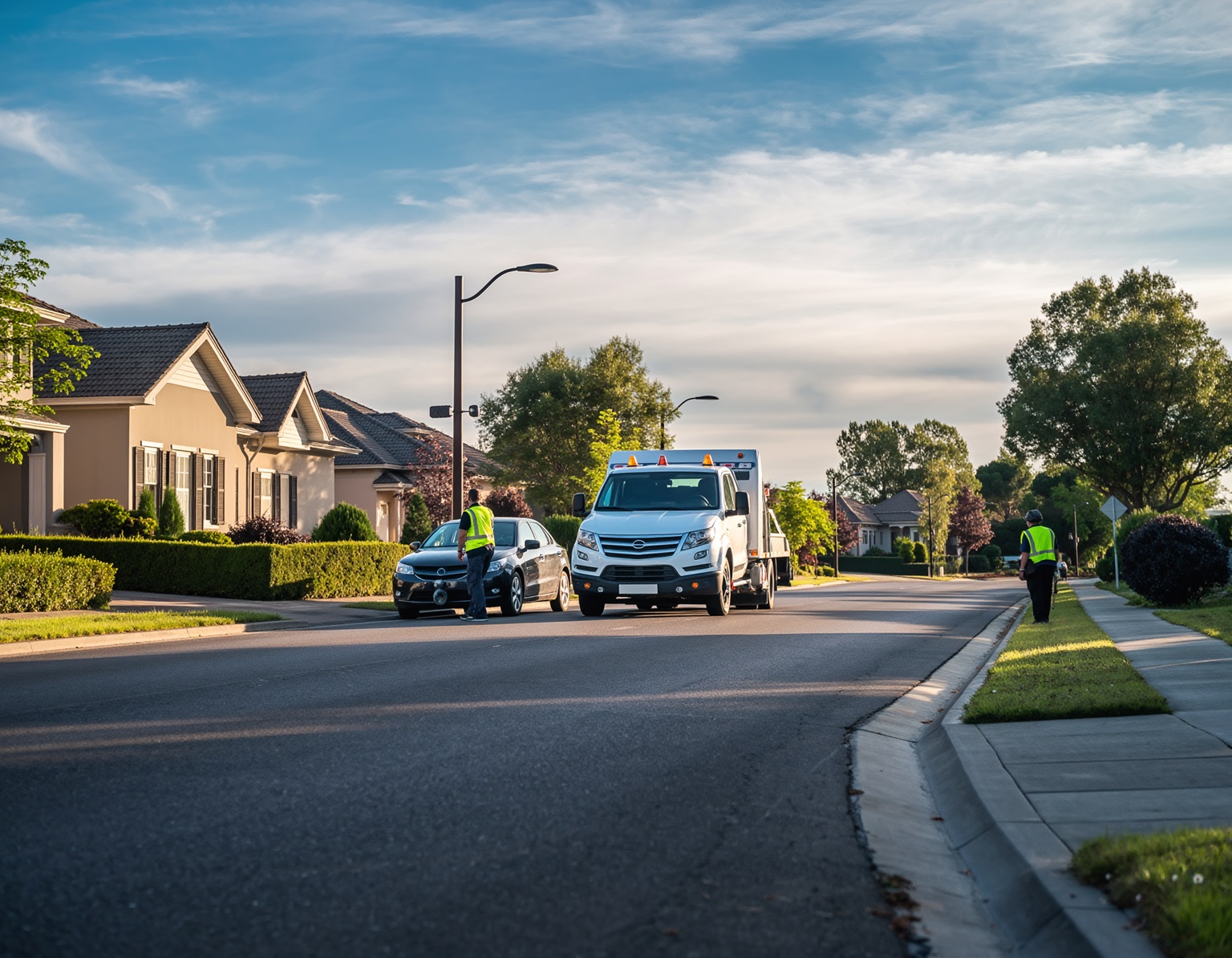
You’ll likely spot the truck before it reaches you – the flashing lights are hard to miss. The driver will position the car to protect you from traffic, which might mean blocking a lane temporarily. This is deliberate and necessary, so don’t worry about the cars backing up behind.
A good operator will introduce themselves, quickly assess the situation, and explain what they’re about to do. They’ll check that the car’s in neutral, release the handbrake, and begin positioning the equipment. For a standard tow, this involves lifting either the front or rear wheels off the ground using a wheel-lift or boom. For a flatbed, your entire car gets winched onto the truck bed.
This is when you might feel a bit useless, standing there watching someone else handle your car. That’s completely normal. You’re not expected to help with the physical work – that’s what you’re paying for. What you can do is answer any questions about the car’s condition and make sure you’ve got everything you need from inside.
Calling for professional help isn’t a bother – it’s literally the operator’s job. That’s the mindset to have when the tow truck Joondalup services arrive: you’re a customer using a service you need, not a burden.
The driver will also ask where you want the car taken. If you’ve already got a mechanic you trust, that’s straightforward. If you don’t, they might suggest options, but you’re never obligated to use their recommendation. Our 24-hour emergency towing across Perth means reputable operators respect your choice about where your vehicle ends up.
What Happens During the Journey
If there’s room in the truck’s cabin and you want to ride along, most operators will accommodate you. This is particularly common in the Northern Suburbs, where distances between breakdown spots and repair shops can be significant. If you’re heading from Quinns Rocks down to a workshop in Osborne Park, that’s a fair drive to organise separately.
During the journey, you’ll typically discuss what went wrong with your car. The driver might offer some preliminary thoughts based on the symptoms you’ve described, but take these as informed opinions rather than definitive diagnoses. A good operator knows the difference between their expertise and a qualified mechanic’s.
This is also when payment gets discussed if it hasn’t already been. You should receive a clear breakdown of costs – the callout fee, the per-kilometre rate, and any additional charges for things like after-hours service or difficult recovery situations. According to Main Roads WA, towing operators must provide written quotes for non-urgent work, though emergency callouts have some flexibility.
Don’t feel pressured to make immediate decisions about repairs or additional services. Your car’s going to a safe location, and you can take time to research your options once the immediate crisis is resolved. Reputable operators understand that you need breathing room to make informed choices.
The Emotional Side Nobody Talks About
Car breakdowns hit harder than they logically should because they disrupt your autonomy. You’re suddenly dependent on strangers, spending unplanned money, and dealing with an unpredictable timeline. If you’re someone who values being in control, this situation feels complicated.
The guilt can be intense, especially if you’re calling someone else to pick you up after the tow or rearranging plans that other people were counting on. But breakdowns happen to everyone. They’re not a reflection of your competence or preparation – they’re just mechanical failures that occur regardless of how carefully you maintain your vehicle.
Even if the breakdown was due to something you missed – low coolant, an ignored warning light, forgetting to service the car – beating yourself up about it doesn’t help. You’re dealing with it now, which is what matters. Learn from it, sure, but don’t carry unnecessary shame about needing help.
The cost stings, especially if it’s unexpected. Towing isn’t cheap, and that’s before you factor in whatever repairs are needed. But consider the alternative: attempting to drive a damaged car and causing more expensive problems, or worse, causing an accident. The tow truck is damage control, and sometimes the wise financial decision feels ecologically in the moment.
Start Here, Not with Perfection
If you’re reading this before you’ve had a breakdown, you’re already ahead. Knowing what to expect removes a huge chunk of the stress from an already stressful situation. But there are a few practical steps you can take now that’ll make any future emergency easier.
Save the number for reliable emergency towing Perth Northern Suburbs services in your phone. Having it under something obvious like “Emergency Towing” means you’re not frantically googling while stressed. Check that they offer 24/7 service, cover your area, and have clear pricing information available.
Know your insurance policy’s towing coverage. Some policies include free towing up to a certain distance, while others require you to pay upfront and claim back later. Understanding this before you need it saves confusion when you’re already dealing with enough.
Keep a basic emergency kit in your car: a charged power bank for your phone, a bottle of water, a high-vis vest, and a warning triangle. These won’t fix your car, but they’ll make waiting for help considerably more bearable, especially if you break down somewhere remote in the Northern Suburbs.
Familiarise yourself with your car’s basic information. Know the make, model, and year. Understand whether it’s front-wheel drive, rear-wheel drive, or all-wheel drive. This sounds obvious when you’re reading it calmly, but under stress, people blank on details they usually know.
When Things Don’t Go Smoothly
Most emergency tows are straightforward: you call, they come, your car gets moved, job done. But occasionally things get complicated, and knowing your rights helps you navigate those situations.
If the tow truck Joondalup operators take significantly longer than the estimated arrival time without explanation, you’re entitled to ask for an update. Traffic happens, multiple callouts happen, but you shouldn’t be left wondering if they’ve forgotten about you. A quick call to check in is perfectly reasonable.
If you’re unhappy with the service – the driver was rude, the car wasn’t secured properly, or you were charged more than quoted – address it immediately if safe to do so, or contact us as soon as possible afterwards. Reputable operators want to know about problems and will usually work to resolve them.
For serious issues like damage to your vehicle during towing or being taken somewhere against your wishes, document everything. Take photos, note times and names, and contact the Department of Transport WA if you need to lodge a formal complaint. These situations are rare, but they do happen.
Remember that tow truck operators are human too. They’re working long shifts, often in difficult conditions, dealing with stressed customers and dangerous traffic situations. A bit of patience and courtesy goes a long way. If they’re running late because they were helping someone in a worse situation than yours, that’s actually a sign you’ve chosen a good operator who prioritises genuine emergencies.
What Makes a Good Emergency Towing Experience
Clear communication, reasonable pricing, and basic human decency separate a good tow from a forgettable one. That’s it. You don’t need fancy trucks or corporate branding – you need someone who shows up when they say they will, treats you with respect, and gets your car safely to where it needs to go.
A good operator will explain what they’re doing and why. They’ll give you realistic timeframes and stick to them. They’ll be upfront about costs before starting work. And they’ll treat your car like it matters, because it does – to you, and that should be enough.
Think of your car like your house – when something breaks at home, you call a tradie who knows what they’re doing. You don’t expect to understand all the technical details, but you do expect them to communicate clearly, charge reasonably, and fix the problem. Emergency towing Perth Northern Suburbs services work the same way. You’re not supposed to be an expert – that’s why you’re calling for help.
The Northern Suburbs of Perth present their own unique challenges for towing. The area’s growing rapidly, which means more traffic, more roadworks, and more potential breakdown spots. The coastal roads can be tricky in winter when storms roll in. The newer housing estates sometimes have street layouts that make accessing broken-down vehicles trickier than you’d expect.
A tow truck Joondalup operator who knows the area – who understands that Marmion Avenue gets choked during school run times, or that certain car parks in Hillarys have tight turns that need careful navigation – makes the whole process smoother. Local knowledge isn’t just nice to have; it’s genuinely valuable when you’re stuck and need efficient help.
Your Next Steps
If you’re currently stuck somewhere needing a tow, stop reading and make that call. Everything else can wait. Your safety and getting your car to a secure location are the priorities right now.
If you’re researching for future reference, bookmark this information and save a reliable towing number in your phone. The time you spend on this small preparation could save you significant stress later. Consider it insurance for your peace of mind.
For those who’ve been through a breakdown recently and are still processing the experience, give yourself some credit. You handled an unexpected situation, made decisions under pressure, and got through it. That counts for something, even if it didn’t feel heroic at the time.
Car trouble is one of those universal experiences that levels everyone. Doesn’t matter if you’re driving a twenty-year-old Commodore or a brand new European luxury car – when something breaks, you’re in the same boat as everyone else who’s ever needed help on the side of the road. There’s no shame in it, and there’s definitely no shame in calling professionals who do this work every day.
The emergency towing process doesn’t have to be a mystery wrapped in anxiety. It’s a straightforward service provided by people who’ve seen every possible car problem and know exactly how to help. From the moment you dial through to when your car’s safely delivered, each step has a clear purpose and a predictable outcome.
Next time you see a tow truck on the road, remember, they’re heading to help someone who’s having a rough day. And if that someone is you one day, you’ll know precisely what to expect, which makes all the difference when you’re standing on the roadside wondering what happens next.