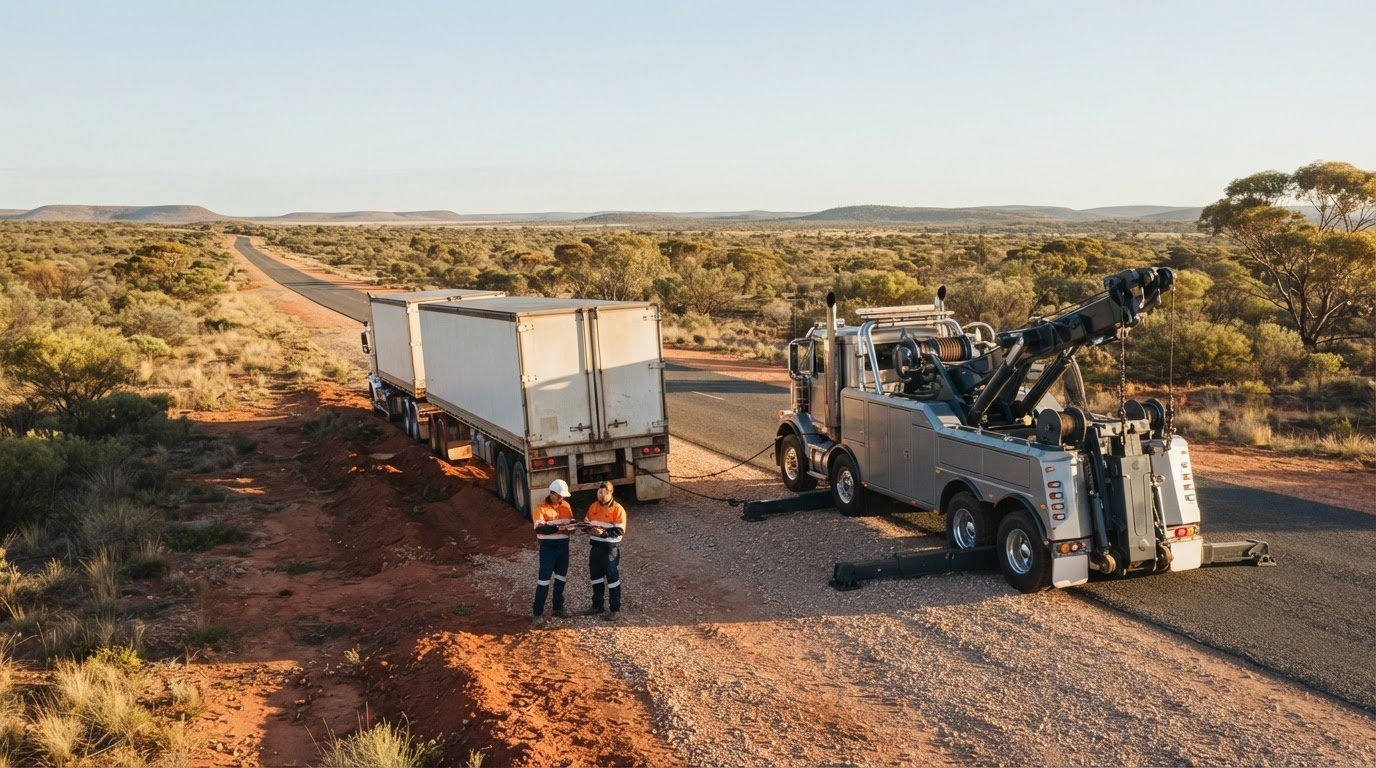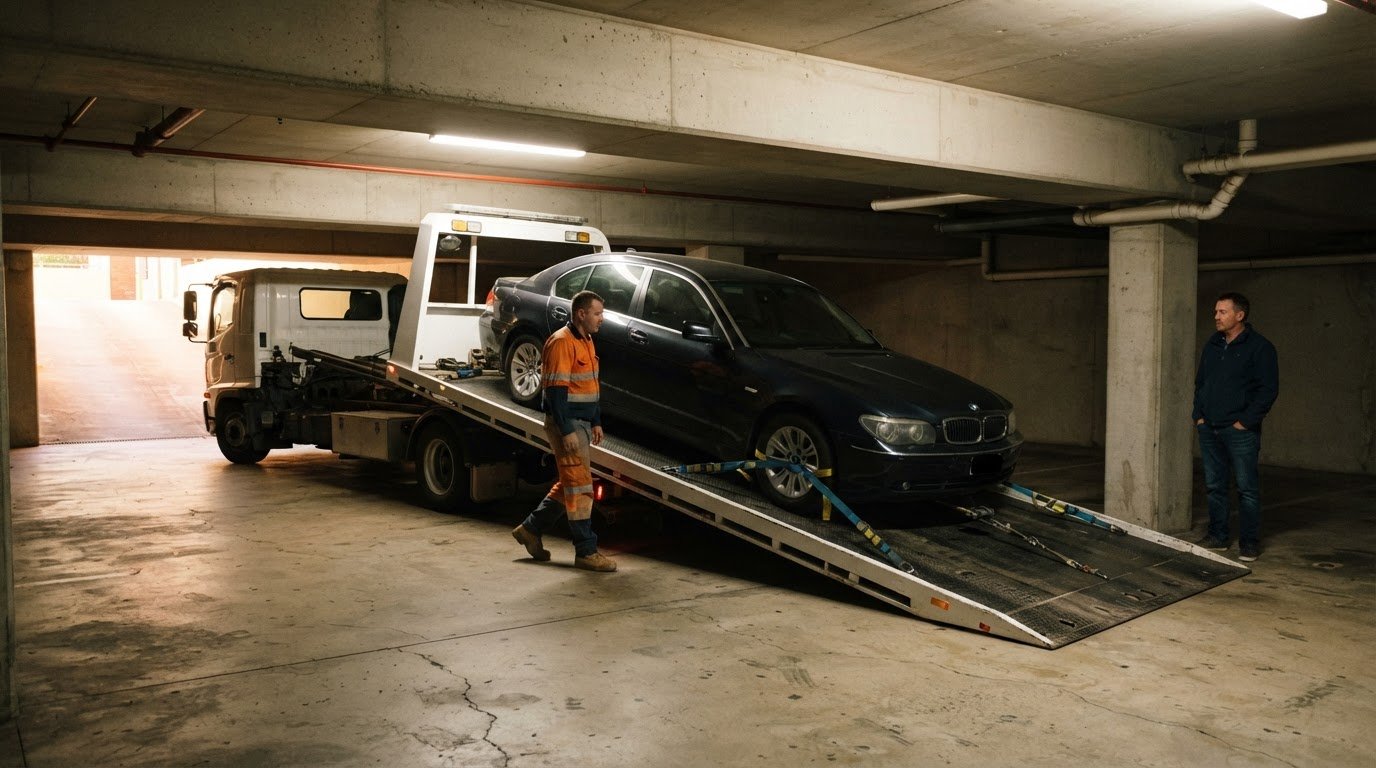
A towing quote depends on more than distance. The vehicle, route, access and equipment required all affect the estimate. To get a towing quote online in Perth, provide the vehicle’s location, its destination and what has happened.
It’s understandable to want a clear cost before arranging a tow, especially when a breakdown or crash has put you under pressure. A useful quote reflects the actual vehicle and job, helping the operator consider suitable equipment and transport from the outset.
This guide explains what can affect towing costs in Perth, what to include in an online request and how to compare quotes by scope. It also covers when a tilt tray may suit your vehicle and how pickup and destination across Perth and Western Australia shape the job.
Key Takeaways
- Towing costs depend on factors such as distance, vehicle type, access and the equipment required, so give clear job details when requesting a quote.
- For crash towing in Perth and Peel, the maximum additional charge after the first 50 km is A$4.75 per kilometre, according to the Department of Transport (Western Australia).
- Compare quotes by checking what the transport covers and whether the proposed truck suits your vehicle and its condition.
- An online request is a practical way to share your pickup point, destination and towing needs; these details help explain the job.
- Perth and Western Australia coverage can matter when arranging a local tow or longer vehicle transport. The right service depends on the route and load.
How much does towing cost in Perth?
There’s no single price for every Perth tow. The vehicle, route and work required all matter. A useful quote describes the job and the charges it covers, making it easier to compare like with like.
Towing price factors
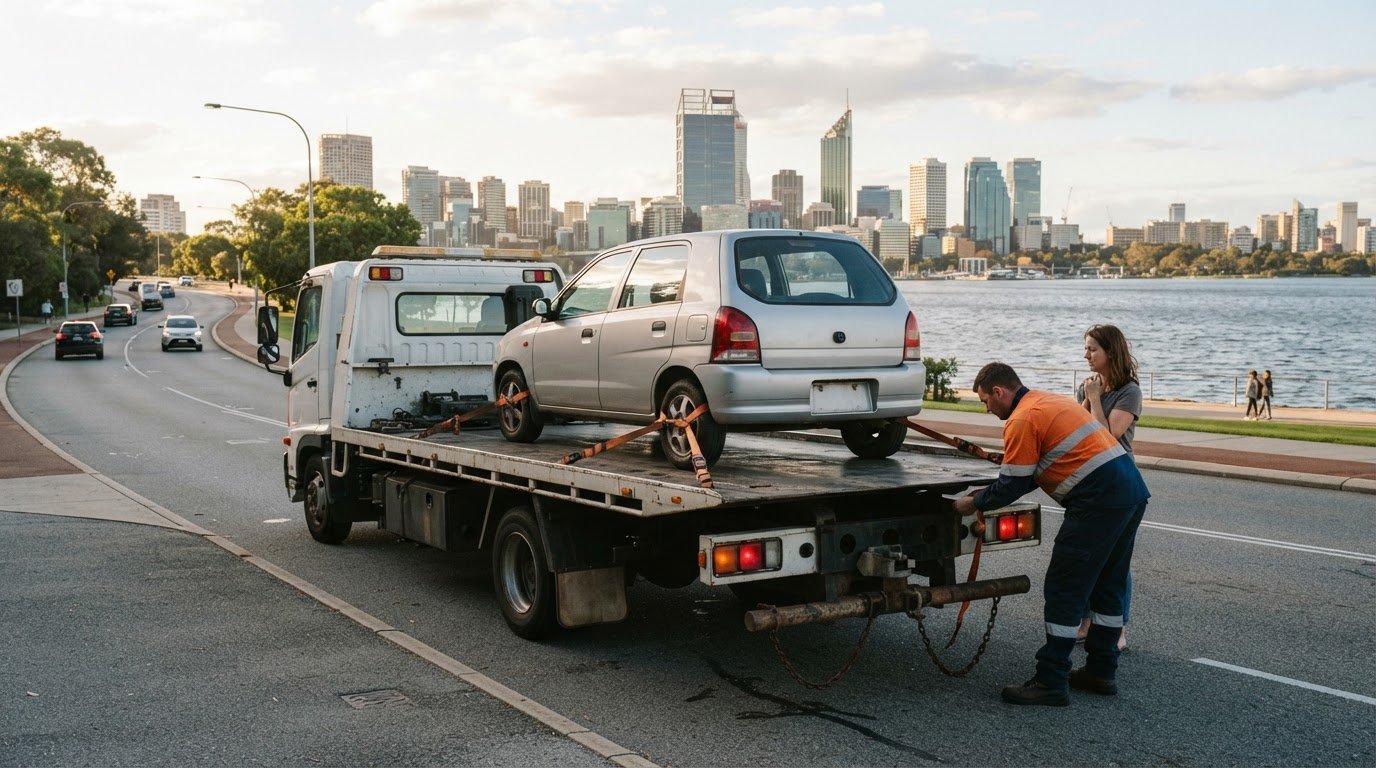
The pickup point, destination, vehicle and its condition all affect the towing job. A car that rolls freely from a roadside may need different equipment from a damaged vehicle that cannot move. Restricted access, such as a tight parking area, can also affect loading. Provide accurate details so the operator can match the truck and loading method to the job.
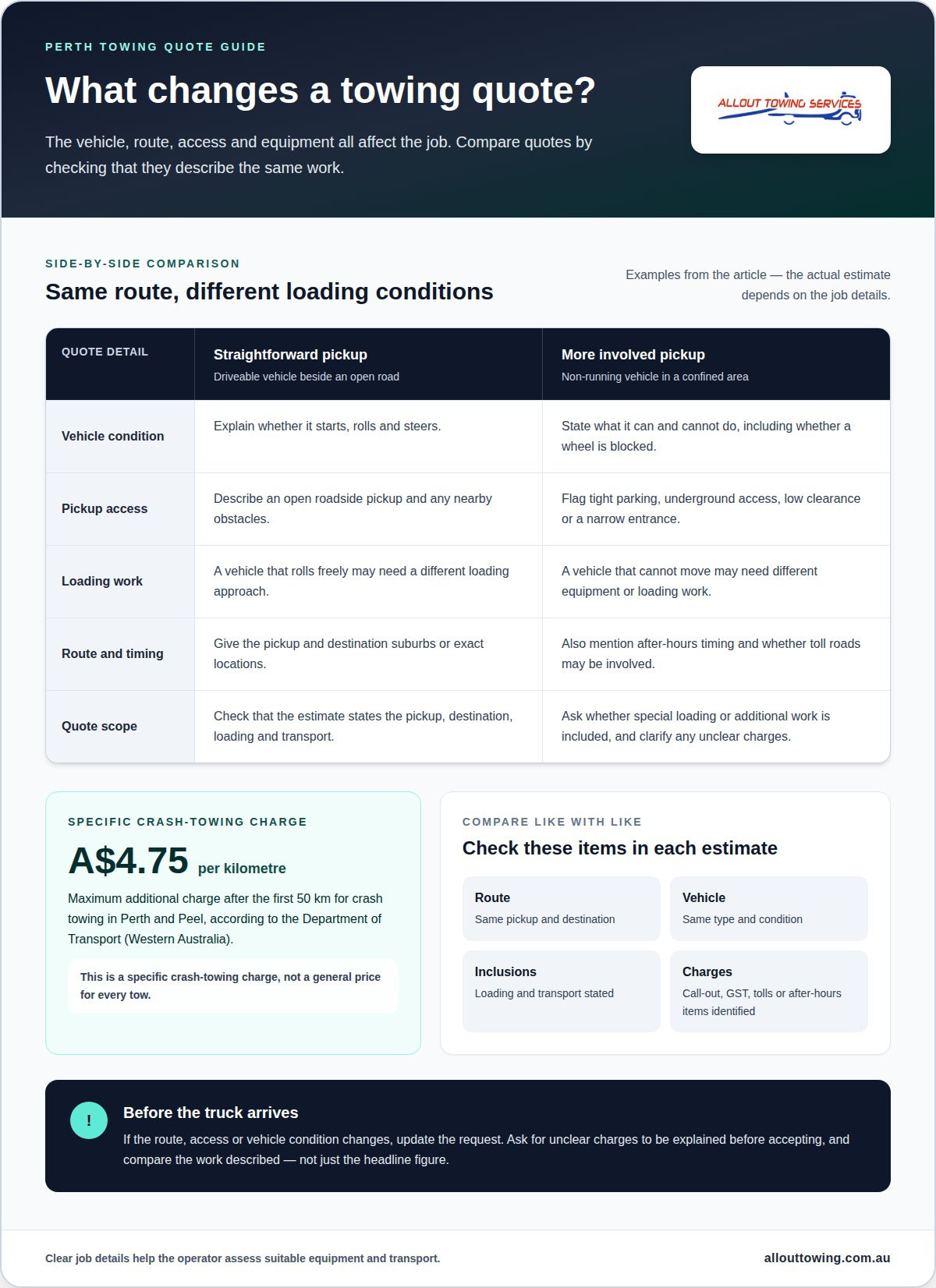
Distance matters, as do the time and work involved in loading and unloading. For crash towing in Perth and Peel, the maximum additional charge is A$4.75 per kilometre after the first 50 km, according to Department of Transport (Western Australia). This is a specific crash-towing charge, not a general price for every tow.
Quote fees and charges
Do Perth towing quotes include call-out fees, GST, tolls or after-hours charges? Inclusions can vary, so ask for each item to be clearly identified instead of assuming it’s included in the total. Mention any after-hours pickup or toll roads when requesting a quote.
Check whether the estimate covers the stated pickup and destination, loading, transport and any additional work. The price depends on the job and is provided after a quote request. Distance, vehicle type, access and equipment are among the factors that affect it.
How do Perth tow truck companies calculate towing prices? They consider the route, vehicle, access and equipment needed, as well as the work involved. A non-running vehicle in a confined car park, for example, presents a different loading challenge from a driveable vehicle beside an open road. Clear details help the operator assess the job.
Before accepting, compare the same details across each quote:
- Pickup and destination: name the suburbs or provide exact locations.
- Vehicle condition: explain whether it starts, rolls and steers.
- Access: mention underground parking, narrow entrances or obstacles.
- Timing: state when you need the tow and whether toll roads may be involved.
Compare the scope of each quote. One may describe a straightforward tow, while another accounts for difficult access or special loading needs. Ask for unclear charges to be explained before the truck arrives. In Western Australia, the right vehicle and equipment for the job matter as much as the estimate. Include the route and vehicle condition in your online request so the response reflects the work required.
Getting a free towing quote online or by phone
A clear request helps the operator understand the job before dispatch. Submit an online towing request or call with the vehicle, route and access details.
Online and phone quote options
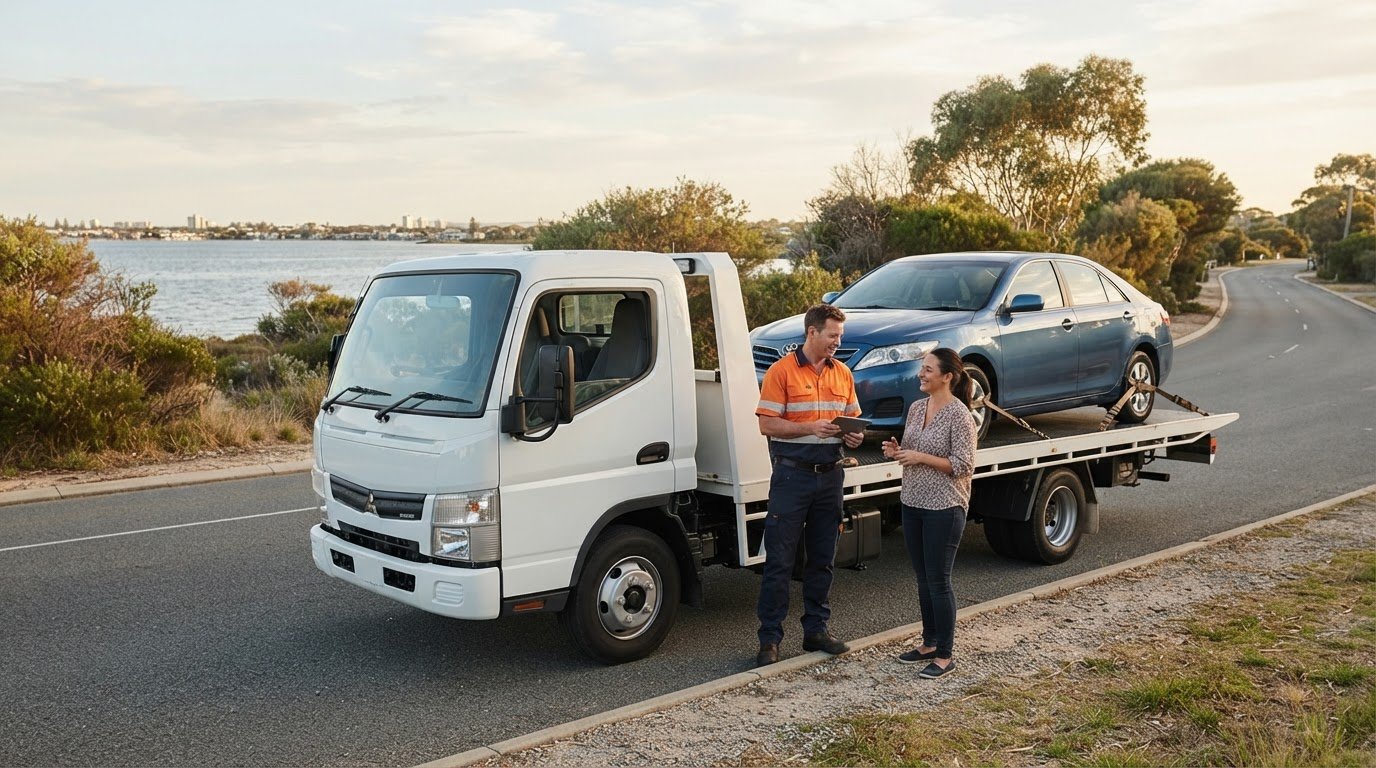
To get a towing quote online in Perth, use the booking form to send your request in writing. Include the pickup and destination, vehicle type and condition. A phone call can suit an urgent or difficult situation, such as a vehicle blocking access. If it’s safer to send details than speak roadside, you can get a towing quote online in Perth through the form.
Use one contact method, then update the request if circumstances change. Specify whether the job involves a motorcycle, caravan or machinery rather than a standard car. Explain whether the vehicle starts, rolls and steers. These details help describe the transport needed and prepare the operator for the pickup.
Details for an online quote
Gather the details needed to describe the route and loading conditions. Exact suburbs help establish the journey, while access notes flag potential obstacles. If the form accepts attachments, a photo may show visible damage or a tight entrance. Don’t put yourself at risk to take one, especially beside moving traffic.
- Location: enter the pickup address and destination.
- Vehicle: name its type, such as a car, motorcycle or caravan.
- Condition: explain whether it starts, rolls or steers.
- Access: note low clearance, a blocked wheel or a narrow entrance.
- Timing: say when you need the tow and whether the vehicle obstructs traffic.
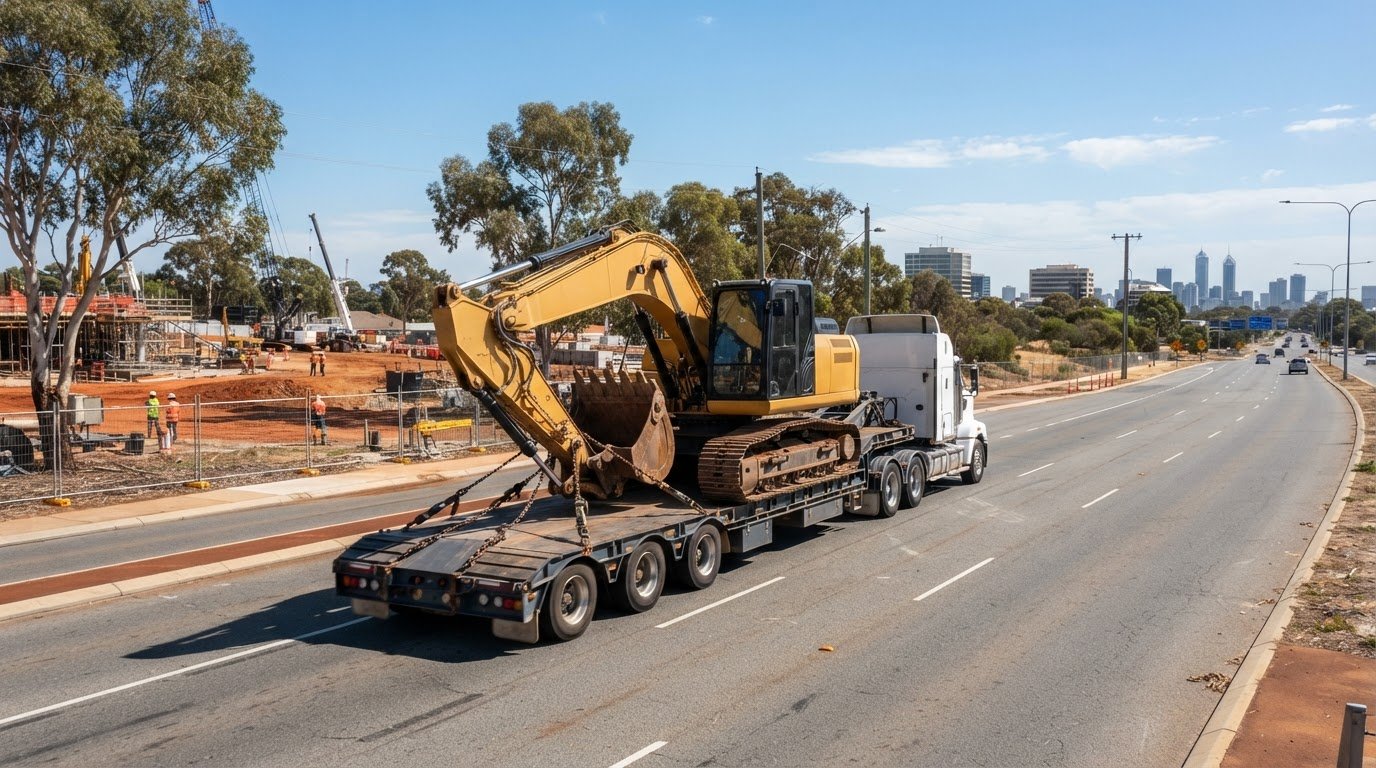
For machinery, name the equipment and describe the loading area. This helps distinguish a machinery move from a standard vehicle tow.
Comparing quotes and inclusions
Compare quotes using the same pickup, destination, vehicle condition and requested timing. Check whether each estimate covers loading and transport, and whether additional charges may apply. A lower total may reflect a different scope, so compare the work described, not just the headline figure.
Ask for unclear items to be explained before accepting a quote. For example, clarify whether it assumes the vehicle rolls freely or needs special loading. If the route or access changes, update your request so the operator can reassess the job. Keep the written estimate handy when discussing changes by phone.
For an online request, send your towing details in one clear summary. If the situation is urgent, call and give the exact location first. State whether anyone is unsafe or the vehicle is obstructing traffic. These practical details help the operator understand the immediate circumstances and discuss suitable transport arrangements.
Choosing a tow truck after a crash or breakdown
After a crash in Western Australia, the driver chooses who tows the vehicle and where it goes under the Towing Services Act 2024. Choose a tow truck that suits the vehicle’s condition, access and intended destination, rather than agreeing before those details are clear.
Start by describing what happened. A crash-damaged vehicle may not roll, steer or load like one with a flat battery. Tell the operator what still works and mention visible damage, leaking fluids or a blocked wheel. These details help the team understand the vehicle and loading requirements.
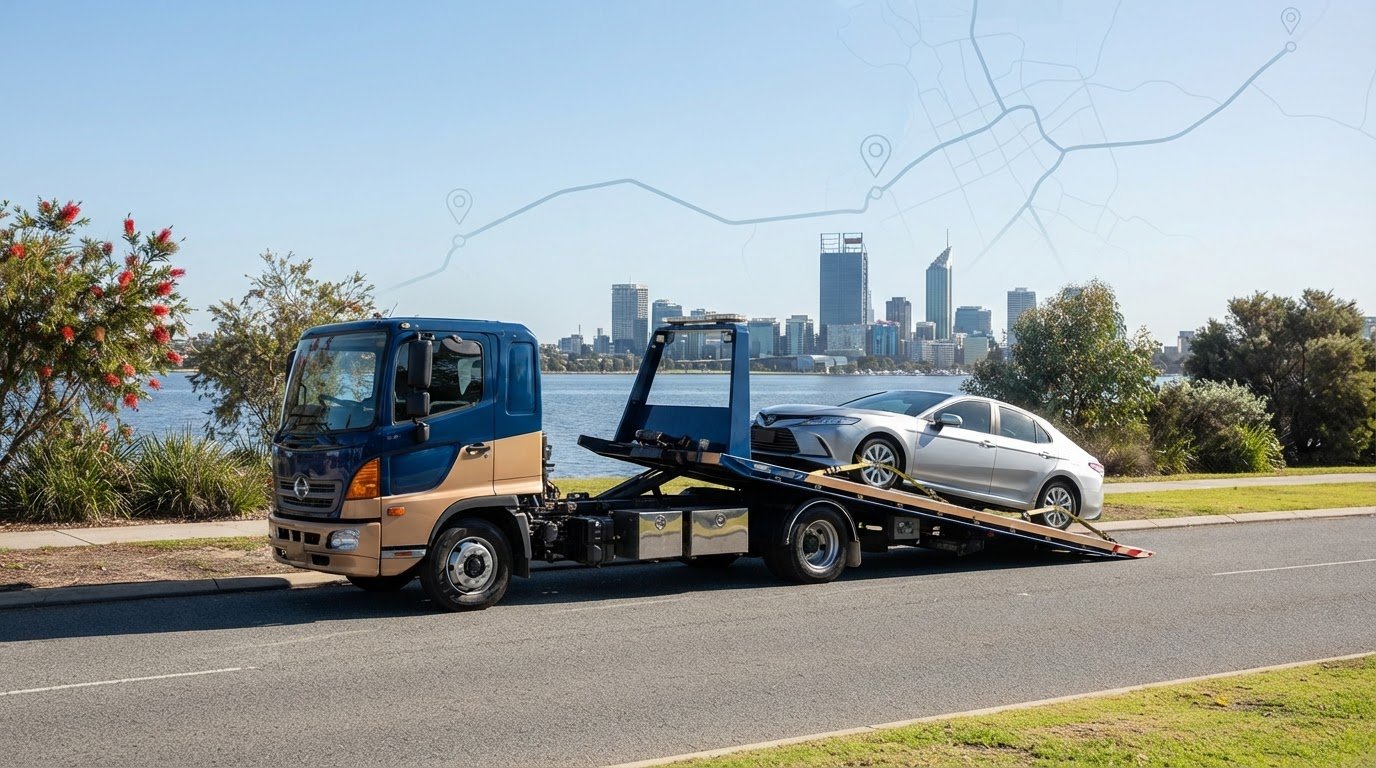
Consider which equipment suits the vehicle. A tilt-tray truck carries a vehicle on its tray and can suit some cars that cannot be driven. Low clearance, tight access or an unusual vehicle shape may affect loading. For a breakdown beside a narrow road, describe nearby hazards and the space available for the truck to stop.
Choose the destination before the tow begins. It could be a repairer or another location you select. Give the full address and any access instructions, such as a rear entrance. If you’re unsure where the vehicle should go, consider your options before authorising transport.
- Explain the vehicle’s condition: say whether it starts, rolls and steers.
- Describe the scene: mention traffic, limited space or difficult access.
- Identify the vehicle: give its type and any relevant features, such as low clearance.
- Confirm the destination: provide the address and access details.
- Clarify the plan: make sure the proposed truck and loading method suit the job.
What should you do if your car breaks down while waiting for a tow in Perth? Move away from moving traffic if you can do so safely, switch on your hazard lights and tell the operator your exact location. If your position or the vehicle’s condition changes, update them before the truck arrives.
If a vehicle obstructs traffic on a major road in metropolitan Perth, Main Roads may relocate it to a safer location at no cost. This applies to that specific obstruction situation, not every breakdown or crash tow. Tell the operator if traffic cannot pass safely, and follow directions from emergency personnel at the scene.
A crash can be stressful, so keep decisions practical: confirm the destination, explain the damage and understand the loading plan. If another tow truck arrives unexpectedly, you can decide who will tow your vehicle before accepting. A clear choice helps the operator prepare the appropriate equipment and take the vehicle to your selected destination.
Perth and Western Australia service coverage
The pickup and destination shape a towing request across Perth and Western Australia. A short trip in Perth differs from recovery between regional locations, where distance and access affect the job. Provide both locations when requesting a quote, even if the vehicle cannot move.
Make a Perth pickup easier to understand by naming the suburb and street, then describing where the vehicle is. A driveway, underground car park and roadside can each require a different loading approach. Include entrance restrictions and a suitable place for the truck to stop. These details help assess the pickup and transport required.
For journeys beyond metropolitan Perth, provide the regional destination rather than naming only a broad area. “Near Geraldton” gives less route information than an exact town or address. Distance, vehicle type and loading access help define the job, whether it’s a local tow or longer transport across Western Australia.
- Metro Perth: provide the suburb, street and any parking or access limits.
- Regional pickup: state the town, roadside location or identifiable landmark.
- Long-distance trip: give the exact destination and explain where the vehicle can be unloaded.
- Special load: describe whether it is a car, machinery or another vehicle type.
Crash towing and ordinary breakdown towing can follow different pricing rules. For crash towing in Perth and Peel, the Department of Transport (Western Australia) identifies an additional-distance charge after the included distance. Keep that regulated crash-towing schedule separate from a breakdown or planned transport quote, which depends on its own route and job details.
Coverage matters when a vehicle is outside the Perth metro area. If you’re stranded on a regional road, share the road name, direction of travel and nearest identifiable location. Include a visible landmark or street sign if possible. Clear directions help the tow truck locate a vehicle away from a familiar Perth suburb.
For transport to a destination in Western Australia, confirm the pickup and drop-off points before agreeing to the job. A tow to a nearby repairer differs from transport to another town. State whether the vehicle is accessible from the road, whether it rolls and whether there’s room to unload at the destination.
Across Australia’s long distances, precise locations are particularly helpful for regional recovery. Provide a map pin or written address where possible, and describe road access issues plainly. If the vehicle moves or your destination changes, update the details before dispatch. This gives the operator a clearer picture of the route, equipment and work involved.
What details are needed to get a towing quote online in Perth?
A useful online towing request gives the operator enough detail to understand the vehicle, pickup and job. Before submitting the form, gather the location, destination, vehicle type and condition, plus access notes. Clear information helps the operator assess the transport and loading approach for your situation.
Start with the pickup point. Provide the suburb and street address, then describe exactly where the vehicle is, such as a driveway, shopping centre car park or roadside. On a busy road, include your direction of travel and a nearby landmark. A precise location helps the driver find you.
Next, identify the vehicle. Include its make, model and body type if you know them. A small car, prestige vehicle, motorcycle and caravan can need different handling. For a motorhome or another large vehicle, describe its size and any features that could affect access or loading.
- Pickup and destination: provide street addresses or clear location details.
- Vehicle information: state the type, make and model if known.
- Condition: explain whether it starts, rolls and steers.
- Damage: describe crash damage, a flat tyre or another issue affecting movement.
- Access: mention tight turns, low clearance, steep driveways or blocked wheels.
- Timing and contact: say when you need assistance and provide a number for a response.
Be specific about what the vehicle can and cannot do. “It won’t start” doesn’t explain whether it rolls freely or has a locked wheel, details that may affect the loading plan. If you’re unsure, describe what you can see rather than trying to diagnose the fault.
Access information matters at both ends of the journey. Tell the operator if the pickup is in a low-clearance car park or the destination has a narrow entrance. Mention obstacles, limited stopping space or a vehicle parked close to a wall. These notes help assess whether a truck can reach and load the vehicle.
If the vehicle is damaged, describe what you can see and include clear photos if the online form allows. Don’t stand in traffic to take pictures. Your safety comes first. For a roadside breakdown, provide the nearest safe landmark and say whether the vehicle is obstructing traffic.
Review your details before sending the request. Confirm that the destination is correct, the vehicle description is accurate and your phone number works. To request a quote, send your towing details online, or call with the same information ready.
Allout Towing: Tilt Tray Perth Services
Allout Towing can help when a vehicle needs careful loading or transport after a breakdown or crash. Its Tilt Tray Perth Services suit jobs where carrying the vehicle on a tray is appropriate, while 24 Hour Car Towing supports drivers needing a tow at any time.
For larger loads, Allout Towing provides Super tilt heavy transport and Container Transport. When requesting a quote, share the load type, pickup, destination and access conditions. These details help the team understand the job and the transport required.
If you need towing or transport in Perth, contact Allout Towing or visit allouttowing.com.au.
Make your next move with clear details
A towing request is easier to progress when your location, destination and vehicle details are ready. If anything changes after you submit the request, update the information so the transport plan reflects the new situation. Clear communication helps when you’re already dealing with a stressful breakdown or crash.
If you’re ready to get a towing quote online in Perth, send the details of your job to Allout Towing. You can also contact the team to discuss your towing needs and the information required for a quote. There’s no need to have every answer worked out before reaching out; start with what you know about the vehicle and its location.
Contact Allout Towing for a quote and take the next step towards arranging transport with confidence.
Frequently Asked Questions
What types of vehicles can you tow in Perth?
Allout Towing provides towing for cars, trucks, motorcycles, caravans, motorhomes and campervans in Perth and Western Australia. Services also include prestige and vintage vehicle towing, machinery and equipment transport, forklifts, construction equipment and containers. For a specialist load, describe what it is and whether it rolls or can be driven. This helps the team understand the towing or transport job.
How quickly can a tow truck arrive in Perth?
Arrival time varies with your pickup location, traffic and the vehicle or equipment required. Give the suburb, street, direction of travel and a nearby landmark when you call. If you’re on a major road or the vehicle blocks traffic, state that first. This helps the operator understand the roadside situation and discuss an appropriate response, rather than relying on a broad suburb description alone.
Are tow truck prices regulated in WA?
Yes. Western Australia has a maximum regulated rate schedule for licensed tow-truck operators. Crash towing has separate regulated charges, which depend on factors such as distance and the circumstances of the tow. This isn’t a flat price for every job. For a crash tow, make sure the quote identifies the applicable charges and distance covered.
Are you available 24/7?
Yes. Allout Towing provides 24-hour car towing in Perth and across Western Australia. If you need help overnight, share your exact location, vehicle condition and a safe access point when requesting assistance. For urgent towing, call 0418 959 216. You can also submit an online enquiry with the job details, including where the vehicle needs to go.
Are you fully insured and qualified?
Allout Towing’s drivers are fully insured, police-certified and fully trained. When arranging a job, explain whether it involves a standard car, prestige vehicle or heavy load so the team understands the work required. Have your destination and relevant vehicle details ready when discussing the request.
Can I get a quote before you dispatch?
Yes. Request a quote before dispatch through Allout Towing’s online enquiry form or by phone on 0418 959 216. A free quote is available. State whether you need a tow after a breakdown, accident or planned transport, and provide the pickup and destination. If the vehicle’s condition changes before dispatch, update your request with the new details.
Can you handle difficult or specialist towing jobs?
Yes. Allout Towing handles specialist work including super tilt heavy transport, machinery transport, container transport and prestige vehicle transport. Its truck towing service covers heavy-vehicle recovery up to 10 tonnes. Name the load type and describe access at pickup and delivery, such as a site entrance or loading area. Those details help establish what kind of transport job you need.
Which Perth towing companies provide online quotes?
Allout Towing provides an online enquiry form for Perth towing requests and accepts quote enquiries by phone. The form lets you send job details in writing; call 0418 959 216 if you need to explain an urgent or unusual situation. Include the pickup and destination, vehicle type and issue, then keep your request details handy for any follow-up about the tow.