There’s something about hitting the open road in WA that makes you feel properly free. You’ve got your playlist sorted, a full tank, and maybe a few snacks for the drive. But what most drivers don’t think about until it’s too late: the sheer distance between towns, the heat that can turn your bonnet into a frying pan, and the fact that mobile reception drops off faster than you’d like.
The drivers who fare best on long WA journeys aren’t always the ones with the newest cars. They’re the ones who plan and know what to do when things go sideways. Because out here, “sideways” can mean you’re 80 kilometres from the nearest servo with a car that won’t start.
These roadside assistance tips WA drivers rely on will actually make a difference when you’re heading out on a long drive across this massive state.
Why Distance Changes Everything
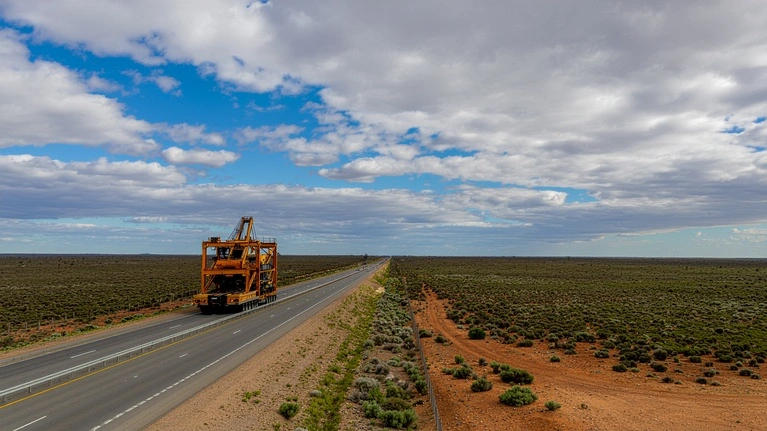
You might be used to city driving where help’s always 20 minutes away. That doesn’t apply once you’re past the metro area. Between Perth and Broome, you’ve got stretches where the next town is genuinely hours away, not minutes.
The heat does things to vehicles that drivers from cooler climates wouldn’t believe. Batteries die in carparks, tyres lose pressure on scorching bitumen, and radiators boil over on highways that look perfectly flat. Your car works harder here, and the consequences of a breakdown are more serious when you’re isolated.
This isn’t meant to scare you off long drives. WA’s got some of the most stunning routes in the country, and you should absolutely experience them. But you need to respect the conditions and prepare accordingly. Understanding these roadside assistance tips WA conditions demand starts with recognising how different regional driving is from metro travel.
Check Your Spare Before You Leave
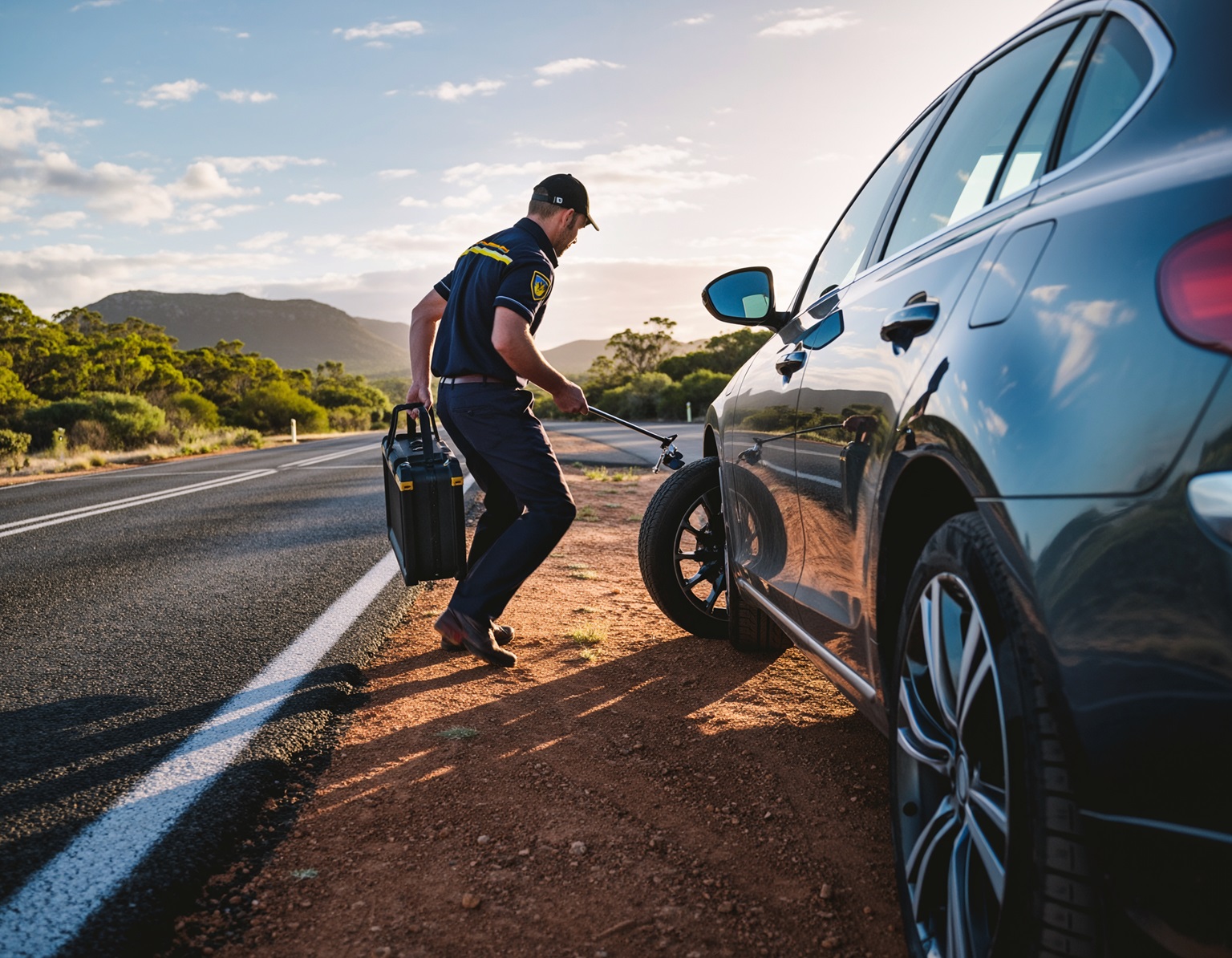
Stranded drivers with flat tyres often discover their spare is also flat – completely unusable because they’d never checked it. Your spare tyre isn’t just something that lives under your car gathering dust. It’s your insurance policy, and like any insurance, it isn’t beneficial if it’s not valid when you need it.
Check the pressure at least a week before your trip, not the morning you leave. If it’s low, you’ve got time to sort it. If it’s damaged or perished, you can replace it without the panic of last-minute shopping. While you’re at it, make sure you’ve actually got a jack and a wheel brace, and that you know how to use them.
Some modern cars don’t come with spares anymore. They’ve got puncture repair kits instead. If that’s your situation, check the kit’s expiry date and make sure the compressor actually works. Test it at home, not on the roadside in 38-degree heat.
Know Your Limits with DIY Fixes
There’s a fine line between being self-sufficient and making things worse. Both ends of that spectrum exist, and the second one gets expensive.
If you’ve got a flat battery and jumper leads, and you know what you’re doing, brilliant. Jump it and get moving. But if you’re not confident about which terminal is which, don’t guess. You can cause severe electrical damage, and that turns a simple flat battery into a much bigger problem.
The same goes for overheating. If your temperature gauge is climbing, pull over safely and turn the engine off. Let it cool down properly before you even think about opening the bonnet. Never take the radiator cap off a hot engine. The pressure release can cause boiling coolant to spray out, and that’s a trip to the emergency department, not just a roadside inconvenience.
Understanding what you can safely handle and what needs professional help is crucial. There’s no shame in calling for roadside assistance when you’re out of your depth. It’s cheaper than a botched repair and safer than putting yourself at risk.
Pack an Actual Emergency Kit
Most drivers think they’ve got this covered because they’ve got a first aid kit in the boot. That’s important, but it’s not enough for long WA drives. These roadside assistance tips WA travellers swear by include proper emergency preparation.
Your emergency kit should include water, and not just a bottle or two. Pack at least four litres per person for drinking, plus extra for the radiator if you need it. The Department of Transport WA recommends carrying plenty of water for remote travel, and they’re not being dramatic. Dehydration happens fast out here.
You’ll also want a torch with fresh batteries, a phone charger that works from your car’s power outlet, and something reflective like a high-vis vest or warning triangle. If you break down at dusk or after dark, being visible to other drivers is critical for your safety.
A basic tool kit doesn’t hurt either. You don’t need a whole mechanic’s arsenal, but a screwdriver, pliers, and some duct tape have solved more problems than you’d think. Securing loose parts with cable ties and tape can get you to the next town safely.
Non-perishable snacks are worth throwing in, too. If you’re waiting for help in a remote area, having something to eat makes the wait more bearable, especially if you’ve got kids with you.
The Guilt You’re Probably Feeling About Calling for Help
There’s this weird thing that happens when people break down. They feel like they’ve failed somehow, like they should’ve prevented it or should be able to fix it themselves. Common phrases include: “I hate to bother you” or “I feel stupid calling.”
Vehicles are complex machines operating in harsh conditions, and sometimes they break down. It’s not a reflection on you as a driver or a person. It’s just a mechanical reality.
Calling for professional help when you need it is the wise choice, not a weakness. All Out Towing helps thousands of WA drivers get back on the road safely, and professional operators never think less of someone for needing assistance. That’s literally what these services exist for.
The guilt gets worse when you’re travelling with family. You feel responsible for getting everyone home safely, and a breakdown feels like you’ve let them down. But the responsible thing is recognising when you need help and getting it quickly, not spending hours trying to fix something you’re not equipped to handle while your kids are sitting in a hot car.
Download Offline Maps Before You Lose Signal
Mobile reception in regional WA is patchy at best and non-existent at worst. If you’re relying on your phone for navigation and you lose signal, you’re suddenly guessing at which turn-off to take or how far the next town is.
Before you leave, download offline maps of your route. Most mapping apps let you do this, and it takes a few minutes. You won’t get live traffic updates, but you’ll still have the map itself, which is infinitely better than nothing.
Write down key phone numbers, too. Save them in your phone, sure, but also write them on a piece of paper and keep it in your glovebox. If your phone dies or you’re in an area with terrible reception, you might need to borrow someone else’s phone. Having the number for 24-hour emergency towing or your insurance provider written down means you can still make the call.
And speaking of phones, charge it before you leave and bring a portable power bank. A dead phone when you’re broken down on a remote stretch of highway is genuinely dangerous. You need to be able to call for help.
Start Here, Not with Perfection
You don’t need to turn your car into a mobile survival bunker before you head off on a road trip. But you do need to cover the basics, and the basics aren’t complicated.
Check your tyres, including the spare. Make sure you’ve got water, a charged phone, and some way to stay visible if you break down. Know who to call if things go wrong, and don’t hesitate to make that call when you need to.
Drivers who wait hours before calling for help often make their situation wors,d digging vehicles deeper into sand, attempting repairs without proper tools, or staying in dangerous hea,t all compound the original problem. Sometimes the best thing you can do is recognise when you need help.
That’s not giving up. That’s being sensible. These roadside assistance tips WA drivers learn through experience demonstrate that preparation beats improvisation every time.
What Actually Happens When You Call
If you’ve never needed roadside assistance before, you might not know what to expect. It’s worth understanding the process so you’re not guessing if something goes wrong.
When you call for help, you’ll need to explain where you are and what’s happened. This is where those offline maps and location markers come in handy. Saying “somewhere on Indian Ocean Drive” doesn’t narrow it down much, but “about 15 kilometres north of Lancelin near the lookout” gives operators something to work with.
The operator will ask about your vehicle and the problem. Be as specific as you can. “It won’t start” could mean a dozen different things, but “the engine turns over but won’t catch” or “there’s no sound at all when I turn the key” helps operators bring the right equipment.
You’ll get an estimated arrival time, though in remote areas that might be longer than you’re used to. Help will arrive as quickly as possible, but distance is distance. This is why having water, snacks, and a way to stay cool or warm matters.
If you’re in an unsafe location, like on the shoulder of a busy highway, the operator will advise you on what to do while you wait. Usually, that means getting everyone out of the vehicle and well away from the road if it’s safe to do so. Your car can be fixed or replaced. You can’t.
The Real Cost of Skipping Maintenance
Services are expensive, and it’s tempting to push them out a bit when money’s tight. But a breakdown in the middle of nowhere costs more than a service ever would, and that’s before you factor in the stress and lost time.
Regular maintenance catches problems before they strand you. A mechanic might notice your battery’s getting weak or your coolant’s low, and fixing those things at home is straightforward. Fixing them on the side of the road 200 kilometres from anywhere is a different story.
Your car’s like your body – you can ignore the warning signs for a while, but eventually, something gives. And when it breaks down on a remote highway in summer, you’re not just dealing with inconvenience. You’re dealing with safety.
According to Main Roads WA, vehicle breakdowns are a significant contributor to road incidents, especially in regional areas. A well-maintained car is a safer car, full stop.
Why This Feels Harder Than It Should
Planning for potential problems feels like inviting them to happen. There’s this superstitious part of our brains that thinks if we prepare for a breakdown, we’re somehow making it more likely. That’s not how machines work, but the feeling is understandable.
The other barrier is that preparation takes time, and you’re already busy packing, organising, and getting ready to leave. Adding “check the spare tyre” to the list feels like one more thing when you’re already stretched.
But this isn’t about being pessimistic or expecting the worst. It’s about giving yourself options if things don’t go to plan. You wear a seatbelt, not because you wish to crash, but because you want to be protected if you do. Roadside preparation is the same principle.
And honestly, once you’ve done it once, it becomes routine. Check the tyres, top up the fluids, and pack the emergency kit. Twenty minutes before a long trip, and then you can genuinely relax knowing you’ve covered the basics.
When You’re Back on the Road
Getting help and getting moving again is a relief, no question. But don’t just carry on and forget about what happened. If your car broke down, there was a reason, and that reason might still be there.
If you’ve had a jump-start, get the battery appropriately tested when you’re back in civilisation. A flat battery might mean you left the lights on, or it might mean the battery’s dying and will leave you stranded again next week.
If you’ve overheated, book your car in for a cooling system check. It might be as simple as topping up the coolant, or there could be a leak or a failing thermostat. Either way, you need to know.
And if you’ve had a flat tyre, don’t just chuck the punctured one in the boot and forget about it. Get it repaired or replaced so you’ve got a working spare again. You don’t want to be in a situation where you get another flat and realise you’ve got no backup.
Think of a breakdown as your car trying to tell you something. Listen to it, contact a mechanic or us, and sort it before it becomes a bigger issue.
You’re Not Alone in This
Every driver who’s done long trips across WA has a breakdown story. It’s practically a rite of passage. The difference between a story you laugh about later and one that still makes you anxious is usually how prepared you were and how quickly you got help.
You don’t need to be a mechanic or a survival expert. You need to think ahead a bit, pack sensibly, and know when to call for backup. That’s genuinely all it takes.
WA’s roads are incredible, and the freedom of a long drive through this state is something everyone should experience. Don’t let fear of breaking down stop you from going. Just make sure you’re ready if it happens, and you’ll be fine.
The roadside assistance tips WA drivers need aren’t complicated or expensive. They’re practical, achievable, and they work. Check your spare, pack water and a phone charger, know who to call, and don’t feel guilty about asking for help when you need it. That’s the list. That’s what’ll make the difference.
Safe travels, and if you do end up needing a hand, professional help will be there.