An expired registration is not just a paperwork inconvenience – it is a legal liability that strips your vehicle of its right to be on any public road in Western Australia. Driving an unregistered vehicle carries fines up to $800 for a first offence. Comprehensive insurance also becomes void the moment that registration lapses.
What catches most Perth drivers off guard is this: you cannot simply drive that vehicle to a licensing centre or workshop to sort things out. The moment registration expires, the vehicle is legally grounded on public roads. It needs professional transport to get anywhere – including to a mechanic, an inspection station, or even your own driveway if it has been parked on a public street.
Expired registration towing is required more often than many people realise. Project cars, inherited vehicles, mechanically failed daily drivers, and fleet vehicles with lapsed paperwork all need the same solution – legal, professional unregistered vehicle transport that moves the car compliantly without creating additional fines or personal liability.
Why Expired Registration Vehicles Cannot Be Driven
WA Legal Requirements Under the Road Traffic Act
Under the Road Traffic (Vehicles) Act 2012, operating an unregistered motor vehicle on any public road is a strict liability offence in Western Australia. The law applies to all public roads, streets, and thoroughfares. Penalties escalate with each offence:
- First offence: fines up to $800
- Subsequent offences: fines up to $1,200
- Commercial vehicles: separate, higher penalty tiers apply
- Serious incidents: potential vehicle impoundment and criminal charges
WA law draws no distinction between “I forgot to renew” and “I chose not to register.” The offence is strict liability – the outcome is the same regardless of the reason for the lapse. This is why expired registration towing is not optional when an unregistered vehicle needs to cross any public road.
What Happens to Your Insurance
Comprehensive car insurance becomes invalid the moment registration lapses. If an unregistered vehicle is involved in any incident – even a minor car park scrape – the owner faces full personal liability for all third-party damages. CTP (Compulsory Third Party) insurance for personal injuries also no longer applies. The financial exposure from a single uninsured accident is substantial and entirely avoidable through proper unregistered vehicle transport.
The Limited Exceptions Under WA Law
Very limited exceptions exist under WA Department of Transport rules. Specific permits can be issued for pre-arranged inspection appointments – but these are tightly controlled, time-limited, and conditional. For most unregistered vehicles, particularly those that are not roadworthy or have been stationary for months, these permits are not accessible. Unregistered vehicle transport via a licensed operator is the only compliant path forward, in accordance with Main Roads WA towing industry requirements.
When You Need Expired Registration Towing
Common Scenarios Requiring Unregistered Vehicle Transport
Expired registration towing requests cover a wide range of circumstances. The most common include:
- Project and classic cars: Enthusiasts letting registration lapse during long-term restorations – when it is time to move for paint, mechanical work, or sale, legal vehicle transport in Perth is required
- Inherited vehicles: Family members inheriting a car that has been sitting for months or years with registration long expired and the vehicle often not roadworthy
- Financial hardship: The vehicle sits until finances improve, but then needs to move to a mechanic or storage facility legally
- Post-breakdown storage: A vehicle broke down and was moved to temporary storage while waiting for parts – registration expired during that period
- Interstate relocations: Vehicles registered in other states that are not currently valid under WA registration requirements
- Sale or disposal: Selling an unregistered vehicle privately, or transporting it to a wrecker for disposal
Defect Notices and Compliance Orders
Vehicles issued with police defect notices or Department of Transport compliance orders face an identical legal situation. The vehicle cannot be driven until specified defects are rectified and an inspection is passed. Non-registered vehicle recovery is the only compliant way to move these vehicles to the workshop for the required repairs and re-inspection.
How Tilt Tray Transport Works for Unregistered Vehicles
Why Stationary Vehicles Need Flatbed Transport
Vehicles that have been stationary for months present additional technical challenges beyond their legal status. Tyres develop flat spots from prolonged ground contact. Brakes can seize from rust on drums and rotors. Steering components may have stiffened or corroded. Hook or wheel-lift towing on a vehicle in this condition places load on systems that are not ready for it – potentially causing damage that did not previously exist.
Specialist damage-free tilt tray transport eliminates these concerns. The vehicle is winched onto the flatbed deck without wheels needing to roll, without steering input required, and without load placed through potentially seized brake or suspension components. It moves the vehicle exactly as it sits – without asking anything mechanical of it throughout the process.
The Tilt Tray Loading Process for Unregistered Vehicles
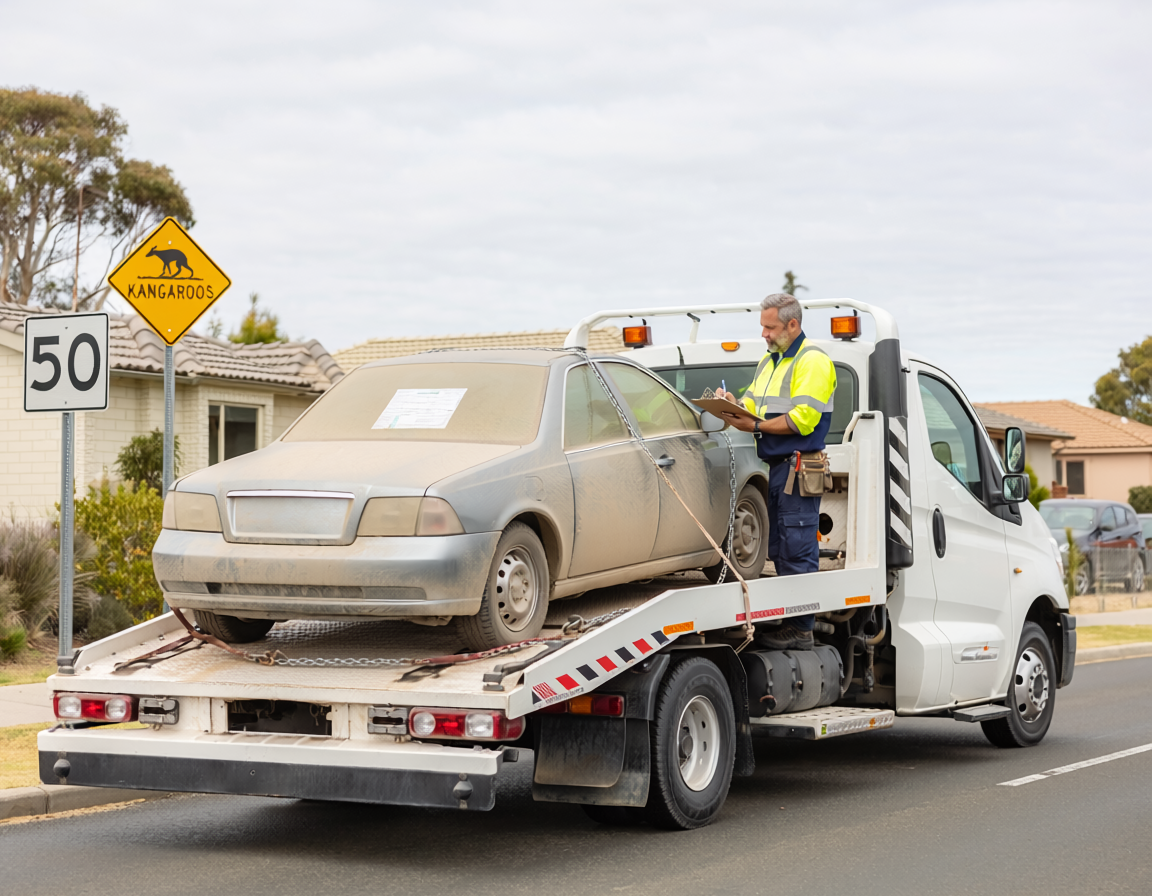
The flatbed deck lowers hydraulically until completely flat on the ground surface. A remote-controlled electric winch then pulls the vehicle straight onto the deck in a controlled, steady movement. No wheels need to roll. No steering input is needed. Soft straps attach to manufacturer-approved recovery points throughout the loading process.
Once secured with multiple tie-down points, the deck tilts back to the horizontal transport position. The unregistered vehicle sits safely on a stable platform for the entire journey. Expert vehicle recovery services delivered by trained operators ensure the vehicle arrives at its destination in exactly the same condition it departed from the pickup location.
Information to Have Ready When Booking
Booking expired registration towing efficiently requires specific information. Having the following ready before calling speeds up the process considerably:
- Vehicle make, model, year, and current condition (does it roll, are tyres inflated, does it steer)
- Any modifications affecting towing – lowered suspension, body kits, oversized wheels
- Exact pickup address and access type (street, driveway, garage, or underground car park)
- Any access obstacles – narrow driveways, low-hanging trees, or steep inclines
- Delivery destination and access requirements at that location
- Urgency level – is the vehicle blocking access or subject to a council removal notice
Private Property Versus Public Roads: A Critical Distinction
When Movement Is Legally Permissible Without a Tow Truck
Moving an unregistered vehicle on genuinely private property is permissible without professional towing – provided that property is not accessible to the public in any way. This includes moving a car within a rural property without crossing any public road, relocating a vehicle inside a fully enclosed private warehouse, or repositioning a car entirely within a secured private garage.
Where the Law Draws the Line
The legal line is more complex than most drivers expect. Many driveways, apartment car parks, and shared laneways are legally classified as public thoroughfares because members of the public can access them. Moving an unregistered vehicle across what appears to be private space may still constitute a public road offence under WA towing regulations.
The safest assumption is straightforward: if you are uncertain whether a space is genuinely private, treat it as public and arrange professional unregistered vehicle transport. The cost of a licensed towing service is significantly less than the cost of fines, impoundment fees, and potential liability exposure from an incident on a technically-public thoroughfare.
Common Scenarios: Expired Registration Towing in Action
The Street-Parked Project Car
A Perth resident bought a classic Holden as a long-term project. It sat on a public street for eight months while parts were sourced. The local council issued a removal notice – unregistered vehicles cannot be stored on public roads. Non-registered vehicle recovery on a tilt tray collected the vehicle and delivered it to a rented garage space in the same suburb. Total time from pickup to delivery: 45 minutes. Attempting to drive it quietly across the suburb would have risked an $800 fine and potential impoundment on the spot.
The Interstate Inheritance
A Perth resident inherited a ute registered in Queensland from their late father. It had been sitting in a Mandurah driveway for over a year with Queensland registration long expired. They needed it assessed by a Malaga mechanic before deciding whether to re-register or sell. Legal vehicle transport in Perth moved the vehicle 80 kilometres to the mechanic’s workshop without incident – and without the risk of operating an interstate-registered, unregistered vehicle on WA roads.
The Expired Fleet Vehicle
A small business had a work van break down at their depot during a busy period. Twelve months later, during a business sale, the unregistered and non-operational van was still there. Specialised vehicle recovery moved it to a licensed wrecker in Kwinana as part of the site clearance. The business received a certificate of disposal that formally cancelled all remaining registration obligations and removed ongoing liability entirely.
Re-Registering After Transport: What Happens Next
WA Re-Registration Requirements
Once expired registration towing delivers the vehicle to its destination, re-registration requirements depend on how long it has been off the road and its current condition. Generally, re-registration in WA requires:
- A roadworthy inspection from a licensed inspection station (unless off-road for less than 3 months)
- Proof of identity and current ownership documentation
- A valid roadworthy certificate from the completed inspection
- CTP insurance arranged and confirmed before registration is granted
- Payment of registration fees and any outstanding penalties
Selling or Disposing of the Vehicle
For vehicles being sold or scrapped rather than re-registered, unregistered vehicle transport remains necessary to get the vehicle to the buyer or wrecker. Private buyers cannot legally drive an unregistered vehicle away from the sale location. For time-sensitive disposal situations – such as vehicles subject to council removal notices – urgent towing response ensures the vehicle is moved compliantly before additional penalties apply.
Why DIY Solutions Create Greater Risk
Tow Ropes and Chains on Public Roads
Towing an unregistered vehicle using a rope, chain, or privately owned trailer on public roads creates a second offence on top of the existing unregistered vehicle breach. If the vehicle causes any incident during that transport, liability falls entirely on the person organising the unlicensed move. Insurance will not cover it. The financial exposure from even a minor collision under these circumstances is significant and entirely unprotected.
The True Cost of Getting It Wrong
The pattern of DIY expired registration transport going wrong is consistent and costly. Driving the vehicle “just this once” risks an $800 fine, impoundment fees, and full accident liability. Using an unlicensed mate with an improperly secured trailer creates liability if the vehicle separates in transit. The apparent saving of $100-$200 in professional towing fees regularly results in fines, impound costs, and uninsured accident liability that far exceed the original transport cost. Professional expired registration towing is the less expensive option when total cost is calculated accurately.
Conclusion
Expired registration towing is the only legally compliant way to move an unregistered vehicle across WA public roads. Whether the vehicle is a project car awaiting restoration, an inherited vehicle from interstate, or a daily driver with lapsed paperwork, professional unregistered vehicle transport protects against fines, impoundment, and insurance liability throughout the entire process.
All Out Towing handles expired registration towing across Perth and regional WA every week. Our tilt tray fleet manages vehicles in any condition – flat tyres, seized brakes, missing wheels – without needing the vehicle to move under its own power. We transport to mechanics, inspection stations, private storage, and licensed wreckers across the entire metro area and beyond.
Perth drivers have access to professional unregistered vehicle transport across the metro area through All Out Towing. Contact our team at 0418 959 216 for immediate assistance or to arrange a scheduled pickup – transparent pricing, no judgement, and a fully compliant solution every time.