A single millimetre of miscalculation on a 2026 Main Roads WA permit can ground a multi-million dollar project before the truck even leaves the yard. It’s a stressful reality for many local businesses managing oversized load transport Perth wide. You likely know the frustration of dealing with shifting regulations or the sudden realisation that your pilot vehicle costs have spiralled. It is easy to feel overwhelmed by the technicalities of traffic escort wardens and route surveys when you just need your machinery on-site and ready to work.
We’ve put together this comprehensive guide to help you take back control of your logistics. You’ll learn exactly how to classify your cargo under the latest 2026 standards and which heavy transport equipment, like specialised Super Tilt trays, is best for your specific move. We’ll look at everything from updated permit thresholds to finding a reliable local partner who treats your gear like their own. Let’s clear the path for a smooth, damage-free transit across Western Australia.
Key Takeaways
- Learn how to classify your cargo by identifying the specific width, height, and mass thresholds that trigger OSOM regulations in Western Australia.
- Discover why a specialised Super Tilt tray is often the safest choice for oversized load transport Perth projects involving heavy machinery.
- Get a clear breakdown of the Main Roads WA permit process and find out exactly when you’ll legally require a licensed pilot vehicle or traffic escort.
- Understand the importance of professional route surveys to avoid hidden costs and navigate restricted heavy vehicle corridors across the state.
- Find out how partnering with a family-owned local team with 30 years of experience ensures your project stays on schedule with 24-hour support.
What Defines an Oversized Load in Perth and Western Australia?
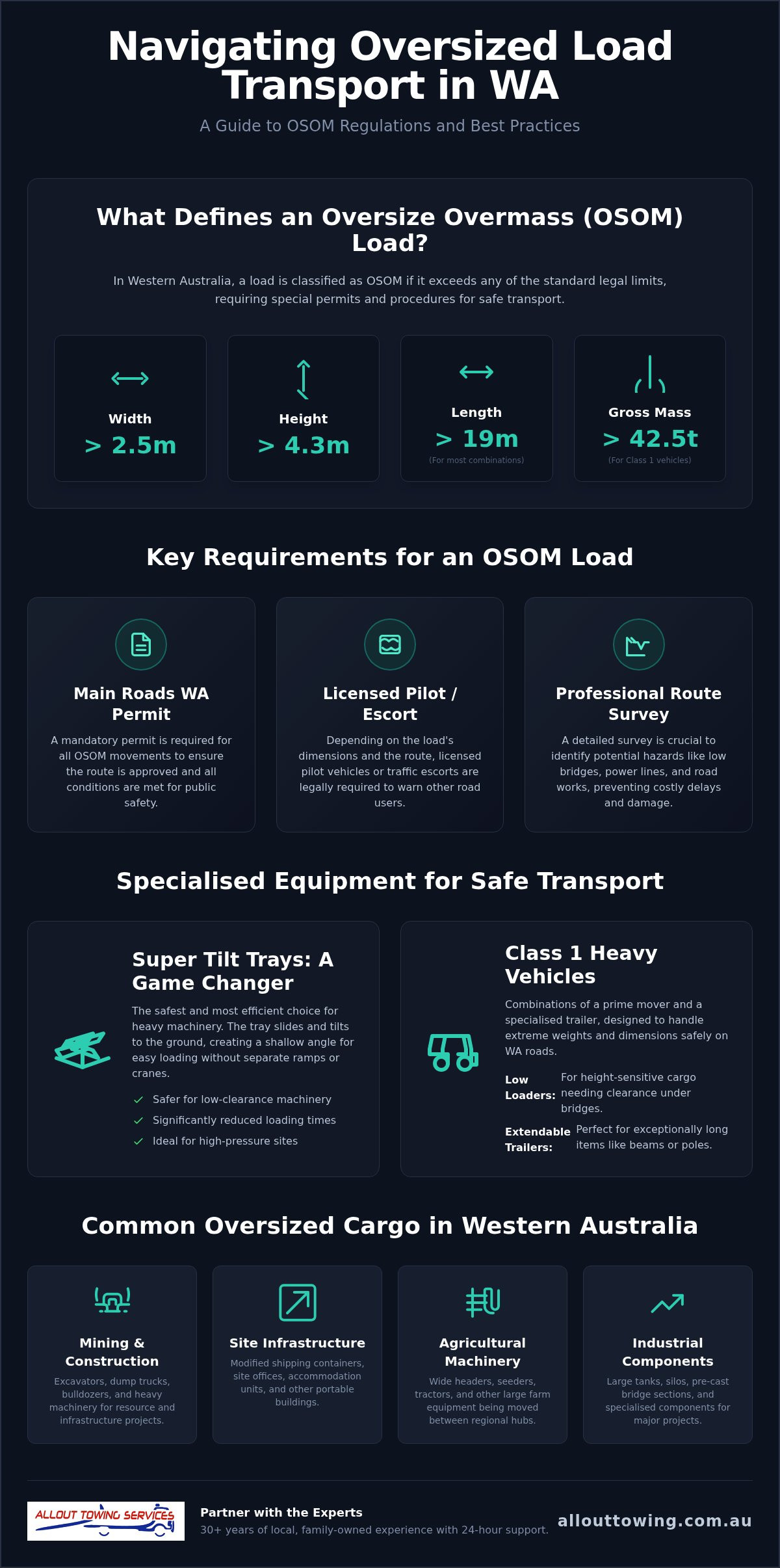
Understanding the legal boundaries is the first step in managing successful oversized load transport Perth projects. In Western Australia, we use the term OSOM, which stands for Oversize Overmass. This classification applies as soon as your cargo exceeds the standard dimensions or weight limits set for our road network. For most vehicles, the “safe zone” ends when the load is wider than 2.5 metres, higher than 4.3 metres, or longer than 19 metres. If your gear pushes past these markers, you’ve officially moved into the territory of an Oversize load, and specific legal requirements apply.
A critical concept in WA logistics is the “Large Indivisible Item.” This refers to cargo that cannot be broken down into smaller pieces without extreme cost or risk of damage. Main Roads WA remains focused on road safety, ensuring that OSOM permits are reserved for items that truly need the extra space. As of August 2026, the Multi-Loading Policy has been updated to remove the previous 19-metre restriction when loading multiple items front to back on a prime mover and semi-trailer combination. This change helps improve efficiency, but the core principle remains: you shouldn’t create an oversized situation if the items can be transported separately.
If you’re looking to further optimise your supply chain beyond oversized transport, you can explore 3PL Matching to find pre-screened logistics providers capable of handling your broader distribution and warehousing needs.
Class 1 Load-Carrying Vehicles Explained
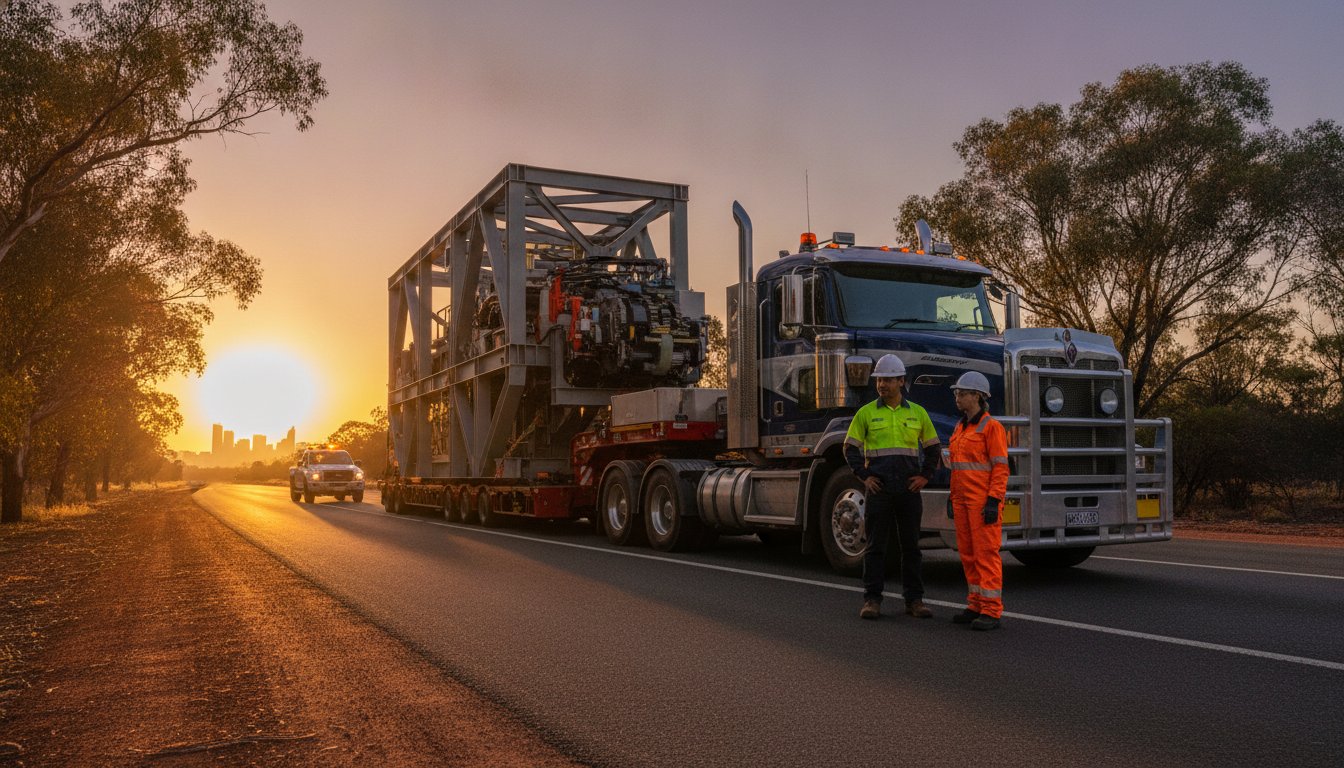
Most oversized load transport Perth jobs involve Class 1 vehicles. These are typically combinations of a prime mover and a trailer, such as a low loader or an extendable trailer. These trailers are designed to distribute massive weight across more axles, protecting our road surfaces from damage. Extendable trailers are particularly useful for long items like steel beams or power poles. Because these vehicles often exceed 42.5 tonnes in gross mass, they require careful planning to ensure they don’t exceed the structural capacity of bridges or culverts along the route.
Common Oversized Items Transported in WA
Perth serves as the primary gateway for the state’s industrial sectors, meaning we see a massive variety of heavy gear on our roads. Common examples include:
- Mining and Construction: Massive excavators, dump truck trays, and bulldozers heading to the Pilbara or Goldfields.
- Site Infrastructure: 20ft containers modified into offices or site sheds that exceed standard width.
- Agricultural Machinery: Wide headers and seeders being moved between regional hubs like Northam or Geraldton.
- Industrial Components: Large tanks, silos, and pre-cast bridge components for metropolitan infrastructure projects.
Moving these items requires more than just a big truck and a trailer. It takes a deep understanding of how these specific machines sit on a deck and where their centre of gravity lies to ensure a stable, safe journey.
Essential Equipment for Oversized Load Transport Perth
Success in oversized load transport Perth projects depends entirely on the steel beneath the cargo. While many operators rely on standard flatbeds, complex moves require specialised vehicle combinations that can handle Western Australia’s unique road conditions. Prime movers must be configured for high gross mass and paired with trailers that offer maximum stability. Whether you are moving a 20ft site office or a massive excavator, the choice between a low loader and a tilt tray will define the safety and efficiency of your entire project.
Why Super Tilt Heavy Transport is a Game Changer
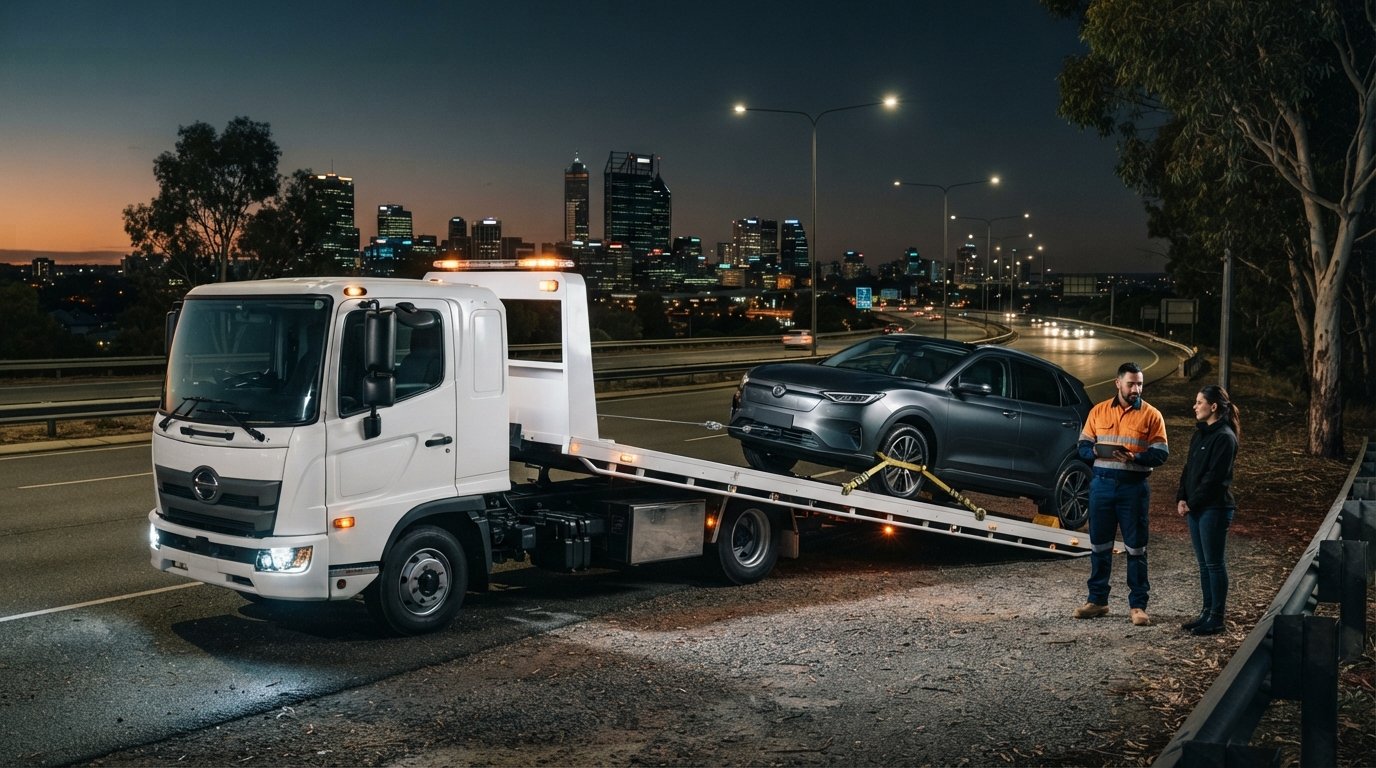
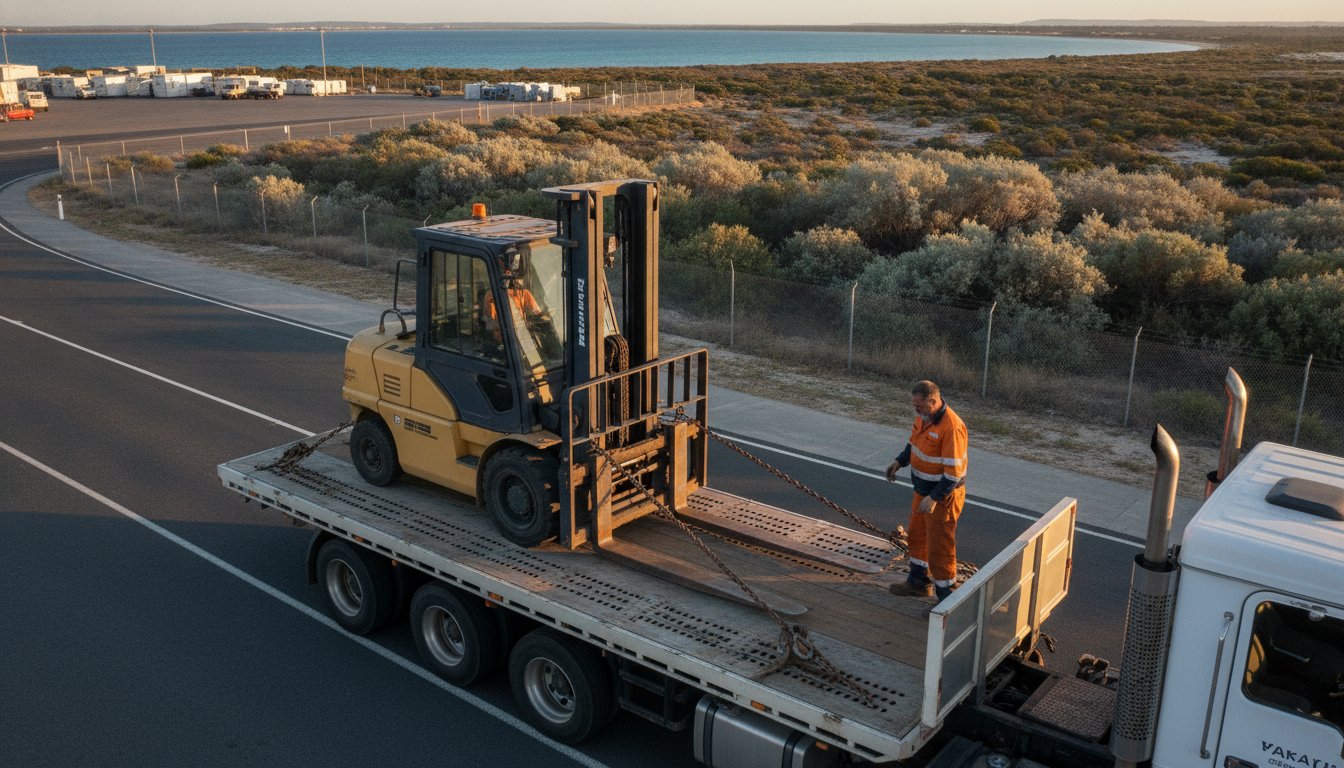
A Super Tilt tray is more than just a transport bed; it’s a precision tool for heavy logistics. Unlike traditional trailers that require separate ramps or cranes, a Super Tilt slides and tilts to reach the ground directly. This creates a shallow, manageable approach angle. It’s much safer for low-clearance machinery like forklifts, rollers, and containers. Loading times are significantly reduced because there is no need to manually assemble heavy ramps or use secondary lifting equipment. It’s an efficient solution for high-pressure sites where every minute of downtime costs money.
For those moving height-sensitive cargo, low loaders provide the necessary clearance to pass under power lines and bridges. however, for most industrial machinery, the versatility of our Super tilt heavy transport offers a superior balance of speed and safety. These trays are designed to handle the weight while keeping the load as low as possible to the road surface.
Specialised Machinery Transport Gear
Securing the load is where technical expertise meets high-quality hardware. Every move requires heavy-duty chains, binders, and straps that far exceed the load’s weight rating. Stability is maintained through high-capacity hydraulic systems and powerful winches that can pull non-running machinery safely onto the tray. We ensure the trailer configuration matches the specific weight distribution of the cargo, preventing axle overloads that could lead to structural damage or legal penalties.
Compliance is non-negotiable for any reputable carrier. Vehicles must be fitted with specific signage, including “OVERSIZE LOAD AHEAD” signs for pilots that meet the 1200 mm by 600 mm Australian standard. Effective electronic communication via UHF radio is essential for real-time coordination between the driver and the escort team. For loads exceeding 4.5 metres in width, forward-facing video recording is now a mandatory requirement under Main Roads WA pilot and escort requirements. These technical details ensure that the equipment isn’t just capable, but fully compliant for every kilometre of the journey.
Navigating Main Roads WA Permits and Pilot Requirements
Securing the right paperwork is often more complex than the physical move itself. In Western Australia, Main Roads WA acts as the regulatory gatekeeper for all oversized load transport Perth operations. You’ll generally deal with two types of permits. Single-trip permits are designed for one-off movements of specific items, while period permits, available for 12 or 36 months, are better suited for businesses moving similar loads along approved routes frequently. Getting this choice right at the start prevents unnecessary administrative delays and keeps your project costs predictable.
Operating hours in the Perth Metropolitan area are strictly controlled to manage traffic flow. Most oversized movements are restricted during peak periods, typically between 7:30 am to 9:00 am and 4:30 pm to 6:00 pm on weekdays. For particularly large loads, you might be limited to night-time movements or weekends only. Planning your schedule around these curfews is essential to avoid being grounded by transport inspectors mid-journey. It’s also worth understanding what happens when a prime mover breaks down during a permitted move; our guide to truck towing Perth and heavy vehicle recovery covers exactly how to handle those high-pressure situations on WA roads.
The Role of Pilot and Escort Vehicles
The level of escort required depends entirely on the dimensions of your load. Once a load exceeds 3.5 metres in width, you’ll generally require at least one licensed pilot vehicle. If the width pushes past 4.5 metres, two pilots become mandatory, and the lead vehicle must be fitted with a forward-facing video recording device. For the largest moves, specifically those exceeding 5.5 metres in width or 40 metres in length, a Traffic Escort Warden (TEW) is legally required.
As of August 2026, the daily rate for a TEW within the Perth metro area is $2080.00 per warden. These wardens have the authority to direct traffic and temporarily close roads, which is vital for navigating tight suburban corners or major intersections. Constant communication via UHF radio between the truck driver, pilot drivers, and wardens ensures everyone knows exactly when to hold traffic or clear a path.
WA Regulatory Compliance for 2026
Compliance in 2026 involves more than just having a permit tucked in the glovebox. All heavy vehicle pilots must hold a current Western Australian Heavy Vehicle Pilot Licence and follow a strict Code of Conduct. Drivers must carry the specific “Operating Conditions” document that accompanies their permit, as this outlines restricted bridges and mandatory routes.
Main Roads WA now uses the online Traffic Escort Services Scheduling System (TESSS) for all warden bookings, making the process more transparent but also more rigid regarding lead times. Failing to meet these standards can lead to heavy fines and the immediate suspension of your transport. Partnering with an experienced local team ensures all these technical boxes are ticked before the engine even starts, protecting your cargo and your reputation.
Ensuring your drivers are equipped with the right certifications is a key part of this compliance; Right Way Transport Training provides the professional heavy vehicle instruction needed to navigate Western Australia’s strict transport regulations safely.
For businesses requiring specialised technical support with complex transport planning and infrastructure impact assessments, you can learn more about ML Traffic Engineers Australia to see how expert consultancy can streamline your project’s regulatory approvals.
Planning Your Logistics: Route Surveys and Site Preparation
A successful oversized move is won or lost in the planning phase. In Western Australia, you can’t just rely on a standard GPS. Many of our main arteries, like specific sections of the Kwinana Freeway or suburban bridges, have strict height and width restrictions that can stop a project in its tracks. Effective oversized load transport Perth requires a boots-on-the-ground route survey to identify temporary roadworks, low-hanging branches, or new infrastructure that hasn’t made it onto the digital maps yet.
For loads exceeding 4.3 metres in height, coordination with Western Power is mandatory to manage overhead lines. This isn’t a quick process. It requires early engagement to ensure power can be safely lifted or disconnected if necessary. Similarly, if your route crosses rail lines, you’ll need to coordinate with Arc Infrastructure or the Public Transport Authority to ensure your transit doesn’t clash with scheduled train movements. Managing these multi-agency logistics is part of the “calm authority” we bring to every job.
For those requiring broader logistics support and freight forwarding expertise, you can visit Freight and More Pty Ltd to see how they manage complex cargo movements across the country.
Step-by-Step Route Survey Process
We don’t just look at the straight lines. Our team assesses the ‘swing room’ at every major intersection. Long loads require significantly more space to turn than a standard semi-trailer. While we use Main Roads WA mapping tools to identify approved heavy vehicle corridors, we always follow up with a physical drive-through. This allows us to spot recent changes, like new roundabouts or median strips, that might hinder the transit. If you’re worried about a tight access point, our team can provide a professional oversized load transport Perth assessment to ensure the route is viable.
Preparing Your Site for the Transport Team
The journey doesn’t end when we reach your gate. Site preparation is vital for a safe delivery and remains the client’s responsibility. You need to ensure the ground is stable enough to support the concentrated weight of a heavy trailer and its cargo, especially during the wetter months when Perth’s soil can become unpredictable. Clear a wide turning circle and remove any parked vehicles or equipment that could block the path of a Super Tilt or low loader.
A clear safety briefing for your on-site staff is also essential. Everyone needs to stay well back during the loading or unloading process to maintain a sterile work zone. By preparing the site properly, you reduce the risk of load damage and avoid the hidden costs of standby time. If you’re unsure about your site’s suitability, a quick conversation with our local team can save hours of stress on the day.
Why Allout Towing is the Reliable Choice for Oversized Loads
Managing complex logistics requires more than just heavy equipment. It demands a partner who brings a sense of calm authority to every move. With over 30 years of experience in the Western Australian transport industry, we’ve seen every challenge the road can offer. From shifting regulatory requirements to the tightest metropolitan corridors, our team has the deep situational knowledge to keep your project moving. We don’t just provide oversized load transport Perth wide; we provide the peace of mind that comes from three decades of proven reliability.
Time is your most valuable asset on a worksite. We understand that industrial projects don’t always stick to a standard nine-to-five schedule. That’s why we offer 24-hour availability to work around your specific project timelines. Whether you need an urgent machinery move at dawn or a coordinated container transport across the city at midnight, we are ready to respond. This commitment to being available at all times is what separates a local, family-owned business from a rigid corporate entity.
A Family-Owned Legacy of Reliability
Our identity is built on trust and a neighbourly attitude. As a family-owned business, we treat your cargo with the same care we would our own. This personal touch doesn’t come at the expense of professional rigor. We maintain the highest safety standards and ensure every operator in our team is an expert in damage-free vehicle transport. You get direct access to seasoned professionals who understand Perth’s unique industrial landscape and the specific needs of local businesses. We are the quiet achievers who ensure your gear arrives exactly where it needs to be, without the fuss.
Once your machinery has been safely delivered, ensuring it remains protected on-site is the next critical step. For businesses operating in Queensland that require high-level asset protection, Tupper Security Services provides professional security solutions to safeguard industrial sites and valuable equipment.
Comprehensive Heavy Haulage Solutions
Our fleet is specifically designed for versatility. We are the Super Tilt specialists, utilising modern trays that make loading heavy plant machinery and 20ft containers safer and faster. We support a broad range of sectors across Western Australia, including:
- Construction: Transporting site sheds, excavators, and forklifts to active metropolitan builds.
- Mining: Moving essential components and heavy machinery destined for regional hubs.
- Industrial: Handling large-scale equipment and container logistics for Perth’s manufacturing zones.
No matter the size or weight of your cargo, we have the specialised equipment and the local expertise to handle the job. We take care of the permits, the pilot coordination, and the precision driving so you can focus on your core business. Contact Allout Towing for an oversized load quote today and experience the difference that 30 years of local knowledge makes.
Secure Your Next Heavy Move with Professional Confidence
Successfully managing oversized load transport Perth wide is a matter of precision and local knowledge. You’ve seen how the 2026 regulatory landscape requires strict adherence to permit curfews and pilot vehicle standards. Choosing the right equipment, like our specialised Super Tilt fleet, ensures your machinery is loaded safely without the risks associated with manual ramps. By conducting thorough route surveys and preparing your site, you eliminate the hidden costs of delays and project downtime.
Our team brings over 30 years of local experience to every job, providing a calm authority that keeps high-stakes moves on track. We are fully insured and strictly Main Roads WA compliant, offering 24/7 emergency and scheduled transport to suit your project’s heartbeat. We also recommend that businesses maintain robust asset protection through specialists like AllCover Insurance Brokers to ensure every part of their operation is secure. You don’t have to navigate the red tape alone when you have a seasoned partner ready to handle the heavy lifting.
Get a Professional Quote for Your Oversized Load in Perth and let us take the stress out of your logistics. We’re here to help you get the job done right.
Frequently Asked Questions
What is considered an oversized load in Western Australia?
A load is considered oversized in Western Australia if it exceeds standard dimension limits, which are generally 2.5 metres in width and 4.3 metres in height from the ground. Length limits vary by vehicle configuration, but anything over 19 metres usually requires a permit. If your cargo pushes past these boundaries or exceeds standard mass limits, it falls under OSOM (Oversize Overmass) regulations and requires specific legal authorisation.
Do I need a pilot vehicle for my oversized transport in Perth?
You will generally need at least one licensed pilot vehicle if your load exceeds 3.5 metres in width. For loads wider than 4.5 metres, two pilots are mandatory, and specific equipment like forward-facing cameras must be used for the lead escort. The exact requirements are determined by Main Roads WA based on the dimensions, the route taken, and the time of day the transport occurs to ensure public safety.
How do I apply for an oversized load permit with Main Roads WA?
Applications are managed through the Main Roads WA Heavy Vehicle Services (HVS) online portal. You’ll need to provide specific details about the vehicle configuration, precise load dimensions, and the intended route. For complex oversized load transport Perth projects, many businesses prefer to have their transport partner handle the application. This ensures all technical data is accurate and compliant with the latest 2026 standards before the journey begins.
Can a tilt tray be used for oversized machinery transport?
Yes, a tilt tray is an excellent choice for oversized machinery, particularly when using a Super Tilt configuration. These specialised trays allow the bed to reach the ground at a shallow angle, making it much safer to load wide or low-clearance items like forklifts and rollers. It eliminates the need for separate ramps or cranes, significantly reducing the risk of damage during the loading and unloading process at busy sites.
What are the restricted travel times for oversized loads in Perth?
Travel is typically restricted during peak traffic hours in the Perth Metropolitan area, generally between 7:30 am to 9:00 am and 4:30 pm to 6:00 pm on weekdays. Very large loads may also be restricted to night-time movements or specific weekend windows to minimise public disruption. These curfews are outlined in your permit’s operating conditions and must be strictly followed to avoid heavy fines and project delays.
How much does oversized load transport cost in Perth?
The cost of transporting an oversized load depends on several factors, including the dimensions of the cargo, the distance travelled, and whether pilot vehicles or traffic escort wardens are required. Additional expenses can include permit fees and the cost of route surveys for height-sensitive items. Because every project has unique logistical requirements, it is best to request a tailored quote that accounts for your specific machinery and intended route.
What is a Super Tilt and when should I use one for heavy haulage?
A Super Tilt is a heavy-duty transport vehicle featuring a hydraulic tray that slides back and tilts to the ground. You should use one when moving heavy machinery or containers that require a stable, low-angle approach for loading. It is particularly effective for oversized load transport Perth jobs where site space is limited, as the integrated winch and tilting mechanism allow for precision handling without the need for secondary lifting gear.
Who is responsible for route surveys in oversized transport?
The responsibility for conducting a route survey typically falls on the transport operator or a specialist logistics planner. This process involves physically checking the path for overhead obstacles, bridge capacities, and tight corners. While Main Roads WA provides digital tools, a professional physical survey is essential for identifying recent roadworks or changes in infrastructure that could obstruct your cargo or create safety risks during transit.