For lowered car transport Perth, the safest choice may not be the fastest quote. First check whether the carrier has assessed how your car will load. A low front bar or underbody can make the loading angle as important as the truck’s capacity. A tilt tray can provide a controlled way to load a vehicle, but the right truck and method depend on your car’s clearance and setup.
It’s understandable to worry that a carrier might refuse the job or scrape your car during loading. Sharing clear details upfront helps the operator assess the job and set expectations before transport is arranged.
This guide explains what to ask a carrier, which vehicle measurements and photos to share, and how to confirm the proposed loading plan. Allout Towing is a family-owned Perth business with more than 30 years of towing experience. Its tilt slide fleet includes trucks with 7-metre and 10-metre trays, but those specifications alone don’t confirm that a particular lowered car can be transported. Ask for a vehicle-specific assessment before booking.
Key Takeaways
- For lowered car transport Perth, compare carriers on their vehicle assessment and proposed loading plan, not just the quote.
- Share your car’s make, model, modifications and known lowest points so the operator can assess the job before booking.
- Ask how the truck, tray position and loading approach will suit your car, and confirm the plan in writing.
- Use the booking checklist to prepare useful photos and clarify transport details before pickup.
- Contact Allout Towing about tilt tray or prestige vehicle transport, and request confirmation that the equipment and loading method suit your vehicle.
Why lowered car transport in Perth needs a vehicle-specific plan
It’s stressful to arrange a tow, then watch the truck arrive and hear that your car can’t be loaded safely. For lowered car transport Perth, planning should start with the vehicle itself, not an assumption based on suspension height or a general clearance figure.
Lowered car transport is vehicle transport planned around a particular car’s ground clearance and the geometry of loading it onto the carrier. The car and loading setup need to be considered together. Two cars with similar suspension height can have different front bars, side skirts, wheelbases or underbody parts, so one loading method may suit one car but not the other.
Why a lowered car can be harder to load
A low front bar or side skirt can come close to a ramp as the car moves onto the tray. Underbody components may also be vulnerable if they catch or scrape. Ground clearance describes the space beneath the vehicle; the approach angle describes how sharply the vehicle meets the ramp. Both matter, but neither alone confirms that a particular setup will work.
There’s no single clearance figure that guarantees safe loading for every car. Older forum discussions quote different carrier requirements, including five- and six-inch figures. Treat those as reports about particular situations, not a universal rule. Ask the operator to assess your vehicle and proposed loading method.
What to confirm before arranging transport in Perth
Before booking, ask whether the operator can assess your actual car and confirm the truck and loading plan. A car carrier trailer can refer to different vehicle-carrying designs, so confirm the specific equipment being proposed rather than relying on a general label.
Share accurate details about the car, including modifications and known low points. Describe access at both ends as well: steep driveways, tight turns, slopes or restricted spaces may affect how the carrier can approach and load. Tell the operator if the vehicle can’t move under its own power or has existing damage that could affect loading.
Ask how the planned approach will protect the front bar and underbody, and what might change the plan on arrival. Clear answers before pickup help avoid surprises and give the operator a chance to identify concerns early. Confirm suitability with the carrier before treating the booking as final.
How tilt tray loading can suit a lowered car when the setup is right
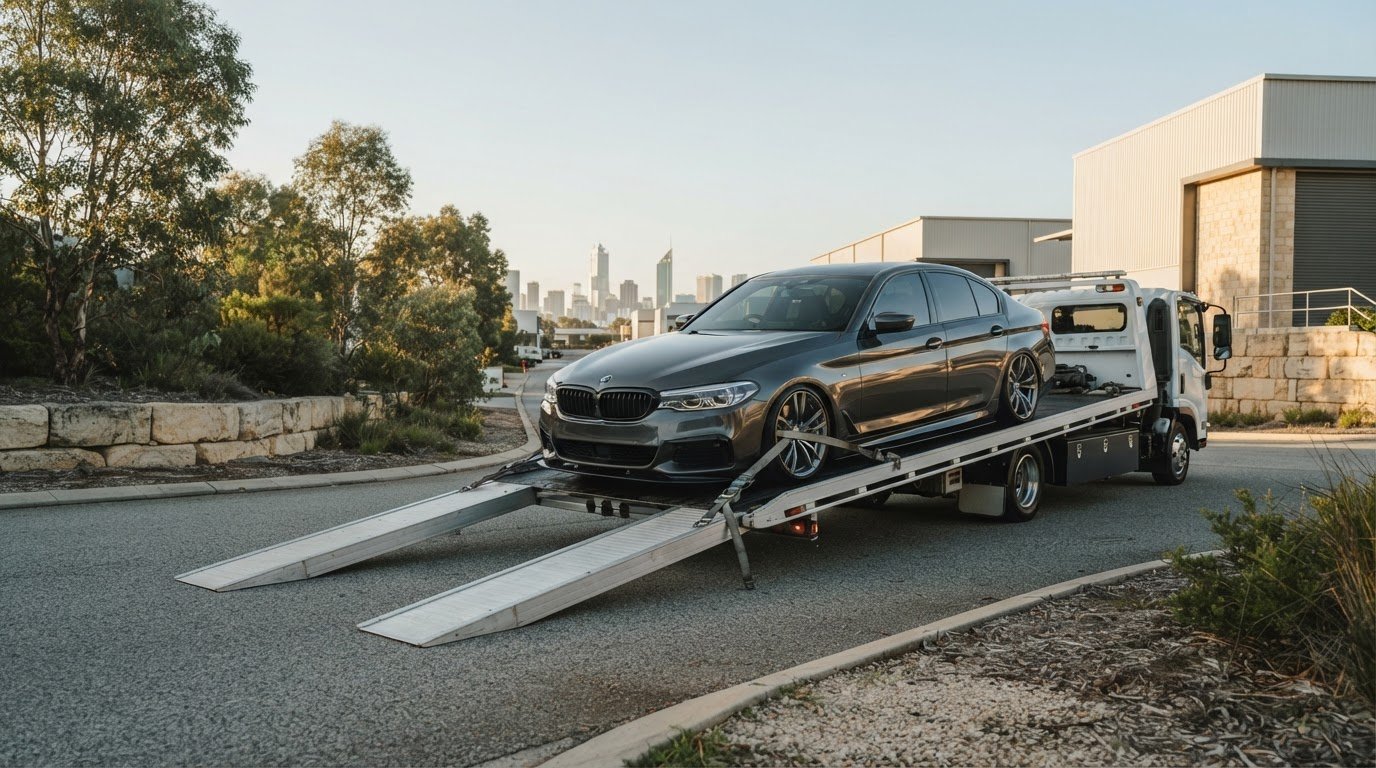
A tilt tray moves its platform into an inclined position so a vehicle can be guided onto it, then returns the tray to a level position for transport. This can offer a controlled loading method, but it doesn’t automatically make every lowered car suitable. The carrier needs to match the truck and loading approach to the individual vehicle.
Tray position, approach angle and vehicle dimensions all work together. A car’s wheelbase, front overhang and lowest bodywork can affect how it meets the ramp. If the front wheels climb while the front lip is still close to the ground, that lip may be at risk of contact. The carrier should assess the full loading path, not just the car’s suspension height.
Check clearance and vulnerable bodywork
The lowest point might be the front lip, a side skirt or an underbody component. Tell the operator about non-standard body kits, modified suspension and any known low points. Don’t rely on a clearance threshold quoted in a forum or by another carrier as a universal standard. Ask the operator what their proposed setup requires for your car.
Ask how the loading will work
Before confirming the booking, ask which truck and tray the operator proposes and how they’ve assessed the approach. If they suggest winch-controlled loading, ask how they’ll monitor the vehicle as it moves onto the tray and protect vulnerable bodywork. Also ask how they’ll apply load restraint, the method used to secure the car for transport.
- Will the proposed truck and tray suit the vehicle’s dimensions and weight?
- How will the operator reduce the chance of the front lip or underbody contacting the ramp?
- What will happen if access or the vehicle’s condition differs from the details provided?
Allout Towing’s tilt slide fleet includes 7-metre trays with 4.5-tonne capacity and a 10-metre tray with 10-tonne capacity. These specifications are useful to discuss, but they don’t confirm suitability for a particular lowered car. Ask for the vehicle and loading plan to be assessed before treating the arrangement as confirmed. When comparing operators, due diligence matters: OwnerDriver reported a national investigation concerning a warning about fraudulent vehicle movers.
For a vehicle-specific discussion, contact Allout Towing about tilt tray transport and confirm the proposed truck and loading method for your car.
Compare lowered car transport providers in Perth before you book
A low quote can look appealing, but it won’t tell you whether the operator has assessed your car or planned a suitable loading method. For lowered car transport Perth, compare what each carrier can confirm about your vehicle, route and pickup conditions. Requirements can affect the quote, so ask what it covers rather than comparing the total alone.
| What to compare | What to confirm |
|---|---|
| Vehicle assessment | Will the operator review your car’s make, model, modifications and photos before accepting the booking? |
| Equipment | Which truck and tray do they propose, and have they checked the vehicle’s dimensions and weight against the equipment? |
| Loading plan | How will the operator load the car while protecting low bodywork, then secure it for transport? |
| Insurance | What insurance coverage applies during transport, and can they provide the relevant terms in writing? |
| Quote clarity | Does the quote specify pickup, delivery and any access requirements or other stated conditions? |
Before accepting a booking, check that the provider has assessed your vehicle, the proposed truck and loading approach, applicable insurance terms, and the quote’s inclusions for the stated route and access.
Ask questions that test the plan
Ask whether the operator has transported vehicles with similar clearance or bodywork, then request a clear explanation of the truck and loading approach proposed for yours. Be ready to provide the make, model, modifications, known low points and photos from useful angles. If a provider can’t assess the details you share, ask what else they need before giving a firm quote or confirming acceptance.
Check insurance and quote terms
Don’t assume a general statement that a service is insured explains what applies to your car. Ask for the transport insurance terms in writing, including any relevant limits, conditions or exclusions, and keep the response with your booking details. Check that the quote reflects the agreed pickup and delivery locations, access information and transport requirements. If the vehicle is modified, you can also review the WA Department of Transport’s vehicle modification standards in Western Australia. Road compliance and safe loading are separate questions, so confirm both as needed.
For related considerations around specialist vehicle moves, read this guide to prestige vehicle transport in Perth. A careful comparison gives you a clearer basis for choosing a carrier than a low quote alone.
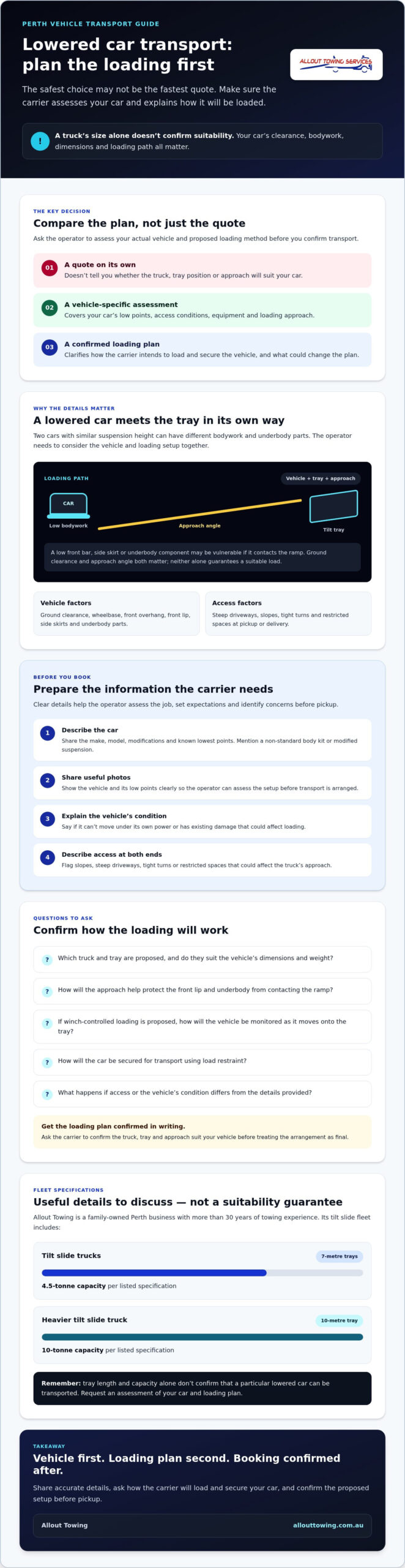
Prepare your lowered car for transport: a Perth booking checklist
Accurate details help the carrier assess your car before pickup and identify issues early. Use this checklist to help the carrier assess whether the truck and loading plan suit your car. It’s especially useful when arranging lowered car transport Perth for a modified vehicle.
- Describe the vehicle clearly. Give the make, model and known details about its current condition. Explain suspension changes, non-standard body kits, side skirts or other modifications, and identify the lowest points you know about.
- Take useful photos. Send clear views of the front, side and low bodywork. Photograph the underbody only if you can do so safely and practically; don’t crawl under a vehicle that isn’t safely supported. Include tight driveways, steep approaches or restricted access at pickup or delivery.
- Ask what else the carrier needs. Check whether extra measurements or images would help assess your vehicle and the proposed loading method. Don’t guess or leave out details you’re unsure about. Explain what you know and ask the operator how to provide any further information.
- Don’t change the car’s setup yourself. Don’t raise the suspension or alter the vehicle to make loading easier without qualified advice and confirmation from the carrier. A change may affect the car or still fail to resolve the loading concern.
- Confirm both locations and the plan. Check the pickup point, destination access, agreed timing and loading approach with the operator. Tell the contact person about any clearance concerns so they can explain them to the driver.
- Get the booking details in writing. Ask for confirmation of the agreed vehicle details, truck and loading plan, route, timing and quote. Keep the messages or email so you can refer to what the carrier has assessed and agreed.
- Record the car’s condition before handover. Take photos of the vehicle before it’s collected, including any existing marks or damage. Keep these with your booking communications.
These steps make your enquiry more useful for both you and the carrier, particularly if you’re arranging transport for a modified car you can’t easily inspect underneath. To discuss your vehicle details and loading requirements, contact Allout Towing about tilt tray transport and ask for an assessment before confirming the booking.
Arrange lowered car transport in Perth with Allout Towing
Allout Towing is a family-owned Perth operator with more than 30 years of towing industry experience. The business offers tilt tray transport and prestige vehicle transport. If you’re considering lowered car transport Perth, the team needs to assess your particular vehicle and loading requirements before confirming whether a suitable truck and loading plan are available.
The fleet includes two tilt slide trucks with 7-metre trays and 4.5-tonne capacity, plus a heavier tilt slide truck with a 10-metre tray and 10-tonne capacity. These specifications are useful details to discuss, not a guarantee that a truck will fit your car or suit its clearance. Ask the team to assess the vehicle and confirm the proposed equipment and loading approach before booking.
What to share when you contact Allout Towing
Give the team enough information to understand the vehicle and both ends of the trip. Have these details ready:
- Make and model, pickup suburb and destination.
- Known modifications, including suspension changes or a non-standard body kit.
- Low bodywork, such as a front lip or side skirts, and any existing damage.
- Pickup or delivery access concerns, such as a steep driveway or restricted space.
- Your preferred transport timing.
Include clear photos if you have them. Then ask the team to confirm which truck and loading plan they propose for your car. Sharing accurate details early helps the operator assess suitability and identify questions before the booking is finalised.
Confirm the plan, then arrange transport
Before agreeing to the booking, ask for confirmation of the vehicle’s suitability, the proposed loading plan, what the quote includes and which insurance terms apply. If any part of the plan is unclear, ask the team to explain it in plain language. Written confirmation gives you a clear record of what has been assessed and agreed.
If your vehicle also needs urgent recovery, see Allout Towing’s 24-hour towing and vehicle recovery in Perth. Otherwise, call 0418 959 216 or enquire online with your car’s details and photos. Ask for a vehicle-specific assessment before confirming transport.
Confirm your transport plan with confidence
Safe lowered car transport Perth starts with a vehicle-specific assessment, not a guess based on suspension height alone. Share your car’s details and clear photos, then ask the carrier to confirm the truck, loading approach and quote before you book. Tray length and capacity are useful details, but they don’t prove that a particular vehicle will load safely.
Allout Towing is a family-owned Perth towing business with more than 30 years of industry experience. Its tilt slide fleet includes 7-metre trays with 4.5-tonne capacity and a 10-metre tray with 10-tonne capacity. These specifications can inform an assessment, but the team needs to confirm suitability for your car. Ask which insurance cover applies to your booking and request the terms.
Have your vehicle details and photos ready? Call 0418 959 216 or enquire online about your lowered car transport. Contact Allout Towing to discuss your vehicle and request an assessment before booking.
Frequently Asked Questions
Can a tilt tray transport a lowered car in Perth?
A tilt tray can transport some lowered cars in Perth, but the carrier must assess the specific vehicle and loading setup first. The tray tilts to form an inclined platform, allowing the car to be loaded onto it. Suitability depends on details such as the lowest bodywork, vehicle dimensions, tray position and approach angle. Ask the operator to confirm the proposed truck and loading method before finalising the booking.
How low is too low for car transport?
There isn’t one clearance figure that determines whether every lowered car can be transported safely. A front lip, side skirt or underbody part may be the lowest point, and the car’s approach to the tray ramp also matters. Ask the carrier what measurements or photos they need to assess your vehicle. Don’t rely on a clearance number from a forum or another booking as a universal carrier requirement.
What details should I give a carrier when booking lowered car transport?
Share the make and model, pickup and destination locations, suspension changes, body kit details and any known low points. Mention existing damage and describe access issues such as steep driveways or tight spaces. For lowered car transport Perth, clear photos of the front, side and low bodywork can help the operator assess the loading plan. Ask whether they need extra measurements or images before confirming the quote and booking.
Can a carrier refuse to transport my lowered car?
Yes. A carrier may decline the job if they can’t confirm a suitable truck and safe loading plan for your vehicle or the pickup conditions. This can be frustrating, especially if you expected the booking to be settled, so disclose modifications and clearance concerns before arranging transport. Ask the operator to assess the details and confirm acceptance before pickup. If the plan changes, get the revised arrangement confirmed before proceeding.
How do I reduce the risk of scraping a lowered car during loading?
Give the carrier accurate details about the car’s lowest points, modifications and existing damage, and send clear photos where practical. Describe slopes, tight turns or access restrictions at both locations. Ask how the operator will position the tray and load the vehicle, and confirm the plan before booking. Don’t raise the suspension or alter the car without qualified advice and confirmation that the change suits the transport plan.
How much does lowered car transport in Perth cost?
The cost depends on the vehicle, route and confirmed transport requirements, so there isn’t a single price that applies to every lowered car. Share the car’s details, pickup and delivery locations, access conditions and photos when requesting a quote. Ask the carrier to state what the quote includes, including pickup, delivery and any agreed requirements. Confirm the truck and loading plan as well, so you’re comparing like-for-like arrangements.
What if my lowered car is being transported between Perth and another state?
Before booking an interstate move, confirm that the carrier handles your route and can assess the car’s loading requirements at pickup. Provide the same vehicle details and photos you would for a Perth move, then ask who will manage loading, delivery and any handover between transport providers. Confirm the route, timing, quote inclusions and insurance terms in writing. Check directly with the operator that they can arrange transport for your specific journey.