Your motorhome has broken down beside a busy Perth road. First, get everyone to a safer place. Then work out who can move the vehicle without causing further damage. Motorhome breakdown recovery Perth starts with a safe scene and a recovery vehicle suited to your motorhome.
It’s understandable to worry that a standard tow truck may not be suitable, or that missing details could cause delays or unexpected charges. If it’s safe, move passengers away from traffic. When arranging help, share your location, the motorhome’s approximate dimensions and weight, access conditions, and what has happened.
This guide covers passenger safety while you wait, the details that help a towing team assess the job, and questions to ask about equipment and costs before dispatch. Allout Towing provides motorhome towing in Perth and has tilt slide trucks with different tray lengths and weight capacities. The right option depends on your motorhome and the recovery conditions, so confirm suitability before a truck is sent.
Key Takeaways
- If your motorhome breaks down, focus first on passenger safety and contact assistance once you’re in a safe position.
- For motorhome breakdown recovery Perth, give the operator clear information about the breakdown, your location and where the motorhome needs to go.
- Before agreeing to dispatch, check that the provider has assessed the vehicle and access conditions and confirmed the proposed recovery method.
- While waiting, keep your phone available, follow the operator’s updates and don’t attempt repairs or move the motorhome into an unsafe spot.
- Read on to see how Allout Towing assesses motorhome recovery needs and when tilt slide equipment may be suitable.
Motorhome Breakdown in Perth: What to Do First
A motorhome breakdown can be unsettling, especially with passengers on board and traffic nearby. Take it one step at a time: make the scene as safe as possible, then arrange help and explain what the recovery team needs to know. For motorhome breakdown recovery Perth drivers can make the process clearer by sharing accurate details from the outset.
If anyone is injured or in immediate danger, call 000. Follow the emergency operator’s instructions. Don’t put yourself at risk by trying to reach the vehicle or help someone in an unsafe location.
How do you keep passengers safe beside the road?
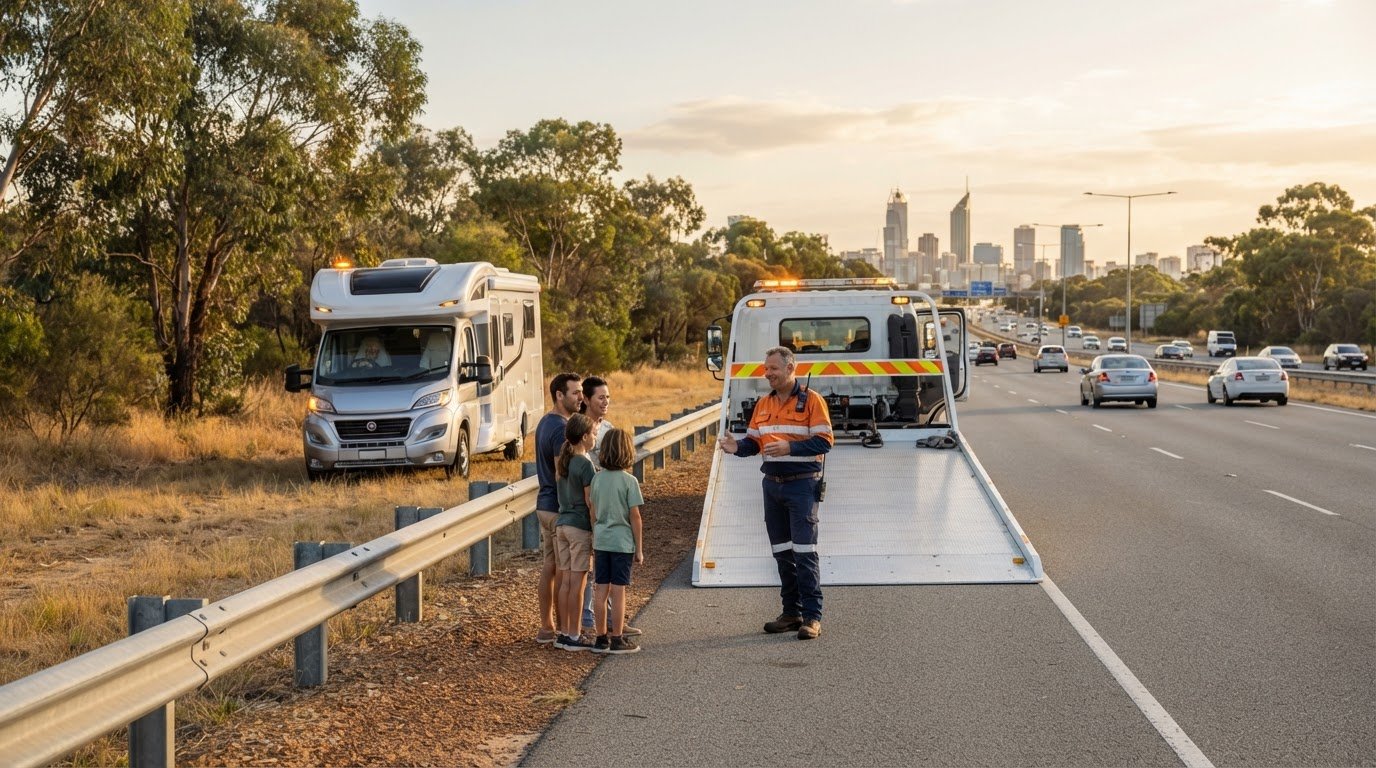
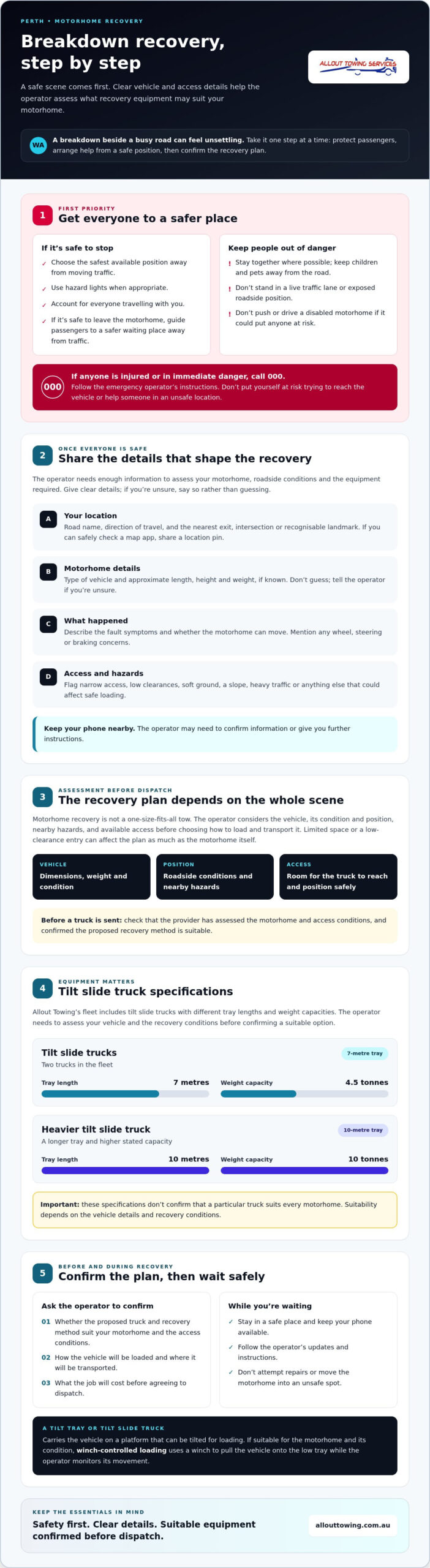
If you can stop safely, choose the safest available position away from moving traffic. Switch on the hazard lights when appropriate. Before anyone gets out, consider the traffic around you and whether there’s a safer place for passengers to wait. Don’t stand in a live traffic lane or another exposed roadside position.
- Check that passengers are safe and account for everyone travelling with you.
- If it’s safe to leave the motorhome, guide passengers away from traffic to a safer waiting place.
- Stay together where possible, and keep children and pets away from the road.
- If the situation worsens, call 000 and follow the emergency operator’s directions.
Don’t try to push or drive a disabled motorhome to another position if doing so could put anyone in danger. Wait for recovery advice from a safe location.
What details should you give when calling for recovery?
Once everyone is safe, call a suitable recovery provider and describe the situation plainly. The operator needs enough information to assess the motorhome, roadside conditions and equipment required. Towing methods and truck types vary, as outlined in this general overview of Towing services.
Be ready to provide:
- Your location: Give the road name, direction of travel and nearest exit, intersection or recognisable landmark. If you can safely check a map app, share a location pin.
- Motorhome details: Say whether it’s a motorhome, campervan or another type, and provide its approximate length, height and weight if known. Don’t guess. Tell the operator if you’re unsure.
- What happened: Describe the fault symptoms and say whether the motorhome can move, or if there are wheel, steering or braking concerns.
- Access and hazards: Mention narrow access, low clearances, soft ground, a slope, heavy traffic or anything else that could affect safe loading.
These details help the operator assess the recovery before dispatch and explain what may happen next. Keep your phone nearby in case they need to confirm information or give you further instructions.
How motorhome breakdown recovery works in Perth
Motorhome recovery starts with an assessment, not a one-size-fits-all tow. The operator considers the vehicle, its condition and position, nearby hazards, and available access before choosing how to load and transport it. On a Perth road, limited space or a low-clearance entry can affect the plan as much as the motorhome itself.
The recovery equipment must suit the motorhome’s dimensions, weight and condition, as well as access and safety conditions at the scene. The details you provide help the operator decide what equipment may be suitable before dispatch. For guidance about breakdown procedures on Perth roads, see Main Roads Western Australia’s official breakdown procedures in Perth.
Why do motorhome dimensions and weight matter?
A motorhome may be longer, taller or heavier than a standard vehicle—particularly if fitted with touring gear or camping setups featured on outdoor exploration hubs like Adventurerz—so don’t assume any tow truck can carry it. Give the operator its approximate length, height and weight if you know them. If you don’t, say so rather than guessing. The operator needs to check the tray’s capacity and whether the truck can safely reach and position at the breakdown site.
Allout Towing’s fleet includes tilt slide trucks with seven-metre trays and 4.5-tonne capacities, plus a heavier tilt slide truck with a ten-metre tray and a ten-tonne capacity. These figures don’t confirm that a particular truck suits every motorhome. The operator needs to assess the vehicle details and recovery conditions before confirming a suitable option.
What happens during loading and transport?
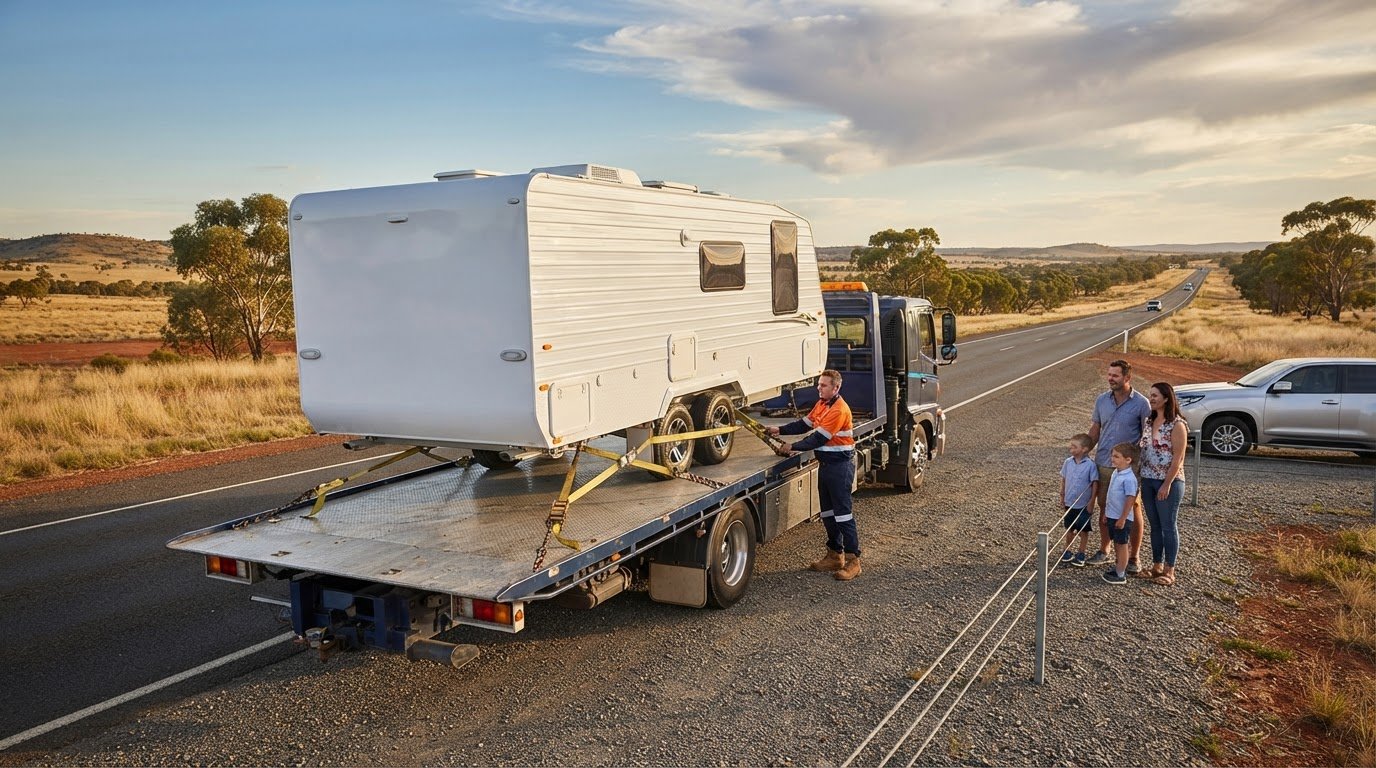
After assessing the scene and vehicle, the operator can explain the proposed loading method and confirm the destination. A tilt tray or tilt slide truck carries the vehicle on a platform that can be tilted for loading. If suitable for the motorhome and its condition, winch‑controlled loading uses a winch to pull the vehicle onto the low tray while the operator monitors its movement.
The operator then applies load restraint to secure the motorhome and prevent it shifting during transport. The method depends on the vehicle and situation. Careful handling is a process, not a guarantee that damage is impossible. Before loading begins, ask the operator to explain the plan and raise any concerns about the motorhome’s condition or destination.
If you need to discuss a suitable recovery approach, you can contact Allout Towing about its motorhome towing service.
Choosing motorhome breakdown recovery in Perth: what to check
It’s easier to choose a recovery provider when you know what to confirm before a truck is sent. For motorhome breakdown recovery Perth drivers should seek clear answers about vehicle suitability, the loading plan, insurance and charges. A provider should explain what they’ve assessed and what still needs checking, rather than treating a motorhome like a standard car.
Use this checklist during the call:
- Has the operator considered your motorhome’s type, approximate dimensions and weight?
- Have you described the breakdown location, access conditions and any damage or steering or wheel issues?
- Does the proposed truck have suitable tray capacity and enough space to reach and load the vehicle?
- What loading method do they propose, and how will they secure the motorhome for transport?
- What charges may apply to this job, and will the operator explain them before recovery begins?
- What arrival estimate can they give for your location, and what factors could affect it?
For more background on safe recreational vehicle transport, read the Perth recreational vehicle towing guide.
Questions to ask before the truck is sent
Ask whether the operator has assessed your motorhome’s size, weight and exact breakdown position. If available, share the manufacturer’s specifications or a photo showing the vehicle and access route, but take photos only from a safe place. Check whether the operator needs anything else to decide which equipment may suit the job. Confirm the destination as well, so it can be factored into the recovery plan.
Charges can depend on the vehicle, distance, access and work involved. Ask which fees apply and how the total will be explained before you agree to proceed. If a verbal estimate is unclear, ask what it covers and whether any circumstances could change it.
How to assess safety and reliability
A reliable operator should explain the proposed recovery in plain language and answer reasonable questions about the truck, loading method and securement. Ask about relevant licensing and insurance coverage, including what protection applies while the motorhome is being transported. You can also ask what happens if the operator finds that the original plan or truck isn’t suitable on arrival.
Be clear about timing. Ask whether an arrival estimate is specific to your location and current conditions, and treat it as an estimate unless the provider confirms otherwise. Don’t assume a general response-time claim applies to motorhome recovery. A clear conversation before dispatch can help you understand the plan, costs and next steps while you wait.
What to Do While Waiting for Motorhome Recovery
Once recovery is arranged, stay somewhere safe and keep communication open. Waiting can be stressful, but you can use the time to prepare useful details without putting yourself or your passengers at risk. If your position becomes unsafe or conditions change, contact emergency services if needed and update the recovery operator as soon as it’s safe.
A practical checklist for the waiting period
- Keep the operator’s number handy, and answer calls about your location, access or the recovery plan.
- Gather the motorhome keys, relevant vehicle documents and destination instructions only if you can do so safely.
- Tell the operator promptly if the motorhome’s position, traffic conditions or access route changes.
- Keep passengers in a safe waiting place. Don’t stand near traffic or return to the motorhome if doing so puts anyone at risk.
Don’t attempt roadside repairs or try to move a disabled motorhome into a less safe position. If the situation changes, update the operator rather than trying to manage the vehicle yourself. For broader emergency towing information, see this 24-hour towing Perth guide.
Can roadside assistance fix a motorhome breakdown?
Roadside assistance can help with minor issues such as jump-starts or tyre changes. If a flat battery seems likely, ask whether a jump-start may be appropriate for your motorhome. If it can’t be moved safely or needs transport, the operator will need to assess the vehicle and recovery conditions. Read more about battery help in the Perth car jump-start service guide.
While arranging motorhome breakdown recovery Perth, have your keys and destination details ready, but don’t leave passengers exposed to retrieve them. If you need motorhome towing, contact Allout Towing about recovery options.
Arranging motorhome breakdown recovery with Allout Towing
Allout Towing lists motorhome towing across Perth and Western Australia. If you’re stranded, clear information about your motorhome and its position helps the team assess what recovery may be suitable. The fleet includes two tilt slide trucks with seven-metre trays and 4.5-tonne capacities, plus a heavier tilt slide truck with a ten-metre tray and a ten-tonne capacity. These specifications don’t guarantee that a particular truck suits every motorhome. The team needs to check your vehicle and the recovery conditions first.
How to request a motorhome recovery assessment
Call Allout Towing and explain what has happened. Share:
- Your precise location, direction of travel and a nearby landmark.
- The motorhome’s type, approximate dimensions and weight, if known.
- Its condition, including whether it can move and any wheel or steering concerns.
- Access restrictions, such as a narrow approach, low clearance or limited space to load.
- Your intended destination and any passenger safety concerns.
If you’re unsure of a measurement, say so rather than guessing. Ask whether the operator needs photographs or other details to assess the vehicle and access. Before agreeing to dispatch, confirm the proposed equipment, recovery method, destination and applicable charges. This gives you a clearer understanding of the plan before the truck is sent.
What Allout Towing can confirm before dispatch
With the information you provide, the team can assess whether available tilt slide equipment may suit the motorhome and the conditions at the breakdown location. That assessment should consider the vehicle’s weight and dimensions, tray capacity, loading approach and access. A truck’s stated capacity is only one part of the decision; it doesn’t confirm suitability on its own.
Before a recovery truck is allocated, provide your location, motorhome type, known dimensions and weight, vehicle condition, access restrictions, destination and any passenger safety concerns. Then ask the operator to confirm the proposed equipment and applicable charges. If anything changes while you’re waiting, share the update so the team can reassess the plan.
For motorhome breakdown recovery Perth drivers can discuss their situation directly with the team. Contact Allout Towing for motorhome recovery assistance and share the details needed to assess the job.
Make a clear plan for your motorhome recovery
A breakdown is stressful, but a few practical steps can help you stay in control: move passengers to safety, give the operator accurate details, and confirm the recovery plan, equipment and applicable charges before dispatch. The right truck depends on your motorhome’s size, weight, condition and access at the scene, so don’t assume a particular vehicle will suit without an assessment.
Allout Towing lists motorhome towing across Perth and Western Australia and has more than 30 years of towing industry experience. Its fleet includes tilt slide trucks with seven-metre trays and 4.5-tonne capacities, as well as a heavier truck with a ten-metre tray and a ten-tonne capacity. The team needs to confirm which equipment, if any, suits your motorhome and the recovery conditions.
If you need motorhome breakdown recovery Perth, share your location, vehicle details, access conditions and destination so the team can assess the job. Contact Allout Towing to discuss motorhome recovery.
Frequently Asked Questions
What should I do if my motorhome breaks down in Perth?
Move yourself and your passengers away from traffic if it’s safe, and switch on the hazard lights when appropriate. If anyone is injured or in immediate danger, call 000. Share your exact location with a recovery operator, including your direction of travel and a nearby landmark. Explain the motorhome type, any known dimensions and weight, what has stopped working, and whether access is restricted.
Can a tilt tray tow a motorhome?
A tilt tray or tilt slide may suit some motorhomes, but the operator needs to assess the vehicle and recovery conditions first. Tray length and weight capacity matter, as do the motorhome’s dimensions, condition and access at the breakdown site. Give the recovery provider accurate details before dispatch, then ask them to confirm that the proposed equipment is suitable for your specific motorhome.
How long does motorhome breakdown recovery take in Perth?
Arrival time depends on your location, traffic, time of day, truck availability and recovery requirements. A general estimate isn’t a guaranteed arrival time, so ask the operator for an estimate based on your circumstances. Keep your phone available in case the driver needs directions or more details about the motorhome or access. If your location or roadside conditions change, update the operator when it’s safe.
What information do I need to give a motorhome recovery service?
Give the operator your precise location, direction of travel and a nearby landmark, along with the motorhome type and any known dimensions or weight. Explain what happened and whether the vehicle can move, or if its wheels or steering are affected. Describe access restrictions and any immediate safety concerns. Share your intended destination too, so the operator can assess the recovery and suitable equipment.
Can roadside assistance recover a motorhome that will not start?
Roadside assistance may help with a minor issue, such as a jump-start or tyre change, depending on the fault and service available. If the motorhome can’t be made safe to drive, ask for a recovery assessment and describe the problem clearly. Don’t assume a roadside assistance vehicle can transport your motorhome. Confirm the service and equipment with the provider before dispatch.
How much does motorhome breakdown recovery cost in Perth?
The charge depends on factors such as recovery distance, the motorhome’s size and weight, access conditions, equipment and work required. No motorhome-specific price is provided here, so a generic figure may not reflect your job. Describe the situation when requesting help and ask the provider to explain applicable charges before you agree to the recovery. Check what the quoted amount covers and whether any circumstances could change it.
Can Allout Towing recover a large motorhome?
Allout Towing lists motorhome towing and operates tilt slide trucks with different tray lengths and stated weight capacities. Those specifications alone can’t confirm whether a particular large motorhome is suitable for recovery. Share its dimensions and weight, location, condition and access details so the team can assess the job. Ask the operator to confirm whether available equipment suits your specific vehicle and recovery conditions before dispatch.