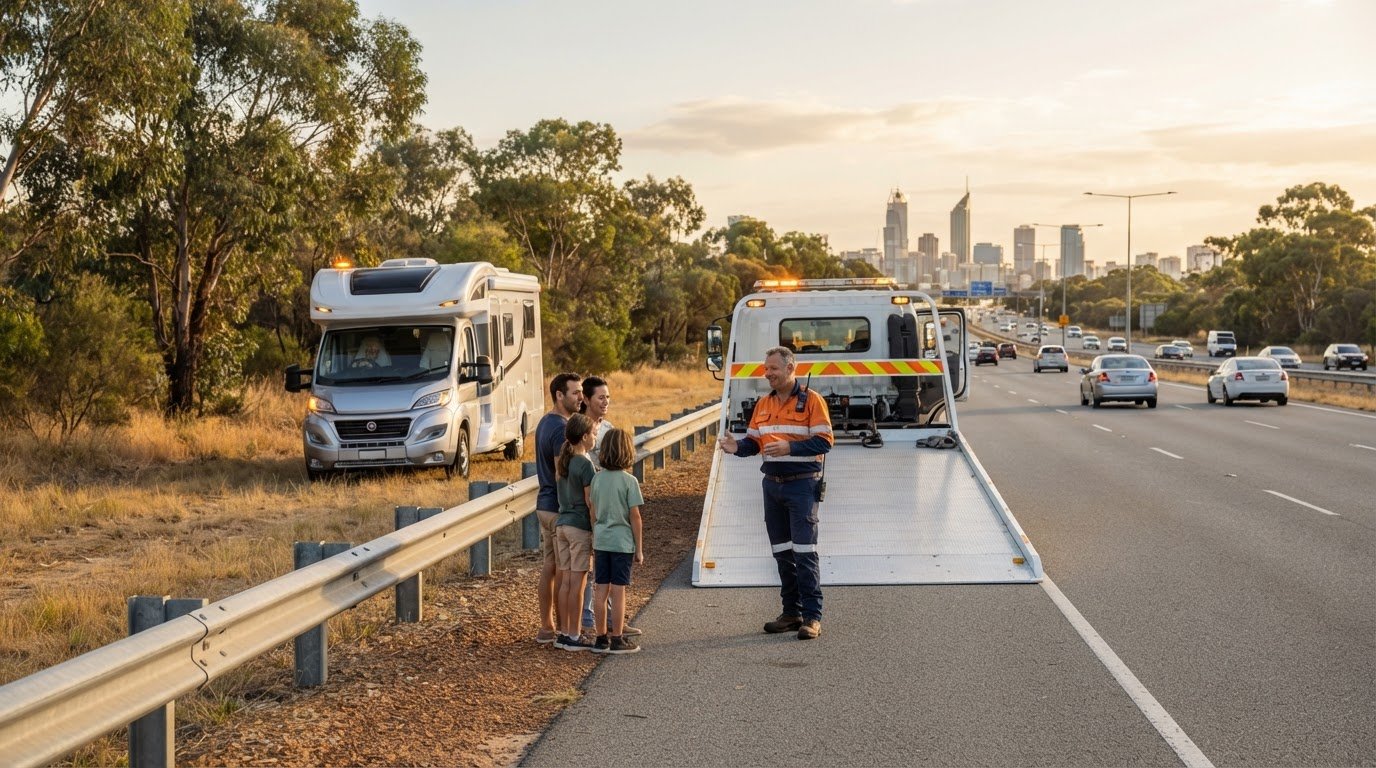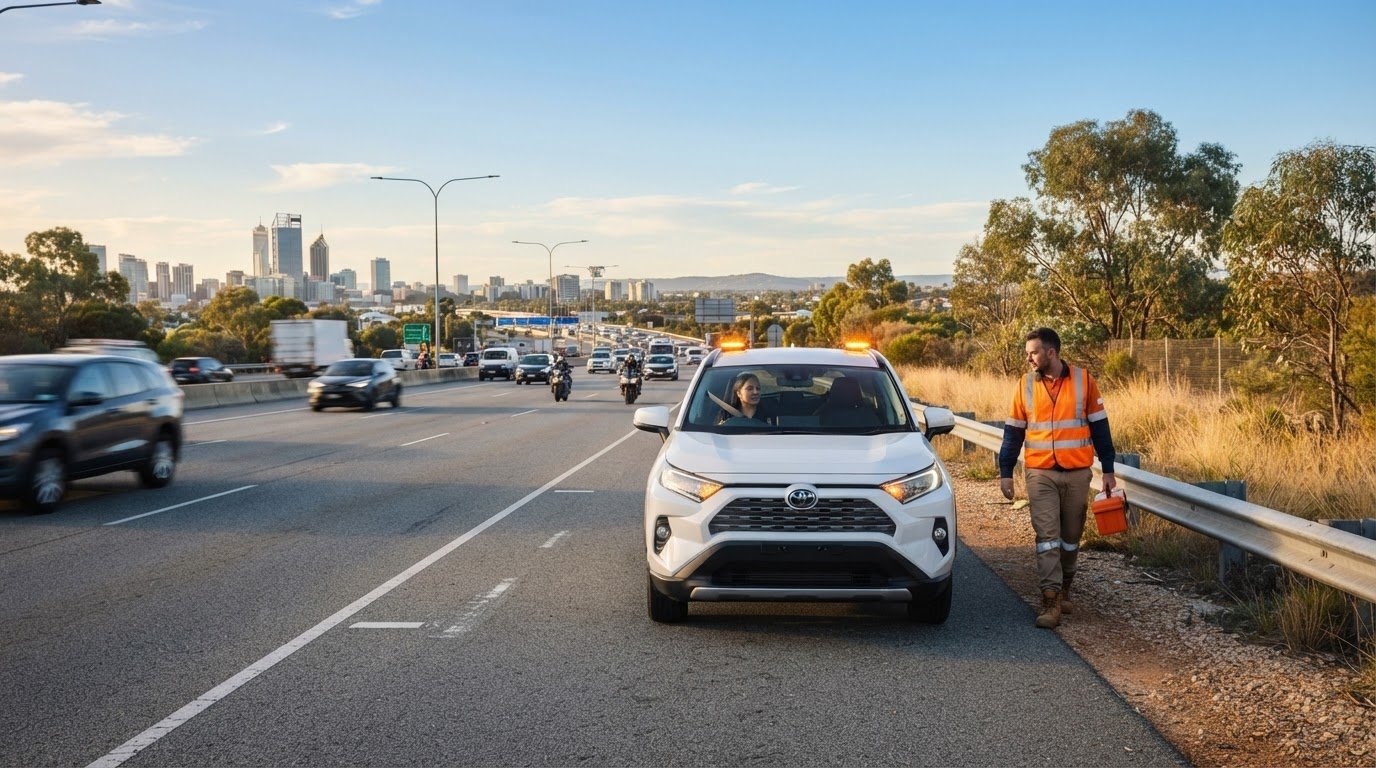
What should you do first when your car stops on one of Perth’s busiest freeways? If your car broke down on Kwinana Freeway, the next few minutes can feel frightening, especially with traffic passing close by. Put your safety before arranging a tow.
You may be unsure whether to stay in the vehicle or get out, or how to describe your location. If you can safely move to an emergency lane or stopping bay, do so. If you can’t, remain inside with your seatbelt fastened and hazard lights on. Leave the vehicle only when it’s clearly safe, then move well away from traffic. Call 000 if anyone is in immediate danger. For freeway assistance, contact Main Roads WA on 138 138.
This guide covers roadside safety, the details to share when asking for help, and how to arrange towing if your car can’t safely continue. Allout Towing provides 24-hour car and truck towing across Perth and Western Australia, including breakdown towing and tilt tray transport. The steps below can help you choose suitable assistance and prepare for recovery.
Key Takeaways
- If your car broke down on Kwinana Freeway, prioritise safety and follow current WA authority guidance before arranging recovery.
- Share your direction of travel, nearest landmark or exit, vehicle type and symptoms to help others locate you and understand what assistance may be needed.
- A jump-start or tyre change may suit a minor issue, but only if the work can happen safely. Arrange towing if it isn’t safe to keep driving.
- While waiting, follow instructions for your location. Don’t stand near moving traffic or try to stop passing vehicles.
- If your car can’t continue, Allout Towing provides 24-hour car and breakdown towing across Perth and Western Australia, with tilt tray transport available.
Car broken down on the Kwinana Freeway: make safety your first priority
A freeway breakdown can feel frightening and disorienting. If your car broke down on Kwinana Freeway, focus on controlling the vehicle and protecting everyone inside before thinking about the fault or arranging a tow. Traffic moves quickly, and hazard lights or a warning triangle cannot make an unsafe stopping place safe.
The Kwinana Freeway runs through Perth, but the safest next step depends on exactly where your vehicle has stopped. Follow current WA authority advice for the conditions and your location.
What to do in the first few minutes
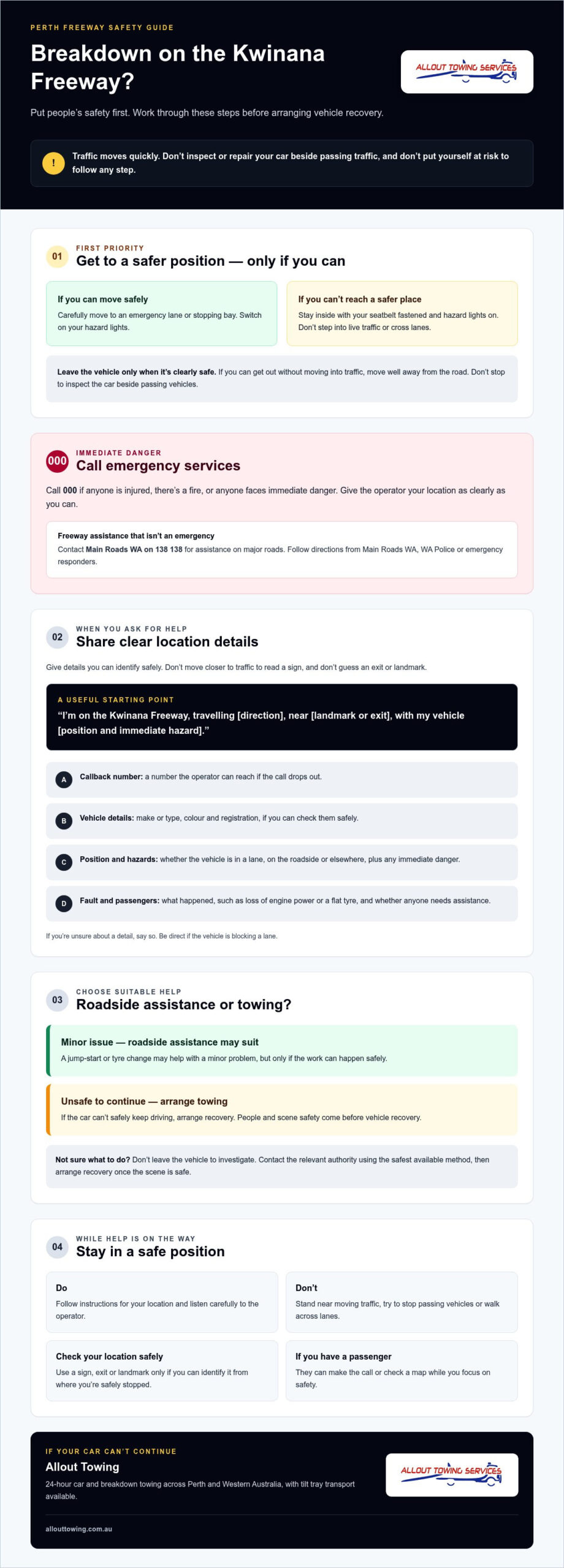
Take these steps in order, but don’t put yourself at risk to complete them:
- Stay in control. Slow down carefully and stop only where it’s safe. If you can safely reach an emergency lane or stopping bay, move the vehicle there.
- Switch on your hazard lights. They warn other drivers that your vehicle has a problem, but they don’t guarantee that passing traffic will see you or be able to avoid you.
- If you can’t reach a safer place, stay inside. Keep your seatbelt fastened and hazard lights on. Don’t step into live traffic or walk across lanes to reach the roadside.
- Leave only if it’s clearly safe. If you can get out without moving into traffic, move well away from the road. Don’t inspect the vehicle or attempt repairs beside passing traffic.
Don’t try to flag down passing drivers. Wait for help from a safe position and follow instructions for your exact location.
People and scene safety come before vehicle recovery.
When to call emergency services
Call 000 if anyone is injured, there’s a fire, or you face immediate danger. Tell the operator what has happened and give your location as clearly as you can. A tow operator can recover a vehicle, but they don’t replace emergency responders or manage a life-threatening incident.
For freeway assistance that isn’t an emergency, contact Main Roads WA on 138 138. Its operators can provide help with incidents on major roads. Follow directions from Main Roads WA, WA Police or emergency responders, as advice may depend on the incident and where your vehicle has stopped.
If you’re unsure what to do, don’t leave the vehicle to investigate. Contact the relevant authority using the safest available method, then arrange recovery once the scene is safe.
How to report your location on the Kwinana Freeway
Clear location details help emergency responders or a recovery operator understand where you’re stopped and what assistance may be needed. If your car broke down on Kwinana Freeway, don’t guess an exit or landmark. Share only details you can identify safely, and don’t move closer to traffic to read a sign.
Tell the operator: “I’m on the Kwinana Freeway, travelling [direction], near [landmark or exit], with my vehicle [position and immediate hazard].” This gives them a useful starting point. If you’re uncertain about a detail, say so rather than risk giving misleading information.
What information should you give the operator?
After giving your location, share details that help the operator understand the situation and plan an appropriate response:
- Callback number: Give a number where the operator can reach you if the call drops out.
- Vehicle details: Share the make or type, colour and registration if you can check them safely.
- Position and hazards: Explain whether the vehicle is in a lane, on the roadside or elsewhere, and mention any immediate danger.
- Fault and passengers: Describe what happened, such as the engine losing power or a flat tyre, without trying to diagnose the cause. Say whether anyone is travelling with you or needs assistance.
Be direct about whether the vehicle is blocking a lane. That information helps the operator understand the urgency and conditions they may face on arrival.
How to share location details safely
Use a visible sign, exit or landmark only if you can identify it from where you’re safely stopped. Check a navigation app only when the vehicle is in a safe position and you can do so without distraction. If you have a passenger, ask them to make the call or check the map while you focus on safety.
Keep the call concise, listen carefully and follow the operator’s instructions for your location. For general Australian road-safety guidance on how to stay visible and prepared, consult the Australian Government’s travel safety information. If you need recovery after sharing your location, learn more about breakdown towing assistance.
Roadside assistance or towing: what help does your broken-down car need?
The right help depends on both the fault and where the vehicle has stopped. A jump-start or tyre change may suit a minor issue, but it isn’t a safe option if someone would need to work beside live traffic. If your car broke down on Kwinana Freeway, tell the operator what’s happening and where the vehicle is, then discuss the safest response.
Roadside assistance covers help with minor breakdowns, such as jump-starts or tyre changes. Discuss a tow if the vehicle can’t move safely or remains unsafe to drive.
| Type of help | May suit | Safety check |
|---|---|---|
| Roadside assistance | A minor issue that may be addressed with a jump-start or tyre change. | Only if the vehicle is in a safe place for the work to happen. |
| Towing | A vehicle that can’t move safely or shouldn’t continue on the road. | Tell the operator where it has stopped and ask what recovery equipment is suitable. |
When roadside assistance may be enough
A jump-start or tyre change may be suitable for some breakdowns if there’s a safe work area away from moving traffic. Don’t assume a simple fix is safe just because the fault seems minor. If the vehicle is in an exposed or dangerous position, tell the operator before anyone attempts work.
Describe what you noticed, such as the engine failing to start, a warning light appearing or a tyre losing pressure. You don’t need to identify the mechanical cause. Clear symptoms help the provider understand the situation without relying on a guess or risking an unsuitable response.
When to arrange a tow truck
Discuss a tow if the car won’t move safely, has a fault that makes driving unsafe, or can’t be attended to safely where it has stopped. A tilt tray may suit some vehicles and recovery situations, but the operator needs to confirm the right truck and method for your vehicle and its position.
Before agreeing to recovery, ask who is attending and what equipment they plan to use. Allout Towing provides breakdown towing and tilt tray transport. Towing moves the vehicle to an agreed destination; it doesn’t mean a mechanic will repair it at the roadside.
While waiting for help on the Kwinana Freeway, stay visible and prepared
Waiting beside a freeway can be unsettling, especially with passengers on board. Follow current WA authority guidance and instructions from the operator who knows your location. Don’t stand near moving traffic or try to flag down passing vehicles. Whether you stay in the car or move away depends on the situation, so getting out is not a blanket rule. If you’re unsure, ask Main Roads WA or emergency responders for guidance.
If your car broke down on Kwinana Freeway, tell the operator if children, older passengers or anyone with mobility or other accessibility needs is with you. Keep passengers together where it’s safe, and explain if anyone needs urgent help. Prepare vehicle details and registration from a safe position; don’t go back towards traffic to check them.
A quick vehicle recovery checklist
Before assistance arrives, run through this vehicle recovery checklist without leaving a safe position:
- People: Are all passengers accounted for? Does anyone need urgent or accessibility assistance?
- Location: Can you restate your direction of travel and the nearest landmark or exit you identified safely?
- Vehicle: What make, type, colour and registration can you provide? What symptoms or visible damage have you noticed?
- Position: Is the car obstructing a lane, and are there immediate hazards the operator should know about?
- Recovery: What destination do you want the vehicle taken to?
What to confirm before recovery begins
Before the vehicle is loaded or moved, confirm the operator’s identity and intended destination. Point out visible damage and mention personal belongings that need attention, but don’t approach an unsafe area to inspect the car. Ask questions from a safe position and follow instructions from the operator or relevant authorities.
If a tow truck arrives that you didn’t contact, pause before agreeing to recovery. Ask who they are, which company they represent and where they propose to take the vehicle. If it’s safe, verify those details with the provider you contacted. You can choose the operator you want to arrange for your breakdown.
For recovery, find breakdown towing information from Allout Towing. Share your location, vehicle details and preferred destination so the operator can discuss suitable equipment and next steps.
Arrange reliable Kwinana Freeway breakdown towing with Allout Towing
If your car can’t safely continue, arrange recovery once you and your passengers are in a safer position. Allout Towing provides 24-hour car and breakdown towing across Perth and Western Australia. The team can discuss whether tilt tray transport suits your vehicle and the recovery situation.
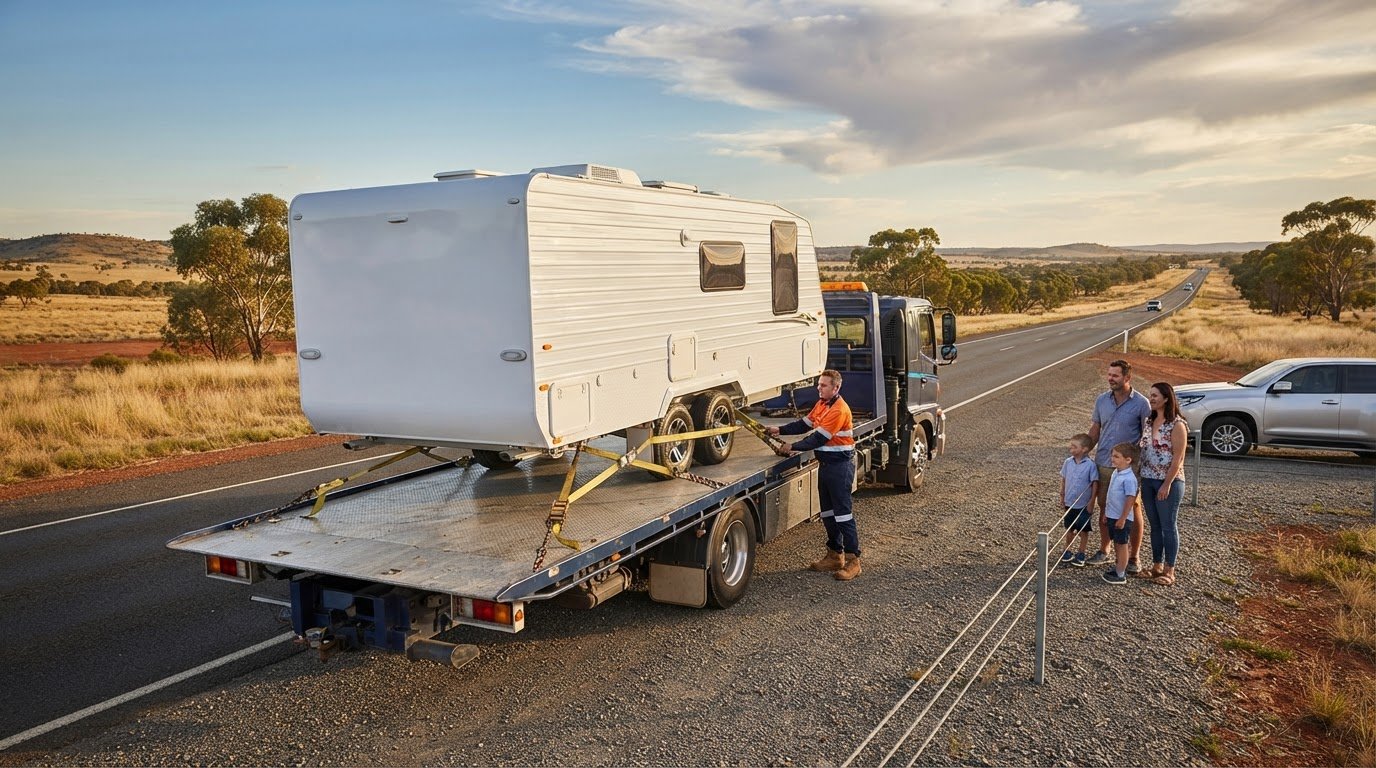
A tilt tray carries a vehicle on the back of a truck. It’s a transport option, not a roadside mechanical repair. The right truck and loading method depend on the vehicle and where it has stopped, so give the operator clear details when you call.
What to expect when you request towing
To help assess the job, share your direction of travel, nearest location clue, vehicle make or type, colour and registration if available. Describe what the car is doing rather than guessing the cause. Mention passengers who need assistance, the vehicle’s position and your preferred destination.
The operator can use this information to discuss suitable equipment and service details with you. Ask who will attend, what type of truck they plan to use and where they’ll take the vehicle. Arrival timing depends on your location and conditions, so ask the operator for an estimate rather than relying on a general promise.
Next steps after your car leaves the freeway
Keep the operator’s contact details and note the agreed destination. If you need to check whether your policy covers the tow or what steps to take next, contact your insurer or roadside assistance provider. They can explain your cover and any requirements that apply to your situation.
If your car broke down on Kwinana Freeway, having your location, vehicle details and destination ready can help you organise recovery. Confirm the service details before transport begins, and keep the handover information somewhere you can find it later.
For towing information, visit Allout Towing or call 0418 959 216.
Put safety first, then arrange the right recovery
If your car broke down on Kwinana Freeway, protect yourself and your passengers before dealing with the vehicle. Follow current WA authority guidance, share your direction of travel and nearest landmark you can identify safely, and describe the car’s position and symptoms clearly. A jump-start or tyre change may suit a minor issue only if the work can happen safely. If the vehicle can’t continue, discuss towing and suitable equipment.
Allout Towing provides 24-hour car and breakdown towing across Perth and Western Australia, with tilt tray transport available for suitable vehicles and recovery situations. Confirm the destination and service details before transport begins.
If you need to arrange a tow, call Allout Towing on 0418 959 216. Take things one step at a time: recovery is easier to organise once everyone is safe and the operator has clear information.
Frequently Asked Questions
What should I do if my car breaks down on the Kwinana Freeway?
If your car broke down on Kwinana Freeway, focus first on keeping everyone safe. If you can safely move the vehicle to an emergency lane or stopping bay, do so and switch on your hazard lights. If you can’t move it to a safer spot, stay inside with your seatbelt fastened and hazards on. Call 000 for injury, fire or immediate danger. For freeway assistance, contact Main Roads WA on 138 138.
Can I get out of my car if it breaks down on the Kwinana Freeway?
Only get out if you can do so clearly and safely without moving into traffic. If your vehicle can’t reach a safe stopping place, stay inside with your seatbelt fastened and hazard lights on. If it is safe to leave, move well away from the road. Don’t walk across lanes, inspect the car beside live traffic or try to flag down passing vehicles.
Who should I call if my car breaks down on the Kwinana Freeway?
Call 000 if anyone is injured, there’s a fire or you face immediate danger. For freeway assistance that isn’t an emergency, contact Main Roads WA on 138 138. If the car can’t continue and needs recovery, contact a towing operator and share your direction of travel, location clues, vehicle details and any hazards. A tow operator arranges vehicle recovery, but doesn’t replace emergency responders.
Can a tow truck collect my car from the Kwinana Freeway?
You can contact a towing operator to arrange recovery, but follow instructions from Main Roads WA, WA Police or emergency responders about your vehicle’s position. If a vehicle obstructs traffic on a major Perth metropolitan road, Main Roads WA may move it to a safer nearby location. You’ll then need to arrange your own tow from there. Confirm the collection point and destination with the operator.
How long will it take for a tow truck to reach me on the Kwinana Freeway?
There isn’t a set arrival time for every freeway breakdown. Timing depends on your location, traffic and the recovery circumstances, so ask the towing operator for an estimate when you call. Give clear details, including your direction of travel, nearest landmark or exit, vehicle type and whether it’s obstructing a lane. Allout Towing provides 24-hour car and breakdown towing across Perth and Western Australia, but doesn’t promise a specific arrival time.
Should I call roadside assistance or a towing company for a freeway breakdown?
Choose help based on the vehicle’s condition and whether it’s safe for anyone to work where you’ve stopped. Roadside assistance covers minor issues such as a jump-start or tyre change, but a roadside fix shouldn’t be attempted beside live traffic. Discuss towing if the car can’t move safely or remains unsafe to drive. Explain the symptoms and exact position so the provider can assess what help is suitable.
What information should I give a tow truck operator?
Give the operator your direction of travel, nearest landmark or exit, and the vehicle’s position. Share your callback number, vehicle make or type, colour and registration if you can check them safely. Describe symptoms without guessing at the cause, and mention visible damage, immediate hazards or whether the car is blocking a lane. Tell them if passengers need assistance and confirm your preferred destination before transport begins.