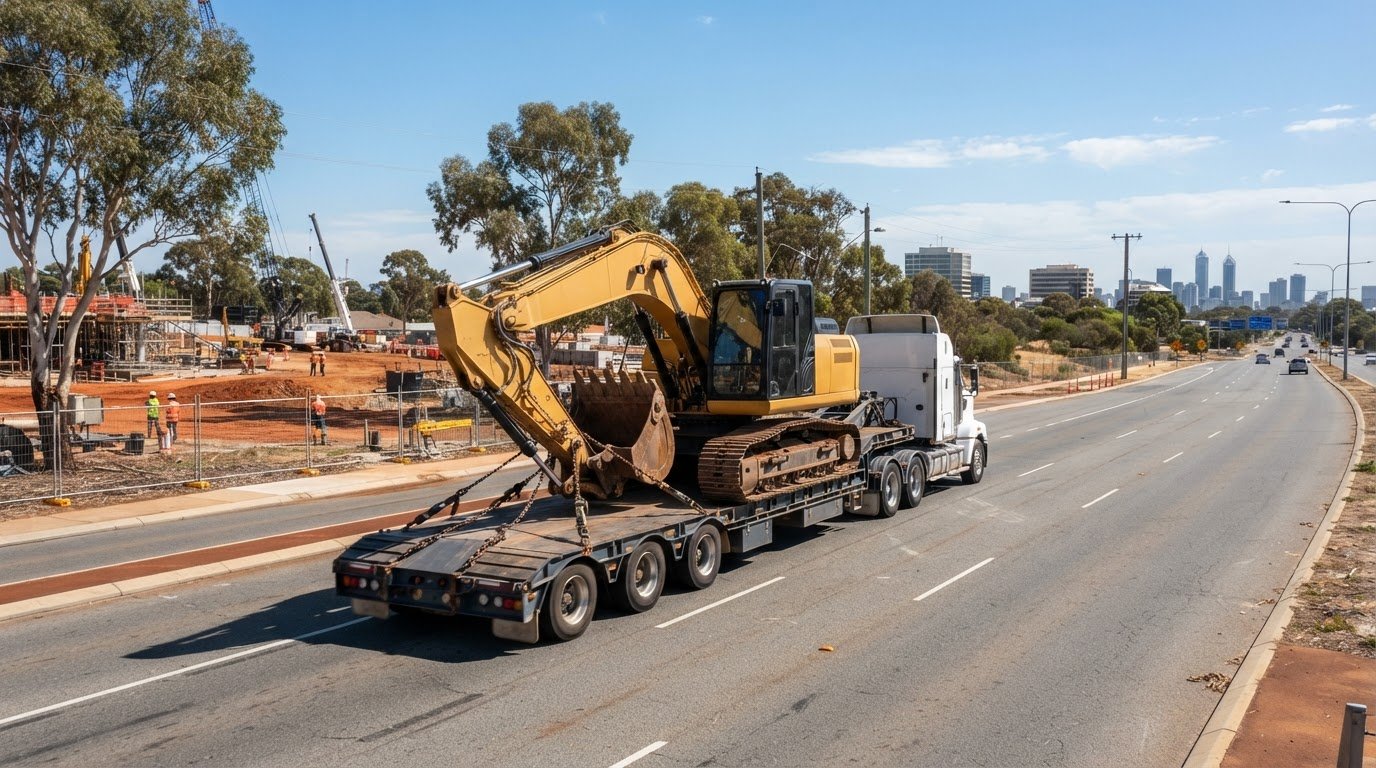
A forklift can’t be moved safely on guesswork. For forklift transport in Perth, the quote depends on details such as the machine’s dimensions, weight, condition, pickup point and destination. The loading method and load restraint must suit the equipment. Gathering these details early makes the move easier to plan.
Before machinery leaves your site, you need clear answers: what information to provide, how the forklift will be secured and when it is likely to travel. This guide explains what to include in a quote request, how tilt tray transport and load restraint work, and what affects planning a forklift move across Perth and Western Australia.
You’ll also learn what to expect from tracking and progress updates, and how to prepare attachments and receiving arrangements for a smoother handover. Whether you’re moving a forklift between worksites or coordinating a delivery, the aim is to help you understand each step before transport begins.
Key Takeaways
- Prepare the forklift’s type, dimensions, weight, condition, pickup and delivery details to help shape a useful transport quote.
- Include attachments and receiving arrangements when planning a move, especially for regional or coordinated deliveries.
- Understand how a tilt tray and suitable load restraint help keep a forklift secure during transport.
- Learn what can affect transport timing, including the machine’s condition, route and loading requirements.
- Know what to discuss when arranging progress updates and coordinating the forklift’s arrival.
Do You Need a Forklift Transported in Perth?
A forklift relocation involves more than the distance between two sites. The machine’s weight, width, operating condition and access at each end all shape the transport plan. A working forklift moving between Perth warehouses may load differently from a non-operational unit at a regional worksite. Share the pickup point and destination early so the loading, journey and unloading requirements can be planned.
Transport can be arranged within metropolitan Perth or to regional Western Australia. For example, a move from a Perth depot to a worksite outside the metropolitan area needs a route and receiving plan suited to that destination. Machinery dimensions also matter: transport planning must account for the forklift’s full width and any attachments travelling with it. The stated width range for machinery transport is up to 2.5 metres.
Permits may be required for wide or heavy machinery loads in Western Australia. WA heavy vehicle accreditation is mandatory for transport businesses operating vehicle combinations over 50 tonnes gross mass, according to Main Roads Western Australia.
For a move beyond Western Australia, the route may extend across Australia. A Perth-to-East Coast relocation could have Melbourne as its destination, depending on the project. If the equipment move involves a vessel, its timing needs to align with the planned vessel movement. Identify mining machinery early, too, so the receiving team can coordinate access, unloading and deployment.
Key risks include forklift movement in transit, damage during loading and access problems at delivery. Consider insurance for loading, transit and unloading, and understand the policy’s coverage limits and exclusions before the move proceeds.
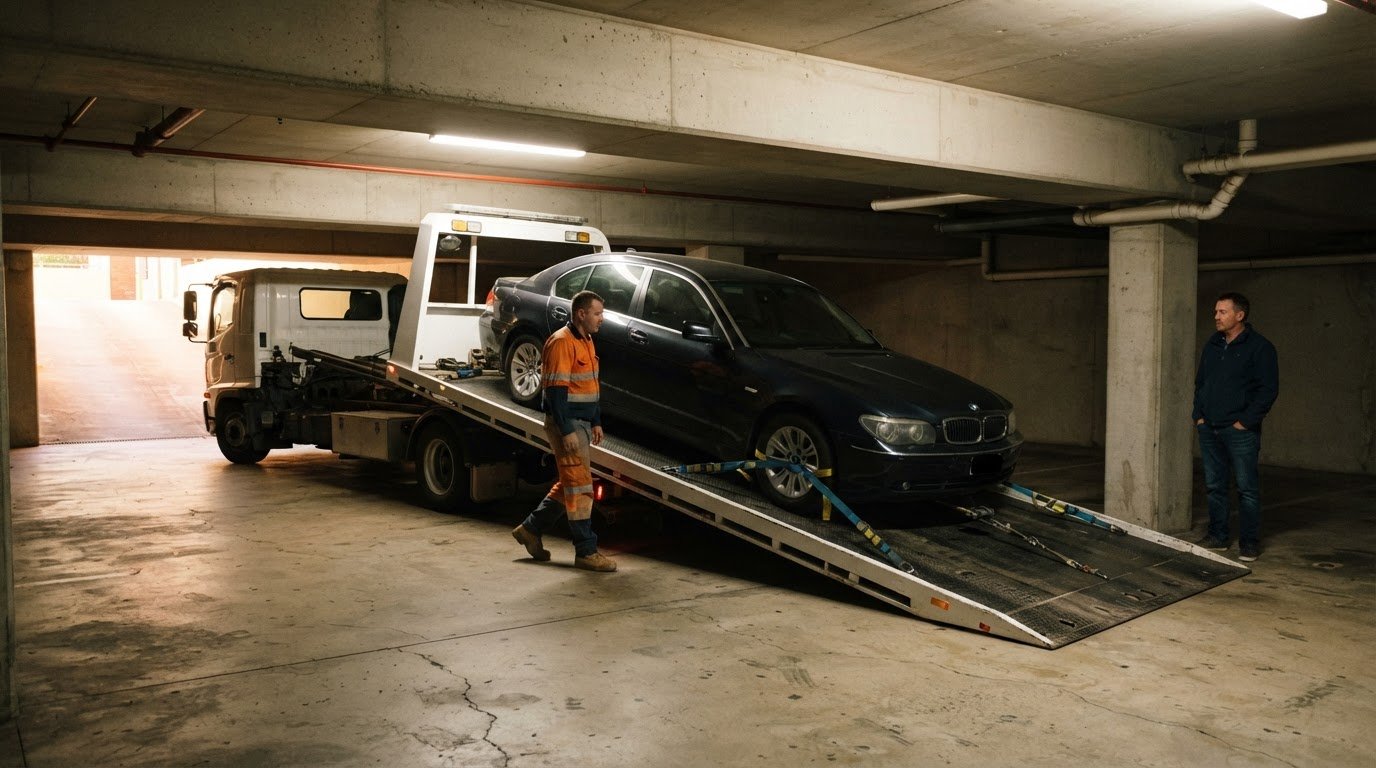
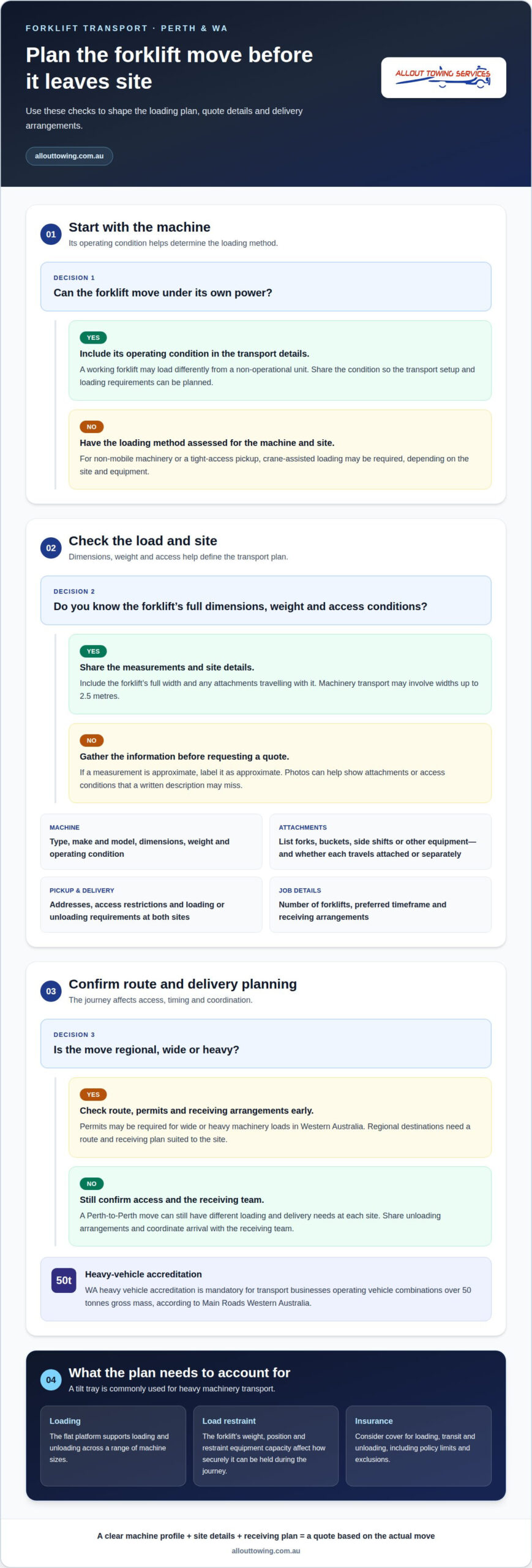
A tilt tray is commonly used for heavy machinery because its platform supports loading and unloading across a range of machine sizes. If a forklift cannot drive under its own power, its condition needs to be factored into the loading method. Non-mobile machinery or a tight-access pickup may require crane-assisted loading, depending on the site and equipment.
Before arranging a relocation, map these practical details:
- Record the pickup and delivery locations, including site access constraints.
- Identify whether the forklift runs and list its attachments.
- Share its dimensions and weight so the transport setup suits the load.
- Coordinate the receiving team, unloading access and deployment timing.
These details help define the job, whether the forklift is travelling across Perth, regional Western Australia or on a longer route across Australia. They also help the transport plan account for the machine’s condition, route and delivery arrangements before loading begins.
Information required for a transport quote
A useful forklift transport quote starts with the machine and the full journey. For a move in Perth, provide the forklift type, dimensions, weight and operating condition. A forklift that drives under its own power may have different loading requirements from one that cannot move. Accurate information helps determine the transport setup and loading method.
Include the pickup location, destination, number of forklifts and preferred timeframe. A move between two Perth industrial sites may have different access and delivery needs from a regional Western Australia job. Note any narrow entry, restricted loading area or other site constraint. If the destination has a receiving team, include its contact details and unloading arrangements so delivery can be coordinated.
Attachments affect the load, too. List forks, buckets, side shifts or other equipment travelling with the machine, and say whether each item will be attached or transported separately. For example, an attachment can change the forklift’s overall dimensions. Clear information helps the transport plan account for the full load, not just the machine model.
Before requesting a quote, gather these details in one place:
- Forklift type, dimensions, weight and operating condition.
- Pickup address, destination and any access restrictions at either site.
- Quantity, attachments and equipment travelling with each forklift.
- Preferred timeframe and receiving arrangements at delivery.
Bookings and quote requests are easier to process when these details are ready. If a measurement is approximate, label it as such rather than presenting it as exact. Include the forklift’s make and model where available, as these can help identify the machine and clarify its configuration. Photos can also show attachments or access conditions that written descriptions may miss.
For industrial machinery, matching the requested timeframe with site access and unloading arrangements helps establish a workable transport plan. A quote should reflect the actual job, including the forklift’s size, weight, condition, route, loading needs and delivery requirements. Allout Towing provides a free quote, with the price based on the specific move.
If you’re seeking a free transport quote, check whether the quote carries any conditions before accepting it. A request for a quote is not the same as a confirmed booking; the transport details and agreed timing should be clear before the forklift is scheduled to move. For a machinery move, send the relevant details through the machinery transport enquiry.
Securing forklifts for transport
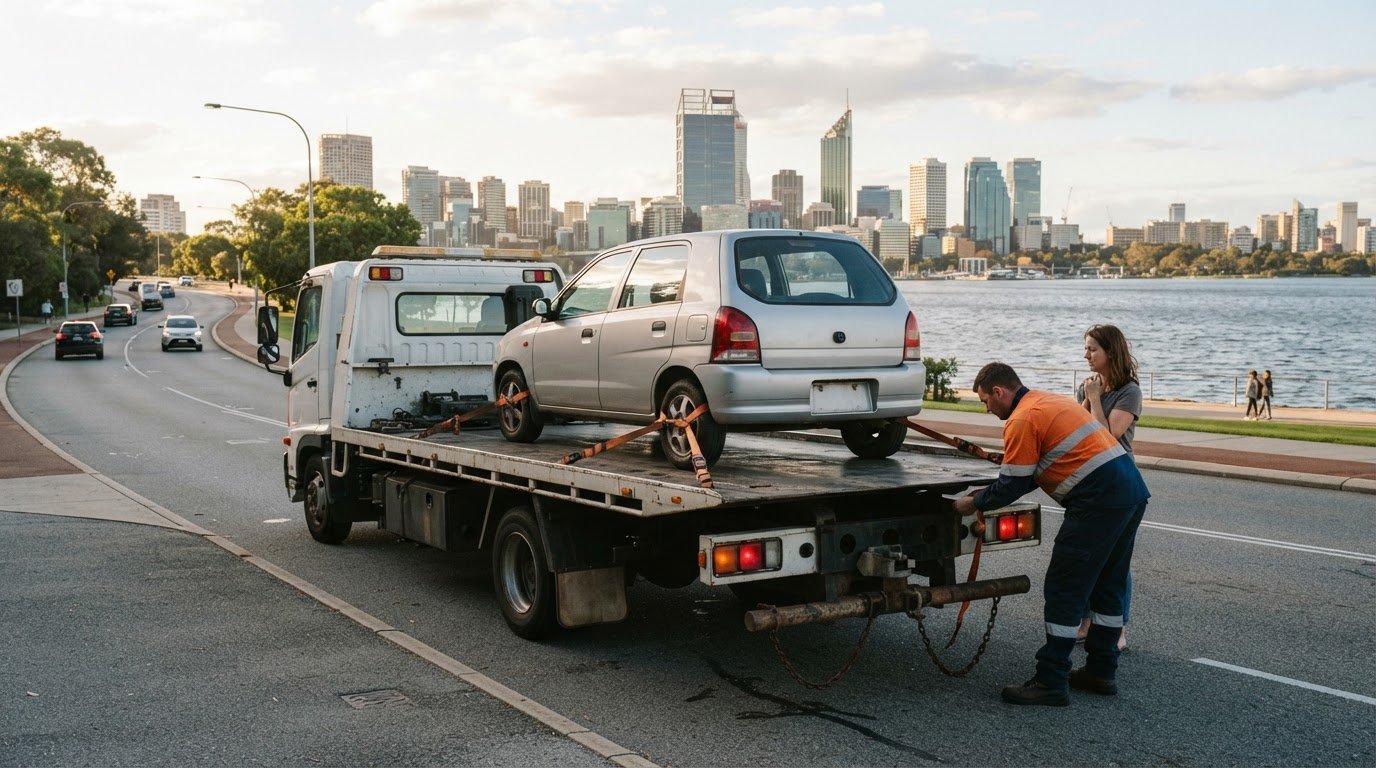
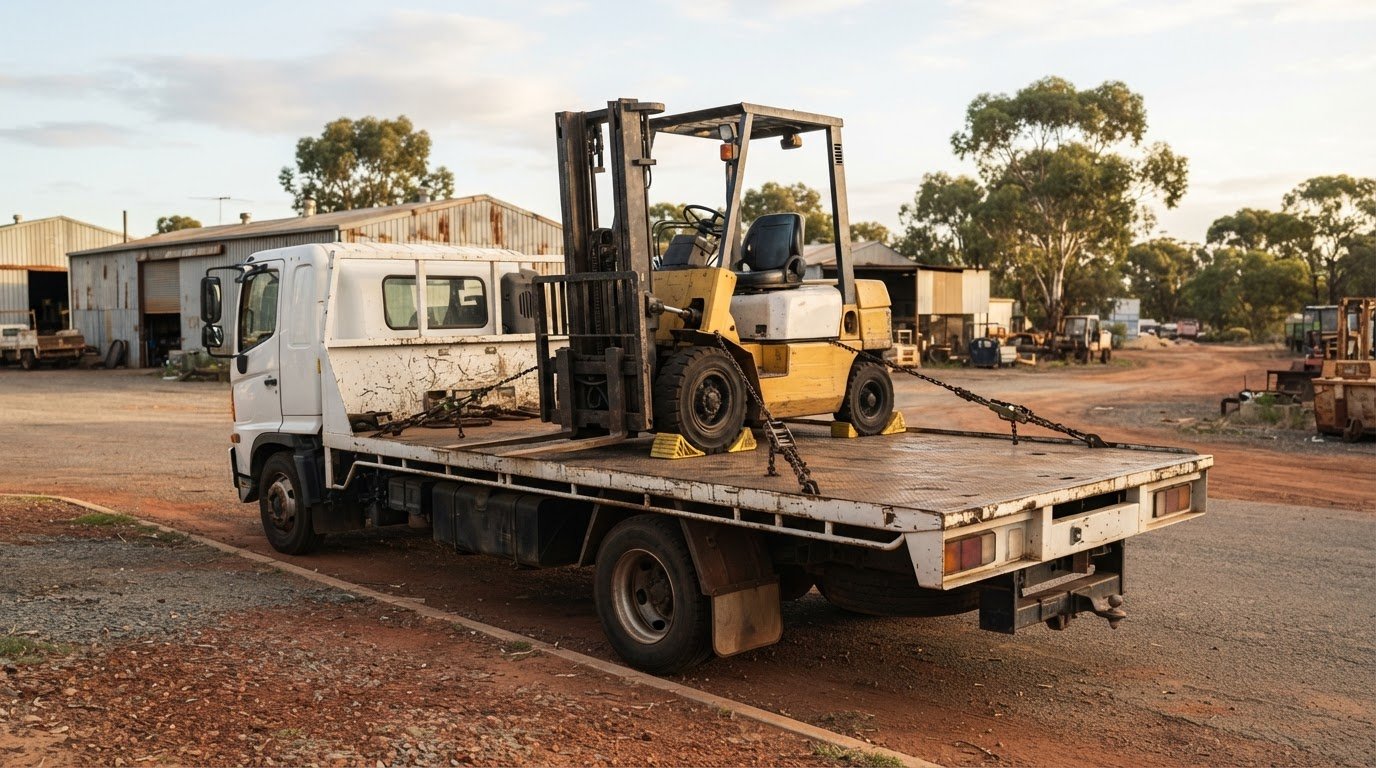
A forklift travels on a tilt tray truck’s flat platform rather than on a trailer. The platform provides a base for positioning the machine before applying load restraint. The forklift’s weight, the restraint equipment’s capacity and the machine’s position all matter, as each affects how securely the load can be held during the journey.
Before securing the forklift, the transport operator considers its condition and loading requirements. A machine that cannot move under its own power may need a different loading approach from an operational forklift. Its position on the tray must also allow effective load restraint. Attachments and other equipment travelling with it form part of the load plan.
Heavy-duty chains, straps or wheel chocks can secure machinery and help prevent movement during transport. The restraint method must suit the forklift’s weight and position, rather than relying on the tray alone. Construction equipment may also have parts or attachments that need attention during loading. These details help reduce movement that could damage the machine or transport vehicle.
A secure transport process follows a clear sequence:
- Assess the forklift’s condition and note whether it can move under its own power.
- Position it on the tilt tray’s flat platform, considering its weight and load placement.
- Select chains, straps or wheel chocks suited to securing the machinery.
- Restrain the forklift to prevent movement before the vehicle travels.
Load restraint means securing cargo with chains, straps or nets to prevent movement in transit. For a forklift, the restraint must account for the machine’s weight, chain capacity and position on the load. A restraint that does not suit these factors can leave the equipment vulnerable to shifting, putting the forklift and other road users at risk.
Attachments also affect how the forklift sits on the tray and where restraints can be applied. For example, a forklift travelling with an attachment must be treated as a combined load, not just as the base machine. The operator considers the attachment’s position alongside the forklift’s weight and the available restraint equipment. Any separate equipment travelling with the machine also needs secure placement.
Before departure, the secured load needs a final check for movement and correct positioning. If the forklift shifts during loading, its position needs to be corrected before transport begins. Considering the machine’s condition, weight and restraint helps protect it from avoidable damage during a Perth move or a longer journey through Western Australia.
Forklift transport services in Perth
Forklift transport covers the move from pickup through to delivery and unloading. In Perth, the operator loads the forklift onto a suitable truck, secures it for the journey and transports it to the requested destination. Planning also accounts for the machine’s condition and site access, so a non-operational forklift is handled differently from one that can drive onto the platform.
Transport planning starts with the route and both site locations. A forklift moving between two Perth industrial sites may need a different arrival plan from one travelling to a regional Western Australia worksite. Pickup access, loading space and unloading arrangements all shape the job. For a mine-site delivery, for example, the receiving team may need arrival timing to coordinate access and deployment.
Tilt tray trucks are commonly used for heavy machinery because their platforms support a range of machinery sizes and allow loading and unloading. If a forklift cannot move under its own power, the operator takes its condition into account when planning the loading method. A non-mobile machine or tight-access pickup may call for crane-assisted loading. These factors affect the equipment and site coordination required.
Safe delivery also depends on load restraint and following relevant requirements at each stage. Drivers follow local laws and workplace safety requirements when transporting forklifts. Before the truck moves, the operator considers the forklift’s weight, position and restraint. At pickup and delivery, the loading area needs to be managed so the machine can be handled without avoidable risks to people or nearby equipment.
Availability depends on the route, the forklift’s condition, loading needs and preferred timeframe. A Perth metropolitan move has different logistics from a trip to regional Western Australia. Longer equipment movements also require coordination between pickup, transit and the receiving site. Clear delivery arrangements help avoid a truck arriving before the destination can accept and unload the forklift.
Tracking is best understood as knowing the transport’s progress, rather than assuming a particular app or live GPS service. Useful milestones include:
- Collection time and confirmation that loading is complete.
- Departure from the pickup site and progress towards the destination.
- Notice of arrival so the receiving team can prepare to unload.
Agreeing on updates before collection gives both sites a practical way to coordinate staff and access. For a Perth-to-regional move, an arrival update can help the destination team prepare its unloading area. In short, transport covers loading, travel and unloading, while the route, machine condition, site access and agreed progress updates shape how the move is organised.
Perth forklift transport companies and contact details
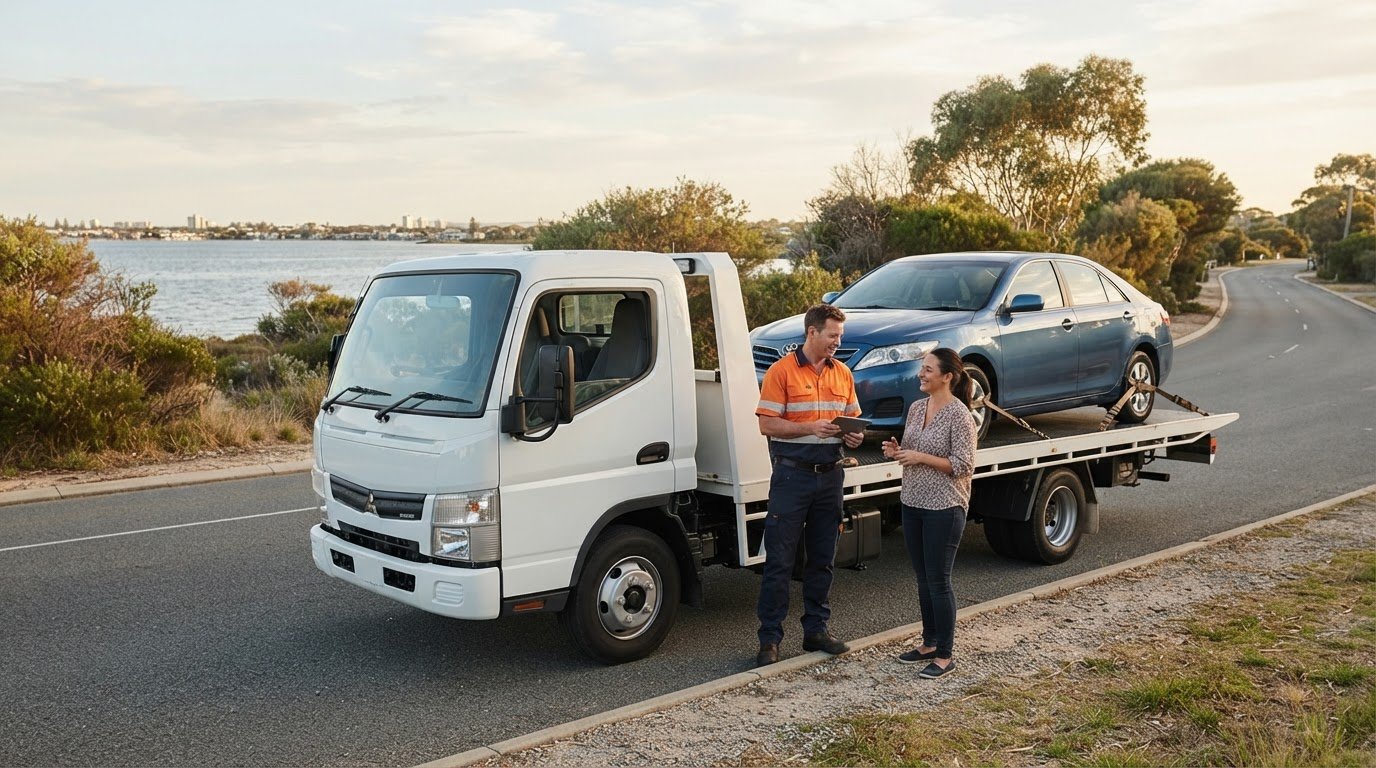
Arranging forklift transport in Perth is easier when the request reaches the right person with clear job details. Use one contact point for the pickup, destination and booking updates. For a business move, nominate someone at each site to coordinate access and receive timing updates. This helps prevent conflicting instructions reaching the driver.
When making contact, explain what the move involves and what you need. A quote request should identify the forklift, its operating condition, attachments, pickup address, delivery address and preferred timeframe. Mention whether the move is within Perth or to regional Western Australia. If a site has restricted access, include that detail early so it can be considered in the plan.
Keep the response and booking details together. Record the agreed pickup and delivery locations, site contacts, transport timing and loading arrangements. If plans change, share the update through the same contact channel. This gives the people arranging collection and receiving the forklift one consistent version of the job.
Contact details matter during the move, too. A site contact should be reachable around the planned collection and delivery windows. For example, a warehouse supervisor can arrange pickup access while a receiving team member prepares the unloading area. If either contact changes, update the booking details promptly. Clear communication helps prevent avoidable delays at the gate or loading area.
Before confirming a booking, make sure the practical arrangements are understood:
- Who will meet the driver at pickup and delivery.
- Where the forklift will be loaded and unloaded.
- How the transport team will share collection and arrival updates.
- Who will communicate changes to the route, timing or site access.
These details are useful for a single forklift or a coordinated industrial relocation. They also help distinguish a preliminary quote request from a confirmed booking. Keep the contact record available to the staff managing the move, especially when different teams or shifts handle pickup and delivery.
For a forklift move, use the available transport enquiry channel or call 0418 959 216 with the job details ready. A clear request helps the transport team understand the route, equipment and site coordination involved. Include the preferred timeframe and the best contact for updates, so the next steps can be discussed without repeating the basic information.
Send a forklift transport enquiry with the pickup, destination and machine details to start arranging the move.
Allout Towing: Tilt Tray Perth Services
Allout Towing provides forklift and machinery transport across Perth and Western Australia. Tilt Tray Perth Services suit forklift relocations where a tilt tray provides the loading platform, while Super tilt heavy transport supports larger equipment movements. The right setup depends on the forklift’s weight, dimensions, condition and access at pickup and delivery.
For a move, provide the forklift details, both site locations, preferred timeframe and any attachments travelling with it. This helps plan loading, load restraint and delivery arrangements. If your equipment move also involves a shipping container, Allout Towing provides Container Transport as a separate service.
Contact Allout Towing to discuss your forklift move and share the pickup, destination and machine details.
Set your forklift move in motion
A planned move is easier to coordinate when your team has one clear point of contact. Choose a site contact to align access, receiving arrangements and transport updates before the forklift leaves. This gives the pickup and destination teams a shared plan, especially when different people manage each location.
For forklift transport in Perth, Allout Towing offers Tilt Tray Perth Services and Super tilt heavy transport. The transport approach should suit the equipment and the move. Allout Towing also offers 24 Hour Car Towing for vehicle towing needs.
Next, bring the site contacts together around the preferred timing and agreed handover arrangements. A clear handover helps the receiving team prepare for the forklift’s arrival and connect the move to the work planned at its destination.
When you’re ready to discuss your move, contact Allout Towing about forklift transport. A calm, organised plan can help your team move forward with confidence.
Frequently Asked Questions
Need Machinery Moved?
Allout Towing provides machinery transport for forklift relocations in Perth and Western Australia. This suits businesses shifting equipment between construction, warehouse and farm sites. If several machines are moving together, describe the group and note any differences between them. That keeps each forklift’s transport requirements clear, rather than treating a mixed equipment load as identical items.
What Machinery Can Be Transported?
Allout Towing transports forklifts and other machinery, including bobcats, excavators and farm equipment. These machines have different shapes and configurations, so the transport plan needs to reflect the equipment being moved. For example, an excavator and a forklift may need different loading arrangements. Identify each machine clearly, especially if the job includes several equipment types or a container travelling as part of the same project.
What forklift transport services are available in Perth, WA?
Allout Towing provides forklift and machinery transport in Perth and Western Australia. This can help a business move equipment during a site change, project handover or new machinery delivery. For a planned move, nominate one person to coordinate instructions between the sending and receiving sites. A single point of contact helps keep operational updates together if site arrangements change.
How much does forklift transport cost in Perth?
Allout Towing provides a free quote, with the price supplied after a quote request. There isn’t one price for every forklift move. A job-specific quote gives you the cost for your requirements, rather than a general figure that may not match the transport involved. If your move includes multiple machines, make clear that the request covers the full consignment.
What information is needed to get a forklift transport quote in Perth?
For forklift transport in Perth, identify each machine if the job includes more than one. A mixed consignment might include an operational forklift and another machine that cannot move independently. This distinction helps the transport team understand that the equipment may need different handling. Also state the delivery site and who will receive the machinery, so the quote request reflects the handover plan.
How are forklifts loaded and secured for transport?
The operator selects a loading approach to suit the forklift and pickup site. If a forklift cannot move under its own power, crane-assisted loading may suit a non-mobile machine or a tight-access location. The operator also accounts for the machine’s position and weight when securing it. Mention unusual site access, such as a confined loading area, so it can be considered in the handling plan.
Can forklifts be transported on a tilt tray or flatbed truck?
A tilt tray truck carries a forklift on its flat platform rather than on a trailer. Whether a flatbed is suitable depends on the forklift and transport setup. The key is to match the truck and loading method to the machine and job. At a worksite with restricted access, the loading area and unloading space can help determine which arrangement fits.
Forklift transport from Perth to regional WA: delivery times and costs
For forklift transport from Perth to regional WA, timing and price depend on the route and project arrangements. At a remote worksite, the receiving team may need to coordinate site access and machinery deployment. For longer equipment movements towards the East Coast, a vessel schedule can also affect coordination. Share the destination and receiving arrangements early, particularly if the forklift must arrive in line with another project milestone.