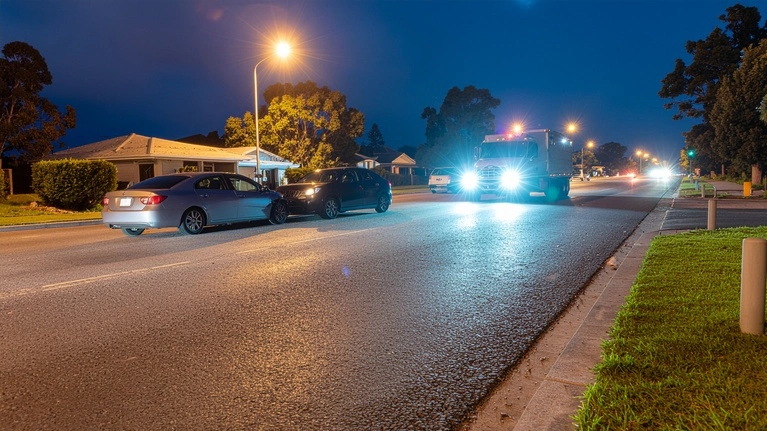
Road trauma costs Western Australia more than lives – it reshapes families, communities, and futures. In 2023, 171 people died on WA roads, with thousands more left dealing with injuries, damaged vehicles, and the overwhelming stress of what comes next. If you’ve been involved in a collision in Perth, your first priority is safety. But once everyone is accounted for, you’ll need to arrange an emergency tow order to clear the scene safely and get your vehicle to the right place.
Placing an emergency tow order correctly is more important than most drivers realise. The decisions you make in those first minutes – who you call, where your vehicle goes, and what paperwork you authorise – directly affect your insurance claim, your repair timeline, and whether your vehicle arrives at the repairer in the same condition it left the scene.
Perth’s towing services are governed by specific WA regulations, including requirements around documentation and driver consent that protect you from being towed to a location you haven’t chosen. Understanding these protections before you need them is the clearest advantage you can have at a crash scene.
All Out Towing, Perth’s trusted towing provider, has responded to collision scenes across Perth for over 15 years. From minor bumper taps on the freeway to multi-vehicle incidents requiring heavy recovery equipment, the difference between a smooth recovery and a chaotic one comes down to knowing exactly what to do in those critical first minutes.
What Happens Immediately After a Collision
The moments following a crash are disorienting. Adrenaline floods your system and clear thinking becomes difficult. However, there’s a specific sequence of actions to follow – for your safety, for legal compliance, and to protect your insurance claim.
Check for Injuries and Make the Scene Safe
First, check for injuries. If anyone is hurt, call 000 immediately. Even when injuries seem minor, have paramedics assess everyone on scene. WA Police attend all collisions involving injury, significant property damage, or where a vehicle is blocking traffic.
Second, make the scene safe. If vehicles are drivable and it’s safe to do so, move them off the road. Turn on hazard lights. If you have a warning triangle, place it at least 50 metres behind the crash site. On freeways like the Kwinana or Mitchell, that distance should be greater – traffic approaches fast, and drivers often don’t register stationary vehicles until it’s almost too late.
Exchange Details and Document the Scene
Third, exchange details. You’re legally required to provide your name, address, and vehicle registration to the other driver. Take photos of all vehicles, the surrounding area, any skid marks, and road conditions. These images become crucial evidence for insurance claims and police reports.
Fourth, report the incident. If police don’t attend, you must report the collision at a police station within 24 hours when there’s property damage over $3,000 or any injury. For insurance purposes, report to your insurer as soon as possible – most policies require notification within 48 hours.
When to Order an Emergency Tow
Not every collision requires a tow truck. A minor scrape might leave you with cosmetic damage but a perfectly drivable car. However, certain situations demand professional safe vehicle towing in Perth – and attempting to drive when these apply can make things significantly worse.
Signs Your Vehicle Needs a Tow
- Vehicle won’t start or won’t stay running – impact can sever electrical connections, crack radiators, or damage fuel lines
- Wheels or suspension are damaged – a bent control arm or damaged tie rod makes steering unpredictable
- Airbags have deployed – safety systems are compromised and the vehicle isn’t safe to operate
- Fluids are leaking – coolant, oil, transmission fluid, or brake fluid pooling under the vehicle signals serious damage
- The vehicle is blocking traffic – the secondary collision risk makes a tow the safest option regardless of drivability
Hidden Damage You Can’t Always See
Collision damage is often more extensive than it first appears. A seemingly minor front-end impact can bend the subframe, misalign wheels, or damage the radiator support. Our team assesses every vehicle before loading, looking for hidden damage that might require specialised equipment or affect the safest transport method.
How to Order an Emergency Tow in Perth
Once you’ve determined you need a tow, the process is straightforward. However, there are important details to get right – including understanding the paperwork involved and your rights as the vehicle owner.
Call Immediately and Be Specific About Location
Call immediately, not later. If you’re on a busy road, you want your vehicle recovered as quickly as possible. When you contact us for towing services in Perth, we’ll ask specific questions: your exact location, the make and model of your vehicle, visible damage, whether it’s blocking traffic, and whether emergency services are present.
Be specific about your location. “Near the airport” isn’t enough. We need the exact street or freeway, the nearest cross-street or landmark, and which direction you were travelling. GPS coordinates from your phone eliminate any confusion and help us dispatch the right truck faster.
The Authority to Tow Form – What It Is and Why It Matters
In Western Australia, towing operators are required to obtain consent before moving your vehicle. This consent is formalised through an Authority to Tow form – a document that records your name, your vehicle details, the destination you’ve chosen, and your authorisation for the tow to proceed.
The Authority to Tow form protects you from being towed to a location you haven’t agreed to – a practice that has historically disadvantaged drivers in urgent situations. You have the legal right to choose where your vehicle goes. The Authority to Tow form records that choice and creates a clear paper trail for insurance purposes.
Review the Authority to Tow form before signing. Confirm the destination matches your instructions. If anything is unclear or the operator is pressuring you to accept a specific repairer, you’re entitled to ask questions before authorising. A professional towing service in Perth will complete this form accurately and without pressure.
Choose Where Your Vehicle Goes
You have the legal right to choose where your vehicle is towed. Your options include:
- Your insurance company’s preferred repairer
- Your own trusted mechanic or panel beater
- A secure storage yard while you make a decision
- Your home address if you have secure off-street parking
Don’t let urgency or pressure from the scene force you into a towing destination you’re not comfortable with. The Authority to Tow form exists precisely to record and protect that choice.
Understand the Cost Structure
Emergency towing costs typically include a base call-out fee plus a per-kilometre rate. Some insurance policies cover towing services in Perth up to a certain amount – check your policy or call your insurer while waiting for the tow truck. If you’re not at fault, the at-fault driver’s insurance should cover your towing costs, though you’ll usually pay upfront and claim reimbursement later.
What to Expect When the Tow Truck Arrives
Our trucks carry everything needed to safely recover collision-damaged vehicles – wheel dollies for damaged suspension, protective padding for vehicles with deployed airbags, and spill containment equipment for fluid leaks.
Assessment and Documentation
Before touching your vehicle, our operator walks around it, checking for structural damage, fluid leaks, and hazards. This determines the safest loading method. Our team photographs your vehicle from multiple angles before loading – creating a clear record of its condition at the time of recovery. That documentation often proves crucial when insurers assess claims later.
Tilt Tray Loading for Collision-Damaged Vehicles
Most collision-damaged vehicles are recovered using our damage-free tilt tray transport. The tray lowers completely flat to the ground, and we winch the vehicle on without needing to roll it. This is critical when wheels are damaged, suspension is compromised, or there’s undercarriage damage. It’s the difference between a clean recovery and making existing damage worse.
Securing the Vehicle and Cleaning the Scene
Once loaded, your vehicle is secured with multiple tie-down points to prevent shifting during transport. If your vehicle has leaked oil, coolant, or other fluids, we use absorbent materials to clean the road surface. This prevents secondary accidents and meets WA environmental regulations. The whole process typically takes 15-30 minutes depending on damage severity and location.
Insurance, Police Reports, and Your Rights
After a collision, you’re dealing with multiple parties – police, insurers, the other driver, and potentially their insurer. Understanding your rights prevents problems later.
You Choose the Repairer
Your insurance company may have preferred repairers, but you’re not legally required to use them. You can have your vehicle towed to any licensed repairer. Some insurers offer benefits like guaranteed workmanship or faster claim processing through their network, but the choice is yours. The emergency tow order and Authority to Tow form both record your chosen destination – ensuring it’s honoured.
At-Fault and Not-at-Fault Recovery
If you’re not at fault, the at-fault driver’s insurance should cover your towing service in Perth. You’ll usually pay upfront and claim reimbursement – keep all receipts and invoices. If you’re deemed at fault, your comprehensive insurance covers towing and repairs minus your excess. Third-party-only policies generally don’t cover your own vehicle’s towing costs.
Police Report Numbers and Insurance Claims
Note the attending officer’s name, station, and incident number. Your insurer will request the report directly from WA Police. For serious collisions involving injury or significant damage, WA Police may seize vehicles for forensic examination. In these cases, police coordinate towing to a secure facility. Once examination is complete, you can arrange secondary transport to a repairer.
After-Hours and Weekend Collisions
Collisions don’t follow business hours. Our immediate emergency assistance service operates around the clock – including weekends, public holidays, and Perth’s worst winter storms.
After-Hours Rates and Night-Time Recovery
After-hours towing services in Perth often attract slightly higher rates – that’s standard across the industry and reflects the cost of maintaining genuine 24/7 availability. When you’re stranded on the Tonkin Highway at midnight, the cost difference is negligible compared to the safety risk of waiting until morning.
Night-time recoveries require extra safety measures. Our trucks carry additional lighting and reflective equipment. On poorly lit roads, we work methodically rather than quickly – rushing in low visibility creates more problems than it solves.
Weekend Response Times
Saturday and Sunday see higher traffic volumes and more collisions, particularly on routes to and from Perth’s beaches and hills. If you’re not in immediate danger and your vehicle is off the road, expect a slightly longer response time during peak weekend periods. We’ll give you an honest timeframe when you call – not a promise we can’t keep.
Common Mistakes After a Collision
We’ve seen drivers make the same errors repeatedly. Here’s what to avoid.
Don’t Agree to Towing Without Confirming the Destination
Some operators push drivers toward specific repairers who pay referral fees. You choose where your vehicle goes – not the tow truck operator. The Authority to Tow form records your chosen destination. Review it before signing.
Don’t Drive a Damaged Vehicle to Test It
If there’s any doubt about your car’s safety, don’t drive it. The risk of a breakdown, further damage, or causing another collision isn’t worth it. An emergency tow order costs far less than the additional damage caused by driving a compromised vehicle.
Don’t Delay Reporting to Your Insurer
Most policies require notification within 48 hours. Missing this window can jeopardise your claim. Report to your insurer as soon as possible – even from the scene if it’s safe to do so.
Don’t Accept Cash Settlements on the Spot
The other driver offers to settle privately and avoid insurance. Then you discover $3,000 in hidden damage two days later. You’ve already settled. Always go through insurance when there’s any vehicle damage involved.
Conclusion
Knowing how to place a correct emergency tow order – and understanding the Authority to Tow form that protects your rights – transforms a chaotic collision scene into a manageable process. Check for injuries, make the scene safe, exchange details, document everything, and then call for professional towing services in Perth. Don’t drive a damaged vehicle, don’t leave it blocking traffic, and don’t accept towing to a destination you haven’t chosen.
Our team provides insurance-approved accident towing across Perth, with experienced operators who understand collision recovery, documentation requirements, and insurer processes. For vehicles requiring careful handling after a crash, our on-site vehicle assistance team can also assess whether your vehicle needs a tow or can be made safe at the roadside.
Perth drivers can arrange towing services by calling 0418 959 216 any time, day or night. All Out Towing specialises in professional vehicle recovery – giving you one less thing to worry about while you focus on what matters most.