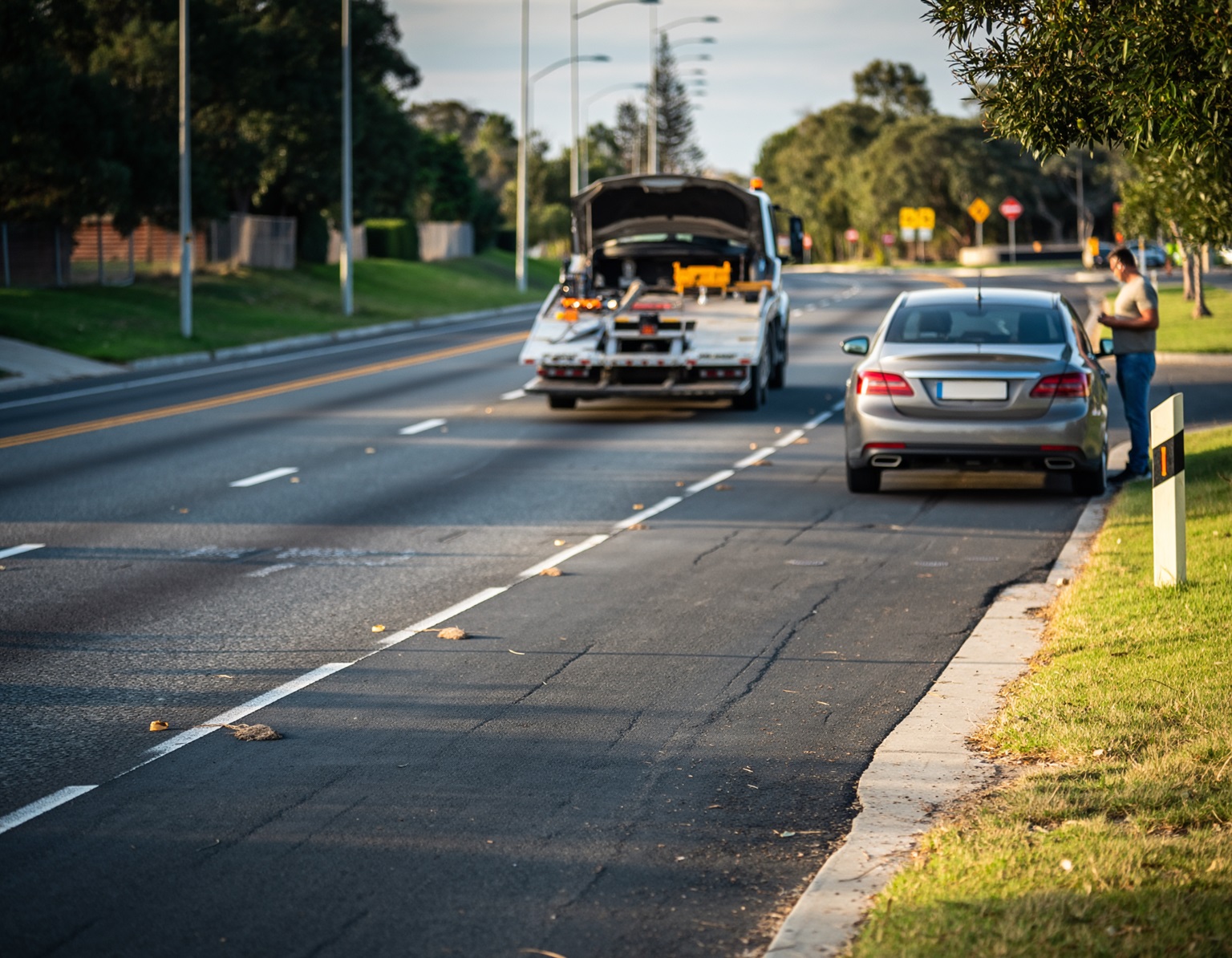
You’re stuck on Mitchell Freeway with smoke coming from under the bonnet, and you’re not sure who to ring. Should you call for roadside assistance in Perth or a tow truck? It’s a question that catches most Perth drivers off guard, and understanding the difference matters: choosing the wrong service can mean longer wait times, higher costs, or even damage to your vehicle.
The truth is, these two services overlap in some areas but serve completely different purposes in others. Understanding the distinction isn’t just about saving money – it’s about getting the right help when you’re vulnerable on the side of the road. Most drivers think they’re the same thing until they’re actually stranded, and by then, making the wrong call can turn a fixable situation into a much bigger headache.
Why This Feels More Confusing Than It Should
The line between roadside assistance and towing has blurred over the years, and that’s partly because many companies (including All Out Towing) offer both services. When you’re stressed, and your car won’t start, you’re not thinking clearly about service categories – you want someone to fix the problem.
What makes it more complicated is that some roadside issues can be resolved on the spot, while others genuinely need a tow to a workshop. The challenge is knowing which situation you’re in before you make that call. Most drivers overestimate what can be fixed roadside or underestimate when a tow is actually the safer option.
Consider a common scenario: a driver near Wanneroo Road with a dead battery. A mate arrives with jumper leads, but the car still won’t turn over. Turns out the alternator was shot – no amount of jumping would’ve helped. A tow to a mechanic was needed, not a quick fix. That’s the kind of situation where knowing the difference would’ve saved an hour of frustration.
What Roadside Assistance Perth Services Actually Cover
Roadside assistance Perth is designed for problems that can be solved without moving your vehicle to a workshop. It’s emergency first aid for your car – like having a paramedic for your engine rather than rushing straight to the hospital. Quick fixes get you mobile again or at least safe until you can arrange something more permanent.
The most common roadside jobs include jump-starting a flat battery, changing a flat tyre, delivering fuel if you’ve run out, and unlocking your car if you’ve locked the keys inside. These are the bread-and-butter calls that make up the majority of roadside work across Perth and the Northern Suburbs.
Battery jump-starts are probably the most frequent request, especially during Perth’s colder winter mornings when older batteries struggle. A technician arrives with a portable jump pack or jumper cables, gets your engine running, and you’re usually good to drive to a battery shop or home. It’s a 15-minute job in most cases.
Tyre changes are straightforward if you’ve got a spare in decent condition. The technician swaps your flat for the spare, and you can drive carefully to get a proper repair or replacement. However, if your spare is also flat or missing (which happens more often than you’d think), you’ll need a tow instead.
Fuel delivery is precisely what it sounds like. Running out of petrol happens to everyone eventually, and our roadside assistance can bring enough fuel to get you to the nearest station. It isn’t very comfortable, but fixable on the spot.
Lockout services cover situations where you’ve locked your keys in the car. Depending on your vehicle’s make and model, a technician can often gain entry without damage, though modern cars with advanced security systems sometimes make this trickier.
What roadside assistance Perth doesn’t cover are mechanical failures that require diagnostic tools, parts replacement, or anything beyond basic emergency fixes. If your engine’s overheating due to a coolant leak, your transmission’s slipping, or you’ve got a grinding noise from the brakes, you’re beyond roadside territory.
When You Actually Need a Tow
Towing becomes necessary when your vehicle can’t be safely driven, can’t be fixed on the spot, or presents a risk to you or other road users. This is where our professional car towing services step in to transport your vehicle to wherever it needs to go – usually a mechanic, panel beater, or sometimes your home.
Accident damage is the most obvious towing scenario. If you’ve been in a collision and your car isn’t roadworthy – whether that’s due to structural damage, fluid leaks, or deployed airbags – it needs to be towed. Driving a damaged vehicle, even a short distance, can make the damage worse and potentially void insurance claims. Our accident towing service handles these situations with care.
Major mechanical failures that leave your car completely immobile require towing. If your engine’s seized, your transmission’s failed, or you’ve got a snapped timing belt, there’s nothing a roadside technician can do except arrange a tow. These aren’t quick fixes – they need a workshop with proper equipment.
Overheating issues often need towing, particularly if the engine’s already been damaged or if the cooling system failure is severe. At the same time, a roadside service might top up coolant temporarily. If the problem’s a cracked radiator or failed water pump, you’ll need to get towed to prevent engine damage.
Electrical system failures beyond a simple flat battery usually require towing. If your car’s completely dead and won’t respond to a jump-start, or if you’re experiencing multiple electrical faults, the issue needs proper diagnosis at a workshop.
Consider a ute stuck in beach sand up near Yanchep. The driver had remained remarkably calm despite how deeply the vehicle had become embedded. Attempts to winch it out failed because the sand was too soft and the tide was coming in. That needed a tow, no question. Sometimes the situation decides for you.
The Grey Area Nobody Talks About
There’s a frustrating middle ground where it’s genuinely unclear whether you need roadside assistance in Perth or a full tow, and this is where drivers often feel stuck. You don’t want to pay for a tow if a jump-start would’ve worked, but you also don’t want a roadside technician to arrive and tell you there’s nothing they can do.
But how do you know which service you really need when the symptoms aren’t clear-cut? Intermittent problems are the worst for this. Your car might start sometimes, but not others, or it makes a weird noise that comes and goes. When you call for help, you’re not sure if it’ll even demonstrate the problem. In these cases, describing the symptoms accurately to the dispatcher helps them provide exemplary service.
Minor collisions create confusion, too. If you’ve had a small bingle and the car still drives, but something feels off, you’re weighing up whether to risk driving it home or play it safe with a tow. The honest answer? If there’s any fluid leaking, any warning lights on the dashboard, or any handling changes, get it towed. The cost of a tow is nothing compared to engine or transmission damage from driving a compromised vehicle.
Battery issues that aren’t battery issues catch people out constantly. Your car won’t start, you assume it’s the battery, but it could be the starter motor, alternator, or even an immobiliser fault. A roadside technician can test the battery and charging system, but if it’s something more complex, you’ll need a tow after all. This isn’t anyone’s fault – it’s just the reality of car diagnostics.
The guilt you’re probably feeling about “wasting” someone’s time by calling the wrong service is misplaced. Dispatchers and technicians deal with this uncertainty every day, and they’d rather you call and let them figure it out than make a guess that leaves you more stranded. At All Out Towing, we talk through the symptoms with you first and recommend the most appropriate service based on what you’re describing.
What Your Membership Actually Includes
If you’ve got a roadside assistance membership through your insurance, RACWA, or another provider, you might assume you’re covered for everything. That’s not quite how it works, and the fine print matters more than most Perth drivers realise.
Most memberships include a set number of callouts per year for standard roadside services – battery jumps, tyre changes, lockouts, and minor fuel delivery. They’ll also typically include a certain amount of towing distance, often around 15-25 kilometres, which might get you from the freeway to a nearby mechanic but won’t cover a tow from Perth to Mandurah.
Distance limits are the big catch. If you travel further from your destination than your membership covers, you’ll pay out-of-pocket for the additional kilometres. This can add up quickly, especially if you’re travelling through regional WA, where distances between towns are significant.
Exclusions vary by provider but often include off-road recoveries, vehicles over a certain weight, and situations where the car wasn’t being used legally (like driving unregistered). Some memberships also won’t cover you if you’ve run out of fuel more than once in a membership year.
The point isn’t to criticise these memberships – they’re valuable and often worth having. It’s to make sure you understand what you’re actually covered for before you’re stranded and assuming help is free when it’s not.
How to Make the Right Call When You’re Stuck
When you’re actually broken down, stressed, and possibly in an unsafe location, you need a simple decision-making process. This is how to work out what you need without second-guessing yourself.
Start by asking: Can I describe what’s wrong in simple terms? If it’s “the car won’t start,” “I’ve got a flat tyre,” or “I’ve run out of fuel,” you’re probably looking at roadside assistance Perth. If it’s “there’s a grinding noise, and now the car won’t move,” or “I’ve hit something and fluid’s leaking,” you need a tow.
Next: Are there any warning lights on the dashboard? A single battery light might mean an alternator issue that needs a tow. Multiple warning lights, especially the engine management light, usually indicate something beyond roadside fixes. <a href=”https://www.mainroads.wa.gov.au/” target=”_blank” rel=”noopener”>Main Roads WA</a> offers guidance on safe breakdown procedures that can help you assess whether it’s safe to wait with your vehicle.
Consider your location and safety. If you’re broken down in a dangerous spot – on a freeway shoulder during peak hour, on a blind corner, or anywhere you feel unsafe – prioritise getting the vehicle moved quickly. In these situations, our 24-hour emergency towing can assess remotely and dispatch the appropriate help.
When in doubt, describe the situation honestly to the dispatcher. Tell them exactly what happened, what you’ve tried already, and what the car’s doing now. They’ve heard it all before and can usually tell from your description whether you need roadside help or a tow. There’s no penalty for uncertainty – it’s literally their job to work it out with you.
If you’ve already tried jump-starting with no success, or if the car starts but immediately cuts out, mention that upfront. It helps the dispatcher send someone with the right equipment and expectations.
The Cost Reality You Should Understand
Money matters when you’re broken down, and understanding the cost difference between these services helps you make informed decisions rather than panicked ones.
Roadside assistance Perth through a membership typically costs nothing per callout if you’re within your annual limit, though you’ve paid an annual or monthly membership fee. If you’re paying out-of-pocket without membership, expect to pay somewhere between $10 and $2000 for standard services like a jump-start or tyre change, depending on your location and time of day.
Towing costs vary significantly based on distance. A short tow within Perth’s metro area might start around $150-200 for the first few kilometres, with additional charges per kilometre after that. A longer tow – say from Joondalup to a specialist workshop in Malaga – could efficiently run $300-500 or more.
After-hours rates, weekend callouts, and complex recoveries (like winching a vehicle out of sand or mud) will cost more than standard tows. This isn’t price gouging – it’s reflecting the additional equipment, expertise, and unsociable hours involved.
Sometimes paying for a tow you’re not sure you need is cheaper than the potential damage from driving a compromised vehicle. If your car’s overheating and you try to limp it home, you could crack the engine block and turn a $300 tow into a $5,000 engine replacement.
What Happens After the Initial Call
Once you’ve made contact and help is on the way, knowing what to expect reduces anxiety and helps you prepare.
For roadside assistance in Perth, the technician will arrive with basic tools and equipment to attempt an on-the-spot fix. If they can resolve the issue, you’ll be back on the road within 20-40 minutes, typically. If they determine you actually need a tow, they’ll either arrange that directly or you’ll need to make a separate call, depending on the service provider.
For towing, the driver will secure your vehicle correctly, which takes a few minutes, then transport it to your specified destination. You’ll usually need to have decided where you want it taken before they arrive – your regular mechanic, a dealership, or home if you’ve got someone who can look at it. If you’re unsure, the tow truck driver can often recommend reputable workshops in the area, though they won’t decide for you.
You’ll need to provide identification and, if you’re using insurance or membership cover, your policy or membership details. Have these ready on your phone or in your wallet to speed things up.
Start Here, Not With Perfection
If you’re reading this before you’ve broken down (well done, honestly), the single best thing you can do is check what your current roadside assistance actually covers. Pull out your insurance documents or RACWA membership details and look for the specific inclusions, exclusions, and distance limits.
Save the roadside assistance Perth number in your phone under something you’ll remember when you’re stressed – “Roadside Help” or “Car Emergency” works better than trying to remember a company name when you’re flustered.
Keep a basic emergency kit in your boot: a torch, a hi-vis vest, and a phone charger at a minimum. You’d be surprised how many callouts involve people whose phones are about to die and who can’t be seen by passing traffic.
If you don’t have roadside cover and you’re weighing up whether it’s worth it, consider how often you drive, the age of your vehicle, and whether you’ve got the mechanical knowledge to handle fundamental issues yourself. For most Perth drivers, especially those with older vehicles or long commutes, the membership pays for itself after a single callout.
When something does go wrong, remember that choosing between roadside assistance and towing isn’t a test you can fail. It’s a practical decision based on symptoms and safety, and the professionals you’re calling have dealt with far more confusing situations than yours. At All Out Towing, we’ve helped thousands of WA drivers work through exactly this confusion, and we’d rather you call uncertain than not call at all.
The difference between these services matters, but it’s not as complicated as it feels when you’re stuck on the side of Wanneroo Road in the heat. One gets you going again on the spot. The other gets your car to someone who can fix what’s actually wrong. Both have their place, and knowing which one you need starts with an honest assessment of what’s happening with your vehicle right now.
If you’re ever genuinely unsure, contact us and talk through the symptoms. A two-minute conversation can save you hours of frustration and potentially hundreds of dollars in unnecessary costs.