A north-bound winter run can look simple on the map. The caravan still needs a careful check before it leaves Perth, especially if it has been parked for months.
Good caravan trip prep reduces the chance of a roadside delay on wet roads, exposed highways or busy holiday routes. It also gives the driver time to fix towing faults before the first long climb.
Why Caravan Trip Prep Matters Before Leaving Perth
A caravan places extra load on the tow vehicle, brakes, tyres and suspension. Small faults that feel harmless around the suburb can become serious once speed, distance and weather are added.
The first stage is a calm inspection. Check tyres, wheel nuts, lights, plugs, safety chains, breakaway cables, coupling height and the condition of the jockey wheel.
Weight, Weather and Distance
Caravan trip prep should include the route, expected wind and stopping points. A long north-bound trip can include crosswinds, heavy rain and passing road trains.
A caravan towing check is not only mechanical. It also asks whether the load is balanced, whether tanks are partly full and whether loose gear can shift inside the van.
Check the Caravan Before the Tow Vehicle Moves
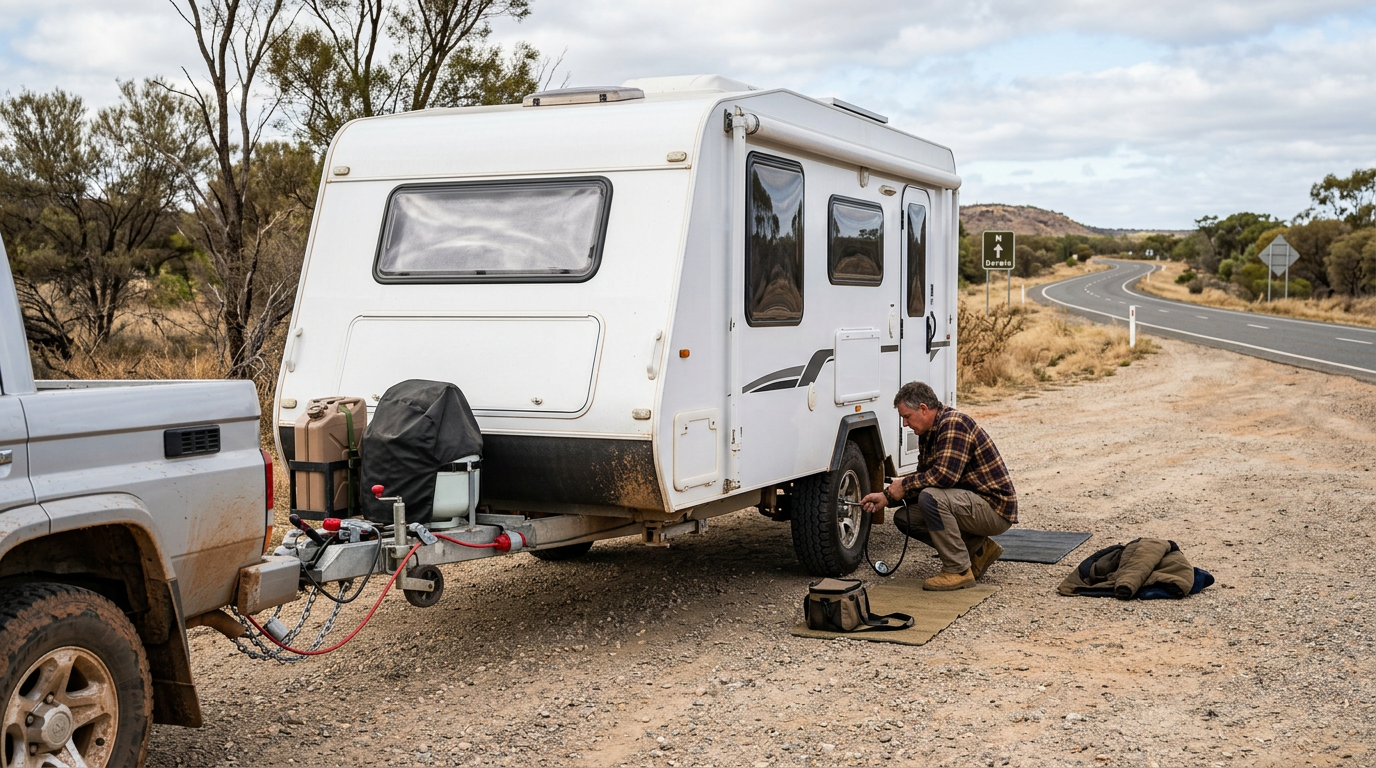
Start with the caravan itself. Tyres should have correct pressure, visible tread and no cracking on the sidewalls. Old tyres can fail even when the tread still looks acceptable.
Wheel bearings, brakes and lights need attention because they often sit unused between trips. A short test drive near home can show pulling, wobble or brake drag before the trip begins.
Coupling and Chain Checks
The coupling should lock cleanly on the tow ball. Safety chains should cross correctly, with enough slack for turning and not enough slack to scrape the road.
If the caravan has a breakaway system, battery charge and cable condition should be part of the caravan towing check. The system is only useful when it is connected and working.
Balance the Load Before Highway Speeds
Poor weight distribution can create sway. Heavy items should sit low and close to the axle line where possible. Rear-heavy loading can make the caravan feel unstable.
Water tanks, gas bottles, toolboxes and front boots all change balance. The driver should know what is full, what is empty and what has been added since the last trip.
Interior Load Control
Inside the caravan, cupboards and drawers should be secured. A loose microwave plate or heavy storage box can move sharply during braking.
This step may feel minor, but it protects the van and the tow vehicle. It also reduces distraction when the driver hears movement behind the vehicle.
Plan for Breakdown Recovery Before It Happens
A careful plan includes what to do if the caravan cannot continue. Some faults need a mechanic. Others need controlled transport to a repairer, storage yard or home address.
Allout Towing Services has more than 30 years of family-owned towing experience across Perth and wider WA. The company’s current website supports the 30+ years experience claim.
Matching Equipment to the Load
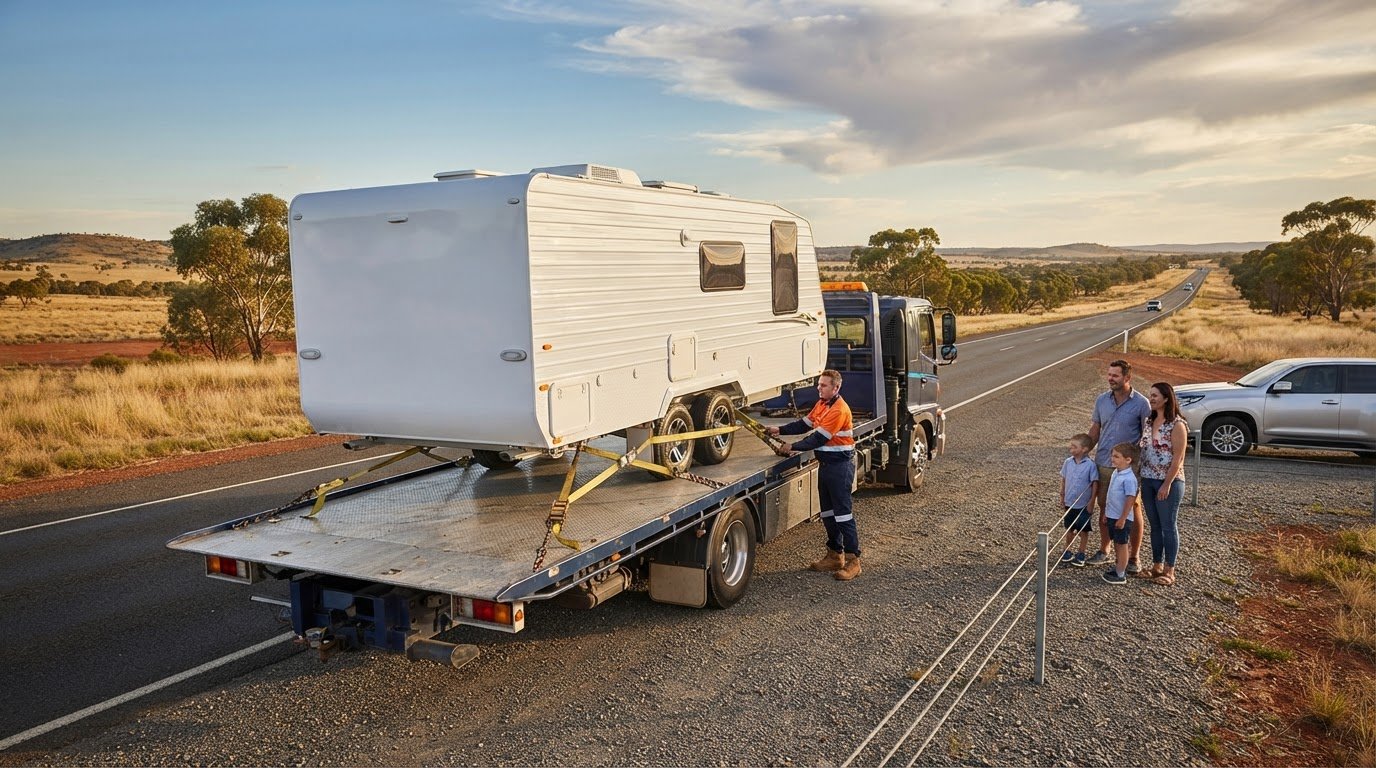
Caravans vary in size, height and access needs. Recovery may require a tilt tray, flatbed or tow setup that suits the weight, wheelbase and road position.
Allout Towing Services operates a tow fleet for cars, caravans, boats, trucks, motorcycles and specialist loads. Its website currently states that the fleet handles loads up to 10 tonnes.
When a Professional Tow Is Safer
A caravan with brake trouble, bearing heat, tyre damage or major sway should not be forced along the highway. The short-term convenience is not worth the added risk.
Professional transport can also help when a van needs to be moved for service before the holiday starts. That avoids putting a questionable setup through a long first leg.
Care Around Bodywork and Fittings
Caravans can be awkward to load because of stabiliser legs, long rear overhangs and low-mounted accessories. The loading angle and tie-down points need to protect the body.
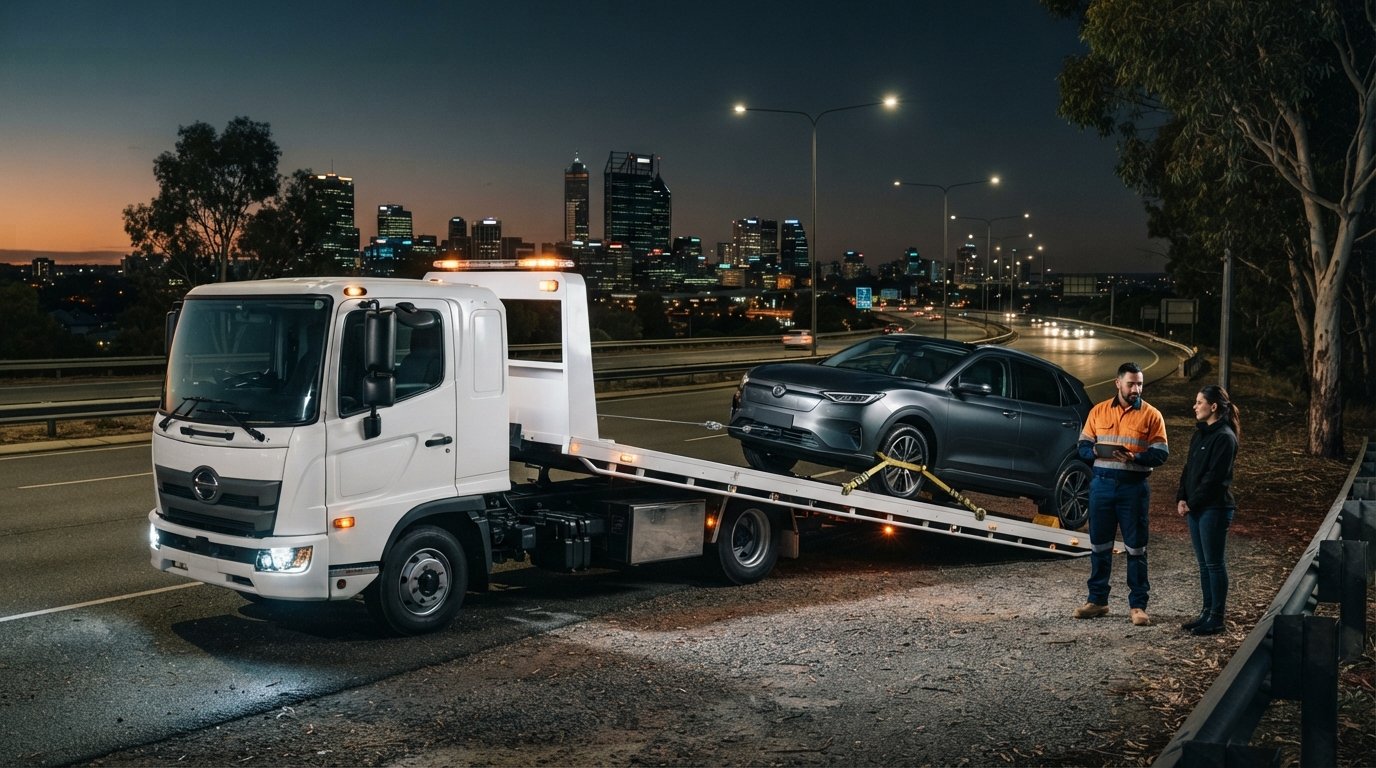
The same care used for prestige vehicle transport is useful here. The goal is controlled movement without avoidable damage to panels, steps or fittings.
Final Checks on Departure Morning
Before leaving, repeat the visible checks. Look at tyre shape, lights, mirrors, number plate, coupling, chains and plug connection. Confirm that the handbrake is released.
A caravan towing check should also include the first stop. Pull over after a short distance and feel for abnormal heat near the hubs, without touching hot components directly.
That early pause can catch a fault before highway speed. It also gives the driver a chance to adjust mirrors and confirm that the caravan is tracking properly.
Another useful step is to write a simple fault plan before leaving. Note the preferred repairer, insurer contact, storage option and the safest place to stop if the caravan starts pulling or vibrating. This does not make the trip complicated. It gives the driver a calm checklist if a small fault interrupts the first day on the road.
For older vans, take photos of the coupling, tyres and existing body marks before departure. Those records help separate old wear from any new transport issue.
FAQ
What should be checked before a north-bound caravan trip?
Check tyres, bearings, brakes, lights, coupling, chains, load balance, water tanks, gas bottles and interior storage. Route and weather should also be reviewed.
Can a tow truck move a caravan for inspection?
Yes, if the operator has suitable equipment and access. The right setup depends on caravan size, weight, clearance and whether the wheels can roll safely.
When should a caravan not be towed by the owner?
Avoid towing if there is brake failure, hot bearings, major sway, tyre damage, steering instability or uncertainty about the caravan’s safe loaded weight.
Conclusion
Caravan trip prep works best when tyres, balance, coupling and route planning are checked before the first long stretch. Allout Towing Services provides specialised towing for caravans that need careful movement before or during a trip. To arrange safe camper support, call (0418) 959 216.