Fleet managers handling end-of-lease returns face a recurring challenge. Coordinating the safe, damage-free transport of multiple vehicles to dealerships, auction yards, or holding facilities across Perth within tight timeframes creates complex logistics. When you’re managing 15, 50, or 200 vehicles coming off lease simultaneously, the logistics become complex fast.
Corporate fleet towing isn’t just about moving cars from Point A to Point B. It’s about protecting asset values, meeting contractual return conditions, avoiding excess wear charges, and keeping your fleet transition on schedule. One scratched bumper or delayed return can cost your organisation thousands in penalties or reduced residual values.
For Perth-based corporate fleet operators, the difference between a smooth lease transition and a costly one often comes down to one decision: how vehicles get from where they are to where they need to be.
Why End-of-Lease Returns Require Specialised Towing
Most fleet vehicles reach their lease end in good mechanical condition. They don’t need towing because they’ve broken down. They need towing because driving them to their return location adds unnecessary kilometres, creates insurance complications, or risks damage that could trigger excess wear-and-tear charges.
The Reality of Lease Contracts
A lease contract specifies exact return conditions. Drive a vehicle an extra 200km to a return depot, and you might push it over the kilometre threshold, triggering per-kilometre penalties. Park it on-site for three weeks waiting for someone to drive it, and you’re paying holding costs.
Tilt Tray Transport Eliminates Risks
Choosing professional towing services in Perth eliminates these risks entirely. The vehicle is loaded at your premises, secured properly, and delivered to the designated return location without adding a single kilometre to the odometer. No risk of kerb damage, no chance of a stone chip on the final trip, no insurance grey areas about who’s covered during the return journey.
The Hidden Costs of DIY Fleet Returns
Many fleet managers initially attempt to coordinate returns internally. Staff members drive vehicles to return locations during work hours, catching Ubers back, or following each other in convoys. It seems cost-effective on paper. But the real costs accumulate quickly compared to engaging an established Perth towing service.
Staff Time Investment
A three-vehicle return across Perth can consume an entire working day for two employees when you factor in travel time, paperwork at the return facility, and getting staff back to your premises.
Fuel and Toll Expenses
Driving 15 vehicles across the metro area racks up hundreds in fuel costs, plus toll fees if your route crosses the Gateway or Freeway systems.
Insurance Exposure Gaps
Who’s covered if an employee has an accident while driving a lease vehicle to its return location? Many corporate policies have grey areas around non-business use during vehicle transitions.
Excess Wear Charges
One careless moment – a scraped wheel on a kerb, a shopping trolley dent in a car park – can trigger charges that exceed what professional transport would have cost.
Opportunity Cost
Your team’s time is better spent on actual fleet management, not playing shuttle driver. Pre-arranged corporate vehicle transport converts all these variables into a single, predictable line item. You know exactly what it costs, exactly when it happens, and exactly what condition your vehicles will arrive in.
How Pre-Arranged Corporate Fleet Towing Works
Think of it like booking a removalist for an office relocation rather than asking staff to move boxes in their personal cars. You’re engaging specialists to handle a logistical task efficiently.
Initial Consultation and Scheduling
A reliable towing company starts by understanding your fleet return timeline. How many vehicles? What types (sedans, utes, SUVs, light commercial)? Where are they currently located (single depot, multiple sites, employee homes)? Where do they need to go (single dealership, multiple return facilities, auction yard)?
Most corporate leases end on specific dates – often clustered around financial year-end or calendar year-end. Fleet return logistics schedules your transport requirements weeks or months in advance, locking in capacity during Perth’s busiest periods for fleet movements.
Vehicle Collection Strategy
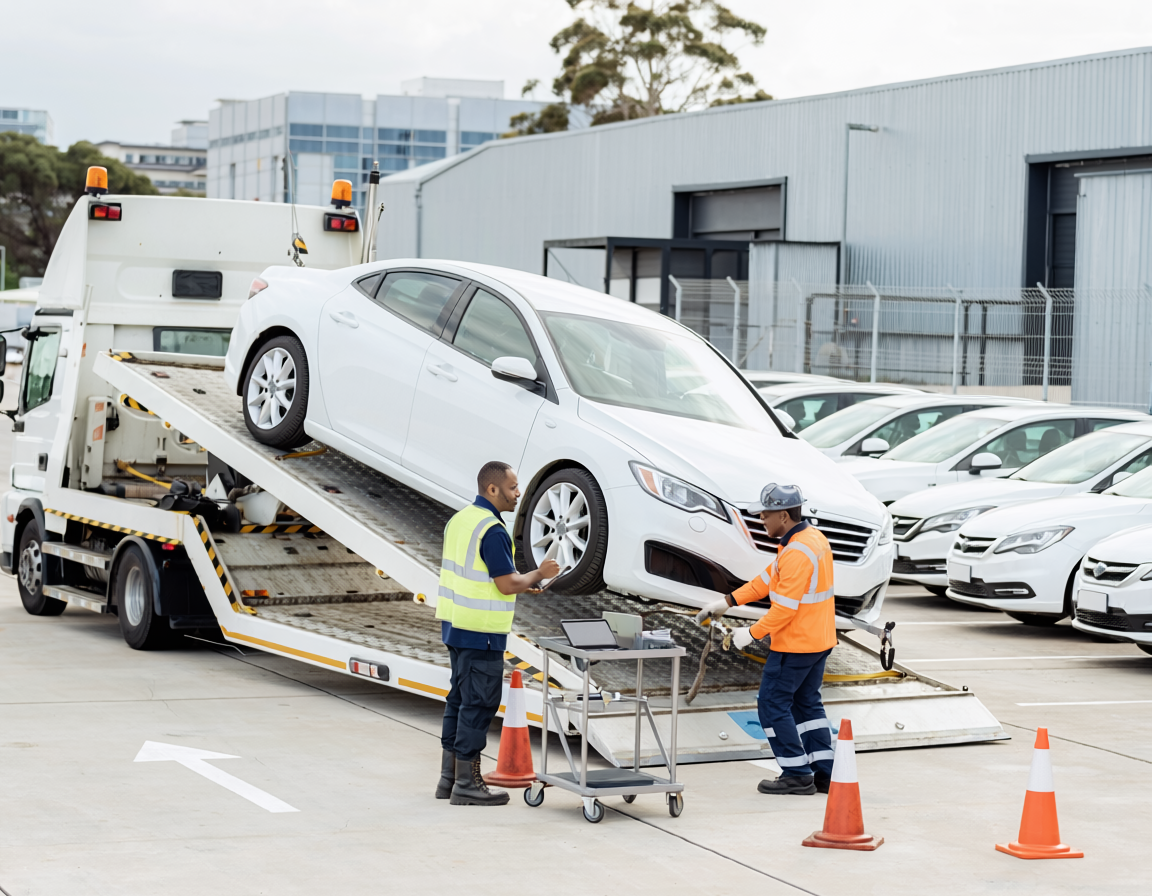
For fleets located at a central depot, operators can often schedule multiple vehicles in a single visit, maximising efficiency. Damage-free tilt tray transport handles back-to-back loads throughout a day, systematically working through your return list.
For vehicles at employee homes or scattered locations, operators develop a collection route that makes geographic sense, minimising travel time between pickups while meeting your return deadlines.
Documentation and Condition Reporting
Every vehicle is photographed before loading. This creates an independent record of its condition at collection time – protecting both you and your leasing company from disputes about when damage occurred.
Operators complete a basic condition report noting any pre-existing damage, current odometer reading, and fuel level. This documentation proves invaluable if questions arise later about the vehicle’s condition during the return process.
Secure Transport
Professional bulk vehicle towing differs from standard towing – operators aren’t responding to a breakdown. They’re moving valuable assets that need to arrive in exactly the same condition they left. Tilt tray trucks load vehicles completely flat, with no steep ramps that risk scraping low front spoilers. Four-point tie-down systems secure each vehicle without putting pressure on suspension components or body panels.
Delivery and Handover
Operators coordinate delivery times with your return facilities to avoid vehicles sitting in unsecured car parks. Most dealerships and auction yards have specific receiving hours and documentation requirements. Upon delivery, operators obtain a signed receipt confirming the vehicle’s arrival and condition. This closes the loop on your responsibility for the vehicle and provides proof of timely return.
Fleet Types Handled for Corporate Returns
With over 30 years of experience, All Out Towing operates a modern fleet equipped to handle the full spectrum of corporate vehicles across Perth’s metro and northern suburbs. Police-certified operators apply the same care to a sales sedan as they do to a six-figure executive vehicle.
Passenger Vehicles
Sedans, wagons, and hatchbacks from your sales team or executive fleet are straightforward tilt tray jobs, often done in batches. Professional car towing services handle multi-unit pickups across Perth’s metro area, and bulk car towing in Perth is generally the most cost-effective category in any corporate fleet return.
SUVs and 4WDs
Field service vehicles, regional fleet units, or management vehicles are common. Many are all-wheel-drive, which means they must be transported on a tilt tray rather than towed conventionally – in line with Main Roads WA equipment standards. Attempting to tow an AWD vehicle with two wheels on the ground will destroy the drivetrain within kilometres.
Utes and Light Commercials
Trade vehicles, service utes, or delivery vehicles require specialist handling. Operators handle single-cab, dual-cab, and cab-chassis configurations. If your ute has a toolbox or canopy, they account for the extra height when selecting the transport vehicle.
Vans and Light Trucks
Panel vans, minibuses, or people movers require specific tie-down points and careful height clearance management. If your fleet includes vehicles up to 4.5 tonnes GVM (like Isuzu NPRs or Hino 300 series), light truck towing in Perth is part of the same scheduled service – capacity extends up to 10 tonnes for the heavier end of the corporate spectrum.
Timing Your Fleet Returns for Maximum Efficiency
Most corporate leases cluster around financial year-end (June 30) or calendar year-end (December 31). This creates predictable peak periods when every fleet manager in Perth is trying to coordinate returns simultaneously.
Booking in Advance
Booking your lease vehicle collection in advance – ideally 4-6 weeks before your return deadline – gives you several advantages. You secure transport capacity during peak periods, with specific trucks and crew allocated to your job. Towing services in Perth get heavily booked at quarter-end, so early commitment matters.
Flexible Scheduling Options
You get more flexible scheduling options. Need vehicles collected early morning before staff arrive? Late afternoon after they leave? Operators can accommodate your operational requirements when planning weeks ahead rather than days.
Reduced Stress
Instead of scrambling to coordinate last-minute returns as your lease expiry approaches, you’ve already ticked this task off your list. When the date arrives, it just happens.
Cost Structure and Budget Planning
Corporate fleet towing is priced differently from emergency towing. You’re not calling at 2am because a vehicle broke down on the freeway. You’re booking a scheduled towing service in Perth with defined parameters.
Pricing Factors
Compared to emergency callouts, scheduled towing services in Perth offer significantly more predictable pricing. Several variables shape the final quote:
- Volume pricing applies when you’re moving multiple units – per-vehicle cost drops significantly with batch jobs
- Distance between collection and delivery points affects pricing – a 10km trip from Osborne Park to Balcatta costs less than a 40km Joondalup-to-Kwinana run
- Collection logistics matter – vehicles at a single location are more efficient than 15 scattered employee addresses
- Vehicle type influences cost – a standard sedan costs less than a dual-cab ute with a full toolbox and roof racks
Timing Flexibility Benefits
If you can give operators a 3-4 day window for collection rather than demanding a specific 2-hour slot, they can route you more efficiently and pass those savings on.
Transparent Upfront Quotes
Detailed quotes are provided upfront, so you can budget accurately. No surge pricing, no after-hours penalties (because it’s pre-arranged, not an emergency), no surprises.
Integration With Your Fleet Management Process
The best corporate fleet towing isn’t a standalone transaction – it integrates seamlessly with your broader fleet management workflow.
Software Integration
Operators can work directly with your fleet management software or leasing company’s return portal. If your system generates a vehicle return schedule with addresses and deadlines, operators can import that data and build collection plans around it.
Leasing Company Coordination
For organisations using fleet management companies like SG Fleet, LeasePlan, or Orix, operators are familiar with their return processes and documentation requirements. They know what paperwork they need, what condition standards they apply, and how to streamline the handover.
Multiple Destination Handling
If you need vehicles returned to different locations – some to dealerships for resale, others to auction yards, some to a holding facility for refurbishment – operators can split the delivery destinations within a single collection run. For unusual fleet items like pool boats, branded display trailers, or motorcycle units in your asset register, specialist towing solutions cover the items standard fleet operators won’t touch.
Risk Management and Insurance Considerations
Professional corporate fleet towing isn’t just about convenience – it’s about risk management.
Insurance Clarity
When an employee drives a lease vehicle to its return location, several insurance questions arise:
- Is the vehicle covered under your corporate policy during this non-business use?
- Is the employee’s personal vehicle insurance affected if they’re driving for work purposes?
- What happens if there’s an accident during the return trip?
Professional Transport Insurance
Professional transport eliminates these grey areas. A fully insured towing company carries cover for the work it performs. If damage occurs during loading, transport, or unloading (rare, but possible), insurance responds. Your corporate policy isn’t involved.
Pre-Existing Damage Documentation
This matters especially for vehicles approaching lease-end that might have minor pre-existing damage. If an employee drives a car with a small dent to its return location and gets in an accident, sorting out which damage was pre-existing and which is new becomes complicated. When operators transport the vehicle, there’s clear documentation of its condition before and after their involvement.
After-Hours Coverage for Urgent Situations
Occasionally a fleet vehicle fails before its scheduled return – flat battery in a depot car park, a tyre puncture overnight, or a mechanical issue that prevents it from being moved. 24-hour emergency towing ensures these situations don’t derail your return schedule, with the same Perth towing operator handling both the planned movements and any tow truck 24/7 contingency.
Planning for 2026 Fleet Returns Now
If you’re reading this in 2025 with fleet leases expiring in 2026, you’re thinking ahead – which is exactly the right approach.
Market Capacity Considerations
The corporate fleet market in Perth is substantial. Government departments, mining services companies, construction firms, healthcare organisations, and professional services all run significant fleets with regular lease cycles. When multiple organisations’ leases expire simultaneously, demand for towing services in Perth gets tight. Booking your 2026 returns now means you’re first in line, not competing for limited availability during peak periods.
Better Pricing Through Advance Booking
Booking months in advance allows operators to route jobs efficiently with other work in the same area, reducing deadhead travel and passing those efficiencies on to you. This is one area where choosing the right Perth towing company genuinely affects your bottom line.
Rolling Lease Cycle Arrangements
For organisations with rolling lease cycles – where vehicles come off lease throughout the year rather than all at once – operators can establish ongoing arrangements. You provide them with your return schedule quarterly, and they automatically handle collections as vehicles reach their end dates. It becomes one less thing your fleet manager needs to actively manage.
Roadside Support During Transition
For drivers still operating fleet vehicles in their final lease months, emergency roadside support keeps the fleet running until handover day – jump starts, fuel delivery, and lockout assistance all sit alongside the scheduled return work.
The Real Value Proposition
Pre-arranged corporate fleet towing delivers predictability in an area of your fleet management that’s often chaotic. You know exactly when vehicles will be collected. You know exactly where they’re going. You know exactly what condition they’ll arrive in. You know exactly what it costs.
Your staff aren’t spending work hours playing shuttle driver. Your vehicles aren’t accumulating extra kilometres or damage during return trips. Your insurance exposure is clear and managed. Your fleet transition happens on schedule.
When your leasing company or finance department asks “How did the returns go?” – you can answer with documentation, delivery confirmations, and zero drama. That’s not exciting or innovative. It’s just solid logistics executed by people who’ve moved thousands of vehicles across Perth.
Booking Your 2026 Fleet Returns
Corporate fleet end-of-lease vehicle returns represent a significant logistical challenge that many Perth organisations face annually. The difference between handling these returns professionally and attempting to coordinate them internally often comes down to hidden costs – staff time, fuel, insurance exposure, and damage risk that DIY approaches rarely account for.
Perth’s northern, southern, and eastern suburbs receive comprehensive towing services from a single coordinated provider. For pre-arranged corporate fleet bookings, scheduled lease returns, or general enquiries, contact the team at All Out Towing on 0418 959 216 – 30+ years of Perth experience, police-certified operators, and direct insurance billing on a single call.