You’ve just picked up a project car at an estate sale. It hasn’t seen a registration sticker in five years. Or maybe you’re a business owner who’s bought a written-off excavator for parts, and now you need to shift it across Perth to your workshop. The question hits fast: can you legally move an unregistered vehicle on WA roads?
The short answer is no – not without the right paperwork. But there’s a legal pathway that lets you do it safely, compliantly, and without the risk of fines or worse. It’s called an unregistered vehicle permit, and understanding how it works can save you time, money, and a headache with the Department of Transport.
An unregistered car move might seem like a minor logistical challenge. However, the legal and financial consequences of getting it wrong are far more serious than most drivers expect – including personal liability for any accident that occurs without CTP insurance in place. Knowing your options before you need them is the clearest advantage any vehicle owner can have.
All Out Towing, Perth’s trusted towing provider, has moved thousands of unregistered vehicles across Perth – from classic cars to forklifts to caravans that haven’t turned a wheel in a decade. Here’s what you actually need to know.
Why WA Law Prohibits Driving Unregistered Vehicles
Western Australia’s Road Traffic Act 1974 is clear: you cannot drive an unregistered vehicle on a public road, car park, or verge unless you hold a valid permit or exemption. This isn’t bureaucratic overreach. It’s rooted in two critical safety principles.
Roadworthiness and CTP Insurance
First, registration confirms that a vehicle has passed basic safety standards. Registered vehicles must meet roadworthiness criteria – functional brakes, lights, tyres, and steering. An unregistered car might have rusted brake lines, bald tyres, or no working headlights, all of which pose serious risks to other road users.
Second, registration funds compulsory third-party (CTP) insurance. If an unregistered vehicle causes an accident and injures someone, there’s no insurance safety net. The driver becomes personally liable for medical costs, lost income, and legal damages that can stretch into hundreds of thousands of dollars.
The Penalties
The modified penalty for driving unregistered is $200 for individuals and up to $250 for companies. But if the matter goes to court, fines climb significantly higher – and in cases involving serious accidents, criminal charges may apply.
What Is an Unregistered Vehicle Permit?
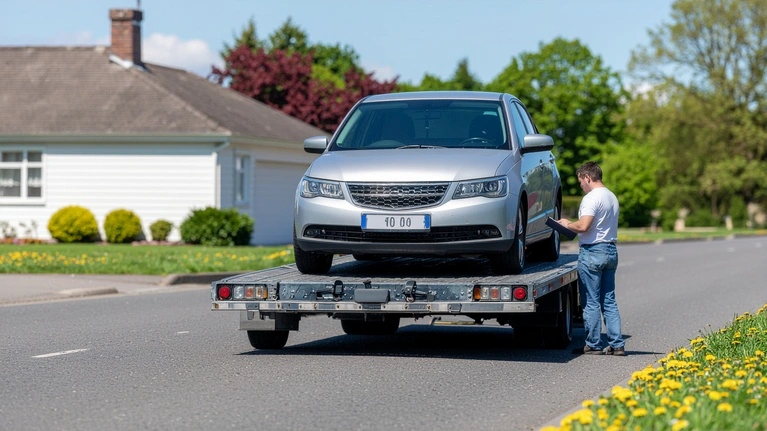
An unregistered vehicle permit (UVP) is a temporary, single-use authorisation issued by the Department of Transport that allows you to move an unregistered vehicle on public roads for a specific, limited purpose. Think of it like a hall pass for your car – valid only for the journey, date, and purpose stated on the permit.
The permit doesn’t register the vehicle. It doesn’t make it roadworthy. It simply grants legal permission to move it from Point A to Point B under strict conditions.
When You’ll Need a UVP
- Transporting a newly purchased vehicle from a private sale or auction to your home or mechanic
- Moving a project car, classic car, or restoration vehicle to a workshop or event
- Relocating a written-off or deregistered vehicle to a wrecker, repairer, or storage facility
- Shifting farm machinery, forklifts, or construction equipment between sites
- Taking a vehicle for a roadworthy inspection or compliance check
The permit is issued for a maximum of three days, and it must specify the exact route, start point, and destination. You can’t deviate from that route, and you can’t use it to run errands or make side trips. It’s a direct, purpose-driven unregistered car move only.
How to Apply for an Unregistered Vehicle Permit in WA
Applying for a UVP is straightforward, but it requires attention to detail. You can apply through the Department of Transport, either online via the Transport Online portal or in person at a licensed vehicle licensing agent.
What You’ll Need to Provide
- Vehicle identification number (VIN) or chassis number
- Make, model, and year of the vehicle
- Current location of the vehicle – a specific street address
- Destination address – must be specific, not just “Perth metro”
- Reason for the move, such as “transport to mechanic for roadworthy inspection”
- Planned travel dates – permits are valid for up to three days
- Proof of identity – your driver’s licence
The fee is currently around $27.70 for a standard UVP – non-refundable even if you don’t end up using it. Once approved, the permit is issued digitally or as a printed certificate. You must carry it during the journey and have it available for inspection by police or transport inspectors if requested.
Conditions and Restrictions You Must Follow
A UVP isn’t a free pass. It comes with strict conditions, and breaching them can void the permit and expose you to fines or prosecution.
What the Permit Requires
- The vehicle must be moved only for the stated purpose. If the permit says “transport to mechanic,” don’t stop at a friend’s property to show off the car
- The vehicle must be roadworthy enough to be safely moved. It must have functional steering, brakes, and tyres sufficient to control the vehicle
- You must hold a valid driver’s licence for the class of vehicle you’re moving
- The permit is valid only for the dates and route specified. If your plans change, you’ll need to apply for a new permit – extensions aren’t available
- The vehicle must not be used for commercial purposes during the move
If police pull you over and the vehicle doesn’t meet these conditions, the permit won’t protect you. You’ll be treated as driving an unregistered vehicle.
When a Permit Isn’t Enough – and When You Need a Tow
Not every unregistered vehicle can be legally driven, even with a permit. If the car is mechanically unsound, missing key safety components, or simply too risky to move under its own power, you’re legally required to have it towed.
Why Tilt Tray Is the Safest Option
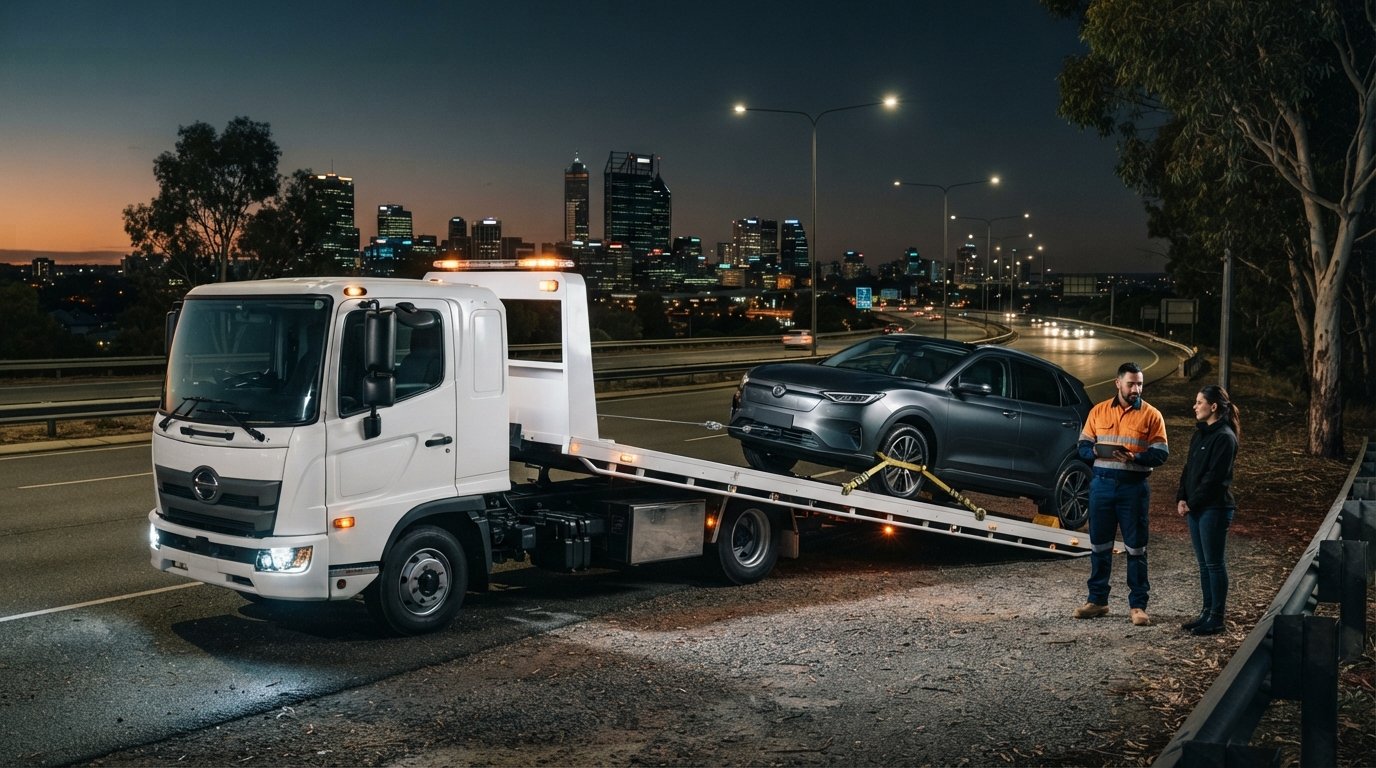
This is where our damage-free tilt tray transport comes in. A tilt tray is the safest, most compliant way to complete an unregistered car move because the vehicle never touches the road. It’s winched onto a flatbed, secured, and transported entirely off its own wheels.
We’ve moved everything from barn-find Holdens with seized engines to forklifts with flat tyres to caravans with no brakes. If it can’t roll safely, we don’t risk it.
Using a professional towing service also removes your personal liability. If the vehicle is being towed by a licensed operator, you’re not driving it – so you don’t need a UVP in most cases. The towing company handles compliance, securement, and safe transport. You just need to provide the keys and the destination.
High-Value and Delicate Vehicles
For classic cars, prestige vehicles, or show cars requiring an unregistered car move, we recommend our prestige car towing services. We use enclosed tilt trays, soft straps, and wheel cradles to ensure your investment arrives exactly as it left.
What Happens If You’re Caught Without a Permit
Let’s say you drive an unregistered project car across town without a permit – just a 15-minute trip. The baseline fine is $200. But if the vehicle is involved in an accident – even a minor one – you’re personally liable for all damages and injuries because there’s no CTP insurance. If someone is hurt, you could face claims worth tens or hundreds of thousands of dollars. Your personal assets, including your home, could be at risk.
If the matter escalates to court, you may also face:
- Demerit points if the offence is tied to other traffic violations
- Vehicle impoundment – the car can be seized and held until fines and fees are paid
- Criminal charges in cases involving serious injury or death
We’ve seen it happen. A client once tried to move a written-off ute across Perth without a permit. He was pulled over, fined, and the vehicle was impounded. By the time he paid the fines, towing fees, and impound charges, he’d spent more than double what professional towing would have cost.
Alternatives to Driving: When Professional Towing Makes More Sense
There are situations where applying for a UVP is more hassle than it’s worth. If the vehicle is:
- Mechanically unsound or unsafe to drive
- Located in a hard-to-access area – a backyard, farm, or construction site
- High-value or irreplaceable – a classic, prestige, or show car
- Being moved a long distance across or beyond Perth
- Needed urgently, with no time to wait for permit approval
…then professional towing is the smarter, safer, and often cheaper option.
Our expert vehicle recovery services cover the full Perth metro area from Joondalup to Mandurah, with same-day service for most unregistered car move jobs. If you’ve bought a car at auction, inherited a vehicle, or just need to clear a driveway, we handle the logistics, compliance, and transport.
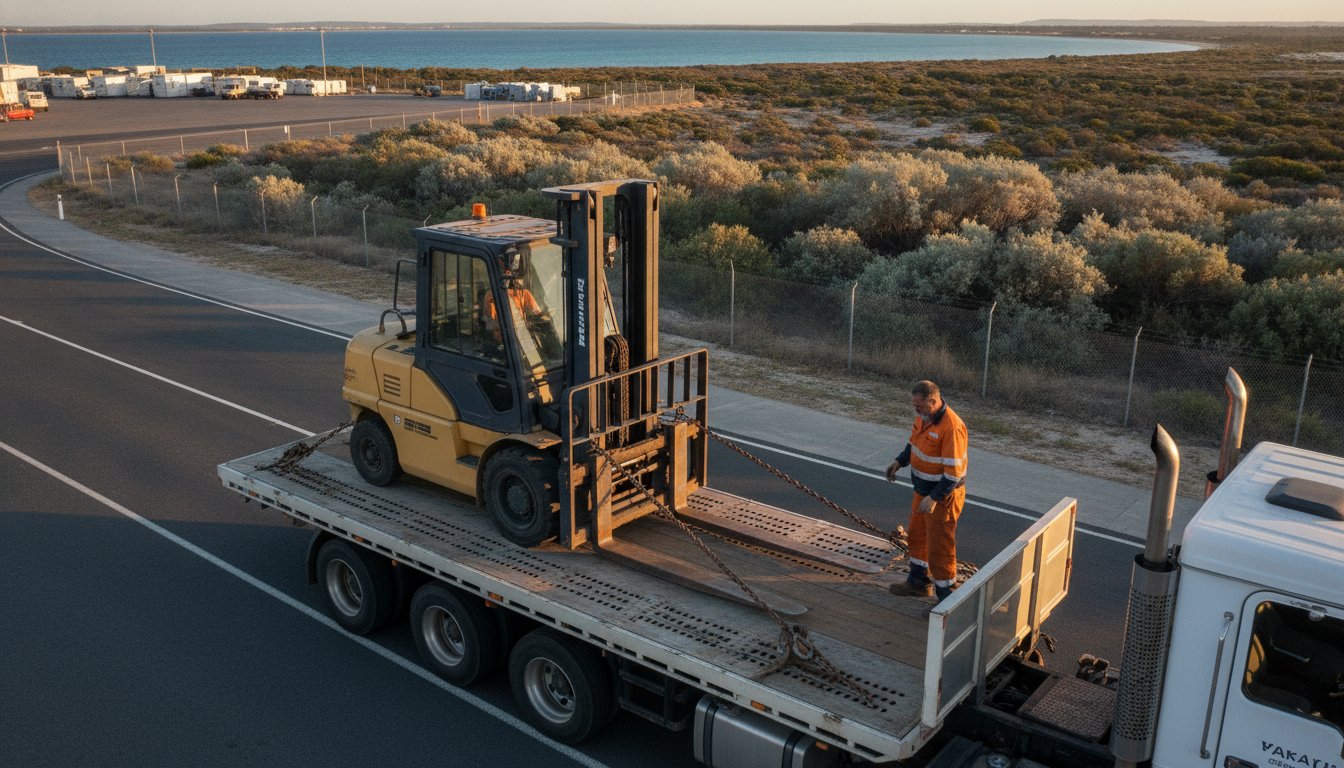
For businesses moving equipment – bobcats, forklifts, generators, or site sheds – our specialist heavy equipment towing is built for the job. We carry the permits, insurance, and equipment to move machinery up to 10 tonnes, and we coordinate with site managers to ensure safe loading and delivery.
What About Farm Machinery, Trailers, and Boats?
Unregistered vehicles aren’t just cars. The same rules apply to trailers, caravans, boats, farm machinery, and construction equipment. If it’s designed to be used on a road and it’s not registered, you need a permit or a tow.
Farm machinery presents a unique challenge. Many tractors, harvesters, and spray rigs are never registered because they operate exclusively on private land. But the moment you need to move one across a public road, you’re technically required to hold a permit or have it towed. WA Police and the Department of Transport are pragmatic about short rural crossings on quiet roads – but longer highway movements attract scrutiny.
For boats, caravans, and unregistered trailers, the rules are the same. We move dozens of these every month for clients who’ve bought them secondhand or pulled them out of storage. Our specialist towing solutions handle these jobs safely and legally – whether it’s a boat trailer needing delivery to a new owner or a caravan being relocated across Perth.
How All Out Towing Simplifies the Process
If you’re unsure whether you need a permit or a tow, contact us and we’ll walk you through it. We’ll ask about the vehicle’s condition, location, and destination, and we’ll recommend the most cost-effective, compliant solution.
If the vehicle is safe to drive and you’ve got time to apply for a permit, we’ll point you in the right direction. But if it’s safer, faster, or cheaper to tow, we’ll give you a quote with no obligation and no pressure. Our fleet includes tilt tray trucks, flatbeds, and heavy-duty recovery vehicles, so we can handle anything from a Smart car to a 10-tonne excavator.
For urgent unregistered car move situations – clearing a vehicle from a driveway before a property settlement, or recovering a broken-down truck blocking a worksite – our 24/7 roadside assistance team is on standby around the clock.
Conclusion
Moving an unregistered vehicle in WA isn’t illegal – but doing it without the right paperwork is. An unregistered vehicle permit gives you a legal, low-cost pathway for a compliant unregistered car move. It’s simple to apply for, and it protects you from fines, liability, and legal complications.
But permits have limits. If the vehicle isn’t safe to drive, or if you’d rather hand the job to professionals who do this every day, towing is the smarter choice. We handle the compliance, the securement, and the transport – so you can focus on what matters.
For reliable towing services, reach out to our team at 0418 959 216. All Out Towing operates across Perth’s metro area – with the gear, the experience, and the local knowledge to complete any unregistered vehicle permit situation correctly and without stress.