WA’s coast, forests, and red-dirt tracks are incredible, but they are not forgiving when something goes wrong. Safe off-road vehicle recovery WA is about calm decisions, the right gear, and a methodical approach that protects people and vehicles. With a few practical steps, most bogs, sand traps, and rocky hangs can be resolved without damage. When it is beyond your setup, professional off-road recovery WA support makes the difference between a short delay and a dangerous situation.
Why Off-Road Recoveries Go Wrong
Most incidents start with good intentions and rushed technique. Panic creates shortcuts that break gear and injure people. Common failure points include:
- Using unrated straps, ropes, or hardware-store hooks.
- Pulling from non-rated points like tow balls or tie-downs.
- Hard yanks instead of controlled loads, leading to snapped equipment.
- Pulling at the wrong angle on slopes and risking a rollover.
Key principle: slow the situation down, make a plan, and only use rated gear attached to rated recovery points.
What You Need Before You Leave the Bitumen
Pack quality equipment that matches the real loads involved:
- Rated kinetic recovery strap (8,000 kg minimum for most 4WDs).
- Two rated bow shackles to match the strap.
- Recovery boards (MaxTrax or similar).
- Shovel with a proper blade.
- Tyre deflator and portable air compressor.
- Tree trunk protector, snatch block, and winch if travelling remote or solo.
- Recovery damper or heavy blanket, gloves, first aid kit, and reliable comms (UHF; satellite device for remote trips).
Buy once, buy rated, and inspect gear after every use.
The Guilt You Might Be Feeling
Feeling embarrassed because you are stuck is common and unhelpful. Every off-roader gets bogged eventually. The smart move is to pause, assess, and work a safe plan. Confidence comes from process, not speed.
Assess the Situation Before Touching Gear
Walk the scene:
- What is stuck? Spinning wheels, belly-hung, cross-axled, or a rock jam under the diff.
- What is the angle? If tilt exceeds roughly 30°, treat as a rollover risk.
- Any fluids or damage? Leaks, fuel smells, or hot components change the plan.
- What is changing? Rising tide, fading light, or heat.
- Are people hydrated and clear-headed? Fatigue leads to poor decisions.
If the setup looks marginal or unsafe, prepare to call a professional rather than escalate risk.
Start With Low-Risk Techniques
Simple steps solve more recoveries than people expect:
Tyre Pressures First
Drop to 18–20 PSI for sand and 22–24 PSI for mud or rock. This increases footprint and traction dramatically.
Dig and Ramp
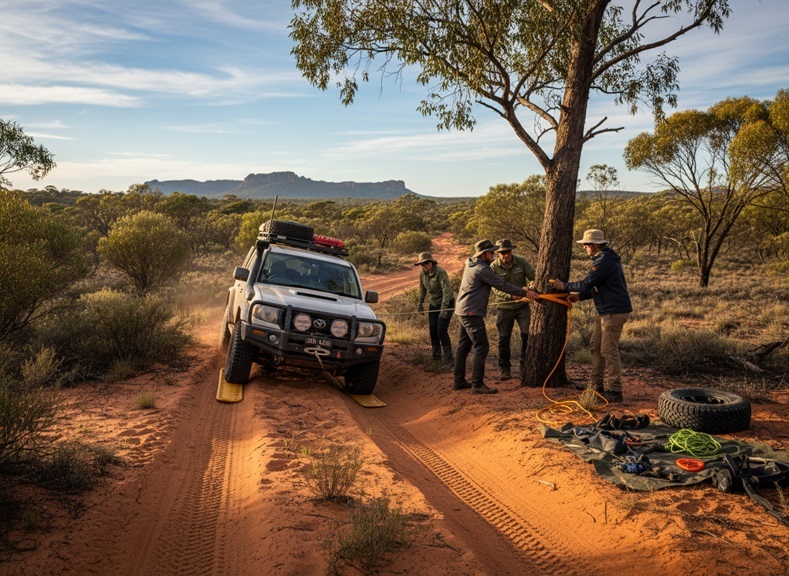
Use the shovel to clear sand or mud in front of and behind the drive tyres. Shape a short ramp the tyres can climb.
Boards, Not Throttle
Seat recovery boards firmly, then apply smooth, steady throttle. Wheel spin digs you deeper.
Re-trace Your Line
If you are pointed uphill in soft sand, reversing down the track you created is often the easiest exit.
Analogy: Forcing a bogged 4WD with throttle is like trying to sprint in deep water. You work harder, go nowhere, and exhaust yourself. Give your tyres a firm footing and move with control.
When You Need a Gentle Pull
If the basics are not enough, set up a controlled pull:
Only Use Rated Recovery Points
Attach to factory or aftermarket rated points. Never use a tow ball, bumper loop, or tie-down.
Correct Connections
Fit the strap with bow shackles. Tighten pins firm, not over-torqued. Keep lines straight and untwisted.
Clear the Danger Zone
All bystanders stand at least 1.5× strap length away and never between vehicles. Add a recovery damper to reduce recoil if anything fails.
Smooth Power
The recovery vehicle eases the slack out, then pulls steadily. The stuck vehicle applies gentle throttle in low range. Use UHF or clear hand signals, not shouting.
Winching Without Wrecking
Winches are powerful tools that demand disciplined setup:
- Inspect rope or cable for kinks and frays. Replace if suspect.
- Use a tree trunk protector on suitable anchors; avoid ring-barking.
- Add a snatch block to double line pull and improve angles.
- Never step over a tensioned line. Never hook back to the line itself.
- Keep pulls slow and steady. If nothing moves, stop and reassess.
Why This Feels Harder Than Videos Make It Look
YouTube edits out the 30 minutes of measuring angles, clearing paths, and setting dampers. Real recoveries involve heat, fatigue, and time pressure. That is why a slow, checklist-driven approach keeps everyone safe.
When To Call Professionals
Call in help if any of the following apply:
- Significant tilt or rollover risk.
- Water ingress, rising tide, or unstable ground.
- Vehicle damage, leaking fluids, or unknown mechanical condition.
- No rated gear, no safe anchor, or no second vehicle.
- You have tried the basics and made no progress.
A licensed team arrives with heavy-duty winches, multiple rigging options, and the experience to run safe angles under load.
Practical Support When You Need It
The first mention of All Out Towing is linked here so you can quickly find help. For urgent after-hours recoveries, see our 24-hour emergency towing. For controlled transport after extraction, our tilt tray services protect AWDs and low-clearance vehicles. If you need to get in touch, the team can advise you on the safest next step before mobilising.
Post-Recovery Checks Before You Drive Off
- Inspect underbody, lines, and diffs for strikes or leaks.
- Clear sand and debris from brakes; test pedal feel at low speed.
- Re-inflate tyres to on-road pressures before returning to sealed roads.
- If you took a hard pull or odd angle, book a workshop inspection.
Build Skills and Confidence
- Take a reputable 4WD course to learn safe rigging and terrain reading.
- Travel with others when learning new regions.
- Join a local club to refine technique and share route knowledge.
- Upgrade gear progressively and retire worn items early.
The Kit That Actually Matters
- Rated kinetic strap (8,000 kg+), two matched bow shackles.
- Recovery boards, shovel, tyre deflator, portable compressor.
- Tree protector, snatch block, quality winch for remote travel.
- Recovery damper, gloves, first aid kit, UHF radio.
- Satellite comms or PLB for remote WA trips, plus a fire extinguisher.
A Quick Recovery Checklist
- Have I identified what is truly stuck and why?
- Is the area safe from rollover, tide, heat, or traffic?
- Are attachment points and gear rated and undamaged?
- Are bystanders outside the danger arc with a damper on the line?
- Do we have clear comms and a simple, reversible plan?
- If uncertain, will I pause and call professional help?
The Truth About Remote Recovery
Getting stuck is not failure. Unsafe recovery is. WA’s distances, heat, and terrain raise the stakes, so preparation and patience are your best tools. When conditions or angles look marginal, step back and call a team that does this work daily. Your vehicle, your passengers, and your trip plans are all better served by a safe outcome.
If you need advice right now, All Out Towing can talk you through safe first steps and deploy the right truck for your terrain. For immediate assistance, get in touch and let a licensed operator handle the heavy work.