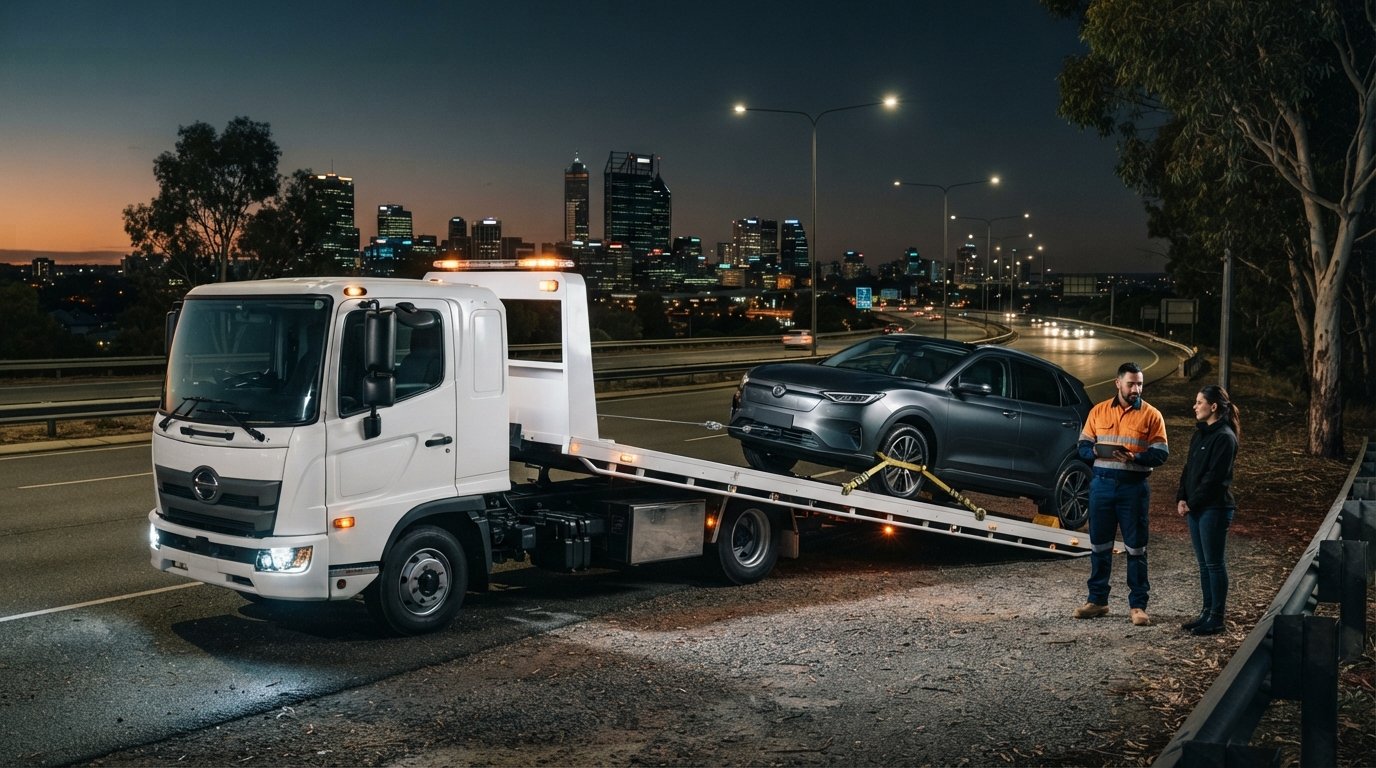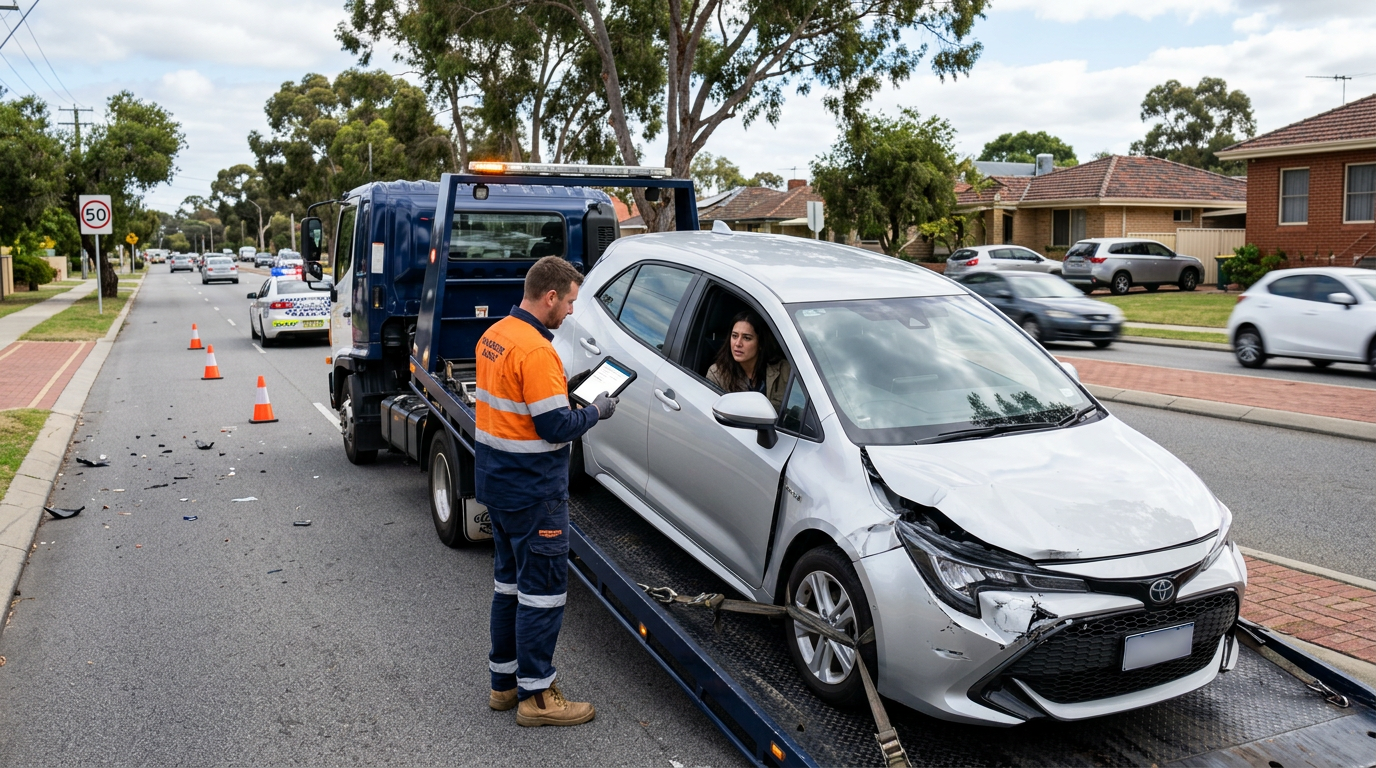
An accident in Kingsley can leave a driver dealing with the vehicle, traffic, police instructions and insurance questions at the same time. The towing decision should make that process simpler, not more confusing.
Kingsley insurance towing is easier when the tow operator understands claim handling, safe vehicle recovery and insurer documentation. An approved recovery also helps the driver keep the job organised from the first call.
Why Kingsley Insurance Towing Needs Clear Records
After a crash, the tow is part of the claim file. The insurer may need the pickup location, delivery address, vehicle condition, tow reason and payment details.
Allout Towing Services brings 30+ years of family-owned transport experience to accident and recovery work across Northern Perth. The company provides accident and insurance towing as part of its Perth towing services.
First Details to Capture
The driver should record the crash location, vehicle registration, insurer name and preferred repairer details where available. Photos can also help, if it is safe to take them.
An insurance-approved tow is not only about moving the vehicle. It is also about keeping the paperwork clean enough for the next step.
How Direct Billing Helps After a Collision
Direct billing can reduce the need for the driver to pay first and claim later. The exact process depends on the insurer, policy and claim approval.
Allout Towing Services runs a tow fleet for passenger cars, boats, caravans, motorcycles and specialist loads. Its fleet includes vehicles with different capacities for different towing and transport requirements.
Avoiding Receipt Confusion
A driver should ask what details will appear on the tow invoice. The invoice should match the vehicle, location and recovery reason.
The recovery works better when the operator can explain what information the insurer normally requests. That reduces avoidable back-and-forth after the vehicle is delivered.
Choosing a Safe Drop-Off Point
The vehicle may need to go to a repairer, holding yard, home address or insurer-approved assessment location. The safest destination depends on damage, access and claim instructions.
If the vehicle has steering, suspension or wheel damage, it may need careful loading. A controlled recovery is safer than trying to drive a damaged car a short distance.
Damage That Changes the Tow Method
Wheel damage, leaking fluids, locked steering or a damaged driveline can change how the vehicle should be moved. The operator needs enough detail to bring the right equipment.
For awkward or damaged vehicles, specialised towing may be the right approach. It supports loads that need more care than a standard roadside pickup.
What to Ask Before the Tow Starts
Before agreeing to the recovery, confirm the destination, payment method, insurer instructions and whether direct billing is available. Also ask whether the driver needs to contact the insurer before movement.
An insurance-approved tow should create a clear record. That record helps the repairer, insurer and vehicle owner understand why the vehicle was moved and where it went.
Keeping Personal Items Safe
If safe, the driver should remove valuables, garage remotes and essential documents before the vehicle leaves. If that is not possible, note what remains in the car.
The careful custody principles used in prestige vehicle transport can still matter after a crash. The vehicle may be damaged, but it still needs organised handling.
When Heavy or Commercial Vehicles Are Involved
Some accident recoveries involve work vehicles, trailers or loaded utes. These jobs need attention to weight, cargo and delivery access.
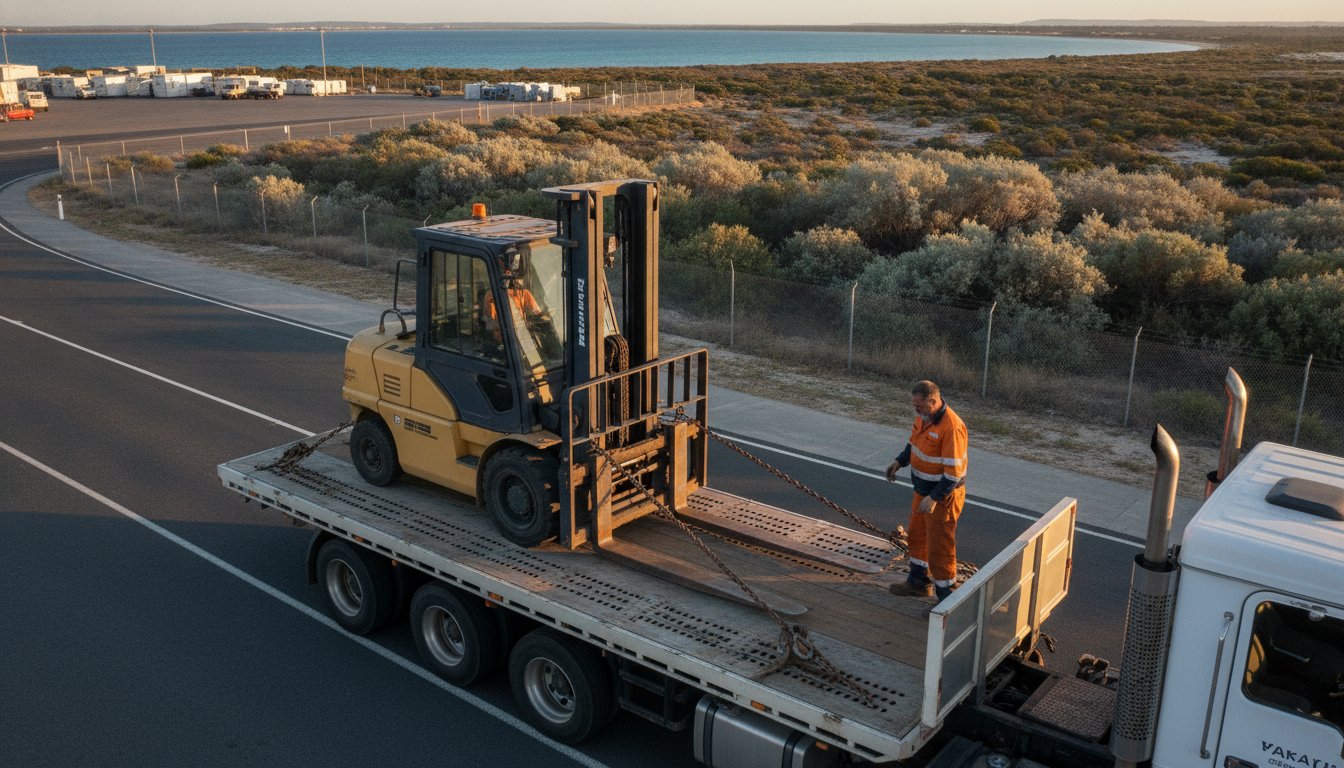
The same load-control discipline used in heavy equipment towing can apply when a vehicle is heavier than expected. Deck rating and tie-down points should be matched to the job.
Kingsley Claim Follow-Up
After the tow, the driver should keep the invoice, claim reference, operator details and delivery confirmation together. These details make insurer follow-up easier.
If the insurer asks for more proof, a clean towing record can answer many questions quickly. Good documentation reduces stress after the immediate recovery is finished.
Handling Storage and Access Questions
Storage can become a claim issue if the vehicle is taken to a yard without clear instructions. The driver should ask whether the destination can receive the car and whether storage charges may apply.
Access also matters after dark or during poor weather. A repairer may be closed, a home driveway may be steep, and a holding yard may require prior approval. Sorting those details before movement helps avoid a second tow.
A practical accident file should also note weather, road conditions and whether the vehicle was safe to leave unattended. These details are not complicated, but they help explain why a tow was needed at that time. If the vehicle blocks access, leaks fluid or cannot steer, the recovery reason should be written plainly.
Drivers should also keep the operator name and arrival time with the claim notes. That information can support later questions from the insurer, repairer or vehicle owner. When several people are involved, a simple written record prevents mixed messages and protects the recovery timeline.
A final call before delivery can also confirm access, gate codes and after-hours instructions. That small step keeps the tow record cleaner.
FAQ
Does insurance always cover towing after an accident?
Coverage depends on the policy, claim circumstances and insurer approval. The driver should check the policy or speak with the insurer as soon as practical.
What makes an insurance-approved tow different?
It usually means the tow is documented in a way the insurer can process. The pickup point, destination, vehicle details and reason should be clear.
Can a damaged vehicle be taken straight to a repairer?
Yes, if the insurer, repairer and site access allow it. Some vehicles may need assessment or storage first.
Conclusion
Kingsley insurance towing is easier when recovery, destination and paperwork are handled as one claim step. Allout Towing Services provides specialist tow service support for accident recoveries that need careful documentation. To arrange an accident tow, call (0418) 959 216.