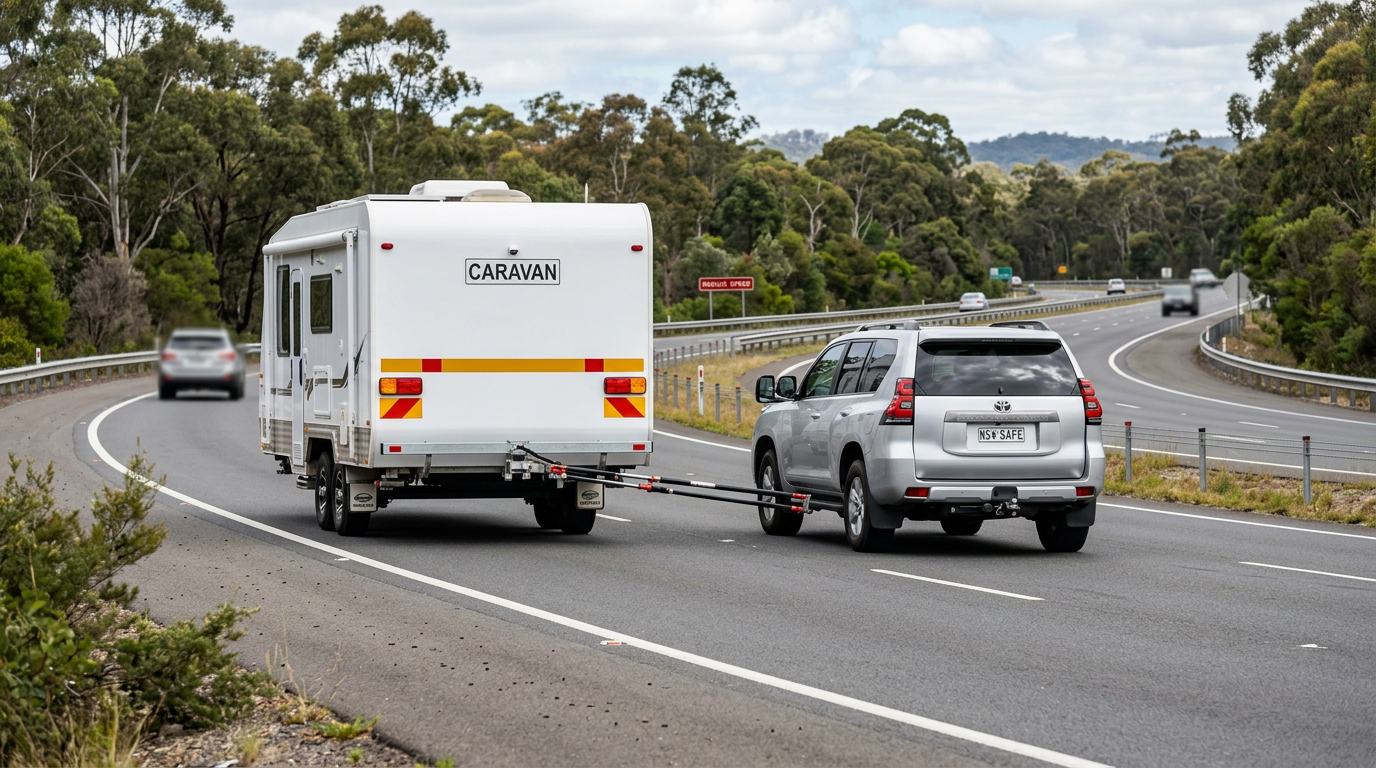
Caravan sway control is one of the most important checks before a long tow. A caravan that begins to move side to side can quickly unsettle the tow vehicle.
Stabiliser bar safety helps, but it does not replace correct loading, tyre checks and sensible speed. The setup needs to be stable before the driver reaches highway conditions.
Why Caravan Sway Control Matters
Sway happens when the caravan begins to oscillate behind the tow vehicle. It can be triggered by crosswinds, passing trucks, uneven roads, sudden steering or poor weight distribution.
Once sway starts, over-correction can make it worse. The safer approach is to prevent the conditions that cause it before the trip begins.
Weight Distribution Basics
Place heavier gear low and close to the caravan axle where practical. Too much weight at the rear can make the caravan behave like a pendulum.
Caravan sway control also depends on tyre pressure, suspension condition, tow ball download and the match between tow vehicle and caravan weight.
What Stabiliser Bars Can and Cannot Do
A stabiliser bar can improve control when correctly fitted and adjusted. It is not a cure for overloading, poor balance or a tow vehicle that is not rated for the job.
Stabiliser bar safety means checking the bar, brackets, friction surfaces, pins and clearances before travel. Damaged or poorly fitted parts can create false confidence.
Check the Setup After Loading
A setup that was stable last trip may not be stable today. Water levels, luggage, gas bottles, food, tools and bikes can all change the balance.
After loading, step back and look at the caravan and tow vehicle profile. A sagging rear vehicle or nose-high caravan should be investigated before departure.
Slow Down When Conditions Change
Speed makes sway more dangerous. Wet roads, gusty wind and passing heavy vehicles all reduce the margin for correction.
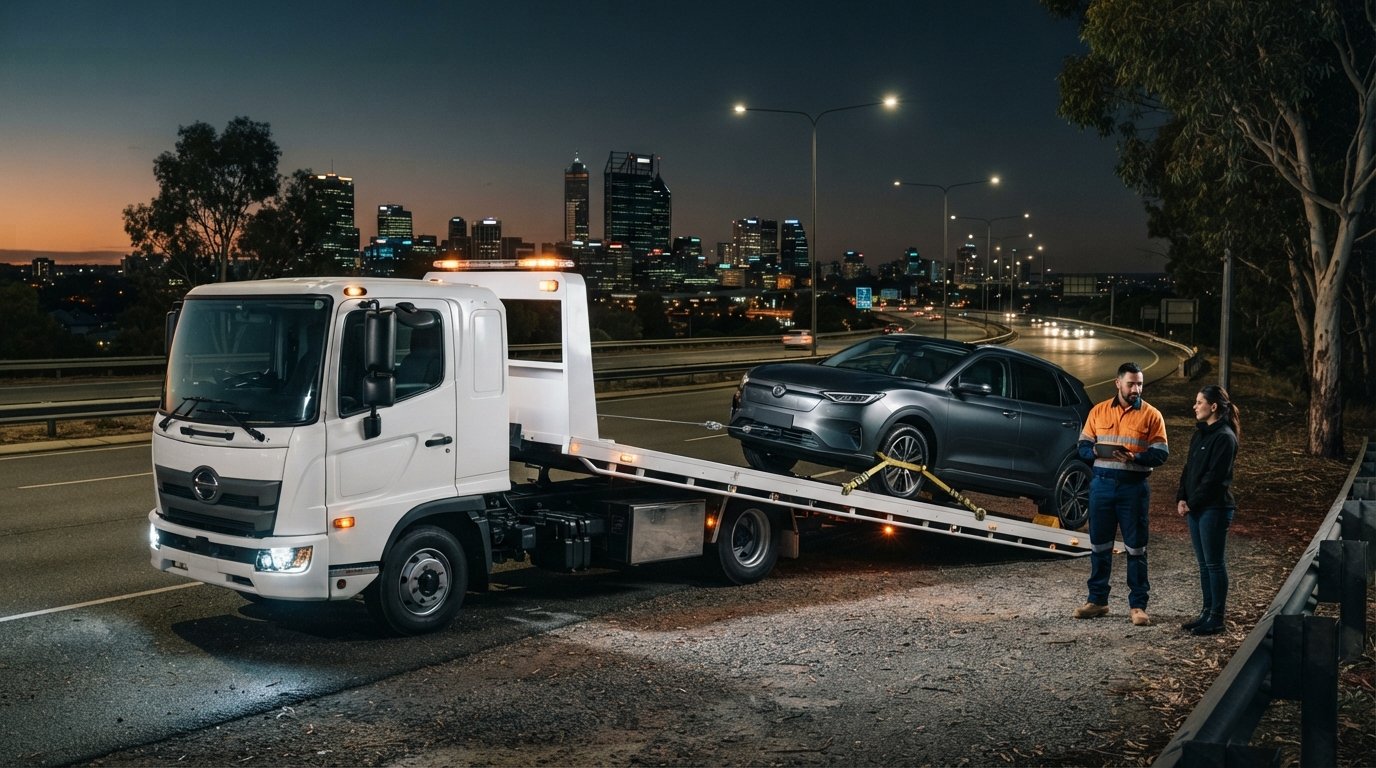
Allout Towing Services has towing experience across Northern Perth and wider WA. The same practical lesson applies: stable loading beats rushed correction.
Warning Signs on the Road
A driver should respond calmly if the caravan begins to snake or the steering feels light. Sudden braking or sharp steering inputs can make sway worse.
Continuing with a known sway problem can damage the caravan, tow vehicle and other road users. A controlled stop is better than pushing on.
When Not to Keep Towing
If the driver cannot identify or correct the cause, the caravan should not continue behind the same setup. The fault may involve loading, weight, tyre condition or a mechanical issue.
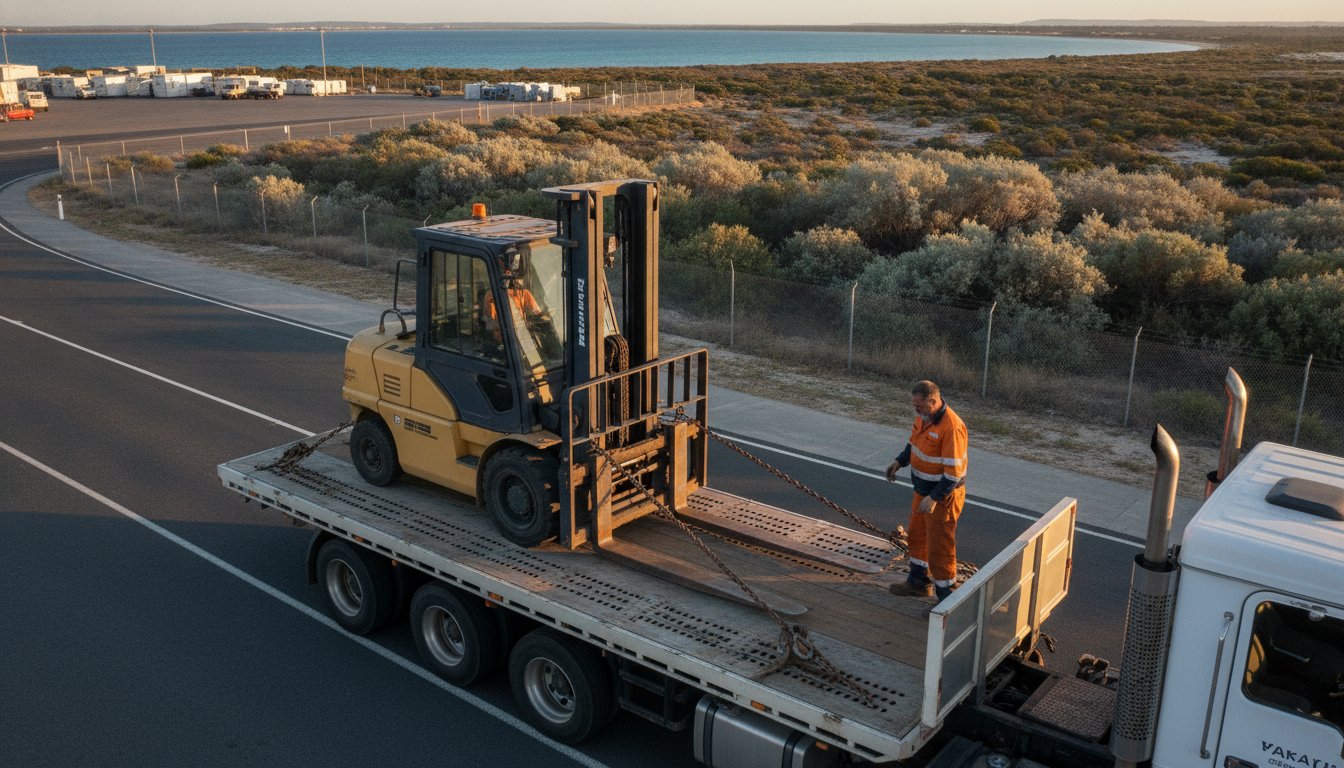
Allout Towing Services operates a Northern Perth tow fleet for cars, caravans, boats, motorcycles, trucks and specialist loads up to 10 tonnes. That fleet support can help when a normal tow becomes unsafe.
Recovery After a Sway Incident
After a serious sway event, inspect the coupling, tyres, suspension, body mounts and load position. The caravan may need workshop attention before another trip.
A controlled recovery can move the van to a repairer without asking the same unstable setup to travel again.
Practical Packing Tips
Pack heavy gear low and forward of the axle where suitable. Avoid stacking heavy items at the rear or high in overhead cupboards.
Keep water tank levels in mind. Partly filled tanks can shift weight during movement, and different tank locations can change balance.
Tyres, Brakes and Bearings
Caravan sway control is harder when tyres are old, soft or mismatched. Brake imbalance can also affect the caravan during slowing.
Before a long trip, inspect tyre age, pressure, wear, wheel nuts and bearing condition. These checks support stabiliser bar safety and reduce road surprises.
Choosing Professional Transport
Professional transport is sensible when a caravan shows repeated sway, has unknown weight or needs to reach a workshop before travel.
A specialist tow service can move the caravan without relying on the unstable combination. That may be safer than trying several roadside adjustments.
Care for Larger or Valuable Vans
Larger caravans can need careful loading angles, tie-down planning and route selection. Accessories such as awnings, steps and low fittings should be protected.
The handling discipline used for prestige vehicle transport can apply when the van has high value or fragile fittings.
After any sway incident, do not simply repack and leave at the same speed. Check whether one side of the caravan has dropped, whether the coupling looks level and whether the load has shifted inside. If the cause is not clear, a workshop inspection is safer than another highway attempt.
Drivers should also note the conditions that caused the problem. Crosswind, road camber and passing trucks can expose a setup that felt fine at lower speed.
A second check should happen after repacking. Move heavy items lower, remove rear load where possible and confirm tyre pressure on both the caravan and tow vehicle. If the same movement returns during a short test, stop using that setup until it has been inspected.
For touring families, the safer plan may be to send the caravan to a repairer and continue later. Lost time is frustrating, but it is better than fighting sway for the rest of the trip.
That choice protects the vehicle and passengers. It also keeps the problem contained.
That is particularly important on winter roads, with passengers aboard, holiday traffic nearby and exposed highways ahead in poor weather.
FAQ
What causes caravan sway?
Common causes include poor weight distribution, excess speed, crosswinds, low tyre pressure, overloaded rear storage and a poor match between vehicle and caravan.
Do stabiliser bars stop sway completely?
No. They can help when correctly fitted, but they cannot fix unsafe loading, overweight towing or mechanical faults.
Conclusion
Caravan sway control starts with correct loading, checked tyres, suitable equipment and sensible decisions before highway speed. Allout Towing Services provides specialist tow service support when stabiliser bar safety checks show the caravan should not continue normally. To arrange careful caravan support, call (0418) 959 216.