Road trauma costs Western Australia more than lives – it reshapes families, communities, and futures. In 2023, 171 people died on WA roads, with many more serious crashes requiring complex emergency responses across Perth’s expanding metropolitan network. When a major incident occurs – a multi-vehicle pile-up on the Kwinana Freeway, a truck rollover on Tonkin Highway, or a fatal collision during peak hour – the immediate focus rightly falls on emergency medical response and police investigation. However, there’s a critical piece of the puzzle that determines how quickly Perth’s roads can safely reopen: incident scene clearing and road obstruction removal.
Effective road obstruction removal is not simply a matter of hooking up a car and driving away. A professional towing company operating at a major crash scene is managing evidence preservation, hazard mitigation, traffic coordination, multi-agency communication, and vehicle stability simultaneously – often in conditions that place operators at significant risk.
Most Perth drivers experience incident scene clearing only as a traffic delay. What happens inside the crash scene perimeter is far more complex than it appears from a stationary queue on the freeway. Understanding that complexity explains why professional capabilities, specialist equipment, and formal emergency service relationships all matter for the safety and efficiency of Perth’s road network.
All Out Towing works alongside WA Police, Main Roads WA, and emergency services to remove damaged vehicles and debris from major crash scenes across Perth. It’s precision work that happens under intense pressure, in dangerous conditions, with direct consequences for thousands of commuters, freight operations, and emergency service access across the metropolitan area.
Why Speed Matters in Major Incident Clearing
Every minute a major arterial road remains closed creates a ripple effect across Perth’s transport network. Efficient incident scene clearing is not a service preference – it’s a safety and economic imperative.
The Scale of Impact on Perth’s Network
The Kwinana Freeway carries over 180,000 vehicles daily in some sections. Close two lanes during morning peak and you’re not just delaying commuters – you’re blocking freight to Fremantle Port, delaying emergency vehicles, and pushing traffic onto residential streets never designed for that volume. Main Roads WA estimates that each hour of freeway closure during peak periods costs the WA economy approximately $1.2 million in lost productivity, delayed freight, and wasted fuel.
Main Roads WA has strict protocols around incident response times. For major incidents, the goal is scene clearance within two hours where possible. That’s where a professional towing company becomes mission-critical – the difference between a managed disruption and a network-wide crisis.
Road Obstruction Removal and Secondary Collision Risk
A UK study found that 18% of freeway accidents lead to secondary collisions. Main Roads WA data confirms that accident scenes create 3-4 times higher collision risk than normal freeway driving. Drivers slow to look, merge suddenly, or fail to notice stopped traffic in time. Fast road obstruction removal reduces this secondary risk directly – clearing the primary incident reduces the conditions that cause the next one.
Extended traffic congestion from slow clearance also strains emergency service access. Police units, ambulances, and fire crews tied up at one incident can’t respond to new emergencies developing elsewhere across the network. Incident scene clearing that happens quickly frees those critical resources sooner.
The Complexity of Multi-Vehicle Crash Recovery
A single-vehicle breakdown on the Mitchell Freeway is relatively straightforward. A multi-vehicle crash involving trucks, sedans, and potentially hazardous cargo operates at a completely different level of complexity. Effective incident scene clearing in these situations requires managing multiple competing demands at once.
Simultaneous Demands at a Major Scene
- Evidence preservation – WA Police Major Crash investigators need the scene documented before anything moves
- Hazard mitigation – fuel spills, battery acid, shattered glass across multiple lanes, and unstable vehicles each create risk
- Vehicle stability assessment – cars on their roofs, trucks hanging over barriers, and vehicles wedged together require specialised rigging
- Traffic management – working within the protected zone while Main Roads redirects thousands of vehicles
- Multiple simultaneous recoveries – coordinating several trucks to remove vehicles in the correct sequence
Removing vehicles in the wrong sequence can destroy evidence, create new hazards, or collapse a scene that was stable. Professional incident scene clearing requires experience with how these elements interact – not just the ability to tow a car.
How Professional Tow Operators Work Within the Emergency Framework
When a major incident occurs, WA Police coordinate the overall response. They establish the crash scene perimeter, direct traffic, conduct initial investigations, and determine when vehicles can be moved. Main Roads WA manages the broader traffic response. A professional towing company slots into this framework as the specialist recovery arm.
The Recovery Sequence
The typical sequence for major incident scene clearing looks like this:
- Initial dispatch and staging outside the immediate crash scene, waiting for police clearance to enter the work zone
- Scene assessment – vehicle positions, damage, required equipment, and recovery approach in consultation with police and emergency services
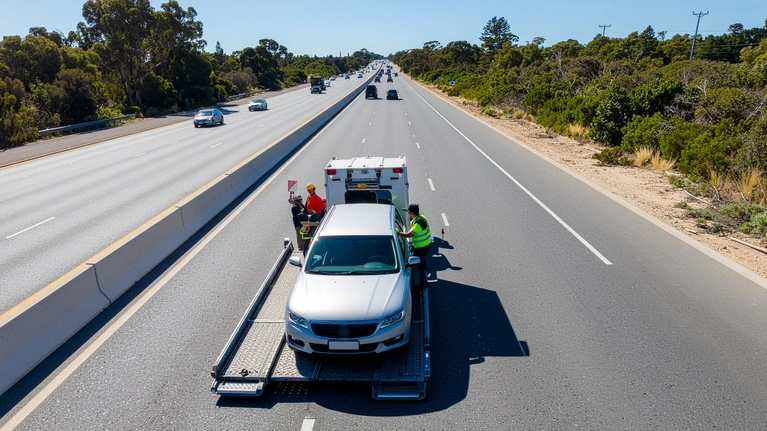
- Equipment deployment – tilt tray services for drivetrain-damaged vehicles, or heavy recovery equipment for trucks and commercial vehicles
- Coordinated recovery – executing the plan around ongoing investigation and medical response
- Debris clearing – shattered plastic, glass, cargo, and vehicle components that pose hazards to traffic
- Final clearance – police and Main Roads conduct a sweep before reopening lanes
Throughout this process, we maintain constant radio contact with the incident controller, adapting to changing conditions and priorities as the scene evolves.
Equipment Required for Heavy Crash Recovery
Not every tow truck can handle major incident work. The equipment demands are substantial, and the capability gap between a standard light tow and a heavy crash recovery operation is significant.
Heavy Incident Response Fleet
- Heavy-duty tilt tray trucks – essential for safely loading vehicles with damaged wheels, suspension, or drivetrains without causing further damage
- Integrated tow trucks with underlift systems – for vehicles that need lifting and stabilisation before movement
- Winching and rigging equipment – heavy-duty winches up to 35,000-pound capacity, synthetic winch lines, recovery straps, and rigging blocks
- Wheel dollies and skates – for moving vehicles with locked wheels or damaged suspension within the crash scene
- Portable LED light towers for night operations
- Absorbent materials for managing fuel and fluid spills before environmental contamination occurs
Commercial and Heavy Vehicle Recovery
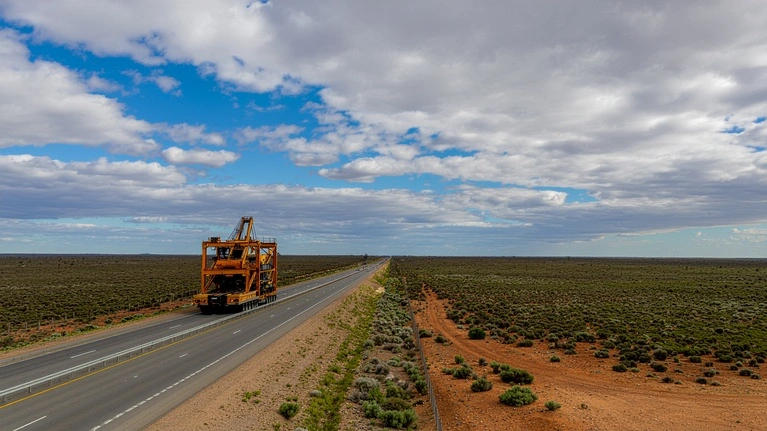
For incidents involving heavy vehicle recovery, the equipment requirements escalate further. A loaded rigid truck weighs 12 tonnes or more. Truck towing in Perth at a major incident scene requires heavy-duty rotating wreckers, air cushion recovery systems for rollovers, and sometimes coordination with specialist heavy haulage operators for the largest vehicles. This is not a service that a standard light tow operator can provide safely.
Working Safely in Live Traffic Environments
Incident scene clearing on a major freeway is one of the most dangerous working environments in the towing industry. Operators work in confined spaces, often with reduced visibility, surrounded by traffic travelling at speed, with distracted drivers rubbernecking the scene.
The Risk Profile for Roadside Workers
According to the Australian Road Safety Foundation, emergency workers are 12 times more likely to be struck by a vehicle while working on roadside incidents than the general population. That risk shapes every decision made on scene – from where trucks are positioned to how quickly road obstruction removal is executed.
Safety Protocols at Major Scenes
- High-visibility PPE – approved clothing with reflective striping, safety boots, hard hats when required
- Shadow positioning – tow trucks placed as physical barriers between the work zone and live traffic lanes
- Constant situational awareness – operators watch both the recovery task and approaching traffic simultaneously
- Radio contact with traffic controllers and police throughout the operation
- Enhanced work zone lighting during night operations to maximise visibility for approaching drivers
Even with all these precautions, the risk never fully disappears. That’s why speed and efficiency in incident scene clearing matter – the faster the scene is safely cleared, the sooner everyone gets out of harm’s way.
The Investigation vs Clearance Balance
One of the most challenging aspects of major incident scene clearing is balancing the urgent need to reopen roads with the equally important need to preserve evidence for crash investigation. When a serious injury or fatality occurs, WA Police Major Crash investigators need time to document the scene, measure positions, photograph evidence, and understand the sequence of events.
Working Within Investigation Requirements
We navigate this by working closely with investigators to understand what needs to be preserved and what can be moved. Sometimes that means recovering vehicles in a specific sequence. Other times it means photographing and documenting positions before any movement occurs. We work under police direction – road obstruction removal begins when investigators grant clearance, not before.
Technology Improving Clearance Times
Modern crash investigation increasingly uses 3D laser scanning and photogrammetry to capture scene details in minutes rather than hours. Once that digital record exists, physical evidence can be moved more quickly. This technology has significantly reduced clearance times for serious crashes while actually improving investigation quality – a meaningful advance for both road safety and network efficiency.
Multi-Agency Coordination at Major Incidents
Major incidents rarely involve just one agency. A typical serious crash on Perth’s freeway network involves WA Police for incident command, St John Ambulance for medical response, Fire and Rescue WA for vehicle extrication and hazmat assessment, Main Roads WA for traffic management and road damage assessment, local government for additional traffic control, and a towing company for vehicle recovery and debris clearing.
How Coordination Works in Practice
Each agency has its own priorities, protocols, and communication systems. Effective incident scene clearing requires all these parts to work in sync. We’ve developed strong working relationships with emergency services through years of responding together. Our operators understand police investigation requirements, know how DFES operates during vehicle extrication, and work within Main Roads traffic management frameworks.
Police hold overall incident command. They make the call on when recovery can begin. Our role is focused vehicle removal executed safely and efficiently – while staying flexible to support the broader emergency response as conditions change.
Night Operations and Adverse Conditions
Major incidents don’t wait for daylight or good weather. Some of the most challenging road obstruction removal operations we’ve conducted have been at 2am in driving rain, or during winter fog that reduced visibility to metres.
Night Recovery Approach
- Enhanced lighting – portable LED light towers illuminate the entire work area, not just the immediate work zone
- Slower, more deliberate operations – a 30-minute daylight recovery might take 45 minutes at night
- Additional personnel for complex night recoveries, providing extra oversight and hazard identification
- Weather-appropriate equipment – synthetic winch lines in wet conditions, anti-slip work platforms
The goal remains consistent – safe, efficient incident scene clearing – but the methods adapt to the conditions. Rushing in low visibility creates more problems than it solves.
Urban Intersection Crashes
While freeway incidents attract the most attention, some of the most complex road obstruction removal work happens at urban intersections. A multi-vehicle crash at a major Perth intersection creates different challenges from freeway recovery.
Urban Recovery Challenges
- Confined spaces with less room to manoeuvre recovery equipment
- Multiple traffic flows requiring impact management across intersecting roads
- Pedestrian and cyclist considerations within the work zone
- Underground services creating risk when deploying stabilisation equipment
- Property damage to poles, traffic signals, or buildings requiring additional agency coordination
These incidents often require more creative recovery approaches. Standard tilt tray loading may not be possible due to space constraints, requiring wheel dollies to move vehicles to a loading zone, or smaller more manoeuvrable equipment. Our specialist tilt tray towing fleet includes configurations suited to tight urban recovery environments as well as open freeway operations.
Training and Certification for Incident Response
Professional incident response towing requires specialised training beyond standard towing certification. Operating safely as a towing company at a major crash scene demands skills that general towing experience alone doesn’t provide.
Operator Certification Areas
- Heavy vehicle recovery techniques – rigging, winching, and stabilisation for complex recoveries
- Hazardous materials awareness – recognising and responding appropriately to fuel spills and chemical cargo
- Traffic management – understanding work zone safety and coordination with traffic controllers
- Incident command systems – operating within the emergency services command structure
- Defensive driving and emergency vehicle operation for safe priority response
This training is ongoing. Techniques evolve, equipment improves, and regulations change. The stakes at a major incident are too high for anything less than continuous professional development.
Conclusion
Effective incident scene clearing and road obstruction removal are central to the safety and efficiency of Perth’s road network. When crashes occur, professional towing company operations – done safely, efficiently, and in coordination with WA Police and Main Roads – make the difference between a manageable disruption and a network-wide crisis that compounds the original incident.
For immediate emergency recovery, our urgent towing response team operates 24/7 across Perth’s freeway and metropolitan network, working with emergency services when required. For drivers or fleet operators needing reliable support after a breakdown or collision, our 24/7 roadside assistance team provides on-site response across Perth’s northern and southern suburbs.
For reliable towing services, reach out to our team at 0418 959 216. All Out Towing operates across Perth’s metro area – available every hour of every day, with the specialist equipment and trained operators that major incident response demands.