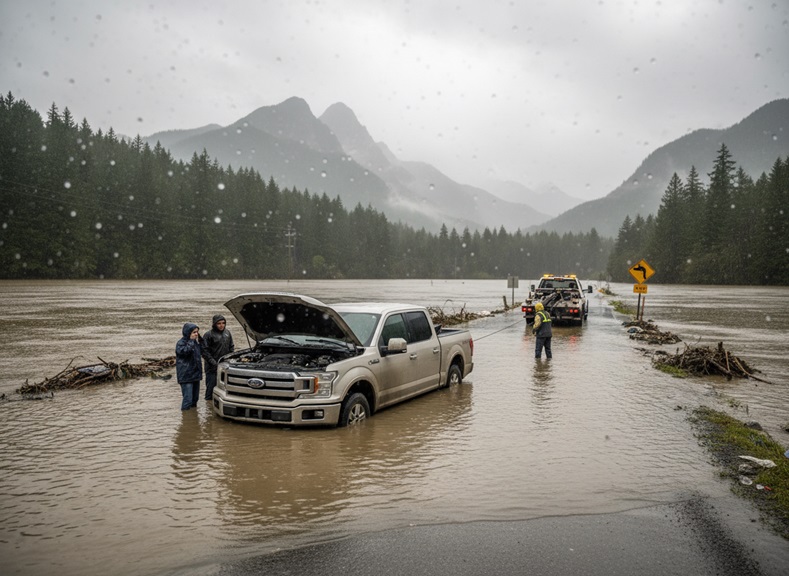
You’re halfway through a flooded section when the engine splutters, coughs, and dies. Water creeps up the tyres, and the dashboard lights up. It feels awful, and it happens across WA every wet season. Professional vehicle recovery WA services deal with this every week, and there’s a safe way forward. The key is simple: don’t restart, protect the engine, and arrange flood towing WA so the vehicle can be assessed properly.
At All Out Towing, the team has handled countless flood recoveries across Perth and regional WA. The process is calm, methodical, and focused on preventing further damage. With the right steps in the first few minutes, many vehicles avoid a write-off and get back on the road.
Why Engines Stop In Floods – And Why Restarting Can Wreck Them
When water enters the air intake, it can be drawn into the cylinders. Water doesn’t compress. As pistons rise, something must give – often connecting rods, valves, or cylinder heads. That’s hydrolock, and it can ruin an engine in seconds.
Trying to restart after a stall forces the issue. It’s like asking someone to breathe underwater – it won’t work, and pushing harder only makes the outcome worse. Leaving the ignition off is the single best protection you can give the engine.
Key points at a glance:
- Turn the ignition fully off the moment the engine stalls.
- Do not crank the engine to “test” it.
- Arrange a tow so the drivetrain isn’t rotated again.
What To Do The Moment The Car Stalls
Stay calm. You’ve got options.
- Switch off the ignition and remove the key.
- Assess safety first. If water is rising or there’s a current, exit the vehicle carefully and move to higher ground.
- Note the depth. The above wheel arches suggest likely intake or electrical exposure.
- Call professional help for vehicle recovery WA – moving or pushing the car can rotate the engine and increase the risk.
- Share your location clearly and describe the water level when you call.
Need urgent help right now? Use our 24-hour emergency towing to get the vehicle out without turning the engine over.
Why Waiting For Water To Recede Can Make Damage Worse
Standing water keeps working its way into electronics, bearings, and interiors. Salt or contaminated floodwater accelerates corrosion. Even if the water drops, attempting to start the car is a gamble.
Better approach:
- Book flood towing WA promptly so the vehicle is transported, not driven.
- Move it to a workshop or secure location for drying and inspection.
- Keep the electrical system isolated until a qualified technician checks it.
How Professional Flood Recovery Works
A professional recovery is more than “hook and go.” It’s a controlled process designed to protect both people and the vehicle.
- Safety assessment: Depth, current, access and ground conditions are checked first.
- Non-rotational loading: The vehicle is winched or lifted onto a tilt tray, avoiding pushing, rolling, or cranking the engine.
- Secure transport: The car is kept level and secured to reduce further water movement inside systems.
- Next-step logistics: Delivery to a mechanic, home, or storage is arranged based on your plan and insurance instructions.
If a flat battery or soaked ignition components are part of the drama once you’re out, our roadside assistance can support with safe, staged checks.
The First 24 Hours – Give The Car Its Best Chance
The clock matters. Quick, careful action helps avoid long-term issues.
If you’re technically confident (and only once the vehicle is dry and safe):
- Disconnect the battery to prevent shorts.
- Remove the air filter and check for water.
- Do not use the starter. If a technician needs to turn the engine, it should be by hand with spark plugs removed to confirm no water in the cylinders.
- Inspect and drain fluids (engine oil, transmission, differential) if contamination is suspected.
For most owners: hand the vehicle straight to a professional. Water hides in unexpected places – inside looms, brake lines, and modules. Proper diagnostics before any start attempts prevent expensive mistakes.
Insurance – What To Expect And How To Prepare
Coverage depends on your policy. Comprehensive insurance often includes flood events, but exclusions apply if warning signs were ignored or if repeated restart attempts caused additional damage.
Practical steps:
- Document everything: photos of water level, location, and vehicle condition.
- Keep all invoices: professional recoveries include details insurers understand.
- Be transparent: explain exactly what happened and that you avoided restarting.
- Check policy details now, not during a storm – know your excess, inclusions, and exclusions.
How To Avoid A Flooded Engine Next Time
Floods move fast in WA. Preparation and decision-making are everything.
- Turn around if in doubt. If water is higher than halfway up the wheels, don’t enter.
- Go slow if crossing is unavoidable. Walking pace reduces the bow wave, forcing water into the bay.
- Keep revs steady and do not stop mid-stream.
- Test brakes gently after exiting – they’ll need a moment to dry.
- Check official updates from Main Roads WA or local councils during heavy rain.
Simple analogy: think of water like wet cement. The more force you throw at it, the deeper it finds its way into places it shouldn’t. Gentle, controlled movement – or choosing not to enter at all – prevents the mess in the first place.
When You Need Help Right Now
Stuck in or near floodwater? Turn the engine off. Get everyone safe. Then get in touch with the location details and the approximate water depth.
- Calm guidance on the phone so you know what happens next.
- Rapid dispatch for flood towing WA and controlled recovery.
- Clear quotes and professional documentation that assist with insurance.
Need after-hours support? Our 24-hour emergency towing is available across Perth and the surrounding areas.
The Recovery Timeline – Why Patience Pays Off
Flood assessment takes time. Technicians may need to remove plugs, dry connectors, test control modules, and inspect fluids and bearings. If salt or contaminated water is involved, corrosion treatment adds steps.
Some cars are roadworthy within days. Others need deeper work. A few will be uneconomical to repair. Rushing can turn a salvageable car into a costly failure later. A measured approach protects the engine, the electronics, and your budget.
Lessons From The Road – What Experience Teaches
Calm decisions save engines. The drivers who fare best switch off immediately, avoid cranking, arrange vehicle recovery WA quickly, and let professionals handle the move. Those who struggle often try to “just get it going” – and end up with hydrolock, electrical faults, or both.
One question to hold onto in the moment: what action protects the engine right now? If the answer involves turning the key, it’s the wrong move. Protect first, repair second, restart last.
When the weather turns and floodwater rises, All Out Towing is the steady hand. The team brings the right equipment, the right technique, and a focus on preventing secondary damage so your vehicle has the best chance of a clean recovery.
Helpful Checklist – Quick Reference
- Engine stalled? Ignition off – completely.
- Is it safe to exit? Prioritise people, not metal.
- Don’t push or roll the car. Avoid rotating the engine.
- Book a tow: choose controlled loading and transport.
- Document for insurance: photos, times, invoices.
- Professional inspection before any restart.
Whether it’s a city intersection after a downpour or a regional road after a storm, professional car recovery and tow control make the difference. For prompt, careful help, get in touch with All Out Towing and ask about priority vehicle recovery WA support.