Choosing long distance car towing WA isn’t just about finding the quickest option. Moving a car interstate from Perth can feel stressful, especially when you’re coordinating a relocation and want to avoid damage, delays or a confusing handover.
Start with the route and handover plan, then choose an approach that suits your car and circumstances. This guide compares driving with vehicle transport, explains what information to prepare and outlines the steps for collection and delivery. You can then compare quotes based on the service described, not just the price.
Allout Towing is a family-owned Perth business with more than 30 years of towing industry experience. We provide tilt tray vehicle transport across Perth and Western Australia. The guidance below explains how tilt tray transport can fit into a long-distance move and what to plan before arranging your car’s journey.
Key Takeaways
- Plan the collection point, destination, timing and vehicle condition before arranging long distance car towing WA.
- Understand how collection, winch-controlled loading, transport and delivery fit together so you can prepare for each handover.
- Compare towing with driving by considering the car’s condition, journey distance and whether a driver is available.
- Tell the operator whether the vehicle starts, rolls, steers and brakes, and remove personal items before collection.
- Allout Towing’s tilt slide fleet has different tray lengths and capacities to suit different transport jobs.
Moving a Car Interstate from Perth: What to Plan Before Choosing Towing
Coordinating a car move alongside an interstate relocation can feel like another job on an already full list. A clear plan helps reduce the pressure. Before arranging long distance car towing WA, write down the collection and delivery locations, your preferred timing and the car’s current condition.
These details help shape the transport plan and make it easier to compare quotes for the same service. Be specific about whether the car is roadworthy and starts, and mention any handling needs, such as low ground clearance or delicate bodywork. General background on towing methods and reasons for moving a vehicle is available in Understanding Vehicle Towing. For practical planning, your vehicle and route are what matter most.
Which details should you gather before arranging transport?
Prepare these job details before requesting transport. Accurate information helps the operator plan suitable equipment and makes collection and delivery easier to coordinate.
- Vehicle: Record the make, model and registration. Say whether the car can be driven, and describe any damage or special handling needs.
- Addresses: Write down the full pickup and delivery addresses. Note access limits, such as a narrow driveway, steep entry or restricted vehicle access.
- Contacts: Provide a reliable contact for each end of the journey. Make sure each person knows when they may need to be available and can access the vehicle or delivery location.
- Timing: Share your preferred collection and delivery timing, including any fixed relocation dates that affect the handover.
- Expectations: Clarify what the transport arrangement covers, how updates will be handled and what each handover involves.
Keep this information together in one message or document. If someone else will hand over or receive the car, share the same details with them to avoid confusion about access, timing or the vehicle’s condition.
How does a Perth-to-interstate move differ from a move within WA?
A journey within Western Australia and a move across a state border both need a clear collection and delivery plan, but the route and handover arrangements can differ. For a WA-only journey, the destination remains within the state. An interstate move crosses a border, making route planning and coordination between the people at each end especially important.
For either journey, map the collection and delivery points, consider access at both locations and agree on how the handover will work. For a longer route, don’t treat a preferred date as the whole plan. The vehicle’s condition, access and arrangements at the destination matter too. Share timing constraints early so they can be considered alongside the route.
Before choosing transport, check your plan against four points: route, access, handover contact and transport expectations. This gives you a practical starting point for discussing the job and deciding whether towing suits your move.
How Long-Distance Car Towing Works: Loading, Transport and Handover
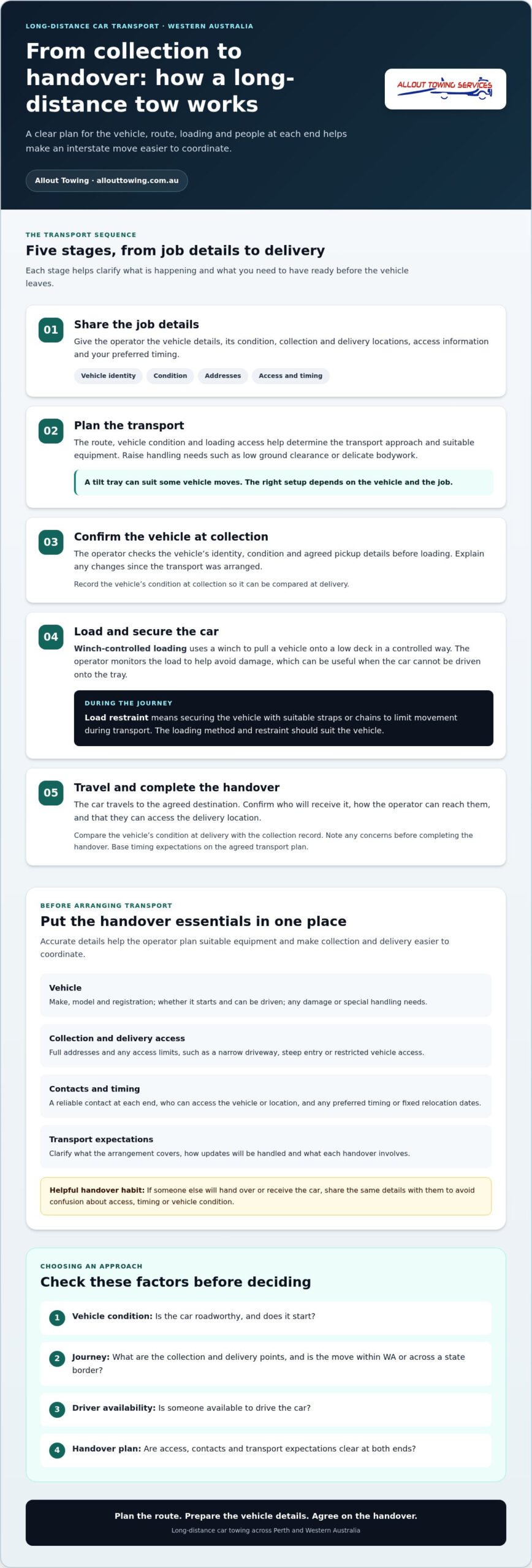
A planned tow has several stages, from agreeing on the job details to handing the vehicle over at its destination. Knowing what happens at each stage helps you prepare and raise questions before the car leaves.
Vehicle transport means moving a car from one location to another using equipment suited to the vehicle and the job. For long distance car towing WA, the vehicle needs suitable loading, secure restraint and an agreed handover at the other end.
- Job details: The operator uses the car’s identity and condition, the collection and delivery locations, access details and timing preferences to understand the job.
- Transport planning: The route, vehicle condition and loading access help determine the transport approach and suitable equipment.
- Collection: The vehicle and agreed pickup details are checked before loading begins.
- Secure loading: The operator loads the car using a method suited to its condition and access, then applies load restraint to limit movement during the journey.
- Travel and delivery: The car is transported to the agreed destination, where the receiver and handover arrangements are confirmed.
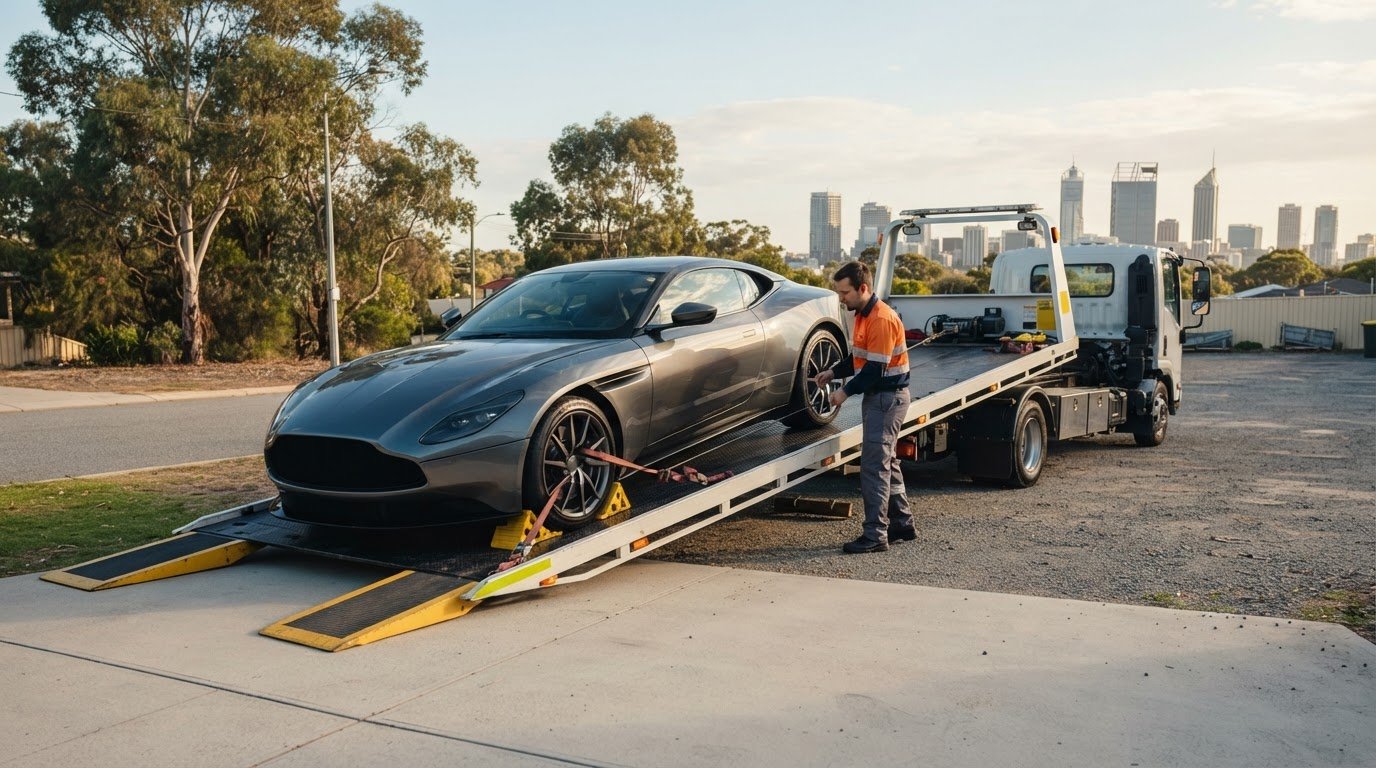
Winch‑controlled loading uses a winch to pull a vehicle onto a low deck in a controlled way. The operator monitors the load to help avoid damage, which can be useful when a car can’t be driven onto the tray. Load restraint means securing the vehicle with suitable straps or chains so it stays in position during transport. The loading method and restraint should suit the vehicle, not just the distance.
What happens when a car is collected for transport?
At collection, the operator confirms the vehicle’s identity, condition and agreed pickup details. The loading method and equipment need to suit the car and the available access. A tilt tray truck can suit some vehicle moves, but the right setup depends on the vehicle and job. If anything has changed since arranging transport, explain it before loading starts.
What should happen at delivery and handover?
Agree in advance who will receive the car and how the operator can reach them. Make sure that person knows where and when to meet the truck and can access the delivery location. Record the vehicle’s condition at collection, then compare it at delivery and note any concerns before completing the handover. Base timing expectations on the agreed transport plan rather than assuming a fixed arrival time.
For general background on national heavy-vehicle rules, the National Transport Commission provides information about the Australian Heavy Vehicle Regulations. Rules can depend on where transport takes place, so don’t assume one framework applies across every part of a journey.
Clear job details and handover arrangements make a move easier to manage. Allout Towing provides car and vehicle transport across Perth and WA. Explore Perth and WA towing services as you plan your move.
Driving the Car or Using Long-Distance Car Towing from Perth?
Choosing between driving and arranging transport depends on the car, the route and your plans. A vehicle that runs well may be suitable for the journey, but driving isn’t automatically the easiest option. If you’re relocating separately or the car can’t be driven, professional transport may make the move more manageable.
Use this comparison to weigh the practical differences. Your circumstances matter more than assumptions about which option will cost less or take less time.
| Factor | Driving the car | Professional transport |
|---|---|---|
| Vehicle condition | May suit a roadworthy car that’s ready for the planned trip. | Can suit a vehicle that won’t start or isn’t suitable to drive. |
| Distance | Requires the driver to complete the journey behind the wheel. | Moves the car separately from its owner. |
| Timing | Depends on when the driver can travel and reach the destination. | Requires collection and delivery to be arranged around the transport plan. |
| Driver availability | Someone needs to be able to make the trip. | Useful when the owner is travelling by another method or is unavailable to drive. |
| Handling needs | The car is driven for the journey. | Loading and restraint are planned to suit the vehicle and job. |
When might driving the car make sense?
Driving may suit a roadworthy car and someone with the time and ability to make the journey. Consider the trip demands, your schedule and what needs to happen when you arrive. If you’re moving ahead of the car or have other travel arrangements, driving may complicate the relocation. Compare the actual costs and commitments in your situation rather than assuming one option is cheaper.
When might professional vehicle transport suit better?
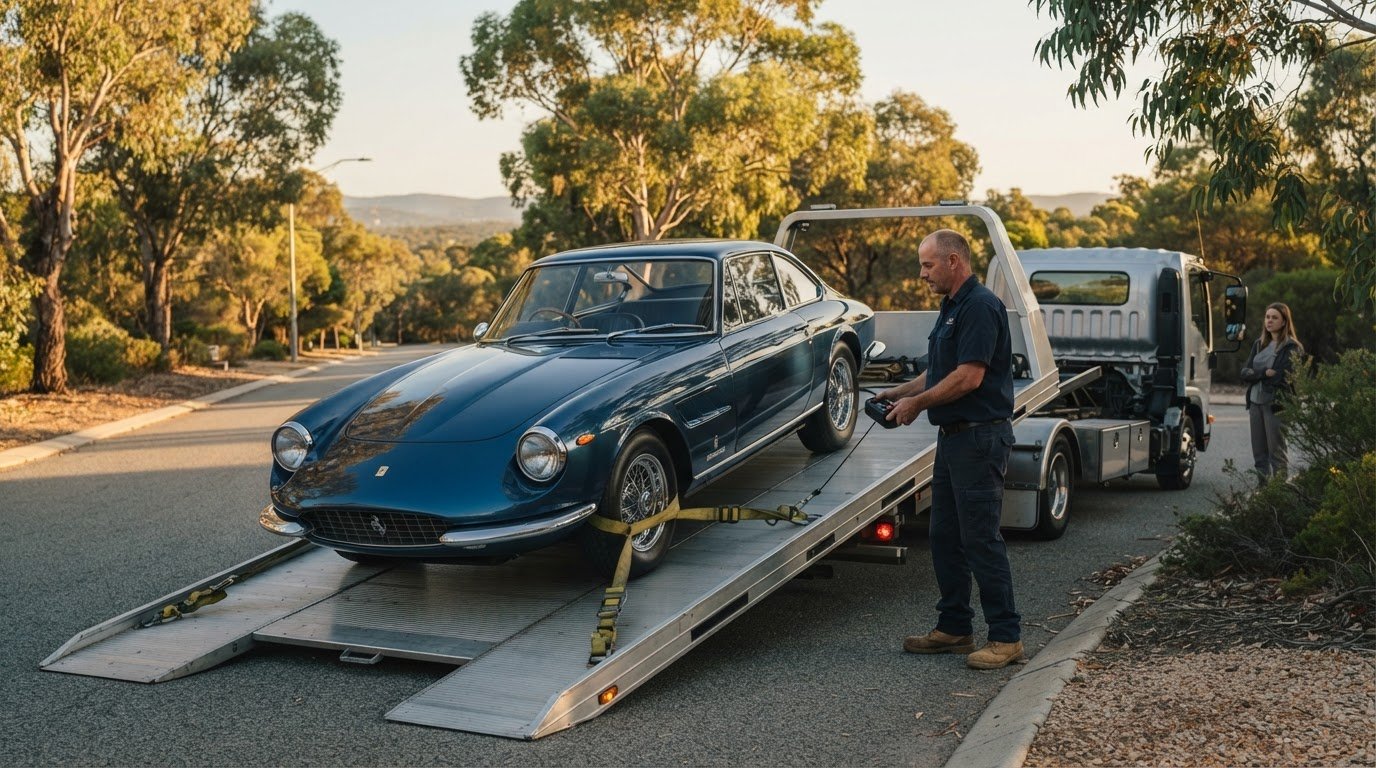
Transport can be practical if the car won’t run, you can’t make the drive or you’re relocating separately. A tilt tray can carry a vehicle without requiring you to drive it to the destination, with the loading method selected to suit the car and access. For a high-value vehicle, include its handling needs in your decision and use this guide to prestige vehicle transport in Perth to consider specialist relocation factors.
Before deciding, assess whether the car is suitable for the planned drive and whether you can manage the journey alongside the rest of your move. If vehicle compliance is a concern, the Australian Government’s information on Australian Road Vehicle Standards explains the national standards framework. It doesn’t replace an assessment of the car’s condition or suitability for a particular trip.
For a Perth departure, long-distance car towing WA is one option when you need to move the vehicle separately. Match your choice to your circumstances, not an assumed saving.
Prepare Your Car and Handover for a Long-Distance Move from Perth
Good preparation makes collection easier to coordinate and helps the operator plan for the car’s actual condition. Before arranging long distance car towing WA, work through these steps and share any changes promptly. Clear information is especially useful if you’re managing the move from another location or asking someone else to hand over the car.
- Confirm the vehicle details: Have the make, model and registration ready, and check that they match the car being collected.
- Describe how it moves: Tell the operator whether it starts, rolls, steers and brakes. Be specific if it starts but won’t drive, or if a wheel or steering issue affects movement.
- Clear the cabin and boot: Remove personal belongings and loose items so they don’t shift around during loading or transport.
- Prepare keys and access: Keep the keys available for the agreed handover and explain any access limits, such as a narrow driveway, low clearance or locked gate.
- Record the condition: Take clear photos from each side and note existing marks, dents or other visible damage before collection.
- Set up the handover: Arrange a reachable contact at pickup and delivery, and make sure each person understands the agreed arrangements.
What should you do before the tow truck arrives?
Send accurate vehicle and access details before collection rather than waiting until the truck arrives. If the car can’t start, roll, steer or brake as expected, say so clearly. This helps the operator plan a suitable loading approach and reduces last-minute uncertainty. Keep the keys and your notes together, and make sure the person meeting the truck knows where the vehicle is and how to reach you.
Remove loose items from the car, including anything that could move around inside the cabin or boot. Leave the vehicle accessible at the agreed time, with gates and other entry arrangements sorted. If the car’s condition changes after you’ve shared the details, update the transport contact before collection so the plan reflects what the vehicle can do.
How can you make collection and delivery smoother?
Choose someone who can be present at each end or answer their phone and coordinate access. Give both contacts the agreed collection or delivery details, and make sure the truck can reach the handover point. At collection, take photos in good light and write down existing marks. At delivery, compare the car with those records before completing the handover. This gives you a clear reference if you need to discuss a change in condition.
If a breakdown occurs before the planned move and the vehicle needs urgent recovery, 24-hour towing and emergency recovery in Perth may suit the changed situation. Otherwise, follow the planned transport arrangements and share any updates that could affect access or loading.
Once your vehicle details, access and handover contacts are ready, arrange car towing with Allout Towing for your Perth and WA move.
Arrange Long-Distance Car Towing with Allout Towing
Choosing transport is easier when you’ve considered the car’s condition, route and handover arrangements. Allout Towing is a family-owned Perth business providing car and vehicle transport across Perth and Western Australia, with licensed and insured services, including transit insurance.
Tilt tray transport can suit a vehicle that shouldn’t be driven or needs careful loading. Allout Towing’s fleet includes two tilt slide trucks, each with a seven-metre tray and 4.5-tonne capacity, as well as a heavier tilt slide truck with a ten-metre tray and 10-tonne capacity. These trucks offer different tray lengths and capacities. The vehicle and job determine which truck and loading approach are appropriate.
Careful handling starts with clear information about the car and collection access. Sharing the vehicle’s condition and any special handling needs helps the team plan transport around the job.
What makes Allout Towing a considered transport option?
For a move from Perth, a local operator can help you work through the practical details. Allout Towing plans tilt tray vehicle transport with attention to the car, access and loading needs, and transit insurance applies during transport. If your relocation includes a car and a recreational vehicle, coordinating their routes and handovers together can help. The guide to safe recreational vehicle transport in Perth covers caravan, motorhome and campervan towing.
What information helps start a transport enquiry?
Have the key details ready so the transport discussion can focus on your route and vehicle. A clear enquiry outlines the job and supports a quote based on its details.
- Vehicle: Share the make, model and registration, and describe whether it starts, can be driven, steers, rolls and brakes.
- Route: Give the collection and delivery locations, along with your preferred timing.
- Access: Note any restrictions at either end, such as tight entry points or limited room for a truck to manoeuvre.
- Handover: Provide the names and contact details of the people meeting the truck, if they differ from you.
Be upfront if the car’s condition, access or timing has changed. That gives the team a clearer picture of the work involved and keeps the plan grounded in the circumstances of your move.
For long distance car towing WA, discuss your route, vehicle condition and collection and delivery arrangements with Allout Towing. Enquire with Allout Towing about your planned move and request a tailored quote.
Set Your Vehicle Move in Motion
A car relocation is easier to manage when it has a clear place in your moving plan. Decide how the vehicle move fits around your travel and arrival arrangements, then keep the route and handover details together so everyone involved can follow the same plan. A little organisation can ease last-minute pressure.
If you’re considering long distance car towing WA, use the details you’ve gathered to make a clear transport request. Explain what the car needs, where it’s travelling from and to, and any practical details that could affect collection or delivery. This gives the transport discussion a useful starting point.
Allout Towing provides vehicle transport across Perth and WA. Start planning your vehicle move with Allout Towing and take the next step with a clear plan for your car.
Frequently Asked Questions
Can I move a car interstate from Perth on a tilt tray?
A tilt tray can be used for some interstate car moves, with the setup chosen for the vehicle and job. For long distance car towing WA, provide the full origin and destination, including the state the car is travelling to. This distinguishes a cross-border move from transport that stays within WA and gives the operator clear route details for planning.
How do I compare quotes for moving a car interstate from Perth?
Look beyond the quoted amount and read the service scope carefully. Check that the quote names the transport method and explains what the price covers. Review the transit insurance terms, including any stated limits or exclusions, so you understand how the vehicle is covered during transport. If two quotes describe different services or coverage, they aren’t directly comparable, even with the same pickup and destination.
Can a non-running car be transported interstate?
A car that won’t start may still be transportable, depending on its condition and loading needs. Tell the operator about issues beyond the engine, such as a missing key, an activated immobiliser or a wheel that won’t turn. These details can affect how the vehicle is loaded. Don’t try to force a locked or damaged vehicle to move. Explain the issue before arranging transport.
What should I remove from my car before long-distance transport?
Remove personal belongings because transit insurance for the vehicle doesn’t cover items left inside it. Check the glovebox, door pockets and boot, and take valuables and important documents with you. If a removable accessory must stay with the car, tell the operator rather than leaving it loose. Keep the vehicle keys available for the agreed handover, especially if the car has an alarm or immobiliser.
How long does interstate car transport from Perth take?
There’s no single delivery duration for every interstate move from Perth. The destination and transport schedule affect the expected timing, so treat a general estimate as a guide rather than a fixed arrival appointment. If you need the car by a particular date, share that requirement when arranging transport and base onward plans on the timing agreed for your move.
Is long-distance car towing suitable for a prestige vehicle?
It can be a practical option if you want a prestige car moved without adding a long drive to your relocation. Allout Towing provides prestige vehicle transport. Mention non-standard features such as an aftermarket body kit, modified suspension or a fitted alarm, as these may affect handling. Discuss the car’s care needs and transport arrangements so expectations are clear before collection.