Western Australia’s sun doesn’t just fade your car’s paint. It systematically dismantles vehicle components in ways most Australians never see coming-until they’re stranded on the side of the road with a dashboard full of warning lights.
After 15 years towing vehicles across Perth, we’ve noticed patterns that don’t show up in manufacturer manuals. Certain breakdowns cluster around specific seasons. Particular components fail at predictable intervals. And nearly all of them trace back to one factor: relentless UV exposure that’s uniquely intense in WA.
The science is straightforward. Perth receives an average of 3,200 hours of sunshine annually-roughly 300 hours more than Sydney and 800 more than Melbourne. That’s not just more beach days. It’s sustained bombardment of ultraviolet radiation that accelerates material degradation at rates vehicle manufacturers don’t always account for when designing components for global markets. Understanding UV vehicle damage Perth patterns helps prevent unexpected breakdowns.
How UV Radiation Actually Damages Vehicle Materials
UV light operates at wavelengths between 10nm and 400nm-short enough to break molecular bonds in plastics, rubbers, and composite materials. When these photons strike polymer chains, they trigger a process called photodegradation.
Here’s what happens at the molecular level. UV energy breaks carbon-hydrogen bonds in polymer chains. This creates free radicals-highly reactive molecular fragments that trigger chain reactions. Each broken bond weakens the material structure. Over time, this manifests as brittleness, discolouration, and eventual mechanical failure.
WA’s position at 32°S latitude means the sun sits higher in the sky year-round compared to southern states. Higher sun angles mean more direct UV exposure. Less atmospheric filtering. More damage per hour of exposure.
The intensity difference is measurable. Perth’s UV index regularly hits 11+ during summer months-classified as “extreme” by the World Health Organisation. That’s sustained exposure that doesn’t let up for four solid months.
Dashboard Components: The First Casualties
We see more dashboard failures in Perth than anywhere else we’ve operated. Not just cosmetic cracking-full structural failure of critical components.
Modern dashboards contain dozens of plastic components: air vent louvers, display bezels, glove box latches, and the dashboard skin itself. Most use ABS plastic or polypropylene compounds. Both are UV-sensitive.
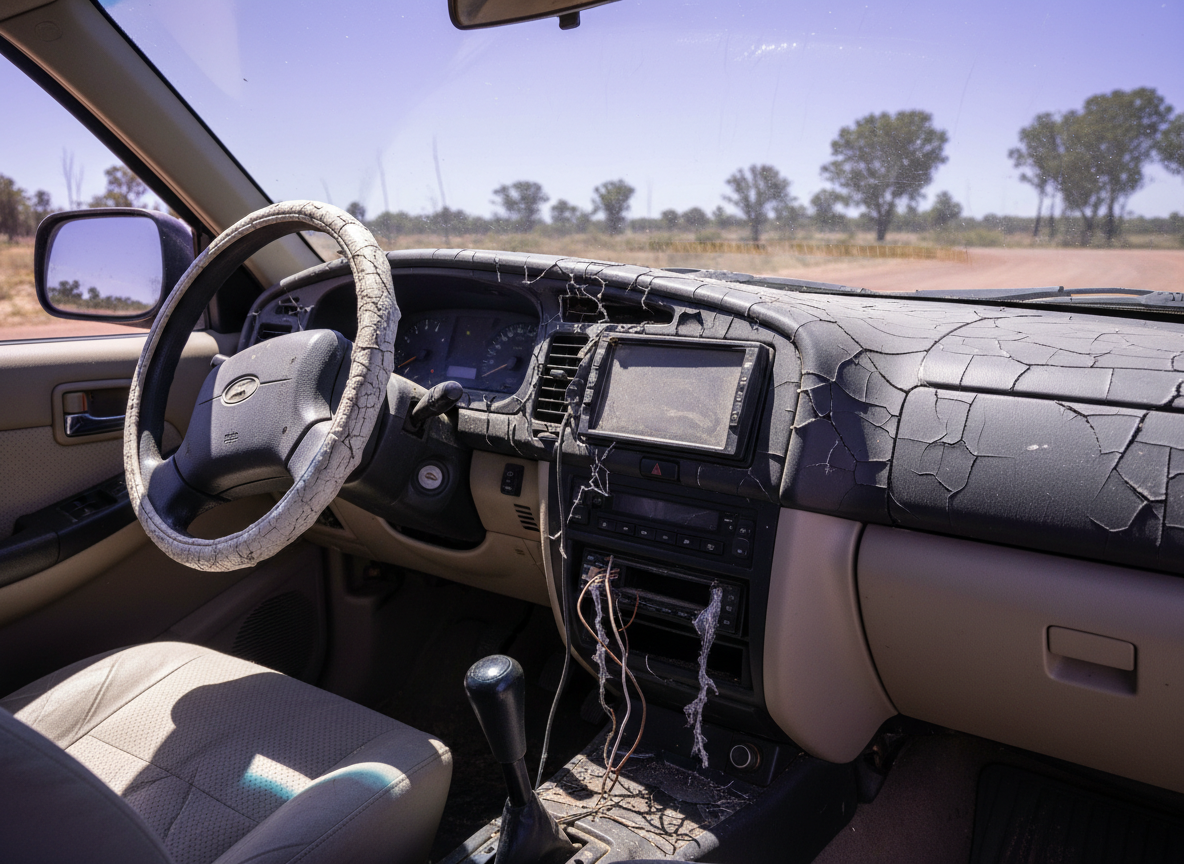
The symptoms follow a predictable pattern. First, you’ll notice surface discolouration-usually a chalky appearance on black plastics. This is the outer layer oxidising. Next comes surface cracking, typically along stress points near air vents or where the dash meets the windscreen.
Then the mechanical failures begin. Air vent louvers snap when adjusted. Display bezels crack around mounting points. Glove box latches fail. We’ve towed vehicles where the entire dashboard skin delaminated from its substrate, creating a safety hazard that obscured instrument visibility.
The windscreen acts as a magnifying lens for parked vehicles. When the sun hits at the right angle, it concentrates UV radiation on specific dashboard sections. This creates hotspots where temperatures can exceed 90°C-hot enough to accelerate degradation exponentially.
Rubber Components: Seals, Hoses, and Hidden Failures
Rubber degrades faster in WA than anywhere else in Australia. The combination of UV exposure and heat cycling creates a perfect storm for elastomer breakdown.
Door seals fail first. You’ll notice this when road noise increases or you feel air leaks around the door frame. The rubber loses its elasticity-what engineers call “plasticisation.” Instead of compressing and rebounding, it becomes rigid and brittle.
Windscreen seals follow the same pattern. When these fail, water leaks into the cabin during Perth’s winter storms. We’ve recovered vehicles with completely soaked interiors because owners didn’t notice the gradual seal degradation until it was too late.
But the dangerous failures happen under the bonnet. Coolant hoses, vacuum lines, and fuel system components all contain rubber elements exposed to both engine heat and UV radiation from above.
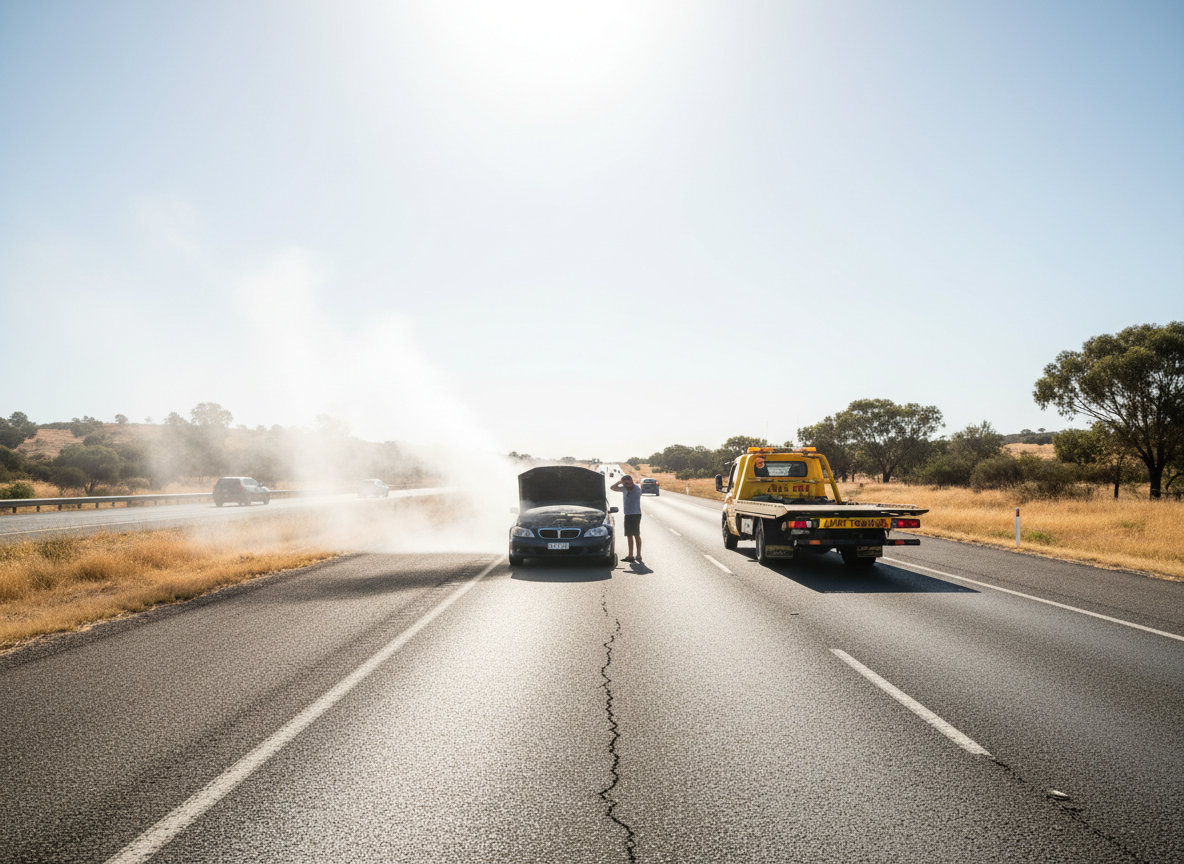
Here’s what makes this particularly problematic: these components fail suddenly. A coolant hose doesn’t gradually leak-it ruptures. One moment you’re driving normally, the next you’re watching steam pour from under the bonnet as your engine overheats.
We respond to these 24-hour emergency towing calls regularly during summer. The pattern is consistent: vehicles with 80,000-120,000km that haven’t had preventative hose replacements. The rubber looks fine externally, but internal degradation has compromised structural integrity with WA sun component degradation.
Electrical System Failures: Wiring Harness Degradation
Modern vehicles contain kilometres of electrical wiring. Much of it runs through the engine bay, exposed to heat and UV radiation simultaneously.
The insulation on these wires-typically PVC or cross-linked polyethylene-breaks down under sustained UV exposure. The insulation becomes brittle, cracks, and eventually exposes the copper conductor inside.
This creates two problems. First, exposed wires can short against metal components, causing electrical faults that range from annoying (random warning lights) to dangerous (complete electrical system failure while driving).
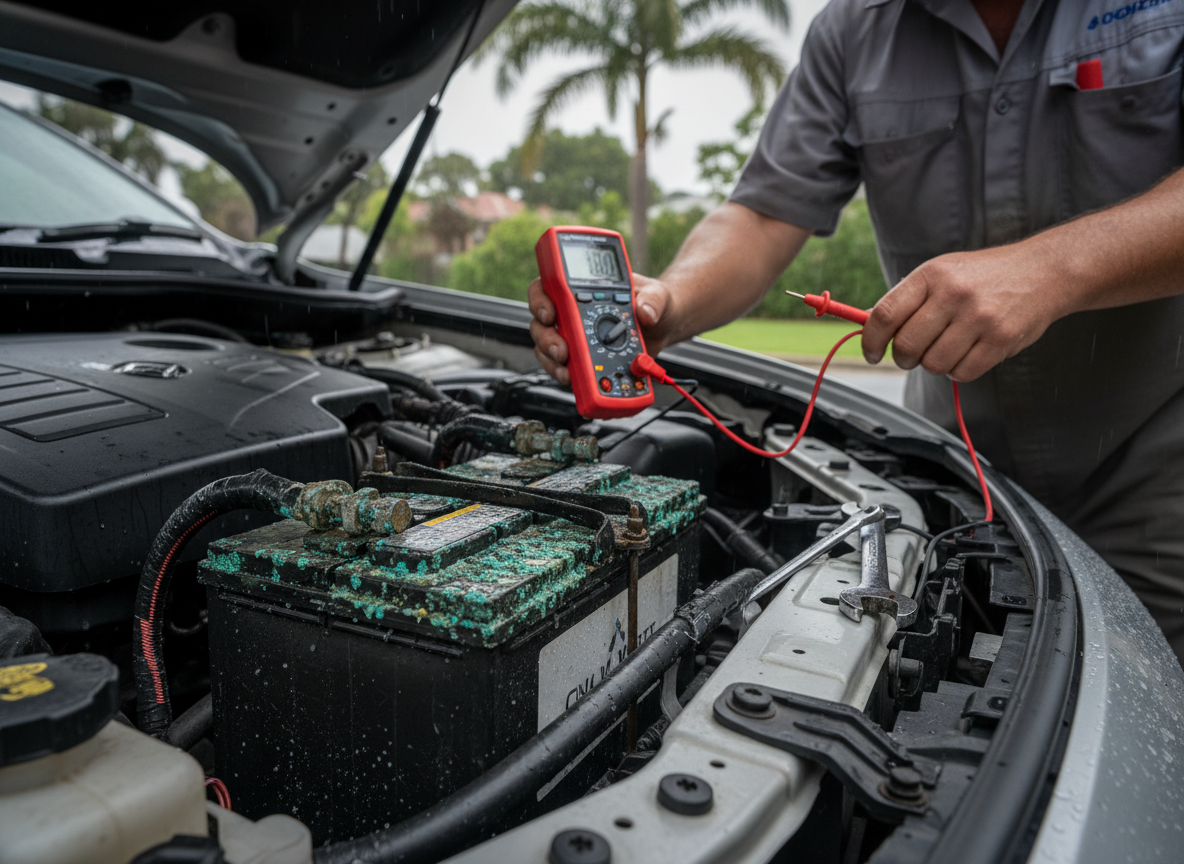
Second, moisture intrusion. Once the insulation cracks, condensation and rain can reach the copper conductor. Corrosion follows. Electrical resistance increases. Components receive insufficient voltage and fail intermittently-the most frustrating type of fault to diagnose.
We’ve towed vehicles where the wiring harness degradation was so severe that repair costs exceeded the vehicle’s value. These weren’t neglected vehicles-they were regularly serviced cars that simply accumulated too many hours of UV exposure over 10-15 years.
Battery and Charging System Complications
Perth’s heat accelerates battery degradation in ways that surprise even experienced mechanics. A battery rated for 5 years in Melbourne might last 3 years in Perth.
The chemistry is straightforward. Lead-acid batteries operate through electrochemical reactions that accelerate with temperature. For every 8°C increase in operating temperature, battery life decreases by approximately 50%.
Under-bonnet temperatures in Perth regularly exceed 60°C during summer. That sustained heat stress breaks down the electrolyte solution, warps internal plates, and accelerates sulphation-the formation of lead sulphate crystals that reduce capacity.
But here’s the UV connection most people miss: the battery case itself. Modern batteries use polypropylene cases that degrade under UV exposure. We’ve seen batteries where the case developed stress cracks, allowing electrolyte to leak. This creates corrosion on battery terminals and surrounding components.
The alternator faces similar challenges. The voltage regulator-often mounted externally on the alternator body-contains electronic components that degrade faster under heat and UV exposure. When the regulator fails, you get overcharging or undercharging conditions that damage both the battery and sensitive electronic systems.
Plastic Fuel System Components: A Ticking Clock
Modern vehicles increasingly use plastic components in fuel systems to reduce weight and cost. Fuel rails, quick-connect fittings, and even fuel tank components contain engineered plastics.
These materials are designed to resist fuel degradation, but they’re not always optimised for extreme UV exposure. We’ve responded to breakdowns where plastic fuel line connectors failed, causing fuel leaks that created immediate fire hazards.
The failure mode is insidious. UV degradation weakens the plastic structure over years. The component looks fine externally. Then one day, normal fuel system pressure exceeds the degraded material’s strength. The fitting cracks. Fuel leaks.
This is why we always recommend having your vehicle inspected by professionals familiar with WA conditions. Our team at All Out Towing has seen enough of these failures to recognise the warning signs before they become roadside emergencies.
Exterior Trim and Structural Components
Black plastic exterior trim-bumper covers, mirror housings, door handles-fades and becomes brittle faster in Perth than anywhere else. This isn’t just cosmetic.
Door handles are particularly vulnerable. The combination of UV degradation and mechanical stress from daily use creates failure points. We’ve towed vehicles where the exterior door handle snapped off completely, leaving the owner locked out with the engine running.
Bumper covers develop stress cracks around mounting points. These cracks propagate over time until sections of the bumper detach while driving-a safety hazard for following vehicles.
Headlight and taillight lenses also suffer UV damage. Modern lenses use polycarbonate plastic that yellows and becomes opaque under sustained UV exposure. This reduces lighting effectiveness and fails roadworthiness standards.
The oxidation you see on headlight lenses isn’t just surface contamination. It’s structural degradation of the polycarbonate itself. Surface polishing provides temporary improvement, but the material damage is permanent.
Cooling System Vulnerabilities
WA’s heat puts extraordinary stress on cooling systems. But it’s not just the heat-it’s the UV degradation of cooling system components that creates cascading failures.
Plastic radiator end tanks are particularly vulnerable. These tanks use nylon or polypropylene that must withstand both coolant temperature (around 90°C) and UV exposure from above. Over time, the plastic becomes brittle. Thermal cycling creates stress cracks. Eventually, the tank splits, dumping coolant and causing catastrophic engine overheating.
We’ve recovered vehicles where radiator failure led to warped cylinder heads or blown head gaskets-damage that costs thousands to repair. The original radiator failure? Often traced to UV degradation of plastic components.
Expansion tanks follow the same pattern. These reservoirs hold excess coolant and must withstand pressure fluctuations. UV-degraded plastic loses strength. The tank cracks. Coolant pressure drops. The engine overheats.
Interior Components Beyond the Dashboard
UV damage extends throughout the vehicle interior. Centre console components, door panel trim, and seat adjustment mechanisms all contain plastic parts vulnerable to degradation.
Seat belt mechanisms deserve particular attention. The plastic housing and internal components can become brittle under sustained UV exposure, particularly in vehicles parked outdoors. When seat belt mechanisms fail, they create immediate safety hazards.
We’ve seen cases where UV-degraded seat belt retractors failed during collisions, reducing restraint effectiveness. This isn’t theoretical-it’s documented in accident towing recoveries where post-collision analysis revealed compromised safety systems.
Steering wheel deterioration is another concern. The polyurethane coating on steering wheels breaks down under UV and hand oil exposure, becoming sticky and eventually flaking off. While this seems cosmetic, it indicates similar degradation in other polyurethane components throughout the vehicle.
Preventative Measures That Actually Work
Protection starts with parking strategy. Covered parking reduces UV exposure by 95%. If that’s not available, windscreen sun shades provide meaningful protection for dashboard components.
Regular application of UV protectant to plastic and rubber components extends their service life. But here’s what most people get wrong: you need products specifically formulated for automotive use. Household products often contain silicones that attract dust and can damage certain plastics.
For rubber components, regular inspection matters more than treatment. Check coolant hoses for surface cracking, hardness, or swelling. Replace them at 100,000km regardless of appearance-internal degradation isn’t always visible externally.
Electrical systems benefit from periodic inspection by qualified technicians familiar with WA conditions. They’ll check for insulation cracking on exposed wiring and address problems before they cause breakdowns.
Window tinting provides measurable UV protection for interior components. Quality ceramic tints block up to 99% of UV radiation while meeting legal visibility requirements. The upfront cost is offset by reduced interior degradation over the vehicle’s life.
Why This Matters for Vehicle Reliability
UV degradation doesn’t cause dramatic, immediate failures. It’s a slow accumulation of damage that suddenly crosses a threshold. The coolant hose that looks fine today ruptures tomorrow. The dashboard that seemed solid develops cracks that propagate into structural failure.
Understanding these patterns helps you anticipate maintenance needs before they become emergencies. Vehicles in WA need more frequent inspection and replacement of UV-vulnerable components than manufacturer schedules suggest with proper UV vehicle damage Perth awareness.
This is particularly important for prestige car towing situations. High-value vehicles often contain specialised plastics and composites that degrade differently than standard automotive materials. Owners need to understand WA-specific vulnerabilities to protect their investment.
When Prevention Fails: What to Do
Despite best efforts, UV-related failures happen. When they do, the response matters.
If you experience sudden coolant loss, stop immediately. Continuing to drive with an overheating engine causes exponentially more damage than the original hose failure. Our car towing services can get you safely off the road and to a repair facility without risking engine damage.
Electrical failures require similar caution. If you experience widespread electrical faults while driving, get to a safe location and shut down the vehicle. Electrical shorts can cause fires-it’s not worth the risk of driving to a mechanic.
For fuel system leaks, the protocol is absolute: stop the vehicle, turn off the engine, and evacuate. Fuel leaks create immediate fire hazards. Contact us for emergency recovery rather than attempting to drive the vehicle.
The Long-Term Outlook for WA Vehicles
Vehicle manufacturers are gradually adapting to extreme climate conditions, but the pace is slow. New materials and improved UV stabilisers are being introduced, but older vehicles remain vulnerable.
The reality is that vehicles in WA face harsher conditions than those in most other Australian markets. Maintenance schedules designed for moderate climates don’t account for Perth’s UV intensity. Owners need to be proactive rather than reactive with WA sun component degradation prevention.
This means budgeting for preventative replacement of UV-vulnerable components. It means parking strategies that minimise exposure. And it means working with service providers who understand WA-specific failure patterns.
Our experience across thousands of towing calls shows clear patterns: vehicles that receive proactive UV-related maintenance last longer and experience fewer catastrophic failures. The investment in prevention is always smaller than the cost of emergency repairs and towing.
Conclusion
UV damage in Western Australia isn’t just about faded paint and cracked dashboards. It’s a systematic degradation of critical vehicle components that creates unique failure patterns you won’t see in other states.
The combination of intense UV radiation, sustained heat, and minimal cloud cover creates conditions that accelerate material breakdown across every vehicle system. Plastics become brittle. Rubbers lose elasticity. Electrical insulation cracks. Cooling system components fail.
Understanding these patterns helps you anticipate problems before they strand you on the roadside. Regular inspection of UV-vulnerable components, proactive replacement based on WA conditions rather than manufacturer schedules, and strategic parking choices all extend vehicle reliability.
When failures do occur, responding appropriately prevents minor problems from becoming major damage. Whether it’s a ruptured coolant hose or an electrical system fault, getting professional assistance quickly protects both your safety and your vehicle’s long-term viability.
We’ve seen how WA’s sun affects every type of vehicle, from daily drivers to heavy machinery towing recoveries where UV-degraded components failed on construction equipment. The patterns are consistent across all vehicle types-UV damage is the hidden factor behind countless breakdowns.
The vehicles that last longest in WA are those whose owners understand these unique challenges and adapt their maintenance accordingly. It’s not about spending more-it’s about spending strategically on the components most vulnerable to UV degradation.