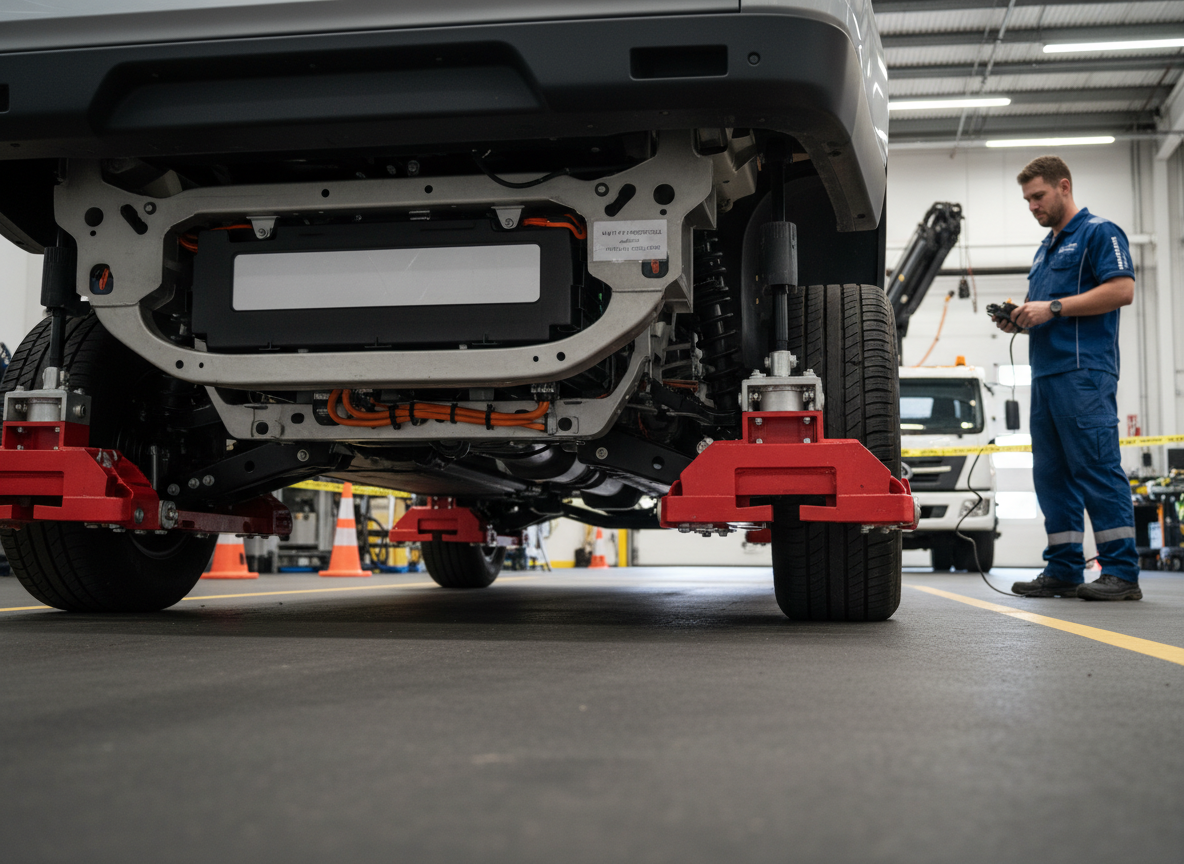
Electric vehicles have landed in Perth, and they’re not just sedans anymore. Utes and SUVs now dominate EV sales across WA, with models like the BYD Shark, Ford F-150 Lightning, and Tesla Model X becoming common sights on our roads. But when one breaks down or needs transport, the stakes are higher than with a petrol vehicle.
The battery pack underneath isn’t just expensive to replace-it’s vulnerable to specific types of damage that traditional towing methods can cause. We’ve seen firsthand what happens when an EV is towed incorrectly: error codes, warranty voids, and repair bills that exceed $15,000. That’s why understanding how to move these vehicles safely matters, whether you’re a fleet manager, a tradesperson with an electric ute, or a family with an EV SUV.
Why Electric Vehicles Require Different Towing Methods
Electric utes and SUVs aren’t just regular vehicles with a different fuel source. They’re built around a completely different powertrain that changes how they must be handled during electric ute transport WA operations.
The regenerative braking system is the core issue. When an EV’s wheels turn while the vehicle is off, the electric motors act as generators, sending power back to the battery. Sounds clever, right? It is-until you’re dragging the vehicle down a road with two wheels on the ground.
That uncontrolled power generation can overload the battery management system, fry sensitive electronics, or even create a thermal event. Think of it like forcing water backwards through a pump that’s designed for one-way flow. Eventually, something gives.
All-wheel-drive EVs (which includes most electric utes and many SUVs) face an additional risk. Unlike petrol AWD systems that can sometimes be towed in neutral with precautions, EV AWD systems remain mechanically connected. Towing with any wheels touching the ground creates resistance and heat in components that aren’t designed to spin without the vehicle’s computer managing them.
The BYD Shark, for example, explicitly states in its owner’s manual that all four wheels must be off the ground during transport. Ford’s F-150 Lightning manual is even more direct: “Do not tow with any wheels on the ground.” These aren’t suggestions-they’re engineering requirements.
The Risks of Standard Towing for Electric Utes and SUVs
We’ve recovered EVs after they’ve been towed incorrectly by well-meaning operators who didn’t understand the differences. The damage isn’t always obvious at first, but it’s real and it’s expensive.
Battery system errors are the most common outcome. The vehicle’s computer detects abnormal voltage or current patterns and throws the system into a protected mode. Sometimes a dealer can reset these faults. Sometimes they can’t, and the entire battery management system needs replacement-a $8,000 to $12,000 job depending on the model.
Motor damage occurs when the wheels spin without lubrication systems running. Electric motors in EVs are cooled and lubricated by systems that only operate when the vehicle is powered on. Dragging them down the road creates friction and heat that can warp bearings or damage windings.
Warranty voids are almost guaranteed if the manufacturer discovers improper towing. Most EV makers explicitly state that wheel-lift or dolly towing voids the powertrain warranty. Given that EV powertrains are warrantied for 8 years or 160,000km in most cases, that’s a significant financial risk to take.
Thermal events, while rare, are the nightmare scenario. If the battery system is compromised during incorrect towing and begins to heat uncontrollably, the result can be catastrophic. We’re not trying to scare anyone-the risk is low if the vehicle isn’t already damaged-but it’s why every EV manufacturer insists on flatbed transport.
How Tilt Tray Services Protect Electric Vehicle Systems
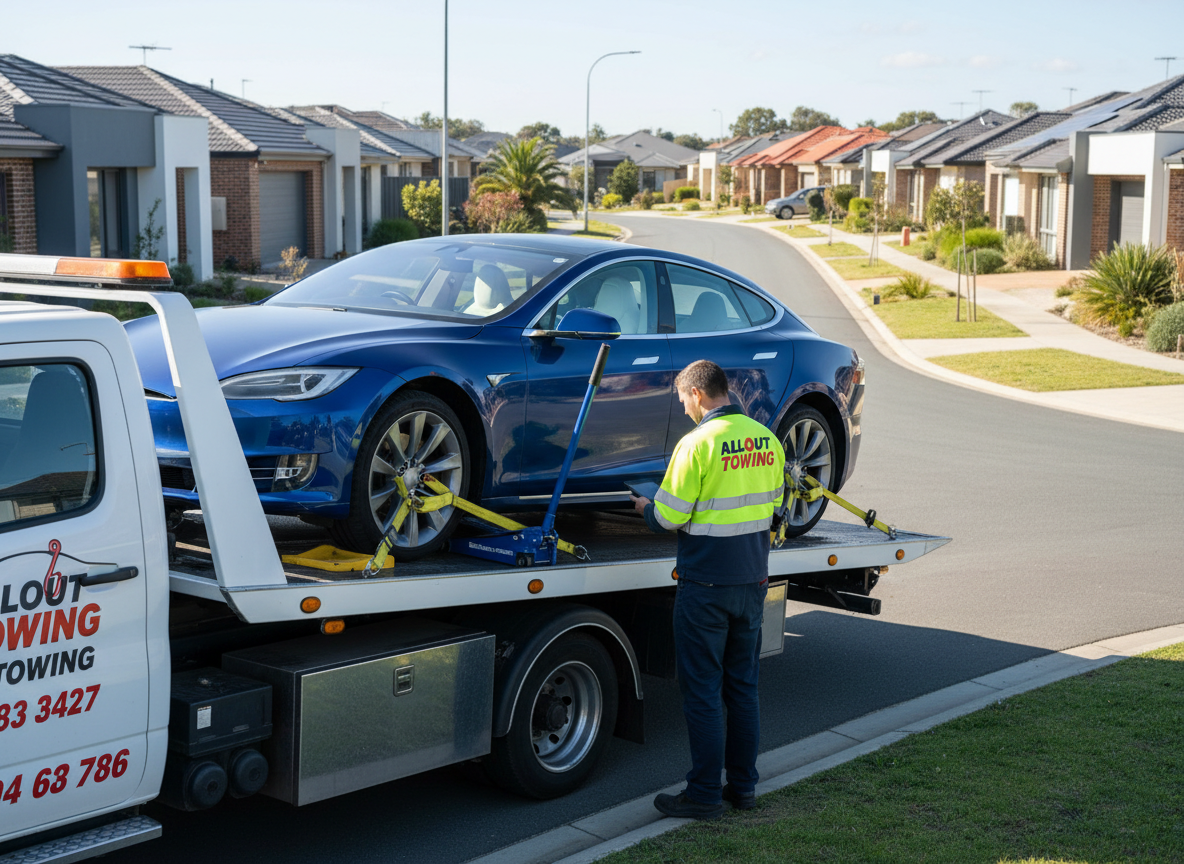
The solution is straightforward: keep all four wheels off the ground. Our tilt tray services are purpose-built for this exact requirement.
The tray lowers completely flat to ground level, creating a ramp rather than a steep incline. We winch the vehicle onto the tray without needing to drive it or rotate the wheels. Once secured, the entire vehicle is lifted and transported with zero wheels touching the road.
For electric utes-which can weigh 2,800kg to 3,200kg depending on battery size-this method also distributes the load evenly. The battery pack sits in the floor pan between the axles, creating a low centre of gravity but also a concentrated weight point. A tilt tray supports the entire chassis, not just the suspension pickup points.
No drivetrain movement means no unintended power generation, no motor spinning, and no risk to the battery management system. It’s the same method we use for prestige cars, 4WDs, and lowered vehicles-anything that can’t tolerate traditional towing.
We’ve transported hundreds of EVs across Perth metro and regional WA using this method without a single reported fault or damage claim. That’s not luck-it’s the right equipment used correctly.
What Happens During an Electric Vehicle Towing Job
When you contact us about electric car towing Perth needs, the process is designed around protecting the vehicle’s systems from the moment we arrive.
Step one: Confirm the vehicle is safe to move. If the vehicle has been in an accident or shows any signs of battery damage (warning lights, unusual smells, heat), we treat it as a potential hazmat situation. Most of the time, EVs are perfectly safe to transport, but we don’t take shortcuts on the initial assessment.
Step two: Ensure the vehicle is in park or the parking brake is engaged. Unlike petrol vehicles, many EVs don’t have a traditional neutral position that’s safe for transport. We leave them in park and release the parking brake only once the vehicle is fully secured on the tray.
Step three: Load the vehicle onto the tilt tray. The tray lowers to the ground, and we use a winch to pull the vehicle up the deck. The wheels rotate during this process, but only for a few metres at walking speed-not enough to generate problematic current or heat.
Step four: Secure the vehicle using multiple tie-down points. We anchor the chassis at four points, avoiding any contact with the battery pack housing or high-voltage cables. The vehicle is immobilised completely, with no risk of shifting during transport.
Step five: Transport to the destination. Whether it’s a dealer, a repairer, or your home, the vehicle travels with all systems isolated and protected. No wheels on the ground, no drivetrain movement, no risk.
The whole process takes about 15 to 25 minutes from arrival to departure, depending on the location and access.
Common Scenarios Where Electric Utes and SUVs Need Towing
Breakdowns are less common with EVs than petrol vehicles-there’s no engine to seize, no transmission to fail-but they still happen. The 12-volt accessory battery (separate from the main drive battery) can fail, leaving the vehicle unable to start. Or a software fault might prevent the vehicle from shifting out of park. Either way, you’re stuck, and the vehicle needs transport to a dealer.
Accident recovery is another frequent scenario. If an electric ute or SUV is involved in a collision, it often can’t be driven due to suspension damage, wheel misalignment, or safety system lockouts. Our accident towing team works with insurance companies and assessors to recover EVs safely, with full documentation of the transport method to protect warranty claims.
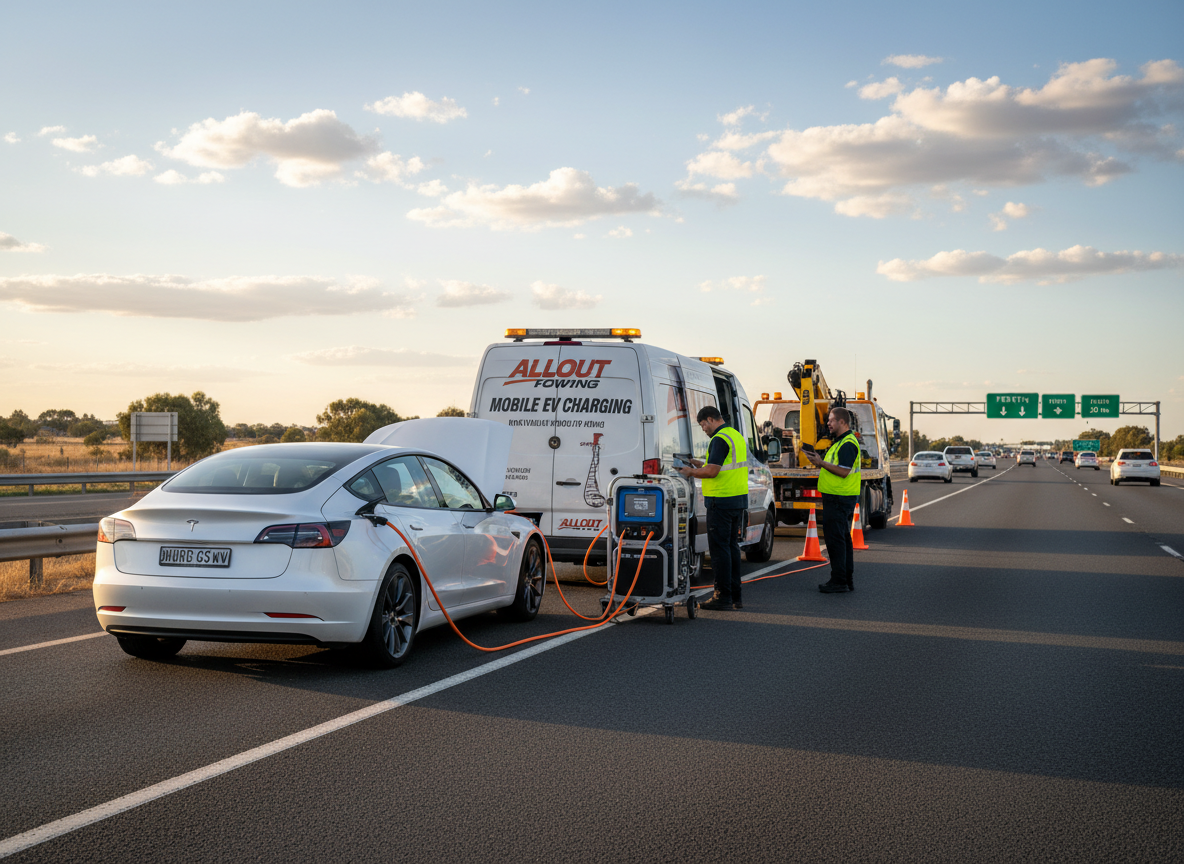
Flat battery situations are unique with EVs. Unlike a petrol car, you can’t just jump-start an EV and drive it to a charger. The drive battery is separate from the 12V system, and if the drive battery is completely depleted, the vehicle won’t move under its own power. We’ve transported EVs from remote locations where drivers misjudged their range and ran out of charge with no nearby charging infrastructure.
Relocation for sale or service is increasingly common as more Perth families and businesses adopt EVs. If you’re moving interstate or selling a vehicle privately, you need it transported without adding kilometres to the odometer. Our tilt tray keeps the vehicle secure and stationary for the entire journey.
Pre-delivery transport for dealerships is a growing part of our work. New EVs arriving at Perth docks or freight terminals need transport to dealerships across the metro area and regional WA. Dealers trust us because we understand the compliance and care requirements for vehicles still under manufacturer warranty.
Differences Between Electric Utes and SUVs for Towing
While the core principle-keep all wheels off the ground-applies to both, there are practical differences in how we handle electric utes versus SUVs.
Electric utes like the BYD Shark or LDV eDeliver 9 are built on body-on-frame or reinforced unibody platforms designed for load carrying. They’re heavier, with kerb weights often exceeding 2,800kg. The battery packs are larger (up to 100kWh), and the vehicles sit higher, which affects loading angles.
We use heavier-rated tie-downs and position the vehicle further forward on the tray to account for the weight distribution. The tray itself is rated for 4,000kg, so even the heaviest electric utes are well within safe limits.
Electric SUVs like the Tesla Model X, Hyundai Ioniq 5, or Mercedes EQC are lighter (typically 2,200kg to 2,600kg) and have lower ground clearance. They’re easier to load, but many have air suspension systems that can complicate the process if the vehicle has no power.
If the air suspension has collapsed due to a dead 12V battery, we take extra care during loading to avoid scraping the undercarriage. In some cases, we use low-profile dollies to lift the vehicle slightly before winching it onto the tray.
Both types require the same fundamental approach: no wheel-lift, no dolly towing, no compromises.
Why EV Manufacturers Specify Flatbed Transport Only
It’s not about being difficult-it’s about physics and liability. EV manufacturers have invested billions in battery technology and safety systems. They know exactly how those systems behave under normal conditions, and they know what can go wrong when those conditions aren’t met.
Regenerative braking systems are optimised for controlled energy recovery during normal driving. When the vehicle’s computer isn’t managing that process, the energy flow becomes unpredictable. Voltage spikes, current surges, and thermal buildup are all possible, and all potentially damaging.
High-voltage safety interlocks are designed to disconnect the battery in a crash or when the vehicle detects a fault. But those interlocks assume the vehicle is stationary or being driven normally-not being dragged down a road with the wheels spinning and the systems offline.
Warranty protection is the manufacturer’s way of ensuring they’re only liable for defects, not damage caused by improper handling. If you ignore the towing guidelines and damage the vehicle, you’re on your own for the repair bill. And given that a replacement battery pack can cost $20,000 to $40,000 depending on the model, that’s not a risk worth taking.
We’ve worked with fleet managers who’ve tried to save money using cheaper towing services that didn’t have tilt tray capability. The short-term savings evaporated when the first vehicle came back with a battery fault and a voided warranty. Now they call All Out Towing first, because they’ve learned the hard way that doing it right is always cheaper than doing it twice.
What to Do If Your Electric Ute or SUV Breaks Down
If you’re stranded in an electric vehicle, here’s the process that keeps you safe and protects the vehicle.
First, get the vehicle to a safe location if possible. If it still has some power and can move under its own control, pull off the road completely. If it’s dead and stuck in a traffic lane, turn on hazard lights and get yourself and any passengers to a safe position away from traffic.
Second, contact us for 24-hour emergency towing. Let us know it’s an electric vehicle, the make and model, and whether there’s any visible damage or warning lights related to the battery system. That information helps us bring the right equipment and take the right precautions.
Third, don’t attempt to push or tow the vehicle yourself. Even a short distance with the wheels rolling can trigger faults. We’ve seen drivers try to push an EV into a parking bay, only to find the parking brake won’t release because the 12V battery is dead. Leave it where it is and let us handle the recovery.
Fourth, if the vehicle has been in an accident or you smell anything unusual, stay clear. EV battery fires are extremely rare, but if a battery pack is compromised, it can release toxic fumes or heat. Move upwind, keep others away, and let us know immediately when you call. We’ll coordinate with emergency services if needed.
Finally, confirm where you want the vehicle taken. Most EV repairs require a dealer or a specialist EV repairer with high-voltage certification. We can transport to any location in Perth metro or regional WA, but it’s worth confirming with your insurer or warranty provider before we move the vehicle.
Choosing the Right Towing Service for Your Electric Vehicle
Not all towing companies in Perth have the equipment or knowledge to handle EVs safely. Here’s what to look for when you need transport for an electric ute or SUV.
Tilt tray capability is non-negotiable. If the operator suggests a wheel-lift or dolly tow, end the conversation. It doesn’t matter how experienced they are with petrol vehicles-EVs require flatbed transport, full stop.
Experience with electric vehicles matters. Ask if they’ve transported EVs before, and specifically whether they’ve handled the make and model you’re driving. The loading process for a Tesla Model X with falcon-wing doors is different from a BYD Shark with a full tray of tools in the back.
Insurance and certification should be confirmed before the vehicle is loaded. Our trucks are fully insured for up to $100,000 per vehicle, and our operators are trained in EV safety protocols. If a towing company can’t provide proof of insurance or training, you’re taking a risk with a vehicle that might be worth $80,000 or more.
24/7 availability is critical for breakdowns. EVs don’t care if it’s 2pm or 2am-if the battery management system throws a fault, you’re stuck. We operate around the clock, every day of the year, because breakdowns don’t keep business hours.
Transparent pricing means no surprises when the job is done. We provide upfront quotes based on the vehicle type, location, and destination. No hidden fees, no inflated charges because it’s an EV.
The Future of Electric Vehicle Towing in WA
Electric vehicle adoption in WA is accelerating faster than most people realise. In 2024, EVs accounted for 8.4% of new vehicle sales in Australia, and WA is tracking slightly above the national average. That means more electric utes and SUVs on our roads, and more situations where they’ll need transport.
Charging infrastructure is expanding across Perth metro and into regional areas, but range anxiety is still real. We’ve recovered EVs from Bindoon, Mandurah, and even as far out as Northam when drivers misjudged their remaining range. As the network grows, those calls will become less frequent, but they won’t disappear entirely.
Battery technology is improving, with longer ranges and faster charging times in newer models. But that doesn’t eliminate breakdowns-it just changes the failure modes. Software faults, 12V battery failures, and accident damage will still require professional transport.
Towing standards are likely to become more formalised as EV numbers grow. We expect industry bodies and insurers to mandate specific training and equipment for EV transport, similar to what already exists for heavy machinery or hazardous materials.
We’re staying ahead of that curve by investing in equipment, training, and partnerships with EV dealerships and repairers across Perth. When you call us for electric car towing Perth services, you’re getting a service that’s built for the next decade, not just today.
Protecting Your Investment With Professional EV Transport
An electric ute or SUV represents a significant investment-not just in purchase price, but in the technology and warranty coverage that comes with it. Protecting that investment means using transport methods that align with manufacturer requirements and industry best practice.
We’ve built our reputation on doing the job right, even when it’s more complex or requires specialised equipment. Whether it’s a BYD Shark that’s run out of charge in Ellenbrook, a Tesla Model X with a suspension fault in Fremantle, or a fleet of electric delivery vans that need relocation across Perth, we’ve got the tilt tray capacity and the EV knowledge to handle it safely.
You can contact us anytime for a quote or to discuss your specific situation. If you’re unsure whether your vehicle needs tilt tray transport, we’ll walk you through the manufacturer’s guidelines and explain why it matters. No pressure, no upselling-just honest advice from operators who’ve been doing this for over 15 years.
Electric vehicles are the future of transport in WA, and we’re ready to support that future with the right equipment, the right expertise, and the right approach. When your electric ute or SUV needs moving, we’ll make sure it arrives in the same condition it left-no faults, no damage, no regrets.