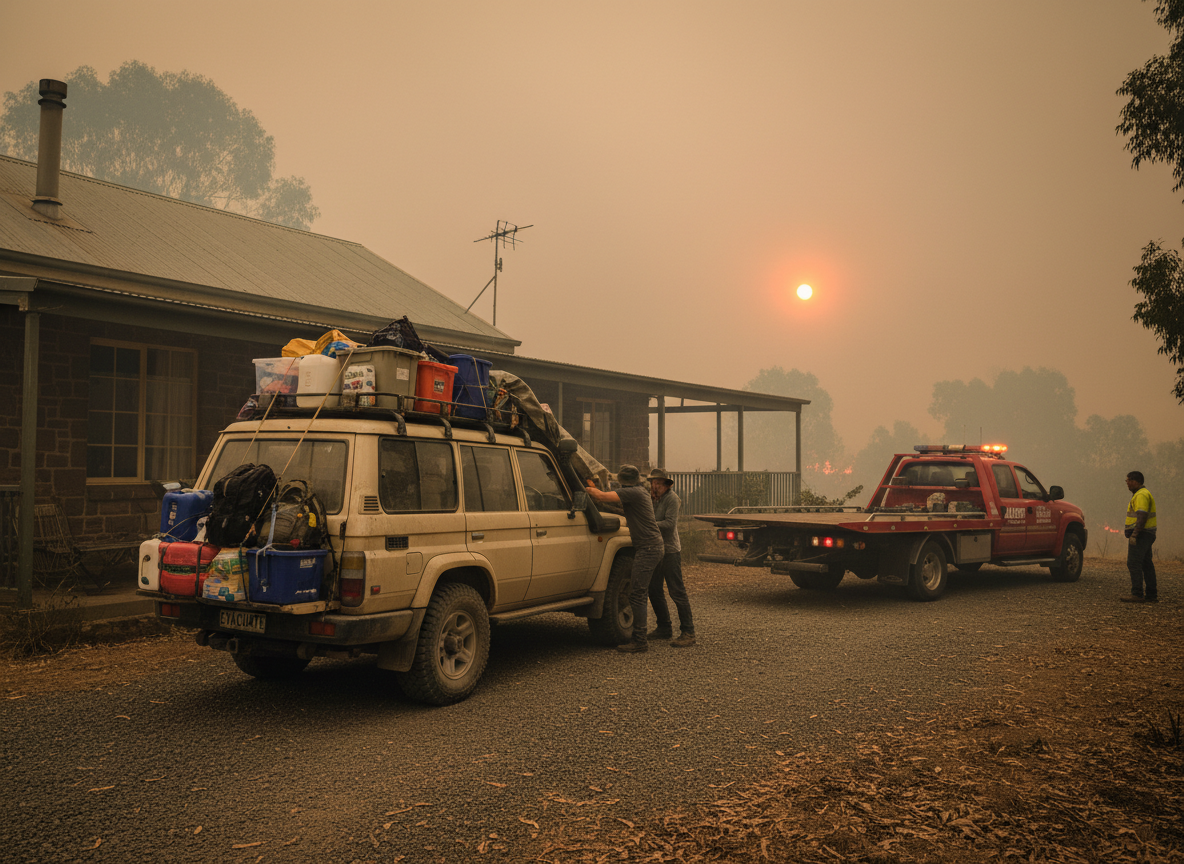
Perth’s summer heat doesn’t just test human endurance-it pushes vehicles to their absolute limits. When temperatures climb past 40°C, we see summer car breakdown Perth callouts surge by over 60% compared to cooler months. It’s not coincidence.
Your car’s cooling system, battery, tyres, and fluids are all designed to operate within specific temperature ranges. When Perth’s bitumen reaches 60-70°C on a scorching January afternoon, those systems face stress they weren’t built to handle day after day. The result? Breakdowns that leave drivers stranded on the Kwinana Freeway or stuck in a shopping centre car park.
At All Out Towing, we’ve responded to thousands of heat-related breakdowns across Perth’s northern and southern suburbs. We’ve seen the same patterns repeat every summer: vehicles that ran perfectly in May suddenly fail in December. Understanding why this happens-and how to prevent it-can save you from an expensive, stressful roadside emergency.
How Extreme Heat Actually Damages Your Vehicle
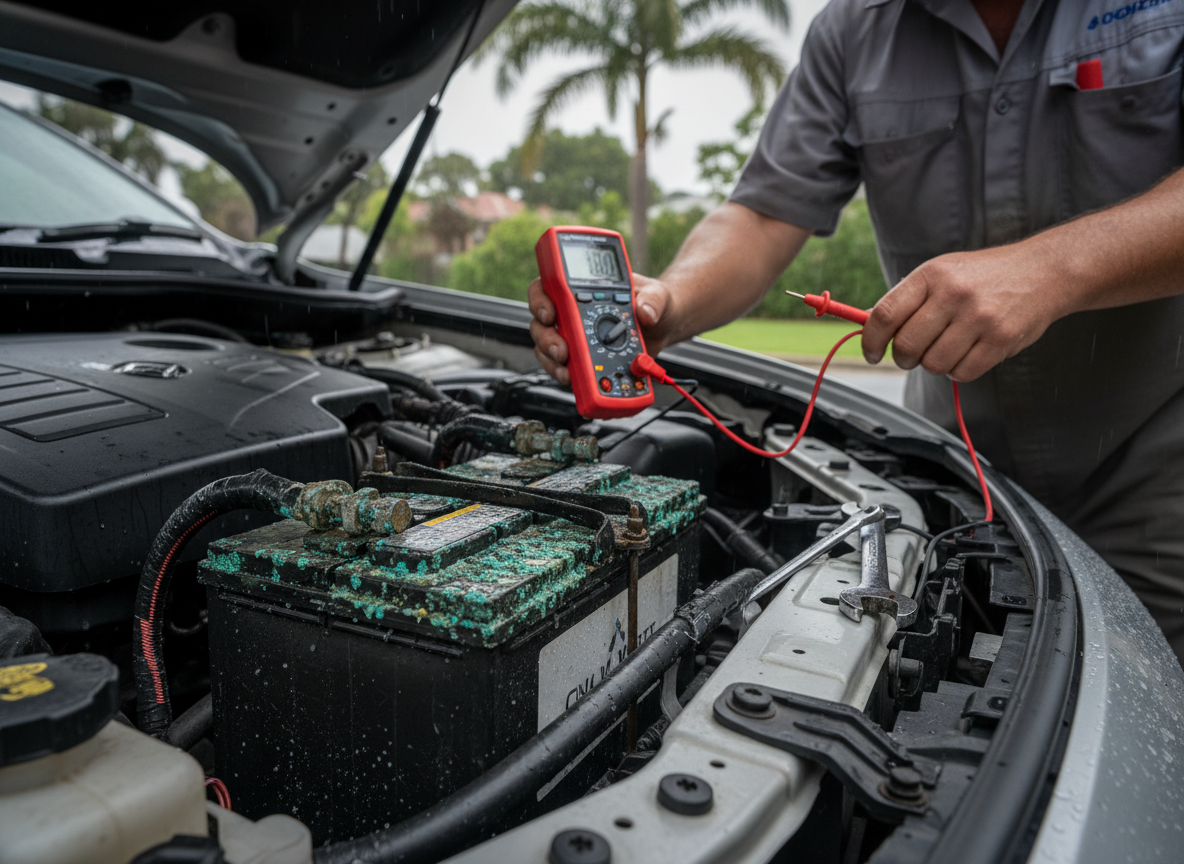
Most drivers know that cold weather is tough on batteries. What they don’t realise is that heat is far more destructive. For every 10°C increase in temperature, the rate of chemical reactions inside your battery doubles. That acceleration speeds up both power delivery and internal degradation.
Perth’s 40°C days mean your battery is working overtime just to maintain its charge. The heat causes the battery fluid to evaporate faster, exposing the internal lead plates to air. Once exposed, those plates corrode rapidly. A battery that might last five years in Melbourne’s milder climate often fails within three years here.
Cooling systems face similar punishment. Your radiator, hoses, water pump, and thermostat work together to keep engine temperatures around 90°C. When ambient temperatures hit 40°C, that system has far less margin for error. A small coolant leak that wouldn’t matter in winter becomes catastrophic in summer. The engine overheats within minutes.
Tyres suffer too. The rubber compound softens as temperatures rise, and the air inside expands. An underinflated tyre running on hot bitumen flexes more with each rotation, generating additional heat through friction. This cycle can lead to sudden blowouts, especially on older tyres with worn tread.
The Battery Failure Spike: Why December and January Are Peak Months
We track our callout data religiously, and the pattern is unmistakable. Battery-related breakdowns account for roughly 30% of our work in winter. By mid-summer, that figure jumps to nearly 50%. The correlation with temperature is direct and predictable.
Here’s what happens inside the battery: The electrolyte solution (a mix of water and sulphuric acid) facilitates the chemical reactions that produce electrical current. As this solution heats up, it becomes more reactive. That sounds good-more power, right? But it also accelerates the corrosion of the internal plates and the breakdown of the solution itself.
The water component evaporates through the battery’s vents. Even in sealed ‘maintenance-free’ batteries, this evaporation occurs. As water levels drop, the acid concentration increases, which further accelerates corrosion. Eventually, the plates are damaged beyond recovery. The battery might show 12 volts when tested but fail completely under the load of starting your engine.
Age compounds the problem. A three-year-old battery that’s been through three Perth summers has already lost significant capacity. Add one more 40°C week, and it crosses the failure threshold. That’s why we see so many callouts from drivers who say, “It was fine yesterday.”
If your battery is over three years old and you’re heading into summer, get it tested. Most auto shops will do this for free. A $200 replacement battery is far cheaper than a tow and the stress of being stranded.
Cooling System Failures: Small Leaks Become Big Problems
Your engine generates enormous heat-enough to melt its own components if the cooling system fails. That’s why the radiator, water pump, thermostat, and hoses form such a critical network. In Perth’s summer, this network operates under constant strain.
Rubber hoses become brittle over time. Heat accelerates this degradation. A hose that’s been flexing and heating for five years develops microscopic cracks. In winter, those cracks might weep a few drops of coolant. In summer, they rupture completely. We’ve towed dozens of vehicles where the upper radiator hose split while the driver was doing 100km/h on the freeway.
The water pump is another common failure point. This pump circulates coolant through the engine block and radiator. It’s driven by a belt connected to the engine, and it runs constantly whenever your engine is on. The bearings inside the pump wear out over time, and heat accelerates this wear. When the pump fails, coolant stops circulating. Engine temperature spikes within minutes.
Thermostats fail too, usually by sticking closed. The thermostat is a valve that opens when the engine reaches operating temperature, allowing coolant to flow through the radiator. If it sticks shut, coolant can’t reach the radiator to cool down. The engine overheats rapidly, and drivers often don’t notice until the temperature gauge is deep in the red zone.
Think of your cooling system like a chain-it’s only as strong as its weakest link. If any single component fails, the entire system fails. That’s why regular inspections matter. A mechanic can spot a deteriorating hose or a weeping water pump before it leaves you stranded.
Tyre Blowouts: The Hidden Risk of Hot Bitumen
Perth’s roads absorb and radiate heat all summer long. While the air temperature might be 40°C, the bitumen surface can reach 60-70°C. Your tyres are in constant contact with that surface, and the heat transfers directly into the rubber and the air inside.
Air expands as it heats up. If you inflated your tyres to the recommended pressure on a cool morning, they’ll be overinflated by midday. Overinflated tyres have less contact with the road, which reduces grip and increases stopping distances. They’re also more prone to damage from potholes or debris.
Underinflation is even more dangerous. An underinflated tyre flexes more as it rolls, and that flexing generates heat through friction. Combine that internal heat with the external heat from the road, and you’ve got a recipe for structural failure. The tyre’s internal layers can separate, or the sidewall can rupture suddenly.
We’ve responded to countless blowout callouts on the Mitchell Freeway and Tonkin Highway during summer. Many of those drivers had tyres that looked fine but were actually running 10-15 PSI below the recommended pressure. That small difference matters enormously when you’re driving on superheated bitumen.
Check your tyre pressure weekly during summer. Do it in the morning before you’ve driven anywhere, when the tyres are still cool. Adjust to the manufacturer’s recommended pressure (listed on a sticker inside your driver’s door). And inspect the tread depth-if it’s below 3mm, replace the tyres before summer hits hard.
Fuel System Evaporation: Why Your Car Might Not Start
Modern fuel systems are sealed and pressurised, which prevents most evaporation. But older vehicles-particularly those built before 2000-often have vented fuel systems. In extreme heat, fuel can evaporate from the tank, the fuel lines, or the carburettor (if your car has one).
Petrol is volatile. It’s designed to evaporate easily, which is why it works as a fuel. But that volatility becomes a problem when temperatures soar. Fuel vapour can form in the fuel lines, creating pockets that block liquid fuel from reaching the engine. This is called ‘vapour lock,’ and it prevents the engine from starting or causes it to stall.
Diesel vehicles face a different issue: algae growth. Diesel fuel contains small amounts of water, and that water can harbour bacteria and algae. Heat accelerates their growth. When algae clogs the fuel filter, the engine loses power or won’t start. We’ve towed several diesel utes and trucks during summer heatwaves where algae contamination was the culprit.
If your vehicle is more than 15 years old and you notice starting problems on hot days, vapour lock might be the cause. A mechanic can insulate the fuel lines or install a return line to mitigate the issue. For diesel vehicles, adding a biocide to your fuel tank twice a year prevents algae growth.
Air Conditioning Overload: When the Compressor Gives Up
Your car’s air conditioning system works harder in summer than any other component. It’s running constantly, fighting against 40°C external temperatures to keep the cabin cool. That workload takes a toll, especially on older systems.
The compressor is the heart of the AC system. It pressurises the refrigerant, which allows the system to transfer heat out of the cabin. Compressors are driven by a belt connected to the engine, and they cycle on and off as needed. In Perth’s summer, they cycle far more frequently-sometimes staying on continuously for hours.
This constant operation generates heat and stress. The compressor’s internal bearings wear down, and the seals can fail. When the compressor fails, the AC stops working. But more critically, a seized compressor can damage the drive belt, which might also power your alternator and water pump. If that belt snaps, your battery won’t charge and your engine will overheat. Suddenly, a failed AC becomes a full breakdown.
We’ve towed vehicles where the driver ignored AC problems for weeks, then experienced a complete failure on the hottest day of the year. If your AC is blowing warm air or making unusual noises, get it checked immediately. A $400 repair now prevents a $2,000 compressor replacement and a roadside emergency later.
Fluid Breakdown: Oil, Coolant, and Brake Fluid Under Stress
Every fluid in your vehicle has a temperature range where it performs optimally. Engine oil lubricates moving parts and helps dissipate heat. Coolant transfers heat away from the engine. Brake fluid transmits hydraulic pressure to your brake pads. When these fluids get too hot, their properties change.
Engine oil thins as it heats up. Thinner oil flows more easily, but it also provides less protection. If your oil is old or degraded, extreme heat can cause it to break down completely, leaving metal components grinding against each other. This leads to catastrophic engine damage.
Coolant can become acidic over time, especially when contaminated with rust or scale from inside the radiator. Acidic coolant corrodes the metal components it’s supposed to protect. Heat accelerates this corrosion. We’ve seen radiators and heater cores fail because the coolant hadn’t been flushed in years.
Brake fluid absorbs moisture from the air. Water lowers the fluid’s boiling point. When you brake hard on a hot day-say, coming down a hill or stopping suddenly on the freeway-the brake fluid heats up. If it’s contaminated with water, it can boil. Boiling fluid creates vapour bubbles, which compress under pressure. Your brake pedal goes soft, and your stopping power drops dramatically.
Regular fluid changes are cheap insurance. Engine oil should be changed every 6-12 months depending on your driving. Coolant should be flushed every 2-3 years. Brake fluid should be replaced every 2 years. These services cost a fraction of what you’ll pay for a tow and major repairs.
Why Older Vehicles Are More Vulnerable
Age matters. A ten-year-old car has been through ten Perth summers. Every component has expanded and contracted thousands of times. Rubber has hardened. Metal has corroded. Fluids have degraded. The cumulative effect makes older vehicles far more likely to fail when temperatures spike.
Rubber and plastic components are particularly vulnerable. Hoses, belts, seals, and gaskets all deteriorate faster in heat. A new radiator hose might last seven years in Melbourne. In Perth, you’re lucky to get five. The same applies to serpentine belts, timing belts, and coolant hoses.
Electrical systems also suffer. Wiring insulation becomes brittle and cracks, exposing the copper underneath. Corroded connections create resistance, which generates heat and accelerates further corrosion. We’ve diagnosed countless electrical gremlins that only appeared during summer-flickering lights, intermittent starting problems, or malfunctioning sensors.
If your vehicle is over eight years old, consider having a pre-summer inspection. A mechanic can identify components that are near the end of their service life and replace them before they fail. Spending $500 on preventative maintenance beats spending $2,000 on emergency repairs and towing.
What to Do If Your Car Overheats on the Road
Despite your best efforts, overheating can still happen. Maybe a hose ruptures suddenly, or your water pump fails without warning. Knowing how to respond can prevent engine damage and keep you safe.
First, turn off the air conditioning immediately. The AC compressor adds load to the engine, which generates more heat. Turning it off reduces that load. Then, turn the heater on full blast. Yes, it’ll make the cabin unbearable, but the heater core acts as a secondary radiator, helping to dissipate heat from the coolant.
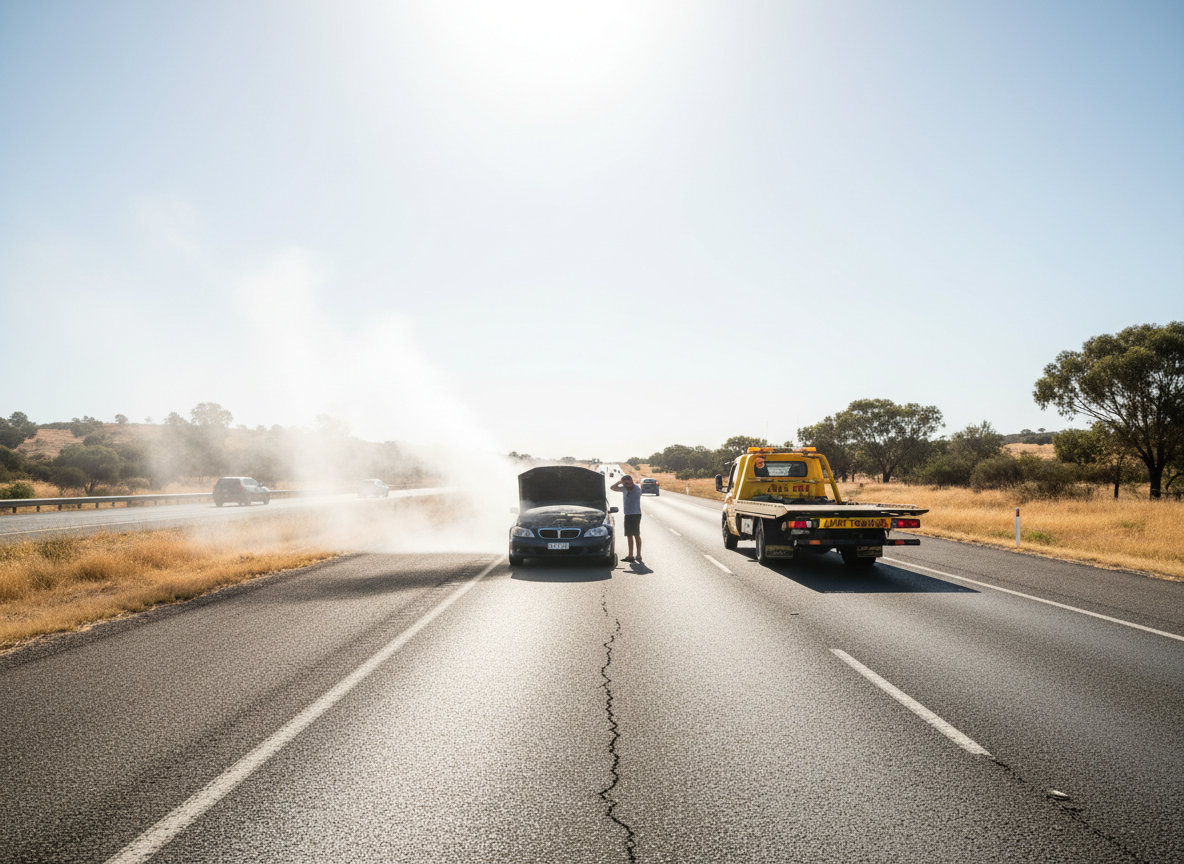
If the temperature gauge continues climbing, pull over safely as soon as possible. Don’t stop in the middle of the freeway-get to the shoulder or an emergency bay. Turn off the engine and pop the bonnet. Do not open the radiator cap. The system is pressurised, and boiling coolant can spray out, causing severe burns.
Let the engine cool for at least 30 minutes. If you have water (not coolant), you can add it to the overflow reservoir once the engine has cooled. But this is a temporary fix to get you to a mechanic or a safe location. Don’t attempt to drive long distances with a compromised cooling system.
If you’re stuck on a major highway in 40°C heat, call for help. Our 24-hour emergency towing team responds quickly across Perth’s metro area. We’ll get you and your vehicle to safety, whether that’s your home or a trusted mechanic’s workshop.
Preventative Maintenance: The Best Defence Against Summer Breakdowns
Most heat-related breakdowns are preventable with Perth heat breakdown prevention strategies. They’re the result of deferred maintenance, ignored warning signs, or simple neglect. A proactive approach keeps your vehicle reliable even when Perth’s temperature hits 42°C.
Start with a pre-summer inspection. Book your car in for a check-up before November. Ask the mechanic to specifically inspect:
- Battery condition and charge capacity
- Coolant level and condition (and pressure-test the system for leaks)
- All belts and hoses for cracks or wear
- Tyre tread depth and pressure
- Air conditioning performance
- All fluid levels (oil, brake, power steering, transmission)
This inspection typically costs $100-150, and it identifies problems before they strand you. If the mechanic recommends replacing a component, weigh the cost against the risk. An $80 radiator hose replacement now is far cheaper than a $1,500 tow and engine repair later.
Check your coolant level weekly during summer. Pop the bonnet when the engine is cold and look at the overflow reservoir. The coolant should be between the ‘min’ and ‘max’ marks. If it’s dropping, you’ve got a leak somewhere. Don’t just top it up and ignore it-find and fix the leak.
Monitor your temperature gauge while driving. Most drivers never look at it, but it’s there for a reason. If the needle starts climbing above the normal range, you’ve got a problem developing. Address it before it becomes critical with effective Perth heat breakdown prevention.
How We Handle Summer Towing Callouts
When you call us because your car has overheated or won’t start in a shopping centre car park, we know you’re stressed, hot, and frustrated. Our job is to get you out of that situation quickly and safely.
We dispatch the appropriate truck based on your vehicle and location. For most breakdowns, our tilt tray services are ideal. The flatbed tilts down, and we winch your car on without any risk of drivetrain damage. This is especially important for vehicles with all-wheel drive or automatic transmissions, which can be damaged by traditional hook towing.
Our drivers carry coolant, water, and jump-start equipment. Sometimes we can get your vehicle running again on the spot. If it’s a simple fix-like a loose battery terminal or low coolant that hasn’t caused damage yet-we’ll sort it out and save you the cost of a tow. If the problem is more serious, we’ll transport your vehicle to your preferred mechanic or back to your home.
We operate across Perth’s entire metro area, from Yanchep to Mandurah. Our response times average 30-45 minutes, even during peak summer car breakdown Perth periods. If you’re stranded on a major highway in dangerous heat, we prioritise your safety. We’ll get to you as quickly as possible.
For drivers who need safe car towing services regularly-perhaps you own a classic car that you don’t want to risk driving in extreme heat-we offer scheduled transport. You can book in advance, and we’ll move your vehicle when and where you need it.
The Real Cost of Ignoring Warning Signs
We’ve seen the consequences of ignored maintenance too many times. A driver notices their temperature gauge creeping up but keeps driving. Five minutes later, the engine seizes. What could have been a $200 hose replacement becomes a $6,000 engine rebuild.
Or a battery that’s been slow to start for weeks finally dies in the middle of an intersection during peak hour. The driver is stuck, blocking traffic, stressed and embarrassed. We tow the vehicle to a workshop, where they discover the alternator has also failed. The repair bill hits $800.
These situations are avoidable. Your vehicle communicates its problems through warning signs: strange noises, dashboard lights, performance changes, or visual cues like leaking fluids. When you notice these signs, act. Book a mechanic appointment. Don’t wait for the problem to escalate.
The financial cost is one thing. The stress and inconvenience are another. Breaking down in 40°C heat with kids in the car, or being late to an important meeting because your vehicle won’t start-these experiences are miserable. And they’re almost always the result of something that could have been prevented.
Why Perth’s Climate Makes Vehicle Maintenance Non-Negotiable
If you lived in Hobart or Melbourne, you could probably get away with less frequent maintenance. Perth’s climate doesn’t allow that luxury. The combination of extreme heat, intense UV exposure, and long distances between suburbs puts unique stress on vehicles.
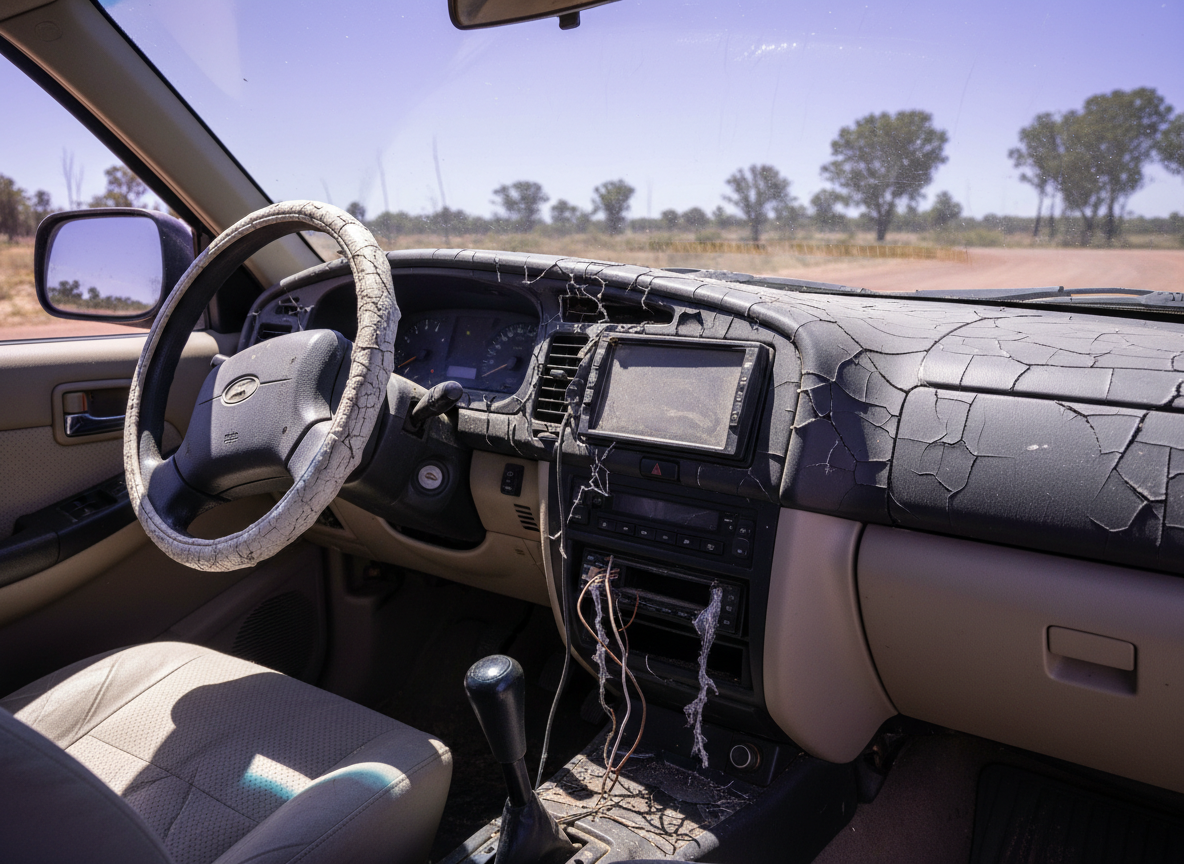
Our UV levels are among the highest in the world. UV radiation degrades rubber, plastic, and paint faster than heat alone. Dashboard plastics crack. Wiper blades perish. Paint oxidises. These might seem like cosmetic issues, but they reflect the same degradation happening to critical components under the bonnet.
The distances we drive matter too. Perth is one of the most sprawling cities in the world. A commute from Yanchep to the CBD can be 50km each way. That’s 500km per week just getting to work-double what someone in a compact European city might drive. More kilometres mean more wear, more heat cycles, and more opportunities for components to fail.
Summer in Perth isn’t a brief inconvenience. It’s four solid months of relentless heat that tests every system in your vehicle. Maintenance isn’t optional-it’s essential insurance against the breakdown that will happen if you neglect it.
When your car needs help during Perth’s brutal summer, we’re ready. Call us anytime for fast, reliable towing that gets you out of the heat and back on track. Because summer car breakdown Perth situations don’t have to ruin your day-not when you’ve got professional support just a phone call away.
If you need assistance or want to discuss preventative options for your vehicle, contact us anytime. We’ve been helping Perth drivers survive summer for over 15 years, and we’re here to make sure you’re not the next person stranded in 40-degree heat.