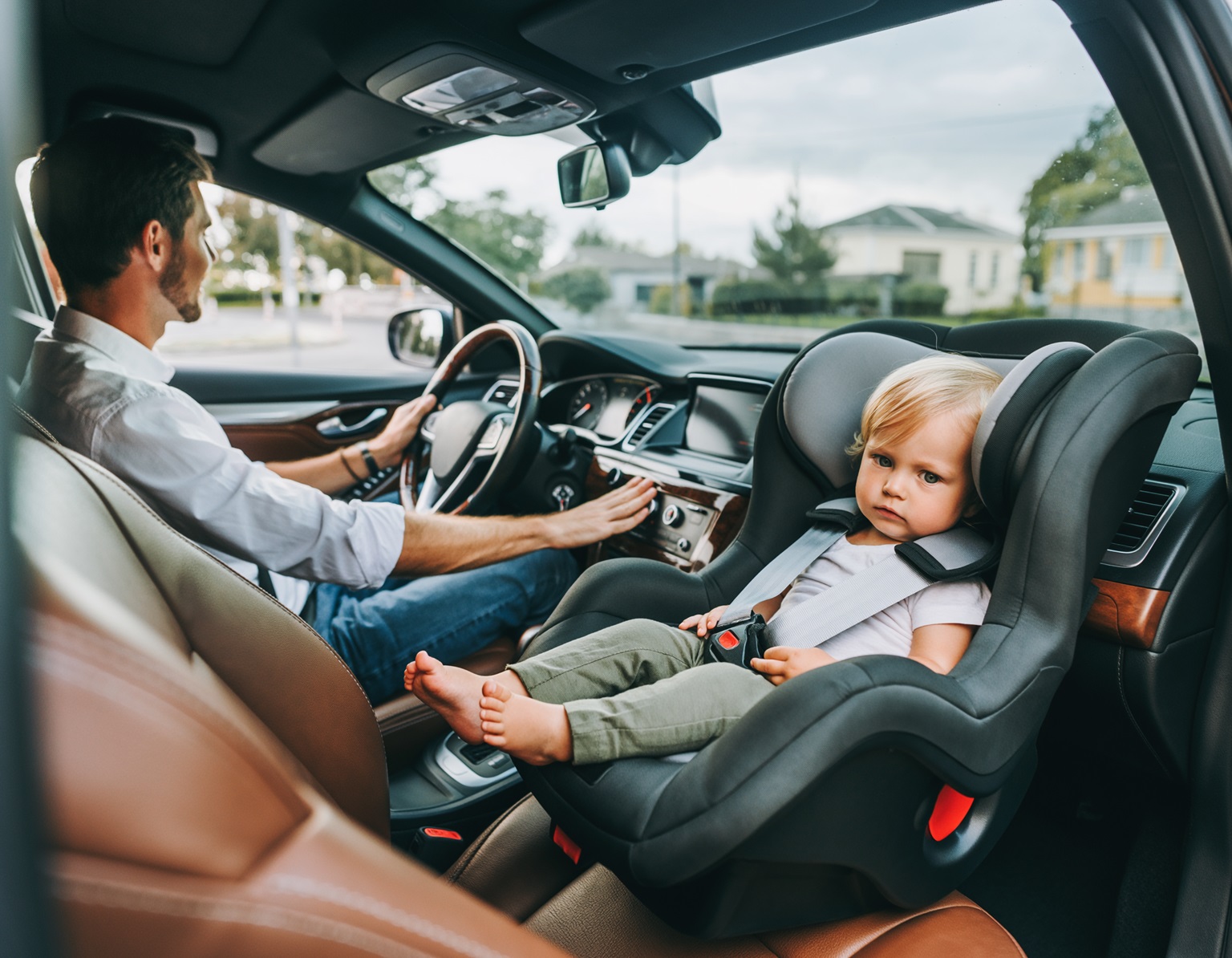
You already know you should buckle up. You’ve heard it since you were a kid, and you probably don’t even think about it anymore when you click that belt into place. But what most WA drivers don’t realise: the seat belt laws WA enforces are more detailed than you’d think, and the rules around child restraints change more often than your oil filter.
Over two decades of vehicle recovery experience across WA roads show what happens when people get these basics wrong. Not just the fines (though they’re steep), but the accidents that could’ve been so much less serious if everyone were properly restrained. One scene near Ellenbrook demonstrated this perfectly: a toddler in the back seat walked away without a scratch because his mum had installed the child seat correctly. The car was a write-off, but that little one was fine. That’s not luck – that’s physics and proper restraint working exactly as designed.
Understanding what seat belt laws WA actually requires, why it matters for your family’s safety, and how to get it right without second-guessing yourself every time you strap in makes all the difference.
What Seat Belt Laws WA Actually Require
Every person in your vehicle must be adequately restrained, full stop. That’s not a suggestion – it’s the law under the Road Traffic Code 2000. If you’re driving, you’re responsible for making sure every passenger under 16 is buckled up correctly. Adults are responsible for themselves, but you’ll still cop a fine if they’re not wearing their belt.
The penalty for not wearing a seat belt in WA is four demerit points and a $550 fine for the driver. Each unrestrained passenger gets their own $550 fine if they’re over 16. If you’re carrying multiple unrestrained passengers, those fines stack up fast.
What trips people up: you can’t have more passengers than seat belts. Sounds obvious, but plenty of utes get pulled over with three people squashed across a two-seat bench, or families who thought it was fine to let one kid sit on another’s lap “just this once” on a short trip. It’s never fine, and it’s never worth the risk.
Exemptions exist, but they’re rare. Medical conditions that genuinely prevent someone from wearing a seat belt require a doctor’s certificate, and you need to carry that certificate in the vehicle. Taxi drivers can be exempt while carrying passengers, and there are specific rules for people delivering goods who need to get in and out of cars frequently. For everyone else, there’s no wiggle room.
Why Following Seat Belt Laws in WA Feels Harder Than It Should
Getting seat belts right seems simple until you’re dealing with real life. You’ve got a crying toddler who’s arching their back and refusing to sit in their car seat. You’re running late for school drop-off. Your teenager insists the belt is “uncomfortable” and keeps slipping it behind their back. Or you’ve borrowed someone else’s car, and you’re not sure if the child restraint you’ve installed is actually secure.
These moments are frustrating because you know what you’re supposed to do, but the gap between knowing and doing feels massive when you’re already stressed. Add in the fact that child restraint rules change based on age and size, and it’s no wonder parents feel overwhelmed.
The emotional weight matters too. You’re not just following rules – you’re protecting the people you care about most. That responsibility can make you second-guess every adjustment and every strap, wondering if you’ve done it right. It’s natural to feel uncertain, especially with younger children whose needs change as they grow.
The Child Restraint Rules That Keep Changing
WA follows national Australian standards for child restraints, and they’re based on age brackets that correspond with how children’s bodies develop. The rules changed in recent years to add more specific requirements, which is why what worked for your older kids might not be current anymore.
- Under six months: must use a rear-facing child restraint (infant capsule).
- Six months to four years: must use either a rear-facing or forward-facing restraint with an inbuilt harness.
- Four to seven years: must use a forward-facing restraint with an inbuilt harness or an approved booster seat.
- Seven years and older: can use an adult seat belt if it fits properly; if under 145cm, a booster is still safer.
The laws set minimum standards, but physics doesn’t care about age brackets – it cares about whether the belt sits in the correct position to do its job.
Where Children Can Actually Sit Under Seat Belt Laws in WA
Children under four can’t sit in the front seat of a vehicle with two or more rows, even if they’re in an approved restraint. They must be in the back. If your car only has one row (like some utes or vans), you can install a child restraint in the front, but you must turn off the airbag if it’s a rear-facing seat.
Children aged four to seven can sit in the front seat only if all rear seats are already occupied by children under seven. So if you’ve got three kids and two are already in the back, the third can go up front in an appropriate restraint. But you can’t just put one child in the front because it’s more convenient.
These rules exist because rear seats are statistically safer, and front airbags – while lifesaving for adults – can seriously injure small children.
Installing Restraints Without the Guesswork
Most child restraints aren’t installed correctly. That’s not a judgment – it’s a fact backed by years of research showing that up to 70% of child seats have at least one installation error. The instructions look straightforward until you’re actually threading a seat belt through clips and anchors, trying to get the angle right, and wondering if “tight enough” really is tight enough.
Practical tips:
- ISOFIX systems make installation easier if your car supports them.
- For seat belt installations, the restraint shouldn’t move more than 2-3cm side to side or forward when pulled hard.
- You might need to put your knee in the seat and use your body weight to compress it while tightening the belt – like packing a suitcase that’s just slightly too full.
- Check the recline angle to ensure proper head and neck support for babies.
If you’re unsure, it’s worth having your installation checked by a professional restraint fitter or mechanic. The peace of mind is worth the appointment.
The Guilt You’re Probably Feeling (And Why It’s Misplaced)
You’ve probably bent the rules at some point. Maybe you drove around the corner without buckling up, or let your kid ride without their booster seat on a short trip. Perhaps you’ve got an older child who’s technically big enough for an adult belt, but you’re not quite sure if it fits right, and you’ve been meaning to check but haven’t got around to it.
That guilt you’re feeling? It means you care. But beating yourself up over past mistakes doesn’t help anyone. What helps is getting it right from now on.
Most crashes happen close to home on familiar roads. That “just this once” trip is statistically when things go wrong, because you’re relaxed and not expecting trouble. You can’t change what you’ve already done, but you can make different choices today.
Start Here, Not With Perfection
Getting seat belt laws WA-compliant doesn’t require perfection – it requires consistency and awareness. Start with these quick checks:
- Read your vehicle’s manual to locate anchor points and ISOFIX options.
- Read your restraint’s manual – every model differs slightly.
- Set a reminder to review restraints every three months.
- Practice installations when you’re not in a rush.
- Talk to your kids about why seat belts and restraints matter.
What Happens After an Accident
If you’re in a collision, your child restraint needs to be replaced even if it looks fine. The forces involved can compromise its internal structure. Most insurance policies cover restraint replacement, and at All Out Towing, we’ve helped countless families through post-accident recovery, including sorting out what needs replacing and what’s still safe to use.
Seat belts can also be damaged in accidents. If the pre-tensioners have deployed or the webbing is frayed or cut, the belt needs to be replaced. Have a professional check the restraint systems before you put your family back in the vehicle. If your vehicle’s been in an accident and needs recovery, our experienced accident towing service ensures your car is handled safely while you focus on what matters most.
When Things Go Wrong on the Road
Even with perfect restraint use, mechanical failures and accidents still happen. If you’re stranded with children in the car, your priority is keeping them safely restrained while you wait for help. Don’t let kids out to “stretch their legs” unless you’re well clear of traffic.
Our 24-hour emergency towing team understands that breakdowns with kids on board are particularly stressful. We prioritise these calls because we know you’re not just dealing with a mechanical problem – you’re managing tired, hungry, or scared children in a vulnerable situation.
If your vehicle needs recovery or safe transport, our safe car towing services can move it securely while you focus on your family. We handle vehicles with installed child restraints carefully because we know how important they are.
The Conversation You Need to Have About Seat Belt Laws in WA
Seat belt laws in WA aren’t complicated because lawmakers wanted to make your life difficult. They’re detailed because crashes are complex, bodies are fragile, and the difference between walking away and serious injury often comes down to whether everyone was restrained correctly.
You don’t need to become an expert in crash dynamics or restraint engineering. You need to follow the rules consistently, check your installations regularly, and adjust as your children grow.
The next time you’re tempted to skip the booster seat for a short trip, remember that you’re not enforcing arbitrary rules – you’re using the single most effective safety device ever invented for vehicles. Seat belts reduce the risk of death by about 45% and serious injury by 50%. That’s not marketing – that’s physics and decades of proof.
If you’re unsure whether you’re meeting WA seat belt laws, get in touch with our team for advice. We’re here to help Perth families stay safe on the road.