Living near the ocean comes with incredible perks-the breeze, the views, the lifestyle. But if you’re driving in Yanchep, Quinns Rocks, or anywhere along Perth’s northern coastline, your car is facing a silent enemy every single day: salt.
We’ve towed hundreds of vehicles from coastal suburbs over the years, and one pattern keeps showing up. Cars that look fine on the outside can be rotting from the inside out. Brake lines seize. Suspension bolts snap. Exhaust systems crumble. And by the time you notice, the damage is already done.
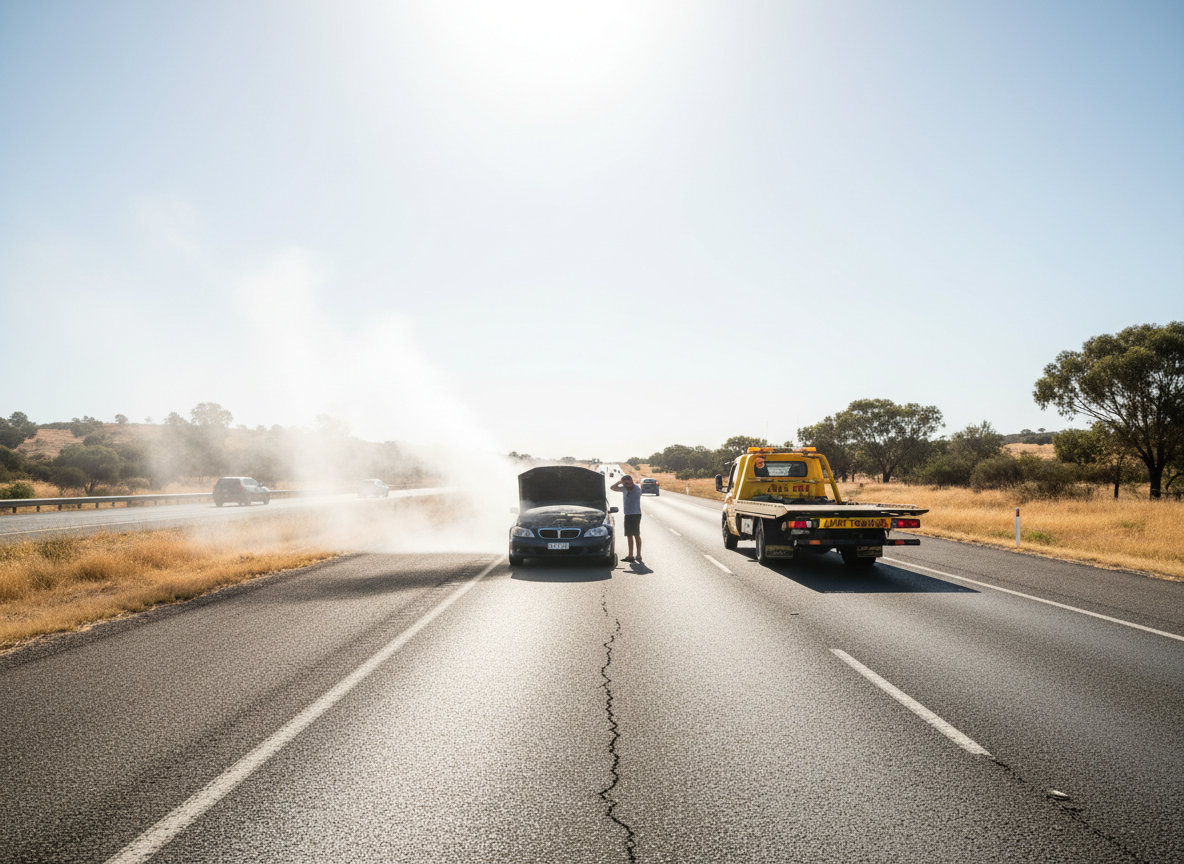
Coastal car corrosion Perth isn’t just cosmetic. It’s a structural threat that can turn a minor repair into a major safety issue-or leave you stranded on Marmion Avenue waiting for our 24-hour emergency towing to arrive.
Here’s what coastal drivers need to know, and how you can protect your investment without spending every weekend in the driveway.
Why Coastal Car Corrosion Hits Perth’s Northern Suburbs So Hard
Salt doesn’t need direct contact to do damage. It travels.
Every time the wind picks up off the Indian Ocean, it carries microscopic salt particles inland. In Yanchep and Quinns Rocks, you’re often within 500 metres of the beach-close enough that salt is settling on your car whether you drive on the sand or not.
Here’s how it works. Salt attracts moisture from the air, creating a thin film of saltwater on metal surfaces. That film acts like a battery, accelerating the oxidation process. Steel rusts. Aluminium corrodes. Even stainless steel can pit and weaken over time.
The undercarriage takes the worst of it. Brake lines, fuel lines, exhaust hangers, suspension components-these parts are exposed to salt spray kicked up from the road, especially after rain when salt residue mixes with water. And because you can’t see them, they corrode silently until something fails.
We’ve seen it firsthand with our Yanchep salt damage protection callouts. A ute that’s been parked near the coast for five years might look spotless on top, but underneath? The chassis is flaking, the bolts are seized, and the exhaust is held together by rust alone.
The Real Cost of Ignoring Salt Corrosion
Let’s talk numbers. A corroded brake line doesn’t just leak-it can fail completely, leaving you with no stopping power. A seized suspension bolt can snap during a turn, causing loss of control. A rusted exhaust mount can drop your muffler onto the road mid-drive.
These aren’t hypothetical scenarios. We’ve responded to callouts where corrosion was the root cause of the breakdown. And in every case, the repair bill was far higher than it would’ve been if the owner had caught it early.
Here’s a rough breakdown of what you’re looking at:
- Brake line replacement: $300-$800 depending on the vehicle
- Exhaust system repair: $400-$1,200 if sections need replacing
- Suspension component replacement: $200-$1,000 per corner
- Chassis rust repair: $1,500-$5,000+ if structural work is needed
Compare that to the cost of prevention, which we’ll cover shortly. It’s not even close.
And then there’s the safety factor. A corroded component doesn’t just cost money-it puts you and your passengers at risk. If a brake line fails on Ocean Reef Road or a suspension bolt snaps on the freeway, you’re not just dealing with a repair. You’re dealing with a potential accident.
Which Parts of Your Car Are Most Vulnerable
Not all corrosion is created equal. Some parts of your vehicle are far more susceptible to salt damage than others, and knowing where to look can save you thousands.
Brake lines and fittings are at the top of the list. They’re made of steel, they’re exposed to road spray, and they carry pressurised fluid. When they corrode, they leak or burst. If you notice a soft brake pedal or see fluid under the car, get it checked immediately.
Exhaust systems are another weak point. The combination of heat, moisture, and salt accelerates rust from the inside and outside. Mufflers, catalytic converters, and exhaust hangers can all corrode to the point of failure. If your exhaust sounds louder than usual or you see rust flakes underneath, it’s time for an inspection.
Suspension components-control arms, sway bar links, shock absorbers, and their mounting bolts-are constantly exposed to salt spray. When bolts corrode, they seize. When metal corrodes, it weakens. A failed suspension component can affect handling, alignment, and safety.
Underbody panels and chassis rails are harder to inspect, but they’re critical. If salt gets into seams, joints, or drainage holes, it can cause rust to spread internally. This is especially common in older vehicles or those that have been in minor accidents where protective coatings were damaged.
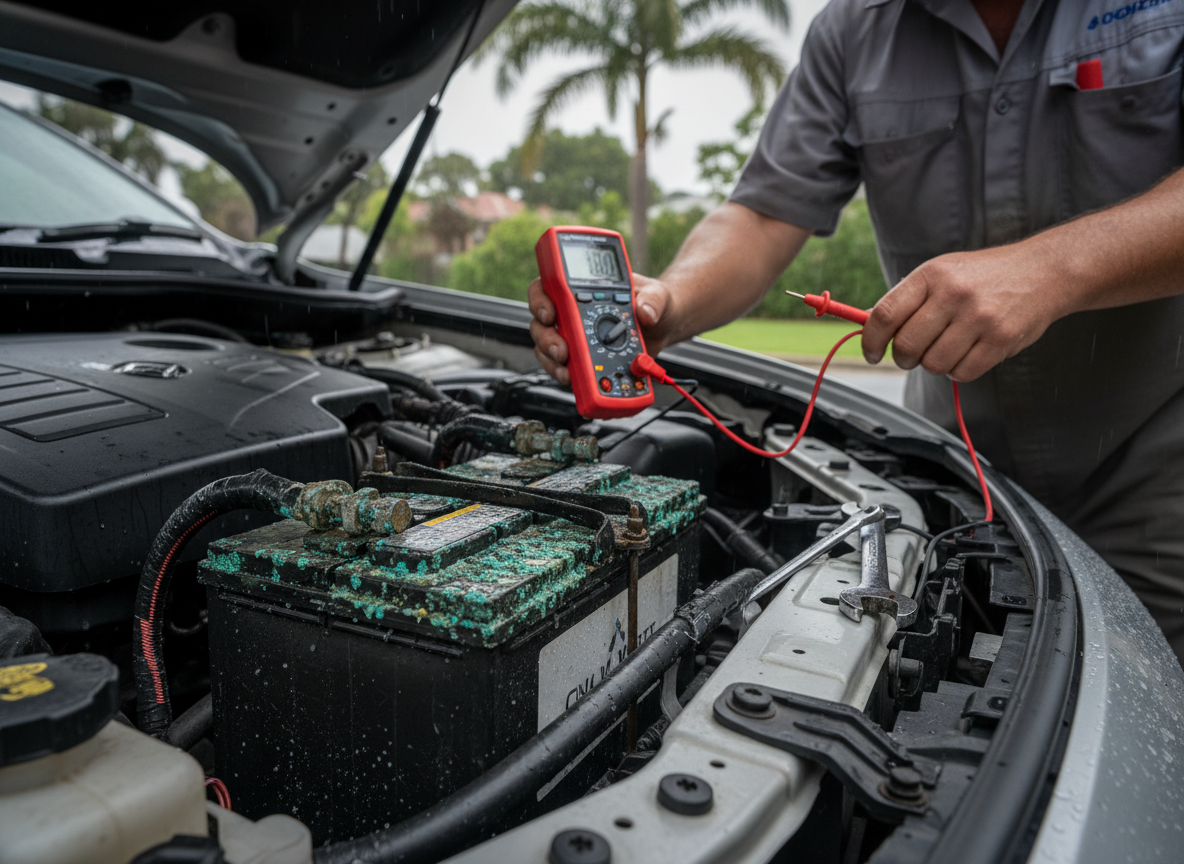
Battery terminals and electrical connectors are often overlooked. Salt accelerates corrosion on electrical contacts, leading to poor connections, voltage drops, and starting issues. If your battery keeps dying or your lights flicker, corrosion might be the culprit.
How to Protect Your Car from Salt Corrosion
The good news? You don’t need to move inland or garage your car in a hermetically sealed bubble. You just need to be proactive with coastal car corrosion Perth prevention.
Wash your car regularly-especially the undercarriage. This is the single most effective thing you can do. A quick rinse every two weeks removes salt before it has time to do serious damage. Focus on the underbody, wheel wells, and behind the bumpers. Most self-serve car washes have an undercarriage spray option. Use it.
Apply a protective coating to vulnerable areas. Products like lanolin-based sprays, rubberised undercoating, or cavity wax create a barrier between metal and salt. We’re not talking about a full restoration job-just a yearly application to high-risk areas like the chassis, suspension, and inside doors and panels.
Check and replace sacrificial anodes if your car has them. Some vehicles use zinc or magnesium anodes to protect aluminium components. These corrode instead of your car’s structure, but they need to be replaced periodically. Check your owner’s manual or ask a mechanic.
Park undercover when possible. Even a carport helps. It reduces exposure to salt-laden air and morning dew, both of which accelerate corrosion. If you don’t have covered parking, consider a breathable car cover for long-term storage.
Inspect your car every few months. Get under there with a torch (or have a mechanic do it). Look for rust spots, flaking paint, or white powdery deposits (a sign of aluminium corrosion). Catching it early means a $50 fix instead of a $500 one.
Don’t ignore chips and scratches. Every time your paint is compromised, you’ve created an entry point for salt. Touch up chips as soon as you notice them, and consider a clear protective film for high-impact areas like the bonnet and bumper.
What to Do If Corrosion Has Already Started
If you’ve already spotted rust or corrosion, don’t panic. Early-stage corrosion is manageable. Late-stage corrosion is expensive. The key is knowing the difference.
Surface rust looks like orange or brown discolouration on exposed metal. It’s the easiest to fix. Wire brush the area, apply a rust converter or inhibitor, then prime and paint. This stops the rust from spreading.
Scale rust is thicker and flaky. It’s eaten into the metal but hasn’t yet compromised structural integrity. You’ll need to grind or sand it back to bare metal, treat it, and repaint. If it’s on a critical component like a brake line or suspension part, replacement is safer than repair.
Penetrating rust has eaten through the metal. You’ll see holes, pitting, or sections that crumble when you touch them. At this stage, the part needs replacing. If it’s a chassis rail or structural panel, you’ll need professional welding or fabrication.
If you’re not sure how bad it is, get a pre-purchase-style inspection from a trusted mechanic. They’ll put the car on a hoist, check the undercarriage, and give you a clear picture of what needs attention.
And if you’re dealing with a vehicle that’s too far gone? We can help with that too. Our specialised towing solutions can move non-running or structurally compromised vehicles safely, whether you’re scrapping it or taking it to a workshop for major repairs.
Why Coastal Drivers Should Be More Vigilant Than Inland Owners
If you’re coming from an inland suburb and you’ve just moved to Yanchep or Quinns Rocks, this is your wake-up call. The rules have changed.
Inland vehicles can go years without serious corrosion issues. Coastal vehicles? You’re on borrowed time if you’re not maintaining them properly with Yanchep salt damage protection strategies. The salt concentration in the air near the ocean is exponentially higher than even a few kilometres inland. That means faster corrosion, more frequent inspections, and a higher likelihood of expensive repairs.
We’ve towed plenty of cars from Yanchep that were only five or six years old but had the undercarriage of a 15-year-old vehicle. The owners didn’t know. They thought a regular service and an annual wash were enough. They weren’t.
Think of it like sunscreen. If you live in the sun, you reapply. If you live near the ocean, you rinse the salt off. It’s that simple.
How to Choose a Mechanic Who Understands Coastal Corrosion
Not all mechanics are created equal when it comes to corrosion. You want someone who’s seen it, dealt with it, and knows how to prevent it.
Ask them about their experience with coastal vehicles. Do they inspect the undercarriage as part of a standard service? Do they recommend protective coatings? Do they check brake lines and suspension bolts for corrosion, or just tick a box and move on?
A good mechanic will point out early-stage corrosion before it becomes a problem. A great mechanic will recommend preventative treatments and give you a timeline for when to reapply them.
And if they tell you “it’s just surface rust, don’t worry about it,” find someone else. Surface rust is the start of the problem, not the end.
When to Call for Help
Sometimes, corrosion doesn’t just mean a repair bill. It means your car isn’t safe to drive.
If you notice any of the following, don’t risk it-contact us for a tow:
- Soft or spongy brake pedal (possible brake line failure)
- Clunking or grinding noises from the suspension (corroded mounts or bushings)
- Visible rust holes in the chassis or floor pan
- Exhaust dragging or hanging loose
- Steering feels loose or unresponsive (corroded steering components)
We’ve responded to breakdowns where the owner knew something was wrong but kept driving anyway. It never ends well. If you’re not sure, call us. We’d rather tow you to a workshop than scrape your car off the side of the road after a component failed at speed.
Our tilt tray services are ideal for vehicles with structural issues, as they keep all four wheels off the ground and avoid putting stress on compromised components.
Final Thoughts: Protect Your Car, Protect Your Investment
Living near the coast is a privilege. But it comes with responsibilities, and one of them is taking care of your car.
Salt corrosion is preventable. It’s not a question of if it will happen-it’s a question of when, and how much damage it does before you catch it. A regular wash routine, a yearly protective treatment, and a mechanic who knows what to look for will save you thousands in repairs and keep you safe on the road.
And if the worst happens? If a corroded part fails or your car becomes unsafe to drive? We’re here. Day or night, rain or shine, we’ll get you and your vehicle off the road and to a place where it can be fixed properly.
Because at All Out Towing, we’ve seen what salt can do to a car. And we’d much rather help you prevent it than tow you because of it.