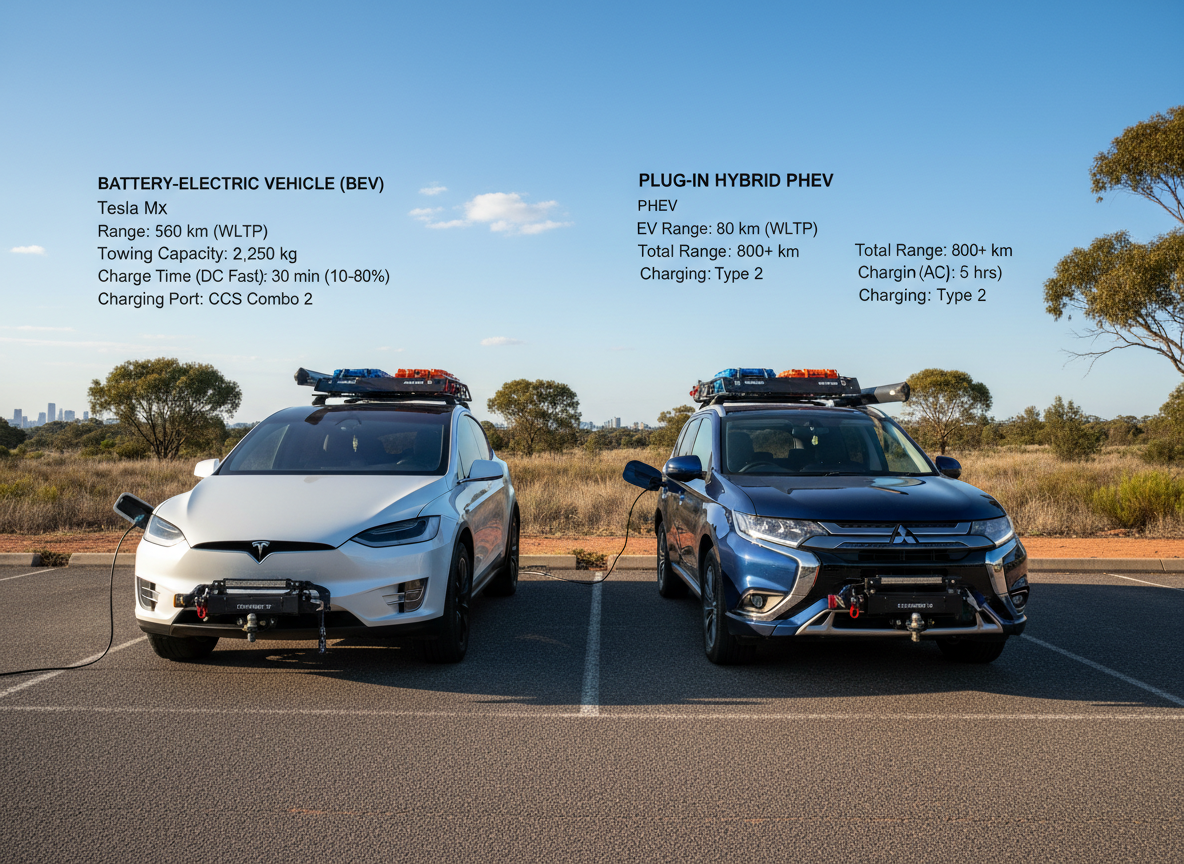
Perth’s shift toward electrified vehicles has sparked a crucial question for anyone who needs towing services: how do battery-electric vehicles (BEVs) and plug-in hybrids (PHEVs) behave when they break down, and which makes a better tow vehicle for our unique conditions? After 15 years moving everything from Teslas to Mitsubishi Outlander PHEVs across Perth’s metro and regional roads, we’ve seen firsthand how these vehicles perform when things go wrong.
The answer isn’t straightforward. It depends on what broke, where you are, and how the vehicle’s drivetrain is configured.
Why Electrified Vehicles Change the Towing Equation
Traditional petrol and diesel vehicles are relatively simple to tow. Put them in neutral, disengage the handbrake, and most can be dragged onto a flatbed or towed with wheels on the ground (for short distances). Electrified vehicles? They’re different animals entirely.
Battery-electric vehicles have no transmission in the conventional sense. Instead, electric motors connect directly to the wheels. When those wheels turn, the motors spin-and if the vehicle’s powered off or in a fault state, that spinning can generate electricity back into the battery system. This is called regenerative braking under normal conditions. But during a tow? It can damage the motor, inverter, or battery management system.
Plug-in hybrids combine a petrol engine with an electric motor and a smaller battery pack. Some PHEVs can mechanically disconnect the electric motor when in neutral. Others can’t. The Mitsubishi Outlander PHEV, for example, uses a complex twin-motor system where the rear wheels are driven purely by electric power. Towing it incorrectly can fry the rear motor within minutes.
Think of it like this: towing a BEV with its wheels on the ground is like trying to charge your phone by spinning the fan backwards. It might work for a second, but you’re going to break something expensive.
The Perth Factor: Heat, Distance, and Infrastructure
Perth’s climate and geography add layers of complexity. Summer temperatures regularly hit 40°C, and our city sprawls across 6,400 square kilometres-one of the largest metropolitan footprints in the world. If your BEV runs out of charge in Yanchep or your PHEV’s hybrid system faults in Mandurah, you’re looking at a long recovery in extreme heat.
Battery-electric towing requirements include understanding that lithium-ion batteries are particularly vulnerable to heat-related failures. They degrade faster in high temperatures, and Perth’s scorching summers put additional strain on thermal management systems. We’ve recovered BEVs that went into “limp mode” simply because the battery overheated after sitting in the sun at a shopping centre car park.
Plug-in hybrids have a safety net: the petrol engine. If the battery or electric motor fails, most PHEVs can still drive on petrol alone (albeit with reduced performance). This makes them more forgiving in remote areas where charging infrastructure is sparse. But that doesn’t mean they’re immune to breakdowns-we’ve towed plenty of Outlander PHEVs and BMW X5 xDrive45e models with failed hybrid systems that left them completely immobile.
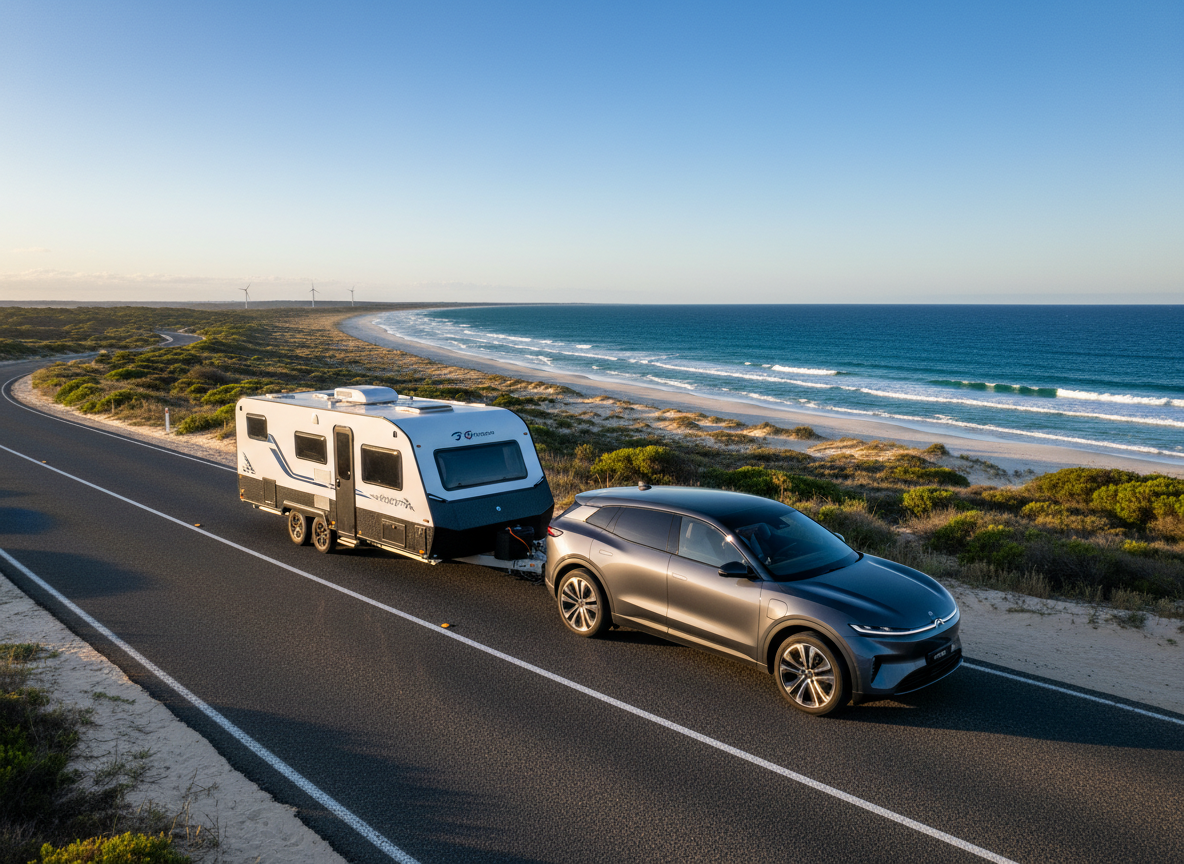
Distance matters too. Perth to Margaret River is 270 kilometres. A BEV with a 400-kilometre range might seem fine, but add in detours, air conditioning, and highway speeds, and that range drops to 320 kilometres. Run out of charge halfway, and you’re calling for 24-hour emergency towing at 11 PM on a Friday.
How We Safely Tow Battery-Electric Vehicles
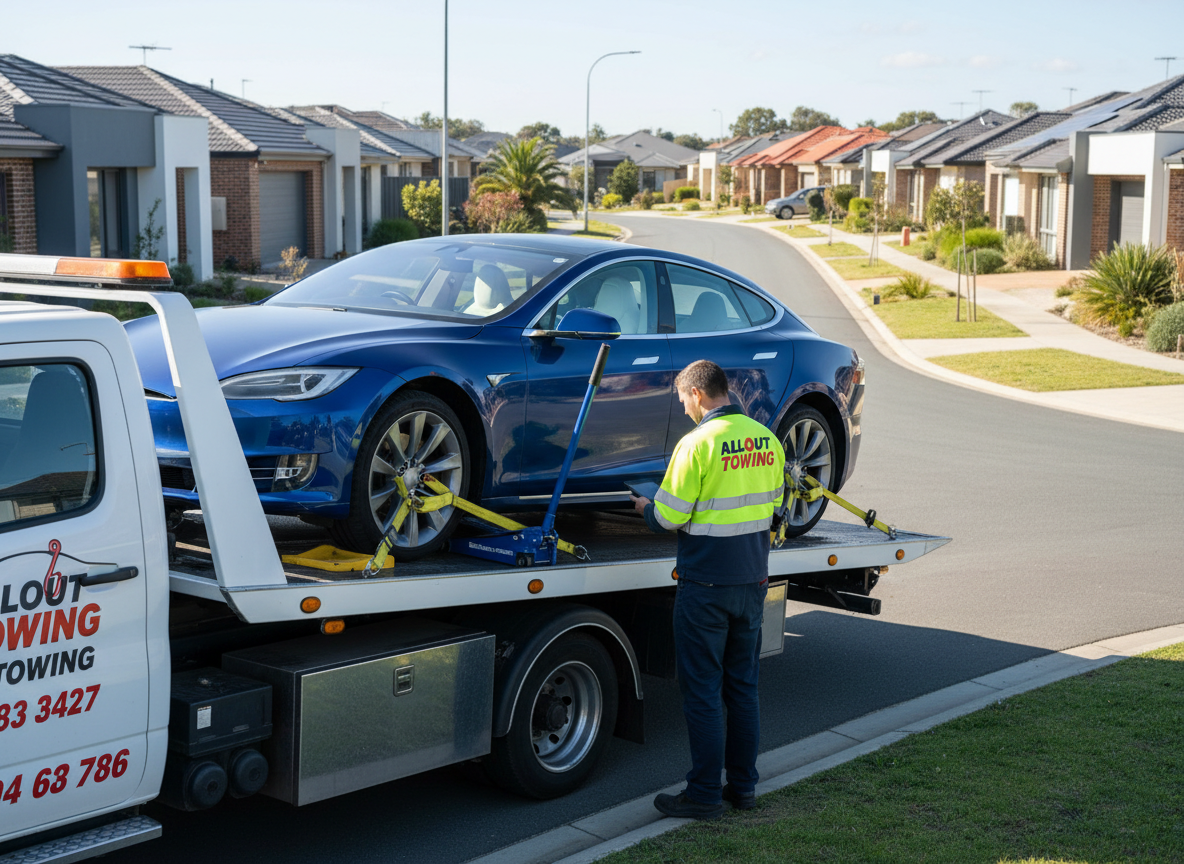
The golden rule for BEVs: wheels up, always. We use tilt tray services exclusively for battery-electric vehicles. The tray lowers completely flat to the ground, we winch the vehicle on, and all four wheels lift off the road. No spinning motors. No risk of electrical damage.
Here’s why this matters. A Tesla Model 3 has a permanent magnet motor on the rear axle. If you tow it with the rear wheels on the ground, that motor becomes a generator, sending uncontrolled voltage back into the battery. Tesla’s own manual explicitly states: “Do not tow with wheels on the ground.” We’ve seen the aftermath of operators who ignored this-burnt-out motors costing $15,000 to replace.
Some BEVs have a “transport mode” that disengages the motors electronically. But if the vehicle’s dead-no 12-volt power, no high-voltage system-you can’t activate transport mode. The only safe option is a flatbed.
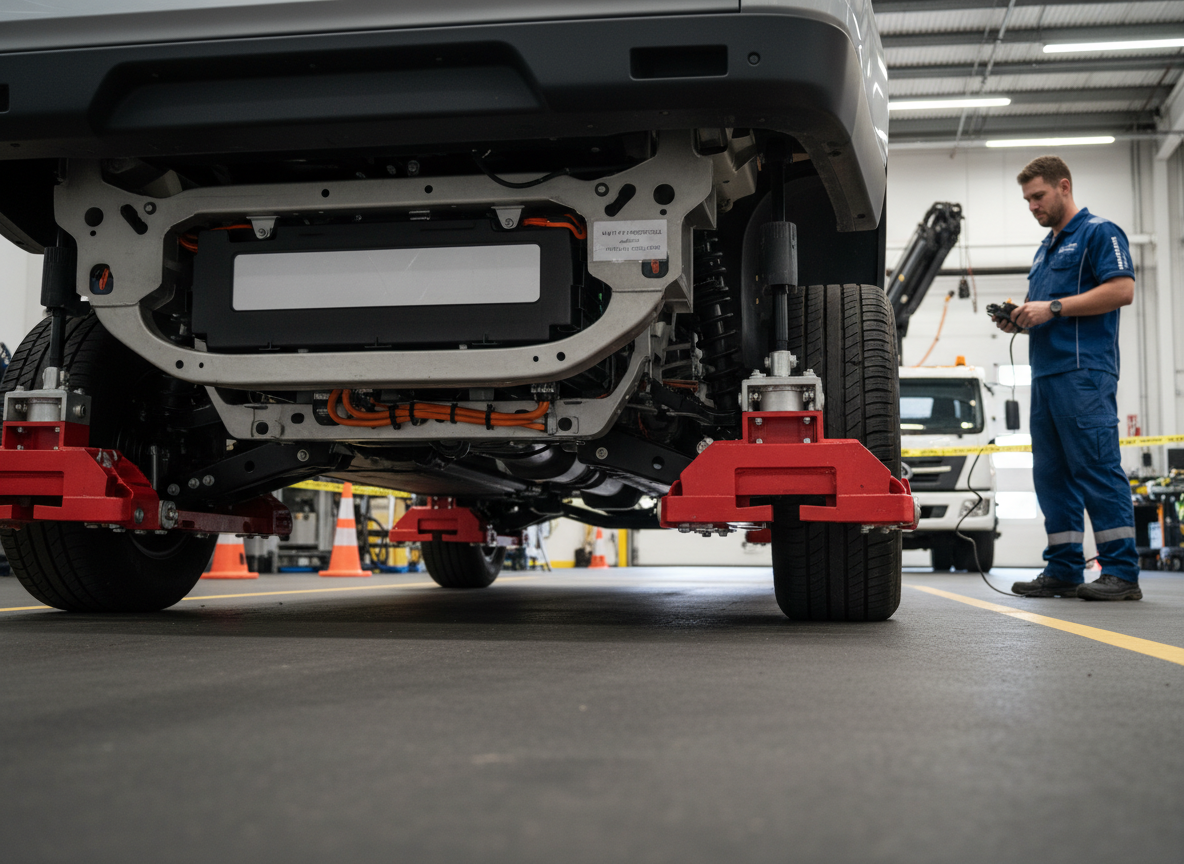
For prestige electric vehicles-Porsche Taycans, Audi e-trons, Mercedes EQS models-we take extra precautions. These vehicles often have air suspension that can drop when unpowered, making it tricky to load. We carry wooden blocks and low-profile jacks specifically for this. Our prestige car towing process treats every BEV like a $150,000 investment, because that’s often what it is.
How We Safely Tow Plug-In Hybrid Vehicles
PHEVs are trickier because there’s no universal rule. Each model has different drivetrain configurations, and the owner’s manual is gospel. But here’s the general breakdown:
Front-wheel-drive PHEVs (like the Toyota Prius Prime) can sometimes be towed with the front wheels off the ground using a wheel-lift truck-but only if the hybrid system allows the front motor to disengage. Even then, we prefer a flatbed. Why risk a $10,000 motor for the sake of convenience?
All-wheel-drive PHEVs (like the Mitsubishi Outlander PHEV or Range Rover Sport PHEV) are almost always flatbed-only. The Outlander uses electric motors to drive the rear wheels, with no mechanical connection to the front. If you tow it with the rear wheels down, those motors spin without lubrication or control. We’ve recovered Outlanders where the previous tow operator tried to “just drag it a few metres”-and destroyed the rear drive unit.
Series-parallel hybrids (like the BMW X5 xDrive45e) have complex transmissions that blend petrol and electric power. BMW’s manual states: “Do not tow with any wheels on the ground.” We follow that to the letter.
The safest bet? Assume every PHEV needs a flatbed unless the manufacturer explicitly says otherwise. Our specialised towing team checks the owner’s manual or contacts the manufacturer before we move any hybrid vehicle towing Perth job we’re unfamiliar with.
Real-World Scenarios: What We See on Perth Roads
Let’s talk about the breakdowns we actually attend.
Scenario 1: Dead 12-Volt Battery
BEVs and PHEVs have two battery systems-the big high-voltage pack everyone knows about, and a small 12-volt battery that runs the computers, locks, and lights. If the 12-volt dies, the whole vehicle shuts down. You can’t shift into neutral. You can’t unlock the charging port. The car becomes a 2-tonne paperweight.
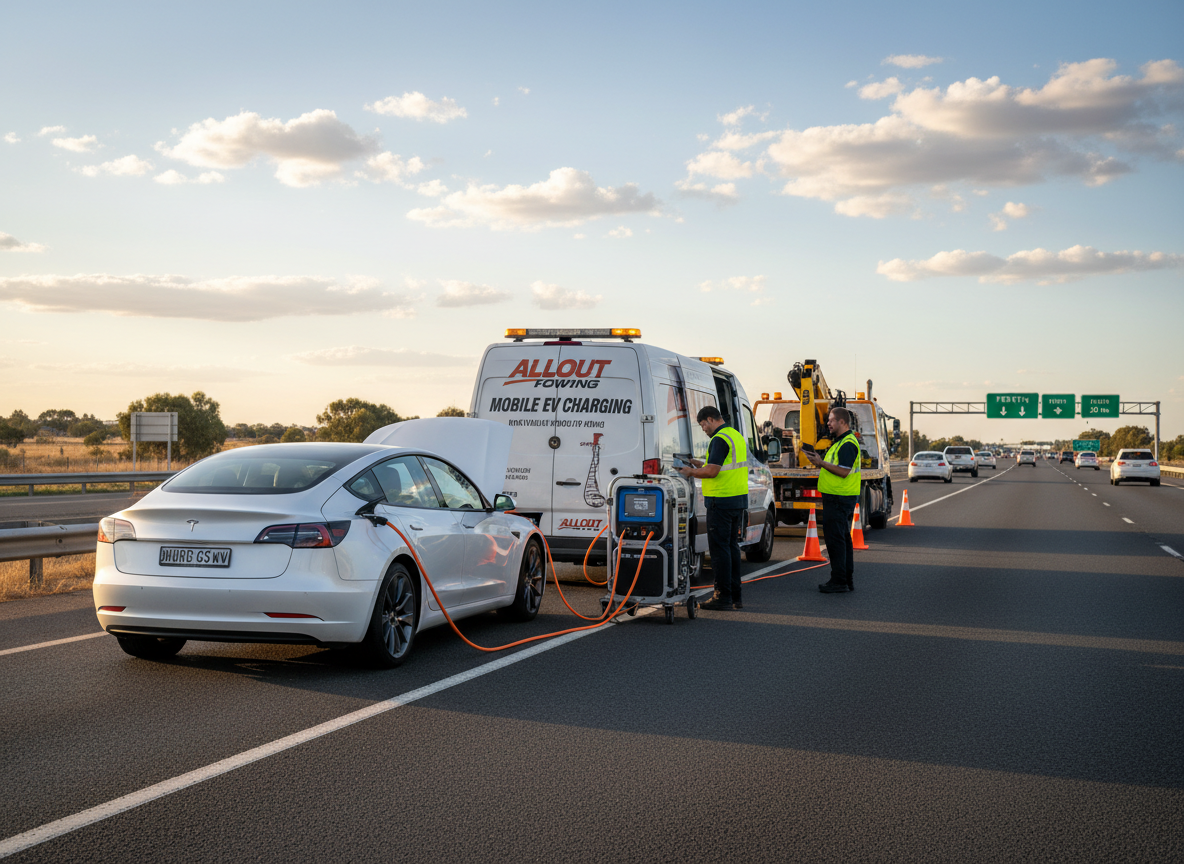
We see this constantly with Teslas. The 12-volt battery is tucked under the front bonnet, and it drains if the car sits unused for weeks. We carry portable jump packs specifically to revive the 12-volt system long enough to shift the car into neutral or activate transport mode. But if that doesn’t work? Flatbed it is.
Scenario 2: High-Voltage System Fault
This is the nightmare scenario. The main battery or inverter fails, and the vehicle goes into a “safe mode” that locks the drivetrain. We’ve towed BYD Atto 3s, Hyundai Ioniqs, and MG ZS EVs with this exact fault. The dashboard lights up like a Christmas tree, and the wheels won’t budge.
For these, we use a tilt tray with a winch. We drag the vehicle onto the flatbed using skates (low-friction pads under the tyres) to avoid damaging the drivetrain. It’s slow, careful work-but it’s the only way to move the vehicle without causing further damage.
Scenario 3: Accident Damage
If a BEV or PHEV is involved in a collision, we treat it like a hazardous material. Damaged lithium-ion batteries can catch fire hours or even days after impact. We’ve attended crashes where the battery pack was breached, and the vehicle had to be towed to a quarantine area and submerged in a water-filled container to prevent thermal runaway.
Our accident towing protocols for electrified vehicles include thermal imaging cameras to check for hot spots, insulated gloves, and coordination with DFES (Department of Fire and Emergency Services). It’s not dramatic-it’s just necessary.
Which Makes a Better Tow Vehicle: BEV or PHEV
Here’s the blunt truth: plug-in hybrids are more forgiving when things go wrong.
If your PHEV’s battery or electric motor fails, you’ve still got a petrol engine. You can limp to a servo or drive home on reduced power. If your BEV’s battery or motor fails, you’re stuck. No backup. No “just get me home” option.
But PHEVs aren’t invincible. Their complexity-two powertrains, a transmission that blends both, and a battery pack that needs active cooling-means more things can break. We’ve towed PHEVs with failed coolant pumps, burnt-out electric motors, and software glitches that bricked the hybrid system entirely.
Battery-electric vehicles are simpler mechanically. Fewer moving parts means fewer catastrophic failures. But when they do fail-or when you run out of charge-you’re calling for a flatbed. There’s no “I’ll just coast to the next exit.”
For Perth conditions specifically:
BEVs excel in metro areas where charging infrastructure is dense and trips are predictable. If you’re commuting from Joondalup to the CBD, a BEV is brilliant. But venture beyond the metro fringe, and range anxiety becomes real.
PHEVs excel in regional driving where charging stations are sparse and distances are long. The petrol engine gives you 600+ kilometres of total range, and you can refuel anywhere.
But what about towing them when they break down? PHEVs are easier to recover in remote areas because we can often get them running on petrol alone. BEVs require a flatbed, period-and if you’re broken down 150 kilometres south of Perth, that flatbed might take two hours to reach you.
What to Do If Your Electrified Vehicle Breaks Down
First, stay calm. You’re not the first person to have a BEV or PHEV fail, and you won’t be the last. Here’s what to do:
Turn on your hazard lights and move to a safe location if possible. If you’re on a freeway, get as far left as you can.
Check the 12-volt battery. If your vehicle won’t power on at all, the 12-volt might be dead. Some BEVs (like Teslas) have a manual release to open the bonnet so you can jump-start the 12-volt.
Don’t attempt to tow it yourself. Seriously. We’ve seen people hire a trailer and try to winch a dead BEV onto it. You’ll damage the drivetrain and void your warranty.
Call All Out Towing. When you contact us, tell the operator your vehicle is a BEV or PHEV. We’ll dispatch a tilt tray specifically equipped for electrified vehicles.
Have your owner’s manual handy (or the digital version on your phone). If the vehicle has a specific towing procedure, we’ll follow it exactly.
The Infrastructure Reality: Perth Isn’t There Yet
Here’s the uncomfortable truth: Perth’s charging infrastructure is improving, but it’s not foolproof. RAC’s electric highway covers major routes to Geraldton, Esperance, and Albany, but gaps remain. If your BEV runs out of charge between Cervantes and Jurien Bay, you’re calling for a tow.
Public chargers also fail. We’ve recovered BEVs stranded at broken fast chargers in Mandurah, Bunbury, and even Perth city. The driver planned their trip around that charger, and when it didn’t work, they had no backup.
PHEVs sidestep this problem entirely. No charge? Burn petrol. It’s not elegant, but it works.
Final Verdict: Which Should You Choose
If you’re buying a BEV or PHEV and wondering which is “safer” from a breakdown perspective, here’s our take:
Choose BEV if:
- You drive mostly in Perth metro
- You have home charging
- Your daily range is well under the vehicle’s rated range
- You’re comfortable planning trips around charging stops
Choose PHEV if:
- You regularly drive to regional WA
- You want a backup for when the electric system fails
- You can’t install home charging
- You value flexibility over pure efficiency
But regardless of which you choose, know this: if it breaks down, we’ll get it home safely. Our hybrid vehicle towing Perth services cover every electrified vehicle on Perth roads, and we’ve invested in the training and equipment to handle them properly.
Conclusion
Battery-electric and plug-in hybrid vehicles represent the future of transport, but they’re not immune to breakdowns-and when they fail, they fail differently than petrol cars. BEVs demand flatbed towing with all wheels off the ground to avoid drivetrain damage. PHEVs are more forgiving but still require careful handling based on their specific drivetrain configuration.
For Perth’s unique conditions-extreme heat, vast distances, and developing charging infrastructure-PHEVs currently offer more peace of mind when things go wrong. The petrol engine acts as a safety net that BEVs simply don’t have. But BEVs are simpler mechanically and excel in metro driving where range isn’t a concern.
Whichever you drive, the key is knowing who to call when you need help. Our team has recovered hundreds of electrified vehicles across Perth and regional WA, and we treat each one with the care it deserves. Because at the end of the day, whether it’s a $60,000 MG or a $200,000 Porsche Taycan, it’s your investment-and getting it home safely is what we do best.