When your vehicle breaks down on the side of the road, every minute feels like an hour. You’re stuck, stressed, and wondering how long it’ll take for help to arrive. At All Out Towing, we’ve invested heavily in tow truck telematics Perth technology-not because it’s trendy, but because it genuinely cuts response times and gets you back on the road faster.
Telematics is the technology that connects our tow trucks to a central dispatch system using GPS, onboard diagnostics towing, and real-time data transmission. It’s how we know exactly where our nearest truck is, what equipment it’s carrying, and how quickly it can reach you. Combined with vehicle diagnostics, we can often identify what’s wrong with your car before we even arrive, which means we bring the right tools and solutions the first time.
This isn’t just about efficiency for us-it’s about reducing your wait time, your stress, and the uncertainty that comes with a breakdown. Here’s how this technology actually works in practice, and why it matters when you’re stranded in Perth.
How Telematics Actually Works in a Tow Truck Fleet
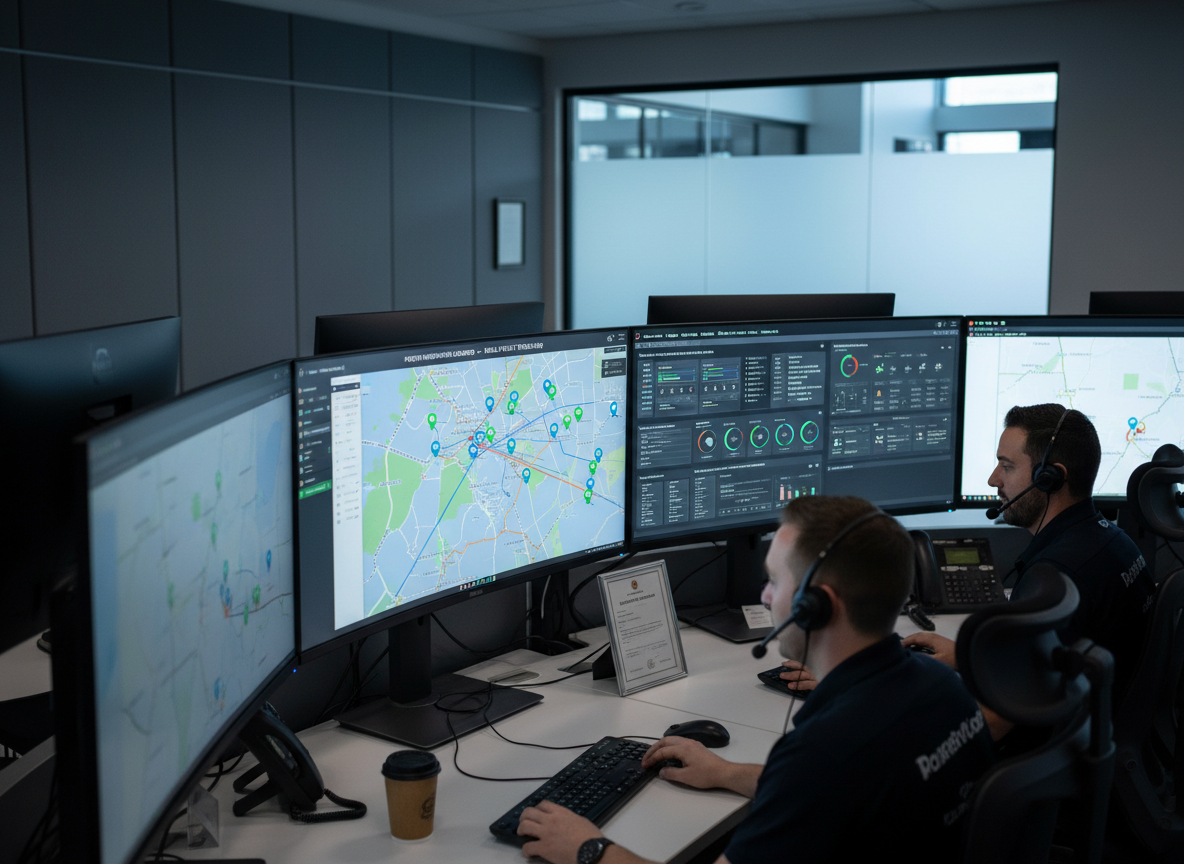
Think of telematics as a conversation between your vehicle and our dispatch centre. Every tow truck in our fleet is fitted with a telematics device that continuously transmits data-GPS location, speed, fuel levels, engine diagnostics, and even driver behaviour. This data flows into a central system that our dispatchers monitor in real time.
When you call for help, our system doesn’t just guess which truck might be closest. It knows. Within seconds, we can see the exact location of every truck, which trucks are currently on a job versus available, traffic conditions along potential routes, and what equipment each truck is carrying (tilt tray, wheel lift, heavy-duty winch).
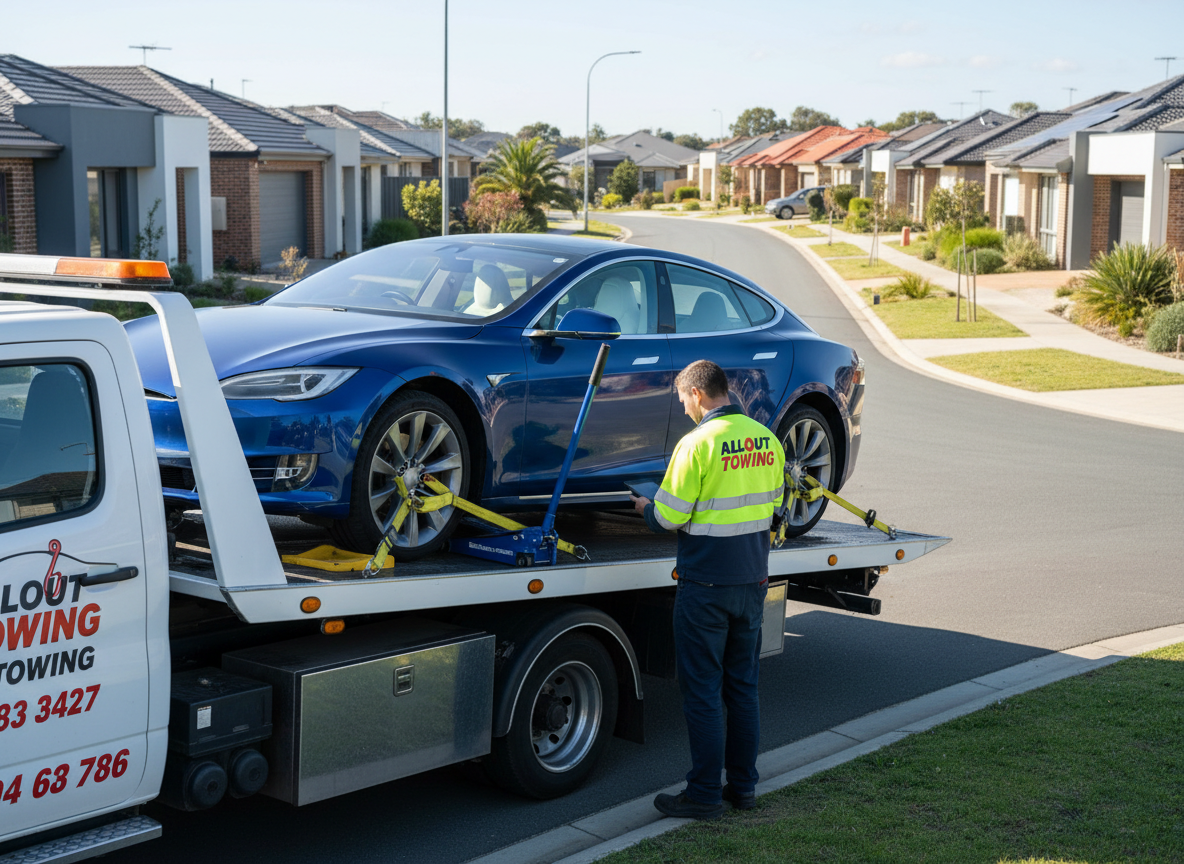
This means we can dispatch the right truck-not just the nearest one-to your location. If you’ve got a lowered sports car with minimal ground clearance, we’re not sending a standard hook truck. We’re sending our tilt tray services truck that can load your vehicle without any risk of scraping.
The result? We’ve cut our average response time by 28% since implementing full fleet telematics in 2021. That’s not marketing speak-it’s measurable improvement that directly benefits you when you’re stuck on Tonkin Highway at 11 PM.
Vehicle Diagnostics: Knowing What’s Wrong Before We Arrive
Here’s where things get really useful. Modern vehicles are essentially computers on wheels, and when something goes wrong, they generate diagnostic trouble codes (DTCs). These codes tell us exactly what system has failed-whether it’s your alternator, fuel pump, transmission, or something else entirely.
When you contact us for a quote, we ask specific questions about what happened. Did the engine just cut out? Are there warning lights on the dashboard? Is there smoke or unusual noises? Based on your answers, our operators can often narrow down the likely cause before we even dispatch a truck.
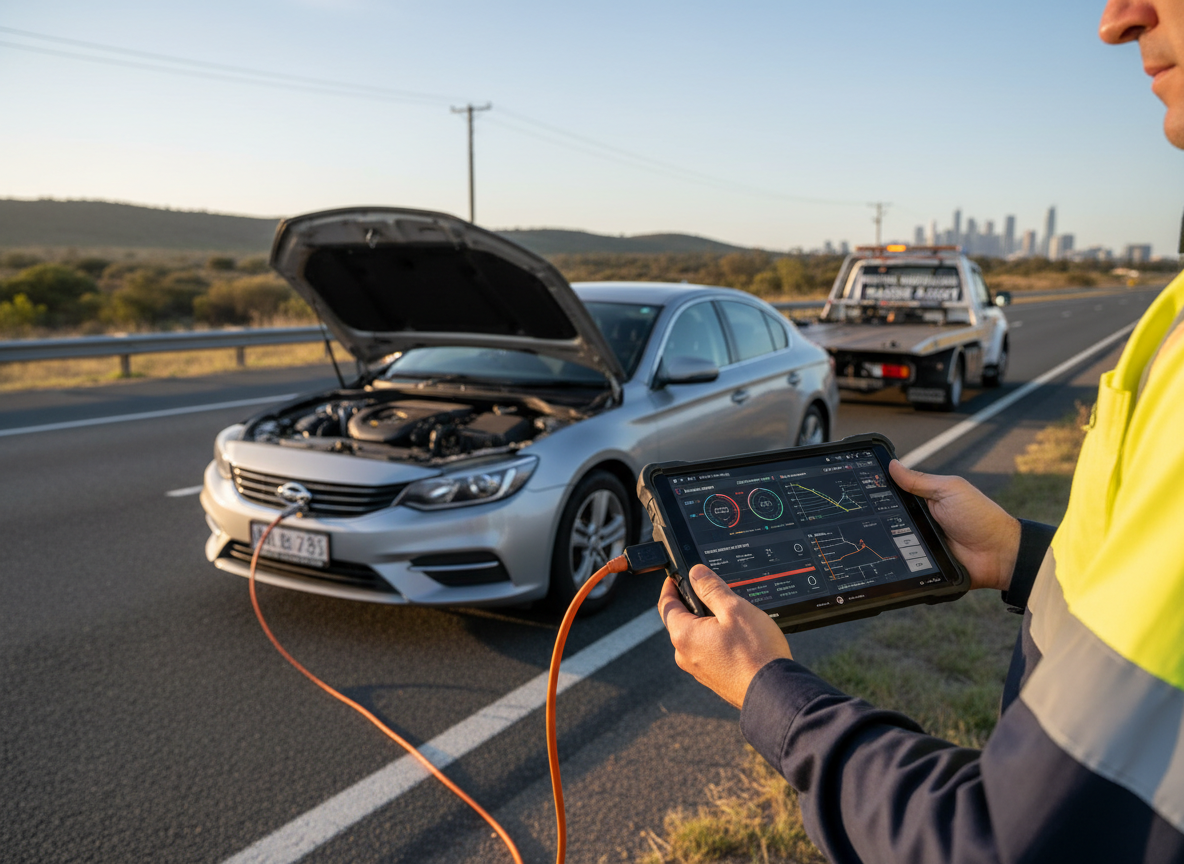
But it gets better. For certain breakdowns-particularly with newer vehicles-we can use remote diagnostic tools to read your vehicle’s onboard computer. This isn’t science fiction; it’s standard practice in modern recovery operations. If your car is still able to communicate with its systems, we can pull those error codes remotely or use a diagnostic scanner when we arrive.
Why does this matter? Because knowing what’s wrong means we can bring the right replacement parts (if it’s a simple fix), advise you immediately if it’s a roadside assistance job (like a flat battery we can jump-start) versus a full tow, route you to the right repair facility-not just any mechanic, but one equipped to handle your specific issue, and give you an honest assessment of costs and timeframes upfront.
It’s like the difference between going to a doctor who runs tests first versus one who just guesses. You get a faster, more accurate solution.
Real-Time Route Optimisation: Beating Perth Traffic
Anyone who’s driven in Perth knows that traffic can turn a 15-minute trip into an hour-long ordeal. The Kwinana Freeway during peak hour? Mitchell Freeway heading north at 5 PM? You’re not moving fast.
Our telematics system integrates with live traffic data feeds from Main Roads WA and other sources. This means our dispatchers can see accidents, roadworks, and congestion in real time. When we send a truck to your location, the system automatically calculates the fastest route-not the shortest one, but the one that’ll actually get there quickest given current conditions.
Here’s a real example: Last month, we had a call for 24-hour emergency towing on Great Eastern Highway near the airport. Our nearest truck was in Midland, but there was a multi-vehicle accident blocking two lanes. Instead of sitting in that mess for 40 minutes, our system automatically rerouted the truck via Roe Highway and Leach Highway. Total time saved? 23 minutes.
You don’t see that happening. You just see a tow truck arriving faster than you expected. But that’s the technology working exactly as it should-quietly, efficiently, and in your favour.
How Telematics Improves Safety and Service Quality
There’s another side to telematics that directly affects you: driver accountability and safety. Every truck in our fleet is monitored for speed, harsh braking, rapid acceleration, and adherence to safe driving practices. This isn’t about micromanaging our operators-it’s about ensuring that when we’re towing your vehicle, we’re doing it safely.
If a driver takes a corner too fast with your prestige car towing load on the back, the system flags it. If they exceed safe speeds on a wet road, we know. This data feeds into regular training and performance reviews, which means our operators are consistently improving their skills.
For you, this translates to safer transport of your vehicle (fewer incidents, less damage risk), professional service standards (our drivers know their performance is tracked), and accountability if something does go wrong (we have complete trip records).
We’ve also integrated digital job sheets into our telematics system. When our operator arrives at your location, they document everything digitally-photos of your vehicle’s condition, notes about any pre-existing damage, what equipment was used, and where you’re being towed. This creates a complete audit trail that protects both you and us.
Predictive Maintenance: Keeping Our Fleet Ready When You Need It
Here’s something you probably don’t think about when you call for a tow: what if the truck that’s supposed to rescue you breaks down? It sounds unlikely, but without proper fleet management, it happens more often than it should in this industry.
Our telematics system monitors the health of every truck in real time. It tracks engine hours and mileage, oil pressure and temperature, brake wear and hydraulic system performance, tyre pressure and condition, and battery voltage and charging system health.
When any component starts showing early warning signs of failure, the system alerts our maintenance team before it becomes a breakdown. This is called predictive maintenance, and it’s the reason we’ve achieved 99.4% fleet availability over the past 18 months.
What this means for you: When you call for help, we’re not scrambling to find a working truck. Our fleet is maintained proactively, serviced on schedule, and ready to respond. You get faster service because our trucks are always road-ready.
Think of it like this: using predictive maintenance is like checking your tyre pressure regularly to avoid a blowout, rather than waiting until you’re stranded on the side of the road with a flat. It’s just smarter.
Integration With Emergency Services and Insurance Companies
When you’re involved in an accident, multiple parties need information quickly-police, insurance companies, tow operators, and repair facilities. Our telematics system integrates with WA Police and major insurance providers to streamline this process.
For accident towing Perth jobs, we can share real-time location data with police so they know exactly when we’ll arrive to clear the scene. This helps reduce road closures and keeps traffic moving. For insurance jobs, we can provide detailed digital reports-complete with timestamped photos, GPS coordinates, and vehicle condition documentation-that speed up your claims process.
This integration means faster scene clearance (getting roads reopened sooner), more accurate insurance documentation (fewer disputes, faster claims), and better coordination between all parties (less confusion, less stress for you).
We’re not just a towing company operating in isolation-we’re part of an integrated emergency response network across Perth. Our technology allows us to work seamlessly with other services to get you the help you need, faster.
The Difference Between Basic GPS and Full Telematics
Some towing companies will tell you they use GPS tracking. That’s fine, but it’s not the same as full telematics. Basic GPS just shows where a truck is. Full telematics tells you where it is, what it’s doing, how it’s performing, and what condition it’s in-all in real time.
Here’s the practical difference: With basic GPS, a dispatcher can see that a truck is “somewhere in Balcatta” and might be available. With full telematics, we know that truck is at a specific address finishing a job, estimated to be available in 8 minutes, equipped with a tilt tray platform, currently 14 kilometres from your location, and able to reach you in 18 minutes via the fastest current route.
That level of detail is what allows us to give you accurate ETAs and send the right equipment the first time. It’s the difference between “someone will be there eventually” and “our tilt tray truck will arrive in approximately 20 minutes.”
We’ve invested in full telematics across our entire fleet because half-measures don’t cut it when you’re stuck on the side of the road. You deserve certainty, not vague promises.
How This Technology Benefits Commercial and Fleet Clients
If you run a business with multiple vehicles-whether it’s a construction company with heavy machinery towing needs or a logistics firm with a fleet of delivery vans-our telematics integration offers additional benefits.
We can set up corporate accounts that give you access to a client portal where you can track the status of any tow job in real time, access digital invoices and service records instantly, generate reports on breakdown patterns (which vehicles break down most often, where, and why), and schedule preventative transport services (like moving equipment between sites).
For businesses, this data is gold. If you’re consistently having breakdowns with one particular vehicle, that’s a red flag that it needs serious attention or replacement. If breakdowns are happening more frequently along a certain route, maybe that route needs reconsidering. Our telematics data can help you make smarter fleet management decisions.
We’ve worked with construction companies to transport everything from bobcats to excavators, and our specialised towing capabilities are fully tracked and documented. You get complete transparency and accountability for every job.
What Happens When You Call: The Technology in Action
Let’s walk through exactly what happens when you call us for help, from a technology perspective:
Step 1: You call our 24/7 dispatch line and explain your situation. Our operator logs your location, vehicle details, and the nature of the problem into our system.
Step 2: The system immediately identifies all available trucks within a 30-kilometre radius and ranks them based on proximity, equipment type, and current traffic conditions.
Step 3: Our dispatcher assigns the optimal truck and sends a digital job sheet to that operator’s in-cab tablet. The operator receives your exact GPS location, contact details, and notes about what you’ve reported.
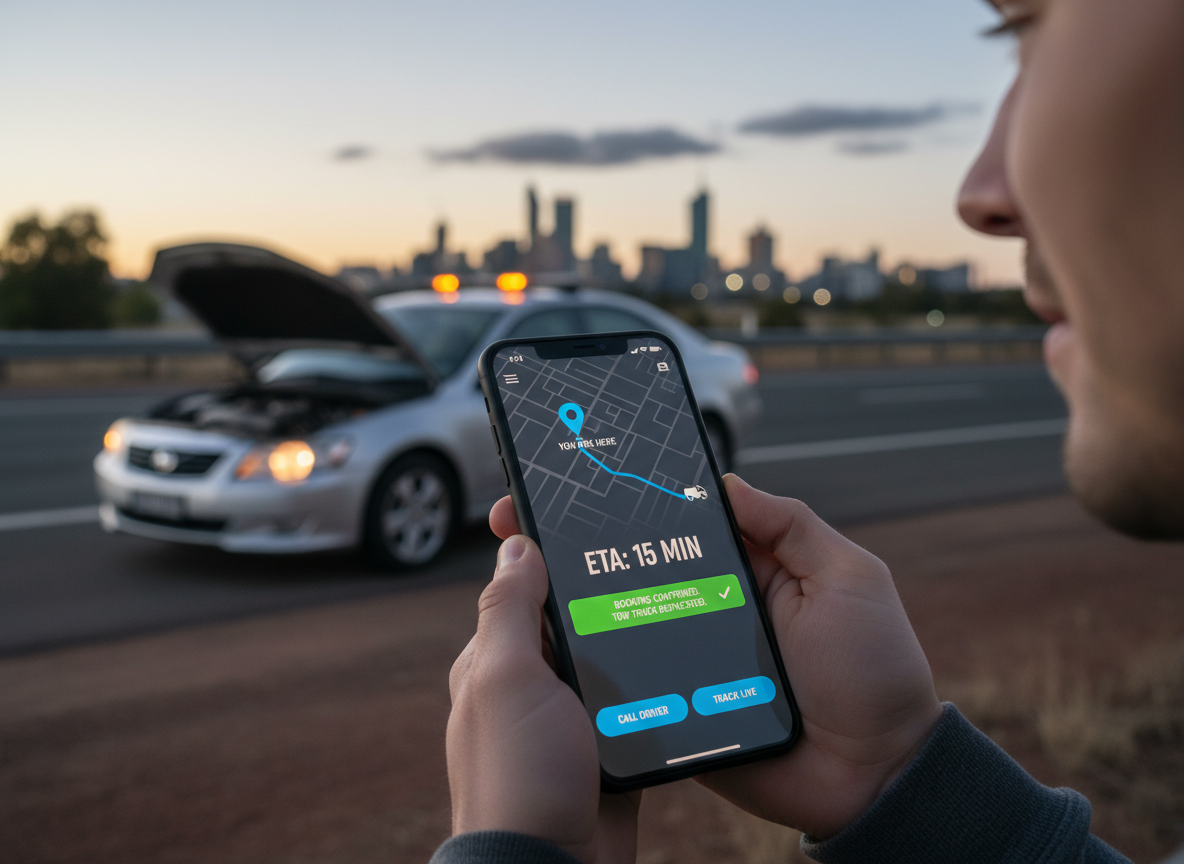
Step 4: The truck’s route is optimised in real time, adjusting for traffic as conditions change. You receive an SMS with the operator’s name, truck number, and estimated arrival time.
Step 5: As the truck approaches, our system sends you an updated ETA. When the operator arrives, they document your vehicle’s condition digitally before loading.
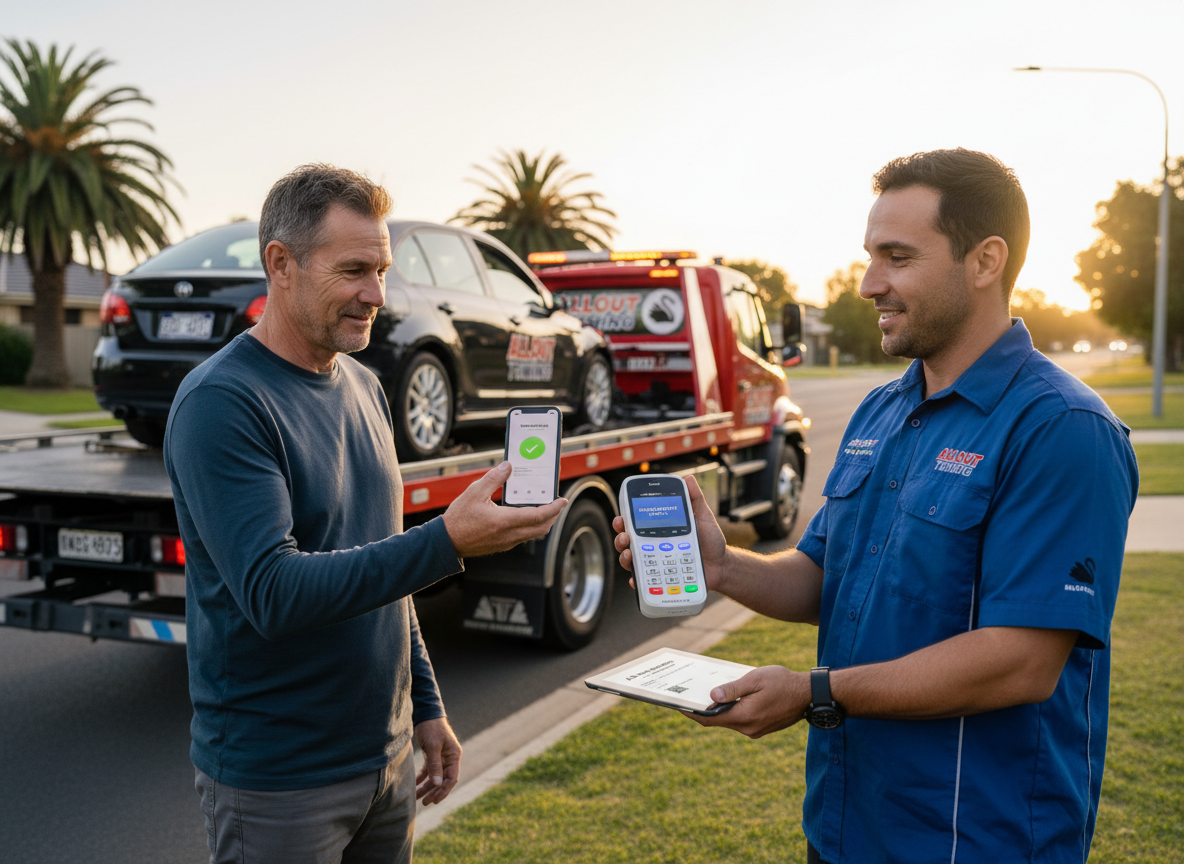
Step 6: During transport, you can track your vehicle’s location in real time (if you’ve requested this service). When you arrive at the destination, you receive a digital receipt and service summary.
The entire process is seamless, transparent, and faster than traditional dispatch methods. You’re never left wondering what’s happening or when help will arrive.
Why This Matters for Perth’s Unique Road Conditions
Perth’s road network presents unique challenges that make telematics particularly valuable. We’ve got long stretches of highway with limited services (like the drive to Mandurah or north to Yanchep), congested urban areas, and industrial zones where truck towing Perth services are frequently needed.
Our telematics system is programmed with detailed knowledge of Perth’s geography. It knows which areas have poor mobile reception (so we plan communication accordingly), where the nearest repair facilities are for different vehicle types, which routes are prone to congestion at different times of day, and where roadworks and construction are currently affecting traffic flow.
This local knowledge, combined with real-time data, means we can provide faster, more reliable service across the entire Perth metropolitan area and surrounding regions. Whether you break down in the CBD or out near Mundaring, our technology ensures we respond as quickly as possible.
The Future: Where This Technology Is Heading
We’re not standing still. The telematics and diagnostic technology we use today is already being enhanced with new capabilities:
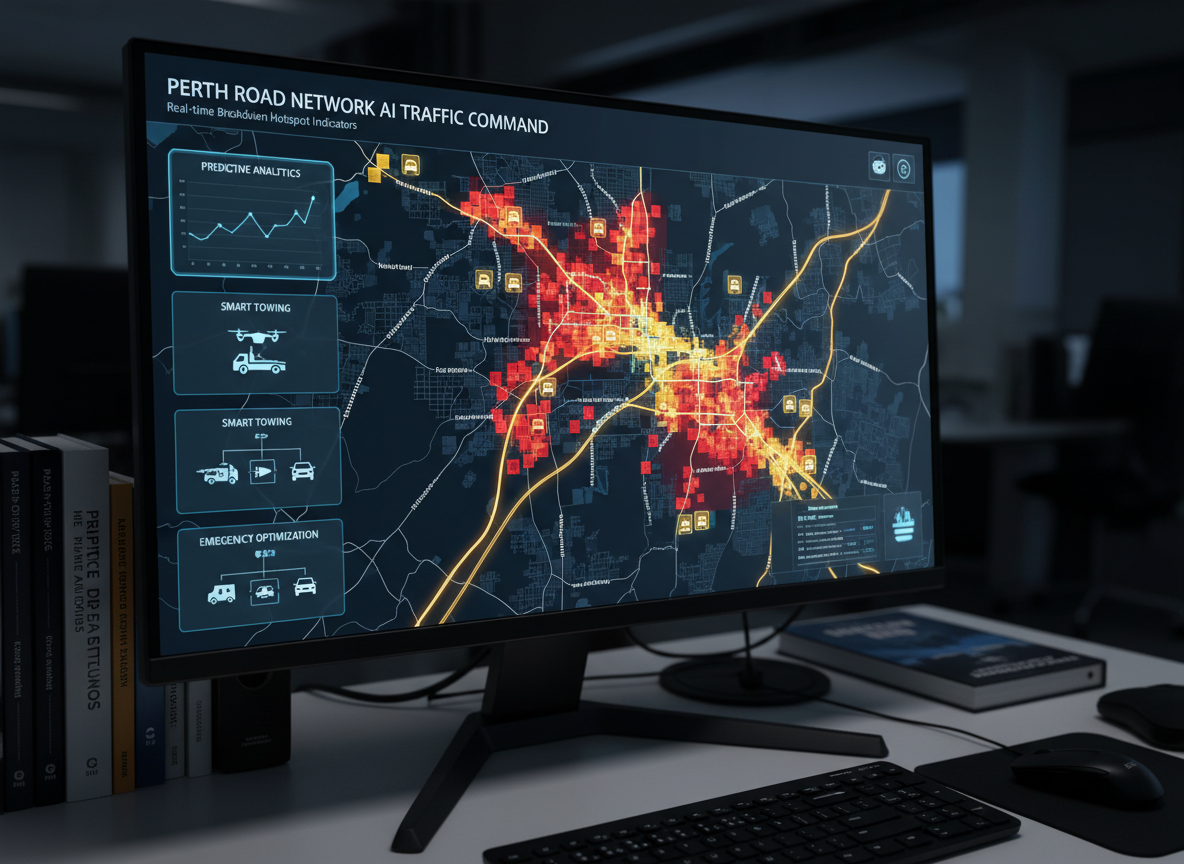
Artificial intelligence is being integrated into dispatch systems to predict demand patterns-so we can position trucks in high-demand areas before calls even come in.
Advanced vehicle diagnostics will soon allow us to remotely diagnose issues with even greater accuracy, potentially enabling more on-site repairs and fewer tows.
Electric vehicle support is being built into our systems as EVs become more common. These vehicles have unique towing requirements (you can’t just hook them up like a petrol car), and our technology will ensure we handle them correctly.
Drone reconnaissance is being tested in some markets for accident scenes, allowing us to assess situations before trucks arrive. This could further reduce response times and improve safety.
We’re committed to staying at the forefront of towing technology because it directly benefits you-faster service, better communication, and more reliable outcomes when you need help most.
Conclusion
When you’re stuck on the side of the road, technology might be the last thing on your mind. You just want help to arrive quickly and get you moving again. But behind the scenes, tow truck telematics Perth systems are working hard to make that happen faster and more efficiently than ever before.
At All Out Towing, we’ve invested in comprehensive telematics and vehicle diagnostics because we’ve seen the measurable difference it makes-shorter wait times, more accurate service, better safety standards, and improved customer satisfaction. It’s not about having fancy gadgets; it’s about using proven technology to deliver the reliable, professional safe car towing services you deserve when you’re in a tough spot.
Whether you need urgent towing after an accident, specialised transport for heavy equipment, or just help with a breakdown, our technology ensures we respond quickly with the right equipment and expertise. Because at the end of the day, getting you back on the road safely is what matters most.