You’ve made the call. Help’s on the way. Now you’re parked on the shoulder of Wanneroo Road or pulled over near a Mitchell Freeway exit, wondering what to do next.
That quiet gap between breakdown and rescue always feels longer than it is. You’re visible, vulnerable, and if it’s dark or busy, probably anxious. That’s completely normal. Most drivers were never taught what to do when their car stops somewhere inconvenient, which describes almost every breakdown spot in Perth’s northern suburbs.
The good news is that a few simple safety steps can make a big difference. These aren’t complicated procedures, just practical habits every driver should know for tow truck safety Perth wide.
Choose the Right Place to Stop
If your car starts failing, your first instinct is to pull over immediately. That’s correct, but where you stop can make the biggest safety difference.
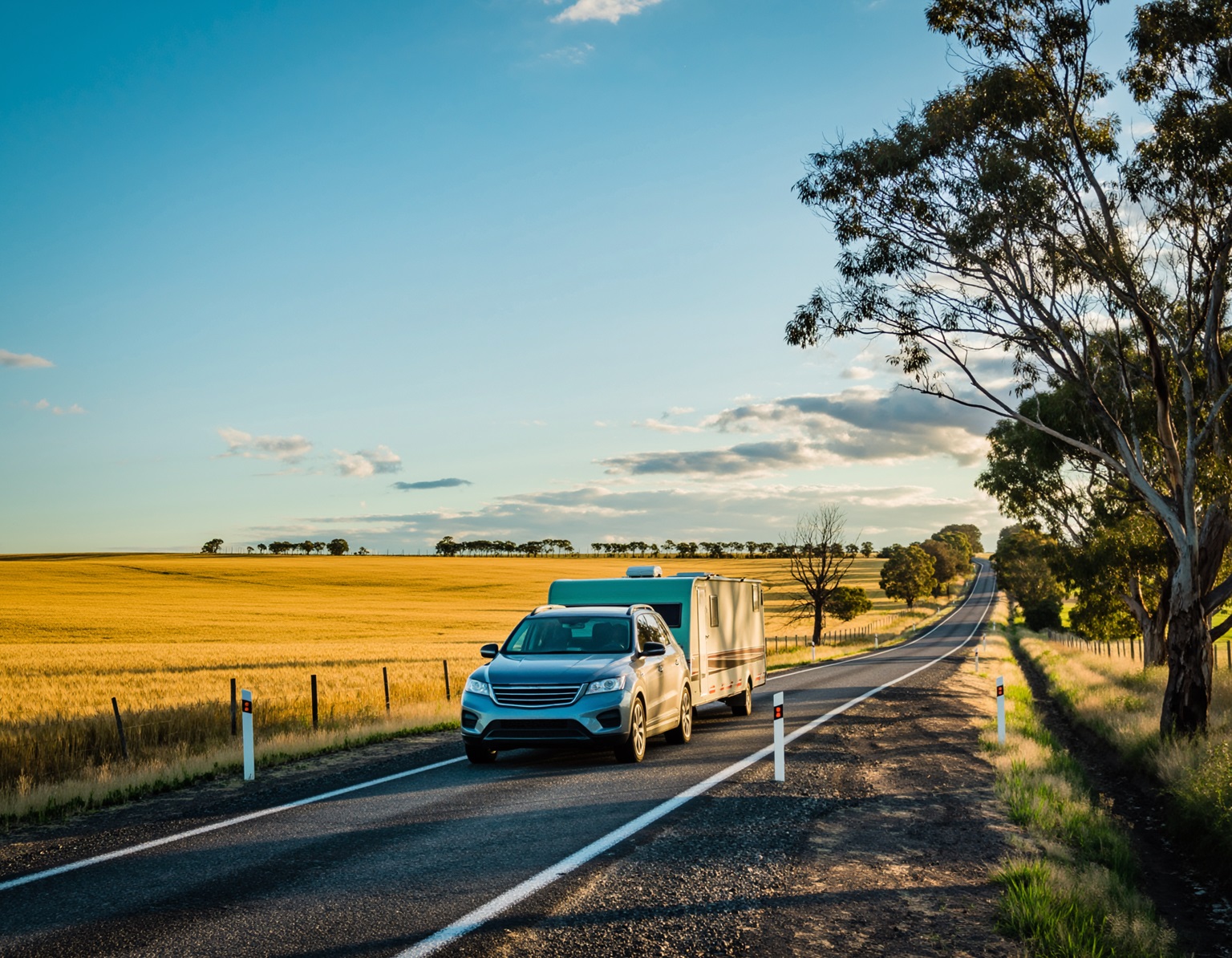
Whenever possible, aim for the widest available shoulder. On roads like Marmion Avenue or Ocean Reef Road, look for service bays or wider verges near intersections. These give you extra space between your car and passing traffic.
Avoid stopping on bends or just after crests. Drivers approaching at speed have less time to react. If the vehicle still has some power, try to reach a straight stretch with clear visibility in both directions.
Even experienced drivers can get caught in difficult spots. I once helped recover a sedan stranded just past a hill on Joondalup Drive. Oncoming traffic couldn’t see the hazard until the last second. Setting up reflective triangles and positioning the truck to shield the car prevented another collision. It showed how location directly affects risk.
The First Minute Matters Most
As soon as you stop, focus on visibility. Turn on your hazard lights immediately, even during daylight. Those flashing indicators tell other drivers you’re stationary and need space.
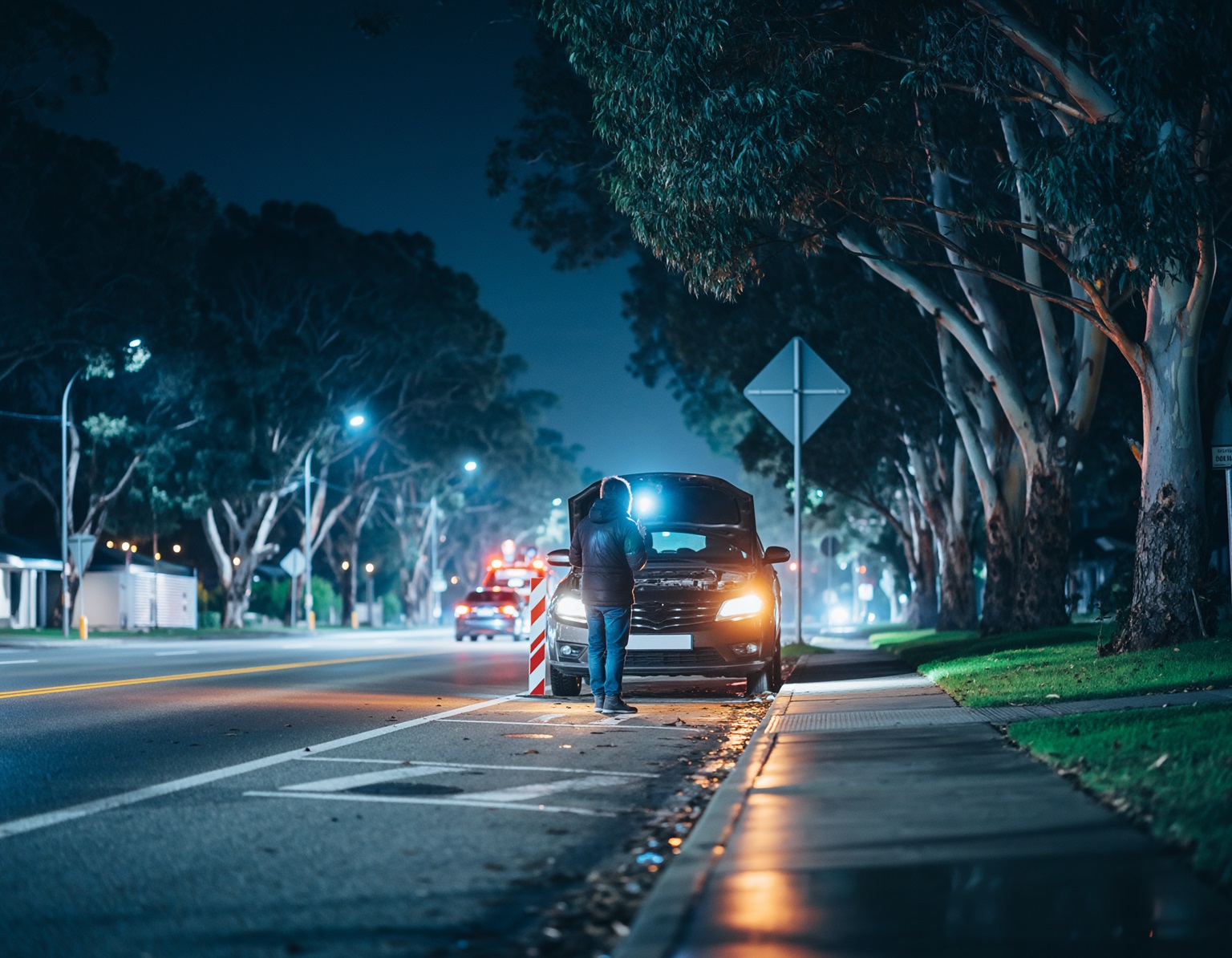
If it’s raining or dark, keep your parking lights on too. Don’t worry about draining the battery – that’s replaceable, you aren’t. Check mirrors carefully before opening any door, and if you must exit, use the passenger side so the vehicle shields you from traffic.
Should You Stay in the Car or Get Out?
It depends on your surroundings.
Stay inside with your seatbelt on when:
- You’re on a narrow or fast-moving road.
- There’s no safe barrier or verge to stand behind.
- Weather conditions make standing outside unsafe.
Step out only if:
- You can reach a barrier or embankment well away from traffic.
- There’s smoke, fuel leakage, or any risk the vehicle isn’t stable.
If you exit, take your phone, keys, and any high-visibility gear. Never stand directly behind the vehicle – that’s the impact zone. Move well clear and position yourself behind a barrier if possible. These small actions define smart roadside safety Perth drivers rely on.
Make Yourself Visible
Hazard lights are the start, not the end. Use your reflective triangle about 50 metres behind your car on the same side of the road. On high-speed roads like the Mitchell Freeway, increase that distance to 100 metres if it’s safe to walk back.
A reflective vest makes a huge difference, especially in low light. You can buy one for under ten dollars at any auto store – an essential part of tow truck safety Perth wide.
If you use a torch or phone light, aim it away from oncoming traffic. You want drivers to see you, not be blinded.
When Strangers Stop to Help
Many people genuinely want to assist, but you’re vulnerable while broken down. If someone pulls over and you’re unsure, stay in your locked car and speak through a small window gap. Let them know a tow truck’s already coming.
If you do talk with them, keep your phone visible and avoid leaving your vehicle. Never get into another car, even if offered a lift. Professional help from All Out Towing or your insurer’s provider is safer and accountable. Trust your instincts – if something feels off, it probably is.
Coping with Perth’s Heat
Summer in Perth’s northern suburbs can turn your car into an oven. If you break down on a hot day, heat stress becomes a real threat.
Drink water if you have it. If not, and you expect a long wait, call back for an ETA update so you can decide whether to move somewhere shaded. If safe shade’s nearby, step there while keeping your vehicle in view.
If sitting inside feels unbearable, get out only if you can stand in a secure, shaded area well away from traffic. Staying hydrated and cool is a key part of roadside safety Perth drivers often overlook.
Waiting After Dark
Breakdowns at night feel worse because visibility drops. Keep your phone charged; it’s your light and your link to help. If there’s no street lighting and you feel unsafe, move to a well-lit location like a 24-hour service station or car park, then call back to update your driver.
One customer once moved from her stalled car to a nearby McDonald’s car park – a smart choice. She stayed visible, comfortable, and easy to find. We collected the car safely soon after.
Be Ready When the Tow Truck Arrives
When you see the tow truck approaching:
- Have your phone ready with your booking or reference number.
- Explain what happened so the driver can prepare the safest loading method.
- Gather any belongings before loading begins.
- Stay clear of the working area unless instructed otherwise.
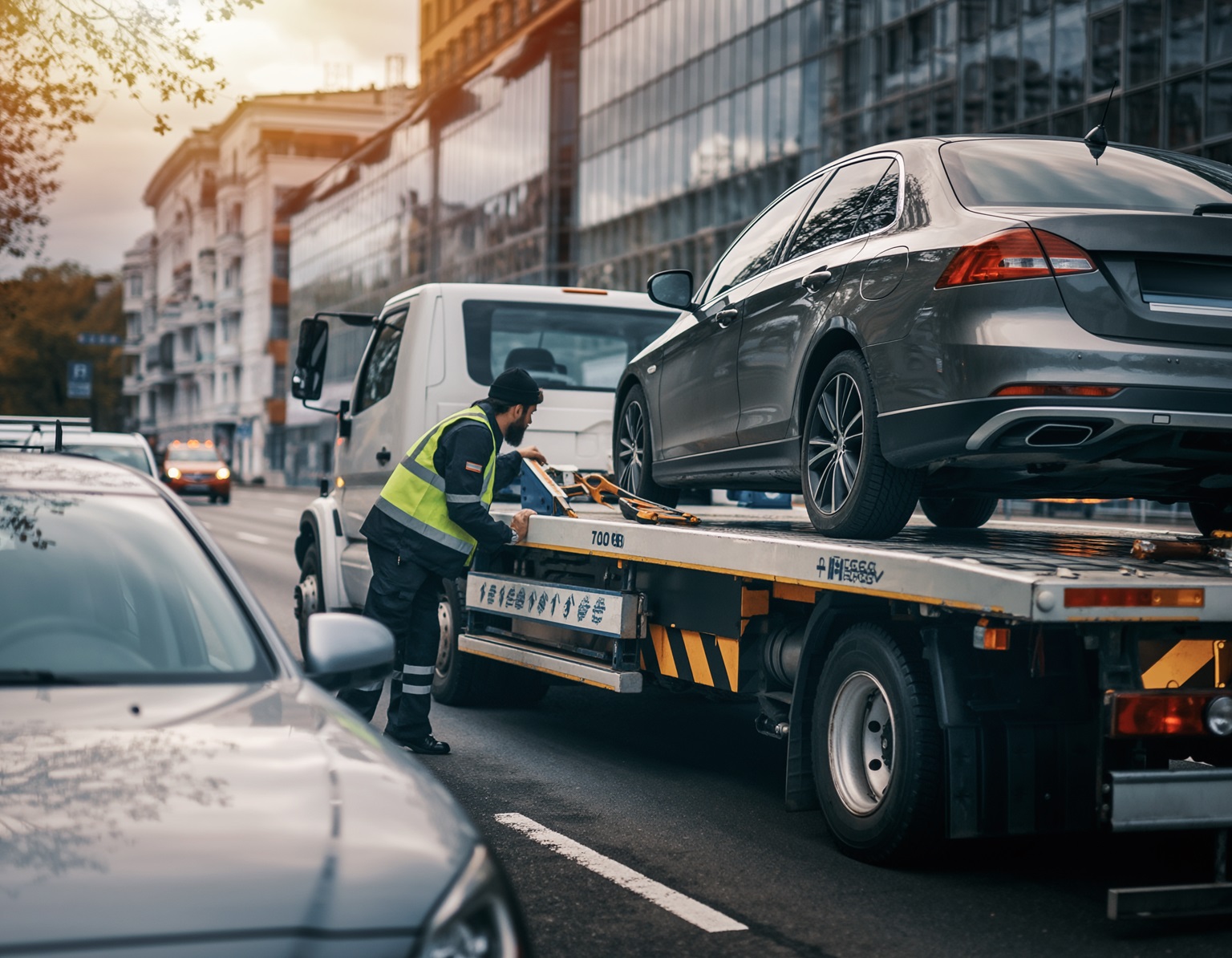
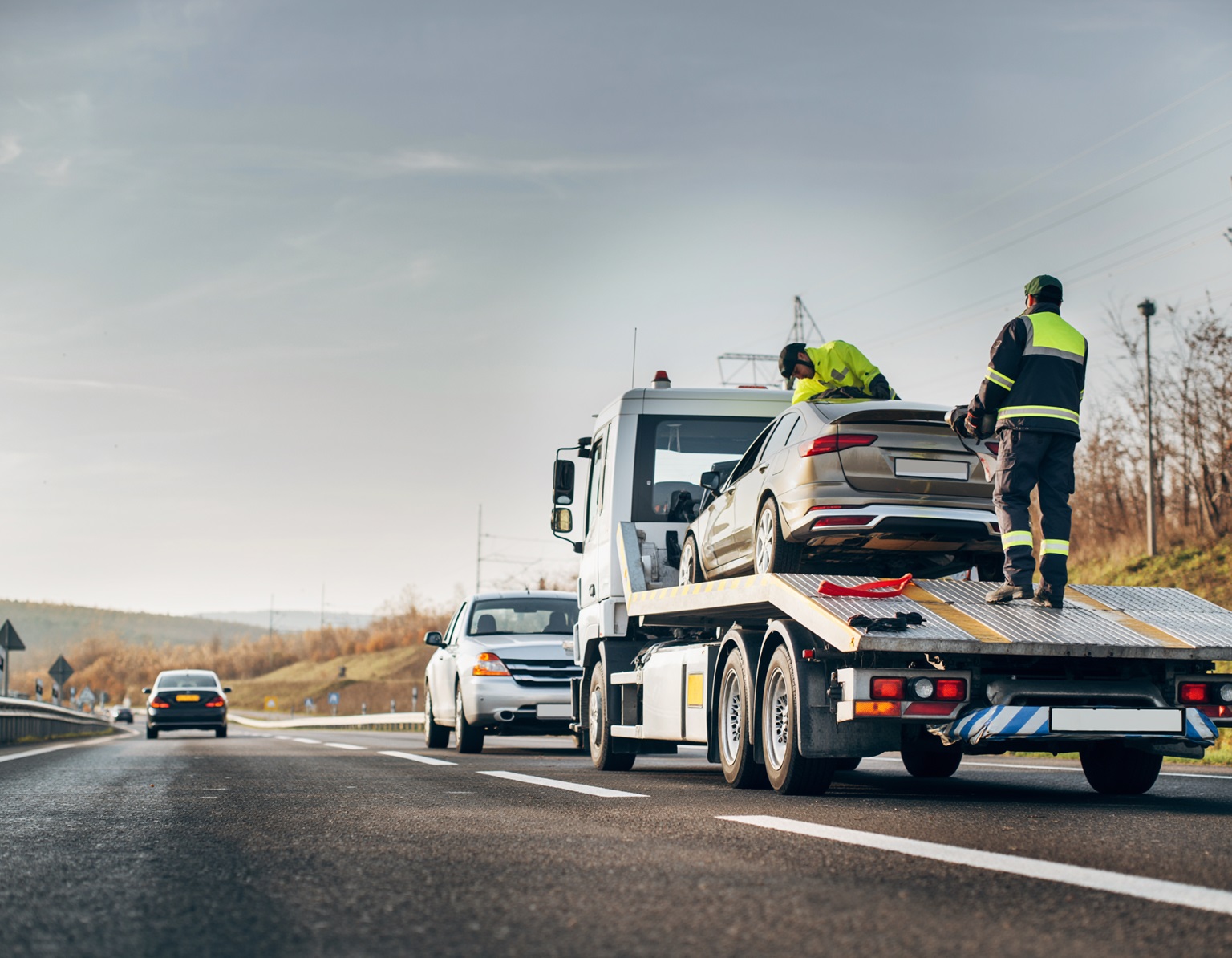
Professional towing involves heavy equipment. Your best spot is safely to the side where you can see but not interfere. For breakdowns or recovery anywhere north of Perth, our truck towing services and roadside assistance ensure your vehicle’s handled correctly from the start.
Don’t Feel Guilty About Breaking Down
Drivers often feel embarrassed, like they’ve done something wrong. You haven’t. Cars fail for countless reasons, and calling for help is exactly what you should do.
That guilt sometimes makes people take unnecessary risks – trying to fix it themselves, standing too close to traffic, or accepting help they don’t trust. Remember: your only job is to stay safe while waiting. That’s it.
Preparing for the Unexpected
Knowing what to do is one thing; remembering it under stress is another. Thinking about possible scenarios before they happen helps. Keeping a basic roadside kit – reflective vest, triangle, torch, and water – removes uncertainty when it counts.
These small preparations turn chaos into calm, which is what tow truck safety Perth is really about.
Once You’re on the Move Again
When the tow truck arrives, the hardest part is over. You’ll ride in the truck’s cabin while your car’s secured for transport. If you’re heading to a workshop, ask the driver for recommendations; we know reliable local mechanics who treat customers fairly.
From here, it’s about solutions, not stress. You’re safe, the vehicle’s handled, and the situation’s under control.
If you’re ever stranded in Perth’s northern suburbs, get in touch with our team anytime. At All Out Towing, we’ve spent over fifteen years helping Perth drivers through moments like these. We’ll get to you quickly, handle the vehicle safely, and make sure you feel secure from start to finish.